Prepare Ye

1470146333745.jpg

Today’s readings (click below to open in new tab/window):
Psalms 12; 146, Judges 7:1-18, Acts 3:1-11, John 1:19-28


When the Pharisees pressed John the Baptist about his identity, he replied with a quote from Isaiah: “I am the voice of one crying out in the wilderness, ‘Make straight the way of the Lord.'” Notably he did not say he was the one making the way straight: he offered a rallying cry, but did not take it upon himself to fill the valleys and lower the mountains and level the rugged places. No, he left those duties to us.

If we look critically at the spiritual landscape of our local community, our nation, or our world, do we see straight paths carved out to usher in the glory of the Lord? Let’s just say much of that highway project remains to be completed. Deep valleys of unbridged poverty interrupt the road. Mountains of wealth, power, or other worldly distractions tempt us to achievement which in reality is more obstacle than accomplishment. Our world is a study in the contrast between spiritual mountains and valleys. High and low social status. Casually discarded half-full bottles of water … and tarps laid out to catch a few life-sustaining drops of dew. Piles of diamonds towering above the graves of those who died to excavate them. The temptation to fill the valleys by toppling the mountains into them can be great.

Unfortunately the challenge isn’t so simple, and none of us can complete this project alone. Some days the best we can do is move one teaspoon of earth at a time, and not even all that without spilling some. But John, Isaiah, the prophets, and the saints keep calling to us: “Prepare ye the way of the Lord.” As long as we keep to our task – spoon by spoon, mountain by mountain – the way of the Lord is that much closer to its completion.

If it all seems overwhelming, perhaps we can begin by leveling the mountains and valleys – those things blocking God from view – in our own hearts. Then we open ourselves to serve as one of the countless stepping stones the Lord uses to stride to the places most in need.

Comfort: If you are struggling, remember God is on your side.

Challenge: If you are comfortable, remember you are on God’s side.

Prayer: God of Abundance, I will seek to prepare Your way in the wilderness. Amen.

Discussion: It’s easy to cast the poor as victims and the rich as villains, but both are operating within the same system of injustice. What are some better, non-binary ways to understand the world?

Join the discussion! If you enjoyed this post, feel free to join an extended discussion as part of the C+C Facebook group. You’ll be notified of new posts through FB, and have the opportunity to share your thoughts with some lovely people. Or feel free to comment here on WordPress, or even re-blog – the more the merrier!
Christian Community

1470063661778.jpg

Today’s readings (click below to open in new tab/window):
Psalms 62; 145, Judges 6:25-40, Acts 2:37-47, John 1:1-18


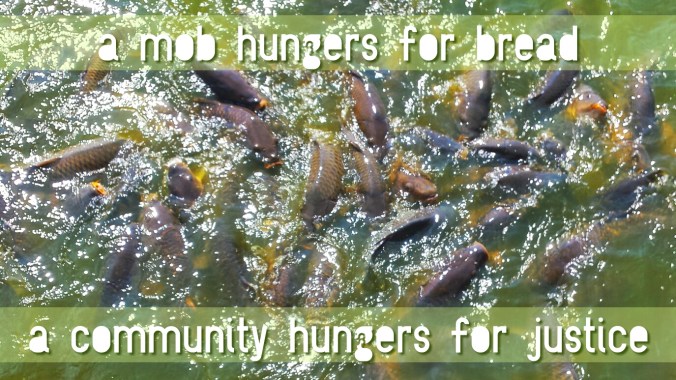
How would we react if our pastor suggested we take all our money to church, throw it into a big pile with everyone else’s money, and let people take what they needed when they needed it? In most churches, we’d start the search for a new pastor. However, Acts 2 tells us that’s how the earliest Christians chose to shape their community.

When our church plans a mission trip, our preparation includes reflection on Acts 2:43-47. We do indeed pool our resources, eat and pray together, and gain the good will of the people by serving them. So far we haven’t sold all our possessions, but members of some Christian communities – often called the New Monastics – have done just that to better serve each other and their neighbors. Some commit to this way of life permanently, and others do it for a season. Mission trips usually last for a short season, but living this way only for a little while can have a profound impact.

The Christian community of Acts functions very differently than today’s mainstream Christian communities. When we hear from people who want to define America as a “Christian nation,” how often do they suggest we divest ourselves of possessions and pool our resources? When someone expresses a desire to do so, do we take them seriously or call them communists or radicals? American culture is based on capitalism and democracy. As Christians, we recognize these are not ends in themselves, but means for building a society. When they are used as tools for injustice and exploitation, as any government or economy can be, we must be the voice of justice – the voice of Christ. When we value ideologies above the values taught by Christ, we must examine and adjust our priorities.

Should we all sell everything and live in communes? Probably not. But we should embrace the underlying values of the early Christians: community is more important than personal wealth; trust is more important than certainty; and time spent in service transforms us in positive ways. What changes can we make to reflect those values in our own lives?

Comfort: Each small step toward community make the next one easier.

Challenge: For each nine dollars you spend on food this week, spend the tenth on donations to a food bank.

Prayer: God of hope, thank you for the gift of community. Amen.

Discussion: What do you think are the positives and negatives of communal living?

Join the discussion! If you enjoyed this post, feel free to join an extended discussion as part of the C+C Facebook group. You’ll be notified of new posts through FB, and have the opportunity to share your thoughts with some lovely people. Or feel free to comment here on WordPress, or even re-blog – the more the merrier!