A House United

cambridge-66714_1280

Today’s readings (click below to open in new tab/window):
Psalms 104; 149, 1 Samuel 22:1-23, Acts 13:26-43, Mark 3:19b-35


Jewish religious leaders were beside themselves trying to explain the popularity and power of Jesus. When they said his ability to cast out demons came from Satan, he replied: “How can Satan cast out Satan? If a kingdom is divided against itself, that kingdom cannot stand. And if a house is divided against itself, that house will not be able to stand.”

At this time his mother and brothers were growing concerned for him, so they called to Jesus from outside the house where a great crowd had gathered.

And he replied, “Who are my mother and my brothers?” And looking at those who sat around him, he said, “Here are my mother and my brothers! Whoever does the will of God is my brother and sister and mother.”

We can hear this a couple ways. The first is a dismissal, if not quite a rejection, of his family in favor of his followers. The second, more in keeping with his comments about a house divided, is an expansion of the definition of family; an expansion which includes all who dedicate themselves to God.

Ironically, Saul invited Jesus’s ancestor David into his house, and the resulting division threatened all of Israel. Because the people loved David more, Saul no longer saw him as a member of his faith family, but a dangerous rival. When his son Jonathan conspired to save David’s life, Saul’s rage was uncontrollable. He slaughtered eighty-five priests and their city of Nob because he believed they had helped David escape him. (In reality, they believed David was still serving Saul.) David, who believed Saul was God’s anointed king, had no plans to harm him.

Like so many divided houses, this was a one-sided war.

When we experience conflict with other believers, let’s not make Saul’s mistake and assume they are out to destroy us … and thereby become what we fear. Through Christ we are always challenged to expand our definition of family, even when that expansion feels threatening.

Jesus said “My father’s house has many rooms.” We don’t all have to sleep in the same one.


Additional Reading:
Read more about today’s passage from Mark in Just. Plain. Crazy.

Comfort: You have more family than you know.

Challenge: Find someone who is a member of your church, family, neighborhood, or city who thinks differently than you do. Have a conversation about what common good you agree on.

Prayer: I give thanks to your name for your steadfast love and your faithfulness. (Psalm 138:2)

Discussion: Are you a member of a divided “house?” What do you think can unite it?

Join the discussion! If you enjoyed this post, feel free to join an extended discussion as part of the C+C Facebook group. You’ll be notified of new posts through FB, and have the opportunity to share your thoughts with some lovely people. Or feel free to comment here on WordPress, or even re-blog – the more the merrier!


Stories of Survival

book-1659717_1920.jpg

Today’s readings (click below to open in new tab/window):
Psalms 51; 148, 1 Samuel 21:1-15, Acts 13:13-25, Mark 3:7-19a


If you joined David in the middle of his story, you might not realize he was the hero. He lies to a priest about being on a special mission from the king to get him to hand over the holy bread normally reserved for temple rituals. Yes he was hungry, but was sacrilege his only option? Then he tricks the priest into giving him the very sword he took when he slew Goliath. When he feels he is in danger of being exposed, he pretends to be mad by committing vandalism and drooling all over himself. Over the next few chapters he’ll employ deception several times, until eventually to save his own skin he commits himself to the service of the enemies of Israel.

Because we know his story from the beginning, we are sympathetic to his reasons for lying, stealing, and deceiving in order to survive.

Are our attitudes as generous towards people we actually know?

The vast majority of people we meet are in the middle of their stories. It’s not always a flattering chapter. Like David, they may be doing what they believe they need to do to get by. When the little lies work for David, he starts to tell bigger ones. People return to the survival mechanisms that get results, and if they have had difficult lives, what they’ve learned may seem wrong or unthinkable. Our choices make sense to us because we know our own stories and motivations, but to someone else they may seem terrible.

If we haven’t had therapy we probably aren’t aware of our own survival mechanisms, yet we all have them. Even when we are aware, overcoming the unhealthy, ill-advised, or sinful ones can be difficult to impossible. While human beings rank these behaviors in a hierarchy of evil, whatever separates us from God is sin.

Our choices make sense to us because we know our own stories and motivations. When other people’s choices don’t make sense, we don’t have to accept them but we have better options than condemning. We can love until better choices seem like valid options.


Additional Reading:
Read more about today’s passage from Mark in Rocks, Thunder, and Dough.

Comfort: The story of your life isn’t defined by its worst chapter.

Challenge: When people disappoint or hurt you, try to understand what might disappoint or hurt them.

Prayer: Have mercy on me, O God, according to your steadfast love; according to your abundant mercy blot out my transgressions. (Psalm 51:1)

Discussion: When have you been surprised to learn “the rest of the story?”

Join the discussion! If you enjoyed this post, feel free to join an extended discussion as part of the C+C Facebook group. You’ll be notified of new posts through FB, and have the opportunity to share your thoughts with some lovely people. Or feel free to comment here on WordPress, or even re-blog – the more the merrier!
Find Your Place

woman-1733891_1920

Today’s readings (click below to open in new tab/window):
Psalms 97; 147:12-20, 1 Samuel 20:24-42, Acts 13:1-12, Mark 2:23-3:6


Has anyone ever done you the favor of not giving you a promotion?

Our culture teaches us to want that next step on the ladder, the better title, the bigger income. We throw around “motivational” phrases like “if you’re not moving forward you’re moving backward.” If we are content with our current position and don’t seek advancement, we’re often perceived as unmotivated, despite being strong performers. Contrary to the constant message to move up, forward, and beyond, we need to differentiate between where we belong and where we’re pressured to go. If we rely on others to do that, we may be letting them set us up for failure.

There’s absolutely nothing wrong with pursuing new opportunities, but let’s understand why we seek them. What makes us good (and happy) at our job is not always what makes us a good candidate for the next level. Not every top salesperson makes a competent director. Not every skilled physician should be chief of staff. Not every great chef has the business savvy to run a restaurant. Fortunately, we need many more people to provide services and manufacture goods than we do managers and CEOs. Whatever your job is, doing it well to support yourself, your family, and your community is as successful as it gets.

King Saul was furious with his son Jonathan for siding with David – whom Saul saw as a rival – and effectively forfeiting his opportunity to succeed his father as king. Both Jonathan and Saul knew David would be far better for the nation of Israel than either of them, but only Jonathan did not fear someone else’s success created his failure. For years all of Israel suffered, and ultimately Jonathan died, for Saul’s lack of perspective.

If someone tells you to know your place, it’s demeaning. When you determine where your place is, and claim it in service to the Lord, it empowers you to meet God’s calling in your life. To Christ, the person who harvests the crops is equal to the person who owns the farm. Why betray that love by thinking less of ourselves?


Additional Reading:
Read more about today’s passage from Mark in Ideology or Idolatry and A Responsible Sabbath.

Comfort: Success is found where you are, regardless of where you are going.

Challenge: Every morning for a week, write down what you can do to be successful that day. At the end of the day, review your list.

Prayer: You are my Lord; I have no good apart from you.. (Psalm 16:2)

Discussion: Have you ever found yourself in a job where you were over your head?

Join the discussion! If you enjoyed this post, feel free to join an extended discussion as part of the C+C Facebook group. You’ll be notified of new posts through FB, and have the opportunity to share your thoughts with some lovely people. Or feel free to comment here on WordPress, or even re-blog – the more the merrier!

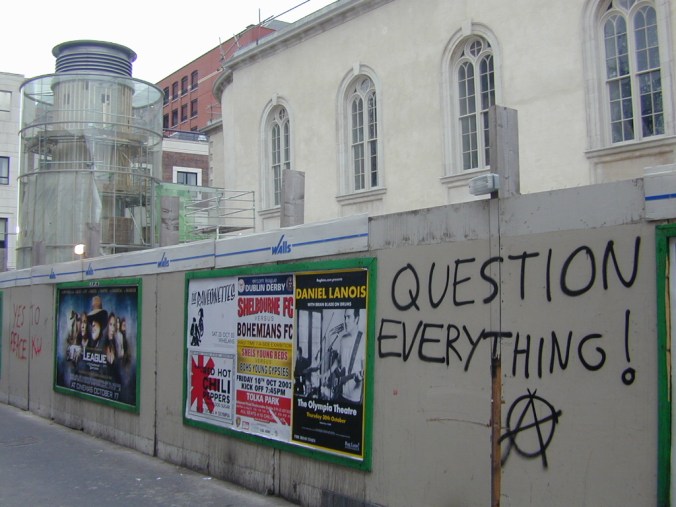
Healthy Skepticism

question-5-of-5-future-1525616

Today’s readings (click below to open in new tab/window):
Psalms 89:1-18; 147:1-11, 1 Samuel 20:1-23, Acts 12:18-25, Mark 2:13-22


“But he seemed like such a nice guy!”

“I never thought she would do something like that…”

How often have we heard similar sentiments after someone has been caught doing something wrong? We even hear them expressed by family members who we believe certainly must have known better. In Nuts, when the main character reveals that her stepfather abused her, her mother insists, “I didn’t know.” She replies, “You didn’t want to know, Mama.” When we love someone, or are otherwise invested in them, we often “don’t want to know.”

When David told Jonathan his father Saul was plotting to kill him, Jonathan’s response was basically, “No way! He woulda told me!” As if the spear marks in the wall from the two or three times Saul had previously tried to kill him were just nicks in the plaster, and Saul’s fits of anger and despair were a minor tic. Because David persuades him their close relationship might prevent Saul from being completely forthcoming, Jonathan concocts an elaborate scheme to let David know whether his suspicions pan out.

We need to be healthy skeptics, even of people we love.

Is that a discomforting thought? If so, let’s keep in mind the difference between being skeptical and being accusatory. We don’t have to assume guilt to be curious.

Predators and con artists survive on charm and our aversion to unpleasant truths. This preference for pleasant denial is so powerful that in families, social circles, or organizations where a person asks questions or speaks the truth, that person is often branded the problem. Are we really more willing to risk neglecting victims of abuse and criminal behavior than to risk offending someone by frankly verifying their intentions? If it seems like a tough call, ask yourself which you’d rather explain to Christ.

We don’t have to believe every accusation by default, for that is also foolishness, but as Paul wrote to the Thessalonians, “test everything, hold fast to what is good.” As Christians, we should be a safe place for people to share hard truths, even if we would rather not know them.


Additional Reading:
Read more about today’s passage from Mark in Gimme Some Skin.

Comfort: In the long run, an uncomfortable truth is better than a comfortable lie.

Challenge: Practice withholding judgment based on hearsay or opinion.

Prayer: Let your steadfast love, O LORD, be upon us,  even as we hope in you. (Psalm 33:22)

Discussion: How do you think we balance love and skepticism?

Join the discussion! If you enjoyed this post, feel free to join an extended discussion as part of the C+C Facebook group. You’ll be notified of new posts through FB, and have the opportunity to share your thoughts with some lovely people. Or feel free to comment here on WordPress, or even re-blog – the more the merrier!

The Competition

goats-692660_1280

Today’s readings (click below to open in new tab/window):
Psalms 42; 146, 1 Samuel 19:1-18 (19-24), Acts 12:1-17, Mark 2:1-12


We are a competitive species. In business, politics, love, art, sports, entertainment – you name it! – we  love to rank and rate ourselves. Whether we want to have the number one sales in our region, achieve first chair in the cello section, or win the Super Bowl, our competition helps us thrive by showing us what is possible and inspiring us to do better.

Of course competition has its uglier side. When winning becomes more important than succeeding, we can be lured into underhanded tactics and unhealthy obsessions. If our self worth depends on being the best, it will be impossible to maintain. We can’t experience our present joy if on the way up all we see is someone in front of us, or if we once we get to the top we obsess over the person gaining on us.

Saul had what we might call an extremely unhealthy sense of competition. David’s great successes in winning both military victories and the hearts of the king’s family settled in the darker corners of Saul’s heart. The king began to see David less as an ally and more as a threat. His plots against David launched a vicious cycle as each backfired and the boy grew even more beloved. David’s achievements all brought glory and love to the house of Saul, but Saul only saw an opponent.

They say to be nice to people we meet on the way up, because we’ll meet them again on the way down. As Saul spiraled out of control and pursued David to kill him, he ran into a group of prophets and involuntarily began to prophesy with them. This recollects an almost identical incident when he was first called to be king. The earlier encounter raised his stature, and the later thwarted his purpose.

Competition is only half a coin. The other side is cooperation. Whatever we do, we do it not for our own glory but for God’s. Ultimately we are all on the same team, running the same race. If we win, it’s time to go back and help others cross the line.


Additional Reading:
Read more about Psalm 42 in God Will Wait and Deep Calls to Deep.
For additional readings from today’s passage from Mark, see Raise the Roof and Forgiveness First.
For more thoughts on today’s passage from Acts, see Timing is Everything.

Comfort: God wants you to be the best you, not the best everything.

Challenge: Make a list of things you wish you were better at. Meditate on whether being better at them also helps you serve God better.

Prayer: I will praise the LORD as long as I live; I will sing praises to my God all my life long (Psalm 146:2)

Discussion: Do you think of yourself as competitive? Why or why not?

Join the discussion! If you enjoyed this post, feel free to join an extended discussion as part of the C+C Facebook group. You’ll be notified of new posts through FB, and have the opportunity to share your thoughts with some lovely people. Or feel free to comment here on WordPress, or even re-blog – the more the merrier!

Extras: Read all about them!

1500242252993

Today’s readings (click below to open in new tab/window):
Psalms 5; 145, 1 Samuel 18:5-16 (17-27a) 27b-30, Acts 11:19-30, Mark 1:29-45


Shortly after Jesus recruited his first four disciples, they all stopped at the house of Simon (whom Jesus would later rename Peter). Simon’s mother-in-law was sick in bed, so Jesus healed her. When her fever passed, the Gospel of Mark tells us, she began serving them.

Who doesn’t appear in this story? Simon’s wife, that’s who. The presence of a mother-in-law tells us she existed, but Mark makes no mention of her. Nor do any of the other gospels. Was she busy caring for her mother? Was she the tiniest bit annoyed her mother was expected to jump from her sickbed right into hostess duties? In his first letter to the Corinthians, Paul mentions how she attended him in his ministry, yet he does not mention her name.

What must it have been like for her when her husband came home and said he’d quit his job to follow a revolutionary? That bombshell must have been unsettling at best. Given the station of women in the first century, her fate was sealed when her husband made this decision for their family.

No one’s journey unfolds in a vacuum. For good or ill, our decisions have repercussions for our loved ones. Our sacrifices become their sacrifices . While each of us is the star of his or her own life, there is no such thing as a supporting player: everyone is equally loved by God.

Simon’s wife had a name. And hopes for her future. And as full and rich an interior life as anyone. As we grow in our faith story, some characters will stand out, but most won’t. It’s how we treat the “background” characters that reveals our character. Do we think of them as mere functionaries, filling a role but without inherent value? Or are we looking for Christ among them, open to hearing their tales? There’s a rule of thumb that says how someone in a restaurant treats the servers is a better indicator of character than how they treat their friends. If in God’s kingdom the last are first, perhaps the extras have the real leading roles.


Additional Reading:
For additional readings from today’s passage from Mark, see Choose Your Own Adventure and Celebrity Gossip.
For more thoughts on today’s passage from Acts, see Lemonade.

Comfort: No life is too small to matter to God.

Challenge: Make a point of being respectful people whose business involves serving you, such as wait staff, tradespeople, etc. We are called to serve them also.

Prayer: Let all who take refuge in you rejoice; let them ever sing for joy. Spread your protection over them, so that those who love your name may exult in you. (Psalm 5:11)

Discussion: Have you ever felt dismissed? How did you handle it?

Join the discussion! If you enjoyed this post, feel free to join an extended discussion as part of the C+C Facebook group. You’ll be notified of new posts through FB, and have the opportunity to share your thoughts with some lovely people. Or feel free to comment here on WordPress, or even re-blog – the more the merrier!

… but she’s my mother.

009Florence03

Today’s readings (click below to open in new tab/window):
Psalms 103; 150, 1 Samuel 17:50-18:4, Romans 10:4-17, Matthew 23:29-39


As Jesus entered the city of Jerusalem, he had harsh words for its citizens, especially religious leaders. He called them a brood of vipers. While they claimed they would never have mistreated the prophets as did their ancestors, he condemned their hypocrisy by saying they were “the city that kills the prophets and stones those who are sent to it!”

Angry words, but also born of love. God often described Israel as his faithless bride, and Jerusalem was the heart of her rejection. Prophets and sages, though they spoke grim words of correction, were sent to save the people … a people whose behavior demonstrated they weren’t interested in saving themselves. Jesus wasn’t angered with Romans, Samaritans, or Egyptians because they had never followed God in the the first place, so hadn’t turned away; we aren’t pained when someone else’s spouse is unfaithful. Our hearts are not broken by strangers. Maybe that is why we react so strongly when the church we trust betrays us.

Augustine is credited with saying, “The church is a whore, but she’s my mother.”

Unfortunate sexist overtones aside, that’s an apt description for a complicated relationship. We can love someone or something and still be deeply troubled by it. When the church and her leaders act from a place of corruption, greed, protectionism, or prejudice our hearts are grievously injured. We can respond with denial, departure, or a third, more difficult option. Denial only lets things fester. Departure lacks resolution; a Christian who never steps foot in another church still has indissoluble bonds to the body of Christ. Remaining in covenant to love our church through her indiscretions but insisting on better, as Christ did, heals us both.

We can become discouraged. The mechanics of conception and prostitution are virtually identical, so we have to do the hard work of sorting intentions and motivations, work that leaves everyone involved feeling vulnerable. Yet as Jesus loves us despite our flaws to help us realize our potential in the Lord’s grace, so must we help the church transcend her sins to be who she claims to be.


Additional Reading:
For more on today’s passage from Matthew, see Give ’em a break… and Love Anyway.

Comfort: No one is beyond redemption if they are willing to accept it.

Challenge: Meditate on what struggles you have with the church, and how you choose to handle them.

Prayer: Search me, O God, and know my heart; test me and know my thoughts. (Psalm 139:23)

Discussion: What attracts you to the church or a congregation?

Join the discussion! If you enjoyed this post, feel free to join an extended discussion as part of the C+C Facebook group. You’ll be notified of new posts through FB, and have the opportunity to share your thoughts with some lovely people. Or feel free to comment here on WordPress, or even re-blog – the more the merrier!

Invitation: Fair

chain-carousel-2274009_1920

Last weekend I attended our local county 4-H Fair. If, like me, you’ve never been an active participant in 4-H, the fair may be your only exposure to the organization. The fair is up for a little more than a week, and most of the vendors, rides, and attractions are part of a national circuit unrelated to 4-H. The heart of the fair – and the core of 4-H – beats in the exhibits of livestock, agriculture, arts, and skills demonstrated by young people who have worked hard all year to submit their entries. While 4-H has more members in urban and suburban counties, rural and farming communities have much higher participation rates.  American rural communities skew conservative in their politics and religion, but the organization itself focuses on values that cross the cultural divide.

For me this tolerance is most evident in the vendors exhibit hall. These groups are unrelated to 4-H, and while the organization doesn’t endorse any of them, it does have final say on who can or can not exhibit. Most of them are completely non-controversial, but you might also be surprised to find some of them under the same roof in Indiana. Local Democratic, Libertarian, and Republican parties all seem to think it’s a good place to recruit. A Right To Life group, The Gideons, and Planned Parenthood are all present. Event organizers are smart enough not to put them beside each other, but there’s room for all.

Nobody protests or taunts anyone. Everyone seems to understand we are there in common support for the youth and the program. The four Hs in 4-H stand for head, heart, hands, and health and for at least a week we manage to direct them toward the common good without betraying our values.

4-H is not a Christian organization, but it sure sets a fine example of gathering around the table. So many Christian congregations adopt a decidedly liberal or conservative stance – often based on the preferences of the pastor – that it doesn’t take long to figure out “All are welcome” really means “all are welcome … to be persuaded to our positions on social issues.”

Yet we can have wildly varying positions on many controversial topics and still be dedicated to Christ. Instead of splintering into narrower and narrower definitions of “acceptable” Christianity, maybe we could take a cue from 4-H. We don’t all need to stand next to each other on every issue, but we can coexist under the same roof without shouting each other down. We can find common values and use them to help young people become better citizens of both the world and the Kingdom. We can understand the beating heart of the church is in the fruit of the vine and the bounty of the harvest present on the communion table. We can realize letting someone in the door is not the same as endorsing their values … but helps us to live ours.

Our reasons for excluding each other are our reasons, not Christ’s. Let’s gather around the table to hear what Christ might have to say about finding reasons to be inclusive. It’s only fair.

May be the peace of our Lord Jesus Christ be with you all.

Fighting Fire with Marshmallows

1500157053704

Today’s readings (click below to open in new tab/window):
Psalms 63; 149, 1 Samuel 17:31-49, Acts 11:1-18, Mark 1:14-28


The outcome of the battle between David and Goliath is such a famous tale of victory for the plucky underdog that it doesn’t need retelling. What happened before, during David’s preparation for the battle, gets less press but has some good lessons for us.

When King Saul realized the young farm boy was determined to face off against the Philistine giant, he put David in his own armor and gave him his own sword to use. David, unused to the armor, couldn’t even walk in it, so he took it off to face Goliath with his staff, some stones, and a sling. To Goliath – and no doubt to seasoned warriors on both sides – this looked like foolishness.

David was smart. He knew he couldn’t survive by engaging on his opponent’s terms, and refused to be lured into them. Whether our battlefield is physical or intellectual, let’s be equally smart. For example, some segments of Christianity seem to be at war with science, and also seem to think the path to victory is to reinvent the the Bible as scientifically accurate. That’s not what it’s for, and trying to prove otherwise is a losing venture which only undermines its real value and purpose. There are no GMO fruits of the Spirit, so let’s trust what we grow is good enough.

David was also wise enough not to feel pressured into using the tactics of his allies when they didn’t fit the situation. It’s not that he wasn’t willing to listen; he did try on the armor before deciding it was a bad fit. He just knew from past experience what skills served him best. Sometimes people on our side of a divide think they need to employ the tactics of our adversaries to keep up or pay them back. That’s why fake news, name calling, and ridiculously broad generalizations are not the exclusive domain of any single political party … and why they result in so little progress.

Like our young shepherd-turned-hero, let’s trust in the strengths God has given us, the ones that come not from fear, but from faith.


Additional Reading:
For additional readings from today’s passage from Mark, see Fool Me or Evangelize vs. Evange-lies.
For more thoughts on today’s passage from Acts, see Astounding Gifts.

Comfort: With God’s help, no obstacle is too large.

Challenge: When you are engaged in conflict, especially if you have time to pre-plan, think about whether your responses lead to resolution or further conflict.

Prayer: Let the favor of the Lord our God be upon us, and prosper for us the work of our hands. (Psalm 90:17)

Discussion: When have you beat the odds?

Join the discussion! If you enjoyed this post, feel free to join an extended discussion as part of the C+C Facebook group. You’ll be notified of new posts through FB, and have the opportunity to share your thoughts with some lovely people. Or feel free to comment here on WordPress, or even re-blog – the more the merrier!

Angels in the Wilderness

drought-1345678_1920

Today’s readings (click below to open in new tab/window):
Psalms 84; 148, 1 Samuel 17:17-30, Acts 10:34-48, Mark 1:1-13


Imagine that on your first day of work the boss introduces you to everyone by proclaiming how proud he is of you. Then he immediately assigns you to an extended gig at a remote branch to square off against a disgruntled former employee who now runs the competition. Per the opening chapter of Mark, that pretty much summed up Jesus’s first day on the job: John baptized him, God announced his favor from the heavens, “and the Spirit immediately drove him out into the wilderness” where he spent forty days grappling with Satan.

That’s the way life goes though. Just as we screw up the courage to make that change, or earn that promotion, or have that baby, we discover it comes with a new set of problems we weren’t anticipating. We start to ask if we weren’t better off before we got what we wanted. It doesn’t seem fair that doing everything right leads to more work. But if Jesus – in whom God was “well pleased” – was sent to suffer temptation in the wilderness, maybe we should realign our expectations and definition of success.

Doing good work – especially God’s work – does not guarantee ease. To the contrary, the Jews as God’s chosen people suffered tremendously, and Christian history is filled with martyrs. Our own callings vary, but all are real and we must engage with them. Accepting accountability – to our boss, our children, ourselves, or God – enlightens us to the brokenness in the world, and how much of it we are called to heal, prevent, or bear witness to.

The Spirit didn’t send Jesus into the wilderness alone: angels waited on him. We too have support available in our fellow Christians who share the same accountability. When times are tough, we remind each other why what we do is important. We help carry each other’s burdens. We listen. We cry. We are angels to each other.

Faithfulness doesn’t create suffering, but it does put us in touch with suffering that already exists. We can count on our God – and our angels – to see us through it.


Additional Reading:
For more on today’s opening chapter of Mark, see Many Waters, One God or Intersections.
For more thoughts on today’s passage from Acts, see Astounding Gifts.

Comfort: Even in life’s wilderness, you are not alone.

Challenge: Write a thank you note to one or more “angels” who have helped you through difficult times.

Prayer: To you, O LORD, I lift up my soul. (Psalm 25:1)

Discussion: What’s the worst job experience that someone helped you get through?

Join the discussion! If you enjoyed this post, feel free to join an extended discussion as part of the C+C Facebook group. You’ll be notified of new posts through FB, and have the opportunity to share your thoughts with some lovely people. Or feel free to comment here on WordPress, or even re-blog – the more the merrier!