Good Luck, Bad Luck, Pot Luck

bread-1281053_1280

Today’s readings (click below to open in new tab/window):
Psalms 89:1-18; 147:1-11, 2 Kings 22:14-23:3, 1 Corinthians 11:23-34, Matthew 9:9-17


Today’s reading from 1 Corinthians is probably familiar to anyone who has celebrated communion in a Christian church. Paul’s recounting of Christ’s words over the bread and cup at the Last Supper are often called the Words of Institution, and are shared as a priest, minister, deacon, or elder breaks the bread.

In the early church, the symbolic or sacramental communion meal was frequently accompanied by a more literal meal, called an Agape Feast (that is, Love Feast). This meal was intended to be shared equally among everyone in attendance. Unfortunately the intent and practice of the meal soon parted ways. People who could bring the most ended up gorging themselves while others got little, and the wine flowed more freely than it should have. Paul reprimanded the church community at Corinth, reminding them of the purpose for these meals, and to keep their lustier appetites in check.

In modern churches, communion is usually a dignified event, but the tendency for some people to think they have more right to the community’s resources and decision-making because they bring more to the table can linger. In some congregations the currency of influence is literal cash, but it can also be seniority, sweat equity, piety, or other factors. When we have contributed much, we can struggle to remember what it means for the first to be last.

Matthew tells us of another meal where Jesus, much to the dismay of the Pharisees, deliberately sat and ate with tax collectors (Jewish people in the employ of their Roman oppressors) and sinners. Though he owed them no explanation, he said “I have come to call not the righteous but sinners.” Jesus extended compassion, grace, and mercy where the religious – the righteous – would not. At other times Jesus did eat with Pharisees, but unlike the tax collector crowd they needed to be reminded they too were sinners, just a different variety.

When we break bread with Jesus, regardless of the size of our contributions or self-righteousness, we are all equal. Our present fortunes, for good or ill, do not make us more or less beloved by God. We are called not to push our way to the head of the line for the largest portion, but to serve each other. As Paul advised the Corinthians, “when you come together to eat, wait for one another.” Through the waiting we learn grace is not for those who deserve it, but those who need it. And that’s all of us.

Comfort: Jesus calls  not to the righteous, but sinners.

Challenge: Volunteer at a soup kitchen, food bank, or other charity.

Prayer:  Our soul waits for the LORD; he is our help and shield. Our heart is glad in him, because we trust in his holy name. (Psalm 33:20)

Discussion: Do we have to admit to being sinners before we can hear Christ’s call?

Join the discussion! If you enjoyed this post, feel free to join an extended discussion as part of the C+C Facebook group. You’ll be notified of new posts through FB, and have the opportunity to share your thoughts with some lovely people. Or feel free to comment here on WordPress, or even re-blog – the more the merrier!

Lost Gospels

bench-1868070_1920

Today’s readings (click below to open in new tab/window):
Psalms 42; 146, 2 Kings 22:1-13, 1 Corinthians 11:2 (3-16) 17-22, Matthew 9:1-8


Josiah was only eight years old when he became king of Judah, but he was the best king to come along in a while. He tried his best to restore the honor of The Lord to his kingdom. During a restoration project at the Temple, the high priest found the book of the law (probably Deuteronomy) and had it delivered to the king. Josiah was outraged to discover his people had not been following the Lord’s commands for quite some time, and immediately set about making things right.

Whether the book had been lost for a long time or simply rediscovered is up for debate, but one thing is clear: by the time of Josiah’s reign, the Jewish people had strayed from the core of what defined them. From the time they insisted on being ruled by kings as were their neighbors, they began more and more to resemble those neighbors in so many ways – including the gods they worshipped – that they could comfortably neglect and eventually forget to do what God had commanded. They still identified fiercely as a people … but what did that really mean?

Being a Christian today is not nearly as well-defined as being a Jew of Josiah’s time, and that may be all the more reason to take a valuable lesson from today’s scripture.

It’s easy for the Gospel to get buried under everything we’ve borrowed from our neighbors. Sometimes it’s obscured by well-intended effort, such as trying to make the faith more “relevant” by assuming the trappings of culture instead of meetings its emptiness head-on. Other times it may take a renovation – of our church community or personal spiritual life – to understand we’ve inherited a Gospel clad in a fortress of bias, tradition, superstition, and ignorance. So much so that not only can’t outsiders find a way in, our central message – assuming we can find it – can’t find its way out.

The Gospel is sufficient on its own. We study a lifetime to understand it, but there’s nothing we can do to improve on it. Grace defines us as a people, yet it cannot be defined. God’s love contains us, but trying to contain it thwarts love. We can domesticate the Gospel and settle for being nominally Christian but otherwise unidentifiable as followers of Christ, or we can let it work its radical change upon us to be seen by all who would seek it.

Comfort: The Gospel speaks for itself…

Challenge: … but if we are to hear, we must be committed to changing.

Prayer:  As a deer longs for flowing streams, so my soul longs for you, O God.. (Psalm 42:1)

Discussion: As you mature in your faith, what aspects of Christian culture do you find more or less important?

Join the discussion! If you enjoyed this post, feel free to join an extended discussion as part of the C+C Facebook group. You’ll be notified of new posts through FB, and have the opportunity to share your thoughts with some lovely people. Or feel free to comment here on WordPress, or even re-blog – the more the merrier!

Faith and Friction

emery-cloth-1827149_1920

Today’s readings (click below to open in new tab/window):
Psalms 5; 145, 2 Kings 21:1-18, 1 Corinthians 10:14-11:1, Matthew 8:28-34


Early followers of Christ lived in a culture where a temple or idol to one deity or another lurked around almost every corner. Even within the Christian church, Jews and Gentiles had backgrounds and beliefs which were not always in agreement. This created complicated social situations where believers had to balance being a loving neighbor (or business partner or customer) against upholding their principles.

In today’s reading from Corinthians, Paul writes about eating meat sacrificed to idols or demons – which would have been forbidden under Jewish law. Instead of declaring such actions sinful or not, he wrote: “‘All things are lawful,’ but not all things are beneficial. ‘All things are lawful,’ but not all things build up.” He advised them their actions should be chosen in accordance with their convictions, yet not to undermine their witness to the people around them. He didn’t want them leading anyone into behavior that other person thought was a sin.

We face similar challenges. Every day we are called to follow our principles even when they run contrary to social pressures, politics, employers, friends, family, foreign cultures, and fellow people of faith. In some situations, particularly matters of personal ethics, we may simultaneously be judged by some people as too pious while others see us as terrible sinners. If we remain loving, it doesn’t matter. Christ didn’t worry about being called a glutton or a drunkard, and John the Baptist was just fine being a holy freak. Isn’t it liberating to know our allegiance is never to public opinion, but to God, “for why is [our] freedom being judged by another’s conscience?”

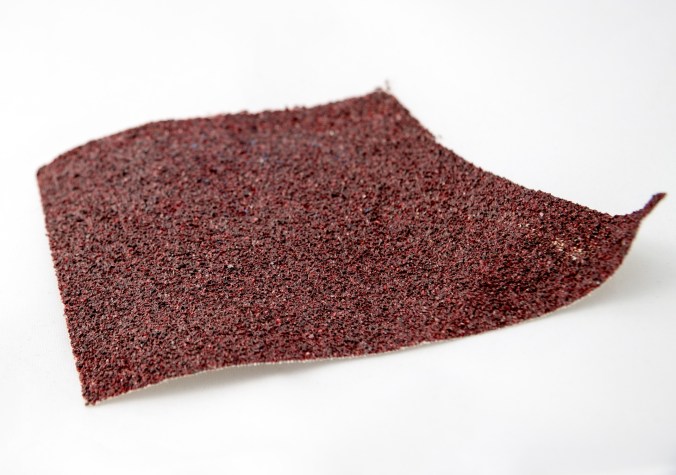
We are not a people bound by laws and technicalities of action and thought (no matter how much some people might cling to that model). We are a people freed by love and meant to love freely. Our faith is in constant friction with the world. We are called to live our faith, but never to impose it. It is up to us to decide whether that friction is a source of irritation like sandpaper on skin, or a source of warmth like two hands rubbing together as if in prayer.

Comfort: You don’t need to worry about how other people judge you.

Challenge: Seek common ground rather than the upper hand.

Prayer:  Give justice to the weak and the orphan; maintain the right of the lowly and the destitute. Rescue the weak and the needy; deliver them from the hand of the wicked. Amen. (Psalm 82:3-4)

Discussion: Where do you encounter the most friction between your faith and the world?

Join the discussion! If you enjoyed this post, feel free to join an extended discussion as part of the C+C Facebook group. You’ll be notified of new posts through FB, and have the opportunity to share your thoughts with some lovely people. Or feel free to comment here on WordPress, or even re-blog – the more the merrier!

Too Good to be False

15147570774 (1)

Today’s readings (click below to open in new tab/window):
Psalms 103; 150, 2 Kings 20:1-21, Acts 12:1-17, Luke 7:11-17


[H]e did not realize that what was happening with the angel’s help was real;
he thought he was seeing a vision.
– Acts 12:9

Have you heard the one about the pious man trapped on his roof by a rising flood? The army, the navy and the marines all came by in boats and offered to rescue him, but he said he was waiting for the Lord to save him. Eventually the flood overwhelmed him. When he got to heaven, he asked God why his prayers went unanswered. God said “I sent you three different boats!”

Peter – Jesus named him “the rock” for a couple reasons – wasn’t much better. When an angel came to rescue him from prison, he thought it was a vision; luckily – having experienced visions before – he followed instructions anyway and was freed. When the prophet Isaiah told King Hezekiah the Lord would spare him from death for 15 years so he could lead his people out of bondage, the King wouldn’t believe him without any less a sign than the sun moving backwards.

Sometimes the Lord’s ways aren’t all that mysterious, and for some reason that seems to be a stumbling block to faith. We are called to be the hands and feet of Christ, but when those hands and feet aren’t pierced with nails or emitting a holy glow, we can struggle to recognize ourselves and others as the answers to prayer. How would it change your perspective on life to realize the answer to your prayer might not be divine intervention, but divinely-inspired human intervention? Or to realize that your action (or maybe just your presence) is the most miraculous thing someone could hope for? After all, the Spirit dwells in each and every one of us. Think on that for a moment…

We are wary of offers that sound too good to be true. A miracle around every corner sounds like one of those. Maybe the wonderful truth is miracles of hope, healing, reconciliation, generosity and comfort are as common as dirt … as long as we are willing to get our hands dirty.

Comfort: You are a miracle.

Challenge: Recognize the miracle in yourself and others.

Prayer:  Thank you Lord for the opportunity to be an answer to someone’s prayer. Amen.

Discussion: What is your general perspective on miracles?

Join the discussion! If you enjoyed this post, feel free to join an extended discussion as part of the C+C Facebook group. You’ll be notified of new posts through FB, and have the opportunity to share your thoughts with some lovely people. Or feel free to comment here on WordPress, or even re-blog – the more the merrier!

Roots and Fruits

forest-1598108_1920

Today’s readings (click below to open in new tab/window):
Psalms 84; 148, 2 Kings 19:1-20, 1 Corinthians 9:16-27, Matthew 8:1-17


The surviving remnant of the house of Judah shall
again take root downward,and bear fruit upward.
– 2 Kings 19:3

How deep are your spiritual roots? Deep enough to keep you healthy during times of spiritual drought? Whether your answer is “Yes”, “No” or “Good question…” you can always deepen them. One good way is to set aside time for regular spiritual practices. As with anything, the time you dedicate to spiritual practice will improve the results. A neglected garden is soon choked out by weeds and devoured by pests, and a neglected spiritual life is soon choked out and devoured by the demands and distractions of daily life. When we attempt to pluck fruit from either of them, we will very likely be disappointed.

But what does spiritual practice look like? And what if you don’t like gardening? Approaches to spiritual practices can range from the Biblical classics of prayer, meditation, and fasting to hiking, music, journaling and – yes – even gardening. A spiritual practice is anything that puts in your touch with your connection to the holy. Regular, intentional practices help our spiritual roots grow deeper and prepare us to better weather hard times and celebrate joyous ones. Find a practice that speaks to you, rather than trying to conform to one someone else prescribes, and it will be easier to maintain.

How high are your spiritual fruits? Probably about as high as your roots are deep. If you aren’t sure what gifts you have to share, spend some time discovering what feeds your roots. Chances are your gifts are closely related. And don’t waste time comparing them to other people’s gifts: it would be pretty foolish of a Granny Smith to spend time regretting it wasn’t a watermelon. Different plants thrive under different soil conditions and varying amounts of water and sunlight. People’s spirits are no less diverse. Your unique gifts are part of a well-balanced spiritual diet for the world. Feed your roots well, and you won’t be able to help producing fruits for all to share!

Comfort: Your gifts are meant to be shared…

Challenge: … so tend them with love and gratitude toward the one who gave them.

Prayer:  Thank you Lord for the many gifts you have given me. I will use them to honor your name. Amen.

Discussion: How do you tend to your spiritual roots?

Join the discussion! If you enjoyed this post, feel free to join an extended discussion as part of the C+C Facebook group. You’ll be notified of new posts through FB, and have the opportunity to share your thoughts with some lovely people. Or feel free to comment here on WordPress, or even re-blog – the more the merrier!

When In (or occupied by) Rome…

rome-2527638_1920

Today’s readings (click below to open in new tab/window):
Psalms 84; 148, 2 Kings 19:1-20, 1 Corinthians 9:16-27, Matthew 8:1-17


The main conflict in the Gospels is between Jesus and the leaders of the Jewish faith. In Acts and the epistles, conflict arises as Jewish and Gentile Christians struggle to become one church. On a larger scale, the backdrop of the entire New Testament is the occupying Roman empire. Christ’s teachings threatened upheaval not just to the Jewish religious leaders, but to the greater social and political order enforced from Rome.

In his lessons and parables Christ used imperial imagery such as kingdoms and victories in a way that turned conventional systems of power and justice upside down. By turning this language on its head in the service of God, he was telling people the existing social structure was not meant to last. Because Judaism was practiced at the pleasure of the emperor, and Jesus was the kind of rabble-rouser who drew the wrong kind of attention, many Jews wished to silence him and his original followers lived under this constant imperial threat. Modern readers of the gospel need to seriously consider how cozy we want to get with the empire – whatever form it takes – today. Then and now, seeking the approval and the favor of the worldly powers-that-be never makes them more just; rather it compromises our integrity and puts us at their mercy. It is when they convince us they are on our side that we are most susceptible to compromising ourselves to share their power.

However, true to his inclusive nature, Jesus did not draw firm lines between the Romans and the Jews when it came to mercy and faith. When a Roman centurion asked Jesus to come heal his beloved slave, Jesus declared it was the faith of the centurion – and not the slave – that dwarfed the faith he had found in Israel. This declaration made it clear that God’s grace was not confined by ethnic or cultural boundaries, and also that Jesus’ Jewish disciples should not become too complacent about their own spiritual situation.

The Roman Empire may be long gone, but imperialism in its many forms is alive and well. Our relationship to the world remains complicated. Are we sharing Christ’s message even when it makes us vulnerable outsiders, or are we selling out the rabble rouser to live comfortably under the empire he confronted?

Comfort: God’s kingdom continues to transform earthly realms.

Challenge: Meditate on what “imperialism” we must stand up to today.

Prayer:  Teach me, Lord, to be faithful to your kingdom above all others. Amen.

Discussion: What do you consider the value of separating church and state?

Join the discussion! If you enjoyed this post, feel free to join an extended discussion as part of the C+C Facebook group. You’ll be notified of new posts through FB, and have the opportunity to share your thoughts with some lovely people. Or feel free to comment here on WordPress, or even re-blog – the more the merrier!

Rights and Wrongs

butterfly-757995_1920

Today’s readings (click below to open in new tab/window):
Psalms 116; 147:12-20, 2 Kings 18:28-37, 1 Corinthians 9:1-15, Matthew 7:22-29


The Apostle Paul was aware some church members were quick to criticize him. He was careful not to hand those people ammunition to use against him. Many apostles lived off the generosity of the community because they felt the service they provided justified those benefits. Paul compared it to military service, where one was not expected to fund the expenses of serving. Without benefactors many would not have been able to do the work of evangelizing, which is why under the religious Law it was basically a right. Paul and his close associate Barnabas purposely did not avail themselves of those rights so no one could claim they were in it for the benefits rather than the faith.

Do we ever exercise our rights to the point where we are no longer doing what is right? Or do we submit our civil rights to our moral responsibilities and our integrity? For example, we can remain well within our legal rights as employers and still exploit our workers. Even Christians will claim “it’s just business” to excuse shabby and outright unethical treatment of neighbors who also happen to be employees or vendors. In times not-so-long past sixteen hours a day of forced child labor was perfectly legal, but it was never a just way to do business.

In his first letter to the Corinthians, Paul mentioned more than once how not everything that was permissible was beneficial. He taught we are to serve our neighbor’s good before our own, even if that means abdicating some of our own rights. Is that a thought we’re comfortable with today? We throw around the idea of “rights” without really agreeing on what that means. Constitutional rights? Nations have constitutions which vary widely. Human rights? We can’t agree on them in a single country, let alone universally. And they are often at odds.

Did Jesus spend more time talking about rights or responsibilities? If the gospel we try to live and spread is to look and sound like Jesus,  perhaps the conversation among Christians needs to shift accordingly. When we pray to be forgiven our debts as we forgive our debtors, let’s reflect on what standard we’re setting.

Comfort: God is merciful.

Challenge: Be merciful in gratitude.

Prayer:  If you, O LORD, should mark iniquities, Lord, who could stand? But there is forgiveness with you, so that you may be revered. (Psalm 130:3-4)

Discussion: If you had to write a Bill of Responsibilities for the constitution, what would be at the top?

Join the discussion! If you enjoyed this post, feel free to join an extended discussion as part of the C+C Facebook group. You’ll be notified of new posts through FB, and have the opportunity to share your thoughts with some lovely people. Or feel free to comment here on WordPress, or even re-blog – the more the merrier!

Junk Drawer

20171004_224149-01

Today’s readings (click below to open in new tab/window):
Psalms 96; 147:1-11, 2 Kings 18:9-25, 1 Corinthians 8:1-13, Matthew 7:13-21


What if the secret to life was at the bottom of your junk drawer? It could be lying there just under a dried up glue stick, a souvenir Disney keychain that’s too big for your pocket, and that not-quite-eleven inch piece of twine that will be perfect for something … someday (not). Not that it’s some seemingly worthless item which unlocks your mind and heart. What if the secret to life was the bottom of the drawer itself? Once you’ve actually emptied that drawer and kept it empty, you’ve learned something about paring away the unnecessary.

And if you’re thinking, “Then I could use the drawer for something meaningful” … stop.

You don’t need to fill the drawer. You really don’t. A drawer with nothing in it may seem like the most pointless thing in the world, but if you can become comfortable with it, that’s the first step to realizing what’s in all the other drawers might not be so meaningful either.

Jesus told his disciples, “Enter through the narrow gate; for the gate is wide and the road is easy that leads to destruction, and there are many who take it. For the gate is narrow and the road is hard that leads to life, and there are few who find it.”

So why is Jesus hidden behind the narrow gate? Why not hang out on the wide road that seems more inviting? If you want to get through a narrow gate, you can’t be loaded down with a lot of junk. Bulging backpacks and overstuffed luggage aren’t going to cut it. It’s hard to truly depend on God when we’re carrying around baggage – physical, emotional, theological – that is evidence we’re relying on everything we’ve managed to amass for ourselves. The gate is narrow so we arrive on the other side carrying only what is essential.

If we can’t keep one drawer empty, how will we get rid of the rest of it?

The secret to navigating that hard road and narrow gate isn’t always finding the right gear. Sometimes it’s more a matter of dropping everything that’s useless.

Comfort: You don’t have to have the solution to everything.

Challenge: Empty one drawer in your home.

Prayer: Loving God, help me to shed everything that stands between me and you. Amen.

Discussion: What’s in your junk drawer?

Join the discussion! If you enjoyed this post, feel free to join an extended discussion as part of the C+C Facebook group. You’ll be notified of new posts through FB, and have the opportunity to share your thoughts with some lovely people. Or feel free to comment here on WordPress, or even re-blog – the more the merrier!

#notalllogs

logs-498538_1920

Today’s readings (click below to open in new tab/window):
Psalms 12; 146, 2 Chronicles 29:1-3, 30:1 (2-9) 10-27, 1 Corinthians 7:32-40, Matthew 7:1-12


Why do you see the speck in your neighbor’s eye, but do not notice the log in your own eye? Or how can you say to your neighbor, ‘Let me take the speck out of your eye,’ while the log is in your own eye?

Jesus didn’t seem concerned with teaching us to identify flaws in other people – that job had too many people doing it already. Rather, Jesus invites you (and me) to repent and reflect, not to feel smug about telling others to do it. Yet somehow we manage to twist his words to point fingers and deflect criticism – Get the log out of your eye before you talk to me about my speck! – when confronted with our own failings. Repentance is something we embrace, not something we inflict.

While repentance is a personal pursuit, it has communal dimensions. Belonging to a specific community doesn’t make us responsible for the actions of every individual in the community, but … Paul’s letters are full of expectations that we hold our community – our body – accountable for its behavior. When one or a few people undermined the character of the Christian church, Paul didn’t accept “it wasn’t me” as an excuse to ignore the behavior.

In Paul’s case he was addressing a church, but community comes in many forms, sometimes with involuntary membership. Gender is an example of a community to which we belong but do not (generally) choose. While gender equality has made remarkable strides over the last century, there are still systemic injustices which need attention. When a topic like sexual harassment is broached, almost invariably some men respond with “not all men are like that.” It’s a defensive reaction meant to communicate, “Hey, I’m one of the good guys!” In reality, “not all men” derails the conversation; it prioritizes “my” comfort with being a man over problems women actually face. When the community has a plank in its left eye, what exactly is accomplished by pointing out how healthy the right one is?

Of course gender is just one example. Is it possible we are even more accountable for communities we join voluntarily? Not all Christians? Not all Democrats? Not all gun-owners? Not all police officers? Not all protesters? And none of these groups (and countless more) are mutually exclusive! The thread of our accountability runs through a series of knots where we’ve anchored ourselves to others.

Let us – individuals and communities – whittle away at those planks until they disappear. We might be surprised to discover how much we contribute to a problem and how much more we can contribute to a solution once we commit to seeing clearly.

Comfort: Community is a blessing.

Challenge: Let’s keep it that way.

Prayer: I will give to the LORD the thanks due to his righteousness, and sing praise to the name of the LORD, the Most High. (Psalm 7:17)

Discussion: Do you ever feel pressured to ignore problems of a group you belong to?

Join the discussion! If you enjoyed this post, feel free to join an extended discussion as part of the C+C Facebook group. You’ll be notified of new posts through FB, and have the opportunity to share your thoughts with some lovely people. Or feel free to comment here on WordPress, or even re-blog – the more the merrier!

Enough for today

lilies

Today’s readings (click below to open in new tab/window):
Psalms 62; 145, 2 Kings 17:24-41, 1 Corinthians 7:25-31, Matthew 6:25-34


Has anyone ever stopped worrying because someone said, “Stop worrying?”

When Jesus told his disciples not to worry about having enough food (God takes care of the birds!) or clothing (God dresses the grass itself in lilies!), or about life in general (can you add an hour to your life that way?) he knew this.  He had a bigger point to make.

No matter how well off we might be, we are still prone to worry. The impulse to get food on our table and have a roof to keep that table under, as well as the fear we could lose it all, drives our behavior in instinctual, inescapable ways. On some level we doubt that faith alone will provide for all our material needs; the history of humankind does more to confirm than to dispel that doubt.

But that’s not all Jesus was saying.

After the birds and the lilies, he says, “strive first for the kingdom of God and his righteousness, and all these things will be given to you as well.” We can read this at least a couple ways. The first is the simpler: have faith and live righteously, and God will provide. The second is broader. In telling us to strive for the kingdom, it asks us to be the instruments of justice as described by citizenship in the kingdom. In the service of kingdom justice, we feed the hungry, tend to the sick, clothe the naked, and welcome the stranger. By being the last and by tending to the troubles of today – not just our troubles, but the troubles of our neighbor – we expand the kingdom in a way that begins to soothe that primal, hungry fear.

The end of worry is a long term endeavor. We still work toward it. Yes we are assured we can let go of individual worry for this particular day, but that process is inseparable from how we participate in the life of our greater community. When we sacrifice our lives to a kingdom free from worry, we will be freed in turn. We will not stop worrying because we are told to, but because we are told how.

Comfort: There is relief from worry.

Challenge: When you worry, ask yourself what you should be doing instead.

Prayer: Whom have I in heaven but you? And there is nothing on earth that I desire other than you. (Psalm 73:25)

Discussion: What is the difference between worrying and preparing?

Join the discussion! If you enjoyed this post, feel free to join an extended discussion as part of the C+C Facebook group. You’ll be notified of new posts through FB, and have the opportunity to share your thoughts with some lovely people. Or feel free to comment here on WordPress, or even re-blog – the more the merrier!