… Since the Lectionary is cyclical, the recent and upcoming Advent posts are polished up versions of ones written two years ago. It was a very different political atmosphere, so please don’t read too much about current events into their intent. But maybe don’t read too little into them either; the prophetic cry for justice is ongoing and timeless.
Advent
Hope Justly

Readings: Psalms 33; 146, Amos 3:1-11, 2 Peter 1:12-21, Matthew 21:23-32
The Old Testament contains over a dozen books named for prophets. Most of them contain the same message for the people of God: repent and embrace the justice God requires of you or the consequences of your actions will destroy you. God seems to have no desire to punish his people — why else provide them so many warnings? — yet when we read the words of the prophets we can’t help but feel the inevitably of their self-destruction.
Amos tells us “the Sovereign Lord does nothing without revealing his plan to his servants the prophets” and says the people hear the lion roar yet do not fear. Rather, they content themselves with fulfilling the letter of the law while ignoring its purpose: to bring justice to God’s people. Nearly 800 years later, Jesus was the roaring lion the people chose to ignore. His message to the leadership of the time could have come from Amos: while paying lip service to the Lord, you are ignoring holy truths. When faced with the question of Jesus’s authority, they feigned ignorance rather than risk losing their grip on the people by telling the truth.
To what prophetic cries for holy justice do we turn a deaf ear today? In what ways are we trading the demands of justice for personal convenience? What groups of people do we allow to be vilified or victimized for political or financial expedience? In this age of information overload, any failure to recognize the voices which cry out for an end to poverty, racism, sexism, exploitation, and countless other ills requires a willful ignorance rivaling the pharisees. We are being warned. Will we be as hard-hearted as those who denied Amos and Jesus?
It’s not too late. Whether Christ returns tomorrow or a million years from now, today we can choose to be a people whose actions court blessing rather than wrath. Advent is a time to say: “I hear you. I see you. I long for the justice denied you, and tremble before God that I have been party to it.” Advent is the time to roar like a prophet.
Comfort: Christ comes into the world to deliver justice to the persecuted.
Challenge: Read about human trafficking and the seafood industry. Think about how you can value justice as part of the price for goods and services.
Prayer: Let all the earth fear the LORD; let all the inhabitants of the world stand in awe of him. For he spoke, and it came to be; he commanded, and it stood firm. (Psalm 33:8-9)
Discussion: Who does it seem God might be warning today? Through whom is God speaking?
Join the discussion! If you enjoyed this post, feel free to join an extended discussion as part of the C+C Facebook group. You’ll be notified of new posts through FB, and have the opportunity to share your thoughts with some lovely people. Or feel free to comment here on WordPress, or even re-blog – the more the merrier!
Hope Humbly
Readings: Psalms 122; 145, Amos 2:6-16, 2 Peter 1:1-11, Matthew 21:1-11
What does it mean to wait for Christ? In one sense it means preparing our hearts and spirits for the promise of Christmas. Whether we all agree about the historical details of the nativity, we share a fairly common understanding about its message. In another sense, it means preparing ourselves for the return of Christ at some future time — and we have a lot less agreement about what that means. Some of us think of it as a literal embodiment of Revelation. Others are less certain of the details but envision a physical return. Still others think of it in metaphorical terms and don’t much separate the future Kingdom of Heaven from the present. Almost certainly none of us knows exactly, and Christ will continue to thwart expectations. It’s kind of his thing.
In Matthew 21, Jesus arrives in Jerusalem on a donkey. This gesture symbolized his defiance of both Roman authority and the expectations of the Jewish people. The Jews were expecting a warrior messiah, a political figure who would throw off the chains of Roman tyranny in bloodshed and battle. Instead, they got a man who refused earthly titles and allowed his persecutors to execute him. A donkey where they expected a stallion.
Jesus will throw over our expectations as well (if he hasn’t already). So how should we prepare? Maybe the best thing to do is carry on as if we don’t know exactly what to expect. Because we don’t.
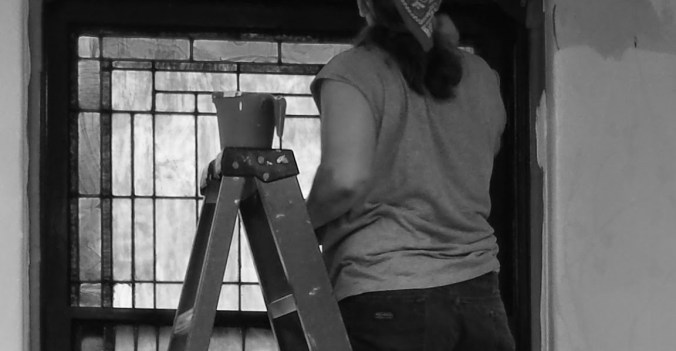
The second letter of Peter advises us to cultivate the qualities describing a life in Christ, each quality laying a foundation for the next: goodness, knowledge, self-control, perseverance, godliness, mutual affection, and love. Without them he says our vision of Christ is nearsighted and blind. Before we make the same mistake as Christ’s contemporaries and insist our understanding of the messiah must be the right one — or insist someone else’s must be the wrong one —let’s concentrate on working up the rungs of Peter’s ladder of virtues from goodness to love. Those rungs are held together between rails of humility and faith. As we hope for Christ’s return, let’s hold tightly to both.
Comfort: We can always grow while we wait to encounter Christ more fully.
Challenge: At the end of each day this week, reflect on where you might have better exercised humility.
Prayer: May God continue to bless us; let all the ends of the earth revere him. (Psalm 67:7)
Discussion: How do you think your understanding of Jesus might differ from someone else’s?
Join the discussion! If you enjoyed this post, feel free to join an extended discussion as part of the C+C Facebook group. You’ll be notified of new posts through FB, and have the opportunity to share your thoughts with some lovely people. Or feel free to comment here on WordPress, or even re-blog – the more the merrier!
Hope Cautiously
Readings: Psalms 24, 150; Amos 1:1-5, 1:13-2:8; 1 Thessalonians 5:1-11; Luke 21:5-19
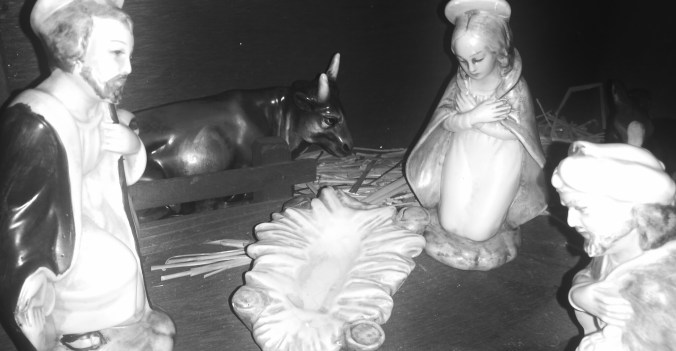
Advent is the season when we prepare for the arrival of Christ. This arrival has a dual nature, as we celebrate his birth and Bethlehem and anticipate his eventual return. Every year it is a cycle within a cycle.
The history of injustice similarly repeats itself. Ethnic tensions, disregard and abuse of the poor, corrupted court systems, war crimes, and other ills have existed throughout all of human history. Whether or not we like to admit it, no nation or people is immune. When the formerly oppressed gain power they may take their turn to become the oppressor, and are blind to it because they still think themselves righteous.
Such was the case with Israel when farmer-turned-prophet Amos spoke to them. Israel had struggled long and hard to become a prosperous nation, but Amos told them they were no better than the wicked nations surrounding them. Amos accused the Israelites of “selling the righteous for silver, and the needy for a pair of sandals […] trampling the head of the poor into the dust of the earth, and pushing the afflicted out of the way.” The leadership of Israel declared themselves righteous because they followed the rules of sacrifice and ritual, but they were indifferent to God’s greater demands of love and justice.
The theme for this first week of Advent is Hope. The flip side of hope is recognition that the world can be bleak, for why would we hope if we didn’t long for things to be better? Amos reminds us part of that recognition needs to be an examination of our own hearts, actions, and inactions. It’s human nature to believe our actions are justified … and to provide justification when we aren’t sure. We don’t always want to face ourselves when we’ve been part of an injustice or we’ve been willfully ignorant about our own contribution to societal problems. If in reading that last sentence you assumed it was accusing you of something specific … it wasn’t but maybe your consciences is. Maybe start there.
The good news of Advent is that we don’t end “there.” In the weeks ahead, we will live into the promise of Hope.
Comfort: Hope is promised to everyone.
Challenge: This Advent season, begin an examination of your conscience and begin owning up to the things that get in the way of hope.
Prayer: For the sake of my relatives and friends I will say, “Peace be within you.” For the sake of the house of the LORD our God, I will seek your good (Psalm 122:8-9)
Discussion: There are countless things to hope for. Which is most pressing to you right now?
Join the discussion! If you enjoyed this post, feel free to join an extended discussion as part of the C&C Facebook group. You’ll be notified of new posts through FB, and have the opportunity to share your thoughts with some lovely people. Or feel free to comment here on WordPress, or even re-blog – the more the merrier!
The End Is Near

Today’s readings (click below to open in new tab/window):
Psalms 63; 149, Micah 7:11-20, 1 Peter 4:7-19, Matthew 20:29-34
The world has been ending for a very long time.
When I was a child, priests and Sunday School teachers, caught up in the atmospheric dread of the Cold War, terrified me by preaching the imminent end of the world and the threat of Russia. I confided my fears to my mother, and it turned out when she had gone to Catholic school at the same parish, the priest and nuns gave the students a specific date to expect the end. She too was terrified until the date came and went. There was supposed to be some lesson in that about being prepared, but all she seemed to learn was a distrust of the clergy.
Peter, like many disciples, genuinely believed Christ would be returning in his lifetime or shortly after, but it didn’t happen. The hundreds of predictions of the end of the world since then have been miserably wrong. One of these more recent debacles was blamed on faulty decimal placement.
On this last day of the liturgical year, we look forward to the beginning of Advent and the new year. Except we don’t traditionally welcome it with parties and feasts. It doesn’t have an equivalent of Ash Wednesday which precedes Lent. Instead, our scripture readings turn to apocalyptic themes and prophets of doom. The stores may be full of twinkling lights and cheerful music, but they represent the false promise of satisfaction via worldly accumulation. Without the rich contemplation of Advent, they offer little more than a picture of a feast offers a starving family.
The world will end someday. Until it does, we are left to contemplate how to balance living both as if it will happen tomorrow, and as if it will happen millennia after we have passed.
But how different do those lives look?
In either case, our neighbor struggling with depression will still need a kind shoulder. The bellies of hungry children halfway around the world won’t stop rumbling. We still need to forgive that person who wronged us sooner rather than later. Our sacrifices and our love and our faith are neither more nor less meaningful, and always necessary. Advent is the time we set aside to remember that while we mourn the broken nature of the world, we are also waking to the promise of its new life in Christ.
The end is near. We need not fear it, for so is the beginning.
Comfort: Christ makes the world new for us each day.
Challenge: Remember the past, live the present, shape the future.
Prayer: Because your steadfast love is better than life, my lips will praise you.
So I will bless you as long as I live; I will lift up my hands and call on your name. (Psalm 63:3-4)
Discussion: Do you observe Advent in any way? If so, what does it mean to you? If not, do you see any value in it?
Join the discussion! If you enjoyed this post, feel free to join an extended discussion as part of the C+C Facebook group. You’ll be notified of new posts through FB, and have the opportunity to share your thoughts with some lovely people. Or feel free to comment here on WordPress, or even re-blog – the more the merrier!
Closing of the Year
Tomorrow begins the season of Advent – the beginning of the church’s new liturgical year. That makes today a sort of New Year’s Eve. As we begin both a new year and – as we complete our journey through the two-year daily lectionary – a new phase of Comfort & Challenge, I thank you for the blessing of your company on these last seven hundred and thirty-five days.
New Year’s Eve is a time for looking both backward and forward. “The Closing of the Year” was introduced to the world 25 years ago as the opening song of the strange and beautiful movie Toys starring Robin Williams. This song performed by Wendy & Lisa captivated me then, and still speaks to me about how we can bring each other love and hope. I hope you enjoy it as I do.
Blessings to you in the closing of one year and the beginning of the next!
Deadline or Lifeline?
Today’s readings (click below to open in new tab/window):
Psalms 90; 149, Isaiah 10:20-27, Jude 17-25, Luke 3:1-9
“Teach us to number our days, that we may gain a heart of wisdom.”
– Psalm 90:12
Many people claim “I do my best work under pressure.” More often than not this actually means “I do my work only under pressure.” Sometimes a deadline can help us sort out competing priorities. If a project overwhelms us and we are spinning our wheels, a looming deadline can force us to find the necessary traction to make decisions and lurch forward. Other times we meet a deadline – such as a bill payment, a task at work, or Christmas shopping – because we don’t want to reap unpleasant consequences. Whatever the reasons, deadlines motivate us to action.
The author of Psalm 90 acknowledges our need to be motivated by a sense of limited time. For this psalmist, wisdom is more than the experience of accumulated years: it is also the acute awareness that these years are finitely numbered. Many people avoid “putting their affairs in order” until they experience a health scare or receive a terminal diagnosis. Others wake up one day to realize their children are adults and wonder how they could have missed sharing so much childhood. And what percentage of the world’s diets are scheduled to start “tomorrow?” When we convince ourselves we have forever – possibly because we are uncomfortable with confronting mortality – what we end up with is never.
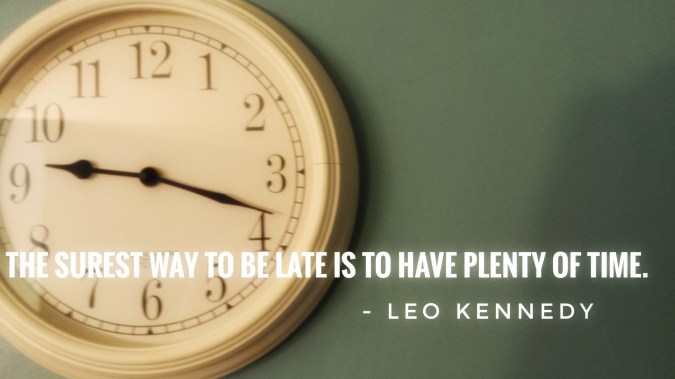
During Advent we are called to gain wisdom in our hearts by focusing on some spiritual deadlines: the arrival of Christ (in the past, present and future); the passing of the world as we know it to make room for the realm of God; our own eventual passing. At first they might seem like disturbing things to contemplate, but they also liberate us to decide what we will, what we won’t, and what we need to accomplish with our lives. They can stir us from complacency to determination, from inertia to action, and from despair to hope for the future. Leo Kennedy said: “The surest way to be late is to have plenty of time.”
Sometimes a deadline is a lifeline.
Comfort: Time limits are not oppressive, but liberating..
Challenge: Before Advent ends – or at the latest before this year ends – select three tasks you have been putting off. Explore why you haven’t completed them, then do them.
Prayer: God of Hope, help me gain a heart of wisdom. Amen.
Discussion: When do you procrastinate, and why?
Join the discussion! If you enjoyed this post, feel free to join an extended discussion as part of the C+C Facebook group or follow @comf_and_chall on Twitter. You’ll have the opportunity to share your thoughts with some lovely people. Or feel free to comment here on WordPress, or even re-blog – the more the merrier!
No (Fake) News is (The) Good News

Today’s readings (click below to open in new tab/window):
Psalms 102; 148, Isaiah 10:5-19, 2 Peter 2:17-22, Matthew 11:2-15
There’s a lot of real news about fake news – but it’s old news.
2 Peter warned the faithful against false teachings circulating among them. It cautioned them against listening to teachings that appealed to their baser natures –that approved of licentiousness and corruption. Many gentile converts were used to fertility cults and temple prostitution, and the lure remained. When certain teachers coopted Jesus’s name to say pretty all this was permissible, many thought they could return to their old ways.
According to Matthew, Jesus may not have been what John was expecting. Never one to soften a message for popularity’s sake, John held a hard line on God’s coming judgment. When Jesus started a ministry revealing God’s judgment would be expressed through mercy, John questioned what he heard. John asked Jesus to confirm he was the real thing. If that makes his commitment seem wishy-washy, remember self-proclaimed messiahs had been popping up with startling regularity.
How do we know when news about faith or current events is fake? Our first clue is that it perfectly confirms everything we want to believe. When it tells us we are biased against the right people, or that our foes fit every stereotype we would layer upon them … it’s probably fake. When it doesn’t challenge us to change in any ways that make us unhappy or uncomfortable … it’s probably fake. If it makes us feel righteous in our anger, hatred, or cowardice … it’s probably fake.
“But I know the difference,” we might say. Smart people of all political persuasions are duped by fake news. Well-meaning Christians have been bilked by charlatans since the first person realized there was profit in it. Like John the Baptist, we can be both faithful and skeptical. How did Jesus confirm his identity? By sending this message to John: “The blind receive their sight, the lame walk, the lepers are cleansed, the deaf hear, the dead are raised, and the poor have good news brought to them.”
The fruits of truth are reconciliation and healing. Let us devour them hungrily, and reject what poisons our spirits.
Comfort: You can discern the truth…
Challenge: … but you may have to work a little harder at it.
Prayer: God of Truth, lead me in Your ways. Amen.
Discussion: Have you ever fallen for a fake news story? What about?
Join the discussion! If you enjoyed this post, feel free to join an extended discussion as part of the C+C Facebook group or follow @comf_and_chall on Twitter. You’ll have the opportunity to share your thoughts with some lovely people. Or feel free to comment here on WordPress, or even re-blog – the more the merrier!
Fire of God
Today’s readings (click below to open in new tab/window):
Psalms 18:1-20; 147:12-20, Isaiah 9:18-10:4, 2 Peter 2:10b-16, Matthew 3:1-12
Fire is a prominent theme in today’s scriptures. It is equated with the coming of God twice in Psalm 18, twice in the Isaiah reading, and three times by John the Baptist in our passage from Matthew’s gospel. Fire is an apt metaphor: it terrifies us, yet sustains us; it destroys us, yet we exist because of flames ignited billions of years ago. Maybe you’ve heard someone compare fire to a living thing. While not technically true, fire is primal, unpredictable, and uncontrollable. Under some conditions, attempting to contain fire may cause more harm than good. Decades of fire prevention in the Southwest contributed to many of the raging firestorms appearing in our present day.
Isaiah’s people thought they had contained the fire of the Lord, that they had reduced it to meaningless rites and empty sacrifices; they were a people ignoring the smoldering coal in their midst, willfully ignorant of the inevitable destruction such negligence would bring upon them. When people shrugged off the warnings of John the Baptist because they considered being Jewish – children of Abraham – all the righteousness they needed, John told them the Lord could raise His people from stones and burn them like chaff separated from the wheat.
But fire also heals. It cleanses. It is absolutely essential to the reproductive cycle of some plants. Humans couldn’t live in many of the places we do without it.
God, like fire, is a force we simultaneously fear, respect, require, flee, draw near, and can’t safely touch. The gospel though, is a lit torch. We pass it to others when we see them shivering in the cold and dark. We gather around it in community. We share its flame so others may bear it where we do not go. In our darker moments, we forget why it was gifted to us and march with it against our enemies. We must always remember the torch we bear is a pale reflection of its source, and shun the pride that tells us we own or control it.
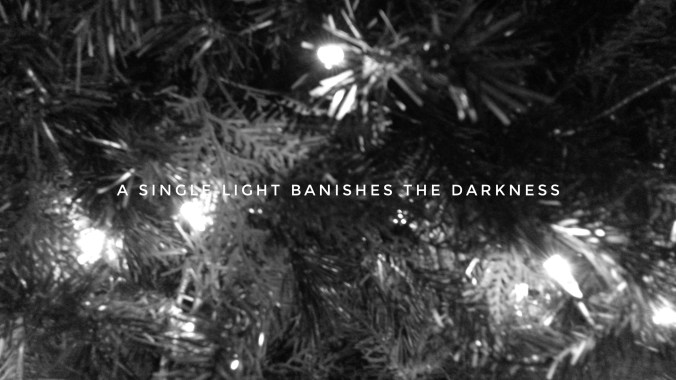
This Advent we wait for the spark in a dark, dark world.
Comfort: God is always larger than we can imagine, but never so large that we are small to God.
Challenge: Meditate on a candle, a campfire, or some other open flame. What do you see?
Prayer: All powerful Lord, I will seek Jesus as the light in the darkness. Amen.
Discussion: How does thinking of God as a fire make you feel?
Join the discussion! If you enjoyed this post, feel free to join an extended discussion as part of the C+C Facebook group or follow @comf_and_chall on Twitter. You’ll have the opportunity to share your thoughts with some lovely people. Or feel free to comment here on WordPress, or even re-blog – the more the merrier!
Intersections

Today’s readings (click below to open in new tab/window):
Psalms 50; 147:1-11, Isaiah 9:8-17, 2 Peter 2:1-10a, Mark 1:1-8
In the opening of Mark’s gospel, the author quotes the prophet Isaiah: “Prepare the way of the Lord, make his paths straight.” The quote continues to say valleys shall be raised and mountains brought low. In this metaphor, the highest and lowest of us all are equal before God and God’s justice. It’s easy to picture a single, clear, straight road leading the Lord right to that place of justice. But note that Isaiah uses the plural “paths.” This may simply indicate turns or changes in direction, but could it be more?
Promoters of social justice often use the term “intersectionality.” In brief, it means that all forms of justice, rather than being separate situations, are connected and intertwined. Issues of poverty are not separate from issues of race, which are not separate from issues of gender, and so on. It is possible to make headway directing our efforts down only one of these paths, but that means we aren’t contributing to progress on the others, which actually holds us back. Even the most privileged person is trapped in systems of injustice, and intersectionality teaches him to see how he is both oppressed by and contributes to them. Intersectionality is not about saying one group’s privilege is bad, but about removing obstacles to that same privilege for everyone else.
And that brings us back to paths, plural. God is beyond time, space, and understanding. His paths to righteousness are infinite, cutting through many wildernesses at once. The Lord’s justice is not completed in a single march, but through a convergence from all directions, all times, all the colors of its spectrum merging into a destination shining with divine understanding. We each have the opportunity to walk with the Lord on many paths, all headed toward that unified light. Let’s make sure we’re not making progress on leveling our own path by throwing our rubble onto someone else’s.
Like love, justice exists in endless supply, but we must let it rush through us like rivers instead of damming it up. Over time, rivers straighten their own paths, and so can we.
Comfort: Your path is as valid as everyone elses.
Challenge: Read about intersectionality.
Prayer: Infinite God, I will seek your justice in all directions. Amen.
Discussion: Have you ever found your well-being tangled with someone who was not like you?
Join the discussion! If you enjoyed this post, feel free to join an extended discussion as part of the C+C Facebook group or follow @comf_and_chall on Twitter. You’ll have the opportunity to share your thoughts with some lovely people. Or feel free to comment here on WordPress, or even re-blog – the more the merrier!
 Comfort & Challenge