Saltiness

salt-in-red-1170958-1920x1440

Today’s readings (click below to open in new tab/window):
Psalms 42; 146, Isaiah 58:1-12, 2 Timothy 1:1-14, Mark 9:42-50


In our current political climate, both left- and right-leaning Christians are working hard at shaping the law of the land to better resemble their idea of the Kingdom. Of course this shape is not clearly defined anywhere in scripture. Instead of definitions we get parables comparing it to everything from sumptuous banquets to lost sheep. So we have some Christians who want to impose more rules, some Christians who want to reduce discrimination against people who don’t follow those rules, and a whole lot in the middle left wondering how we can disagree so strongly.

In Paul’s second letter to Timothy, written from prison, he tells his young protégé not to be ashamed that the empire has jailed him, but to join him in suffering for the Gospel. He doesn’t tell Timothy to try to force the empire to change; rather he understands he resides in a Kingdom which is not defined by walls, laws, or empire. Neither he nor Timothy will submit to laws that run counter to the Gospel, and they understand there is a holy penalty to be paid for their behavior.

Are we Christians called to transform the world? If we are, we must do it like Paul did, by transforming ourselves into models of Christ, who submitted unto death. The empire’s tools of persuasion are the sword and spear, but we transform them into the plowshare and pruning hook: the threat of death versus the promise of life. Paul expanded the Kingdom without passing a single law or firing a single shot.

Jesus warned his disciples that once salt had lost its saltiness, it could not be seasoned again. We might have some small success seasoning the empire to align more with our tastes, but in the end we are a small ingredient caught up in a recipe for disaster. We can’t change the empire by force, and insisting on doing so eventually dilutes our essential identity.

We should be less concerned with whether we see the Kingdom when we look around, and more with whether strangers can see it when they look at us.

Comfort: We travel the Kingdom of Heaven from the inside outward.

Challenge: Salt in the pure form we enjoy does not lose its saltiness, but in Jesus’s time salt was not nearly as pure. Read up on it here.

Prayer: Lord of Heaven and Earth, I will do my best to be recognized as an ambassador of your Kingdom. Amen.

Discussion: How can we influence change through love rather than force?

Join the discussion! If you enjoyed this post, feel free to join an extended discussion as part of the C+C Facebook group , visit comfortandchallenge.tumblr.com, or follow @comf_and_chall on Twitter. You’ll  have the opportunity to share your thoughts with some lovely people. Or feel free to comment here on WordPress, or even re-blog – the more the merrier!

Career Advice

resume-2-1616792-1920x1440

Today’s readings (click below to open in new tab/window):
Psalms 5; 145, Isaiah 57:14-21, Galatians 6:11-18, Mark 9:30-41


If you’ve been on a job interview in the last fifteen years or so, there’s a good chance you’ve been asked: “Where do you see yourself five years from now?” Potential employers ask this question hoping to determine how well your goals and motivation fit the position. Imagine applying for the position of vice-president of a Fortune 500 company, and answering: “I’m hoping to be in an entry-level position in the mail room by then.”

That would be a pretty crazy answer – unless you were interviewing for the position of disciple. Jesus had some unorthodox recruiting techniques (“Hey, Peter and Andrew! Quit your jobs and follow me!”) so it’s no surprise his career advice was unconventional as well. When the disciples argued about which of them was the greatest, Jesus told them: “Whoever wants to be first must be last of all and servant of all.” When following Jesus, success means service.

This doesn’t mean we should suppress or hide our talents and contributions, or that we can’t be leaders. To the contrary, we should fully use all the gifts at our disposal to the glory of God. We can even apply for that CEO position, as long as in all things we are serving as Christ commanded. No matter how successful the world tells us we might be, God’s criteria for success include how welcoming we are to children or whether we give a thirsty person a cup of water. We can serve from a penthouse or a cardboard box, but we must serve.

Servant leadership costs us. Sometimes that cost is social standing and higher earning; other times it may be our safety. Paul bore the marks of servant leadership on his body in the form of scars from beatings he received for spreading the gospel. We don’t aspire to these hardships or offer them as proof of our superior humility, but if necessary we modestly accept them. They prepare us for a career of Christ-like leadership. If someone asks us where we want to be in five years, are we ready to say “last of all?”

Comfort: Serving in the spirit of the Gospel is pleasing to the Lord.

Challenge: Be sure to temper your ambition with your humility.

Prayer: Creator God, I will use the gifts you have entrusted to me to serve your people. Amen.

Discussion: What’s the difference between being humble and demeaning yourself?

Join the discussion! If you enjoyed this post, feel free to join an extended discussion as part of the C+C Facebook group , visit comfortandchallenge.tumblr.com, or follow @comf_and_chall on Twitter. You’ll  have the opportunity to share your thoughts with some lovely people. Or feel free to comment here on WordPress, or even re-blog – the more the merrier!

Monday Morning Quarterbacks

Good Game

Today’s readings (click below to open in new tab/window):
Psalms 103; 150, Isaiah 57:1-13, Hebrews 12:1-6,John 7:37-46


When we identify strongly with a team, we celebrate when that team does well and feel the loss when it does poorly. We call it “our” team and say “we” played great last night, even though “we” have never set foot on a professional field. The sense of community among fans may help us feel included and part of something larger than ourselves. These are good things, but we don’t want to lose sight of reality; after all, “fan” is short for “fanatic.”

Paul had many kind words for newer Christian churches, but he also felt the need to let the air out of their tires a little. Compared to some churches, they’d had it pretty easy. He reminded them: “In your struggle against sin you have not yet resisted to the point of shedding your blood.” It was wonderful to be on Team Jesus, but they hadn’t yet played under duress. None of us knows with complete certainty how we’ll react under pressure until we actually do. When newer churches hadn’t yet felt the squeeze of the Christian big leagues, Paul did have advice about how to prepare: “let us also lay aside every weight and the sin that clings so closely, and let us run with perseverance the race that is set before us.” In other words, if you want to be more than a fan – to be a real part of the “we” – put in the training.

Monday morning quarterbacks believe they could have played a better game. Are we ever Monday morning Christians?  After Sunday services, do we look at the world and believe we could do as well as, or better than, people who are struggling across the globe or in the pew next to us? Without being in their shoes, we don’t know. If we want to be more than fans of Christ, if we want to wear the jersey, we need to put ourselves through the paces until we sweat compassion and bleed forgiveness. Only then do we truly learn that judging doesn’t move us toward the goal, but supporting each other does.

Comfort: If you’re putting in the effort, God doesn’t make cuts.

Challenge: Rather than criticizing or gossiping about people who fall short, find constructive ways to help them regain their footing.

Prayer: God of mercy, teach me to be merciful. Amen.

Discussion: Academically gifted students are often called upon to tutor. Are you aware of any programs where students who are athletically gifted are called to do the same? If not, why do you think not? If so, what was that like?

Join the discussion! If you enjoyed this post, feel free to join an extended discussion as part of the C+C Facebook group , visit comfortandchallenge.tumblr.com, or follow @comf_and_chall on Twitter. You’ll  have the opportunity to share your thoughts with some lovely people. Or feel free to comment here on WordPress, or even re-blog – the more the merrier!

Losers

20160830_132715-01.jpeg

Veterinarian and volunteer treating a sea turtle with a shell damaged by a boat motor.

Today’s readings (click below to open in new tab/window):
Psalms 63; 149, Isaiah 56:1-8, Galatians 5:25-6:10, Mark 9:14-29


In his letter to the Galatians, Paul wrote:

If we live by the Spirit, let us also be guided by the Spirit. Let us not become conceited, competing against one another, envying one another […] Bear one another’s burdens, and in this way you will fulfill the law of Christ […] all must carry their own loads.

Doesn’t sound much like our culture, does it? There are no hit “reality” TV shows about people cooperating to arrive the finale together. Businesses – not content simply to provide quality products which benefit their customers and provide owners and employees with a comfortable living – embrace  a model that can see markets only as competitions. Rather than a system to serve the common good of a nation by sharing ideas, politics long has been a power struggle which exploits tribal ideologies to create winners and losers.

If we want to follow Christ, we must defy cultural expectations. That has always been true, but ever since Christianity became the empire instead of the underdog (some seventeen centuries ago), and we turned the Gospel from an invitation into an edict, we’ve been looking for ways to convince ourselves Jesus backs a winner.

What does it mean both to bear one another’s burdens and to carry ou r own loads?

It means putting the welfare of other people ahead of our own. It means balancing  a humility of word and deed with a steady call for justice. It means seeking ways to serve rather than to conquer. It means willing to be among the last – those whom Jesus calls first in the Kingdom of Heaven, but what many in our society would call “losers.”

In his humility and self-sacrifice, Christ defied expectations of what the Messiah should be: crucifixion was not for winners. As his followers, our triumphs are achieved not through force and fear, but through love and sacrifice. Our strength comes from open hands, not closed fists. When impose our need for victory onto the message of the Gospel, we rob it of the power to reveal itself. Let’s trust the message to be enough.

Comfort: In Christ, you are strong enough to be vulnerable.

Challenge: Look for ways to be more cooperative, especially with people you consider rivals in some way.

Prayer: Holy and loving God, lead your church to unity. Amen.

Discussion: Are you competitive in ways you don’t need to be?

Join the discussion! If you enjoyed this post, feel free to join an extended discussion as part of the C+C Facebook group , visit comfortandchallenge.tumblr.com, or follow @comf_and_chall on Twitter. You’ll  have the opportunity to share your thoughts with some lovely people. Or feel free to comment here on WordPress, or even re-blog – the more the merrier!

Beautifully Broken

quilt-squares-1416222-01.jpeg

Today’s readings (click below to open in new tab/window):
Psalms 84; 148, Isaiah 55:1-13, Galatians 5:16-24, Mark 9:2-13


Christians have an image problem. Like any other group in the age of the 24-hour news cycle, our most extreme and attention-grabbing brothers and sisters make the news and tell our story … whether we’d like them to or not. When a tiny church comprised of a handful of family members pickets military funerals to protest homosexuality, they make national headlines for years. A “family-values” politician caught in an affair becomes a media spectacle and fodder for those who would point out Christian hypocrisy. These types of public relations problems are not unique to Christians, or even religious groups. The public is fascinated with scandals, especially when they involve someone who has portrayed him- or herself as a “righteous” person.

Paul seems to draw distinct lines between the drunken, quarrelsome fornicators who will not inherit the kingdom of God, and the joyful, generous peacemakers who will. We want to heed his words: for good or ill, the behaviors he describes do have consequences in our lives and relationships with God and each other. As Christians we can feel pressure to appear as if we have all the good qualities and none of the bad. In reality, we have the same faults and foibles as everyone else, and when we pretend otherwise, people can practically smell the insincerity. Humbly acknowledging our own flaws doesn’t diminish our witness. To the contrary it tells the true story of grace: not that we become perfect, but that we accept God’s love despite our imperfections.

Acknowledging our flaws doesn’t mean we should settle for them. As we grow in our faith, our behaviors and attitudes will reflect that growth. When someone is thoroughly grounded in her or his faith, other struggling people – believers and non-believers alike – feel comfortable enough with that person to be truthful. To love like Christ loves, we must recognize a person’s brokenness without defining them by it. Let’s do our part to fix that image problem by showing the world following Christ means being humble and truthful. As Christ’s broken body heals the world, our broken and contrite hearts do also.

Comfort: God loves you broken, but doesn’t leave you broken.

Challenge: Resist the urge to make yourself look good. Instead try to be faithful.

Prayer: Thank you God for the love, forgiveness, and healing found in your grace. Amen.

Discussion: Common wisdom says we despise in others the flaws we struggle with ourselves. Do you find this to be true?

Join the discussion! If you enjoyed this post, feel free to join an extended discussion as part of the C+C Facebook group , visit comfortandchallenge.tumblr.com, or follow @comf_and_chall on Twitter. You’ll  have the opportunity to share your thoughts with some lovely people. Or feel free to comment here on WordPress, or even re-blog – the more the merrier!
These Boots Were Made For Preachin’

Public hanging

Today’s readings (click below to open in new tab/window):
Psalms 130; 148, Isaiah 45:18-25, Ephesians 6:1-9, Mark 4:35-41


In his letter to the Ephesians, Paul created one of the most popular extended metaphors in Christian literature: the armor of God. He writes about the belt of truth, the breastplate of righteousness, the shield of faith, the helmet of salvation, and the sword of the spirit. He also mentions shoes, but is noticeably less specific about them: “put on whatever will make you ready to proclaim the gospel of peace.”

What do we put on to make us ready to proclaim the gospel of peace? As a society we design and purchase shoes specific to a countless number of functions. Sneakers are now court shoes, cross-trainers, running shoes, walking shoes, water socks, driving moccasins, and on and on. We buy shoes specific to occupations, seasons, and recreational choices (a tip of the hat to all you bowlers!). Perhaps we really don’t need so many kinds of shoes, but each makes its corresponding activity easier, safer, and more comfortable. That may be a good model for proclaiming the gospel.

Not everyone is open to hearing the good news in the same way, so we might want to think about stepping into their shoes. Some prefer an intellectual approach. Others respond to a more emotional testimony. And others learn more from observing our actions than listening to our words. There are probably as many ways people hear the gospel proclaimed as there are people … or styles of shoes. Our natural tendency is to proclaim the gospel in a way that fits us most comfortably: “If I am touched by emotional stories, you must be too!” Sharing the gospel with someone in a way that does not speak them can be awkward and even painful. Just as we might check the weather before deciding on flip-flops or snow boots, we should take time to get to know someone rather than forcing an inappropriate (and ineffective!) style of witness on them.

We can each become a collector of “proclamation” footwear – it’s free, takes up no space in our closets, and the more we have the more we can spread the good news!

Comfort: Your favorite style is a good fit for lots of other people…

Challenge: … but not for everyone.

Prayer: Thank you God for the diversity of creation; help me to understand people as they are, rather than expecting them to be like me. Amen.

Discussion: What’s your favorite style of Gospel shoes to wear?

Join the discussion! If you enjoyed this post, feel free to join an extended discussion as part of the C+C Facebook group or follow @comf_and_chall on Twitter. You’ll  have the opportunity to share your thoughts with some lovely people. Or feel free to comment here on WordPress, or even re-blog – the more the merrier!

Pain Management

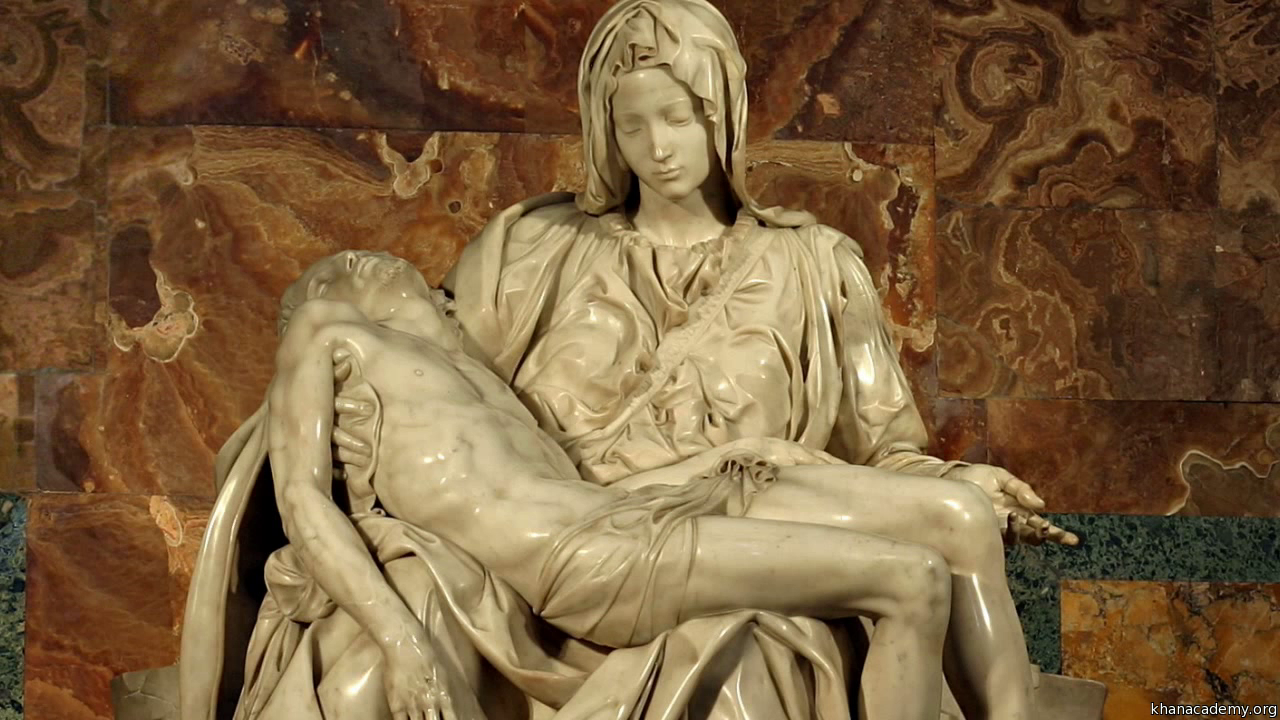
Pietà – Michelangelo

Today’s readings (click below to open in new tab/window):
Psalms 135; 145, Isaiah 44:6-8, 21-23, Ephesians 4:1-16, Mark 3:7-19a


When a person sustain an injury to one part of their body,  they can do further harm if they overcompensate with the use of other parts. For example, limping for an extended period of time can strain the back and good leg and require additional treatment. Another example of the interconnectedness of our parts is the phenomenon of referred pain, which occurs when injury to one area of the body causes pain in a seemingly unconnected one. We could experience pain in an arm without realizing the injury was actually to our spine; identifying the proper diagnosis and treatment under such circumstances can be difficult.

In his letter to the Ephesians, Paul compares the structure of the body of Christ to the human body. He emphasizes the importance of each part, and the need for unity in a healthy body. For the body to grow in love, all parts must function properly. Sometimes, though, we may not be able to easily determine which part we’re meant to be. What then?

Our “diagnostic test” is this: do our actions (or inaction) contribute to the spiritual unity of the body? If we unnecessarily cause other parts to falter or carry an unfair share of the load, we may need to reexamine our role. However, any physical therapist knows pain in the cause of healing is sometimes unavoidable. When it occurs in the body of Christ, we must ask ourselves whether the pain is a price to pay for unity. After all, we are called to voluntarily carry each other’s burdens, and infirmity is no sin. If it is, the body will be stronger for enduring it; if not we must seek or offer relief. When the body is brought back into balance, pain for all members of the body is minimized and the use of our gifts is maximized.

Like physical health, spiritual health is not founded on quick fixes. A mature approach encourages healthy, balanced decisions benefitting the body, not just ones satisfying localized  whims and short-term comfort. We all depend on each other, and must provide and accept support accordingly.

Comfort: The Body of Christ is meant to be a healthy one.

Challenge: With people you trust, have a frank discussion about what pains the Body of Christ is experiencing, and what we can do to make them better.

Prayer: God of healing, teach me to bring your wholeness to the body and the world. Amen.

Discussion: Have you ever learned you caused someone pain without knowing it?

Join the discussion! If you enjoyed this post, feel free to join an extended discussion as part of the C+C Facebook group or follow @comf_and_chall on Twitter. You’ll  have the opportunity to share your thoughts with some lovely people. Or feel free to comment here on WordPress, or even re-blog – the more the merrier!

Our Daily Apocalypse

think-small

Today’s readings (click below to open in new tab/window):
Psalms 93; 148, Isaiah 25:1-9, Revelation 1:19-20, John 7:53-8:11


Isaiah 25 looks toward the day when “God will wipe away the tears from all faces, and the disgrace of his people he will take away from all the earth.” Today’s reading from Revelation introduces John’s vision of Christ’s victory over the evils in the world. Both are standard Christmastide readings, as we celebrate Christ’s arrival in the world. To which victory of the Lord do these readings refer?

Ancient people read scripture with a different sense of time and meaning than we might. For example, we read the Lord’s Prayer as the present-tense: “give us this day our daily bread.” In Greek, this prayer uses the aorist tense, a kind of “once and for all” tense signifying not just the present, but the unfolding future as well. While Isaiah’s vision was about the eventual restoration of a Jewish people exiled in Babylon, early Christians co-opted it to tell of the coming Messiah. This approach might seem odd to modern sensibilities, but for people of the time it was part of understanding that God’s plan of salvation unfolds in the past, present, and future.

Isaiah 25 is an early example of apocalyptic literature. Revelation is also apocalyptic literature. Typical of the genre, both blur the lines between the past and the future. Apocalyptic literature is not so concerned with historical accuracy or specific prophecy as with the idea of the cosmic story of salvation. Time is fluid in these writings because God is always revealed anew to us, and the world is always being remade.

Apocalyptic literature invites us to dwell in the mystery of God’s unfolding plan, better expressed through visions and dreams than facts. The events have already happened, yet are still to happen. This paradox offers confidence that change will come, because it has come. During the Civil War and Civil Rights eras, African-Americans and their allies found inspiration in apocalyptic themes, which assured God’s eventual deliverance. Though mysterious, these themes were comforting.

If we read Isaiah only for the past, or Revelation only for the future, we miss the message of what God is doing today.

For additional thoughts on today’s reading from John, see Thud!

Comfort: God’s plan is unfolding—and we are part of it.

Challenge: Watch the news for modern stories of God’s deliverance.

Prayer: O timeless Creator, thank you for your people’s dreams and visions. Amen.

Discussion: Are you able to see Christ’s work as both complete and continuing?

Join the discussion! If you enjoyed this post, feel free to join an extended discussion as part of the C+C Facebook group or follow @comf_and_chall on Twitter. You’ll  have the opportunity to share your thoughts with some lovely people. Or feel free to comment here on WordPress, or even re-blog – the more the merrier!

Deadline or Lifeline?

20161217_211959-01.jpeg

Today’s readings (click below to open in new tab/window):
Psalms 90; 149, Isaiah 10:20-27, Jude 17-25, Luke 3:1-9


“Teach us to number our days, that we may gain a heart of wisdom.”
– Psalm 90:12

Many people claim “I do my best work under pressure.” More often than not this actually means “I do my work only under pressure.” Sometimes a deadline can help us sort out competing priorities. If a project overwhelms us and we are spinning our wheels, a looming deadline can force us to find the necessary traction to make decisions and lurch forward. Other times we meet a deadline – such as a bill payment, a task at work, or Christmas shopping – because we don’t want to reap unpleasant consequences. Whatever the reasons, deadlines motivate us to action.

The author of Psalm 90 acknowledges our need to be motivated by a sense of limited time. For this psalmist, wisdom is more than the experience of accumulated years: it is also the acute awareness that these years are finitely numbered. Many people avoid “putting their affairs in order” until they experience a health scare or receive a terminal diagnosis. Others wake up one day to realize their children are adults and wonder how they could have missed sharing so much childhood. And what percentage of the world’s diets are scheduled to start “tomorrow?” When we convince ourselves we have forever – possibly because we are uncomfortable with confronting mortality – what we end up with is never.

During Advent we are called to gain wisdom in our hearts by focusing on some spiritual deadlines: the arrival of Christ (in the past, present and future); the passing of the world as we know it to make room for the realm of God; our own eventual passing. At first they might seem like disturbing things to contemplate, but they also liberate us to decide what we will, what we won’t, and what we need to accomplish with our lives. They can stir us from complacency to determination, from inertia to action, and from despair to hope for the future. Leo Kennedy said: “The surest way to be late is to have plenty of time.”

Sometimes a deadline is a lifeline.

Comfort: Time limits are not oppressive, but liberating..

Challenge: Before Advent ends – or at the latest before this year ends – select three tasks you have been putting off. Explore why you haven’t completed them, then do them.

Prayer: God of Hope, help me gain a heart of wisdom. Amen.

Discussion: When do you procrastinate, and why?

Join the discussion! If you enjoyed this post, feel free to join an extended discussion as part of the C+C Facebook group or follow @comf_and_chall on Twitter. You’ll  have the opportunity to share your thoughts with some lovely people. Or feel free to comment here on WordPress, or even re-blog – the more the merrier!

No (Fake) News is (The) Good News

20161216_215036-01.jpeg

Today’s readings (click below to open in new tab/window):
Psalms 102; 148, Isaiah 10:5-19, 2 Peter 2:17-22, Matthew 11:2-15


There’s a lot of real news about fake news – but it’s old news.

2 Peter warned the faithful against false teachings circulating among them.  It cautioned them against listening to teachings that appealed to their baser natures –that approved of licentiousness and corruption. Many gentile converts were used to fertility cults and temple prostitution, and the lure remained. When certain teachers coopted Jesus’s name to say pretty all this was permissible, many thought they could return to their old ways.

According to Matthew, Jesus may not have been what John was expecting. Never one to soften a message for popularity’s sake, John held a hard line on God’s coming judgment. When Jesus started a ministry revealing God’s judgment would be expressed through mercy, John questioned what he heard. John asked Jesus to confirm he was the real thing. If that makes his commitment seem wishy-washy, remember self-proclaimed messiahs had been popping up with startling regularity.

How do we know when news about faith or current events is fake? Our first clue is that it perfectly confirms everything we want to believe. When it tells us we are biased against the right people, or that our foes fit every stereotype we would layer upon them … it’s probably fake. When it doesn’t challenge us to change in any ways that make us unhappy or uncomfortable … it’s probably fake. If it makes us feel righteous in our anger, hatred, or cowardice … it’s probably fake.

“But I know the difference,” we might say. Smart people of all political persuasions are duped by fake news. Well-meaning Christians have been bilked by charlatans since the first person realized there was profit in it. Like John the Baptist, we can be both faithful and skeptical. How did Jesus confirm his identity? By sending this message to John: “The blind receive their sight, the lame walk, the lepers are cleansed, the deaf hear, the dead are raised, and the poor have good news brought to them.”

The fruits of truth are reconciliation and healing. Let us devour them hungrily, and reject what poisons our spirits.

Comfort: You can discern the truth…

Challenge: … but you may have to work a little harder at it.

Prayer: God of Truth, lead me in Your ways. Amen.

Discussion: Have you ever fallen for a fake news story? What about?

Join the discussion! If you enjoyed this post, feel free to join an extended discussion as part of the C+C Facebook group or follow @comf_and_chall on Twitter. You’ll  have the opportunity to share your thoughts with some lovely people. Or feel free to comment here on WordPress, or even re-blog – the more the merrier!