House of Cards

house-of-cards-3-1524019-1599x1056.jpg

Today’s readings (click below to open in new tab/window):
Psalms 5; 145, 2 Samuel 13:23-39, Acts 20:17-38, Mark 9:42-50


We are a nation built on a house of credit cards.

Buy now, pay later. Ninety days same as cash. Getting what we want when we want it seems great, but the people who market credit to us (and it’s a product, not a favor) make more money when we can’t pay them back right away. It’s not called interest for nothing. Middle class households easily overextend themselves into bankruptcy, and between interest and fees poorer people borrow their way right into modern indentured servitude.

Delayed payments are always the most expensive.

It’s difficult to say whether David learned this lesson the hard way, or not at all. When David’s first-born son Amnon raped his half-sister Tamar, David was angry but did nothing because he loved Amnon. Tamar’s full brother Absalom spent two years plotting his revenge on Amnon. He invited all the king’s sons to a feast, and when Amnon was “merry with wine” he ordered his servants to strike Amnon dead. Afterward Absalom fled. It was three more years before he would reunite with his family, but even then the rift between them grew ever worse.

When we sin against others – as individuals, as families, as cultures, or as nations – we don’t do ourselves any favors by delaying payment in the form of repentance. Even if it seems we got away with it, the undercurrent is waiting to drag us down. Especially when it comes to past societal sins, we might want people to just “get over it” … but David could have told you how well that works.

If we sin at an individual level – abuse, neglect, greed, deception – we need to make individual repentance. If we sin at a societal level – systemic oppression, environmental devastation – we need to make repentance at a societal level. That can be tough pill to swallow, because we don’t always feel individually responsible. Yet scripture tells us time and again individuals rise and fall with their communities, regardless of personal culpability. That’s a pretty good reason to participate in the conscience of your community before the cards come due and tumble down.


Additional Reading:
For thoughts on today’s reading from Mark, see There is no eye in team Jesus.

Comfort: Repentance will set you free. 

Challenge: When repentance seems unfair, remember it is not about guilt, but healing.

Prayer: But let all who take refuge in you rejoice; let them ever sing for joy. Spread your protection over them, so that those who love your name may exult in you. (Psalm 5:11)

Discussion: How do you feel about cleaning up messes you didn’t personally make?

Join the discussion! If you enjoyed this post, feel free to join an extended discussion as part of the C+C Facebook group. You’ll be notified of new posts through FB, and have the opportunity to share your thoughts with some lovely people. Or feel free to comment here on WordPress, or even re-blog – the more the merrier!
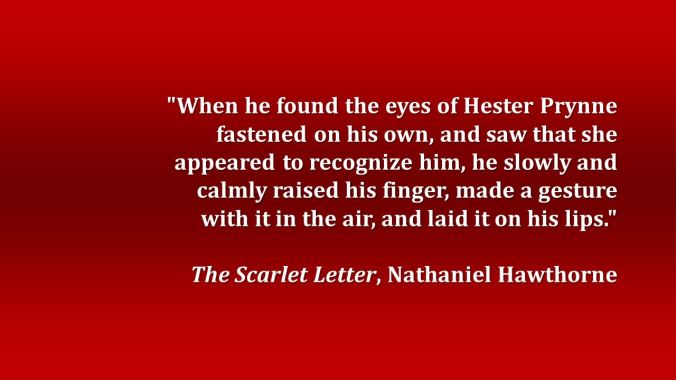

Tamar, today.

scarletgesture

Today’s readings (click below to open in new tab/window):
Psalms 103; 150, 2 Samuel 13:1-22, Romans 15:1-13, John 3:22-36


The story of David’s sister Tamar is a tragic one. Her half-brother Amnon,  who perversely lusted for her, pretended to be ill and tricked her into his bedchamber, supposedly to care for him. When Tamar realized his intentions, she begged him not to force himself upon her, calling it a vile act and asking, “where could I carry my shame?”

Her shame? Tamar was victimized twice.

Amnon’s guilt immediately caused him to loathe and discard her. Her brother Absalom meant well and took her in but even his words robbed her of dignity: “Be quiet for now, my sister; he is your brother; do not take this to heart.” While she remained a “desolate woman” in Absalom’s home, Amnon remained unpunished because David loved him.

The real shame is not hearing Tamar’s point of view. It’s her story, but she’s little more than a prop.

If only this tale was an example of barbarism relegated to the past; victim-blaming is all-too-real and all-too-current. Defense attorneys try to discredit sexual assault victims by shaming them for common behaviors and dress. Cherished institutions offer (and beleaguered families accept) settlements which teach abused children the fair market value of their souls. In families, the abused are taught the family’s “good” name is more important than their truth. When groups who have been oppressed for centuries gain a legal toehold and dare to point out the ongoing need for justice work, they are dismissed for playing the “victim card.”

The lack of consequences for Amnon’s sin had devastating, long-lasting repercussions within the family. When the powerful – or their enablers – silence those they abuse in the name of “keeping the peace” all they’re really keeping is power. Others pay the price. For a while.

When we ask ourselves “What would Jesus do?” the right answer is never “sweep it under the rug.” People like Tamar should be able to carry their shame right into the midst of Christ’s disciples and exchange it for love and solace. The greater good is not built from the top down, but ground up … one mended soul at a time.


Additional Reading:
For thoughts on today’s reading from Romans, see Building the Neighborhood.
For thoughts on today’s passage from John, see Decrease to Increase.

Comfort: Everyone’s story matters to God. 

Challenge: When you encounter examples of victim-blaming, speak up.

Prayer: Read all of Psalm 139.

Discussion: When have you been unjustly silenced?

Join the discussion! If you enjoyed this post, feel free to join an extended discussion as part of the C+C Facebook group. You’ll be notified of new posts through FB, and have the opportunity to share your thoughts with some lovely people. Or feel free to comment here on WordPress, or even re-blog – the more the merrier!

Say a little prayer for you.

pray-2558490_1920

Today’s readings (click below to open in new tab/window):
Psalms 63; 149, 2 Samuel 12:15-31, Acts 20:1-16, Mark 9:30-41


Because David and Bathsheba’s child was conceived in treachery, murder, and ingratitude for all the Lord had given him, the Lord told David the child would not be permitted to live. For a week David fasted, wept, and pleaded. Afterward he returned to his normal routine. His servants, confused that he seemed less grief-stricken than before, asked what was going on.

He said, “While the child was still alive, I fasted and wept; for I said, ‘Who knows? The LORD may be gracious to me, and the child may live.’ But now he is dead; why should I fast? Can I bring him back again? I shall go to him, but he will not return to me.”

That’s … practical. And there’s something to be said for being able to make peace with things the way they are. It’s also admirable that David took time to worship when his vigil ended; he wouldn’t have been the first or last person to reject God in disappointment.

But still. Where were his prayers when he was tempted to chase Bathsheba in the first place?

It’s not like David wasn’t a prayerful man – he’s credited with seventy-three of the psalms. However like many of us, he seemed to believe that when we want something, it’s better to beg forgiveness than ask permission. Have you ever had (or perhaps been) that friend or family member who asks for advice except for when they’ve already made up their mind to do the wrong thing? They (or we) frequently aren’t as hesitant to ask for help or sympathy cleaning up the inevitable mess.

Writer Anne LaMott characterizes her favorite prayers as “Help, Thanks, Wow.” It’s important not to think of them as three discrete prayers triggered by different events. Had David been consistently grateful and seeking God’s guidance, he might have been better prepared to handle the sight of Bathsheba’s beauty without succumbing to his lust.

It’s our everyday relationship with God that prepares us for life’s more extraordinary circumstances. If we turn our hearts over to God before the mess begins, we may avoid it entirely.


Additional Reading:
For thoughts on today’s reading from Acts, see The Ledge.
For thoughts on today’s passage from Mark, see Career Advice.

Comfort: We’re going to make mistakes, and God will see us through. 

Challenge: Let’s at least try to make them faithfully, though. If you don’t have a regular prayer routine, find one that works for you.

Prayer: O God, you are my God, I seek you, my soul thirsts for you; my flesh faints for you, as in a dry and weary land where there is no water. (Psalm 63:1)

Discussion: By the end of today’s passage from Samuel, David and Bathsheba have moved on and had another child whom God loved. How do you think people who have done terrible things find the strength and love of God to bounce back from them?

Join the discussion! If you enjoyed this post, feel free to join an extended discussion as part of the C+C Facebook group. You’ll be notified of new posts through FB, and have the opportunity to share your thoughts with some lovely people. Or feel free to comment here on WordPress, or even re-blog – the more the merrier!
You are the man!

davidandnathan

David and Nathan, Jacob Backer

Today’s readings (click below to open in new tab/window):
Psalms 84; 148, 2 Samuel 12:1-14, Acts 19:21-41, Mark 9:14-29


After David arranged for the death of his loyal soldier Uriah to steal Uriah’s wife, the prophet Nathan dropped by for a visit and told the story of a rich many with many flocks and herds, and a poor man with a single, dearly treasured ewe. The rich man does not want to slaughter any of his own sheep to feed an unexpected guest, so he takes the poor man’s ewe. An infuriated David, interpreting this story literally, declares, “As the LORD lives, the man who has done this deserves to die!”

Nathan responds, “You are the man!”

Now Nathan’s story isn’t long, but we aren’t far in before wondering at what point David is going to realize it’s a parable about himself. Yet somehow he needs to be bludgeoned with the obvious.

This event illustrates the folk wisdom that traits we dislike in other people are actually traits we dislike about ourselves. David doesn’t seem conscious of this, but wouldn’t a man after God’s heart have to know on some level how badly he’d messed up? Powerful stories hold a mirror up to our own experiences, so our reactions to them teach us a lot about ourselves.

In modern parlance “You are the man!” often has a more positive connotation. We say it when someone helps us out or impresses us. Is it possible that, just as we may subconsciously see our weaknesses in others and in stories, we may also unwittingly recognize some of our better qualities? Maybe the kick-butt sci-fi heroine fans the tiny spark of holy rebel inside us. Or perhaps we admire our friend who spends her Saturdays at the food bank because it reminds us of the generosity we are capable of.

Only a minuscule fraction of what happens in the world is actually about us, but it all has something to teach us. When we learn to recognize our commonalities, we are less likely to do things like … say … murder a friend to bed his wife. Or ignore those in need.

If someone tells you, “You are the man!” … which will it mean?


Additional Reading:
For thoughts on today’s reading from Acts, see Threats Both Foreign and Domestic.

Comfort: None of us are perfect; God loves and uses us anyway.

Challenge: Meditate on what your favorite books or movies might teach you about yourself.

Prayer: Make me to know your ways, O LORD; teach me your paths. Lead me in your truth, and teach me. (Psalm 25:4-5)

Discussion: If the phrase was “You are the woman!” would you find that more, less, or equally relatable? Why?

Join the discussion! If you enjoyed this post, feel free to join an extended discussion as part of the C+C Facebook group. You’ll be notified of new posts through FB, and have the opportunity to share your thoughts with some lovely people. Or feel free to comment here on WordPress, or even re-blog – the more the merrier!

Anointed, Appointed, and Appalling.

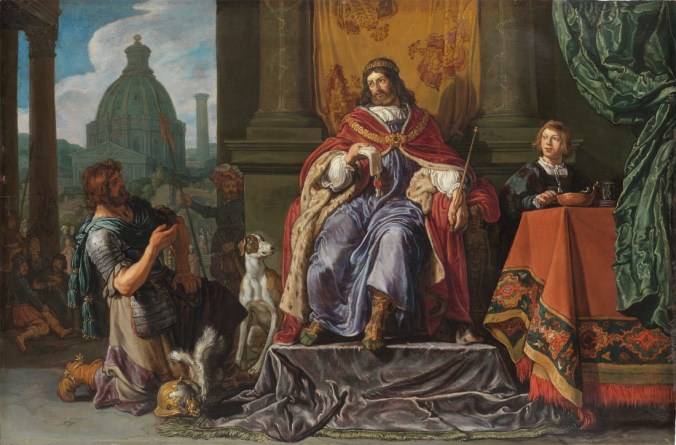
david_uria_brief_grt

David hands the Letter to Uriah, Pieter Lastman ca. 1583 – 1633

Today’s readings (click below to open in new tab/window):
Psalms 116; 147:12-20, 2 Samuel 11:1-27, Acts 19:11-20, Mark 9:2-13


While we are one body, Christians disagree on many subjects. One of the more controversial topics is the nature of God’s will. Over the centuries the finer points of this argument have divided the church many times. Some of us believe God directly controls the universe down to its subatomic components. Others believe God exerts minimal influence over the creation. Most of us land somewhere in the middle, influenced by – but often uninformed on the specifics of – whatever denomination (or non-denomination) we belong to.

In the United States few things highlight the arguments about God’s will – as well as people’s inconsistencies in embracing and defending  those arguments – like the election of a president. When we like the person who is elected, it’s God’s will. When we don’t like the person, it’s a subversion of God’s will. And some of us accept either (or neither) result as God’s will.

Whichever camp we call home, we ought to agree on one thing: just because someone is chosen by God doesn’t mean they will be righteous in all they do.

King David had everything he could have wanted, but when he saw Bathsheba, the wife of his soldier Uriah, he decided he wanted her too. When David impregnated her while Uriah was away at war, he conspired first to trick Uriah into sleeping with her so the solider might believe the child was his own, then to maneuver Uriah into a vulnerable position in battle so he would be killed.

David was anointed by God. David was appointed King of Israel. David was appalling in his behavior.

The evil he did to Uriah was not God’s will – to the contrary, it angered God. Not only did Uriah die, but so did many other soldiers whom David either didn’t consider or didn’t mind sacrificing (and given his considerable strategic skills, it was probably the latter).

Great power amplifies both our virtues and flaws.  Accepting a monarch, president, or other leader does not mean accepting and defending everything they do. God’s will may be inscrutable, but Christ’s teachings will always help us find the way.


Additional Reading:
For thoughts on today’s reading from Acts, see Just One Bite.

Comfort: God does not will evil.

Challenge: Read a little about predestination and Arminianism.

Prayer: I wait for the LORD, my soul waits, and in his word I hope. (Psalm 130:5)

Discussion: What do you think of when you hear the phrase “God’s will?”

Join the discussion! If you enjoyed this post, feel free to join an extended discussion as part of the C+C Facebook group. You’ll be notified of new posts through FB, and have the opportunity to share your thoughts with some lovely people. Or feel free to comment here on WordPress, or even re-blog – the more the merrier!

Cross Training

jesus-2103233_1920

Today’s readings (click below to open in new tab/window):
Psalms 96; 147:1-11, 2 Samuel 9:1-13, Acts 19:1-10, Mark 8:34-9:1


“If any want to become my followers, let them deny themselves and take up their cross and follow me. For those who want to save their life will lose it, and those who lose their life for my sake, and for the sake of the gospel, will save it.”

These words highlight a turning point in Christ’s ministry. All the miraculous healings and signs are revealed to be part of a bigger picture in which anyone who wanted to follow him needed to be willing to share in the sacrifice.

This talk of the cross wouldn’t have had any of the redemptive connotations we associate with it today thanks to our clear hindsight about the resurrection. It would be more like being asked to accompany him to the electric chair or the gallows. The crosses we wear today as jewelry or hang as decorations would have been horrifyingly morbid.

Have time and the marketing of Christianity diminished our sense of the cross in the western world? “Having a cross to bear” usually refers to some personal ailment or struggle, unconnected to any greater salvific purpose. In a predominantly Christian society (about seventy-five percent according to a December 2015 Gallup poll), our faith is hardly risky despite our efforts to spin holiday greetings into a crisis. In a culture where it’s possible to legislatively force others to observe our own values, we are rather more likely to be builders of the cross than its bearers; the dictators rather than the risk-takers.

Picking up the cross represents willingness to sacrifice everything to follow Christ and love God. For most of us it’s not lifted overhead in a single clean-and-jerk motion, but through a lifetime of spiritual exercise. These words marked the end of disciple boot camp, the end of being toy Christian soldiers, and the beginning of putting that training to use. We train not to be the kind of soldiers who kill for a cause, but who will die for it. When we surrender to the weight of the cross, the demanding yoke is made easy, the difficult burden made light.

Comfort: Giving up your life sounds scary, but it’s liberating.

Challenge: Pay attention for crosses. When you see them, reflect on what they represent.

Prayer: Gracious God, give me the strength to let go of all that might stand between me and you.

Discussion: Other than the cross, what Christian symbols are meaningful to you and why?

Join the discussion! If you enjoyed this post, feel free to join an extended discussion as part of the C+C Facebook group. You’ll be notified of new posts through FB, and have the opportunity to share your thoughts with some lovely people. Or feel free to comment here on WordPress, or even re-blog – the more the merrier!

Substance Over Style

job-interview-437026_1920

Today’s readings (click below to open in new tab/window):
Psalms 12; 146, 2 Samuel 7:18-29, Acts 18:12-28, Mark 8:22-33


Successfully interviewing potential employees requires a lot of insight. Because it can be so overwhelming, many employers and hiring managers follow rules-of-thumb to quickly weed out applicants from large piles of resumes. A typo or lack of white space may route someone right to the circular file. Employers may apply similar rules to streamline the interview process. Applicants who have a good interview but don’t supply a timely thank you note may inadvertently disqualify themselves. One could argue these mistakes speak to a lack of attention to detail or follow-through. On the other hand, employers are not usually looking for people whose primary skills include writing resumes and interviewing for new jobs. In some cases, to the chagrin of many a hiring manager, excellent resume and interview skills mask a host of other deficiencies more pertinent to the position.

Eloquence and charisma are no substitute for actual knowledge and experience. Yet people are often more swayed in their opinions by someone who sounds convincing – or convinced – than by people who lack charm but tell truth. A smoothly delivered inaccuracy (or outright lie) may very well be more widely accepted than an ill-spoken fact.

Like good interviewers, we need to be able to discern what’s beneath the surface; between style and substance.

When Priscilla and Aquila (followers of Paul, disciples of Christ) first ran into Apollos, he was enthusiastic, bold, and eloquent in declaring the Way of the Lord. He was also a little deficient in his knowledge, so “they took him aside and explained the Way of God to him more accurately” so he might join them in preaching the gospel. This was a smart hire. For evangelists, style can matter quite a bit. But Priscilla and Aquila knew he needed more substance to do the job well.

They didn’t rule him out over the verbal equivalent of a typo, and they didn’t let him fly solo until he’d proven his skill matched his swagger. Let’s follow their example and be discerning about whom we let sway us. However persuasive we may find the messenger, the message is what counts.


Additional Reading:
For more thoughts on today’s reading from Acts, see Under Construction.
For thoughts on today’s passage from Mark, see Cracked.

Comfort: Even when you don’t feel eloquent, you may have something to say.

Challenge: Flip through a few different news channels. Pay attention to who you pay attention to and why.

Prayer: May the LORD, maker of heaven and earth, bless you from Zion. (Psalm 134:3)

Discussion: Have you ever misjudged someone’s abilities or integrity because of their charisma?

Join the discussion! If you enjoyed this post, feel free to join an extended discussion as part of the C+C Facebook group. You’ll be notified of new posts through FB, and have the opportunity to share your thoughts with some lovely people. Or feel free to comment here on WordPress, or even re-blog – the more the merrier!

Two Tents

starry-sky-2285950_1920

Today’s readings (click below to open in new tab/window):
Psalms 62; 145, 2 Samuel 7:1-17, Acts 18:1-11, Mark 8:11-21


A man goes to a psychiatrist. “Doc,” he says, “you gotta help me. I can’t sleep. One night I dream I’m a wigwam, and the next night I dream I’m a tepee.” The psychiatrist thinks for a minute and then she says: “I think the problem is you’re two tents.”

Tents figure prominently in two of today’s readings. In Acts, we learn that Paul was a tentmaker by trade – though the word translated as “tentmaker” could also be interpreted as leather worker, tailor, etc. In Samuel, the time has come to plan for a temple, a permanent home for the God of Israel who has been traveling and living in tents for over 400 years.

There’s a subtle but important shift in thinking when our God stops wandering with us and puts down roots. We start to think of the Holy of Holies as a destination where once it was a traveling companion. The rest of the world, while still part of the miraculous creation, loses potential to become a temporary center of our faith.  Church becomes a place we go, rather than an inescapable community we are all called to carry through the wilderness.

Imagine being responsible for hauling God from place to place. Not in a Lost Ark face-melting kind of way, but in the sense of undeniable presence. Would your attitude toward school be different if God was waiting whenever you opened your backpack? What would work be like if unzipping your laptop case filled the room with a holy glow? How would you feel about your purchases at the mall if God got a peek when you opened your wallet?

Church may be a focal point, but God is present in all those places and more: every nook and cranny, every canyon and plain. Everywhere. When we open our doors, our mouths, or our wallets the God we worship can be seen. If what dwells in our hearts doesn’t align with the God who inhabits the world, we’re going to lose some sleep. But when it’s the same tent inside and out, our peace is secured.


Additional Reading:
For thoughts on today’s passage from Mark, see Here’s Your Sign, Curveballs, and So. Much. Bread.

Comfort: God is always with you.

Challenge: Pick one object – like your wallet, briefcase, etc – and for the next week each time you open it take a moment to be aware of the presence of God.

Prayer: God of all creation, I will worship you at all times and in all places. Amen.

Discussion: Where  or when do you most strongly feel the presence of God?

Join the discussion! If you enjoyed this post, feel free to join an extended discussion as part of the C+C Facebook group. You’ll be notified of new posts through FB, and have the opportunity to share your thoughts with some lovely people. Or feel free to comment here on WordPress, or even re-blog – the more the merrier!

Leadership Qualities

Today’s readings (click below to open in new tab/window):
Psalms 108; 150, 2 Samuel 6:12-23, Romans 14:7-12, John 1:43-51


Today’s reading from Samuel begins with King David retrieving the ark of God from the household of Obed-Edom. David had ditched the ark there because he was afraid of it after Uzzah (one of the men transporting the Ark) was killed by God’s wrath for touching the ark to steady it. Only after the house of Obed-Edom prospered because of the presence of the ark did David once again desire to take it into his city.

This is not David’s finest leadership moment. As king, he had every right to make the choices he did, but as a leader responsible to his people he chose poorly. Good leaders delegate, but they don’t delegate risks they wouldn’t be willing to take themselves. Worse, once the presence of the ark proved to be not just harmless but actually beneficial, he wanted it back. Kind of like a boss who delegates you a project because s/he doesn’t want to be blamed if it goes south, then takes the credit when you manage to make it a success.

David’s heart tried to be in the right place. As the ark was carried into the city, he dressed in the simple garment of the priests, and danced in joy beside his people.  It was a genuine humility of spirit. Of course it’s easier to humble yourself when your people are in a happy place. Kind of like that same boss who took credit for your project later sitting with your and your co-workers in the cafeteria to let you know s/he is just ordinary folk.

David had his many, many flaws but he was still the anointed of God. People who are uniquely qualified to lead are not exempt from mistakes. Those unique qualities might even make them likely. Does that excuse them though? Often the best way we can serve them when they fall short is with an honest but loving reaction. Merely ignoring them can lead to unpleasant consequences from the top down, and allowing no room for mistakes lacks forgiveness. When we have a choice between punishing and fixing, let’s choose well.

Join the discussion! If you enjoyed this post, feel free to join an extended discussion as part of the C+C Facebook group. You’ll be notified of new posts through FB, and have the opportunity to share your thoughts with some lovely people. Or feel free to comment here on WordPress, or even re-blog – the more the merrier!

Hitting the Mark(et)

bulls-eye-1930498_1920

Today’s readings (click below to open in new tab/window):
Psalms 122; 149, 2 Samuel 5:22-6:11, Acts 17:16-34, Mark 8:1-10


Some churches approach evangelism like a marketing campaign, while others consider this tactic crass. Demographic analysis and ad campaigns may not seem spiritual, but they can get butts in the seats. Prayer groups and one-on-one meetings may seem more spiritual, but risk becoming insular activities which impact only existing members. Trite as it sounds, a healthy approach lies somewhere in the middle.

Paul knew a thing or two about marketing. When he spoke to the Athenians, he used familiar phrases from Greek poets and philosophers to support his position. When modern churches try to appear relevant by co-opting current trends, they aren’t as far from Paul as we might think. In Paul’s Greece, a person’s choice of philosophy was a social statement as much as a system of thought, so Paul knew to keep his references culturally savvy. He chose to “speak their language.”

When churches speak a lot of “Christianese” their insider language is meaningful to members, but leaves outsiders feeling excluded. Think what “slain in the spirit” sounds like to a non-Christian.  A church should not resemble a club with a secret password.

Critics of Christian culture – including many Christians – often point to “relevant” marketing efforts as a sign of desperation or insincerity. If Paul is our example of effective evangelism – and if he isn’t, who could be? – such critics might want to temper their judgments. On the other hand, a packed house does not necessarily indicate spiritual success. A large congregation means nothing if its members are not challenged to fully live the Gospel because its leaership fears doing so might negatively impact the collection plate or the head count. Conversely, a small congregation is not by default virtuous or successful, especially if it isn’t reaching out to the greater community.

A successful congregation is one that shares the Good News in ways people can understand and are attracted to, without compromising its message. The primary goal is never numbers-driven. If we follow Paul’s example, we will see that presenting the unexpurgated Gospel message in a sincere but relatable way is the only marketing plan we need.


Additional Reading:
For more thoughts on today’s passage from Acts, see The Unknown God.

Comfort: Some of the best evangelism is simple truth, plainly spoken.

Challenge: Check your church’s promotional material for “Christianese.”.

Prayer: Compassionate God, teach me to share Christ’s message. Amen.

Discussion: What kind of evangelism do you best respond to?

Join the discussion! If you enjoyed this post, feel free to join an extended discussion as part of the C+C Facebook group. You’ll be notified of new posts through FB, and have the opportunity to share your thoughts with some lovely people. Or feel free to comment here on WordPress, or even re-blog – the more the merrier!