Solidarity

1479010779571-01.jpeg

Today’s readings (click below to open in new tab/window):
Psalms 56; 149, Joel 3:9-17, James 2:1-13, Luke 16:10-17 (18)


I don’t believe in charity. I believe in solidarity. Charity is so vertical. It goes from the top to the bottom. Solidarity is horizontal. It respects the other person. I have a lot to learn from other people.

The author of James would probably have appreciated these words from Uruguayan author Eduardo Galeano. James was very aware that people struggle to see everyone as equal without regard to social and economic status. He wrote:

For if a person with gold rings and in fine clothes comes into your assembly, and if a poor person in dirty clothes also comes in, and if you take notice of the one wearing the fine clothes and say, “Have a seat here, please,” while to the one who is poor you say, “Stand there,” or, “Sit at my feet,” have you not made distinctions among yourselves, and become judges with evil thoughts?

Maybe we don’t make such distinctions on Sunday mornings, but the ever-present barriers between classes is very real. One common way to handle poverty is to push it out of sight. Many a generous soul who volunteers at a food bank or homeless center would not be keen to find one on their own block. We all like to hear a struggling neighborhood has been improved, but do we ask whether the improvements are positively impacting the people most in need, or are just forcing them away to create a new playground for the more affluent? In many ways, we are tolerant rather than inclusive. Tolerance starts from an assumption that we own social (and sometimes physical) space and have the authority to grant others permission to enter it; inclusivity assumes we all have equal right to that space and requires mutual respect and actual relationship to thrive.

Our faith communities should be places where we remove barriers and distinctions. By choosing solidarity and inclusivity over charity and tolerance, we remake part of the world in the image of the Kingdom. Whether our personal poverty is one of pocket, spirit, or status … we have a lot to learn from other people.

Comfort: All members of the Body of Christ are equal.

Challenge: Spend time with people who are different from you.

Prayer: Lord of Creation, may my heart be open to all. Amen.

Discussion: Are there any ways you are tolerant where you could become inclusive?

Join the discussion! If you enjoyed this post, feel free to join an extended discussion as part of the C+C Facebook group or follow @comf_and_chall on Twitter. You’ll  have the opportunity to share your thoughts with some lovely people. Or feel free to comment here on WordPress, or even re-blog – the more the merrier!

Selfieless

1478925609422-02.jpeg

Today’s readings (click below to open in new tab/window):
Psalms 130; 148, Joel 2:28-3:8, James 1:16-27, Luke 16:1-9


Self-portraits used to involve some effort and maybe a little skill, and lot of both to take a good one. Digital cameras removed the time and expense of film processing, and the front-facing phone camera unleashed a torrent of tourists reducing the splendor of the Grand Canyon to a background for a selfie. Armed with the delete button and a battalion of photo retouching apps, we can take shot after shot and adjust them to craft just the right image to present to the world. Staged spontaneity.

James had strong opinions about appearance versus reality:

If any are hearers of the word and not doers, they are like those who look at themselves in a mirror; for they look at themselves and, on going away, immediately forget what they were like. But those who look into the perfect law, the law of liberty, and persevere, being not hearers who forget but doers who act – they will be blessed in their doing.

Some people think the Book of James pushes a theology of acts over grace. For James they are inseparable because acts are the evidence that Christ dwells within us. We can talk about our faith all day long, but talk is shallow as a mirror, and creates a similar illusion of depth. When our hearts are truly committed to Christ, our actions follow, and we can’t help living out that commitment. It’s the difference between taking dozens of pictures to capture the perfect moment for public consumption, and actually living the countless imperfect moments that make a life.

Prayers and songs and scriptures are important – they are our Christian family portraits. Revisiting them should do more than remind us where we came from; it should inspire us to carry on the family legacy of doing peace and justice – “inspire” in the sense of “breathe life into” our words of faith. If we don’t direct that breath toward the real world where Christ calls us to cares for the widows and orphans, the alien and the outcast, friends and enemies, all we really do is fog the mirror.

Comfort: A heart transformed by Christ results in a transformed life.

Challenge: Seriously look at how you spend your time, and ask yourself if it reflect the faith you want to have.

Prayer: Thank you Lord for lives resurrected in Christ. Amen.

Discussion: What areas of your life need less talk and more action?

Join the discussion! If you enjoyed this post, feel free to join an extended discussion as part of the C+C Facebook group or follow @comf_and_chall on Twitter. You’ll  have the opportunity to share your thoughts with some lovely people. Or feel free to comment here on WordPress, or even re-blog – the more the merrier!

Prodigal Son of God

1478839256258-01.jpeg

Today’s readings (click below to open in new tab/window):
Psalms 36; 147:12-20, Joel 2:21-27, James 1:1-15, Luke 15:1-2, 11-32


In The Parable of the Prodigal Son, a young man demands his inheritance from his father, then squanders it on “dissolute living” until he is forced to become a swineherd and live among the pigs – a particularly low state for a Jew. When he is reduced to hungering for the pig’s slop, he decides he must return home. He is ready to humble himself before his father, but while he is still far off, his father runs to him, embraces him, dresses him in finery, and throws a celebratory feast. His older brother is displeased, and asks why the son who lived so recklessly deserved a party, while he who had been faithful to his family got nothing. The father famously replies:

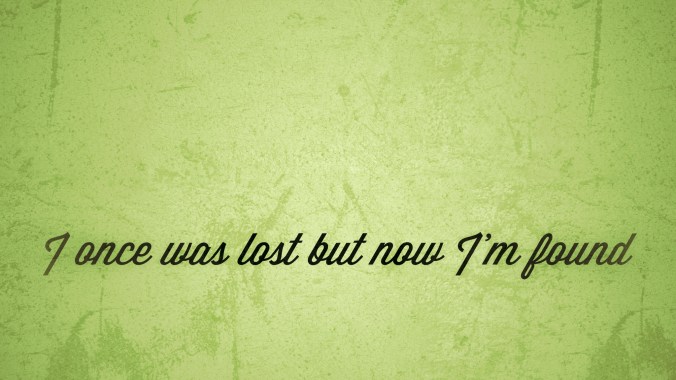
Son, you are always with me, and all that is mine is yours. But we had to celebrate and rejoice, because this brother of yours was dead and has come to life; he was lost and has been found.

Jesus told this story because the Pharisees were complaining that he ate with tax collectors and sinners. Like the prodigal son, these people only had to take the first few steps toward Christ, and like the father he welcomed them with open arms and embraced their presence at his table. In a sense Jesus was also a prodigal son, but rather than being recklessly extravagant with his money he was scandalously generous with God’s love, much to the distress of his Pharisee brothers.

In ways large and small, we can all turn our backs on God. Maybe afterward we feel unclean, like we’ve ruined our lives and lain among the swine, and struggle to find the words that will render us acceptable again. Others may not think we deserve forgiveness, but no matter how far we have strayed, a contrite heart is all the apology God needs to not only welcome us home, but to celebrate our return.

In all of the Good News, is there any better news than a God who rushes toward us in love and forgiveness the moment we take that first step towards home?

Comfort: As soon as you come home to God, it’s like you never left.

Challenge: Call or visit someone you miss and haven’t seen in a while.

Prayer: Loving and merciful God, thank you for always being there with open arms. Amen.

Discussion: Have you ever felt distant from God? Did you wonder whether you’d feel His embrace again?

Join the discussion! If you enjoyed this post, feel free to join an extended discussion as part of the C+C Facebook group or follow @comf_and_chall on Twitter. You’ll  have the opportunity to share your thoughts with some lovely people. Or feel free to comment here on WordPress, or even re-blog – the more the merrier!
Pain is a Four-Letter Word

1478731291186-01.jpeg

Today’s readings (click below to open in new tab/window):
Psalms 137; 147:1-11, Joel 2:12-19, Revelation 19:11-21, Luke 15:1-10


Psalm 137 is rough. Written by Israelites in Babylonian captivity, it expresses sorrow and rage. Because their captors demand to be entertained, the psalmist asks: “How could we sing the Lord’s song in a foreign land?” How demoralizing it would be to perform your songs of worship for the ironic entertainment for your oppressor.

Some mornings we feel like we have woken in an unfriendly foreign land. Oppression, real and perceived, weighs us down while the world demands perhaps not that we entertain it, but that we at least rise above our emotional and spiritual exile. Christians especially are taught and expected to be nice, as though tamping down our feelings for the comfort of others is some expression of love. Nice is not the same as good.

We need Psalm 137. We need the ugliest, most vile parts of it. When we read “Happy shall they be who take your little ones and dash them against the rock!” we are rightly appalled, but then we probably haven’t watched our infants being slaughtered, as did the people of Israel. Who among us doesn’t have some instinct to hit back? We can do the actual hitting, or we can follow Christ and love our enemies … but the sorrow and anger don’t simply disappear. Psalm 137 was sung by a community needing to purge its pain. The words are offensive, but they are just words. Some people find offense in hip hop, in screamo, in lyrics using four-letter words decrying far worse injustices. We embrace songs about war and revenge as patriotic classics. These are the modern versions of Psalm 137. They give us release and expression of things we know we can never really do. Sometimes, to get to good, we need to abandon nice for a while.

God can withstand our anger and fear. There is catharsis in sharing and releasing it in faith with others who understand it. There is danger in not doing so, for pain guides us only to more pain. Wail when you need to. Purge with your words. Then heal with your deeds.

Comfort: Your pain is valid.

Challenge: When people use words that offend you, look behind them for a source of pain and opportunity for healing.

Prayer: God of justice, hear my cries. Amen.

Discussion: Are you comfortable expressing pain, sorrow, and/or anger? How do you do so?

Join the discussion! If you enjoyed this post, feel free to join an extended discussion as part of the C+C Facebook group or follow @comf_and_chall on Twitter. You’ll  have the opportunity to share your thoughts with some lovely people. Or feel free to comment here on WordPress, or even re-blog – the more the merrier!

A Love/Hate Relationship

1478664940153-01.jpeg

Today’s readings (click below to open in new tab/window):
Psalms 123; 146, Joel 2:3-11, Revelation 19:1-10, Luke 14:25-35


Today’s word from Luke is a tough one. A large crowd was following Jesus, and he turned to them and said:

Whoever comes to me and does not hate father and mother, wife and children, brothers and sisters, yes, and even life itself, cannot be my disciple. Whoever does not carry the cross and follow me cannot be my disciple […] None of you can become my disciple if you do not give up all your possessions.

If he was trying to thin the crowd, that probably worked. Not only is it daunting … it’s confusing. This is the same Jesus who tells us to love our enemies – our enemies – telling us to hate our loved ones. Who is going to sign up for that?

Fortunately, we have plenty of examples where Jesus used exaggeration to make a point, so we can take a step back to get some perspective. If we are going to claim to be disciples – that is, students and followers – of Christ, every other priority must place a distant second; a matchstick behind a bonfire; a puddle beside the ocean.

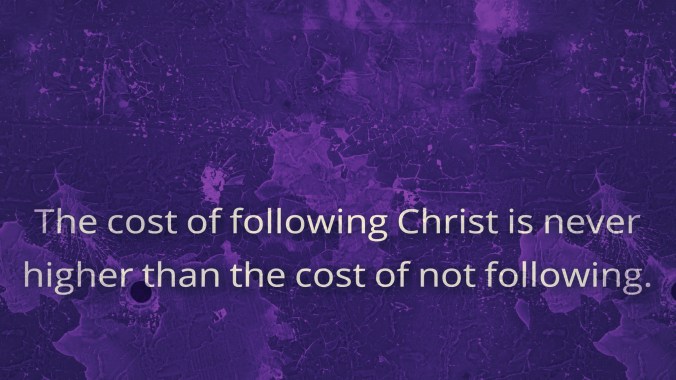
Discipleship has a cost. In a predominantly Christian culture, the need to pay that cost may feel far less urgent than in Jesus’s time, or in other cultures. If we want to, we can live our lives in almost exclusively Christian circles. But there’s a difference between following Christ and following Christians. Christ came for the sick, not the well, so to follow him we must often travel outside our safe spaces. Many fellow Christians aren’t going to want you to go. They may discourage you out of concern for your safety, or possibly because they don’t want to be reminded they aren’t paid up. And when that’s the case, we may have to leave them behind.

Whatever the cost, following Christ means following truth and love. We are called to shed the people and things that keep us from taking that journey. At the end, we won’t need the things, and we will come full circle to love the people again in a better way.

Comfort: Wherever Christ leads you, he will be there with you.

Challenge: Make a list of things you need to let go of to better follow Christ. Which one can you let go of this month?

Prayer: Merciful God, grant me the strength to be a true and faithful disciple of Christ. Amen.

Discussion: Have you ever felt relief from letting go of something – a relationship, a possession, a feeling? If so, what was it?

Join the discussion! If you enjoyed this post, feel free to join an extended discussion as part of the C+C Facebook group or follow @comf_and_chall on Twitter. You’ll  have the opportunity to share your thoughts with some lovely people. Or feel free to comment here on WordPress, or even re-blog – the more the merrier!

Showing Up

1478568508003-01.jpeg

Today’s readings (click below to open in new tab/window):
Psalms 135; 145, Joel 1:15-2:2, Revelation 18:15-24, Luke 14:12-24


It’s no secret that Jesus was fed up with the priestly class, but he didn’t dismiss them out of hand. He was present in the synagogues, and each time they challenged him he gave them an opportunity to hear him and accept him as messiah (though he was careful about using that word). How frustrating must it have been for him when, time and time again, they not only rejected him but remained willfully deaf to his invitation to repent and truly serve God and God’s people?

He told a parable about a man who threw a great dinner and invited many people. Each of the invitees had an excuse for not attending: I just bought some property; I’m a newlywed; I have new oxen to test-drive. The host was very angry, and sent his servants to “bring in the poor, the crippled, the blind, and the lame.” These new banquet guests were the inheritors of the kingdom, and no one who was invited got to taste a bite.

Why do we cater to the people who never show up? Many a church exerts so much energy on attracting new people (or “giving units”) that it has little left for the needs of the faithful regulars. Hours are wasted on figuring out how to placate those dedicated (but affluent) malcontents who always seem to have one foot out the door because of one imagined slight or another, instead of asking engaged people why they stay and what they need. The poor, the blind, the lame; they aren’t merely the beneficiaries of the church – they are the church. We are the church. Every one of us is in need. There’s nothing we have to offer God that is not already God’s, so when any of us shows up, it’s with hat in hand, starving for grace. Any other posture is a rejection of the invitation. Let yourself be dragged into the banquet.

If you reject Christ’s invitation because the church is too hypocritical, judgmental, or old-fashioned, you just might be missing the opportunity to fill the seat that will change it.

Comfort: Church doesn’t exist for its leadership, but for its people.

Challenge: Are you showing up? Think about ways you might be rejecting the invitation.

Prayer: Thank you, loving God, for the invitation to life in your kingdom. I am grateful for it and accept it anew every day. Amen.

Discussion: Have you ever been disappointed by a poor turnout?

Join the discussion! If you enjoyed this post, feel free to join an extended discussion as part of the C+C Facebook group or follow @comf_and_chall on Twitter. You’ll  have the opportunity to share your thoughts with some lovely people. Or feel free to comment here on WordPress, or even re-blog – the more the merrier!

Speaking of gifts…

1478490001436.jpg

Today’s readings (click below to open in new tab/window):
Psalms 19; 150, Joel 1:1-13, 1 Corinthians 14:1-12, Matthew 20:1-16


Paul encouraged followers or Christ to seek and develop what he called Gifts of the Spirit. These were abilities granted by the Holy Spirit and meant to be used for the benefit of the church. Such gifts included, among other things, the abilities to prophesy and to speak in tongues. To prophesy in this sense was not to predict the future, but to “speak to other people for their upbuilding and encouragement and consolation.” Speaking in tongues was speaking a language, either earthly or divine, that was not known to the speaker.

Not surprisingly, even though there was no need or directive to do so, people wanted to rank these gifts, and also looked more favorably on Christians who demonstrated them. Speaking in tongues seemed to be very common, possibly because – let’s be honest – it’s relatively easy to fake. Paul didn’t level this accusation against anyone, but he did tell them he’d rather see them strive for prophesy. While speaking in tongues might have been flashy and dramatic, in few cases did it have any real, positive impact on the life of the church.

Whatever gifts we have – whether the specific spiritual gifts listed by Paul in his letters, or the more mundane gifts granted us at birth or through study – we are meant to steward them well in service to the kingdom. The most immediately impressive ones, like strong leadership or inspirational preaching, are rare for a reason: we don’t need that many people to do them. Many Christians think seeking a purpose through ministry means they should be the face of a unique calling – but Jesus tells us the first are last and the last are first. Being in the trenches with other people who share a common gift is not a sign of insignificance, but of value. Rebuilding homes for the victims of disaster, preparing meals for grieving families, and visiting the sick in hospitals are the work of the kingdom; making a name for ourselves is not.

We don’t value what comes easily to us, but it may be gold to someone who doesn’t have it.

Comfort: Your gifts are valuable.

Challenge: When considering how to use your gifts, start by finding where they are lacking elsewhere.

Prayer: Thank you, generous God, for the for the many gifts you have given your people. Amen.

Discussion: Have you ever been surprised that something you could do, which seemed unimportant to you, was important to someone else?

Join the discussion! If you enjoyed this post, feel free to join an extended discussion as part of the C+C Facebook group or follow @comf_and_chall on Twitter. You’ll  have the opportunity to share your thoughts with some lovely people. Or feel free to comment here on WordPress, or even re-blog – the more the merrier!

Zipper Merge

20161105_114152-01-01.jpeg

Today’s readings (click below to open in new tab/window):
Psalms 104; 149, Zephaniah 3:14-20, Revelation 18:1-14, Luke 14:1-11


The zipper merge is the idea that, when construction or an accident forces two lanes of traffic to funnel into a single lane, drivers should continue using both lanes as long as possible, then alternate between lanes to proceed. States which have adopted this strategy claim it significantly reduces traffic backup, but many people are reluctant to use it. They feel it’s rude to use the closing lane instead of waiting your turn, and either refuse to do it themselves, and/or refuse to yield to people who do so. Either way, they’re shifting blame onto the other “side” when traffic studies show it’s the refusal to yield that really increases the congestion.

We’ve been refusing to yield since well before the invention of the automobile.

When Jesus noticed how the guests chose the places of honor, he told them a parable. “When you are invited by someone to a wedding banquet, do not sit down at the place of honor, in case someone more distinguished than you has been invited […]; and the host […] may come and say to you, ‘Give this person your place,’ and then in disgrace you would start to take the lowest place. […S]it down at the lowest place, so that when your host comes, he may say to you, ‘Friend, move up higher’; then you will be honored in the presence of all who sit at the table with you. For all who exalt themselves will be humbled, and those who humble themselves will be exalted.”

In a culture where “second place is first loser,” we are not inclined to put on the brakes. Yet Jesus clearly instructs us that it’s God’s role, not ours, to decide who is first. Refusing to yield – literally or figuratively – may be momentarily satisfying but it doesn’t teach the other person a lesson. It does, however, reveal something about our own humility. In 1 Corinthians, Paul writes: “love does not insist on its own way.” That’s the zipper merge in a nutshell. In God’s kingdom the point is not to get there first, it’s to get there together.

Comfort: God isn’t sorting us by losers and winners.

Challenge: As you go through your day, look for more opportunities to cooperate rather than to compete.

Prayer: God of Justice, I will work with your children, not against them. Amen.

Discussion: Some competition is healthy, but it becomes unhealthy when it interferes with our ability to treat each other as Jesus asks. Are you prone to any unhealthy competition?

Join the discussion! If you enjoyed this post, feel free to join an extended discussion as part of the C+C Facebook group or follow @comf_and_chall on Twitter. You’ll  have the opportunity to share your thoughts with some lovely people. Or feel free to comment here on WordPress, or even re-blog – the more the merrier!

Everyone’s a Critic

1478305718630.jpg

Today’s readings (click below to open in new tab/window):
Psalms 104; 149, Zephaniah 3:14-20, Revelation 18:1-14, Luke 14:1-11


First-century Galilee, like all other Jewish provinces, was under Roman rule. Many of its affairs were still handled locally by a succession of Jewish governors (tetrarchs) descended from Herod the Great, also commonly called Herod. Herod Antipas was the governor of the Galilean province, where Jesus was most active with his ministry.

When some Pharisees warned Jesus that Herod was looking to kill him, Jesus did not seem at all intimidated. He said: “It is impossible for a prophet to be killed outside of Jerusalem […] the city that kills the prophets and stones those who are sent to it!” Jerusalem, in the neighboring Judean province, was the center of Jewish political, cultural, and religious life. As is the case with many seats of power, it was prone to silence its critics – sometimes violently.

Members of an institution, especially if they feel attacked, are likely to defend it against critics both internal and external. For many of us, the fear of flaws being exposed (if only to ourselves and our peers) outweighs the legitimacy of the criticism. The church is as susceptible to this behavior as other institutions; church history, from the Vatican to countless televangelists to local congregations, is full of cover-ups and scandals. While scandals damage the reputation of individuals, cover-ups erode or obliterate the credibility and moral authority of the church itself.

If we listen to our internal critics – those who call out hypocrisy, ethics violations, inconsistencies, and other problems – we can correct ourselves before the whiff of decay attracts external critics, who are more invested in our comeuppance than our survival. Silencing them leads to an eventual implosion and leaves us nothing but spiritual rubble.

Let’s listen to the voices that make us uncomfortable. Let’s do some soul-searching to figure out whether our defensiveness is triggered because we think they’re wrong – or because we secretly don’t want to admit they are right. That might sound scary, but it’s incredibly liberating to truly know yourself and your own heart. Institutions and reputations can be undone, but no critic can destroy an honest relationship with our loving God.

Comfort: Integrity only improves your relationship with God.

Challenge: When people criticize you or your group, try to understand where they are coming from, rather than immediately responding or defending.

Prayer: Lord of Truth, help me to face truths no matter how difficult they may be to accept, for I know truth will draw my heart closer to yours. Amen.

Discussion: What is some of the best criticism you have received?

Join the discussion! If you enjoyed this post, feel free to join an extended discussion as part of the C+C Facebook group or follow @comf_and_chall on Twitter. You’ll  have the opportunity to share your thoughts with some lovely people. Or feel free to comment here on WordPress, or even re-blog – the more the merrier!

The Mix

1478225850637.jpg

Today’s readings (click below to open in new tab/window):
Psalms 97; 147:12-20, Zephaniah 3:1-7, Revelation 16:12-21, Luke 13:18-30


Potential energy is “energy possessed by a body by virtue of its position relative to others, stresses within itself, electric charge, and other factors.” Such bodies include batteries, tightly coiled springs, and a boulder balanced on a high peak. Until these things interact with the rest of the world in some way, the energy remains dormant – a potential which may or may not be realized – within them.

When Jesus compares the Kingdom of God to a tiny mustard seed that grows into a great tree, or a pinch of yeast that leavens an entire loaf of bread, he is talking about releasing the potential energy of the Spirit into the world through his followers. He describes something small – say a group of twelve people in the outskirts of the Roman empire – transforming the world.

Such potential is released when its bearer interacts with its environment. The mustard seed must be sown in the earth and exposed to the elements; the yeast must be kneaded into the dough and allowed to rise. Leave a packet of either on the shelf, and eventually it expires. You can read about gardening and baking, or sing songs about them, but in order for the mustard and yeast to meet their potential, they – or rather we – have to be in the mix.

We may not know whether we are mustard or yeast until we’re given a chance to grow in the right environment. Throw yeast on the ground or mustard into the dough, and you won’t get the desired results. Some of us will grow until the birds nest in our branches, and some will toil unseen alongside countless others to feed the hungry. Both are equally important to the kingdom, which is also like a banquet, a pearl, a field, a faithful servant, etc. There is no one right way to be part of the Kingdom.

Maybe you’ve already found the way to unlock your potential. Maybe you’re still waiting. Trust the gifts God has instilled in you, and you could be amazed by them. You’ll never know until you get into the mix.

Comfort: You already have everything you need to be part of the Kingdom.

Challenge: Make a list of your talents, and your suspected talents. Think about how you could best use them to serve God.

Prayer: God of Potential, help me discover all the ways I am yours. Amen.

Discussion: Have you ever been in a situation that revealed a gift or gifts you didn’t know you had?

Join the discussion! If you enjoyed this post, feel free to join an extended discussion as part of the C+C Facebook group or follow @comf_and_chall on Twitter. You’ll  have the opportunity to share your thoughts with some lovely people. Or feel free to comment here on WordPress, or even re-blog – the more the merrier!