Cults of Personality

1470346000879.jpg

Today’s readings (click below to open in new tab/window):
Psalms 116; 147:12-20, Judges 8:22-35, Acts 4:1-12, John 1:43-51


Poor Gideon. He was a poor farm boy from a poor clan and had no desire to lead Israel, but God the Father made him an offer he couldn’t refuse. After Gideon – with the Lord’s help – led the Israelites into a miraculous victory over the oppressive Midianites, his people asked him (and his son and grandson) to rule over them. Gideon replied: “I will not rule over you, and my son will not rule over you; the LORD will rule over you.” Instead he fashioned an ephod (priestly garment) from the golden earrings which had been worn by the Midianites and become spoils of war. Scripture tells us the Israelites made an idol of this ephod, and flocked to it as if they were chasing after a prostitute. It was the ruin of Gideon’s family.

It’s quite telling how easily the people settled for an idol instead of a leader as though they were equivalent. How little we’ve changed. Many churches build entire identities around the charisma of a specific minister. Millions of people hang on every word from celebrity preachers and cite their books and sermons like gospel. Citizens surrender their individual identities under banners and deafening chants of a candidate’s name. At least Gideon had the sense to say “don’t follow me – follow God.” When humble Gideon made a huge error in judgment, the people worshiped the error to the exclusion of God. When we turn a person into an idol not only are we prone to overlook their flaws, we are prone to double-down and spin those flaws into virtues.

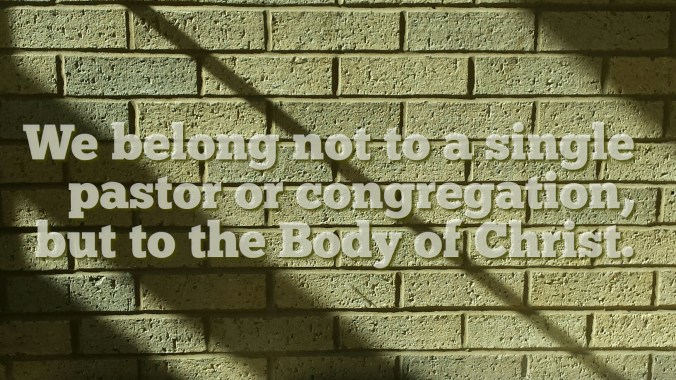
We belong not to a single pastor or congregation, but to the Body of Christ. We owe our primary allegiance not to a candidate, a party, or even a nation, but to the Kingdom of Heaven. We must not turn anyone into an idol who warps our faith; rather we must measure all would-be idols against the standards set by Christ. Idols – whether graven or human – eventually betray us. We may out of necessity follow a Gideon into battle, but only Christ leads us to eternal life.

Comfort: Christ is our spiritual north star.

Challenge: Meditate on the people and institutions you follow; how critical of them are you?

Prayer: Loving and all powerful God, I am faithful to you above all others. Amen.

Discussion: Without tearing apart someone’s character, when have you been disappointed in someone you trusted as a leader?

Join the discussion! If you enjoyed this post, feel free to join an extended discussion as part of the C+C Facebook group. You’ll be notified of new posts through FB, and have the opportunity to share your thoughts with some lovely people. Or feel free to comment here on WordPress, or even re-blog – the more the merrier!
Variety is the Spice of (Eternal) Life

beautyjourney

Today’s readings (click below to open in new tab/window):
Psalms 96; 147:1-11, Judges 7:19-8:12, Acts 3:12-26, John 1:29-42


According to John’s gospel, the first two disciples of Jesus were originally disciples of John the Baptist. One Jesus walked by the three of them, and John declared him the Lamb of God. The two disciples began to literally follow him, until he turned around and asked what they were looking for. Then they followed him home. One of them (Andrew) found his brother Simon to tell him they’d found the Messiah. When they met, Jesus told Simon his new name was Cephas (Aramaic for Rock, the same meaning as Peter).

Don’t Matthew, Mark, and Luke tell a much more interesting version of this story? In that one, Jesus goes down to the docks, starts recruiting, and promises to make any who follow him “fishers of men” – a sales pitch so good people drop their nets and follow him immediately.

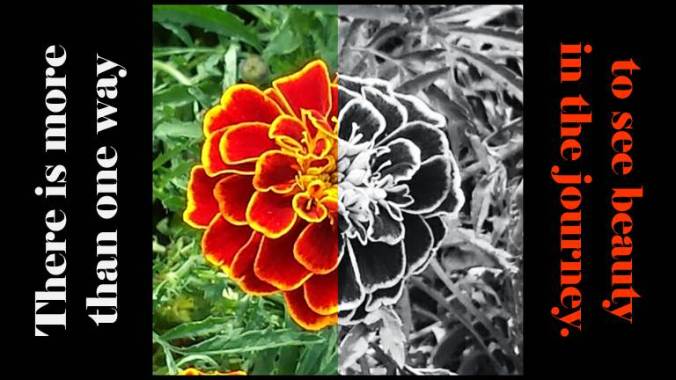
In both versions, whether guided by a teacher or invited directly, Jesus’s disciples feel immediately drawn to follow him. In a way, these two paths reflect different ways we come to know Christ: we can be born into a faith passed on to us, or Jesus can come bursting into our lives from seemingly nowhere. Neither way is more correct than the other, but one makes a more exciting story. While this was not the point John’s gospel was trying to make, it may help us be more open to the variety of faith journeys we encounter.

If we have been born into a faith, dramatic conversion stories may seem more compelling than our own lifelong belief. We should let their enthusiasm reinvigorate our own faith and challenge us to look at it as if it were new to us. If we are converts, we have recently given much thought to what we believe and why, like immigrants who’ve studied to become citizens. Though it may seem others haven’t worked quite as hard for the privilege, we can rely on the grounded experience of lifelong citizens of faith to inform us of the rich traditions we share. No matter how we’ve come to know Christ, we have gifts to share.

Comfort: Whether your faith is new or lifelong, you are an equal member of the Body of Christ.

Challenge: Share your faith journey with someone, and invite them to share theirs with you.

Prayer: Gracious and loving God, thank you for providing many roads to relationship with you. Amen.

Discussion: Have you found anyone’s faith journey particularly inspiring?

Join the discussion! If you enjoyed this post, feel free to join an extended discussion as part of the C+C Facebook group. You’ll be notified of new posts through FB, and have the opportunity to share your thoughts with some lovely people. Or feel free to comment here on WordPress, or even re-blog – the more the merrier!
Prepare Ye

1470146333745.jpg

Today’s readings (click below to open in new tab/window):
Psalms 12; 146, Judges 7:1-18, Acts 3:1-11, John 1:19-28


When the Pharisees pressed John the Baptist about his identity, he replied with a quote from Isaiah: “I am the voice of one crying out in the wilderness, ‘Make straight the way of the Lord.'” Notably he did not say he was the one making the way straight: he offered a rallying cry, but did not take it upon himself to fill the valleys and lower the mountains and level the rugged places. No, he left those duties to us.

If we look critically at the spiritual landscape of our local community, our nation, or our world, do we see straight paths carved out to usher in the glory of the Lord? Let’s just say much of that highway project remains to be completed. Deep valleys of unbridged poverty interrupt the road. Mountains of wealth, power, or other worldly distractions tempt us to achievement which in reality is more obstacle than accomplishment. Our world is a study in the contrast between spiritual mountains and valleys. High and low social status. Casually discarded half-full bottles of water … and tarps laid out to catch a few life-sustaining drops of dew. Piles of diamonds towering above the graves of those who died to excavate them. The temptation to fill the valleys by toppling the mountains into them can be great.

Unfortunately the challenge isn’t so simple, and none of us can complete this project alone. Some days the best we can do is move one teaspoon of earth at a time, and not even all that without spilling some. But John, Isaiah, the prophets, and the saints keep calling to us: “Prepare ye the way of the Lord.” As long as we keep to our task – spoon by spoon, mountain by mountain – the way of the Lord is that much closer to its completion.

If it all seems overwhelming, perhaps we can begin by leveling the mountains and valleys – those things blocking God from view – in our own hearts. Then we open ourselves to serve as one of the countless stepping stones the Lord uses to stride to the places most in need.

Comfort: If you are struggling, remember God is on your side.

Challenge: If you are comfortable, remember you are on God’s side.

Prayer: God of Abundance, I will seek to prepare Your way in the wilderness. Amen.

Discussion: It’s easy to cast the poor as victims and the rich as villains, but both are operating within the same system of injustice. What are some better, non-binary ways to understand the world?

Join the discussion! If you enjoyed this post, feel free to join an extended discussion as part of the C+C Facebook group. You’ll be notified of new posts through FB, and have the opportunity to share your thoughts with some lovely people. Or feel free to comment here on WordPress, or even re-blog – the more the merrier!

Christian Community

1470063661778.jpg

Today’s readings (click below to open in new tab/window):
Psalms 62; 145, Judges 6:25-40, Acts 2:37-47, John 1:1-18


How would we react if our pastor suggested we take all our money to church, throw it into a big pile with everyone else’s money, and let people take what they needed when they needed it? In most churches, we’d start the search for a new pastor. However, Acts 2 tells us that’s how the earliest Christians chose to shape their community.

When our church plans a mission trip, our preparation includes reflection on Acts 2:43-47. We do indeed pool our resources, eat and pray together, and gain the good will of the people by serving them. So far we haven’t sold all our possessions, but members of some Christian communities – often called the New Monastics – have done just that to better serve each other and their neighbors. Some commit to this way of life permanently, and others do it for a season. Mission trips usually last for a short season, but living this way only for a little while can have a profound impact.

The Christian community of Acts functions very differently than today’s mainstream Christian communities. When we hear from people who want to define America as a “Christian nation,” how often do they suggest we divest ourselves of possessions and pool our resources? When someone expresses a desire to do so, do we take them seriously or call them communists or radicals? American culture is based on capitalism and democracy. As Christians, we recognize these are not ends in themselves, but means for building a society. When they are used as tools for injustice and exploitation, as any government or economy can be, we must be the voice of justice – the voice of Christ. When we value ideologies above the values taught by Christ, we must examine and adjust our priorities.

Should we all sell everything and live in communes? Probably not. But we should embrace the underlying values of the early Christians: community is more important than personal wealth; trust is more important than certainty; and time spent in service transforms us in positive ways. What changes can we make to reflect those values in our own lives?

Comfort: Each small step toward community make the next one easier.

Challenge: For each nine dollars you spend on food this week, spend the tenth on donations to a food bank.

Prayer: God of hope, thank you for the gift of community. Amen.

Discussion: What do you think are the positives and negatives of communal living?

Join the discussion! If you enjoyed this post, feel free to join an extended discussion as part of the C+C Facebook group. You’ll be notified of new posts through FB, and have the opportunity to share your thoughts with some lovely people. Or feel free to comment here on WordPress, or even re-blog – the more the merrier!

Holy Underdog!

dragons

Today’s readings (click below to open in new tab/window):
Psalms 108; 150, Judges 6:1-24, 2 Corinthians 9:6-15, Mark 3:20-30


Like many heroes of Israel, Gideon had a humble beginning. Because the Israelites had begun to worship foreign gods, for seven years the Lord allowed the Midianites and other peoples to raze the crops and livestock of Israel: “They and their livestock would come up […] as thick as locusts; neither they nor their camels could be counted; so they wasted the land as they came in.” Gideon’s family threshed their wheat in a wine press to hide it from the Midianites. When the angel of the Lord appeared and told him he would be Israel’s new champion, Gideon was skeptical: “But sir, how can I deliver Israel? My clan is the weakest in Manasseh, and I am the least in my family.” The Lord assured Gideon that – with the Lord at his side – he would be victorious.

Gideon came from a long tradition of underdogs chosen by God (Abraham, Joseph, and Moses to name a few) and many more would follow. What is it God loves about an underdog?

Underdogs are humble. Life has taught them personal strength isn’t always enough. It takes real humility to submit ourselves to God’s will; a person who is used to success on their own terms can find that submission difficult. We have to recognize and admit to our “weaknesses” before they can really become opportunities for God’s strength to shine.

The victory of an underdog is a real testament to faith in God’s power. Had the roles of David and Goliath been reversed, and Goliath been Israel’s giant champion, it would have been just another story of might makes right. When we follow God, right makes might.

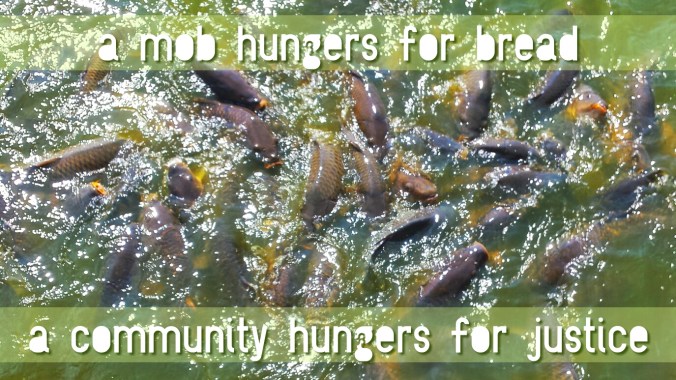
Over and over scripture teaches us God has a love of the disenfranchised. The Mosaic Law has numerous rules about treating widows, orphans, and foreigners with compassion. Jesus taught constantly about loving the poor. The prophets tell us Israel fell from God’s favor when the people became satisfied with themselves and ignored the needy. Holy underdogs are a continuous reminder that God’s justice is not about acquiring what we deserve, but about serving others in need.

Comfort: Whether you feel like a champion or not, God loves you as one.

Challenge: In the coming week, watch the news for examples of true underdogs who have accomplished something important of noble. Can you see the Lord’s influence in their lives?

Prayer: Lord, I thank you for the strength that sustains me even when I am weary and afraid. Amen.

Discussion: Do you have a favorite underdog story?

Join the discussion! If you enjoyed this post, feel free to join an extended discussion as part of the C+C Facebook group. You’ll be notified of new posts through FB, and have the opportunity to share your thoughts with some lovely people. Or feel free to comment here on WordPress, or even re-blog – the more the merrier!

Double Standards

monsters

Today’s readings (click below to open in new tab/window):
Psalms 122; 149, Judges 5:19-31, Acts 2:22-36, Matthew 28:11-20


Have you heard of Jael? She played a pivotal role in the book of Judges. Israel was battling the Canaanite army, whose captain was Sisera. When he realized his cause was lost, Sisera sought refuge at the home of Heber and Jael, Kenites who had no conflict with the Canaanites. Home alone, Jael offered Sisera milk, food, and a place to sleep. As he slept, Jael hammered a tent spike through his skull until it stuck in the ground. Jael’s deed is celebrated in The Song of Deborah, a judge of Israel who prophesied a woman would kill Sisera. Yet Jael remains a controversial figure: she violated the hospitality code of her culture by harming a guest in her home. Normally the Israelites would have judged this type of infraction quite negatively, but since it was to their benefit, they interpreted it as the will of God.

After Jesus had risen from the grave, the chief priests and elders offered a large bribe to Roman guards to say his body had been stolen while they slept. They further offered to run interference with the governor, should word of the missing body get back to him. These chiefs and elders were the supposed spiritual leaders of the Jewish people. Among the laws they represented was a prohibition on bearing false witness. To do so warranted punishment equal to whatever the wronged party would have suffered. Yet because they convinced themselves they were doing right, the hypocrisy did not matter to them.

Double standards are pernicious, especially when we believe our cause is just. It’s natural to overlook flaws in the people and institutions we favor, and exaggerate them in those we don’t. Doing so, however, undermines our integrity, our credibility, and ultimately the cause we serve. For people of integrity, good ends do not justify bad means. The righteous who resort to unrighteous tactics destroy the thing they hope to preserve. Consciously hold your friends, your enemies, and yourself to the same standards. Let us be less concerned with whether we “win” … and more with whether we witness to Christ.

Comfort: Losing is no shame if you lose with integrity.

Challenge: Over the next week, pay to attention to the double standards of your own views, especially around religion and politics.

Prayer: God of Justice, open my eyes to my own short sightedness. Amen.

Discussion: What double standards bother you the most?

Join the discussion! If you enjoyed this post, feel free to join an extended discussion as part of the C+C Facebook group. You’ll be notified of new posts through FB, and have the opportunity to share your thoughts with some lovely people. Or feel free to comment here on WordPress, or even re-blog – the more the merrier!

We All Bleed The Same

“We don’t have it all together, but together we have it all.”

A Thing of Horror?

1469808419621.jpg

Today’s readings (click below to open in new tab/window):
Psalms 88; 148, Judges 5:1-18, Acts 2:1-21, Matthew 28:1-10


“You have caused my companions to shun me;
     you have made me a thing of horror to them.”  – Psalm 88:8

What a jarring statement, to declare oneself a horror to companions and neighbors. Sadly, we can all relate. When we experience an extended personal crisis – a divorce, a job loss, an illness – most of us reach a point where we suspect family and friends must be weary of hearing about it. We notice (or imagine) that people have begun to avoid us. Whatever the situation, even when we feel most alone, God is with us. Like the psalmist, we may feel God’s face is hidden. When that happens, we may need to use prayers like sledgehammers to batter down the barrier a crisis erects between us and God.

And when the tables are turned? Do our neighbors in crisis ever become horrors to us? We grow tired of hearing the minutia of Bill’s family court drama. We have to drag ourselves to the bedside of a formerly vivacious friend we weep to see wasting away. Some days we simply aren’t up to the task. But on better days we honor the Christ of the cross – who had become a physical and social horror to his friends and loved ones – by seeing his face where people suffer. We all know someone who lends the ear, takes someone to chemotherapy, or bakes the casserole. Maybe we are that someone.

If you are that someone, let people who still struggle to serve others know you don’t have superpowers – you rely on the Lord for strength. If you are not that someone and find yourself struggling to serve, understand that you are more capable than you realize. None of us wants to share disease or loss any more than we want to experience it, but we do so because love calls us to. When we serve each other with love, no one – no matter how awful their situation – is a “thing of horror” to God. Each of us is a child of God in need. Let’s not be put off by a matter of degree.

Comfort: God loves us as a child, regardless of circumstance.

Challenge: If you find it easy to serve others, offer to help someone who struggles. If you struggle, find and work with someone who finds it easy.

Prayer: God of strength, I will serve you by serving others. Amen.

Discussion: Have you ever felt like a “thing of horror?”

Join the discussion! If you enjoyed this post, feel free to join an extended discussion as part of the C+C Facebook group. You’ll be notified of new posts through FB, and have the opportunity to share your thoughts with some lovely people. Or feel free to comment here on WordPress, or even re-blog – the more the merrier!

Burying the Body


Today’s readings (click below to open in new tab/window):

Psalms 143; 147:12-20; Judges 4:4-23; Acts 1:15-26; Matthew 27:55-66


Jesus was dead. His disciples, not understanding he would return, were scattered and gutted because their revolution had ended in crucifixion. The Messiah had been killed by enemies among the occupier and the occupied. The evidence of failure was his own lifeless body, hanging on a cross as the Sabbath drew near.

“What now?” they whispered. “What do we do now?”

Joseph of Arimathea and the Marys knew the simple yet devastating answer: bury the body.

Life can go so drastically wrong that we literally don’t know what to do. At these times, the best thing is often to attend to the practical. When life smashes our expectations beyond recovery, the loss can be too overwhelming to process all at once. When this is true, the momentum of responsibilities like a job, cooking dinner, and showering can keep us moving like a bicycle that will topple if it stops. Such distractions help us swallow grief in bite-sized chunks rather than a choking whole. Though we don’t want to turn these responsibilities into a form of denial, engaging in them can help us throttle the grieving process to a manageable pace. Funeral arrangements, for instance, while not routine, serve an important psychological purpose of engaging the grieving parties in activity. They draw us back into the decisions and actions of the living. While it is inevitable that we will have moments when breaking down is the right and necessary thing to do, we need a purpose to rise back up.

Short of clinical issues like depression, we all have the capacity to move on. Parents who care for children with severe disabilities are often asked, “How do you do it?” When the disability is unexpected, a parent may, in a sense, have to bury the body of hopes once held for that child. The future may hold resurrection, or an altered set of expectations, or further disappointment; in any case, these parents pull the extraordinary from the ordinary. Like Joseph and the Marys, they know the enormous healing power of being able to honestly say, “We did what we had to.”

Comfort:  In our greatest losses, God grieves with us.

Challenge: Make a list of the tasks you perform each day. Turn this into a litany of thanks: “God, thank you for the opportunity to …”

Prayer: Merciful and loving God, give me the strength to do what needs doing. Amen.

Discussion: Have you ever been immobilized by grief? What got you moving again?

Join the discussion! If you enjoyed this post, feel free to join an extended discussion as part of the C+C Facebook group. You’ll be notified of new posts through FB, and have the opportunity to share your thoughts with some lovely people. Or feel free to comment here on WordPress, or even re-blog – the more the merrier!

Forsaken

1469571158530.jpg

Today’s readings (click below to open in new tab/window):
Psalms 65; 147:1-11, Judges 3:12-30, Acts 1:1-14, Matthew 27:45-54


“Eli, Eli, lema sabachthani?” That is, “My God, my God, why have you forsaken me?”

Every year during the Passion narrative, this verse moves me more than any other. Although the Gospels tells us Jesus suffered and was tempted like any other person, he seems so wise, so confident, and just so plain good it can be hard to believe. These words, though, contain every bit of despair and doubt I’ve ever felt – and then some. If Jesus, of all beings in creation, can feel abandoned by God, our own doubts and fears condemn us not at all.

All of us sometimes feel forsaken by God. In times of illness, financial hardship, failing relationships, and many other situations, we can feel let down or deserted by God. The last thing we need is a clichéd assurance us of God’s loving presence. Reason tells us everyone suffers, but our distressed hearts may be difficult to convince. We can dispassionately dispense platitudes about someone else’s problem, but our own problems are somehow different.

Doubt, disbelief, and anger at God are almost inevitable. Knowing Jesus felt the same way (at least once) puts us in good company. The psalmists were able to feel faithful and forsaken at the same time. Psalm 119:82 says “My eyes fail with watching for your promise; I ask ‘When will you comfort me?’” How poignant! We must not confuse doubt with the absence or end of faith. Classics of Christian writing like The Dark Night of the Soul by St. John of the Cross help us understand the ways doubt and darkness can transform our faith. While our instinct is often to reject doubt, we need to embrace and explore it. Burying it beneath denial or easy answers undermines the development of true, enduring faith. When we see someone struggling with doubt, offering easy reassurance can actually be a terrible disservice. Better to be present for our struggling friends, and let them reap the benefits of working through their own spiritual struggles.

A moment of doubt did not thwart Jesus’ triumph, and it doesn’t have to destroy our faith.

Comfort: Doubt can be the turn in the road that leads us to new understanding.

Challenge: Invite someone you trust to discuss each other’s doubts.

Prayer: Merciful and loving God, thank you for being bigger than my doubt. Amen.

Discussion: What do you do when you experience doubt?

Join the discussion! If you enjoyed this post, feel free to join an extended discussion as part of the C+C Facebook group. You’ll be notified of new posts through FB, and have the opportunity to share your thoughts with some lovely people. Or feel free to comment here on WordPress, or even re-blog – the more the merrier!