Body of Work

PrayWithYourFeet

Today’s readings (click below to open in a new tab/window):
Psalms 143; 147:12-20, Genesis 16:15-17:14, Hebrews 10:1-10, John 5:30-47


Circumcision can be a divisive topic. Parents don’t always agree on whether it’s right for their sons. In some circles its medical benefits and risks are hotly debated. Many men –circumcised and not – find it a barbaric and abusive practice and actively work to abolish it. Others, such as those who incorporate it into tribal rites of passage, defend it just as vigorously.

When God made his covenant with Abraham, he required that all males of Abraham’s family and household – even slaves – be circumcised as a sign of that covenant. The practice was so important to the Jewish people that many early Christians thought Gentile men could call themselves followers of the Jewish Christ only if they were willing to be circumcised. Paul eventually declared Gentile fidelity to Christ a “circumcision of the heart” – that is, being bound to Christ through the Spirit, not the law.

Among Christians today decisions about circumcision are more about cultural and personal preferences than religious significance. Losing this requirement has expanded the idea of who belongs to God – Gentiles, women, and other groups can all be “marked” in their hearts without altering their bodies. It is symbolic of movement away from legalism toward grace. But in making the practice irrelevant to faith, have we also lost something else?

Circumcision was a constant, intimate reminder that a person had been dedicated to God. Does anything serve this purpose for Christians today? Physical sensations reinforce our experience of the world. From the immersion of baptism, to the bread of communion, to ashes on the forehead, to wedding rings on our fingers, we use physical means to express spiritual truths.

There is ancient wisdom in the spirituality of the body. Modern Christians dwell in a lot of mental space, often downplaying or even degrading the body. Each body is a work of art: God can sign it in many ways. Let’s be aware of how our bodies can help us connect to God through breath, music, dance, prayer, and even pain. Your body houses the spark of life God has granted you; furnish it with sacred intent.

Comfort: God loves you, body and soul. Always.

Challenge: If you are able to, try different body positions when you pray – kneeling, sitting, arms raised up, palms pressed together, head thrown back, face down on the floor – and notice how each affects your attitude of prayer.

Prayer: Thank you, God, for the gift of life. 

Discussion: How would you describe your relationship with your body?

Join the discussion! If you enjoyed this post, feel free to join an extended discussion as part of the C+C Facebook group. You’ll be notified of new posts through FB, and have the opportunity to share your thoughts with some lovely people. Or feel free to comment here on WordPress, or even re-blog – the more the merrier!
Test Everything

test-all-things

Today’s readings (click below to open in a new window/tab):
Psalms 65; 147:1-11, Genesis 16:1-14, Hebrews 9:15-28, John 5:19-29


Some days the biggest stumbling block to faith is scripture itself. Amid its inspiration, today’s passage from Genesis contains some truly horrifying ideas. God promised Abram he would father a nation, but he and his wife Sarai did not immediately conceive a child. An impatient Sarai suggested Abram impregnate her servant Hagar. Under the law, Sarai could have claimed legal possession of the child. The law also claimed that if Hagar started acting “uppity” after conceiving, her mistress could punish her – so naturally that’s exactly what happened. When Hagar ran away, God advised her to return with the promise her child would also beget a nation.

Forced surrogacy. Abuse. Slavery seemingly endorsed by God. Is it any wonder many people find it so easy to reject the Bible wholesale?

Many Biblical literalists and devout atheists approach the Bible in the same way: either it’s all factual or it’s all useless. They simply come to opposite conclusions. Moderate and progressive Christians can find themselves caught up in defending why they bother with the Bible at all, if they don’t find scripture inerrant. Convoluted excuses and justifications for stories like this one (and worse) erode faith rather than strengthen it.

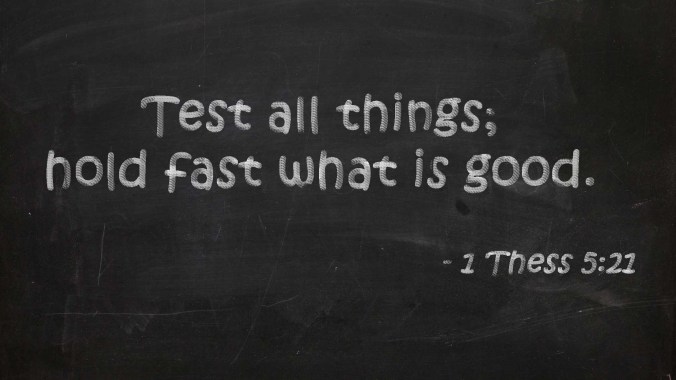
The Bible is not all there is to God. And specific translations or interpretations (and in the modern age that’s all most of us who don’t read Hebrew and Greek have got) even less so. Treating it like it is might be the most acceptable form of idolatry going today. God can withstand our questions and criticisms of Bronze Age culture. Just because Jesus didn’t explicitly condemn slavery doesn’t mean we should approve it. 1 Thessalonians 5:21 advises: “Test all things; hold fast what is good.” God has given us the ability to discern what is moral and what is immoral, though in some cases like slavery it takes us far longer than it should to make the right call. Acceptable practices become unacceptable, and “abominable” practices such as short hair on women grow inoffensive.

The fact that people have been able to use the Bible to both justify and condemn slavery tells us the truth it contains needs more consideration than the popular “The Bible says it, I believe it, that settles it.” Trust that truth is Godly, wherever it is found.

Comfort: God and truth withstand all scrutiny.

Challenge: Meditate on what previously acceptable practices have been morally rejected in your lifetime, and vice versa.

Prayer: God, help me to approach all things, including scripture, with your guidance. Amen.

Discussion: How would you describe your relationship with the Bible?

Join the discussion! If you enjoyed this post, feel free to join an extended discussion as part of the C+C Facebook group. You’ll be notified of new posts through FB, and have the opportunity to share your thoughts with some lovely people. Or feel free to comment here on WordPress, or even re-blog – the more the merrier!

Breaking the Law

image

Today’s readings (click below to open in a new tab/window):
Psalms 54; 146, Genesis 15:1-11, 17-21, Hebrews 9:1-14, John 5:1-18


The fourth commandment is “Remember to keep holy the Sabbath.” For most Christians Sunday is the Sabbath but after church is over it’s not much different than the rest of the week. We are free to go shopping, eat out, and do as we please. Therefore we may underestimate the enormity of Jesus’ decision to perform a healing miracle on the Sabbath. This wasn’t someone declining an opportunity to “take it easy” – it was an act of defiance punishable by death.

For observant Jews, the Sabbath is a day of rest and worship, beginning at sunset on Friday and ending with the appearance of the first three stars on Saturday evening. Sabbath is rich with traditions, prayers, obligations, and rules. One key Sabbath concept is that no work is to be done: even candles must be lit and food prepared in advance. Today it is a strictly religious tradition observed more closely by some Jews than others, but among Jesus’ contemporaries there was no distinction between religious and secular law.

What might have been important enough to Christ to merit this act of disobedience? Mercy.

Could he have waited to heal the ailing man? Possibly. People had walked past and over this lame man for decades. Jesus didn’t break rules just for the sake of breaking them: by choosing mercy over law on the Sabbath, he demonstrated that mercy is always God’s highest priority. No excuse – our own need to be “holy” or even the threat of punishment – justifies withholding it.

For all our claims to be a people freed of legalism, Christians have developed plenty of rules to stand between us and mercy. From baptisms to funerals and everything between, we have our own unclean persons, our own restricted privileges, and our own inviolable traditions. Conscience tells us when mercy is the right response, but fear of breaking the rules and being punished by our social group may keep us from exercising it. When the Spirit prompts us, let’s be brave enough to break a rule or two and touch that “untouchable” person with our hands, hearts, and words.

Comfort: The Lord wants us to love mercy – that means receiving as well as giving.

Challenge: Critically consider whether  rules you have set up for yourself get in th way of being merciful to others.

Prayer: Lord Jesus Christ, Son of God, have mercy on me, a sinner.

Discussion: What does our willingness (or unwillingness) to show mercy say about our relationship with Christ?

Join the discussion! If you enjoyed this post, feel free to join an extended discussion as part of the C+C Facebook group. You’ll be notified of new posts through FB, and have the opportunity to share your thoughts with some lovely people. Or feel free to comment here on WordPress, or even re-blog – the more the merrier!

Cast and Crew

Untitled-1

Today’s readings (click to open in a new tab/window):
Psalms 57; 145, Genesis (14:1-7) 8-24, Hebrews 8:1-13, John 4:43-54


Do you stay to watch the credits at the end of a movie? It can take hundreds of people to see a film through from beginning to end. Writers, producers, directors, stars – these people have the name recognition to get the project off the ground, but without gaffers and grips the production would falter or fold. Every name buried in that scrolling list provides a vital function.

As we follow the story of Abram and his wife Sarai, it mostly unfolds like the story of two stars and a few lesser roles. In today’s passage, however, we get a feel for the large number of people who depended on them, and on whom they depended. Every time Abram and Sarai move, in their wake is an entourage of hundreds, including family, herders (with their wives and children), slaves, trained solders, and sundry others – enough to fill two separate communities.

When we think of Abraham as “our father in faith,” it’s easy to overlook the hundreds of unnamed people who contributed to that title. When he knocked at Egypt’s door seeking entrance, he was more than half a married couple: he represented hundreds seeking sanctuary. When he was forced out, hundreds had to follow. When he was plundered by neighboring kings, he had to recover not just goods, but people as well. He and his people were interdependent: as their patriarch he led them wisely, and they made sure the show went on. A leader is the hub, but without spokes a hub is meaningless.

When we believe we see God acting through a leader, let’s look at the bigger picture – the spokes that define the hub, or the crew that supports the star. God’s touch is not limited to the elect few, so we need to actively support such leaders and understand the scope of their responsibilities. We aren’t an audience passively waiting for leadership to happen to us; we are a vital part of the production. By the time the credits roll, we want to be able to point to our name with pride in the job we’ve done.

Comfort: Even if your role in God’s plan feels small, it is vital.

Challenge: Don’t let your faith, church, or community happen “to” you – take part.

Prayer: Thank you, O Lord, for the responsibilities which are mine, and thank you that not all of them are.

Discussion: We tend to judge religious leaders (or managers, or civic leaders) on how well they meet our specific needs, but their responsibilities are often greater than we know. Our leaders can’t do everything that needs done; when appropriate how can we support them?

Join the discussion! If you enjoyed this post, feel free to join an extended discussion as part of the C+C Facebook group. You’ll be notified of new posts through FB, and have the opportunity to share your thoughts with some lovely people. Or feel free to comment here on WordPress, or even re-blog – the more the merrier!

Generosity and Grace

Santorini Skyline

Today’s readings (click to open in a new tab/window):
Psalms 67; 150, Genesis 13:2-18, Galatians 2:1-10, Mark 7:31-37


When Jesus healed people, he didn’t treat just their physical ailments; he also acknowledged them in a way that restored the dignity they had been denied. Charity and mercy should not be top-down experiences where the more fortunate look pitiably upon the less fortunate. They are more like the closing of a circuit through which grace flows and connects us all in the Spirit.

It’s easy to squeeze the grace out of our generosity. We insist on knowing who is worthy of it. We decide what is best for people without getting to know them. If it gets uncomfortable, we distance ourselves socially and emotionally from the people we are helping. Sometimes we dismiss the efforts of people who take a different approach than we do. Our focus can be too much on how charity makes us feel, rather than on the need we are meeting.

How Jesus healed a man of deafness and a speech impediment (a common combination, since it is difficult to mimic what we can’t hear) is a wonderful model for works we do in Christ’s name. First, he didn’t try to determine worth or blame, but accepted a person who came to him in faith. Next, instead of making a public show of his kindness, he took the man aside, thereby giving him a choice of whether to tell his own story. Then Jesus literally got his hands dirty and put them on the man in an intimate way, because sometimes love has to be messy. All the while Jesus was prayerful, but confident that God would guide him. He comprehensively addressed both the root of the problem (the man’s deafness) and the symptoms (his speech impediment). Finally, after word of his generosity spread, Jesus humbly gave the glory to God.

Grace-filled generosity does not insist on its own way, but responds to the needs of others. Unlike enabling, it empowers recipients to make their own decisions about what to do next. Once someone’s ability to hear (or eat or sleep warmly) is restored, they are free to speak the good news as they will.

Comfort: Sometimes we offer assistance, sometimes we receive it, and at all times we are worthy of dignity.

Challenge: Do some volunteer work that allows you to interact with the recipients of the work. Try to see them not as people who need something you have, but as people who are equally in need of God’s gifts as you are.

Prayer: Gracious and generous God, I will do my best to give as you would have me do, not as my fears and doubts would. Amen.

Discussion: When you give someone a gift, what expectations accompany it?

Join the discussion! If you enjoyed this post, feel free to join an extended discussion as part of the C+C Facebook group. You’ll be notified of new posts through FB, and have the opportunity to share your thoughts with some lovely people. Or feel free to comment here on WordPress, or even re-blog – the more the merrier!
Sleeping with the Enemy

WEAKRESOLVESTRONGFAITH

Today’s readings (click below to open in a new window):
Psalms 56; 149, Genesis 12:9-13:1, Hebrews 7:18-28, John 4:27-42


How do we approach people we assume to be our enemies? Today’s readings feature two stories about people traveling through presumably hostile territory. They start with very different mindsets, and have very different results.

When Abram and his beautiful wife Sarai arrived in Egypt, he instructed her to pose as his sister so the Egyptians who wanted to woo her would treat him well. Otherwise, he feared, they might murder him to take her. Word of her beauty reached Pharaoh and soon she was living in his home. Displeased with this situation, God afflicted Pharaoh’s household with great plagues. His lie thus revealed, Abram was forced to flee with Sarai.

While passing through Samaria, Jesus stopped at a well. He had a very candid though compassionate conversation with a woman he met there. Once he revealed himself to be the messiah by showing he knew undisclosed details of her life, she was not afraid to challenge him about his relationship with non-Jews. After the people of her town heard her story, they invited Jesus to stay and he spent two days with them. As a result many Samaritans became believers.

Abram told an easy lie, and Jesus told hard truths. The Egyptians treated Abram well for a while, but no relationship was established. In the end, the lie forced him away. The Samaritan woman respected Jesus because he told the truth, and returned his frankness. The initial conversation between them does not read as comfortable, but in the end he formed an unexpected and important relationship with the Samaritan people.

The world tells us never to trust our enemies, and to do unto them before they do unto us. Jesus teaches and shows us another way. It is a more risky path, as we can never be sure of our enemy’s intentions, but it also opens a door to the possibility of reconciliation. If we refuse to hear someone’s story, or respond with judgment, that door stays closed. Being the first to offer a hand in peace is not a sign of a weak resolve, but of a strong faith.

Comfort: Jesus doesn’t want a relationship with your Sunday best, he wants one with your honest everyday self.

Challenge: Do you have any enemies you could get to know better? Try to do so.

Prayer: Prince of Peace, teach me the ways of peace. Amen.

Discussion: Who do you consider your enemies? How do you communicate with them?

Join the discussion! If you enjoyed this post, feel free to join an extended discussion as part of the C+C Facebook group. You’ll be notified of new posts through FB, and have the opportunity to share your thoughts with some lovely people. Or feel free to comment here on WordPress, or even re-blog – the more the merrier!

Worship Well

DCP_0580

Today’s readings (click below to open in a new tab/window):
Psalms 130; 148,Genesis 11:27-12:8, Hebrews 7:1-17, John 4:16-26


Samaritans and Jews shared common roots but also shared a bitterness – even a hostility – over religious differences. When Jesus passed through Samaria, he sat by a well to rest while his disciples went into town for food.  He asked a local woman for a drink of water, and as a result of the conversation that followed she recognized him as a prophet. Then, for the first time in John’s gospel, Jesus identified himself as the Messiah. John the Baptist and the disciples already believed this but, according to John’s narrative, Jesus had not confirmed it. So why would he choose to reveal himself openly to this non-Jewish woman in this non-Jewish place?

The well where they met was Jacob’s well, a site significant to both Jewish and Samaritan history. When Jesus said those who drank its waters would be thirsty again, but those who drank the living water he offered would never thirst again, he was saying eternal life was not found in or bound to any material source but in the truth. When the woman pointed out that Jews worship in Jerusalem and Samaritans on Mount Gerizim, he responded: “the hour is coming when you will worship the Father neither on this mountain nor in Jerusalem […], when the true worshipers will worship the Father in spirit and truth.”  His words told her, and tell us today, God is greater than any constraints of tradition or culture.

What constraints do Christians place on God and worship today? We insist on creeds and denominations that are more products of political history than spiritual necessity. Within denominations we have yet more division among groups who believe they own more truth than others. Like a person who believes nothing exists beyond what can be seen through a single window, we can mistakenly use the Bible to limit our understanding of God rather than accept truth wherever it is found.

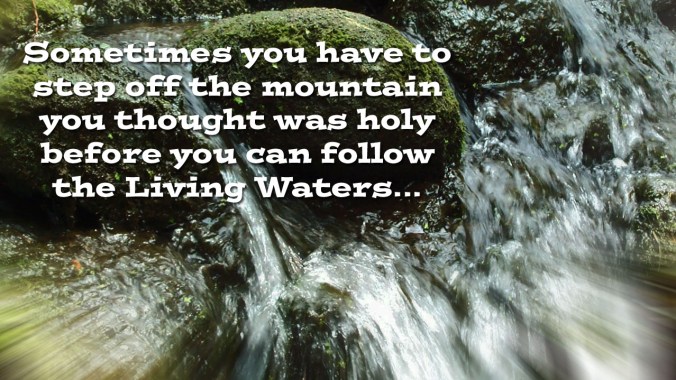
Unexpected revelation from God occurs not when we are certain and comfortable, but when we are questioning and in strange – perhaps enemy – territory. Sometimes we have to leave our temple or mountain to find where the living waters flow.

Comfort: God is greater than any box we try to put him in.

Challenge: Think critically about your own assumptions, including those taught to you.

Prayer: God of all creation, forgive me when I don’t love all you have made. Amen.

Discussion: What restrictions do you try to place on God? Who do you exclude as a result?

Join the discussion! If you enjoyed this post, feel free to join an extended discussion as part of the C+C Facebook group. You’ll be notified of new posts through FB, and have the opportunity to share your thoughts with some lovely people. Or feel free to comment here on WordPress, or even re-blog – the more the merrier!
Gathering the Sparks

1453259613079

Today’s readings (click to open in new tab/window):
Psalms 36; 147:12-20, Genesis 11:1-9, Hebrews 6:13-20, John 4:1-15


Though Charles Darwin did not write On The Origin Of Species as an attack on Christianity, many people interpreted it that way. The controversy of the seeming conflict  between natural selection and Genesis was not limited to Biblical literalists, but was also a concern for Christians who were not in theory opposed to more scientific theories of creation. The real danger of Darwin’s theory was what it said about the nature of life: it was not powered by love and redemption, but by competition and dominance. What did this reveal about God?

Maybe nothing as startling as it seemed. Another Biblical myth – the Tower of Babel – tells us that when God felt humans were growing too powerful and unified, he destroyed the tower symbolizing their potential, forced them to speak different languages, and scattered them across the world. God forced diversity upon his creation, setting tribes at odds with one another. Whether we read Darwin or Genesis, competition and diversity are central to the story.

In the Jewish myth of the Shattering of the Vessels, when God says “Let there be light” he sends forth his divine essence in ten vessels. The vessels are too fragile and they shatter, scattering divine sparks across creation. It is the duty of humanity to collect these sparks and repair the world. Division and scattering seem integral to our creation stories. We recognize the world as broken, and long to restore it.

Now consider Jesus at the well, talking to the Samaritan woman. They are separated by language and culture. As a woman and a Samaritan she is no one Jesus should be talking to, at least by the dictates of his culture. Yet he stops to banter with her, not to preach but to make a connection. They join their sparks to repair one tiny corner of the creation.

Other animals may be shaped by their environments, but humans can choose to shape the environment instead. When we choose cooperation over competition, we help repair the world. Each spark we collect illuminates what it means to be created in the image of a creator. Our brokenness offers the potential to create something divine in a way unquestioned wholeness never could.

Comfort: Brokenness is not a final state; it is the beginning of reconciliation.

Challenge: We have busy lives, and ignore many of the sparks of creation. Where can you slow down and make connections?

Prayer: Lord, make me an instrument of your divine reconciliation. Amen.

Discussion: Are you by nature more cooperative or competitive? Why do you think that is?

Join the discussion! If you enjoyed this post, feel free to join an extended discussion as part of the C+C Facebook group. You’ll be notified of new posts through FB, and have the opportunity to share your thoughts with some lovely people. Or feel free to comment here on WordPress, or even re-blog – the more the merrier!
Decrease to Increase

YourBest

Today’s readings (click below to open in a new tab/window):
Psalms 15; 147:1-11, Genesis 9:18-29, Hebrews 6:1-12, John 3:22-36


The ministry of John the Baptist was a big success. Business was so good he had customers lined up from Bethany to Aenon, where he moved because it had more water to let him do his job. He had his own disciples and irritated all the right authorities. Yet when Jesus arrived on the scene, John willingly gave it all up. John knew something we often forget: successful ministry is not determined by numbers or longevity, but by how well it advances the message and mission of Christ. When John’s followers began flocking to Jesus, John didn’t start planning how to win them back. Instead he said of Jesus: “He must increase, but I must decrease.”

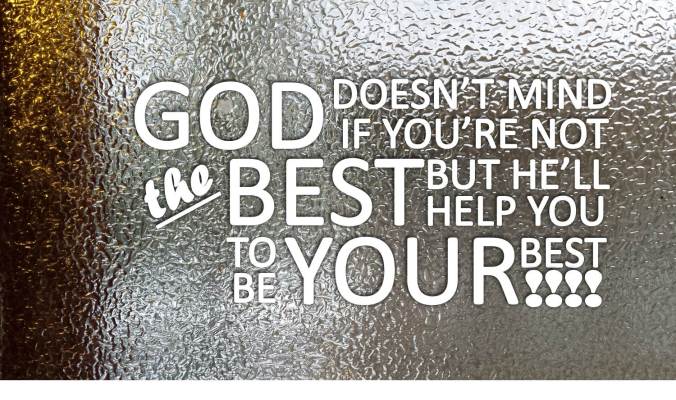
Christian ministry is not a competition, but our competitive nature can sneak into it. Choir solos, sermons, fundraisers, offerings, praise hands, potluck contributions – sometimes we can’t help comparing these things, especially if we are good at them. If healthy competition pushes us to do our best work, the ministry may benefit. When we start thinking of our collaborators as rivals, we do a disservice to everyone, and undermine the community and the ministry. Whether an individual or church, we let our lights shine to illuminate the love of Christ, not to put a spotlight on ourselves. Even if we are the very best at something, sometimes we must intentionally step aside to let others play their parts. Being our best – not the best – is what matters.

Mature preachers will say praise and criticism are the same. In other words, they hear feedback, but do Christ’s work for the sake of the work, not the reaction. Praise does not swell their heads, and criticism does not defeat them. This ego-free attitude requires cultivation, but our work will be the better for it. There’s nothing wrong with enjoying a compliment for a job well done, but if our focus moves from Jesus to acquiring compliments (or members, or money, or readers), our work suffers.

For others to increase, sometimes we must decrease. But if we do it to help Jesus increase, we rise along with him.

Comfort: The best ministries are collaborations; you don’t have to do everything yourself.

Challenge: Whenever you feel competitive with someone, ask yourself whether it is healthy or unhealthy.

Prayer: Gracious God, teach me to appreciate the diversity of the Body of Christ. Amen.

Discussion: Where do you find yourself competing when you could be cooperating?

Join the discussion! If you enjoyed this post, feel free to join an extended discussion as part of the C+C Facebook group. You’ll be notified of new posts through FB, and have the opportunity to share your thoughts with some lovely people. Or feel free to comment here on WordPress, or even re-blog – the more the merrier!

Clashing Symbols

1453178211605

Today’s readings (click to open in a new window):
Psalms 123; 146, Genesis 9:1-17, Hebrews 5:7-14, John 3:16-21


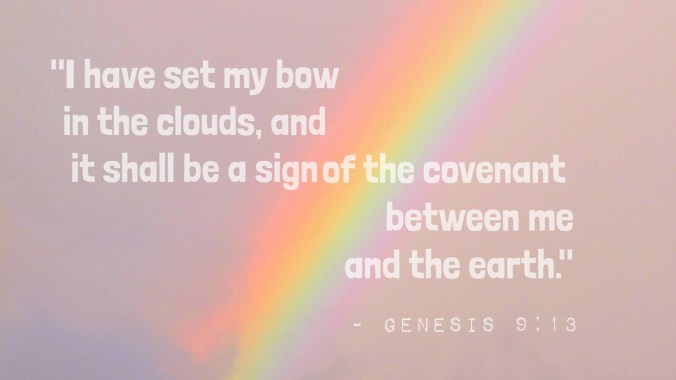
When the great flood ended, God made a covenant with Noah and his family never to drown the world again. He set his bow – the rainbow – in the sky to remind him of the covenant every time he gathered clouds. All who saw the rainbow were reminded of God’s promise not to destroy the world again.

Symbols are important to us. A simple image can evoke complex ideas, emotions, and memories. The most prominent Christian symbol is the cross. It reminds us of death and resurrection. It identifies fellow believers. It marks a spot where we can lay down our burdens. Like all effective symbols, it is easily recognized – two simple lines! – and is rich with meaning.

Corporations spend millions of dollars to develop recognizable logos that communicate the essence of their business and inspire loyalty. Who in America doesn’t immediately recognize the Golden Arches and what they stand for? We wear clothes with symbols to telegraph our status, cultural or counter-cultural affiliations, team loyalties, and peer groups. We exchange a lot of information in the shorthand of symbols.

How do we distinguish truly meaningful symbols from the visual noise bombarding us each day? Are religious symbols nothing more than a brand logo? Let’s consider the rainbow. It only appears in the rain, the very thing it is meant to protect us against. And what about the cross? It was an instrument of death, but it is now a symbol of new life. We revisit and ritualize these symbols because they are about transformation, and about movement from struggle to victory. The Nike swoosh can only aspire to such heights.

Let’s use our symbols wisely and appropriately. If the rainbow was in the sky 24/7, it wouldn’t be nearly as powerful. If we slap a Jesus fish or “John 3:16” on everything we own, its power to transport us to a deeper emotional or spiritual frame of mind is diluted, as is the message it sends to others. They are not like flags or team jerseys that define Team Jesus. The symbols of our faith should be like beacons inviting others home.

Comfort: The symbols of our faith can bring us comfort and help remind us of important things.

Challenge: Symbols can confuse or alienate people who don’t understand them. Be thoughtful about using them to welcome rather than to exclude.

Prayer: God of truth, help me to see beyond symbols to the truths behind them. Amen.

Discussion: What symbols are meaningful to you? Why?

Join the discussion! If you enjoyed this post, feel free to join an extended discussion as part of the C+C Facebook group. You’ll be notified of new posts through FB, and have the opportunity to share your thoughts with some lovely people. Or feel free to comment here on WordPress, or even re-blog – the more the merrier!