Hope Astutely

1449236593541

Readings: Psalms 102; 148, Amos 5:1-17, Jude 1-16, Matthew 22:1-14


In the aftermath of Hurricane Katrina, thousands of volunteers arrived to help the residents of New Orleans recover. Among them were con artists who accepted large down payments for construction work then skipped town. Every year Americans with terminal and/or chronic diseases spend hundreds of millions of dollars on unproven and frequently dangerous “cures.” People who can barely afford to eat donate money they can’t afford to televangelists who teach a  fraudulent prosperity gospel. Politicians convince generation after generation to blame the latest wave of immigrants (Irish, Asians, Jews, Syrians, etc.) for societal ills because they know fear mongering is good campaign strategy.

When people are desperate or afraid, they are especially vulnerable to the false comforts of people who tell them what they want to hear. The author of Jude warned early Christians to be wary of people spreading false doctrine that taught self-glorification over submission to Christ: “These are grumblers and malcontents; they indulge their own lusts; they are bombastic in speech, flattering people to their own advantage.” Today we don’t worry much about the religious orgies contemporary with Jude’s audience, but we should be wary of leaders who conflate secular concerns like capitalism (and other economic systems), democracy (and other government systems),  or nationalism (and other tribalist systems) with Christianity in order to exploit our fears and insecurities.

In the parable of the wedding banquet, Jesus describes the wedding of a king’s son where many were invited but chose not to attend, and this lack of commitment resulted in their deaths as commanded by the king. The king’s slaves collected a second round of guests including everyone they found on the street, but even these guests were not all safe, “for many are called but few are chosen.” Those chosen few sought hard truths over a diluted and convenient message.

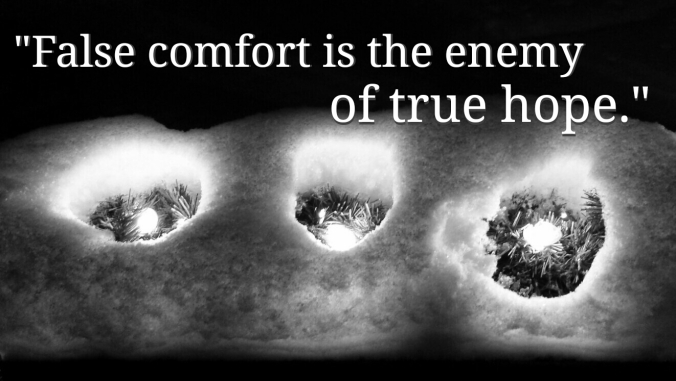
Our world can be scary. Our instincts can be base. Many will take advantage of that combination to spread beliefs that are not in our best spiritual interests. False comfort is the enemy of true hope. Let us be wise and make sure our hope is placed in Christ.

Comfort: We can identify true hope by comparing it to Christ’s example.

Challenge: Be wary of people who would exploit your faith for their own gain.

Prayer: I keep the LORD always before me; because he is at my right hand, I shall not be moved. (Psalm 16:8)

Discussion: Are there any parts of your life where your secular expectations are in conflict with your religious ones? If not … why not?

Join the discussion! If you enjoyed this post, feel free to join an extended discussion as part of the C+C Facebook group. You’ll be notified of new posts through FB, and have the opportunity to share your thoughts with some lovely people. Or feel free to comment here on WordPress, or even re-blog – the more the merrier!

Hope Realistically

1449111283187

Readings: Psalms 18:1-20; 147:12-20, Amos 4:6-13, 2 Peter 3:1-10, Matthew 21:33-46


Wouldn’t it be nice if people of faith were assured peaceful, healthy, uncomplicated lives? Some preachers – mostly of the “send us your money to pray over” variety – claim disease and difficulty can be overcome by faith alone, and that adversity simply fills a void where faith is lacking. The prophet Amos, describing God’s attempts to use drought, famine, and plague to convince the people of Israel to return to him, would claim differently. The faithful and the wicked suffered the consequences of the wicked together. When the world experiences similar troubles today, whether we believe they are sent directly by God or the natural consequences of our own misguided actions, faith is not guaranteed to shield us.

In Jesus’s parable of the landowner, tenant farmers kill the blameless servants who have come to collect the agreed upon share of the harvest on behalf of their master the landowner. One might expect the aura of authority lent by their master would protect the servants, but it does not. One can find many parallels in our modern world, where Christians continue to be persecuted for their faith. From actual martyrdom and execution to depression, addiction, illness, and crime,,, our faith exempts us from none of it.

If we are not spared suffering, why have faith at all?

Faith is the source of hope. We believe in God’s eternal plan of justice and salvation, and trust our sufferings are finite. As part of a larger body, we know the suffering and even destruction of one part does not have to mean the death of the whole. We stand in the center of the wreckage and devastation – and sometimes the wreckage and devastation dwell in the center of us – but we do not allow them to define us. In the face of seemingly endless disaster, is there anything realistic about hope? There is if our hope is dependent not on this moment, but on the faith that the Kingdom of God will not be denied. The ailing body of humankind will be raised to true life again. A stumble is still a step forward.

Comfort: God is with us through suffering, whether or not it is of our own making.

Challenge: When others suffer, let’s offer support instead of empty words.

Prayer: Guard me as the apple of the eye; hide me in the shadow of your wings, from the wicked who despoil me, my deadly enemies who surround me. (Psalm 17:8-9)

Discussion: Do you think there is anyone who hasn’t somehow caused someone else to suffer?

Join the discussion! If you enjoyed this post, feel free to join an extended discussion as part of the C+C Facebook group. You’ll be notified of new posts through FB, and have the opportunity to share your thoughts with some lovely people. Or feel free to comment here on WordPress, or even re-blog – the more the merrier!

Hope Authentically

1449028560917

Readings: Psalms 50; 47, Amos 3:12-4:5, 2 Peter 3:1-10, Matthew 21:12-22


In the New International Version of the Bible, the word “hypocrite” (or some variant of it) appears roughly four dozen times. About half of those instances are attributed to Jesus as he chastised the self-righteous. Amos and other prophets condemn example after example of the hypocrisy of God’s people. They say God finds it so detestable that no quantity or quality of sacrifices can make up for it.

As we hope for the coming of the Kingdom, let’s do what we can to eliminate the hypocrisies in our own lives. We all have them; they’re virtually inescapable. Maybe we don’t feel we are capital-H hypocrites like those who troubled Jesus, but condemning them while ignoring our own failings is … well … hypocritical.

These behaviors are insidious, because often we justify our hypocrisy enough not to be bothered by it. Like when we rail against the sleazy tactics of the opposing political party, yet turn a blind eye toward less than honorable actions of our own side because they are doing it “for the right reason.” Or when we compromise our principles (“I believe in sustainability!”) because they might cost us money (“But fair trade coffee is a dollar more per pound!”). And when we claim to follow Christ, then find reasons to blame the poor, the alien, the imprisoned, the sick, and the sinful for their plight rather than love and serve them as we’ve been told.

The Kingdom we hope for is not one where everyone else changes and we get to bask in the satisfaction of how right we’ve been all along. To be good citizens of the Kingdom — now or in the future — we can’t assume we’ll be better people because the world will be a better place. That’s like saying: “I’ll learn to turn the other cheek when you cease to offend me.” To the contrary, the world will be a better place because we will be better people living into the fullness of Christ’s love.

It’s not easy to face our own hypocrisy, nor realistic to think we will eliminate it entirely, but the nearer we draw to Christ the more authentic we become.

Comfort: God loves us as we are, and because God loves us we can be better.

Challenge: Ask someone you trust to point out an area where you can be hypocritical.

Prayer: Hear a just cause, O LORD; attend to my cry; give ear to my prayer from lips free of deceit. (Psalm 17:1)

Discussion: What hypocrisies have you discovered within yourself?

Join the discussion! If you enjoyed this post, feel free to join an extended discussion as part of the C+C Facebook group. You’ll be notified of new posts through FB, and have the opportunity to share your thoughts with some lovely people. Or feel free to comment here on WordPress, or even re-blog – the more the merrier!

For the record…

… Since the Lectionary is cyclical, the recent and upcoming Advent posts are polished up versions of ones written two years ago. It was a very different political atmosphere, so please don’t read too much about current events into their intent. But maybe don’t read too little into them either; the prophetic cry for justice is ongoing and timeless.

Hope Justly

20151130_232850

Readings: Psalms 33; 146, Amos 3:1-11, 2 Peter 1:12-21, Matthew 21:23-32


The Old Testament contains over a dozen books named for prophets. Most of them contain the same message for the people of God: repent and embrace the justice God requires of you or the consequences of your actions will destroy you. God seems to have no desire to punish his people — why else provide them so many warnings? — yet when we read the words of the prophets we can’t help but feel the inevitably of their self-destruction.

Amos tells us “the Sovereign Lord does nothing without revealing his plan to his servants the prophets” and says the people hear the lion roar yet do not fear. Rather, they content themselves with fulfilling the letter of the law while ignoring its purpose: to bring justice to God’s people. Nearly 800 years later, Jesus was the roaring lion the people chose to ignore. His message to the leadership of the time could have come from Amos: while paying lip service to the Lord, you are ignoring holy truths. When faced with the question of Jesus’s authority, they feigned ignorance rather than risk losing their grip on the people by telling the truth.

To what prophetic cries for holy justice do we turn a deaf ear today? In what ways are we trading the demands of justice for personal convenience? What groups of people do we allow to be vilified or victimized for political or financial expedience? In this age of information overload, any failure to recognize the voices which cry out for an end to poverty, racism, sexism, exploitation, and countless other ills requires a willful ignorance rivaling the pharisees. We are being warned. Will we be as hard-hearted as those who denied Amos and Jesus?

It’s not too late. Whether Christ returns tomorrow or a million years from now, today we can choose to be a people whose actions court blessing rather than wrath. Advent is a time to say: “I hear you. I see you. I long for the justice denied you, and tremble before God that I have been party to it.” Advent is the time to roar like a prophet.

Comfort: Christ comes into the world to deliver justice to the persecuted.

Challenge: Read about human trafficking and the seafood industry. Think about how you can value justice as part of the price for goods and services.

Prayer: Let all the earth fear the LORD; let all the inhabitants of the world stand in awe of him. For he spoke, and it came to be; he commanded, and it stood firm. (Psalm 33:8-9)

Discussion: Who does it seem God might be warning today? Through whom is God speaking?

Join the discussion! If you enjoyed this post, feel free to join an extended discussion as part of the C+C Facebook group. You’ll be notified of new posts through FB, and have the opportunity to share your thoughts with some lovely people. Or feel free to comment here on WordPress, or even re-blog – the more the merrier!
 

Hope Humbly

2015-11-30-scaled

Readings: Psalms 122; 145, Amos 2:6-16, 2 Peter 1:1-11, Matthew 21:1-11


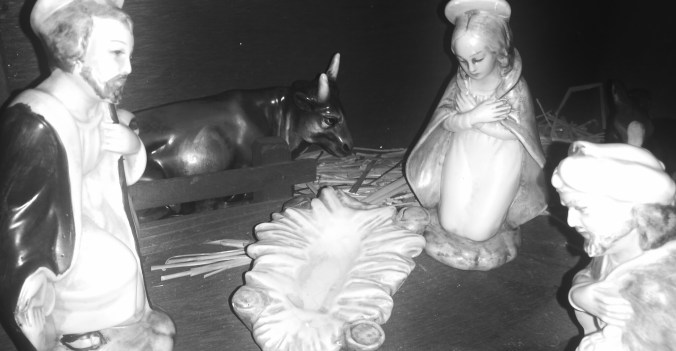
What does it mean to wait for Christ? In one sense it means preparing our hearts and spirits for the promise of Christmas. Whether we all agree about the historical details of the nativity, we share a fairly common understanding about its message. In another sense, it means preparing ourselves for the return of Christ at some future time — and we have a lot less agreement about what that means. Some of us think of it as a literal embodiment of Revelation. Others are less certain of the details but envision a physical return. Still others think of it in metaphorical terms and don’t much separate the future Kingdom of Heaven from the present. Almost certainly none of us knows exactly, and Christ will continue to thwart expectations. It’s kind of his thing.

In Matthew 21, Jesus arrives in Jerusalem on a donkey. This gesture symbolized his defiance of both Roman authority and the expectations of the Jewish people. The Jews were expecting a warrior messiah, a political figure who would throw off the chains of Roman tyranny in bloodshed and battle. Instead, they got a man who refused earthly titles and allowed his persecutors to execute him. A donkey where they expected a stallion.

Jesus will throw over our expectations as well (if he hasn’t already). So how should we prepare? Maybe the best thing to do is carry on as if we don’t know exactly what to expect. Because we don’t.

The second letter of Peter advises us to cultivate the qualities describing a life in Christ, each quality laying a foundation for the next: goodness, knowledge, self-control, perseverance, godliness, mutual affection, and love. Without them  he says our vision of Christ is nearsighted and blind. Before we make the same mistake as Christ’s contemporaries and insist our understanding of the messiah must be the right one — or insist someone else’s must be the wrong one —let’s concentrate on working up the rungs of Peter’s ladder of virtues from goodness to love. Those rungs are held together between rails of humility and faith. As we hope for Christ’s return, let’s hold tightly to both.

Comfort: We can always grow while we wait to encounter Christ more fully.

Challenge: At the end of each day this week, reflect on where you might have better exercised humility.

Prayer: May God continue to bless us; let all the ends of the earth revere him. (Psalm 67:7)

Discussion: How do you think your understanding of Jesus might differ from someone else’s?

Join the discussion! If you enjoyed this post, feel free to join an extended discussion as part of the C+C Facebook group. You’ll be notified of new posts through FB, and have the opportunity to share your thoughts with some lovely people. Or feel free to comment here on WordPress, or even re-blog – the more the merrier!

Hope Cautiously

2015-11-29-scaled

Readings: Psalms 24, 150; Amos 1:1-5, 1:13-2:8; 1 Thessalonians 5:1-11; Luke 21:5-19


Advent is the season when we prepare for the arrival of Christ. This arrival has a dual nature, as we celebrate his birth and Bethlehem and anticipate his eventual return. Every year it is a cycle within a cycle.

The history of injustice similarly repeats itself. Ethnic tensions, disregard and abuse of the poor, corrupted court systems, war crimes, and other ills have existed throughout all of human history. Whether or not we like to admit it, no nation or people is immune. When the formerly oppressed gain power they may take their turn to become the oppressor, and are blind to it because they still think themselves righteous.

Such was the case with Israel when farmer-turned-prophet Amos spoke to them. Israel had struggled long and hard to become a prosperous nation, but Amos told them they were no better than the wicked nations surrounding them. Amos accused the Israelites of “selling the righteous for silver, and the needy for a pair of sandals […] trampling the head of the poor into the dust of the earth, and pushing the afflicted out of the way.” The leadership of Israel declared themselves righteous because they followed the rules of sacrifice and ritual, but they were indifferent to God’s greater demands of love and justice.

The theme for this first week of Advent is Hope. The flip side of hope is recognition that the world can be bleak, for why would we hope if we didn’t long for things to be better? Amos reminds us part of that recognition needs to be an examination of our own hearts, actions, and inactions. It’s human nature to believe our actions are justified … and to provide justification when we aren’t sure. We don’t always want to face ourselves when we’ve been part of an injustice or we’ve been willfully ignorant about our own contribution to societal problems. If in reading that last sentence you assumed it was accusing you of something specific … it wasn’t but maybe your consciences is. Maybe start there.

The good news of Advent is that we don’t end “there.” In the weeks ahead, we will live into the promise of Hope.

Comfort: Hope is promised to everyone.

Challenge: This Advent season, begin an examination of your conscience and begin owning up to the things that get in the way of hope.

Prayer: For the sake of my relatives and friends I will say, “Peace be within you.” For the sake of the house of the LORD our God, I will seek your good (Psalm 122:8-9)

Discussion: There are countless things to hope for. Which is most pressing to you right now?

Join the discussion! If you enjoyed this post, feel free to join an extended discussion as part of the C&C Facebook group. You’ll be notified of new posts through FB, and have the opportunity to share your thoughts with some lovely people. Or feel free to comment here on WordPress, or even re-blog – the more the merrier!

The End Is Near

winter-83112_1280

Today’s readings (click below to open in new tab/window):
Psalms 63; 149, Micah 7:11-20, 1 Peter 4:7-19, Matthew 20:29-34


The world has been ending for a very long time.

When I was a child, priests and Sunday School teachers, caught up in the atmospheric dread of the Cold War, terrified me by preaching the imminent end of the world and the threat of Russia. I confided my fears to my mother, and it turned out when she had gone to Catholic school at the same parish, the priest and nuns gave the students a specific date to expect the end. She too was terrified until the date came and went. There was supposed to be some lesson in that about being prepared, but all she seemed to learn was a distrust of the clergy.

Peter, like many disciples, genuinely believed Christ would be returning in his lifetime or shortly after, but it didn’t happen. The hundreds of predictions of the end of the world since then have been miserably wrong. One of these more recent debacles was blamed on faulty decimal placement.

On this last day of the liturgical year, we look forward to the beginning of Advent and the new year. Except we don’t traditionally welcome it with parties and feasts. It doesn’t have an equivalent of Ash Wednesday which precedes Lent. Instead, our scripture readings turn to apocalyptic themes and prophets of doom. The stores may be full of twinkling lights and cheerful music, but they represent the false promise of satisfaction via worldly accumulation. Without the rich contemplation of Advent, they offer little more than a picture of a feast offers a starving family.

The world will end someday. Until it does, we are left to contemplate how to balance living both as if it will happen tomorrow, and as if it will happen millennia after we have passed.

But how different do those lives look?

In either case, our neighbor struggling with depression will still need a kind shoulder. The bellies of hungry children halfway around the world won’t stop rumbling. We still need to forgive that person who wronged us sooner rather than later. Our sacrifices and our love and our faith are neither more nor less meaningful, and always necessary. Advent is the time we set aside to remember that while we mourn the broken nature of the world, we are also waking to the promise of its new life in Christ.

The end is near. We need not fear it, for so is the beginning.

Comfort: Christ makes the world new for us each day.

Challenge: Remember the past, live the present, shape the future.

Prayer: Because your steadfast love is better than life, my lips will praise you.
So I will bless you as long as I live; I will lift up my hands and call on your name. (Psalm 63:3-4)

Discussion: Do you observe Advent in any way? If so, what does it mean to you? If not, do you see any value in it?

Join the discussion! If you enjoyed this post, feel free to join an extended discussion as part of the C+C Facebook group. You’ll be notified of new posts through FB, and have the opportunity to share your thoughts with some lovely people. Or feel free to comment here on WordPress, or even re-blog – the more the merrier!

Tomorrow begins the season of Advent – the beginning of the church’s new liturgical year. That makes today a sort of New Year’s Eve. As we begin both a new year and – as we complete our journey through the two-year daily lectionary – a new phase of Comfort & Challenge, I thank you for the blessing of your company on these last seven hundred and thirty-five days.

New Year’s Eve is a time for looking both backward and forward. “The Closing of the Year” was introduced to the world 25 years ago as the opening song of the strange and beautiful movie Toys starring Robin Williams. This song performed by Wendy & Lisa captivated me then, and still speaks to me about how we can bring each other love and hope. I hope you enjoy it as I do.

Blessings to you in the closing of one year and the beginning of the next!

Closing of the Year

I Want That

christmas-2971961_1920

Today’s readings (click below to open in new tab/window):
Psalms 84; 148, Isaiah 24:14-23, 1 Peter 3:13-4:6, Matthew 20:17-28


If you didn’t tell people you were a Christian, would they feel compelled to ask about your hope?

The First Epistle of Peter, written to an audience spanning the Roman provinces of Asia Minor, is concerned largely with the relationship between Christians and the surrounding culture. In response to a growing sense among non-believers that Christians were troublemakers, dissidents, and generally immoral the letter encouraged Christians to respect authority and to face discrimination and persecution for doing what is right as opportunities to achieve solidarity with Christ’s suffering.

The letter advises: “Always be ready to make your defense to anyone who demands from you an accounting for the hope that is in you; yet do it with gentleness and reverence.”

Why should people care enough to ask about someone’s hope? Because when we follow Christ, it should be obvious we “do not fear what they fear.” When we don’t fear what other people do, it makes them uncomfortable until they know why. And what are these things people fear? Radical forgiveness (both human and divine). Disregard for public opinion. Willingly becoming a servant to all. Death. Life.

If we never mention being a Christian, people should still see these traits in us. And any unease it causes them should fade when, with gentleness and reverence, we explain our faith.

A good friend of mine, raised without religion, arrived at faith not because Christians tried to talk her into it but because, in her words, “I saw a light in them and thought, I want that.” This light was evident in their everyday attitudes and actions, and buoyed them up through both difficulties and celebrations. Strong-armed evangelistic tactics would have been wasted on her, but the fruits of the Spirit were a compelling witness.

It’s not for us to judge whether the light of Christ dwells within the heart of any individual, but Christians can certainly create barriers to obscure it. Anger, fear, hostility, condemnation, self-righteousness, and stubbornness are all like shades we draw around our hearts. Each one makes it harder for the light to shine into the world; draw enough, and it is obscured entirely. Then no one has anything to ask about, because we look the same as or worse than the rest of the world.

We can positively influence the world’s (and our own) perception of the faithful without making demands or forcing ourselves upon it. The witness of a servant full of hope and without fear is a remarkable thing. Let us strive to be a people who cause other people to say, “I want that.”

Additional reading: for thoughts on today’s passage from Matthew, see Ask? Away!

Comfort: The light of Christ shines within you.

Challenge: Let is shine in the world as well.

Prayer: As for me, I am poor and needy, but the Lord takes thought for me. You are my help and my deliverer; do not delay, O my God. (Psalm 40:17)

Discussion: Have you known anyone who lights up a room without saying anything?

Join the discussion! If you enjoyed this post, feel free to join an extended discussion as part of the C+C Facebook group. You’ll be notified of new posts through FB, and have the opportunity to share your thoughts with some lovely people. Or feel free to comment here on WordPress, or even re-blog – the more the merrier!