Rest In Peace

candle-1068946_1920

Today’s readings (click below to open in new tab/window):
Psalms 67; 150, 2 Samuel 1:17-27, Romans 12:9-21, Matthew 25:31-46


“Don’t speak ill of the dead.”
– Ancient proverb.

“It’s easier to love someone who’s dead. They make so few mistakes.”
– Arnold, Torch Song Trilogy

After Saul and his son Jonathan died battling the Philistines, David wrote The Song of the Bow (today’s reading from 2 Samuel) as a memorial to them. He praised their might and bravery, their loyalty to each other, and the good they did for Israel. He didn’t mention Saul’s crazed and cowardly attempts to murder him, or the fierce division they had over his fate, or that his resulting exile weakened the nation.

Isn’t this the way of most memorial services? “Eulogy” literally means “good words” and we seldom hear anything else spoken at a funeral, regardless of the character of the deceased. At least for a time the bumps in the road of life are smoothed over as we attempt to comfort those left behind.

But not all our grief is for lost love.

Human relationships being complex, we often have unfinished business with the deceased. If this business pains us, we are left with options of denial or therapy  since resolution is no longer possible. Relationships revolving around the person we’ve lost may become more complicated as well.

Then there’s a third option: forgiveness. Death forces us to face we can’t control other people – something we won’t always accept while they live. A hoped for apology or behavioral change – which always seem to remain a possibility when someone is alive – can be an obstacle to forgiveness, because it makes forgiveness dependent upon that person. Yet we can control them no more alive than dead. The relief of forgiveness comes only when we realize it means changing ourselves, but that frequently means hard and humble work on our part.

Fortunately, we can do the work to forgive someone while they still live. On the flip side, we can offer amends any time – regardless of whether we feel like it – and avoid being the source of irresolvable grief. Either way, love as if it’s your last chance. Once we stop waiting, we really start living.


Additional Reading:
For thoughts on today’s passage from Matthew, see Whatsoever.
Read a reflection on today’s scripture from Romans in Burning Love.

Comfort: Forgiveness is something you can choose right now…

Challenge: … but it may take a while to really get there.

Prayer: May God continue to bless us; let all the ends of the earth revere him. (Psalm 67:7)

Discussion: What impact has unfinished business with a deceased friend, for, or family member had on your life?

Join the discussion! If you enjoyed this post, feel free to join an extended discussion as part of the C+C Facebook group. You’ll be notified of new posts through FB, and have the opportunity to share your thoughts with some lovely people. Or feel free to comment here on WordPress, or even re-blog – the more the merrier!

Compromising Positions

communication-73331_640

Today’s readings (click below to open in new tab/window):
Psalms 56; 149, 2 Samuel 1:1-16, Acts 15:22-35, Mark 6:1-13


The word “compromise” has multiple meanings. In one sense it refers to the give-and-take between parties negotiating an agreement. For example, if a couple planning a wedding disagrees on whether the event should be held at the beach or in a hall, they may compromise on an outdoor venue which faces the beach but provides shelter from inclement weather.

In another sense, compromise means to weaken or undermine someone’s strength or credibility. If a pharmaceutical researcher fails to disclose his study is funded by the company who wants to take the drug to market, we might say his conclusions about drug safety are compromised.

We may be willing to compromise. We are almost never willing to be compromised.

In the first case, active participants seek accord. In the second, the consequences are one-sided so it may seem like the comprosmised party is a passive participant, but very often they are a victim of their own misdeeds.

As more and more gentiles converted to Christianity, Jewish disciples didn’t agree on whether these believers needed to follow Jewish customs, particularly circumcision. In the end, they officially agreed that the rules for gentile believers were “abstain from what has been sacrificed to idols and from blood and from what is strangled and from fornication.” Why was circumcision taken off the table? Because Peter reminded the Jewish Christians that they were saved by Christ’s grace since they had failed to bear the yoke of the very law they were trying to impose.

Having compromised themselves, the disciples learned to compromise.

We don’t need to impose our rules on the world around us. Let’s not blame Christ for our compulsion to condemn and shame others we call sinful.  Didn’t Jesus say “judge not lest ye be judged?” Your sins and mine helped pave the road to the cross just as much as anyone else’s … and Jesus died for all of us.

Yet overlooking the broken state of the world does it a disservice. Perhaps the compromise between ignoring sin and condemning people is sharing with them the good news that Christ loves us all.


Additional Reading:
For thoughts on today’s passage from Mark, see A Burden Shared, Faith in the Familiar, and Expect the Unexpected.

Comfort: Compromising is not the same as selling out.

Challenge: In the newspaper, look for stories that result from people’s unwillingness to compromise. How could they be handled differently?

Prayer: O Most High, when I am afraid, I put my trust in you. Amen. (Psalm 56:2)

Discussion: When have you felt good about a compromise? When have you felt bad?

Join the discussion! If you enjoyed this post, feel free to join an extended discussion as part of the C+C Facebook group. You’ll be notified of new posts through FB, and have the opportunity to share your thoughts with some lovely people. Or feel free to comment here on WordPress, or even re-blog – the more the merrier!

Spearhead

middle-ages-228656_1920

Today’s readings (click below to open in new tab/window):
Psalms 130; 148, 1 Samuel 31:1-13, Acts 15:12-21, Mark 5:21-43


As 1 Samuel ends, King Saul – wounded by archers and surrounded by enemy soldiers – falls on his sword rather than let his enemy capture and torment him. Notably absent is any mention of Saul’s spear. For much of his story, Saul and his spear seem inseparable. When Israel’s blacksmiths are lost, only Saul and his son Jonathan have spears and swords. He holds it while he sits in his house, where multiple times he hurls it at David. Feeling betrayed by Jonathan, he hurls it at him too. He’s sitting under a tree holding it when he orders the murder of priests in Nob. The last we read of the spear, he’s sleeping next to it when David steals it away in the night, then returns it to prove (yet again) he means no harm.

There’s an old saying: when the only tool you have is a hammer, every problem looks like a nail. Saul’s tool of choice was a spear, so every problem – real or imagined – looked like a target. Ironically, on the day Saul met David, the shepherd boy told Goliath: “the Lord does not deliver by sword or by spear” – a lesson he never learned. His preoccupation with David’s imagined treachery, and his insistence on solving the problem by running it through, undid Saul and nearly undid Israel.

We might not run around with spears, but we can become so focused on our own ideas that our view of the world narrows to a fine point good for little but stabbing at perceived enemies. When our dedication to a philosophy, a cause, a goal, or a relationship crosses the line from commitment to zealotry, we lose perspective. Those who don’t agree with us – or simply don’t share our enthusiasm – become targets instead of people. Principles are good; obsessions are dangerous.

Trying to view the world through the lens of a single creed, political party, social movement, or motivation pushes most of the world out of focus. God created the big picture. To love it all, we must get out of our own heads to see it all.


Additional Reading:
For thoughts on today’s passage from Mark, see Worthy and Go In Peace.

Comfort: You have something to learn from everyone, and they have something to learn from you.

Challenge: Meditate on how you may have pigeon-holed your thinking.

Prayer: Lord, I seek to love all your creation. Help me see it clearly. Amen.

Discussion: What do you think Saul might have done with his spear after David gave it back? Why?

Join the discussion! If you enjoyed this post, feel free to join an extended discussion as part of the C+C Facebook group. You’ll be notified of new posts through FB, and have the opportunity to share your thoughts with some lovely people. Or feel free to comment here on WordPress, or even re-blog – the more the merrier!

Sense and Ostensibility

20170727_233818-01

Today’s readings (click below to open in new tab/window):
Psalms 36; 147:12-20, 1 Samuel 28:3-20, Acts 15:1-11, Mark 5:1-20


Ostensible:
adjective, outwardly appearing as such; professed; pretended:
an ostensible cheerfulness concealing sadness.

Quite often people conceal the reasons for their actions from other people (and possibly also from themselves) by offering reasonable-sounding explanations to cover their tracks. One such example is the history of Jim Crow laws enacted after the Civil War. Ostensibly, literacy tests and proof-of-residency requirements were instituted in many states to make sure voters could comprehend the ballot and were qualified to vote. Of course the real reason was to disenfranchise black voters who prior to emancipation had often not been allowed to learn to read, and whose residency documentation was at best a bill of sale. The true intentions were revealed when the voting rights of illiterate white voters were grandfathered in. ‘

The legacy of Jim Crow continues today, as evidenced when the Supreme Court overturned recent North Carolina voting laws which were ostensibly about preventing voter fraud but blatantly targeted African-American and Hispanic voters.

This kind of behavior is neither particularly modern nor particularly American. As more and more gentiles began to convert to Christianity, many of the Jews who became the first followers of Christ didn’t believe they were legitimate. They began to demand that gentile converts be circumcised, as Jews were. After some deliberation, Peter said: “[I]n cleansing their hearts by faith [God] has made no distinction between them and us. Now therefore why are you putting God to the test by placing on the neck of the disciples a yoke that neither our ancestors nor we have been able to bear?” On the surface their concerns may have sounded legitimate, but scrutiny revealed them to be little more than cultural bias against the gentiles.

Part of being “innocent as doves and wise as serpents” is knowing when reasonable explanations like tradition, cost, loyalty, or practicality hide unsavory motives. One big clue is when a group who has been historically marginalized – particularly if they have been gaining ground – suffers disproportionately as a result. The Pharisees had “good reasons” to crucify Christ; let’s be wary of smooth talkers who are readying the nails.


Additional Reading:
Read more about today’s passage from Acts in Entrance Exams.
For additional thoughts on Mark, see The Devils You Know.

Comfort: You’re smart enough to figure out what’s really going on.

Challenge: Don’t play dumb.

Prayer: Lord, teach me to see hard truth and resist attractive lies. Amen.

Discussion: What are some examples of good reasons for not-so-good actions?

Join the discussion! If you enjoyed this post, feel free to join an extended discussion as part of the C+C Facebook group. You’ll be notified of new posts through FB, and have the opportunity to share your thoughts with some lovely people. Or feel free to comment here on WordPress, or even re-blog – the more the merrier!
I get knocked down, but I get up again…

freedom-2262513_1920.jpg

Today’s readings (click below to open in new tab/window):
Psalms 15; 147:1-11, 1 Samuel 25:23-44, Acts 14:19-28, Mark 4:35-41


Resilience, a term long used in medical circles, is becoming a staple of life and leadership coaches. For medical purposes, resilience means the ability to resist and recover from disease. In the area of personal development, it describes the ability to bounce back from stress. Either kind of resilience depends partially on traits we’re born with, but with some knowledge and effort we can positively influence how resilient we are in both senses.

Paul was a paragon of resilience. The man was nearly impossible to keep down. In Lycaonia, Paul and the other disciples won many converts among the gentiles. When Jews who were hostile to Paul came from Antioch and Iconium to Lycaonia and turned the people against him, the crowds “stoned Paul and dragged him out of the city, supposing that he was dead.” But when the disciples gathered around him, he got up, regrouped, and went from city to city encouraging the disciples and appointing elders.

It seems Paul’s resilience depended on his faith and his interaction with other people. We can all draw on our reserves of resilience, but we need to learn how. For some of us that means interacting with loved ones, and for others it means time alone. Maybe it’s art. Maybe it’s running. The benefits one person gets from time in prayer and meditation may be the same benefits someone else gets from kickboxing lessons. Because we are all so different, we should be careful not to ridicule or belittle someone else’s means of stress reduction. Nor should we feel pressured to explain or modify our own to suit someone else’s expectations.

Cultivating resilience – even if it takes time away from other people’s priorities – is not selfish; it’s self care. Stress attacks the body in many of the same ways disease does, but we can build immunity. Why deny ourselves mental health exercises any more than we would physical exercise? Our ability to serve God and the Kingdom only improves as our resilience does. If we’re going to love our neighbors as we love ourselves … don’t we first have to love ourselves?

Comfort: You are part of God’s creation; treat yourself like you would the rest.

Challenge: Reflect on the ways you deal with stress and whether they increase your resilience or simply suppress it.

Prayer: Lord, teach me healthy ways to care for myself so I may be at my best to serve you. Amen.

Discussion: What helps you build resilience?

Join the discussion! If you enjoyed this post, feel free to join an extended discussion as part of the C+C Facebook group. You’ll be notified of new posts through FB, and have the opportunity to share your thoughts with some lovely people. Or feel free to comment here on WordPress, or even re-blog – the more the merrier!
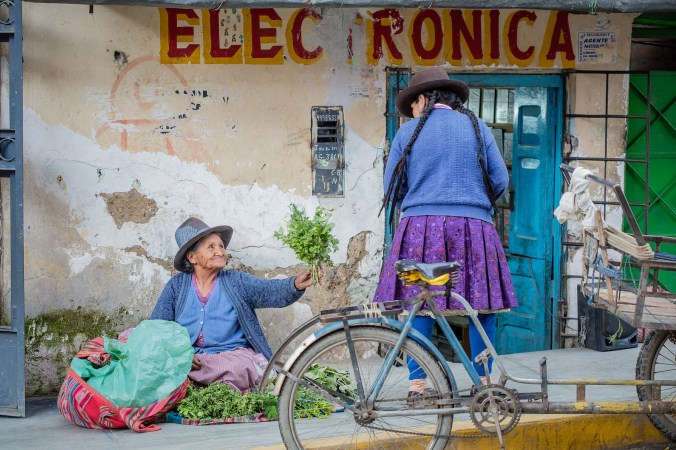
Human Kindness, Overflowing

peru-641632_1920

Today’s readings (click below to open in new tab/window):
Psalms 123; 146, 1 Samuel 25:1-22, Acts 14:1-18, Mark 4:21-34


David and his six hundred men camped in the wilderness outside Carmel, near the property of a wealthy man named Nabal. David sent men to tell Nabal that unlike some of the more dangerous characters roaming the wilderness they had harmed neither his shepherds nor his flock but protected them; therefore, would he spare them whatever food he could? Nabal, cranky and suspicious of runaway servants, declined. David returned with four hundred armed men, ready to kill all the males of the household.

Allowing that a refusal of hospitality was a much stronger insult in David’s culture, and that the text is clearly biased against Nabal … in this situation David is not a nice guy. Essentially he tells his troops, “Hey, boys! This guy who didn’t actually ask for our protection now refuses to compensate us for it so we’re going to slaughter his household.”

Today we call that sort of extortion a “protection racket.”

Ever heard of Nice Guy Syndrome? Simplified (maybe overly so), it’s the idea that some men who see themselves as nice believe this obliges women – especially women they’ve supported through relationships with men who are “not nice” – to consider them romantically. Less a virtue and more an objectifying strategy.

No matter how kind you are, no one (regardless of gender) owes you a date. Or a job. Or a meal. Or even gratitude. We appreciate these things. Being only human, we feel the sting of their absence. But if we feel it too keenly – if it punctures and deflates our impulse to be kind – perhaps what we value is not kindness itself, but the ego stroke of being perceived as kind.

True kindness is an expression of gratitude for God’s limitless love for us. It reflects God’s patience with our own imperfections and ingratitude. If we love only those who love us back, we do not love: we negotiate. As Paul writes in 1 Corinthians, love does not insist on its own way – including being returned “appropriately.” A kindness freely given is a gift to both souls, a balm which never runs dry.

Comfort: Your kindnesses, even unacknowledged, matter.

Challenge: Once a week, make a point of being kind to someone you don’t like, or who doesn’t like you.

Prayer: Thank you, God, for the many kindnesses you show me daily. Amen.

Discussion: David is an example of a flawed but basically good person. How do you deal with it when your heroes or loved ones fall short of your expectations?

Join the discussion! If you enjoyed this post, feel free to join an extended discussion as part of the C+C Facebook group. You’ll be notified of new posts through FB, and have the opportunity to share your thoughts with some lovely people. Or feel free to comment here on WordPress, or even re-blog – the more the merrier!

Killing Blows

board-2294941_1280

Today’s readings (click below to open in new tab/window):
Psalms 135; 145, 1 Samuel 24:1-22, Acts 13:44-52, Mark 4:1-20


David and his men were hiding in a cave when Saul, taking a break from his murderous pursuit to relieve himself, entered the cave and left himself vulnerable to attack. Despite the urging of his men and the weight of prophecy (“I will give your enemy into your hand, and you shall do to him as it seems good to you”), David spared Saul’s life and instead cut off a corner of his cloak. Then David used the corner as evidence that he could have killed Saul, but meant him no harm. Saul repented (for a while).

If we want to be peacemakers, we have to resist the temptation of using a killing blow just because the opportunity has presented itself. We may not be pursued by a mad king, but many people who view us as enemies – whether it’s in politics, religion, social circles, or business – do so because they misunderstand us. And we do the same. Some enemies are unavoidable, but many are created in our own minds. In many situations, such misunderstanding is more assumption than fact. When that’s the case, our best chance of de-escalating hostilities may be laying down our arms.

Have you ever had an argument with someone you loved, or maybe a co-worker, and said something you wish you hadn’t? An emotional killing blow that hurt them in ways you couldn’t fix? We do that because in the heat of the moment it promises to help us win … though the resulting prize is a damaged – sometimes broken – relationship. We do that because in our anger or fear we assume they seek to emotionally destroy us, and we want to get there first. It is a feedback loop of regret.

Like Saul, we can ruin our reputation, relationships, and legacy overreacting to mostly imaginary enemies. Better to be like David who, in the face of actual danger, sought understanding more than victory, and offered humility rather than defensiveness. Even when we are in the right, we should ask ourselves whether our goal is to annihilate our enemies or to make peace with them.


Additional Reading:
Read more about today’s passage from Acts in Shaking the Dust.
For additional thoughts on Mark, see Fertile Ground and Seeds of Faith.

Comfort: Misunderstandings can be cleared up.

Challenge: Sometimes you have to be the first to offer an olive branch, even if you’re not in the wrong.

Prayer: Help me, O Lord, to recognize my enemies, and to love them. Amen.

Discussion: Are you someone who has to have the last word?

Join the discussion! If you enjoyed this post, feel free to join an extended discussion as part of the C+C Facebook group. You’ll be notified of new posts through FB, and have the opportunity to share your thoughts with some lovely people. Or feel free to comment here on WordPress, or even re-blog – the more the merrier!

Actions and Reactions

newtons-cradle-256213_1920

Today’s readings (click below to open in new tab/window):
Psalms 19; 150, 1 Samuel 23:7-18, Romans 11:33-12:2, Matthew 25:14-30


David had many gifts: bravery, loyalty, cunning, musicality, and most importantly a heart for the Lord. A gift he seemed to lack – or at least to employ consistently – was foresight.

After he and his men fled Nob, they found their way to the gated city of Keilah in Judah. Still pursued by Saul, David asked the Lord whether the citizens of Keilah would turn him over. God’s answer was yes … but that shouldn’t have been a surprise. After all, Saul had slaughtered the citizens of the last city where he sought refuge, so Keilah didn’t have much incentive to protect him. David’s remorse for the fate of Nob didn’t seem to make a lasting impression, as he didn’t bother to ask about the safety of Keilah should he stay.

Nob and Keilah foreshadow David’s rule as king of Israel, during which time he would make some impulsive decisions with terrible yet utterly foreseeable consequences. What can we learn from all this?

First it’s yet another example – along with Moses, Samson, Rahab, Paul, etc. – of God working through imperfect people as they actually are. This should comfort us when we screw up, and remind us God still loves people though they do terrible things.

Second it shows us that being loved and forgiven doesn’t mean God is some supernatural fixer who relieves us from the consequences of our own decisions. The consequences themselves are often God’s opportunity to help us learn and grow. It’s like the bumper sticker says: “Everything happens for a reason. Sometimes the reason is that you’re stupid and make bad decisions.”

Third it suggests we have some responsibility for even unintended consequences of our actions. When conning a priest out of some bread and a sword culminated in the murder of eighty-five priests, David told the one surviving priest of Nob, “I am responsible for the lives of all your father’s house” though it was Saul’s man who’d done the killing. It is results more than intentions which obligate us.

David’s story is like everyone’s story: a lesson of God’s constant love for an inconstant humanity.


Additional Reading:
Read more about today’s passage from Matthew in Moving in the direction of justice.

Comfort: God’s love does not depend on your perfection.

Challenge: Once a day for a week, pick one choice you make and try to map out the repercussions it has. For example, the pros and cons – for you and other people before and after you – of your meal choices.

Prayer: Let the words of my mouth and the meditation of my heart be acceptable to you, O LORD, my rock and my redeemer. (Psalm 19:14)

Discussion: How do you handle decisions you later regret?

Join the discussion! If you enjoyed this post, feel free to join an extended discussion as part of the C+C Facebook group. You’ll be notified of new posts through FB, and have the opportunity to share your thoughts with some lovely people. Or feel free to comment here on WordPress, or even re-blog – the more the merrier!

A House United

cambridge-66714_1280

Today’s readings (click below to open in new tab/window):
Psalms 104; 149, 1 Samuel 22:1-23, Acts 13:26-43, Mark 3:19b-35


Jewish religious leaders were beside themselves trying to explain the popularity and power of Jesus. When they said his ability to cast out demons came from Satan, he replied: “How can Satan cast out Satan? If a kingdom is divided against itself, that kingdom cannot stand. And if a house is divided against itself, that house will not be able to stand.”

At this time his mother and brothers were growing concerned for him, so they called to Jesus from outside the house where a great crowd had gathered.

And he replied, “Who are my mother and my brothers?” And looking at those who sat around him, he said, “Here are my mother and my brothers! Whoever does the will of God is my brother and sister and mother.”

We can hear this a couple ways. The first is a dismissal, if not quite a rejection, of his family in favor of his followers. The second, more in keeping with his comments about a house divided, is an expansion of the definition of family; an expansion which includes all who dedicate themselves to God.

Ironically, Saul invited Jesus’s ancestor David into his house, and the resulting division threatened all of Israel. Because the people loved David more, Saul no longer saw him as a member of his faith family, but a dangerous rival. When his son Jonathan conspired to save David’s life, Saul’s rage was uncontrollable. He slaughtered eighty-five priests and their city of Nob because he believed they had helped David escape him. (In reality, they believed David was still serving Saul.) David, who believed Saul was God’s anointed king, had no plans to harm him.

Like so many divided houses, this was a one-sided war.

When we experience conflict with other believers, let’s not make Saul’s mistake and assume they are out to destroy us … and thereby become what we fear. Through Christ we are always challenged to expand our definition of family, even when that expansion feels threatening.

Jesus said “My father’s house has many rooms.” We don’t all have to sleep in the same one.


Additional Reading:
Read more about today’s passage from Mark in Just. Plain. Crazy.

Comfort: You have more family than you know.

Challenge: Find someone who is a member of your church, family, neighborhood, or city who thinks differently than you do. Have a conversation about what common good you agree on.

Prayer: I give thanks to your name for your steadfast love and your faithfulness. (Psalm 138:2)

Discussion: Are you a member of a divided “house?” What do you think can unite it?

Join the discussion! If you enjoyed this post, feel free to join an extended discussion as part of the C+C Facebook group. You’ll be notified of new posts through FB, and have the opportunity to share your thoughts with some lovely people. Or feel free to comment here on WordPress, or even re-blog – the more the merrier!

Stories of Survival

book-1659717_1920.jpg

Today’s readings (click below to open in new tab/window):
Psalms 51; 148, 1 Samuel 21:1-15, Acts 13:13-25, Mark 3:7-19a


If you joined David in the middle of his story, you might not realize he was the hero. He lies to a priest about being on a special mission from the king to get him to hand over the holy bread normally reserved for temple rituals. Yes he was hungry, but was sacrilege his only option? Then he tricks the priest into giving him the very sword he took when he slew Goliath. When he feels he is in danger of being exposed, he pretends to be mad by committing vandalism and drooling all over himself. Over the next few chapters he’ll employ deception several times, until eventually to save his own skin he commits himself to the service of the enemies of Israel.

Because we know his story from the beginning, we are sympathetic to his reasons for lying, stealing, and deceiving in order to survive.

Are our attitudes as generous towards people we actually know?

The vast majority of people we meet are in the middle of their stories. It’s not always a flattering chapter. Like David, they may be doing what they believe they need to do to get by. When the little lies work for David, he starts to tell bigger ones. People return to the survival mechanisms that get results, and if they have had difficult lives, what they’ve learned may seem wrong or unthinkable. Our choices make sense to us because we know our own stories and motivations, but to someone else they may seem terrible.

If we haven’t had therapy we probably aren’t aware of our own survival mechanisms, yet we all have them. Even when we are aware, overcoming the unhealthy, ill-advised, or sinful ones can be difficult to impossible. While human beings rank these behaviors in a hierarchy of evil, whatever separates us from God is sin.

Our choices make sense to us because we know our own stories and motivations. When other people’s choices don’t make sense, we don’t have to accept them but we have better options than condemning. We can love until better choices seem like valid options.


Additional Reading:
Read more about today’s passage from Mark in Rocks, Thunder, and Dough.

Comfort: The story of your life isn’t defined by its worst chapter.

Challenge: When people disappoint or hurt you, try to understand what might disappoint or hurt them.

Prayer: Have mercy on me, O God, according to your steadfast love; according to your abundant mercy blot out my transgressions. (Psalm 51:1)

Discussion: When have you been surprised to learn “the rest of the story?”

Join the discussion! If you enjoyed this post, feel free to join an extended discussion as part of the C+C Facebook group. You’ll be notified of new posts through FB, and have the opportunity to share your thoughts with some lovely people. Or feel free to comment here on WordPress, or even re-blog – the more the merrier!