I was going through some old playlists, and rediscovered this beautiful song from Rosanne Cash. It reminded me of Friday’s post, Twists and Turns. Hope you enjoy.
Clothes Encounters

Today’s readings (click below to open in new tab/window):
Psalms 12; 146, 1 Samuel 15:24-35, Acts 9:32-43, Luke 23:56b-24:11 (12)
Clothing plays a role in all three of today’s scripture passages.
In Samuel, King Saul tries to detain the prophet Samuel by grabbing at his robe and accidentally tears a strip off. Samuel, angry that Saul has not been following God’s instructions to annihilate the Amalekites and their property (and like any good prophet not one to pass up a symbolic moment), declares: “The LORD has torn the kingdom of Israel from you this very day, and has given it to a neighbor of yours, who is better than you.”
In Acts, Peter visits the home of Tabitha, a good and charitable woman who had recently died. Some widows were gathered and reminiscing over garments she had made while among them. Peter clears the room, prays, and says “Tabitha, get up” – which she does.
And in Luke, a Peter who has not yet experienced the power of the resurrection is with the eleven remaining apostles when Mary Magdalene, Mary the mother of James, Joanna, and other women tell them about meeting two angels at the open and empty tomb of Jesus. The disciples dismiss this tale, but Peter investigates for himself. At the tomb he finds the discarded burial shroud.
After someone loses a loved one, it may be quite a while before they can bring themselves to dispose of the deceased person’s clothes. Clothing carries the color, the scent, the shape of our existence. What does a trip through our wardrobe say about us? Does it tell a story of hard work? Of impeccable style? Perhaps a lifelong struggle with body image? Wealth or poverty? Our tendencies toward conformity or rebellion? A barometer of our sense of adventure? When we are gone, what memories will our closet contain?
In the end, we hope to tailor stories of loving God with all our hearts, and our neighbors as ourselves.
Trouser knees worn thin and shiny from time in prayer. Jacket elbows patched because we gave the second coat away. Cuffs and collars pressed for our Sunday best. What we wear will be remembered for how we loved while wearing it.
Additional Reading:
For more thoughts on today’s passage from Luke and the empty tomb, see Idol Tales.
Comfort: How you will be remembered is largely up to you.
Challenge: Take a look at your closet. Does it tell the story you hope people will remember?
Prayer: I will give to the LORD the thanks due to his righteousness, and sing praise to the name of the LORD, the Most High. (Psalm 7:17)
Discussion: What’s your favorite article of clothing and why?
Join the discussion! If you enjoyed this post, feel free to join an extended discussion as part of the C+C Facebook group. You’ll be notified of new posts through FB, and have the opportunity to share your thoughts with some lovely people. Or feel free to comment here on WordPress, or even re-blog – the more the merrier!
Minority Report

Today’s readings (click below to open in new tab/window):
Psalms 62; 145, 1 Samuel 15:1-3, 7-23, Acts 9:19b-31, Luke 23:44-56a
When a Supreme Court decision is split, the justices in the minority may offer a dissenting opinion. While this opinion is not legally binding, it is more than protest or rebuke. It may be used persuasively in future arguments to limit or overturn the majority opinion.
Joseph of Arimathea offered his own form of dissenting opinion. A member of the council that accused and condemned Jesus, he “had not agreed to their plan and action.” Rather, he asked Pilate for Christ’s body for proper burial. This was a bold request, as victims of crucifixion – especially those accused of sedition as Jesus was – were usually left on the cross for several days as a warning to others.
After Joseph laid Jesus in the tomb, the women who’d been following Jesus since Galilee prepared the spices and ointments for his body, then finished their Sabbath preparations.
Imagine the feelings of loss. Of hopelessness. Yet in doing what needed to be done, they defied despair. Burying Jesus was at once unremarkable – Jewish people died and were buried every day – and extraordinary because their messiah was brutally taken from them.
Did they have any inkling how bold they were to carry on? In the face of death and oppression, their ordinary acts declared, “We still have faith. We are still God’s people. We still obey God’s ordinances. This was not what we hoped for, but you have not destroyed us.” They may have felt confused and crushed but they persisted. They remained present. Like dissenting justices, from defeat they wrung an investment in the future.
None of them fully understood that God was at work, unseen and unheard, turning death upside down and inside out. Also like justices, they had no idea when or if their commitment would pay off.
What defeats are you suffering? What tempts you to despair? Remember the Spirit moves in ways not yet known to you. Persevering in small acts of faith will sustain you until they are known. Today you may not be able to see past the tomb of defeat, but unimaginable resurrection is around the corner.
Additional Reading:
For thoughts on today’s passage from Acts, see If Paul could do it….
Comfort: God is not idle.
Challenge: Meditate on how your habits change when you are distressed. Do these changes help or hinder you?
Prayer: For God alone my soul waits in silence; from Him comes my salvation (Psalm 62:1)
Discussion: In hindsight are you able to see times God was delivering you without your being aware of it??
Join the discussion! If you enjoyed this post, feel free to join an extended discussion as part of the C+C Facebook group. You’ll be notified of new posts through FB, and have the opportunity to share your thoughts with some lovely people. Or feel free to comment here on WordPress, or even re-blog – the more the merrier!
No Promises

Today’s readings (click below to open in new tab/window):
Psalms 108; 150, 1 Samuel 14:36-45, Romans 5:1-11, Matthew 22:1-14
“I meant what I said and I said what I meant. An elephant’s faithful one-hundred percent!”
– Dr. Seuss, Horton Hatches the Egg
Several Biblical characters suffer the consequences of an unwise – and unsolicited – oath to God. Saul dedicated his troops by offering an oath that cursed any of them who ate before evening fell and their enemy was vanquished. Saul’s son Jonathan didn’t know about the oath and ate a bite of honey from the ground. As a result, God withdrew from Saul for a time. Unaware of the all the facts, Saul said he would kill whoever had sinned – even if it was his own son.
Once the truth came out, Saul and Jonathan were willing to accept the consequences, but the people spoke up on Jonathan’s behalf and said his victories were proof God was with him. They ransomed Jonathan (possibly by substituting some sort of animal sacrifice) and “he did not die.”
In the heat of battle – military, political, or personal – leaders can make rash promises, often in the absence of facts, to attain victory. We’re not just talking government, but also business, church, and even family. When that happens, clean-up duty falls to the rest of us. Like the Israelites, we have to decide whether to be hardliners who insist the promise be kept or to allow for alternatives. If we supported the promise, we may be tempted to take the hard line out of pride or spite. Frequently our decision is swayed when we hear the story of someone we care for who will be personally affected, like the Jonathan to our Israel.
We don’t have to be leaders to make rash promises. When we do, we are cornered into choosing between keeping our word and doing the right thing, and it feels wrong to sacrifice either. Jesus and James advise us to avoid swearing oaths in the first place. Why create unnecessary potential for letting down others, ourselves, or God?
God knows our hearts and our weaknesses. It’s enough to lay them down at the cross and humbly commit to doing our best.
Additional Reading:
For more about today’s passage from Romans, see Endurance Training.
For thoughts on today’s parable from Matthew, see Come to the Banquet.
Comfort: Let your yes mean yes, and your no mean no.
Challenge: Pay attention to the promises people make you. Ask yourself if they seem realistic – or necessary.
Prayer: Let everything that breathes praise The LORD. Praise The LORD! (Psalm 150:6)
Discussion: Have you ever suffered the consequences of a poorly made promise?
Join the discussion! If you enjoyed this post, feel free to join an extended discussion as part of the C+C Facebook group. You’ll be notified of new posts through FB, and have the opportunity to share your thoughts with some lovely people. Or feel free to comment here on WordPress, or even re-blog – the more the merrier!
Forgive and Remember

Today’s readings (click below to open in new tab/window):
Psalms 122; 149, 1 Samuel 14:16-30, Acts 9:10-19a, Luke 23:32-43
We don’t think we’re like other people. It’s cliché for someone in rehab to claim “I’m not an addict like the rest of them.” When someone else gets fired, they were lazy or inept; when we get fired the boss is a jerk. When a group we don’t belong to reacts to oppression, they are snowflakes; when we feel oppressed (despite possibly being in the majority) we’re standing up for what’s right. Even a thief hanging on a cross can find a reason to mock the savior hanging next to him.
Yet that same savior asked God to forgive his executioners. What’s the difference (besides not being Jesus)? Empathy.
Empathy is an ability to relate to the emotions and circumstances of others. It’s inseparable from forgiveness. To forgive we must understand what it means to be forgiven. To feel forgiven, we must first accept responsibility for the things we’ve done which need forgiving (not as popular a choice as maybe it should be) and then trust Christ to do what he said. If on some level we can’t accept Christ’s forgiveness (and it takes a real ego to think we’re the one person he can’t forgive), can what we call and offer as forgiveness be the real deal?
As long as we insist we would have been better, stronger, kinder, etc. having experienced the exact same life as someone else, true forgiveness eludes us. We don’t have to excuse misbehavior or abandon accountability, but neither of those is required to forgive. Actually, if we did, what exactly would we be forgiving?
When the Lord asked Ananias to attend to Saul, Ananias answered: “Lord, I have heard from many about this man, how much evil he has done to your saints in Jerusalem.” Yet in the end he trusted the Lord to make a great evangelist of this villain. Is there any doubt Ananias knew the forgiveness of Christ?
Psalm 51 tells us God will not despise a broken spirit and a contrite heart. When we are willing to admit to our brokenness and receive forgiveness, our ability to forgive blossoms.
Comfort: God will forgive you.
Challenge: It’s up to you to accept that forgiveness.
Prayer: Create in me a pure heart, O God, and renew a steadfast spirit within me.. (Psalm 51:10)
Discussion: What are some examples of the difference between empathy and sympathy? Why is it important to know the difference?
Join the discussion! If you enjoyed this post, feel free to join an extended discussion as part of the C+C Facebook group. You’ll be notified of new posts through FB, and have the opportunity to share your thoughts with some lovely people. Or feel free to comment here on WordPress, or even re-blog – the more the merrier!
Twists and Turns

Today’s readings (click below to open in new tab/window):
Psalms 88; 148, 1 Samuel 13:19-14:15, Acts 9:1-9, Luke 23:26-31
Trying to cleanly divide the world into good and evil is like untying a pretzel: it turns out to be inseparable unless you break it. Most of us think we make good choices, or at least justifiable ones. We rarely have time to take a mental step back and evaluate all the circumstances which have shaped what we consider to be “good” before making our day-to-day choices – let alone apply that level of critical thinking to other people’s choices. Therefore, we easily slip into thinking people who believe or choose differently than we would are bad decision-makers or even bad people. Yet circumstance is sometimes all that divides us.
Simon of Cyrene is thought of favorably by much of the Christian church – but why? He was a man the Romans forced to help Jesus carry the cross. We think it’s good that for a time he relieved some of Jesus’s burden, but we can’t separate that from the truth that he participated in also helping along the crucifixion. Who is to say what we would have done under similar circumstances? Resisted? Carried it even further? The influence of the empire – be it ancient Roman or modern American – drives our actions (for good, ill, and both) more than we care to admit.
And then there’s Saul on the road to Damascus. His conversion, while incredible, was not voluntary. Saul wasn’t convinced by the apostles; he was in the business of arresting them because he believed he was doing the right thing by defending his faith. The resurrected Christ spoke to him personally and struck him blind. Who could be an unbeliever after that?
But here’s the thing. No matter what road we’re on, be it to Golgotha, Damascus, or the convenience store around the corner, Christ travels with us. We are both flawed and trying to do the right thing, our lives a tangled braid of delights and disappointments to him, and he loves us through all of it. We don’t understand ourselves well enough to judge anyone else. And Jesus frees us from feeling like we should or have to.
Additional Reading:
For more about today’s passage from Acts, see Staring at the Son.
For thoughts on Psalm 88, see A Thing of Horror?
Comfort: Whatever road you’re on, Christ travels with you.
Challenge: The next time you make negative assumptions about someone, put in the effort to make some positive ones and note how hit impacts your perception of them.
Prayer: Turn, O LORD, save my life; deliver me for the sake of your steadfast love. (Psalm 6:4)
Discussion: Do you ever take time to ask yourself why you believe what you do?
Join the discussion! If you enjoyed this post, feel free to join an extended discussion as part of the C+C Facebook group. You’ll be notified of new posts through FB, and have the opportunity to share your thoughts with some lovely people. Or feel free to comment here on WordPress, or even re-blog – the more the merrier!
Radical Inclusion

Today’s readings (click below to open in new tab/window):
Psalms 143; 147:12-20, 1 Samuel 13:5-18, Acts 8:26-40, Luke 23:13-25
One of the great joys of being a Christian is that we are called to be more in the business of expanding our circle than closing our ranks. At any given point in history, or in any given congregation or denomination, we may be circling the wagons in fear, but since the earliest days of the apostles we’ve been learning that God’s love is more inclusive than our own.
Take Philip for example. One day the Spirit urged him down a certain road, where he found a man sitting in a chariot and reading from the prophet Isaiah. The man, an Ethiopian eunuch serving as a court official of his queen, was in Jerusalem to worship. Philip ran up to the man, who needed help understanding what he was reading, and began a conversation which led to the Ethiopian asking to be baptized in some water they passed on the side of the road. So Philip baptized him.
This first Gentile convert – eager to join the faith and just as eagerly welcomed at the urging of the Spirit – differed from the Jewish apostles racially, ethnically, and sexually. He would never have been allowed inside the physical temple, but once Christ became the temple raised, these distinctions no longer mattered. Christ’s arms stretched out on the cross are the temple gates thrown wide open.
Radical inclusion, while ultimately joyful, can scare us. We worry strange newcomers might change the fundamental character of our community. We fear that allowing our understanding of God’s inclusive nature to evolve somehow betrays long-held beliefs or practices. Throughout history the church and its members have excluded, minimalized, or stereotyped the roles of women, the disabled, and even the left-handed. Yet the Spirit continues to urge us toward each other, to build bridges, to break down assumptions and prejudices based not in the gospel but in culture and superstition.
The world pushes us to judge, condemn, and exclude. Christ invites us to love, forgive, and welcome. As Christ’s body, let’s run to those who, like our Ethiopian friend, differ from us so struggle to understand his invitation.
Comfort: God loves more and better than we could possibly understand.
Challenge: Try to find more reasons to include people than to exclude them.
Prayer: Teach me, o Lord, to love your people and share your Gospel abundantly.
Discussion: Do you belong to any groups the church has excluded or does exclude? How does that affect your relationship with and understanding of Jesus?
Join the discussion! If you enjoyed this post, feel free to join an extended discussion as part of the C+C Facebook group. You’ll be notified of new posts through FB, and have the opportunity to share your thoughts with some lovely people. Or feel free to comment here on WordPress, or even re-blog – the more the merrier!
Speaking of happiness and contentment, here’s a great song about embracing them where you are:
You can find the lyrics here.
Lemonade – Alex Boye’
Getting What You Want
Today’s readings (click below to open in new tab/window):
Psalms 65; 147:1-11, 1 Samuel 12:1-6 (7-15) 16-25, Acts 8:14-25, Luke 23:1-12
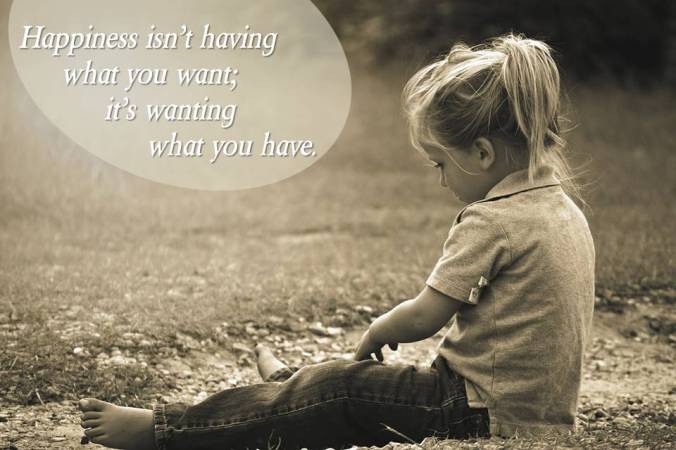
The musical Wicked is a study in contradictions. The Wicked Witch is a misunderstood outcast whose best intentions are used against her. Glinda the Good Witch has charm that hides her manipulative and ambitious nature. As in real life, no character is completely good or evil, but a complicated mix of motives and circumstance. As the second act opens, Glinda has gotten the boy and the fame she hoped for, but at the cost of her dear friend who has been slandered as wicked. As she celebrates her good fortune she also begins to realize it may be the very thing unraveling her happiness. She sings: “Because happy is what happens when all your dreams come true. Well, isn’t it?”
The people of Israel got the king they wanted when God appointed Saul. Yet, Samuel warned them, it was not what God wanted for them. If they or their king rebelled against their Lord, that Lord would turn against them. Once we get what we’ve asked for, we have to live with it … which can turn out to be more complicated and less satisfying than we’d anticipated. And if we’ve really pushed for it – alienating God, friends, or family in the process – we have few options left.
Centuries later the people of Israel got a different kind of king in the person of Jesus, and they didn’t want him. For a while they loved him, but when it became dangerous they turned on him. The authorities arrested him, mocked him, and twisted his words and teachings to convict him. Eventually Jesus just stopped answering questions; no matter what he said, it would be used to condemn him. Maybe that’s a sign that we’ve hardened our hearts too firmly toward what we want (or don’t want): we can’t even hear conflicting opinions.
Life constantly teaches us the differences among what we want, what we should want, and what we need. While we chase our dreams, let’s not trample the blessings we already have. As the Psalmist says, “We shall be satisfied with the goodness of your house, your holy temple.”
Additional Reading:
For more about today’s passage from Acts, see Money For Nothing.
Comfort: True happiness lies in seeking the Lord.
Challenge: Pray regularly about your goals and dreams to discern whether they are right for you; pray also to be grateful for what you have now.
Prayer: Thank you, generous Lord, for providing for my needs.
Discussion: How do you know whether you’re making a sacrifice to follow the right dream, or being stubborn and following the wrong one?
Join the discussion! If you enjoyed this post, feel free to join an extended discussion as part of the C+C Facebook group. You’ll be notified of new posts through FB, and have the opportunity to share your thoughts with some lovely people. Or feel free to comment here on WordPress, or even re-blog – the more the merrier!
Power Play

Today’s readings (click below to open in new tab/window):
Psalms 54; 146, 1 Samuel 11:1-15, Acts 8:1b-13, Luke 22:63-71
After Saul was appointed by God through Samuel to be king, one of his first acts was to end the oppression of Nahash the Ammonite who had been terrorizing Israel by gouging out the right eyes of everyone who did not escape. After Saul defeated and scattered the Ammonites, the people called for the deaths of those who had initially opposed his reign. Saul declined, demonstrating he could be merciful in his power. Many years later, taking power for granted, Saul would become petty enough to maneuver David (of “versus Goliath” fame) into life-threatening situations for becoming too popular. Yet in the moment, and for many years afterward, he was a benevolent ruler who ruled wisely.
Centuries later another Saul, who would become the apostle Paul, used his power to persecute Christians because they represented a threat to the stability of the Jewish people under Roman occupation. This Saul’s power was fueled largely by a sense of righteousness, but somehow his dedication to serving his God did not translate into mercy until he was suddenly brought low.
After Jesus was arrested and brought before the council, they asked him if he was the Messiah. He replied “If I tell you, you will not believe; and if I question you, you will not answer.” When pressed further he said, “You say that I am.” They took that as a confession of heresy. The council used their power to twist perceptions and definitions so the outcome – regardless of the facts – was to their liking.
Power, seen through the eyes of Christ, is more responsibility than privilege. Using power (no matter how limited) in petty and cruel ways, even against our opponents, does not reflect the message of the Gospel. Retaliation is both a poor substitute for justice and difficult to reconcile with turning the other cheek. When we find ourselves in positions of power –elected office, social status, work hierarchy, family dynamics, etc. – let us pray for strength to show mercy and restraint.
How blessed we are to have a savior who shows us the true meaning and best use of power.
Additional Reading:
For more about today’s passage from Acts, see Written Off?.
For another take on today’s passage from Luke, see No-Win Scenario.
Comfort: Being merciful is not a sign of weakness, but of strength.
Challenge: In ways large and small, we can have the upper hand in many relationships. Reflect on whether how you wield power, when you have it, spreads the Gospel.
Prayer: God of power and mercy, give me a heart like Christ.
Discussion: Have you ever been surprised to find out you had more power than you expected?
Join the discussion! If you enjoyed this post, feel free to join an extended discussion as part of the C+C Facebook group. You’ll be notified of new posts through FB, and have the opportunity to share your thoughts with some lovely people. Or feel free to comment here on WordPress, or even re-blog – the more the merrier!
 Comfort & Challenge