
#notalllogs

logs-498538_1920

Today’s readings (click below to open in new tab/window):
Psalms 12; 146, 2 Chronicles 29:1-3, 30:1 (2-9) 10-27, 1 Corinthians 7:32-40, Matthew 7:1-12


Why do you see the speck in your neighbor’s eye, but do not notice the log in your own eye? Or how can you say to your neighbor, ‘Let me take the speck out of your eye,’ while the log is in your own eye?

Jesus didn’t seem concerned with teaching us to identify flaws in other people – that job had too many people doing it already. Rather, Jesus invites you (and me) to repent and reflect, not to feel smug about telling others to do it. Yet somehow we manage to twist his words to point fingers and deflect criticism – Get the log out of your eye before you talk to me about my speck! – when confronted with our own failings. Repentance is something we embrace, not something we inflict.

While repentance is a personal pursuit, it has communal dimensions. Belonging to a specific community doesn’t make us responsible for the actions of every individual in the community, but … Paul’s letters are full of expectations that we hold our community – our body – accountable for its behavior. When one or a few people undermined the character of the Christian church, Paul didn’t accept “it wasn’t me” as an excuse to ignore the behavior.

In Paul’s case he was addressing a church, but community comes in many forms, sometimes with involuntary membership. Gender is an example of a community to which we belong but do not (generally) choose. While gender equality has made remarkable strides over the last century, there are still systemic injustices which need attention. When a topic like sexual harassment is broached, almost invariably some men respond with “not all men are like that.” It’s a defensive reaction meant to communicate, “Hey, I’m one of the good guys!” In reality, “not all men” derails the conversation; it prioritizes “my” comfort with being a man over problems women actually face. When the community has a plank in its left eye, what exactly is accomplished by pointing out how healthy the right one is?

Of course gender is just one example. Is it possible we are even more accountable for communities we join voluntarily? Not all Christians? Not all Democrats? Not all gun-owners? Not all police officers? Not all protesters? And none of these groups (and countless more) are mutually exclusive! The thread of our accountability runs through a series of knots where we’ve anchored ourselves to others.

Let us – individuals and communities – whittle away at those planks until they disappear. We might be surprised to discover how much we contribute to a problem and how much more we can contribute to a solution once we commit to seeing clearly.

Comfort: Community is a blessing.

Challenge: Let’s keep it that way.

Prayer: I will give to the LORD the thanks due to his righteousness, and sing praise to the name of the LORD, the Most High. (Psalm 7:17)

Discussion: Do you ever feel pressured to ignore problems of a group you belong to?

Join the discussion! If you enjoyed this post, feel free to join an extended discussion as part of the C+C Facebook group. You’ll be notified of new posts through FB, and have the opportunity to share your thoughts with some lovely people. Or feel free to comment here on WordPress, or even re-blog – the more the merrier!

What We’ve Chosen

doors-1767564_1920.png

Today’s readings (click below to open in new tab/window):
Psalms 67; 150, 2 Samuel 24:1-2, 10-25, Galatians 3:23-4:7, John 8:12-20


“What you want is irrelevant. What you’ve chosen is at hand.”
– Captain Spock, to Lieutenant Valeris
Star Trek VI: The Undiscovered Country

In the sixth Star Trek film (from 1991, so don’t expect spoiler warnings), Spock discovers his protégé, a young Vulcan woman named Valeris, has conspired with representatives from other worlds to murder the chancellor of the Klingon empire – all in the name of keeping the peace. When Spock insists that logic dictates she must kill him to cover her tracks, she says she doesn’t want to and the conspiracy unravels. Peace unfolds anyway.

When we commit immoral acts in the service of a greater good, real or imagined, the eventual consequences are unavoidable. Unfortunately, we aren’t always the one to pay the price.

King David decided to take a census of all the men in Judah and Israel who were fit for military service. His counselors advised against it. The text is not specific about why this was a sinful decision, but common theories speculate he put his trust in military might instead of God, that it was an issue of pride, or that it was a precursor to taxation and military conscription. David regretted it almost immediately, but that did not stop God’s punishment. David had to choose between three years of famine, three months of being pursued by foes, or three days of pestilence (plague). He begged God not to let other people suffer for his sins, but 70,000 people died of plague.

Are we likely to make decisions resulting in the unintended deaths of tens of thousands? Not most of us. But no decision is made in a vacuum. Every day we have the opportunity to make multiple decisions – from what we buy to how we speak to who we include – which affect people’s lives for better or worse. When we come face to face with the results our poor choices in the form of violence, discord, neglect, or harm, regret can’t change anything.

The choices we make now determine the choices available to us – and others – in the future. When making them, will we trust ourselves or God?

Further Reading:
For more on today’s passage from John, see You Don’t Know Me.


Comfort: Making good choices now helps us make better ones in the future.

Challenge: Don’t choose what is hard, or what is easy; choose what is right.

Prayer: Lord of truth and life, guide my thoughts, guide my words, guide my deeds, guide my choices. Amen.

Discussion: When have you had to face unintended consequences?

Join the discussion! If you enjoyed this post, feel free to join an extended discussion as part of the C+C Facebook group. You’ll be notified of new posts through FB, and have the opportunity to share your thoughts with some lovely people. Or feel free to comment here on WordPress, or even re-blog – the more the merrier!

Persons of Interest

Today’s readings (click below to open in new tab/window):
Psalms 15; 147:1-11, 2 Samuel 18:19-33, Acts 23:23-35, Mark 12:13-27


Psalm 15 begins by asking who may abide in The LORD’s tent, and who may dwell on The LORD’s holy hill. The answers include those who do not slander, who do no evil to their friends, who stand by their word, and who speak truth. And tucked into the list is those “who do not lend money at interest.”

If that last one seems a little oddly specific or out of place, perhaps a little context will help. This verse isn’t referring to a bank making a small business loan so someone can double the available seating in their coffee shop. It’s about loaning money to friends, family, or neighbors in need.

The LORD, it seems, is not a fan of people profiting from other people’s distress.

In a society which identifies so strongly with capitalism (and conflates capitalism so strongly with Christianity), we can forget not every opportunity to make a legal buck is morally justified. Take the payday loan industry, for example. It advertises itself as a friend to people in need of quick cash, but its business model depends on lending to people who are not able to pay their loans back. The profit is in the exorbitant interest and late fees, which in short order can add up to many times the amount of the original loan. All perfectly legal, but predatory and financially devastating to many families in an already precarious financial situation.

There are of course many other ways, both legal and illegal, to exploit people in financial, physical, or emotional need. In this age of self-identified Christian businesses, we might want to consider that Psalm 15 suggests The LORD cares less about whether we flaunt a cross or Bible next to the cash register than about whether we treat our customers, vendors, and partners as Christ would have us do.  In our personal lives, holding ourselves accountable to Christ should be a higher priority than forcing others to be accountable.

As Christians, we are called to ask ourselves not “How much can I get away with?” but “How much can I give away?”


Comfort: Your generosity, even if exploited, is a strength. 

Challenge: Read about predatory lending.

Prayer: Be gracious to me, and hear my prayer. (Psalm 4:1)

Discussion: Have you ever felt someone exploited you when they purported to help you?

Join the discussion! If you enjoyed this post, feel free to join an extended discussion as part of the C+C Facebook group. You’ll be notified of new posts through FB, and have the opportunity to share your thoughts with some lovely people. Or feel free to comment here on WordPress, or even re-blog – the more the merrier!

Tamar, today.

scarletgesture

Today’s readings (click below to open in new tab/window):
Psalms 103; 150, 2 Samuel 13:1-22, Romans 15:1-13, John 3:22-36


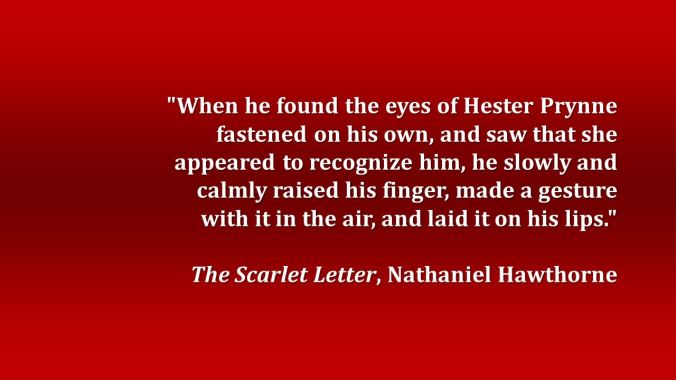
The story of David’s sister Tamar is a tragic one. Her half-brother Amnon,  who perversely lusted for her, pretended to be ill and tricked her into his bedchamber, supposedly to care for him. When Tamar realized his intentions, she begged him not to force himself upon her, calling it a vile act and asking, “where could I carry my shame?”

Her shame? Tamar was victimized twice.

Amnon’s guilt immediately caused him to loathe and discard her. Her brother Absalom meant well and took her in but even his words robbed her of dignity: “Be quiet for now, my sister; he is your brother; do not take this to heart.” While she remained a “desolate woman” in Absalom’s home, Amnon remained unpunished because David loved him.

The real shame is not hearing Tamar’s point of view. It’s her story, but she’s little more than a prop.

If only this tale was an example of barbarism relegated to the past; victim-blaming is all-too-real and all-too-current. Defense attorneys try to discredit sexual assault victims by shaming them for common behaviors and dress. Cherished institutions offer (and beleaguered families accept) settlements which teach abused children the fair market value of their souls. In families, the abused are taught the family’s “good” name is more important than their truth. When groups who have been oppressed for centuries gain a legal toehold and dare to point out the ongoing need for justice work, they are dismissed for playing the “victim card.”

The lack of consequences for Amnon’s sin had devastating, long-lasting repercussions within the family. When the powerful – or their enablers – silence those they abuse in the name of “keeping the peace” all they’re really keeping is power. Others pay the price. For a while.

When we ask ourselves “What would Jesus do?” the right answer is never “sweep it under the rug.” People like Tamar should be able to carry their shame right into the midst of Christ’s disciples and exchange it for love and solace. The greater good is not built from the top down, but ground up … one mended soul at a time.


Additional Reading:
For thoughts on today’s reading from Romans, see Building the Neighborhood.
For thoughts on today’s passage from John, see Decrease to Increase.

Comfort: Everyone’s story matters to God. 

Challenge: When you encounter examples of victim-blaming, speak up.

Prayer: Read all of Psalm 139.

Discussion: When have you been unjustly silenced?

Join the discussion! If you enjoyed this post, feel free to join an extended discussion as part of the C+C Facebook group. You’ll be notified of new posts through FB, and have the opportunity to share your thoughts with some lovely people. Or feel free to comment here on WordPress, or even re-blog – the more the merrier!

Angels in the Wilderness

drought-1345678_1920

Today’s readings (click below to open in new tab/window):
Psalms 84; 148, 1 Samuel 17:17-30, Acts 10:34-48, Mark 1:1-13


Imagine that on your first day of work the boss introduces you to everyone by proclaiming how proud he is of you. Then he immediately assigns you to an extended gig at a remote branch to square off against a disgruntled former employee who now runs the competition. Per the opening chapter of Mark, that pretty much summed up Jesus’s first day on the job: John baptized him, God announced his favor from the heavens, “and the Spirit immediately drove him out into the wilderness” where he spent forty days grappling with Satan.

That’s the way life goes though. Just as we screw up the courage to make that change, or earn that promotion, or have that baby, we discover it comes with a new set of problems we weren’t anticipating. We start to ask if we weren’t better off before we got what we wanted. It doesn’t seem fair that doing everything right leads to more work. But if Jesus – in whom God was “well pleased” – was sent to suffer temptation in the wilderness, maybe we should realign our expectations and definition of success.

Doing good work – especially God’s work – does not guarantee ease. To the contrary, the Jews as God’s chosen people suffered tremendously, and Christian history is filled with martyrs. Our own callings vary, but all are real and we must engage with them. Accepting accountability – to our boss, our children, ourselves, or God – enlightens us to the brokenness in the world, and how much of it we are called to heal, prevent, or bear witness to.

The Spirit didn’t send Jesus into the wilderness alone: angels waited on him. We too have support available in our fellow Christians who share the same accountability. When times are tough, we remind each other why what we do is important. We help carry each other’s burdens. We listen. We cry. We are angels to each other.

Faithfulness doesn’t create suffering, but it does put us in touch with suffering that already exists. We can count on our God – and our angels – to see us through it.


Additional Reading:
For more on today’s opening chapter of Mark, see Many Waters, One God or Intersections.
For more thoughts on today’s passage from Acts, see Astounding Gifts.

Comfort: Even in life’s wilderness, you are not alone.

Challenge: Write a thank you note to one or more “angels” who have helped you through difficult times.

Prayer: To you, O LORD, I lift up my soul. (Psalm 25:1)

Discussion: What’s the worst job experience that someone helped you get through?

Join the discussion! If you enjoyed this post, feel free to join an extended discussion as part of the C+C Facebook group. You’ll be notified of new posts through FB, and have the opportunity to share your thoughts with some lovely people. Or feel free to comment here on WordPress, or even re-blog – the more the merrier!

Breaking The Cycle

beggars-1233291_1280

Today’s readings (click below to open in new tab/window):
Psalms 103; 150, Exodus 6:2-13; 7:1-6, Revelation 15:1-8, Matthew 18:1-14


The “cycle of poverty” describes how the experience of poverty, usually over several generations, alters people’s perceptions and behaviors such that they can not find a way to escape it. Culture, education, and economics can also work against people caught in the cycle. Some exceptional people manage to break out, but more often people need the grace of intervention. Intervention vs. charity is sometimes described as “a hand up instead of a handout.” It’s a catchy saying, but implies people are more in control of their circumstances than they actually are.

Not everyone agrees with this viewpoint. Some insist we can all pull ourselves up by our bootstraps and failing to do so illustrates a lack of will and/or character. However, the Book of Exodus seems to sympathize with the damage inflicted by such a cycle.

When God sent Moses to tell the captive people of Israel they would soon be set free, “they would not listen to Moses, because of their broken spirit and their cruel slavery.” Was God’s next step to lecture the Israelites on their character and willpower? No. It was to send Moses and Aaron to Pharaoh, where they could makes foundational changes on a systemic level.

“But those were slaves, not the poor,” we might argue.

The distinction between slavery and poverty is not as sharp as we might like it to be. The hard truth is, the wealthy have greater freedoms – including the freedom to make good economic decisions, hire good legal representation, etc. – than the poor have. We can stereotype welfare queens and panhandlers, but does anyone believe they weren’t also once children with dreams to be doctors or artists or astronauts? Dreams don’t die, they are suffocated by injustice.

Jesus declared “Woe to the world because of stumbling-blocks” placed before children. He was speaking of spiritual stumbling blocks, but poverty and its associated injustices affect both the physical and spiritual well-being of children. He told the story of a shepherd seeking one lost sheep out of a hundred; how would he feel about the one billion left behind to poverty (fifteen million of them in the United States)?  What we do about poverty and how we think about the poor matters to God.

None of us can solve poverty, but we can change how we understand it and how we approach it. We are all accountable for our choices, but we are all also accountable for helping make sure those choices are available to everyone.

Comfort: Needing help does not make you weak or sinful.

Challenge: When you are tempted to blame people for their circumstances, remember some of the bad decisions you’ve struggled to overcome.

Prayer: Loving God, help me to be generous and wise, to meet needs that will change people’s lives. Amen.

Discussion: When have you asked for help? If you’ve needed help but not asked for it, how did you feel about getting it – or not getting it?

Join the discussion! If you enjoyed this post, feel free to join an extended discussion as part of the C+C Facebook group. You’ll be notified of new posts through FB, and have the opportunity to share your thoughts with some lovely people. Or feel free to comment here on WordPress, or even re-blog – the more the merrier!