
Enough for today

lilies

Today’s readings (click below to open in new tab/window):
Psalms 62; 145, 2 Kings 17:24-41, 1 Corinthians 7:25-31, Matthew 6:25-34


Has anyone ever stopped worrying because someone said, “Stop worrying?”

When Jesus told his disciples not to worry about having enough food (God takes care of the birds!) or clothing (God dresses the grass itself in lilies!), or about life in general (can you add an hour to your life that way?) he knew this.  He had a bigger point to make.

No matter how well off we might be, we are still prone to worry. The impulse to get food on our table and have a roof to keep that table under, as well as the fear we could lose it all, drives our behavior in instinctual, inescapable ways. On some level we doubt that faith alone will provide for all our material needs; the history of humankind does more to confirm than to dispel that doubt.

But that’s not all Jesus was saying.

After the birds and the lilies, he says, “strive first for the kingdom of God and his righteousness, and all these things will be given to you as well.” We can read this at least a couple ways. The first is the simpler: have faith and live righteously, and God will provide. The second is broader. In telling us to strive for the kingdom, it asks us to be the instruments of justice as described by citizenship in the kingdom. In the service of kingdom justice, we feed the hungry, tend to the sick, clothe the naked, and welcome the stranger. By being the last and by tending to the troubles of today – not just our troubles, but the troubles of our neighbor – we expand the kingdom in a way that begins to soothe that primal, hungry fear.

The end of worry is a long term endeavor. We still work toward it. Yes we are assured we can let go of individual worry for this particular day, but that process is inseparable from how we participate in the life of our greater community. When we sacrifice our lives to a kingdom free from worry, we will be freed in turn. We will not stop worrying because we are told to, but because we are told how.

Comfort: There is relief from worry.

Challenge: When you worry, ask yourself what you should be doing instead.

Prayer: Whom have I in heaven but you? And there is nothing on earth that I desire other than you. (Psalm 73:25)

Discussion: What is the difference between worrying and preparing?

Join the discussion! If you enjoyed this post, feel free to join an extended discussion as part of the C+C Facebook group. You’ll be notified of new posts through FB, and have the opportunity to share your thoughts with some lovely people. Or feel free to comment here on WordPress, or even re-blog – the more the merrier!

Divide and Concur

handshake-2009183_1920.png

Today’s readings (click below to open in new tab/window):
Psalms 135; 145, 2 Samuel 17:24-18:8, Acts 22:30-23:11, Mark 11:12-26


Paul was a shrewd man. When he was arrested and brought before the council in Jerusalem, he noticed some of them were Pharisees like himself, and others were Sadducees. The Pharisees believed in the resurrection, spirits, and angels but the Sadducees did not. This was an ongoing point of contention. By mentioning that he himself was a Pharisee on trial concerning the resurrection of the dead, Paul accomplished a couple things.

First, he managed to gain some sympathy from the Pharisees. Instead of outright condemning him, they began to wonder “What if a spirit or an angel has spoken to him?” Second, he moved the focus off himself and onto the ongoing theological quarrel between the two sects. Their dissension became so heated that the tribune, fearing for Paul’s life, had him removed to the barracks.

For such supposedly smart men, the council members were easily led into unnecessary conflict. Maybe that’s because we are so easily swayed by people who we believe to be part of our “tribe” and so suspicious of people who are not. We tend to assume friends and colleagues who agree with us on one controversial issue – abortion, for instance – will also agree with us other issues – such as same-sex marriage. When we discover they disagree, it may be difficult to reconcile. Conversely if someone disagrees with us on one topic we may presuppose they will disagree with us on others, and when they don’t we have to adjust our thinking about them. If we are unable or unwilling to make those adjustments, we can end up turning a blind eye to the faults of those we initially agree with, and an equally blind eye to the virtues of people we first disagree with.

The good news is, we aren’t required to pigeon-hole anyone.

We don’t have to divide into tribes, and we don’t have to agree on every point to be one body. Yitzhak Rabin said, “You don’t make peace with friends. You make it with very unsavory enemies.” If we are to be blessed as peacemakers, loving through disagreement is an absolute necessity.


Additional Reading:
For thoughts on today’s reading from Mark, see Faith and Figs.

Comfort: Agreement is not necessary for peace. 

Challenge: Watch, listen to, or read something from a point of view you generally disagree with, but listen for points where you might be able to agree.

Prayer: Every day I will bless you, and praise your name forever and ever. (Psalm 145:2)

Discussion: When is the last time you found yourself surprised to agree with a person or group?

Join the discussion! If you enjoyed this post, feel free to join an extended discussion as part of the C+C Facebook group. You’ll be notified of new posts through FB, and have the opportunity to share your thoughts with some lovely people. Or feel free to comment here on WordPress, or even re-blog – the more the merrier!

Tradition!

traditiontevyefiddler

Today’s readings (click below to open in new tab/window):
Psalms 89:1-18; 147:1-11, 2 Samuel 14:21-33, Acts 21:15-26, Mark 10:17-31


Since Jesus first challenged the Pharisees and their application of the law, his followers have struggled with our relationship to custom and tradition. Some, like Paul, look beyond tradition to a wider ministry. Others like the church in Jerusalem have a harder time letting go. Today Christians don’t observe many Jewish traditions or customs, but we have added many of our own which can make us seem as rigid as Pharisees. How do we know when to hold on, and when to let go?

Paul’s efforts to gather Gentiles under the umbrella of Christ’s grace caused many to doubt his commitment to his Jewish identity. Like many efforts at inclusiveness, Paul’s acceptance of “the other” was interpreted by his existing community as a rejection. To assuage their concerns, Paul went through the Jewish rituals of purification, but he understood his salvation was in Christ, not ritual. Modern churches experience something similar when leaders reach out to new people with different customs. From new musical styles to liturgical revision to more inclusive language, some people will resist change – and possibly grace.

But change simply for its own sake isn’t good either. When Jesus, using wine as a metaphor, declares “The old is good,” (Luke 5:39) he is talking about the very old – the love and purpose of God that predate even the law. We tend to forget customs and traditions were once new, and after a time we may focus more on a tradition than its purpose. In some churches, a misstep during the offertory, a bungling of the Words of Institution, or an improperly stored card table can cause great consternation. When this happens, it’s time to examine whether our traditions serve the very old, or if we – like the Pharisees – have lost sight of their true purpose. In the latter case we do not necessarily have to change our traditions, but we do need to renew our relationship to them.

As faithful followers of Christ, we should respect what he respected, and challenge what he challenged. To do this well, we must know why we do what we do.


Comfort: Traditions can bring us much comfort and sense of order. 

Challenge: Question traditions that don’t positively inform your faith life.

Prayer: I will sing of your steadfast love, O LORD, forever; with my mouth I will proclaim your faithfulness to all generations. (Psalm 89:1)

Discussion: Families and groups of friends also form traditions. What are some of these traditions you value most, and why?

Join the discussion! If you enjoyed this post, feel free to join an extended discussion as part of the C+C Facebook group. You’ll be notified of new posts through FB, and have the opportunity to share your thoughts with some lovely people. Or feel free to comment here on WordPress, or even re-blog – the more the merrier!

Angels in the Wilderness

drought-1345678_1920

Today’s readings (click below to open in new tab/window):
Psalms 84; 148, 1 Samuel 17:17-30, Acts 10:34-48, Mark 1:1-13


Imagine that on your first day of work the boss introduces you to everyone by proclaiming how proud he is of you. Then he immediately assigns you to an extended gig at a remote branch to square off against a disgruntled former employee who now runs the competition. Per the opening chapter of Mark, that pretty much summed up Jesus’s first day on the job: John baptized him, God announced his favor from the heavens, “and the Spirit immediately drove him out into the wilderness” where he spent forty days grappling with Satan.

That’s the way life goes though. Just as we screw up the courage to make that change, or earn that promotion, or have that baby, we discover it comes with a new set of problems we weren’t anticipating. We start to ask if we weren’t better off before we got what we wanted. It doesn’t seem fair that doing everything right leads to more work. But if Jesus – in whom God was “well pleased” – was sent to suffer temptation in the wilderness, maybe we should realign our expectations and definition of success.

Doing good work – especially God’s work – does not guarantee ease. To the contrary, the Jews as God’s chosen people suffered tremendously, and Christian history is filled with martyrs. Our own callings vary, but all are real and we must engage with them. Accepting accountability – to our boss, our children, ourselves, or God – enlightens us to the brokenness in the world, and how much of it we are called to heal, prevent, or bear witness to.

The Spirit didn’t send Jesus into the wilderness alone: angels waited on him. We too have support available in our fellow Christians who share the same accountability. When times are tough, we remind each other why what we do is important. We help carry each other’s burdens. We listen. We cry. We are angels to each other.

Faithfulness doesn’t create suffering, but it does put us in touch with suffering that already exists. We can count on our God – and our angels – to see us through it.


Additional Reading:
For more on today’s opening chapter of Mark, see Many Waters, One God or Intersections.
For more thoughts on today’s passage from Acts, see Astounding Gifts.

Comfort: Even in life’s wilderness, you are not alone.

Challenge: Write a thank you note to one or more “angels” who have helped you through difficult times.

Prayer: To you, O LORD, I lift up my soul. (Psalm 25:1)

Discussion: What’s the worst job experience that someone helped you get through?

Join the discussion! If you enjoyed this post, feel free to join an extended discussion as part of the C+C Facebook group. You’ll be notified of new posts through FB, and have the opportunity to share your thoughts with some lovely people. Or feel free to comment here on WordPress, or even re-blog – the more the merrier!

Radical Inclusion

shoes mile

Today’s readings (click below to open in new tab/window):
Psalms 143; 147:12-20, 1 Samuel 13:5-18, Acts 8:26-40, Luke 23:13-25


One of the great joys of being a Christian is that we are called to be more in the business of expanding our circle than closing our ranks. At any given point in history, or in any given congregation or denomination, we may be circling the wagons in fear, but since the earliest days of the apostles we’ve been learning that God’s love is more inclusive than our own.

Take Philip for example. One day the Spirit urged him down a certain road, where he found a man sitting in a chariot and reading from the prophet Isaiah. The man, an Ethiopian eunuch serving as a court official of his queen, was in Jerusalem to worship. Philip ran up to the man, who needed help understanding what he was reading, and began a conversation which led to the Ethiopian asking to be baptized in some water they passed on the side of the road. So Philip baptized him.

This first Gentile convert – eager to join the faith and just as eagerly welcomed at the urging of the Spirit – differed from the Jewish apostles racially, ethnically, and sexually. He would never have been allowed inside the physical temple, but once Christ became the temple raised, these distinctions no longer mattered. Christ’s arms stretched out on the cross are the temple gates thrown wide open.

Radical inclusion, while ultimately joyful, can scare us. We worry strange newcomers might change the fundamental character of our community. We fear that allowing our understanding of God’s inclusive nature to evolve somehow betrays long-held beliefs or practices. Throughout history the church and its members have excluded, minimalized, or stereotyped the roles of women, the disabled, and even the left-handed. Yet the Spirit continues to urge us toward each other, to build bridges, to break down assumptions and prejudices based not in the gospel but in culture and superstition.

The world pushes us to judge, condemn, and exclude. Christ invites us to love, forgive, and welcome. As Christ’s body, let’s run to those who, like our Ethiopian friend, differ from us so struggle to understand his invitation.

Comfort: God loves more and better than we could possibly understand.

Challenge: Try to find more reasons to include people than to exclude them.

Prayer: Teach me, o Lord, to love your people and share your Gospel abundantly.

Discussion: Do you belong to any groups the church has excluded or does exclude? How does that affect your relationship with and understanding of Jesus?

Join the discussion! If you enjoyed this post, feel free to join an extended discussion as part of the C+C Facebook group. You’ll be notified of new posts through FB, and have the opportunity to share your thoughts with some lovely people. Or feel free to comment here on WordPress, or even re-blog – the more the merrier!

Generation J(esus)

cross-generation-1317075-1279x961

Today’s readings (click below to open in new tab/window):
Psalms 57; 145, Deuteronomy 11:13-19, 2 Corinthians 5:11-6:2, Luke 17:1-10


Millennials are unfairly stereotyped, but that’s nothing new. Every generation criticizes the ones that follow: “Kids today!” – as if younger generations made a group decision to irritate us, when in truth they are the product of all the generations that came before, including our own. The things we complain about are the very things we created. On some level we understand this, so maybe that’s why we fixate on them. They reflect back our own shortcomings  and – even worse – have the gall to name them out loud. They might not yet realize that it will soon be their turn, but then neither did we in the hubris of youth.

Lost in all the finger-pointing is the reality that people essentially haven’t changed. For every viral millennial blogger boasting how corporate America should fear them, a thousand more are trying to make ends meet under difficult circumstances and working just as hard (and probably smarter when it comes to technology) as their elders.

If we’re still tempted to paint them with the “participation trophy” brush, maybe we can remember these words from Jesus to his disciples:

Do you thank the slave for doing what was commanded? So you also, when you have done all that you were ordered to do, say, ‘We are worthless slaves; we have done only what we ought to have done!'”

In other words: “Don’t expect a reward just for showing up and doing what you were supposed to do anyway.” Not a new problem, it seems.

When we experience generational conflict, let’s not reflexively blame it all on the younger or the older. People stay relatively the same but society does change, and children are often mastering difficult changes which confound their parents. Rather, as Paul recommends, let’s build one another up. It takes humility both ways to admit we can learn from each other. Mentoring isn’t an extra credit activity – it’s vital for healthy communities.

Our ultimate reward has been won for us by Christ. Our level of participation does not influence that grace. Our level of gratitude is evident in how we love others.

Comfort: Our generations are more alike than different.

Challenge: Make a point each week of spending time with people who are younger or older than you. Listen to what they have to say.

Prayer: Loving God, I thank you for the generations before me, and ask you to make me a blessing to those who come after. Amen.

Discussion: Are you surprised to find yourself doing anything that your parents or elders did, especially things you said you’d “never” do?

Join the discussion! If you enjoyed this post, feel free to join an extended discussion as part of the C+C Facebook group. You’ll be notified of new posts through FB, and have the opportunity to share your thoughts with some lovely people. Or feel free to comment here on WordPress, or even re-blog – the more the merrier!

“One of the good ones.”

photo-montage-1514218_1280

Today’s readings (click below to open in new tab/window):
Psalms 47; 147:12-20, Ezekiel 18:1-4, 19-32, Hebrews 7:18-28, Luke 10:25-37


We all know one. A relative, friend, or co-worker who isn’t a terrible person but can’t completely shake off remnants of bigotry. When conversation touches on race (or religion, sexual orientation, political affiliation, etc.) they make unkind blanket statements. And when we ask them how they can say that when they are friends with Sammy (who is Korean or Muslim or whatever), they say, “Oh he’s one of the good ones.”

The parable of the Good Samaritan is a story about “one of the good ones.” There was no love lost between the Samaritans and the Jews, so when one of them became the hero of a parable answering the question “Who is my neighbor?” many Jews probably considered him the exception rather than the rule.

What’s the difference between “the good ones” and the rest? Most of the time, it’s simply that we know them. When we eat lunch every day with Sammy, or when he helps us change a flat tire in the parking lot, or when he brings a casserole to our house because our spouse is ill, our conscience won’t let us lump him into a category of people we stereotype. But somehow, sometimes, we can’t make the leap to realizing Sammy isn’t an exception.

When someone categorically condemns a class of people we happen to belong to, based on the bad behavior of a few, we leap to point out, “Not all of us.” Historically (and ironically) we are less likely to be as understanding of other groups as we expect them to be of us. It’s only after we get to know people who are different from us that we recognize our similarities. Anyone who’s been in a high school cafeteria knows that’s not something we do naturally.

The Letter to the Hebrews reminds us God made Melchizedek a high priest not because he was born to the priestly class, but because he was righteous. God sees beyond categories and into hearts. Christ invites us all to the same table. We all live in God’s neighborhood, so why not get to know each other?

Comfort: Differences are not threats but opportunities.

Challenge: Rather than make assumptions about people different than you, befriend and ask them about their lives.

Prayer: Loving God, thank you for the beauty and diversity of your creation. Amen.

Discussion: What’s a stereotype you once believed but learned wasn’t true?

Join the discussion! If you enjoyed this post, feel free to join an extended discussion as part of the C+C Facebook group. You’ll be notified of new posts through FB, and have the opportunity to share your thoughts with some lovely people. Or feel free to comment here on WordPress, or even re-blog – the more the merrier!

In the Light

sankt-hans-1247171

Today’s readings (click below to open in new tab/window):
Psalms 19; 150, Isaiah 62:6-12, 1 John 2:3-11, John 8:12-19


In his first epistle, John tells us any believer who hates another believer is no believer at all. We can claim to walk in the light of Christ, but if we hate a brother or sister we are still in the darkness. In the Gospel of John, Jesus says: “I am the light of the world. Whoever follows me will never walk in darkness but will have the light of life.” True commitment to Christ leaves us unwilling to hate our fellow believers, no matter how strongly we may disagree with them (and we can disagree plenty).

It’s possible to say we’re following Christ, and maybe to believe that, without it actually being true. Let’s think of the light of Christ like a bonfire on the beach. We can remain within its direct light where we can feel its heat, see clearly by it, and easily reach those who would share it with us. Or we can dispassionately observe it from a little further down the beach or farther out at sea. From a distance, we see the bonfire and believe it exists; we can study it through a telescope to describe it and theorize about it and analyze it; maybe we use it as a rough guide to navigate … but it has no real impact on our lives. Even if we can hear the songs and laughter of those gathered around the bonfire, and smell the food being roasted on it, we don’t actually share the light, warmth, and proximity they do.

Successfully staying within the bonfire’s influence requires cooperation among those gathered. For example, we can all agree not to throw gasoline on it, but we may disagree on what species of wood is most fragrant. Some of us may be choking on smoke while others breathe easily (and obliviously), but the wind will always change. We may argue and develop resentments over these differences, but it’s not our business to push people out or storm off ourselves. Christ tends this fire; he will make sure all who stay within its glow are cared for.

Comfort: When you walk in the light, hate burns away.

Challenge: Try thinking of the light as a communal gathering, not a solo walk.

Prayer: God of light and love, I will seek to follow in Christ’s footsteps. Amen.

Discussion: Sometimes we throw something on a bonfire and experience unintended and unfortunate consequences. Have you ever unintentionally caused strife in your faith community?

Join the discussion! If you enjoyed this post, feel free to join an extended discussion as part of the C+C Facebook group , visit comfortandchallenge.tumblr.com, or follow @comf_and_chall on Twitter. You’ll  have the opportunity to share your thoughts with some lovely people. Or feel free to comment here on WordPress, or even re-blog – the more the merrier!
Monday Morning Quarterbacks

Good Game

Today’s readings (click below to open in new tab/window):
Psalms 103; 150, Isaiah 57:1-13, Hebrews 12:1-6,John 7:37-46


When we identify strongly with a team, we celebrate when that team does well and feel the loss when it does poorly. We call it “our” team and say “we” played great last night, even though “we” have never set foot on a professional field. The sense of community among fans may help us feel included and part of something larger than ourselves. These are good things, but we don’t want to lose sight of reality; after all, “fan” is short for “fanatic.”

Paul had many kind words for newer Christian churches, but he also felt the need to let the air out of their tires a little. Compared to some churches, they’d had it pretty easy. He reminded them: “In your struggle against sin you have not yet resisted to the point of shedding your blood.” It was wonderful to be on Team Jesus, but they hadn’t yet played under duress. None of us knows with complete certainty how we’ll react under pressure until we actually do. When newer churches hadn’t yet felt the squeeze of the Christian big leagues, Paul did have advice about how to prepare: “let us also lay aside every weight and the sin that clings so closely, and let us run with perseverance the race that is set before us.” In other words, if you want to be more than a fan – to be a real part of the “we” – put in the training.

Monday morning quarterbacks believe they could have played a better game. Are we ever Monday morning Christians?  After Sunday services, do we look at the world and believe we could do as well as, or better than, people who are struggling across the globe or in the pew next to us? Without being in their shoes, we don’t know. If we want to be more than fans of Christ, if we want to wear the jersey, we need to put ourselves through the paces until we sweat compassion and bleed forgiveness. Only then do we truly learn that judging doesn’t move us toward the goal, but supporting each other does.

Comfort: If you’re putting in the effort, God doesn’t make cuts.

Challenge: Rather than criticizing or gossiping about people who fall short, find constructive ways to help them regain their footing.

Prayer: God of mercy, teach me to be merciful. Amen.

Discussion: Academically gifted students are often called upon to tutor. Are you aware of any programs where students who are athletically gifted are called to do the same? If not, why do you think not? If so, what was that like?

Join the discussion! If you enjoyed this post, feel free to join an extended discussion as part of the C+C Facebook group , visit comfortandchallenge.tumblr.com, or follow @comf_and_chall on Twitter. You’ll  have the opportunity to share your thoughts with some lovely people. Or feel free to comment here on WordPress, or even re-blog – the more the merrier!

Pain Management

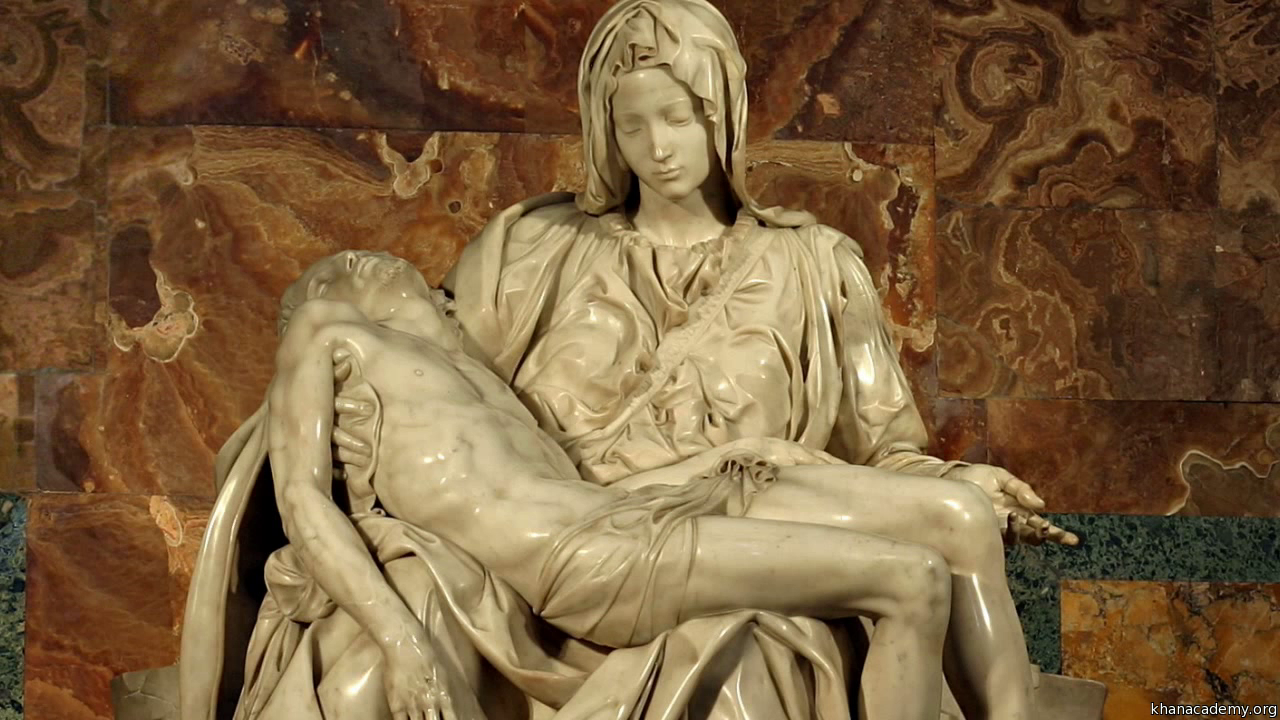
Pietà – Michelangelo

Today’s readings (click below to open in new tab/window):
Psalms 135; 145, Isaiah 44:6-8, 21-23, Ephesians 4:1-16, Mark 3:7-19a


When a person sustain an injury to one part of their body,  they can do further harm if they overcompensate with the use of other parts. For example, limping for an extended period of time can strain the back and good leg and require additional treatment. Another example of the interconnectedness of our parts is the phenomenon of referred pain, which occurs when injury to one area of the body causes pain in a seemingly unconnected one. We could experience pain in an arm without realizing the injury was actually to our spine; identifying the proper diagnosis and treatment under such circumstances can be difficult.

In his letter to the Ephesians, Paul compares the structure of the body of Christ to the human body. He emphasizes the importance of each part, and the need for unity in a healthy body. For the body to grow in love, all parts must function properly. Sometimes, though, we may not be able to easily determine which part we’re meant to be. What then?

Our “diagnostic test” is this: do our actions (or inaction) contribute to the spiritual unity of the body? If we unnecessarily cause other parts to falter or carry an unfair share of the load, we may need to reexamine our role. However, any physical therapist knows pain in the cause of healing is sometimes unavoidable. When it occurs in the body of Christ, we must ask ourselves whether the pain is a price to pay for unity. After all, we are called to voluntarily carry each other’s burdens, and infirmity is no sin. If it is, the body will be stronger for enduring it; if not we must seek or offer relief. When the body is brought back into balance, pain for all members of the body is minimized and the use of our gifts is maximized.

Like physical health, spiritual health is not founded on quick fixes. A mature approach encourages healthy, balanced decisions benefitting the body, not just ones satisfying localized  whims and short-term comfort. We all depend on each other, and must provide and accept support accordingly.

Comfort: The Body of Christ is meant to be a healthy one.

Challenge: With people you trust, have a frank discussion about what pains the Body of Christ is experiencing, and what we can do to make them better.

Prayer: God of healing, teach me to bring your wholeness to the body and the world. Amen.

Discussion: Have you ever learned you caused someone pain without knowing it?

Join the discussion! If you enjoyed this post, feel free to join an extended discussion as part of the C+C Facebook group or follow @comf_and_chall on Twitter. You’ll  have the opportunity to share your thoughts with some lovely people. Or feel free to comment here on WordPress, or even re-blog – the more the merrier!