It’s 3:16 Somewhere

1470692116198.jpg

Today’s readings (click below to open in new tab/window):
Psalms 5; 145, Judges 12:1-7, Acts 5:12-26, John 3:1-21


John 3:16 is possibly the most commercially successful verse in the Bible. It’s so marketable that the reference alone is enough to sell millions of keychains, bumper stickers, t-shirts, coffee mugs, eyeglass cases, pocket protectors, and just about anything else that can sport an imprint. It is the unofficial logo of Brand Jesus.
There’s no shame in its popularity – it’s a beautiful verse summing up the message of the gospel:

“For God so loved the world that he gave his only Son, so that everyone who believes in him may not perish but may have eternal life.”

But could it be the tiniest bit too popular for its own good? Without delving into the whole discussion about faith versus works, is it possible we can be so happy all we have to do is “believe” that we never get around to living out a life transformed by that belief? After all, belief is a solitary and internal occurrence. Belief alone neither feeds the poor nor clothes the naked, or accomplishes any of the things Jesus says we do for him when we do them for the least of our sisters and brothers.

The verses following John 3:16 expand on its statement, and describe how those who believe embrace the light, and those who don’t believe stay in the darkness because it hides their deeds. No matter how strongly we “believe in him” (and what exactly that means is a discussion unto itself), it’s a good idea to regularly check in with ourselves to ask whether we would be comfortable with Christ’s light shining on our lives at this moment. Our actions confess the convictions of our hearts more clearly than any public statement of belief ever will. We can cover our lives in bumper stickers from the local branch of 3:16 24:7 but Jesus knows a whitewashed tomb when he sees one.

Belief is the beginning of a life in faith, not its end. If how we conduct our lives does not stand up to the light, our belief has died on our lips instead of living in our hearts.

Comfort: There’s no need to hide who you are – God loves you warts and all.

Challenge: Supreme Court Justice Louis Brandeis said: “Sunlight is said to be the best of disinfectants.” Shine light on the parts you feel you need to clean up by sharing them with someone you trust.

Prayer: Lord of Light, make your face to shine upon me. Amen.

Discussion: Where do you draw the line between privacy and secrecy?

Join the discussion! If you enjoyed this post, feel free to join an extended discussion as part of the C+C Facebook group. You’ll be notified of new posts through FB, and have the opportunity to share your thoughts with some lovely people. Or feel free to comment here on WordPress, or even re-blog – the more the merrier!
Variety is the Spice of (Eternal) Life

beautyjourney

Today’s readings (click below to open in new tab/window):
Psalms 96; 147:1-11, Judges 7:19-8:12, Acts 3:12-26, John 1:29-42


According to John’s gospel, the first two disciples of Jesus were originally disciples of John the Baptist. One Jesus walked by the three of them, and John declared him the Lamb of God. The two disciples began to literally follow him, until he turned around and asked what they were looking for. Then they followed him home. One of them (Andrew) found his brother Simon to tell him they’d found the Messiah. When they met, Jesus told Simon his new name was Cephas (Aramaic for Rock, the same meaning as Peter).

Don’t Matthew, Mark, and Luke tell a much more interesting version of this story? In that one, Jesus goes down to the docks, starts recruiting, and promises to make any who follow him “fishers of men” – a sales pitch so good people drop their nets and follow him immediately.

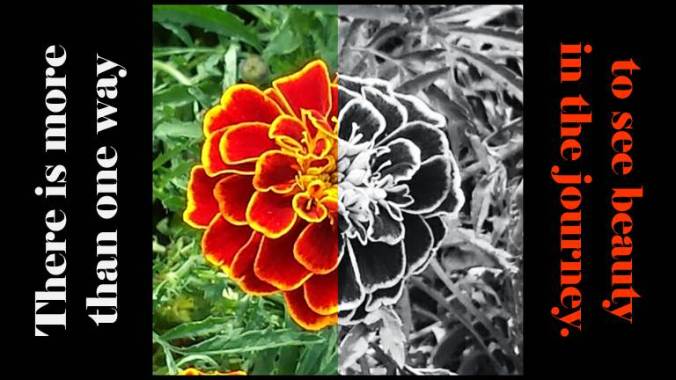
In both versions, whether guided by a teacher or invited directly, Jesus’s disciples feel immediately drawn to follow him. In a way, these two paths reflect different ways we come to know Christ: we can be born into a faith passed on to us, or Jesus can come bursting into our lives from seemingly nowhere. Neither way is more correct than the other, but one makes a more exciting story. While this was not the point John’s gospel was trying to make, it may help us be more open to the variety of faith journeys we encounter.

If we have been born into a faith, dramatic conversion stories may seem more compelling than our own lifelong belief. We should let their enthusiasm reinvigorate our own faith and challenge us to look at it as if it were new to us. If we are converts, we have recently given much thought to what we believe and why, like immigrants who’ve studied to become citizens. Though it may seem others haven’t worked quite as hard for the privilege, we can rely on the grounded experience of lifelong citizens of faith to inform us of the rich traditions we share. No matter how we’ve come to know Christ, we have gifts to share.

Comfort: Whether your faith is new or lifelong, you are an equal member of the Body of Christ.

Challenge: Share your faith journey with someone, and invite them to share theirs with you.

Prayer: Gracious and loving God, thank you for providing many roads to relationship with you. Amen.

Discussion: Have you found anyone’s faith journey particularly inspiring?

Join the discussion! If you enjoyed this post, feel free to join an extended discussion as part of the C+C Facebook group. You’ll be notified of new posts through FB, and have the opportunity to share your thoughts with some lovely people. Or feel free to comment here on WordPress, or even re-blog – the more the merrier!
Prepare Ye

1470146333745.jpg

Today’s readings (click below to open in new tab/window):
Psalms 12; 146, Judges 7:1-18, Acts 3:1-11, John 1:19-28


When the Pharisees pressed John the Baptist about his identity, he replied with a quote from Isaiah: “I am the voice of one crying out in the wilderness, ‘Make straight the way of the Lord.'” Notably he did not say he was the one making the way straight: he offered a rallying cry, but did not take it upon himself to fill the valleys and lower the mountains and level the rugged places. No, he left those duties to us.

If we look critically at the spiritual landscape of our local community, our nation, or our world, do we see straight paths carved out to usher in the glory of the Lord? Let’s just say much of that highway project remains to be completed. Deep valleys of unbridged poverty interrupt the road. Mountains of wealth, power, or other worldly distractions tempt us to achievement which in reality is more obstacle than accomplishment. Our world is a study in the contrast between spiritual mountains and valleys. High and low social status. Casually discarded half-full bottles of water … and tarps laid out to catch a few life-sustaining drops of dew. Piles of diamonds towering above the graves of those who died to excavate them. The temptation to fill the valleys by toppling the mountains into them can be great.

Unfortunately the challenge isn’t so simple, and none of us can complete this project alone. Some days the best we can do is move one teaspoon of earth at a time, and not even all that without spilling some. But John, Isaiah, the prophets, and the saints keep calling to us: “Prepare ye the way of the Lord.” As long as we keep to our task – spoon by spoon, mountain by mountain – the way of the Lord is that much closer to its completion.

If it all seems overwhelming, perhaps we can begin by leveling the mountains and valleys – those things blocking God from view – in our own hearts. Then we open ourselves to serve as one of the countless stepping stones the Lord uses to stride to the places most in need.

Comfort: If you are struggling, remember God is on your side.

Challenge: If you are comfortable, remember you are on God’s side.

Prayer: God of Abundance, I will seek to prepare Your way in the wilderness. Amen.

Discussion: It’s easy to cast the poor as victims and the rich as villains, but both are operating within the same system of injustice. What are some better, non-binary ways to understand the world?

Join the discussion! If you enjoyed this post, feel free to join an extended discussion as part of the C+C Facebook group. You’ll be notified of new posts through FB, and have the opportunity to share your thoughts with some lovely people. Or feel free to comment here on WordPress, or even re-blog – the more the merrier!

Holy Underdog!

dragons

Today’s readings (click below to open in new tab/window):
Psalms 108; 150, Judges 6:1-24, 2 Corinthians 9:6-15, Mark 3:20-30


Like many heroes of Israel, Gideon had a humble beginning. Because the Israelites had begun to worship foreign gods, for seven years the Lord allowed the Midianites and other peoples to raze the crops and livestock of Israel: “They and their livestock would come up […] as thick as locusts; neither they nor their camels could be counted; so they wasted the land as they came in.” Gideon’s family threshed their wheat in a wine press to hide it from the Midianites. When the angel of the Lord appeared and told him he would be Israel’s new champion, Gideon was skeptical: “But sir, how can I deliver Israel? My clan is the weakest in Manasseh, and I am the least in my family.” The Lord assured Gideon that – with the Lord at his side – he would be victorious.

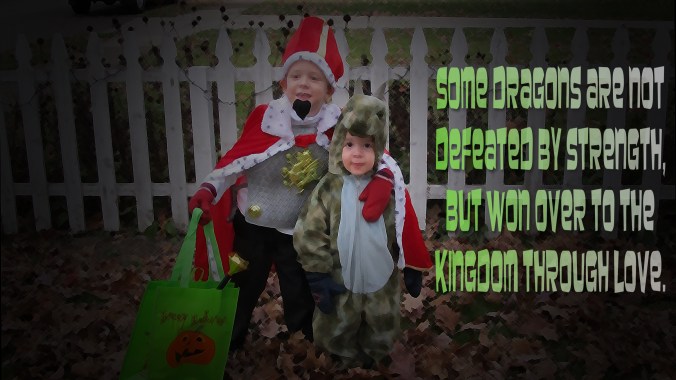
Gideon came from a long tradition of underdogs chosen by God (Abraham, Joseph, and Moses to name a few) and many more would follow. What is it God loves about an underdog?

Underdogs are humble. Life has taught them personal strength isn’t always enough. It takes real humility to submit ourselves to God’s will; a person who is used to success on their own terms can find that submission difficult. We have to recognize and admit to our “weaknesses” before they can really become opportunities for God’s strength to shine.

The victory of an underdog is a real testament to faith in God’s power. Had the roles of David and Goliath been reversed, and Goliath been Israel’s giant champion, it would have been just another story of might makes right. When we follow God, right makes might.

Over and over scripture teaches us God has a love of the disenfranchised. The Mosaic Law has numerous rules about treating widows, orphans, and foreigners with compassion. Jesus taught constantly about loving the poor. The prophets tell us Israel fell from God’s favor when the people became satisfied with themselves and ignored the needy. Holy underdogs are a continuous reminder that God’s justice is not about acquiring what we deserve, but about serving others in need.

Comfort: Whether you feel like a champion or not, God loves you as one.

Challenge: In the coming week, watch the news for examples of true underdogs who have accomplished something important of noble. Can you see the Lord’s influence in their lives?

Prayer: Lord, I thank you for the strength that sustains me even when I am weary and afraid. Amen.

Discussion: Do you have a favorite underdog story?

Join the discussion! If you enjoyed this post, feel free to join an extended discussion as part of the C+C Facebook group. You’ll be notified of new posts through FB, and have the opportunity to share your thoughts with some lovely people. Or feel free to comment here on WordPress, or even re-blog – the more the merrier!
Forsaken

1469571158530.jpg

Today’s readings (click below to open in new tab/window):
Psalms 65; 147:1-11, Judges 3:12-30, Acts 1:1-14, Matthew 27:45-54


“Eli, Eli, lema sabachthani?” That is, “My God, my God, why have you forsaken me?”

Every year during the Passion narrative, this verse moves me more than any other. Although the Gospels tells us Jesus suffered and was tempted like any other person, he seems so wise, so confident, and just so plain good it can be hard to believe. These words, though, contain every bit of despair and doubt I’ve ever felt – and then some. If Jesus, of all beings in creation, can feel abandoned by God, our own doubts and fears condemn us not at all.

All of us sometimes feel forsaken by God. In times of illness, financial hardship, failing relationships, and many other situations, we can feel let down or deserted by God. The last thing we need is a clichéd assurance us of God’s loving presence. Reason tells us everyone suffers, but our distressed hearts may be difficult to convince. We can dispassionately dispense platitudes about someone else’s problem, but our own problems are somehow different.

Doubt, disbelief, and anger at God are almost inevitable. Knowing Jesus felt the same way (at least once) puts us in good company. The psalmists were able to feel faithful and forsaken at the same time. Psalm 119:82 says “My eyes fail with watching for your promise; I ask ‘When will you comfort me?’” How poignant! We must not confuse doubt with the absence or end of faith. Classics of Christian writing like The Dark Night of the Soul by St. John of the Cross help us understand the ways doubt and darkness can transform our faith. While our instinct is often to reject doubt, we need to embrace and explore it. Burying it beneath denial or easy answers undermines the development of true, enduring faith. When we see someone struggling with doubt, offering easy reassurance can actually be a terrible disservice. Better to be present for our struggling friends, and let them reap the benefits of working through their own spiritual struggles.

A moment of doubt did not thwart Jesus’ triumph, and it doesn’t have to destroy our faith.

Comfort: Doubt can be the turn in the road that leads us to new understanding.

Challenge: Invite someone you trust to discuss each other’s doubts.

Prayer: Merciful and loving God, thank you for being bigger than my doubt. Amen.

Discussion: What do you do when you experience doubt?

Join the discussion! If you enjoyed this post, feel free to join an extended discussion as part of the C+C Facebook group. You’ll be notified of new posts through FB, and have the opportunity to share your thoughts with some lovely people. Or feel free to comment here on WordPress, or even re-blog – the more the merrier!

Maybe next time…

1469498503067.jpg

Today’s readings (click below to open in new tab/window):
Psalms 54; 146, Judges 2:1–5, 11–23, Romans 16:17–27, Matthew 27:32–44


The book of Judges recounts the history of Israel between the time of Joshua’s death and the reign of Saul, Israel’s first king. The second chapter begins a cycle that repeats several times: Israel prospers, then grows lax and disobedient and God withdraws his favor; eventually the plight of the Israelites softens his heart and he sends a judge to set them back on the right track. Over a dozen times. We may or may not experience our fortunes and misfortunes proportional to God’s favor, but we can all find lessons in these stories.

One simple, yet important lesson: learn from your mistakes. For two centuries, the Israelites teetered on the brink of ruin multiple times, always for the same reason. It is easy to shake our heads at their stubborn foolishness, but we’ve all been there. Maybe relationship after relationship sours because we can’t change our ways. Maybe our weight boomerangs in a cycle of diet and despair. Maybe we repeatedly sabotage our job or education or finances because we cling to a particular mindset. Everyone has some story of an attitude or habit they had difficulty changing (or still need to). Most of us have more than one. Not everyone needs a twelve step program, but sometimes we all need to surrender to the higher power integral to success.

Another related lesson: neglecting our relationship with God has consequences. Perhaps not direct punishment, but consequences intrinsic to our behavior – a sort of “built-in” system of moral checks and balances. Christ and the prophets teach us to put God and our neighbor above materialistic concerns, yet advertising and other influential aspects of our culture tell us exactly the opposite. However, our novels and films abound with morality tales about the dangers of prioritizing wealth, popularity, vanity, etc. In these tales, people nearly always either arrive at a bad end or save themselves by repenting. Could these stories be popular because they strike a chord of truth within us? By nurturing our relationship with God, we can focus on priorities that deliver a true abundance, an abundance of the spirit.

Comfort: Like the north star, God helps our path stay true if we follow him.

Challenge: Change one part of your routine today and observe the effects.

Prayer: Merciful and loving God, my heart is set on you. Amen.

Discussion: What habits have you found hard to break?

Join the discussion! If you enjoyed this post, feel free to join an extended discussion as part of the C+C Facebook group. You’ll be notified of new posts through FB, and have the opportunity to share your thoughts with some lovely people. Or feel free to comment here on WordPress, or even re-blog – the more the merrier!

Hear to Understand

1469404706685.jpg

Today’s readings (click below to open in new tab/window):
Psalms 67; 150, Joshua 24:1-15, Acts 28:23-31, Mark 2:23-28


We all like to think we are open-minded – that our beliefs and attitudes are the result of well-informed reasoning and thoughtful consideration. Unfortunately there are at least a dozen types of cognitive bias to which we are prone, and another three dozen types of logical fallacy which our biases urge us to ignore. Since human beings are largely irrational creatures, being an expert in bias and logic is no guarantee of solid reasoning; actually the smarter we are, the more easily we can justify our own biases by manipulating those very laws of logic.

When Paul went to Rome, many Jewish leaders there were willing to hear him out regarding the teachings of Jesus. He talked with them an entire day, into the evening, and when he was finished some believed and some did not. For those who did not, he shared these words from the Holy Spirit:

“You will be ever hearing but never understanding;
you will be ever seeing but never perceiving.”

These leaders were not evil, or – like the ones in Jerusalem who had driven him to seek sanctuary in Rome – even hostile. They simply felt no compelling reason to change their minds. What was the difference between those who believed Paul and those who didn’t? One possibility: they couldn’t imagine being wrong about the faith they had been taught and known all their lives.

Flash forward two thousand years, and people are basically the same. We believe God is moving among us, but in ways tradition has taught us to expect. When the Holy Spirit inspires prophets to declare Christians must grow to be more inclusive and just … some people believe and some do not. Few people today justify racial, gender, or ethnic discrimination on religious grounds, but once it was more common than not. Forces seeking justice and inclusion endure, and those that focus on condemnation and exclusion are judged unfavorably by history. When we consider such divisions in the church today, we must prayerfully consider whether we are biased toward merely hearing and seeing, or whether we are truly open to understanding and perceiving.

Comfort: The Spirit is still moving us toward justice.

Challenge: Follow the links in the first paragraph of today’s post – they may just teach you to be a better thinker.

Prayer: Lord of Truth and Light, teach me to be humble and bold enough to hear your word anew, even when I think I already understand it. Amen.

Discussion: When is the last time you changed you mind about something important to you? What prompted the change?

Join the discussion! If you enjoyed this post, feel free to join an extended discussion as part of the C+C Facebook group. You’ll be notified of new posts through FB, and have the opportunity to share your thoughts with some lovely people. Or feel free to comment here on WordPress, or even re-blog – the more the merrier!

The Art of (Non) Persuasion

1469036875566.jpg

Today’s readings (click below to open in new tab/window):
Psalms 15; 147:1-11, Joshua 8:30-35, Romans 14:13-23, Matthew 26:57-68


Almost all of us have engaged in a dispute – friendly or heated – which ended with: “Let’s agree to disagree.” It sounds like a civil way to exit an impasse, but is it at all satisfying for either party?  Rarely is it as short and simple as “I believe X” and “I believe Not X” so “Let’s A2D.” By the time it becomes necessary to drop this conversational guillotine, both parties have probably been building a case for a position that matters to them – no one “agrees to disagree” chocolate ice cream is better than vanilla. The unspoken message is: “I believe you’re wrong, but it seems impossible to convince you otherwise.”

Members of the early church in Rome seemed to have trouble agreeing on a lot of things. The flagship issue was about food. In simplest terms, Gentile converts to Christianity did not feel the need to observe Jewish dietary laws, and many Jewish members of the church held fast to these laws. Paul directed his response to the Gentiles, whom he characterized as stronger in their faith:

I know and am persuaded in the Lord Jesus that nothing is unclean in itself; but it is unclean for anyone who thinks it unclean. If your brother or sister is being injured by what you eat, you are no longer walking in love … Let us then pursue what makes for peace and for mutual upbuilding.

In other words, we don’t have to impose, defend, or even share every belief we have, especially if doing so undermines someone’s faith or the peace of the community. Surrendering our need to be right is a legitimate spiritual discipline. Here’s a modern example for consideration: some people believe Gospel miracles are metaphors, and other people they are historical; does trying to convince someone miracles are or aren’t “true” help build their faith or just reinforce our own?

These days mutual upbuilding is a countercultural attitude. Rather, we are encouraged to shout over each other and refuse to give an inch. We don’t have to settle for agreeing to disagree … if we can agree to listen.

Comfort: You are not responsible for changing the minds of the world.

Challenge: For one whole day, try not to offer any unnecessary opinions. Can you go two?

Prayer: God of peace, grant me the wisdom to know when to speak and when to hold my tongue. May I do both these things to the glory of your name. Amen.

Discussion: What do you think are the practical limits of keeping your opinions to yourself? When does this type of peacemaking cross the line to appeasement?

Join the discussion! If you enjoyed this post, feel free to join an extended discussion as part of the C+C Facebook group. You’ll be notified of new posts through FB, and have the opportunity to share your thoughts with some lovely people. Or feel free to comment here on WordPress, or even re-blog – the more the merrier!

Road Trip

1468940645773.jpg

Today’s readings (click below to open in new tab/window):
Psalms 123; 146, Joshua 8:1-22, Romans 14:1-12, Matthew 26:47-56


“Christian” is not always a useful term. To people outside the faith, it’s often defined by a set of assumptions and biases that may or may not reflect the beliefs and actions of any particular person. Inside the faith … well, it’s pretty much the same thing. Not only have we divided ourselves into denominations, within those denominations we differ along liberal/conservative lines and other polarities. Non-denominational congregations often become de facto denominations with a single member church. On our good days we work toward being ecumenical, on most days we are tolerant but pretty convinced we are right, and on bad days we think “those people” are not “real Christians.”

Chapter 14 of Romans offers us some advice. Paul tells those who are strong in the faith to welcome the weaker (even those terms contain judgment), but not to quarrel over opinions. If the weak reject certain foods, or consider some days holier than others, the strong (who had moved beyond the law) should not chastise them, but instead recognize these actions were intended for the glory of God.

Our mistake lies in assuming that once we have embraced the Christian label, we have reached a destination.  In truth, we have only begun a journey. We follow the path to Christ our whole lives and beyond. We’re all at different places on the path, and that’s fine. If our fellows aren’t as far along as we are (and isn’t that a subjective call!) we may feel like they are holding us back and be tempted to drag them forward. Ever physically dragged someone along? Not only is it exhausting, it results in unsafe stumbling for both parties. What we can do is blaze a trail, mark it with friendly sign-posts, and wait to offer the refreshment of bread and wine before resuming our journey together. We can offer guidance when asked, and corrections if they wander off the path entirely or try to drag us backward with them. And we can humbly remember that up ahead, maybe out of sight beyond a curve in the road, someone waits patiently for us.

Comfort: Faith is like a road trip; we’re all trying to get to the same place. 

Challenge: Faith is like a road trip; we all have to stop at different times.

Prayer: Loving God, grant me patience and endurance for my own journey, and patience and generosity to help others on their own journey. Amen.

Discussion: Have you ever been tempted to think that someone who identifies as a Christian is not a “real” Christian? Why or why not?

Join the discussion! If you enjoyed this post, feel free to join an extended discussion as part of the C+C Facebook group. You’ll be notified of new posts through FB, and have the opportunity to share your thoughts with some lovely people. Or feel free to comment here on WordPress, or even re-blog – the more the merrier!

Questions That Matter

stupidanswers

Today’s readings (click below to open in new tab/window):
Psalms 116; 147:12-20, Deuteronomy 3:18-28, Romans 9:19-33, Matthew 24:1-14


In Matthew 24, Jesus begins to talk about his eventual return. He speaks about what signs and trials the disciples can expect before the “end of the age.” Despite expectations of his earliest followers, it didn’t happen quickly, and ever since some Christians have spent great effort assembling world events like pieces of an end-times jigsaw puzzle. Others insist on creating a rift between science and religion, pitting evolution against creationism. Is it possible to spend so much time focusing on the beginning and the end that we lose sight of the middle – the only time we can actually know?

While knowledge is important on its own merit, it can be a mistake to hang our faith on specific, unknowable questions, or to judge whether someone else is “our kind” of Christian based on their answers. So what sort of faith questions should we be asking ourselves and each other? Evaluating them against another question might help: Will the answer affect my faith or how I live my life? Developing a relationship with Christ; feeding the hungry; sharing the Good News: none of these depend on arguments for or against evolution, or whether the end is nigh. A life lived in love, justice and mercy transcends apologetics and refutations. Defense of a certain idea or school of thought can easily become an idol substituted for true faith. Hundreds of end time predictions have been wrong. What do we suppose the people who pinned their faith on these predictions did the day after the world ended?

Jesus did talk about the beginning and the end, but the greater part of his lessons was about the middle – about living in right relationship with God and each other. Shouldn’t we spend our limited time and energy on the things Jesus emphasized? Endless debate doesn’t clothe the naked or comfort the sick. If Jesus does show up tomorrow, we might rather be caught doing what he told us to do.

So here’s a question: what can we do for the least of our brothers and sisters? The answer matters to Jesus and to us.

Comfort: We don’t need all the answers to follow Jesus.

Challenge: The next time someone wants to engage you in divisive theological debate, instead invite her/him to share in works of mercy.

Prayer: Gracious and Merciful God, lead me always to the right questions. Amen.

Discussion: Are you able to confidently say: “I don’t know?” Why or why not?

Join the discussion! If you enjoyed this post, feel free to join an extended discussion as part of the C+C Facebook group. You’ll be notified of new posts through FB, and have the opportunity to share your thoughts with some lovely people. Or feel free to comment here on WordPress, or even re-blog – the more the merrier!