Expectation Management

detour-sign-1141114-1920x1272

Today’s readings (click below to open in new tab/window): 
Psalms 84; 150, Reading Genesis 48:8-22, Romans 8:11-25, John 6:27-40


How often does life unfold the way we expect? It’s a question without a truly quantifiable answer, but one suspects: far less than we’d like.

Jacob was a very old man when he met his grandsons Ephraim and Manasseh. The lives of Jacob and his family, particularly his son Joseph, were full of twists and turns, deception and separation. Many of these familial wounds were self-inflicted, such as when Joseph’s brothers sold him into slavery and faked his death. They didn’t like his predictions that one day he – the youngest – would rule over them, and ironically their actions set him on a convoluted path to power over not only themselves but all of Egypt.

When Joseph presented his two sons to Jacob for a blessing, the surprises continued. Joseph had positioned them so the older boy, Manasseh, was at Jacob’s right hand, traditionally the hand of greater blessing reserved for the oldest son. Jacob crossed his hands and – despite Joseph’s protests – instead gave the greater blessing to Ephraim, who was destined to father a “multitude of nations.”

Hard to believe the prophetic Joseph didn’t see it coming. After all, he was the youngest when his brothers betrayed him. And Jacob was a younger son who’d stolen the blessing of his older brother by deceiving his blind father. Down the line, Jacob’s great-great-grandson Moses survived to lead the Israelites back out of Egypt and slavery because of deception surrounding his birth. The nation of Israel survived and thrived because God isn’t limited by human expectation.

Christ upended expectations as a messiah of peaceful submission rather than bloody revolt. He taught us God loves and forgives all the “wrong” people. Could it be that the thing standing between us and the fully realized kingdom of God is our own expectations? Perhaps God waits to meet us around those twists and turns we fear and avoid. Those apparent flaws we condemn in ourselves and others could be keys to grace. Some days the map of faith is nothing but detours. When we stop placing expectations on God, we learn to expect God everywhere.

Comfort: You don’t have to know God’s plan.

Challenge: You just have to be open to it.

Prayer: God of creation, I seek to meet you where you are, and not where I would demand you be. Give me eyes to see and ears to hear your presence wherever you would have me encounter you. Thank you for the wonder of life, and its countless unexpected blessings. Amen.

Discussion: What expectations are frustrating you right now? Are they necessary expectations? Is anything but ego making you hold onto them? If you let go of them, would your life be better?

Join the discussion! If you enjoyed this post, feel free to join an extended discussion as part of the C+C Facebook group. You’ll be notified of new posts through FB, and have the opportunity to share your thoughts with some lovely people. Or feel free to comment here on WordPress, or even re-blog – the more the merrier!

“Not the heart, but the stomach”

1457189838895

Today’s readings (click below to open in new tab/window): 
Psalms 43; 149, Genesis 47:27-48:7, 1 Corinthians 10:1-13, Mark 7:1-23


Most of us identify the “self” with the brain or head. Our physical voice resonates inside our skull, so we assign that same voice to our mental life. Hearing our own recorded voice can be shocking; because it differs so greatly from what we expect, the experience can border on identity crisis. However, this sense of identity belonging to the head is not universal. Cultures have placed the self in the heart, the kidneys, and elsewhere. Helen Keller wrote of her pre-lingual existence: “If I had made a man, I should certainly have put the brain and soul in his finger-tips.”

What organs best describe our faith experience?

Do we rely on our gut? Instinct is a fine survival tool, but doesn’t always align with faith. The instinct to fit into our tribe is so strong that we can elevate tribal traditions to immutable laws and ostracize those who don’t follow along. For example, the Jewish people practiced ceremonial hand-washing before meals. It was not a religious law, but a human one. When the Pharisees and scribes accused the disciples of disrespecting tradition by not washing their hands, Jesus pointed out how the religious leaders truly disrespected God by rationalizing away his commands.

The Pharisees relied on brainpower to the detriment of their souls. They allowed some Jews to dodge financial support of their parents – part of God’s command to honor them – by pledging money or property to the temple, thereby making it unavailable for other use. This clever ploy – benefiting both the pledger and the temple – was within the letter of the law, but far from its spirit. The brain may love a faith full of loopholes, but Jesus doesn’t.

Jesus taught faith comes from the heart. Regarding Jewish dietary laws, he said everything that enters the body is destined for the sewer, so it can not defile us, but if our heart generates wickedness, we are defiled from within. Our physical hearts have tremendous influence on our brain function. Our spiritual hearts should similarly influence our minds and guts away from defilement toward true faith and love.

Comfort: Christ’s law is love.

Challenge: It can be easy to vilify the Pharisees and distance ourselves from them. Like us, they were products of their culture. Try reading today’s passage from Mark with some sympathy for the Pharisees and ask yourself what cultural traditions are more important to you than they need to be.

Prayer: Create in me a clean heart, O God. May my mind and will always be in your service. Amen.

Discussion: Have you ever been surprised to learn something you thought had religious roots was only a local tradition?

Join the discussion! If you enjoyed this post, feel free to join an extended discussion as part of the C+C Facebook group. You’ll be notified of new posts through FB, and have the opportunity to share your thoughts with some lovely people. Or feel free to comment here on WordPress, or even re-blog – the more the merrier!
No Excuses

1456963310560

Today’s readings (click below to open in new tab/window):
Psalms 27; 147:12-20, Genesis 46:1-7, 28-34, 1 Corinthians 9:1-15, Mark 6:30-46


In what ways are we humans responsible to each other? This question produces heated debates about public policy for everything from healthcare to school lunches to seat belt laws to immigration. While one side cries “nanny state” and the other cries “class warfare” both seem less interested in compassion than in domination. People of faith can not look to secular leaders – even Christian ones – for answers about how to respond to God’s call to compassion. Fortunately, we have Christ as our guide.

When Jesus led his disciples to what he hoped would be a place of rest, and instead found a great crowd already waiting, he didn’t complain or look for a different place. Rather, “he had compassion for them, because they were like sheep without a shepherd; and he began to teach them many things.” Compassion drove him even when he sought rest. Does our own compassion take precedence over our immediate fears and desires, or is it a slave to budgets, calendars, and convenience? It is tempting to make excuses when compassion asks for more than we want to give, especially to strangers. Compassion can be inconvenient, and may make demands of us when we are tired, hungry, or poor ourselves.

When the disciples asked Jesus to send that same crowd into town so they could find dinner, his response was: “You give them something to eat.” The disciples’ first reaction was to claim they couldn’t afford food for everyone. How often have we answered the call to compassion with similar excuses? Yet Jesus only asked them to give what was at hand, which turned out to be more than enough. He didn’t ask them to evaluate who was truly deserving, or to run a stewardship campaign to determine what resources were available. He trusted that God would use the gifts of the people to provide what was needed.

We can try to instill fairness, wisdom and compassion into secular society and government, but in the end Jesus is telling each of us: “you feed them” (or clothe them, or heal them, or help them). Will we respond with compassion or an excuse?

Comfort: The gifts you already possess are enough to make an important difference to someone.

Challenge: Of course you can’t be all things to all people at all times, but also try not to let yourself off the hook by dismissing what you have to offer.

Prayer: Gracious God, thank you for the gifts you have entrusted to me. Please bless me with the strength and will to use them in your service. Amen.

Discussion: In what ways are you stingy with your compassion? What excuses do you make for not using your gifts?

Join the discussion! If you enjoyed this post, feel free to join an extended discussion as part of the C+C Facebook group. You’ll be notified of new posts through FB, and have the opportunity to share your thoughts with some lovely people. Or feel free to comment here on WordPress, or even re-blog – the more the merrier!

Faith in the Familiar

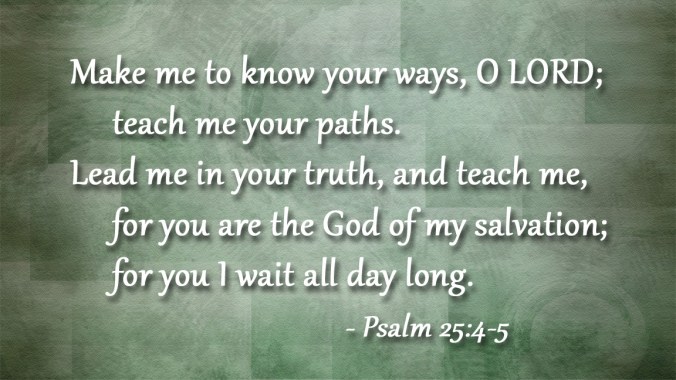
teach me your ways

Today’s readings (click below to open in new tab/window):
Psalms 34; 146, Genesis 45:1-15, 1 Corinthians 7:32-40, Mark 6:1-13


Can you imagine any of your childhood friends becoming the Messiah? Neither could the people of Jesus’ hometown. When we have known someone since before they were toilet-trained, or have endured their adolescent moodiness, or have witnessed other personal (all too humanizing!) traits, our ability to see her or him as truly extraordinary can evaporate. Executive washrooms are exclusive for a reason. Familiarity may not always breed contempt, but it doesn’t often promote reverence.

When Jesus tried to teach in Nazareth, people took offense at his attempt. They asked: “Isn’t he just that carpenter? You know, Mary’s kid?” Their unbelief amazed him, and limited his abilities. Like a nightmarish high school reunion, his peers’ preconceptions negated all he had become. We may judge in hindsight, but how would we react if the neighbor kid started telling us we needed to rethink our concept of God?

Though none of our neighbors, children, siblings, parents, or friends are likely to be the second coming of Christ, the reaction of the people of Nazareth serves as a warning. We don’t always want to hear challenging truths from someone we know well. We may brush off legitimate criticism from friends by reminding ourselves (and them) of their own faults. We might ignore good advice from Dad because “he always worries too much.” After watching our children make mistakes we warned them about, we may have trouble learning to see them as capable adults. Companies often bring in consultants to point out obvious truths not because consultants are smarter, but because strangers lack the baggage we use to discredit our peers when we don’t like what they have to say.

What damage do we cause our relationships when, even unknowingly, we dismiss people because they are familiar? Maybe we’re not preventing them from performing miracles, but how much might they accomplish if shown a little faith? One way to try seeing the face of Christ in everyone is to define them by their potential, and not by their shortcomings. Sometimes they may let us down, but how we can rejoice when they lift us up!

Comfort: No matter how other people see you, God sees you as He created you to be.

Challenge: Be discerning, but don’t fall into the trap of cynicism.

Prayer: Thank you, Lord, for giving me space to grow. Please help me to live into the potential you have created for me. Please help me support and foster the potential of others. May we develop all our talents to serve God and neighbor. Amen.

Discussion: Is there anyone in your life – children, parents, friends, etc. – you are seeing through outdated eyes? How can you change that?

Join the discussion! If you enjoyed this post, feel free to join an extended discussion as part of the C+C Facebook group. You’ll be notified of new posts through FB, and have the opportunity to share your thoughts with some lovely people. Or feel free to comment here on WordPress, or even re-blog – the more the merrier!

Go In Peace

Untitled-1

Today’s readings (click below to open in new tab/window):
Psalms 119:73-80; 145, Genesis 44:18-34, 1 Corinthians 7:25-31, Mark 5:21-43


During pre-flight safety instructions, attendants tell us that in an emergency we should put on our own oxygen masks before helping others. As Christians we learn to put others before ourselves. We love to repeat stories like the one about Mother Theresa, who suffered deformed feet because she always picked for herself the worst shoes out of the donations. Some of us are taught to be ashamed of asking for prayers for ourselves. Are self-mutilation and shame really part of the “good news” of the gospel?

A crowd was following Jesus to the house of Jairus, whose daughter was ill. Along the way a woman who had suffered from hemorrhages for twelve years pushed her way forward to touch his cloak.  According to the religious voices of the time, her gender and affliction made her too unclean to touch him. When he asked who in the crowd had touched him, she bravely confessed. Someone less merciful could have demanded her punishment. Instead her faith healed her immediately, and Christ bade her “go in peace.”

Despite the interruption, Jesus was able to travel on and heal Jairus’s daughter. We need to stop treating grace as if: a) there’s a limited supply to be doled out to the most worthy, b) it’s for other people but not ourselves, and c) it’s for ourselves but not other people. If the woman had not acted on her own behalf, she might have spent the rest of her life miserable and shunned; instead she became a powerful witness for Christ.

Without doubt we are called to sacrifice our wealth, time, reputation, and even safety if it means staying true to our faith and loving our neighbor, but putting others before ourselves does not equal pointless humiliation or self-destruction. Christ brings healing, not damage; hope, not shame. If the shoes that fit you poorly could fit someone else well, your show of piety harms two people and helps no one. If you don’t put on your own mask first, you won’t be alive to help anyone else. It’s OK to push forward once in a while; Christ also wants you to “go in peace.”

Comfort: God loves you just as much as he loves everyone else.

Challenge: Learn to be fine with loving yourself as God loves you, and understand how this can be compatible with a life of service.

Prayer: God of grace, thank you for your steadfast love. I know I can serve you best when I accept all the love you have to offer me. Please help me understand how your love for me can help me love and serve my neighbor. Amen.

Discussion: Many people find this Mother Theresa story inspirational. What’s your take on it, especially if it’s different from the one in this post?

Join the discussion! If you enjoyed this post, feel free to join an extended discussion as part of the C+C Facebook group. You’ll be notified of new posts through FB, and have the opportunity to share your thoughts with some lovely people. Or feel free to comment here on WordPress, or even re-blog – the more the merrier!
Seeds of Faith

good soil

Today’s readings (click below to open in new tab/window):
Psalms 5; 147:1-11, Genesis 42:18-28, 1 Corinthians 5:9-6:11, Mark 4:1-20


Jesus frequently used parables to teach his followers. A parable is more than a story: it illustrates a deeper truth or lesson not easily expressed through more direct instruction. Most of the time Jesus told a parable and left the interpretation to his audience. One benefit of not explaining too much is that people can approach the parable from different angles and identify with different characters. The risk is people failing to understand your message.

For today’s parable about the seeds, however, he unpacks the meaning of the parable (in a somewhat exasperated fashion) to his inner circle. Some landed on rocky ground and were easily uprooted, others landed on scorched earth and withered, and still others were eaten by birds or choked out by thorns. The seeds are the Word, and the type of soil they land on represents the condition of the person receiving the Word. Only a few are standing on good soil where the seed can take root and produce fruit.

We can benefit from Jesus’ explanation by making conscious decisions about what kind of ground we are preparing for the seed. Have you wandered off a righteous path to where the evils of the world can snatch the Word away? Retreat to a community that nurtures your faith. Find yourself on rocky ground that won’t secure you in times of trouble? Till the soil with prayer and study so you will be rooted in the storms. Are you caught in a thorny tangle of worldly concerns that chokes out the Word? Prune them back by simplifying your life to free up time and space to spend in the Word.

Of course making any of these moves from inhospitable soil to a place where we can grow deep roots takes a lot of time and effort. And once we’re there, we can’t lazily wait for a harvest: we still have to do the work of tending the seedlings. A living, growing faith requires care, but as it matures it becomes more self-sufficient. Are we doing what we can to make sure it gets a decent start?

Comfort: You can prepare yourself to better receive Christ’s Word.

Challenge: Imagine yourself as each of the types of soil Christ mentions in this parable.

Prayer: Loving God, thank you for the gift of stories and insight. Please make my heart fertile ground for the seeds Christ offers. Amen.

Discussion: What is your soil like? How can you tend it better?

Join the discussion! If you enjoyed this post, feel free to join an extended discussion as part of the C+C Facebook group. You’ll be notified of new posts through FB, and have the opportunity to share your thoughts with some lovely people. Or feel free to comment here on WordPress, or even re-blog – the more the merrier!

Just. Plain. Crazy.

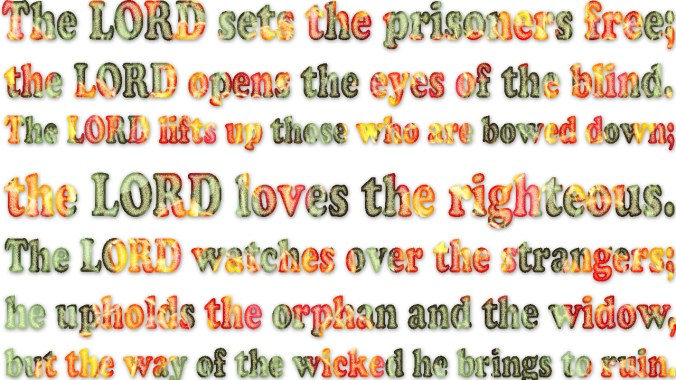
The Lord Loves

Today’s readings (click below to open in new tab/window):
Psalms 34; 146, Genesis 42:1-17, 1 Corinthians 5:1-8, Mark 3:19b-35


If we are faithful to Jesus’ teachings, eventually someone will think we are at least a little crazy. It may happen at work when we say “I’m sorry, but this isn’t an ethical practice.” Or when we get arrested protesting injustice. It may happen when we tell church friends we feel called to something that makes no sense to them. Or when we tell secular friends we are joining a church and following Christ. It may happen when we invite a homeless person to the table in our home or church—and then we are not just crazy but reckless.

Despite those who would claim the United States is a Christian nation, our culture clings to many values conflicting with Christ’s teachings. Greed, corruption, abuses of power, and contempt for the poor and unfamiliar are as prevalent today as they have ever been – among the faithful as well as unbelievers. Christians are called to challenge these things when we encounter them. When our walk with Christ is faithful, we will find ourselves out of step with the world (and yes, much of the church) and labeled crazy when we fail to conform.

Jesus’ own family tried to restrain him when his preaching began to unnerve them. The scribes tried to claim he was possessed by demons. If we are to speak plainly and justly, we will inevitably make some people uncomfortable, and possibly angry. These may be people we love, or people in power. The nature of Christianity is revolutionary and counter-cultural, but even fellow Christians grow anxious when someone starts to take discipleship “too seriously.”

When our beliefs push us to the fringe of the larger culture, belonging to a supportive Christian community can give us strength. Jesus sent disciples out to spread the Gospel two by two. Travelling in pairs promoted their safety, but it also allowed for encouragement and accountability. Standing up for what is right can be dangerous and exhausting. The support of our family in Christ can help sustain us.

As Christians, we act justly. We speak plainly and truly to power. We are willing to appear crazy to the eyes of the world. We and God will both know better.

Comfort: The world may look at you askance, but God looks at you with love.

Challenge: Do something which you think it the right – but scary – thing to do.

Prayer: God of justice, you are my source and my life. May my words and actions always serve you. When my friends and enemies don’t understand me, teach me to show them Christ rather than shame. Amen.

Discussion: Are there times you let your need to be accepted overrule your call to act in faith? How has that made you feel?

Join the discussion! If you enjoyed this post, feel free to join an extended discussion as part of the C+C Facebook group. You’ll be notified of new posts through FB, and have the opportunity to share your thoughts with some lovely people. Or feel free to comment here on WordPress, or even re-blog – the more the merrier!

Forgiveness First

image

Today’s readings (click below to open in new tab/window):
Psalms 27; 147:12-20, Genesis 39:1-23, 1 Corinthians 2:14-3:15, Mark 2:1-12


Jesus was speaking to a large crowd gathered in and around his home. “[S]ome people came, bringing to him a paralyzed man, carried by four of them. And when they could not bring him to Jesus because of the crowd, they removed the roof above him; and […] let down the mat on which the paralytic lay. When Jesus saw their faith, he said to the paralytic, ‘Son, your sins are forgiven.'” The scribes present were offended that Jesus felt he had the authority to forgive sins. The man lowered through the roof may have been disappointed his faith was rewarded with forgiveness and not healing. His friends were probably not looking forward to carrying him back.

As he always seems to do, Jesus turns the situation on its head.

To demonstrate to the scribes the level of his authority, Jesus commands the man to pick up his mat and walk. What’s a little forgiveness compared to a miracle? While we have a suspicion Jesus intended to heal the man all along, his decision to first emphasize forgiveness is a powerful statement. In the text leading to this moment, Jesus seems increasingly frustrated the people follow him only for healings and miracles. While these are signs of his authority, they are only signs – which exist to point to something more important, something beyond our own satisfaction.

The most important healing Jesus offers is not of our mortal bodies, but of our eternal relationship with God. Some of us are convinced we are irredeemable (even though we hail Christ as our Redeemer!), and live our whole lives as if that was true. Others place blame on everyone else and live lives of petty grudges. Both situations demonstrate a lack of faith in forgiveness. These mindsets can be nearly impossible to shake. When we can fully accept that love and forgiveness are at the core of our beings and the center of our relationship with God, well … there’s the miracle.

Healing is not the end of the story, but the beginning. Once we accept God’s love and forgiveness, we can in turn love and forgive ourselves and each other. We heal the world. We are resurrected.

Comfort: The only thing standing between you and forgiveness … is you.

Challenge: Forgive someone. Don’t confuse it with excusing or justifying them. Forgive them as many times as you need to until it sticks.

Prayer: God of forgiveness, I step into your welcoming embrace. Thank you for loving me when I can’t forgive myself. I will accept your love even when I feel unworthy, because only your love heals me so I may forgive others. Amen.

Discussion: What do you need to forgive yourself for? Are you able to ask God to forgive you before you can forgive yourself?

Join the discussion! If you enjoyed this post, feel free to join an extended discussion as part of the C+C Facebook group. You’ll be notified of new posts through FB, and have the opportunity to share your thoughts with some lovely people. Or feel free to comment here on WordPress, or even re-blog – the more the merrier!

Fail to Succeed

dumbbell-1306867-1920x1280

Today’s readings (click to open in new tab/window):
Psalms 5; 145, Proverbs 27:1-6, 10-12, Philippians 2:1-13, John 18:15-18, 25-27


Bodybuilders know the secret to success is failure. A muscle grows bigger and stronger only when it is worked until it fails. They reach for more than they know they can do, because they know the reward will be a stronger body. Every successful workout teaches them the limit of their strength.

Most of us are not experts at judging our own limits, physical or spiritual. When pressed we overestimate or underestimate our abilities. Many people who have gone through a crisis with a parent or child have said: “I didn’t know I could do it until I had to!”

Peter didn’t understand his own limits. Shortly before his crucifixion, Jesus predicted Peter would deny him three times. Of course Peter insisted he would never deny Jesus, but once the rubber hit the road Peter’s fear was greater than his faith. We can shake our heads at Peter, and insist just as hard as he did that we would not have been so faithless, but the truth is we don’t know. We have the advantage of knowing how it all turns out, but for Peter and the other disciples, Jesus’s death brought terror and confusion.

And yet … Jesus also predicted Peter would be the rock upon which he built his church. Jesus didn’t pick someone with a perfect faith, because that someone doesn’t exist. Later when Jesus appeared to the disciples after his resurrection, he asked Peter three times: “Do you love me?” For each failure, Jesus offered an opportunity for redemption.

Attempting only what we know is possible is not faith, it is fear. To grow our faith, we must be willing to test its limits – to trust God to carry us through things we don’t think we can do. When things don’t work out, remember Peter.

God knows we will fail. He can use each of those failures to make us better: more humble, more compassionate, less judgmental. We may need some recovery time – bodybuilders typically wait 24-48 hours before working the same muscles again – but after we recover we know our faith is stronger than it was before.

Comfort: Failure is always an option. Through God, so is redemption.

Challenge: Pick something you’ve been afraid to try, and trust God to see you through it. Even if you fail at it, God will be with you to dust you off.

Prayer: Thank you, O Lord, for the challenges which strengthen me. Amen.

Discussion: Have you ever been stronger than you thought you could be? If so, what or whom do you credit?

Join the discussion! If you enjoyed this post, feel free to join an extended discussion as part of the C+C Facebook group. You’ll be notified of new posts through FB, and have the opportunity to share your thoughts with some lovely people. Or feel free to comment here on WordPress, or even re-blog – the more the merrier!

Fearfully and Wonderfully Made

1454871305319

Today’s readings (click to open in a new tab/window):
Psalms 139; 150, Malachi 4:1-6, 2 Corinthians 3:7-18, Luke 9:18-27


Is the concept of an all-knowing God intimidating or comforting? The author of Psalm 139 finds great comfort in the idea that God has been and always will be with him, from conception through death. He portrays God’s constant presence not as one of judgment, but one of personal investment. As God’s carefully wrought works of art, “fearfully and wonderfully made,” we are each of us His precious creation.

Artists frequently compare their own creations to children; how could we be less to God? Like all good parents, He does not coerce our love through threats, nor does He abandon us when we make mistakes. God has our best interests at heart; Jesus assures us no father, when his child asks for a fish, would hand him a snake. Good parents can be strict, but always with an eye toward guiding and challenging children to be their best selves.

Psalm 139 provides beautiful images of the relationship God intends to have with us: guide, artist, parent, creator. Jesus used similar metaphors to describe our relationship to God, and they can help us explore His unknowable yet always loving nature. Whether we are living in the light or the darkness, God desires an intimate connection with each of His children.

Focusing on  God’s presence in our lives, even when we don’t necessarily “feel” it, inspires us to rise to the opportunity of being our best selves. Without reducing God’s role in our lives merely to a supportive buddy or life coach, we can contemplate God’s presence as we devise plans, make decisions, and take actions. Pausing to reflect on how God might view an action before we commit to it can help us transcend fleeting impulses which may not serve us well. If such reflection nags our conscience or sense of guilt, they may be signposts pointing us to a better – if sometimes more difficult – path. God does not promote shame but does encourage us to have self-control. God’s presence is not a fist knocking us down, but a hand lifting us up. Let’s grab it and be the wonderful creations God intended.

Comfort: God is with us always, waiting to lift us ever higher.

Challenge: Before going to bed each night, reflect on which of the day’s actions glorified God, and which you might have done differently if you’d been keeping God in mind. Thank God for loving you enough to help you do better tomorrow.

Prayer: Thank you God for always calling me toward the right direction.

Discussion: Can you imagine yourself as a work of art? If not, why not? If so, what kind of art would you be?

Join the discussion! If you enjoyed this post, feel free to join an extended discussion as part of the C+C Facebook group. You’ll be notified of new posts through FB, and have the opportunity to share your thoughts with some lovely people. Or feel free to comment here on WordPress, or even re-blog – the more the merrier!