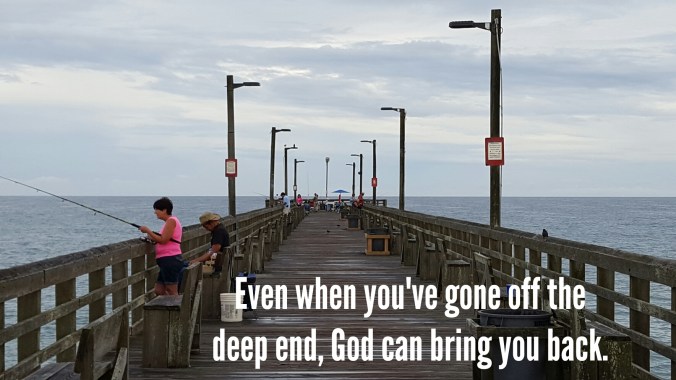
Point of No Return

1494693295858

Today’s readings (click below to open in new tab/window):
Psalms 92; 149, Jeremiah 31:23-25, Colossians 3:12-17, Luke 7:18-28 (29-30) 31-35


[Note: this post is about relationships and forgiveness, but it is not intended to address physically or emotionally abusive relationships. If you are or suspect you are in an abusive relationship, please seek support, safety, and counseling.]

When a relationship sours, it isn’t uncommon for one or both parties to be able to do no right in the eyes of the other. Good behavior – say, a spouse who starts showing more kindness – can be met with suspicion, or dismissed as “too little, too late.” Eventually a relationship can pass the point of no return where people are more invested in being right than in reconciling. Such relationship implosions aren’t limited to individuals. History is full of national, political, and religious feuds that long outlast the actual sins and become matters of stubborn pride; we continue to disagree or take offense not over what is done, but who does it. Once we sufficiently vilify the other side, we feel justified in no longer asking what role we played in the decline of the relationship.

Had the Pharisees reached the point of no return in their relationship with God? John and Jesus were hardly the first to tell them God desired mercy over sacrifice. It seemed that no matter who God sent to warn them, they could find a reason to dismiss the warning. Jesus told them:

John the Baptist has come eating no bread and drinking no wine, and you say, ‘He has a demon’; the Son of Man has come eating and drinking, and you say, ‘Look, a glutton and a drunkard, a friend of tax collectors and sinners!’

Fortunately, Jesus specializes in retrieving those who have seemingly passed the point of no return. Blindness? Sight restored. Lifelong illness? Cured. Death? Overcome.

Broken relationship? Forgiveness.

Oh … that’s a little tougher. That requires us to do something more than show up and let Jesus do his thing. Perhaps that’s because we didn’t cause our physical ailments, but we did contribute to the failure of the relationship. Maybe not equally, maybe not much, but forgiveness isn’t about the size of the offense; it’s about the peace in our heart. When we heed Christ’s words, we realize the point of no return is the limit of our willingness to forgive. He’ll bring us back, as long as we’re willing.

Comfort: Through Christ, you are capable of forgiving more than you realize.

Challenge: Reflect on a relationship you blame someone else for breaking. Consider the ways you contributed, and whether you need to forgive them or yourself.

Prayer:  Forgive our sins as we forgive those who sin against us. Amen.

Discussion: Do you think of yourself as good or bad at relationships?

Join the discussion! If you enjoyed this post, feel free to join an extended discussion as part of the C+C Facebook group  or visit comfortandchallenge.tumblr.com. You’ll  have the opportunity to share your thoughts with some lovely people. Or feel free to comment here on WordPress, or even re-blog – the more the merrier!

Loving Our Enemies

20170416_183615-01

Today’s readings (click below to open in new tab/window):
Psalms 99; 147:1-11, Jeremiah 30:18-22, Colossians 1:24-2:7, Luke 6:27-38


When Christ tells us to love our enemies, the underlying assumption is that we will have enemies; none of us gets through life without a few. How are we to love them? As usual, Jesus doesn’t tell us how to feel but how to behave: “Do good to those who hate you, bless those who curse you, pray for those who abuse you.” This sounds like the ultimate in selflessness, but we engage in these actions to transform ourselves and our relationships with the world.

Unless we are engaged in a war, calling someone an “enemy” can seem melodramatic. To put Christ’s words into action, we might define enemies as anyone we don’t feel like blessing, praying, or doing good for. Maybe our enemies are social – the people challenging us at work, school, or other social groups. Maybe they are political; few things set us at odds so quickly, even when we share common goals. Maybe our enemies are inherited through longstanding cultural grudges, and we don’t have any firsthand reason to clash. In all these cases, society teaches us to distrust, outmaneuver, or outright harm. Television reality shows turn strangers into enemies for entertainment. Our hearts can war even when our hands are at peace.

If we love our enemies only to change them, we are missing the point. While a move from enemy toward friend is great, harboring any purpose for love other than love itself will eventually frustrate and disappoint us – and short-circuit its power to change our own hearts. How should we pray for our enemies, if not to change them? Just like we pray for our loved ones. Such prayer may take immense effort when we have been wronged, but if we wait until we feel like praying for them, that day may never come. Kindness toward those who anger us isn’t hypocritical, it is a discipline crucial to re-shaping our hearts to better resemble Christ’s heart.

Loving those who love us is nothing to brag about, but loving those who despise us – while expecting nothing in return! – changes both our hearts and the world.

Comfort: Loving our enemies gets easier with practice.

Challenge: Pray for your enemies – and mean it.

Prayer: Teach me, Lord, to love my enemies as Christ loves me. Amen.

Discussion: As you go through life, do you find you have more or fewer enemies?

Join the discussion! If you enjoyed this post, feel free to join an extended discussion as part of the C+C Facebook group  or visit comfortandchallenge.tumblr.com. You’ll  have the opportunity to share your thoughts with some lovely people. Or feel free to comment here on WordPress, or even re-blog – the more the merrier!
Found Wanting or Wanting to be Found?

feestmaal

Belshazzar’s Feast, Rembrandt, 1637

Today’s readings (click below to open in new tab/window):
Psalms 47; 147:12-20, Daniel 5:13-30, 1 John 5:13-20 (21), Luke 5:1-11


Jesus knows you are flawed, and loves you anyway. God knows you are flawed, and loves you anyway. People know you are flawed, and some of them will love you and some of them won’t, but none of them are God so in the long run it doesn’t matter. That leaves you. You know you are flawed; how will you deal with it?

King Belshazzar was deeply flawed, and he seemed to revel in it. When he desecrated the temple vessels of the captured Jews, a mysterious hand wrote strange words on the palace wall. Terrified, he brought in the captive prophet Daniel to interpret them for him. Because Belshazaar praised false idols but ignored the “God in whose power [was his] very breath,” Daniel interpreted the words as follows:

 mene, God has numbered the days of your kingdom and brought it to an end; tekel, you have been weighed on the scales and found wanting; upharsin, your kingdom is divided and given to the Medes and Persians

Belshazzar was killed that same night.

Peter was also flawed. When he first realized Christ’s nature, “he fell down at Jesus’ knees, saying, ‘Go away from me, Lord, for I am a sinful man!’” Jesus replied, “Do not be afraid; from now on you will be catching people.” Peter would remain highly flawed throughout his career as apostle and founder of the church, but his attitude of faith and repentance kept him close to God.

Some of us think our flaws put distance between us and God. With this mindset, we worry we aren’t as “good” as other Christians (who are doing their own worrying). When things get tough we don’t want to burden others with our struggles (though they would happily lend an ear, a hand, or a buck). With this mindset, our flawed ego tells us we couldn’t possibly be forgiven.

Not so.

Do not be afraid. Belshazzar teaches us to be aware of our flaws. Peter teaches us not to be so aware of them that we despair. God loves us too much to leave us where we are.

Comfort: God loves you as you are.

Challenge: Love and trust God enough to make you even better.

Prayer: Thank you, Holy God, for the forgiveness and love you offer even though I can never earn it. Amen.

Discussion: Have you ever felt like your flaws put distance between you and God?

Join the discussion! If you enjoyed this post, feel free to join an extended discussion as part of the C+C Facebook group  or visit comfortandchallenge.tumblr.com. You’ll  have the opportunity to share your thoughts with some lovely people. Or feel free to comment here on WordPress, or even re-blog – the more the merrier!

The Letter Kills

forgiveness

Today’s readings (click below to open in new tab/window):
Psalms 103; 150, Daniel 7:9-10, 13-14, 2 Corinthians 3:1-9, John 12:27-36a


Victor Hugo’s novel (and popular musical) Les Miserables opens as hero Jean Valjean completes a 19-year prison sentence that began with stealing a loaf of bread for his starving sister. The yellow letter he must carry impairs his ability to rebuild his life, until a merciful encounter propels him into a new identity. In Nathaniel Hawthorne’s The Scarlet Letter, Hester Prynne has a child out of wedlock. She and her daughter are forever outcast because of the scarlet “A” (for adultery) she must wear as a constant declaration of her sin.

In both stories, the heroes committed the original crimes, yet we root for them. We feel the injustice of their disproportionate and lifelong punishments. Yet somehow as a society our fictional compassion is divorced from our compassion for real people. We recognize the unjust legalism of the yellow and scarlet, but don’t quite make the connection to modern equivalents.

In most states job applications include a question about felony convictions. Honesty dramatically reduces the chances a former felon will even get an interview. “But wait,” you may think, “don’t employers have a right to know?” Maybe that’s too small a question. Of course child molesters shouldn’t be hired by a daycare, but if the system is meant to rehabilitate, why does it heap obstacles in front of a forty year old person who was foolish at twenty, has done their penance, and now seeks gainful employment? What separates them from Jean and Hester? Motivation? A catchy tune?

Forgiveness and relentless punishment are incompatible. If we argue it’s a civil matter and outside religious purview, then we have no business introducing Christian values into other civil matters. If we argue it’s a matter of risk, we have lost sight that following Christ always invites risk. We are meant to be outsiders, challenging the status quo of the empire. As Paul told the Corinthians: “the letter kills, but the Spirit gives life.”

In all matters, let us seek the life-giving Spirit. Justice seeks more than punishment – it seeks to heal the starving and the outcast before punishment appears on the page.

Comfort: No matter who seeks to punish you, Christ seeks to forgive you.

Challenge: Read this short article about removing the “felony checkbox” in Minnesota. If it raises questions, search for more to read.

Prayer: Spirit of God, I will seek life in you for myself and others. Amen.

Discussion: The “felony box” is just on example of how our penal system is at odds with mercy and rehabilitation. Can you think of others?

Join the discussion! If you enjoyed this post, feel free to join an extended discussion as part of the C+C Facebook group , visit comfortandchallenge.tumblr.com, or follow @comf_and_chall on Twitter. You’ll  have the opportunity to share your thoughts with some lovely people. Or feel free to comment here on WordPress, or even re-blog – the more the merrier!

Flip

20170208_175756-01.jpegToday’s readings (click below to open in new tab/window):

Psalms 89:1-18; 147:1-11, Isaiah 59:1-21, 2 Timothy 1:15-2:13, Mark 10:1-16


We can all struggle with decisions. From dinner to voting, sometimes we just get stuck. A friend once advised that when we find ourselves spinning our mental wheels, we should flip a coin. The result is not binding: if it lands and we feel satisfied, let it ride; if we think, “Maybe two out of three…” make the other choice. When we go to friends for advice, they often tell us, “You know what to do.” At that point we’re not seeking advice so much as a nudge in the right direction. When we are determined to do something we know is a bad decision … those are the times we don’t seek advice at all.

Sin is that last type of decision: we deliberately turn away from God and conscience. Isaiah promises God’s arms are not too short to reach us, or His ears too weak to hear. Rather, we erect our own barriers through sin. Isaiah describes sinners who weave webs to snare others and clothe themselves, but find no shelter in them. He talks about the serpent eggs they hatch to poison others. Webs of lies. Hatched plots. Such sins cover us in barriers of shame, fear, and guilt that can make it feel almost impossible to turn back to God. Always there, he can’t offer forgiveness we don’t seek.

Jesus tells us to receive the Kingdom of God like little children. Children are shameless. They can grind peanut butter into a shag carpet and still ask for the jelly with a smile. We raise them to understand consequences, but spend little time training them to accept forgiveness. To stop reaching for us and to start obeying us – or hiding when they don’t. To see God that way. Tearing down those barriers built by sin means trusting that God will forgive us. That’s a lot of unlearning, but we don’t have to be defined by our bad decisions; Christ practically begs us to make the one good choice which restores us to wholeness.

We don’t need to flip a coin; we just need to flip an attitude.

Comfort: God is always waiting for you to seek His face.

Challenge: Learn to ask for forgiveness, even when you don’t feel like you deserve it.

Prayer: Thank you loving God for the gift of your grace. Amen.

Discussion: What conditions do you put on yourself (or others) before you can forgive?

Join the discussion! If you enjoyed this post, feel free to join an extended discussion as part of the C+C Facebook group , visit comfortandchallenge.tumblr.com, or follow @comf_and_chall on Twitter. You’ll  have the opportunity to share your thoughts with some lovely people. Or feel free to comment here on WordPress, or even re-blog – the more the merrier!

First, do no harm.

1479243135156-01.jpeg

Today’s readings (click below to open in new tab/window):
Psalms 54; 146, Habakkuk 3:1-10 (11-15) 16-18, James 3:1-12, Luke 17:1-10


Primum non nocere – Latin for “first do no harm” – is a widely accepted principle of the medical community. It may seem obvious that the art of healing would be opposed to harm, but medicine is less cut-and-dried than we’d like. Physicians need a healthy ego. Especially in life-threatening situations, hesitation and self-doubt can have serious consequences for the patient. Yet decisive action needs to be tempered by humility, for the wrong treatment may make things worse and our intentions can’t prevent that.

James advised early Christians against becoming teachers, because teachers are held to higher standards of judgment and we all make plenty of mistakes. He explained many mistakes involve the tongue (our words) and the damage caused by its improper use. In matters of faith, it takes a certain amount of ego to claim to be a teacher, and even more humility to be a good one. Without the right balance, teachers can do more harm than good to a faith community. There’s a difference between sharing and discussing our faith, and establishing ourselves as authorities. Much caution is advised for the latter.

Acknowledging there are countless opportunities to make mistakes, Jesus warned his disciples: “It would be better for you if a millstone were hung around your neck and you were thrown into the sea than for you to cause one of these little ones to stumble.” How do we cause people to stumble? Well, the next thing he talked about was forgiving people who sin against us (note he didn’t mention forgiving those who sin against others, because neither the offense nor the forgiveness are ours). If they offend us seven times a day, we are to forgive them each time they repent. Think of it as a physician who tells her patient at every annual checkup to eat less and exercise more; the patient is contrite and promises to do better, and though it never happens, the physician retains the patient.

What is the connection between forgiveness and stumbling? That may be for a teacher to reveal. Until you find one, try to do no harm.

Comfort: Repentance is not a one-time offer.

Challenge: Find some spiritual exercises to build your forgiveness muscles.

Prayer: Loving and merciful God, grant me the strength, humility, and wisdom to share your love with others even when I don’t want to. Amen.

Discussion: Who do you have trouble forgiving? What impact does that have on your spiritual and emotional well-being?

Join the discussion! If you enjoyed this post, feel free to join an extended discussion as part of the C+C Facebook group or follow @comf_and_chall on Twitter. You’ll  have the opportunity to share your thoughts with some lovely people. Or feel free to comment here on WordPress, or even re-blog – the more the merrier!

Prodigal Son of God

1478839256258-01.jpeg

Today’s readings (click below to open in new tab/window):
Psalms 36; 147:12-20, Joel 2:21-27, James 1:1-15, Luke 15:1-2, 11-32


In The Parable of the Prodigal Son, a young man demands his inheritance from his father, then squanders it on “dissolute living” until he is forced to become a swineherd and live among the pigs – a particularly low state for a Jew. When he is reduced to hungering for the pig’s slop, he decides he must return home. He is ready to humble himself before his father, but while he is still far off, his father runs to him, embraces him, dresses him in finery, and throws a celebratory feast. His older brother is displeased, and asks why the son who lived so recklessly deserved a party, while he who had been faithful to his family got nothing. The father famously replies:

Son, you are always with me, and all that is mine is yours. But we had to celebrate and rejoice, because this brother of yours was dead and has come to life; he was lost and has been found.

Jesus told this story because the Pharisees were complaining that he ate with tax collectors and sinners. Like the prodigal son, these people only had to take the first few steps toward Christ, and like the father he welcomed them with open arms and embraced their presence at his table. In a sense Jesus was also a prodigal son, but rather than being recklessly extravagant with his money he was scandalously generous with God’s love, much to the distress of his Pharisee brothers.

In ways large and small, we can all turn our backs on God. Maybe afterward we feel unclean, like we’ve ruined our lives and lain among the swine, and struggle to find the words that will render us acceptable again. Others may not think we deserve forgiveness, but no matter how far we have strayed, a contrite heart is all the apology God needs to not only welcome us home, but to celebrate our return.

In all of the Good News, is there any better news than a God who rushes toward us in love and forgiveness the moment we take that first step towards home?

Comfort: As soon as you come home to God, it’s like you never left.

Challenge: Call or visit someone you miss and haven’t seen in a while.

Prayer: Loving and merciful God, thank you for always being there with open arms. Amen.

Discussion: Have you ever felt distant from God? Did you wonder whether you’d feel His embrace again?

Join the discussion! If you enjoyed this post, feel free to join an extended discussion as part of the C+C Facebook group or follow @comf_and_chall on Twitter. You’ll  have the opportunity to share your thoughts with some lovely people. Or feel free to comment here on WordPress, or even re-blog – the more the merrier!

Love and Forgiveness

1477883595622-01.jpeg

Today’s readings (click below to open in new tab/window):
Psalms 103; 150, Zephaniah 1:1-6, 1 Corinthians 12:27-13:13, Matthew 18:21-35


Love and forgiveness are intertwined throughout the Gospel, and can’t be untangled. Both find their ultimate source in God: we love because we are loved, and we forgive because we have been forgiven. If we aren’t doing both, we are doing neither. Without both, all our other efforts are wasted. Paul told the Corinthian church:

If I speak in the tongues of mortals a nd of angels, but do not have love, I am a noisy gong or a clanging cymbal. And if I have prophetic powers, and understand all mysteries and all knowledge, and if I have all faith, so as to remove mountains, but do not have love, I am nothing. If I give away all my possessions, and if I hand over my body so that I may boast, but do not have love, I gain nothing.

In a response to a question about how often we need to forgive someone, Jesus told a parable about a slave who was forgiven a large amount of debt by his master, but refused to forgive a debt that was only one hundredth of that amount. The master was angered by this lack of mercy, and demanded both punishment and repayment of the entire original debt.

Through Christ, God forgives us everything. Ev-er-y-thing. What we are asked to forgive others in return is a mere fraction. When in the Lord’s Prayer we pray “forgive us our debts as we forgive our debtors,” we might want to remember both this parable and Paul’s teaching. If I have all faith, but do not have forgiveness … what do I have? I have nothing.

When we struggle to forgive, are we really struggling to believe we are forgiven? And when we struggle to love, is it because we can’t comprehend how much we are loved? Unlike money or time, love and forgiveness are in never-ending supply. There’s no reason to hoard them out of fear. God isn’t going to run out before we get our share. No matter how much love and forgiveness we give away, God promises to replenish our hearts with more.

Comfort: You are loved. You are forgiven.

Challenge: What offenses do you find difficult to forgive? Think about what they say about you.

Prayer: Holy God, forgive me my debts as I forgive my debtors. Amen.

Discussion: Has anyone ever had trouble forgiving you? Why do you think that is?

Join the discussion! If you enjoyed this post, feel free to join an extended discussion as part of the C+C Facebook group or follow @comf_and_chall on Twitter. You’ll  have the opportunity to share your thoughts with some lovely people. Or feel free to comment here on WordPress, or even re-blog – the more the merrier!

See And Be Seen

1475808780421.jpg

Today’s readings (click below to open in new tab/window):
Psalms 97; 147:12-20, Hosea 9:1-9, Acts 24:1-23, Luke 7:36-50


A Pharisee named Simon invited Jesus to dine with him in his home. When Jesus arrived, a woman known throughout the city as a sinner followed him inside. She bathed his feet with her tears and dried them with her hair. Then she kissed his feet and anointed them with ointment from an alabaster jar. Simon looked on in contempt because he believed a real prophet would have seen the woman for what she was. Jesus told Simon a story about a creditor who forgave the debts of two people, one of whom owed ten times as much as the other, and asked which of them would love the creditor more. Simon said the one whose debt was greater.

Jesus then turned toward the woman and explained to Simon why she had showered him in kindnesses, while Simon had offered nothing: “Her sins, which were many, have been forgiven; hence she has shown great love. But the one to whom little is forgiven, loves little.”

Isn’t it interesting that while Jesus spoke to Simon, he looked at the woman? And that Simon, who thought he knew everything he needed to know about her, didn’t really see her at all? And that though Simon said nothing, Jesus saw his heart clearly?

If we are to be Christians – little Christs – we need to see people as Christ sees them. More importantly, we need to help people believe Christ sees, loves, and forgives them. That means meeting people where they are, but it also means letting them meet us where we are – letting sinners from across town into our orderly houses of worship to shed unseemly tears at the foot of the cross and generally make the “respectable” Christians uncomfortable. When they follow Jesus through the door, he sees exactly who they are and loves them anyway. If we don’t do the same, he sees hearts that love him only a tenth as much as they should, and they see hypocrisy instead of hope.

Don’t worry about looking like a good Christian. Try to look like Christ. That’s who people need to see.

Comfort: Christ sees you and loves you..

Challenge: Remember that you may be the face of Christ to someone today.

Prayer: Loving God, teach me to see with the eyes of Christ, and love with the heart of Christ. Amen.

Discussion: When have you felt so out of place that you just wanted to leave?

Join the discussion! If you enjoyed this post, feel free to join an extended discussion as part of the C+C Facebook group or follow @comf_and_chall on Twitter. You’ll  have the opportunity to share your thoughts with some lovely people. Or feel free to comment here on WordPress, or even re-blog – the more the merrier!

Written Off?

20160816_174620-01.jpeg

Today’s readings (click below to open in new tab/window):
Psalms 123; 146, Judges 18:1-15, Acts 8:1-13, John 5:30-47


After St. Stephen was martyred by leaders of a temple in Jerusalem, the eighth chapter of Acts tells us Saul – who would later become Saint Paul – stood watching and “approved of their killing him.” In the next chapter Saul will experience an astounding conversion, but before that happens he is a Roman Jew who persecutes and imprisons Christians. Can any of us imagine the person who is our greatest persecutor becoming our most ardent champion? Yet Christ made it possible for Saul. When Christ tells us to pray for our enemies, it’s not just to change their hearts, but to change ours as well. Because you never know.

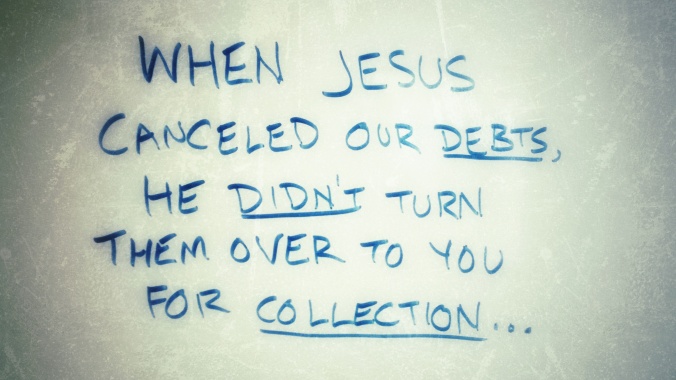
In business, when customer debt is deemed uncollectible, the business has a few options. One is to write it off as bad debt. When this happens, the business can no longer consider that receivable an asset, though the business may continue to try to collect it or sell it off to a collection agency. Generally the business reports this event to credit reporting agencies, and the customer’s debt clings to them for years. A second option is to forgive the debt. The customer must be notified and the business can no longer try to collect. When Christ died for us, all our debts were forgiven … including Saul’s. That is why his past, once he accepted the notice he’d been forgiven, could not be held against him. That is why the present circumstances of anyone, including our persecutors and ourselves, do not give us permission to write them off. Because we never know.

When we write someone off, we say: “You no longer drag me down, but I retain the right to remind you and everyone else how you’ve done me wrong.” If we forgive them, we say: “I don’t like what you did, but it does me no good to waste effort on this debt. Go in peace and I’ll do the same.” Because of the cross, the decision has been taken out of our hands. After all, Jesus taught us to pray: “forgive us our debts as we forgive our debtors.”

Comfort: You aren’t responsible for judging all the wrongs of the world.

Challenge: Meditate on what debts you have trouble forgiving. Pick one to work on forgiving before the year is out.

Prayer: Lord of Healing, forgive me as I forgive my debtors. Amen.

Discussion: When customer debt is forgiven, it may be considered a form of income and therefore create a tax obligation. Do you feel that God’s forgiveness of our debts creates any obligations for us?

Join the discussion! If you enjoyed this post, feel free to join an extended discussion as part of the C+C Facebook group. You’ll be notified of new posts through FB, and have the opportunity to share your thoughts with some lovely people. Or feel free to comment here on WordPress, or even re-blog – the more the merrier!