Humble Beginnings

1494984412446

Today’s readings (click below to open in new tab/window):
Psalms 98; 146, Jeremiah 32:16-25, Romans 12:1-21, Luke 8:1-15


Have you ever tried negotiating with God? Something like: “Dear God, if you will [fill in the blank]… I promise to never/always [fill in another blank].” Are we able to keep such promises? In retrospect, we may realize we were foolish to make them in the first place. God knows just how weak we can be when it comes to holding up our end of a deal.

Jeremiah tells the story of how the Israelites lost the land God gave them, because they forgot God and lived sinfully . In their pride and selfishness, they forgot everything they had was a gift. How often do we hear about “self-made” athletes, entertainers, or politicians who achieve success, only to forget their humble beginnings? And how often do these stories end with a fall from grace when the successful lose perspective? How frequently have we pleaded with God to deliver us – only to insist on our own way once things improve? When times are good do we, like the Israelites, forget the God who provided for us and return to the old ways that caused us trouble in the first place? When our responsibilities are no longer convenient, do we neglect them to follow our desires?

In Romans, Paul warns us not to overestimate our own wisdom. Our successes come when we remember to be faithful stewards of our gifts, not when we take too much credit for them. When times are good, let’s give thanks for what we’ve been entrusted, and when times are bad let’s not rely solely on our own resources to get out of trouble. We learn from the Israelites that such attitudes can turn good situations to bad, and bad to worse. Our efforts count, but not for everything.

Promises do not convince God to act one way or another, and failing to meet promises – even with the best intentions – damages our character. Negotiating is a way of using our “wisdom” to manipulate God. Instead let’s seek God’s will in all circumstances, and live as if we’ve promised to make of ourselves a holy and living sacrifice.

Comfort: We have greater resources than our own thoughts.

Challenge: Meditate on promises you have kept… and broken.

Prayer:  Loving God, thank you for being constant when I am not. Amen.

Discussion: What do you take for granted?

Join the discussion! If you enjoyed this post, feel free to join an extended discussion as part of the C+C Facebook group  or visit comfortandchallenge.tumblr.com. You’ll  have the opportunity to share your thoughts with some lovely people. Or feel free to comment here on WordPress, or even re-blog – the more the merrier!
Who’s The Boss?

bossleader

Today’s readings (click below to open in new tab/window):
Psalms 93; 150, Genesis 18:22-33, 1 Peter 5:1-11, Matthew 7:15-29


“God opposes the proud,
but gives grace to the humble.”

In his first epistle, Peter wrote these words to both the elders of the early church and the younger members of the flock. He advised the elders not to lord their position over anyone, and the younger to accept appropriate authority. This may seem like a basic teaching, but even among Christians who have been circulating this letter for two thousand years, it’s easier said than done.

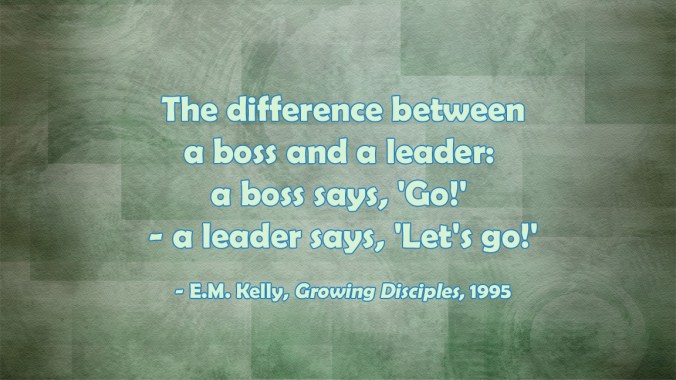
In church and in business, it’s easy to confuse being a boss with being a leader. Bosses tell people what to do, expect people to accept marching orders whether they make sense or not, and often aren’t willing to entertain challenges. Leaders on the other hand embody qualities that make people want to follow them, empower and encourage people to make decisions that support the organization’s vision, and listen to what the people they are leading have to say. A boss makes it your problem; leaders make it their responsibility.

According to Peter, the difference between a boss and a leader is humility. We should never confuse humility with a lack of confidence. To the contrary, the bossiest people are often the most brittle and least confident about their vision, while confidence allows for an open mind. Leaders are decisive, but they are also thoughtful and flexible. A boss reprimands; a leader coaches. Because they view the relationship with the people they lead (and with fellow leaders) as collaborative rather than adversarial, leaders trust people unless there is a reason not to. Peter, though the effective head of the church, considered himself one elder among many.

Christianity is a voluntary state. Good Christians leaders don’t intimidate or bully people into faith or good behavior – they make a compelling case for the love of Christ. Even once we opt in to being part of the Christian community, the job of our leaders is not chief prosecutor, but mentor. Yes they must always stick to sound teaching, and sometimes even discipline, but the primary method of both should adhere to the grace Christ offers us.

Comfort: It’s OK to question your church leaders when they seem in it for their own gain. Even if you’re mistaken, a good leaders will listen to what you have to say.

Challenge: If you are called to a position of authority or decision-making, be a leader not a boss.

Prayer: Gracious God, teach me to be humble, for I am serving both when I lead and when I follow. Amen.

Discussion: Who’s one of the best leaders you’ve met and why?

Join the discussion! If you enjoyed this post, feel free to join an extended discussion as part of the C+C Facebook group  or visit comfortandchallenge.tumblr.com. You’ll  have the opportunity to share your thoughts with some lovely people. Or feel free to comment here on WordPress, or even re-blog – the more the merrier!

Dream of Service

nebuchadnezzar

Daniel Interpreting Nebuchadnezzar’s Dream, Mattia Preti (1613-1699)

Today’s readings (click below to open in new tab/window):
Psalms 99; 147:1-11, Daniel 2:17-30, 1 John 2:12-17, John 17:20-26


Have you ever heard the advice to be good to people while you’re on your way up the ladder of success, because you’ll be running into them again on the way down? No matter how successful or powerful we are, no one is completely independent. Take King Nebuchadnezzar of Babylon: when he was greatly troubled by a dream, he had to depend on others to interpret it. The self-proclaimed wise men of the kingdom were unable to do this for him – though they still pretended they might – and so he ordered the execution of them and others beside. Daniel heard what was about to happen, so he prayed with his friends that God might have mercy on them. When God revealed to Daniel (in another dream) the meaning of the king’s visions, he sought an audience with the king.

Daniel took no credit for knowing the dream or its interpretation. He said no person could do that, but that God could and had. It’s important to remember our gifts are not meant to exploit others for our own benefit (as the wise men would have exploited the king) or to abuse others (as the angry Nebuchadnezzar would have done to innocents). They exist for us to serve God and God’s kingdom. Daniel wisely presented himself as no one special. It was this very humility, the willingness to cast off his ego and get out of his own way to answer the call to service, that made him very special to the king.

We like to feel special. When other people recognize our talents and efforts, it feels good. There’s nothing wrong with acknowledging our abilities – false humility doesn’t serve much of a purpose – but we must always remember to give credit to God. Whether we are kings or captives, we are the same to God because all we have came from God. Whether we find that humbling or heartening reveals something to us about our own attitudes.

On our way up, down, or simply holding steady, we should remain focused on God. That’s the best way to keep our balance.

Comfort: You are special to God …

Challenge: … but no more special than anyone else.

Prayer: Thank you, God, for the time and talents you have given me. Teach me to use them well. Amen.

Discussion: What gift do you think you have faithfully put in service to God?

Join the discussion! If you enjoyed this post, feel free to join an extended discussion as part of the C+C Facebook group , visit comfortandchallenge.tumblr.com, or follow @comf_and_chall on Twitter. You’ll  have the opportunity to share your thoughts with some lovely people. Or feel free to comment here on WordPress, or even re-blog – the more the merrier!

Who Built That?

toolbox

Today’s readings (click below to open in new tab/window):
Psalms 5; 145, Deuteronomy 6:1-15, Hebrews 1:1-14, John 1:1-18


Shortly before the Israelites ended their forty years of wandering in the desert, Moses spoke to them about how they were to live in the promised land. These sermons, which make up most of the book of Deuteronomy, were good news for the Israelites, but not for the Canaanites – who were already living in the promised land of Cana. Moses warned the people of Israel:

“When the LORD your God has brought you into the land that he swore to your ancestors […] — a land with fine, large cities that you did not build, houses filled with all sorts of goods that you did not fill, hewn cisterns that you did not hew, vineyards and olive groves that you did not plant — […] take care that you do not forget the LORD.”

How easy it is to believe we have received all the good things in our lives through our own merit, and to forget how much of it is due to the people who came before us. These people are not only direct ancestors, but those people who shaped our lives and societies through victories – and sometimes more poignantly through losses. Financial inheritance, good genes, a strong work ethic, economies stable enough to support business, roads, an education, natural resources beyond measure, civil rights: all these things which contribute to our success and survival were provided by others who either gave them or had them taken away. No matter how hard we’ve worked for what we have, we didn’t do it alone.

Our sense of gratitude is tied to our sense of history. Each person’s life is built on the bones of those who voluntarily and involuntarily contributed to it. Our sense of justice is also tied to our willingness to remember history. All societies, past and present, are a mix of what we’ve built, what we’ve been given, and what we’ve taken. When the Israelites remembered how God had delivered them to their homes, they also had to remember the people of Cana. When we give thanks for what we have, let’s also remember where it came from.

Comfort: We are all part of an ongoing story.

Challenge: Give thanks for the people who have helped you become what you are.

Prayer: God of history, help us to understand and honor the past so we may practice reverence in the present. Amen.

Discussion: Some people complain about being made to feel “guilty” about privilege. Guilt is inwardly focused and rarely constructive. What is a better attitude toward our own privilege?

Join the discussion! If you enjoyed this post, feel free to join an extended discussion as part of the C+C Facebook group , visit comfortandchallenge.tumblr.com, or follow @comf_and_chall on Twitter. You’ll  have the opportunity to share your thoughts with some lovely people. Or feel free to comment here on WordPress, or even re-blog – the more the merrier!

Keep It Real

Christian Symbol

Today’s readings (click below to open in new tab/window):
Psalms 122; 149, Ruth 4:1-22, 2 Corinthians 4:13-5:10, Matthew 6:1-6


In television’s Game of Thrones, a tyrannical, tantrum-prone prince named Joffrey assumes the throne and becomes angry when his court doesn’t seem to take him seriously. In frustration he screams “I am the king!” His grandfather Tywin interrupts him with a now famous line: “Any man who must say ‘I am the king’ is no true king.”

Might we substitute “Christian” for “king?”

Jesus told his disciples to pray in private and give alms (donations to the poor) without drawing attention: “Beware of practicing your piety before others in order to be seen by them; for then you have no reward from your Father in heaven.” Flashy charity and public, wordy prayers were the habits of hypocrites.

We want to share the Gospel, but we must be careful not to blur the lines between evangelism and self-congratulations. The Good News is not that we have learned to condemn or avoid certain behaviors and people, or that we know who is going to heaven or hell. The Good News is not even that we live better lives. The Good News is that Jesus offers redemption to all who would accept it. If the message we’re spreading doesn’t express Christ’s love to Christians and non-Christians alike, we’re not evangelizing … we’re propagandizing.

Ever heard someone offer a compliment like: “So-and-so has money, but it’s ok because they don’t act like it?” That usually means the person is perceived as humble instead of snobby (or other negative traits fairly or unfairly associated with wealth). If someone said you were a Christian, but it was OK because you didn’t act like it, what would you think they meant? Probably they would mean you seemed humble and loving instead of self-righteous, condemning, or other negative associations we have fairly and unfairly earned. Would that be so bad?

Proclaiming ourselves Christians is not the same thing as proclaiming Christ. Of Christ we may and should speak boldly. Declaring ourselves his followers is and should be a humbling experience of being in service to others because we have been forgiven as much and more as anyone else.

Comfort: The evidence of your faith is written on your heart.

Challenge: Live so that people are drawn to the light that inspires you.

Prayer: I am the humble servant of Christ. Amen.

Discussion: If the word “Christian” didn’t exist, how would you explain your faith?

Join the discussion! If you enjoyed this post, feel free to join an extended discussion as part of the C+C Facebook group , visit comfortandchallenge.tumblr.com, or follow @comf_and_chall on Twitter. You’ll  have the opportunity to share your thoughts with some lovely people. Or feel free to comment here on WordPress, or even re-blog – the more the merrier!

The Spin Class

swirl-1419873

Today’s readings (click below to open in new tab/window):
Psalms 15; 147:1-11, Isaiah 63:15-64:9, 1 Timothy 3:1-16, Mark 11:27-12:12


Have you heard of the “unpology?” It’s what many celebrities and politicians do instead of actually apologizing. For instance, after getting called on the carpet for saying something insensitive, they say “I’m sorry if anyone was offended by what I said.” Subtly but distinctly different from “I’m sorry I said this offensive thing,” isn’t it?

The unpology is just one method of avoiding honest communication. Not an outright lie, but more a method of speaking yet delivering no content whatsoever. When the chief priests, scribes, and elders demanded to know by what authority Jesus said he would answer them only if they first answered a question from him: “Did the baptism of John come from heaven, or was it of human origin? Answer me.” They conferred among themselves because they weren’t sure what to say. They were afraid to say “from Heaven” because Jesus could ask why they didn’t believe him, but they were also afraid to say “of human origin” because the crowd, who regarded John as a prophet, would turn on them.

They settled on, “We do not know.”

Mark’s Gospel gives us no indication that what they truly believed even factored into their answer. So they said essentially nothing, because that’s how they had learned to maintain power.

Our society has an entire class of people who rise to prominence by declaring not what they believe, but what people want to hear. This class includes a regrettable number of politicians, lobbyists, executives, and clergy. Things like speaking bold truth and owning one’s mistakes get sacrificed on the altar of spin when we value power more than integrity.

We could point fingers at examples, but it’s more important not to get drawn into these behaviors ourselves. It’s tempting to make ourselves look as good as possible, and easy to rationalize why we should, but no true prophet worried about his or her image. No matter how well intentioned, once we start spinning the facts, it’s hard to stop. Speaking honestly and simply may not always move us up the ladder, but it keeps us grounded in our faith.

Comfort: Being honest saves a lot of effort.

Challenge: Be truthful, even when it’s not to your immediate advantage.

Prayer: God of truth and life, fill me with an abundance of both. Amen.

Discussion: Regardless of whether you actually do, when are you tempted to fudge the truth?

Join the discussion! If you enjoyed this post, feel free to join an extended discussion as part of the C+C Facebook group , visit comfortandchallenge.tumblr.com, or follow @comf_and_chall on Twitter. You’ll  have the opportunity to share your thoughts with some lovely people. Or feel free to comment here on WordPress, or even re-blog – the more the merrier!

Sunday Best

1487133294618.jpg

Today’s readings (click below to open in new tab/window):
Psalms 123; 146, Isaiah 63:7-14, 1 Timothy 1:18-2:8 (9-15), Mark 11:12-26


Like much of the world, church has become more casual. Not long ago it was a place most people dressed up for. People attended in a tie, a fancy dress, shined shoes, or a beautiful hat – their Sunday Best. Dressing well was a sign of respect for the house of God. Yet in his letter to Timothy, Paul instructed women not to wear anything gaudy to worship: no braids, jewelry, or expensive clothes. He didn’t mention men’s clothing, but he did tell them to pray “without anger or argument” – behavior they could put on as external signs of exaggerated, manly self-righteousness. He wanted people to practice modesty and humility rather than displaying the sort of religious spectacle Jesus had so clearly denounced.

in Mark’s Gospel, a hungry Jesus spied a fig tree that had sprouted leaves, a sign that it was bearing fruit. Upon closer inspection, the fig tree bore no fruit at all (which wasn’t terribly surprising since figs weren’t in season), so Jesus cursed it and it withered. This story bewilders a lot of people who wonder why Jesus would hurt an innocent fig tree. Perhaps it makes more sense if we remember the tree was representing itself as something that it was not – a valuable resource to the community. Jesus cursed the tree right before he cleansed the temple of money changers – people who pretended to be working in the service of the temple but were really in it to exploit the faithful for their own gain. The money changers and the fig tree both promised something good but delivered only physical and spiritual starvation.

Both passages point to a trait Jesus emphasized many times: authenticity. Only by being our true selves before God and humanity can we hope to bear healthy fruits of the spirit. Pretense is like a fig leaf out of season and doesn’t survive close inspection. Whether in a three piece suit or a sackcloth, each of us should present ourselves as a humble servant. Our Sunday Best is not what we put on our bodies, but what pours forth from our hearts.

Comfort: Your authentic self is your best self.

Challenge: Look beyond people’s appearances to the fruits of their spirit.

Prayer: O God my creator, teach me to love your creation as it is, not as I would have it be. Amen.

Discussion: When do you feel most authentic? Least authentic?

Join the discussion! If you enjoyed this post, feel free to join an extended discussion as part of the C+C Facebook group , visit comfortandchallenge.tumblr.com, or follow @comf_and_chall on Twitter. You’ll  have the opportunity to share your thoughts with some lovely people. Or feel free to comment here on WordPress, or even re-blog – the more the merrier!

God helps those…

wasntme

Today’s readings (click below to open in new tab/window):
Psalms 51; 148, Isaiah 61:1-9, 2 Timothy 3:1-17, Mark 10:32-45


“God helps those who help themselves.”

Many people throw this proverb around like a Bible verse. It was popularized by Ben Franklin in Poor Richard’s Almanack, but versions of it have been around for centuries. Its sentiment – that we should be self-sufficient where we can – is innocent enough, but it has also been corrupted to rebuff those who ask for help. Does it ever seem like we put more effort into making excuses why we shouldn’t help people, than for finding reasons why we should?

Some people learn to be so self-conscious about asking for help, that they won’t even ask others to pray for them. And like the disciples who grew angry when James and John had the nerve to ask Jesus whether they could sit on either side of him in glory, they aren’t comfortable with other people asking either. Jesus reminded the disciples yet again that those who would be great must become servants to all, but he didn’t fault James and John for asking. Servants don’t just do, they depend – on each other and on those they serve. Asking for needed help is no weakness, and we shouldn’t resent it in ourselves or others.  Often when, out of pride or shame, we “don’t want to be a bother” we end up causing more work, inconvenience, and/or injury than if we’d asked for help in the first place.

On the other hand, Jesus didn’t simply hand James and John everything they asked for. He told them they didn’t know what they were asking; could they follow in his steps and suffer his fate? When they said yes, he told them they would but what they asked was not in his power to grant. When we ask for something, we shouldn’t get upset if someone then in good faith questions whether we’ve already done what we can and should. An invitation to further conversation is not a rejection.

Whether we’re doing the asking or being asked, we are called to the same attitude of humble service. The least we can do … is the least we can do.

Comfort: You are allowed to ask for help.

Challenge: When you need it, ask for help.

Prayer: Source of mercy and grace, give me the heart of a servant. Amen.

Discussion: Have you ever been that person who won’t ask for help, then needs twice as much help later? If so, did you learn anything from it?

Join the discussion! If you enjoyed this post, feel free to join an extended discussion as part of the C+C Facebook group , visit comfortandchallenge.tumblr.com, or follow @comf_and_chall on Twitter. You’ll  have the opportunity to share your thoughts with some lovely people. Or feel free to comment here on WordPress, or even re-blog – the more the merrier!

Career Advice

resume-2-1616792-1920x1440

Today’s readings (click below to open in new tab/window):
Psalms 5; 145, Isaiah 57:14-21, Galatians 6:11-18, Mark 9:30-41


If you’ve been on a job interview in the last fifteen years or so, there’s a good chance you’ve been asked: “Where do you see yourself five years from now?” Potential employers ask this question hoping to determine how well your goals and motivation fit the position. Imagine applying for the position of vice-president of a Fortune 500 company, and answering: “I’m hoping to be in an entry-level position in the mail room by then.”

That would be a pretty crazy answer – unless you were interviewing for the position of disciple. Jesus had some unorthodox recruiting techniques (“Hey, Peter and Andrew! Quit your jobs and follow me!”) so it’s no surprise his career advice was unconventional as well. When the disciples argued about which of them was the greatest, Jesus told them: “Whoever wants to be first must be last of all and servant of all.” When following Jesus, success means service.

This doesn’t mean we should suppress or hide our talents and contributions, or that we can’t be leaders. To the contrary, we should fully use all the gifts at our disposal to the glory of God. We can even apply for that CEO position, as long as in all things we are serving as Christ commanded. No matter how successful the world tells us we might be, God’s criteria for success include how welcoming we are to children or whether we give a thirsty person a cup of water. We can serve from a penthouse or a cardboard box, but we must serve.

Servant leadership costs us. Sometimes that cost is social standing and higher earning; other times it may be our safety. Paul bore the marks of servant leadership on his body in the form of scars from beatings he received for spreading the gospel. We don’t aspire to these hardships or offer them as proof of our superior humility, but if necessary we modestly accept them. They prepare us for a career of Christ-like leadership. If someone asks us where we want to be in five years, are we ready to say “last of all?”

Comfort: Serving in the spirit of the Gospel is pleasing to the Lord.

Challenge: Be sure to temper your ambition with your humility.

Prayer: Creator God, I will use the gifts you have entrusted to me to serve your people. Amen.

Discussion: What’s the difference between being humble and demeaning yourself?

Join the discussion! If you enjoyed this post, feel free to join an extended discussion as part of the C+C Facebook group , visit comfortandchallenge.tumblr.com, or follow @comf_and_chall on Twitter. You’ll  have the opportunity to share your thoughts with some lovely people. Or feel free to comment here on WordPress, or even re-blog – the more the merrier!

Monday Morning Quarterbacks

Good Game

Today’s readings (click below to open in new tab/window):
Psalms 103; 150, Isaiah 57:1-13, Hebrews 12:1-6,John 7:37-46


When we identify strongly with a team, we celebrate when that team does well and feel the loss when it does poorly. We call it “our” team and say “we” played great last night, even though “we” have never set foot on a professional field. The sense of community among fans may help us feel included and part of something larger than ourselves. These are good things, but we don’t want to lose sight of reality; after all, “fan” is short for “fanatic.”

Paul had many kind words for newer Christian churches, but he also felt the need to let the air out of their tires a little. Compared to some churches, they’d had it pretty easy. He reminded them: “In your struggle against sin you have not yet resisted to the point of shedding your blood.” It was wonderful to be on Team Jesus, but they hadn’t yet played under duress. None of us knows with complete certainty how we’ll react under pressure until we actually do. When newer churches hadn’t yet felt the squeeze of the Christian big leagues, Paul did have advice about how to prepare: “let us also lay aside every weight and the sin that clings so closely, and let us run with perseverance the race that is set before us.” In other words, if you want to be more than a fan – to be a real part of the “we” – put in the training.

Monday morning quarterbacks believe they could have played a better game. Are we ever Monday morning Christians?  After Sunday services, do we look at the world and believe we could do as well as, or better than, people who are struggling across the globe or in the pew next to us? Without being in their shoes, we don’t know. If we want to be more than fans of Christ, if we want to wear the jersey, we need to put ourselves through the paces until we sweat compassion and bleed forgiveness. Only then do we truly learn that judging doesn’t move us toward the goal, but supporting each other does.

Comfort: If you’re putting in the effort, God doesn’t make cuts.

Challenge: Rather than criticizing or gossiping about people who fall short, find constructive ways to help them regain their footing.

Prayer: God of mercy, teach me to be merciful. Amen.

Discussion: Academically gifted students are often called upon to tutor. Are you aware of any programs where students who are athletically gifted are called to do the same? If not, why do you think not? If so, what was that like?

Join the discussion! If you enjoyed this post, feel free to join an extended discussion as part of the C+C Facebook group , visit comfortandchallenge.tumblr.com, or follow @comf_and_chall on Twitter. You’ll  have the opportunity to share your thoughts with some lovely people. Or feel free to comment here on WordPress, or even re-blog – the more the merrier!