Training Wheels

all things

Today’s readings (click below to open in new tab/window):
Psalms 88; 148, Ecclesiastes 5:1-7, Galatians 3:15-22, Matthew 14:22-36


After the feeding of the multitude, Jesus sent the disciples off in a boat, and retreated to a mountain to pray in solitude. A storm broke, and great waves pushed the disciples far from shore. In the morning they saw Jesus walking across the water toward them, but mistook him for a ghost. When Peter realized who was coming, he climbed out of the boat and started walking toward him. A strong wind frightened Peter and he began to sink. Jesus reached out to save him, and asked: “You of little faith, why did you doubt?”

Who exactly was Peter doubting? Was it Jesus … or himself? Only a few hours earlier he and the other disciples had fed a crowd of thousands with little more than the makings of a few fish sandwiches. Jesus had blessed the food, but he told the disciples to do the feeding. From the beginning of his ministry, Jesus was preparing the disciples to carry on his mission after he was gone. That meant teaching them to trust themselves to do the work. Of course all they accomplished was through Christ, but they would have to do the actual work; losing confidence when the winds turned against them would sink the mission entirely.

How many miles and hours do parents spend running behind bicycles once the training wheels have been taken off? Their steadying hands at first provide balance, then only the illusion of balance, and finally they let the child ride alone. The Law was like a set of training wheels – for a while it kept the people upright, but over time it outgrew its usefulness, and the people relied on it for the wrong reasons. During his ministry, Jesus was removing the training wheels and teaching his followers to find their balance.

Our growth follows a similar path. When we doubt we can count on him to reach out that steadying hand, but eventually we must act. Faith is not believing Jesus will do what we ask of him, but believing he has already prepared us for what he asks us to do.

Comfort: When our faith feels wobbly, Christ stands ready to steady us.

Challenge: It’s easy to confuse what we want with what God wants.

Prayer: Powerful and ever-loving God, grant me strength and faith to do the work you ask of me. Amen.

Discussion: Has doubt or fear been holding you back from something you feel called to do?

Join the discussion! If you enjoyed this post, feel free to join an extended discussion as part of the C+C Facebook group. You’ll be notified of new posts through FB, and have the opportunity to share your thoughts with some lovely people.

Run, Don’t Walk!

run fast

Today’s readings (click below to open in new tab/window):
Psalm 63:1-8 (9-11), 98; Ecclesiastes 1:1-11; Acts 8:26-40; Luke 11:1-13


The Acts of The Apostles, chronicling the formation and earliest days of the church, tells a story of an ever-widening circle of inclusion.

Philip the Evangelist was one of seven people selected by the Apostles to care for poor Christians in Jerusalem. One day, Acts tells us, an angel instructed Philip to go to a certain place. In that place was a eunuch who served as a court official to Kandake, queen of Ethiopia. The Spirit urged Philip to run to the chariot where the eunuch was reading aloud a passage from Isaiah. Philip offered to explain the passage, and the eunuch gratefully accepted. After Philip used this scripture to share the good news of Jesus, the eunuch was eager to be baptized. When they saw some water, the eunuch stopped the chariot, then Philip baptized him and went on his way leaving a joyous convert behind.

Because of their modified genitals, eunuchs were considered impure under the Levitical code and therefore not allowed full participation in the life of the temple. They could wait in the outer courtyard with women and non-Jews, could but not go in with the other men. Baptism, by contrast, signified full participation in the body of Christ. This man was a Gentile, an African, and a member of an “impure” sexual minority, yet because of Christ, Philip eagerly welcomed him. Before you say, “well of course,” remember we still draw lines in the sand over Biblical interpretation. This type of inclusion was – and still is – radical.

Who are today’s eunuchs? Certainly there are parallels with the exclusion of the LGBT community, and churches continue to be some of the most racially segregated institutions in America. In most places, bilingual church services – including sign language – are a rarity. The list of human-made division goes on. Our exclusion may be less explicit, but our implicit lack of inclusion speaks volumes. Where are the Philips running to greet them? When we do encounter them, do we brand these present-day Philips as evangelists or heretics?

Did Jesus ever condemn anyone for being too inclusive? Rather than ignore our modern eunuchs, let’s run to them with the good news. The worst that can happen? Someone hears it.

Comfort: We’re all outsiders to someone. We’re all insiders to Christ.

Challenge: Start a discussion within your faith community about who you are intentionally or unintentionally excluding, and brainstorm ways to be more inclusive.

Prayer: God of love and abundance, teach me to see Christ in all your children.

Discussion: Who do you have trouble accepting into the body of Christ?

Join the discussion! If you enjoyed this post, feel free to join an extended discussion as part of the C+C Facebook group. You’ll be notified of new posts through FB, and have the opportunity to share your thoughts with some lovely people.

Mustard Seeds

weedlove

Today’s readings (click below to open in new tab/window):
Psalms 130; 148, Proverbs 23:19-21, 29—24:2, 1 Timothy 5:17-22 (23-25), Matthew 13:31-35


Have you ever heard someone say they love gardening because it brings them closer to nature? This is somewhat ironic, because manicured lawns and gardens are anything but natural. Nature is not tidy rows bent to human will; it is rambling and untamed. Gardeners fight nature with fertilizer, pesticides, and herbicides to make sure desirable plants  thrive in an orderly fashion, and the plants they don’t value are removed or destroyed. Left to her own devices, nature would overrun most gardens and lawns with a beautiful and diverse ecosystem we call “weeds.”

When Jesus told the parable of the mustard seed – the tiny seed which grows into a great shrub to shelter birds – he wasn’t talking about mustard as a cultivated crop. In his culture, mustard was often a highly invasive plant species which was difficult to remove once it infested a field. Essentially, he was comparing his followers to a persistent nuisance – to weeds.

The Kingdom is all about the humble persistence of small acts of faith. As much as the world tries to insist its structures are the right way to do things, followers of Christ appear and reappear like weeds to defy its exclusionary boundaries. And try as we Christians might to impose order and uniformity through religion, visionaries and prophets spring up among us to remind us God’s vision can’t be contained within ours. In the parable of the mustard seed, it is the nuisance shrub which becomes a great sheltering tree for those needing a safe place to roost. Does that sound like the church today? Or are we busy balancing the soil pH for roses because dandelions are too common and don’t look as pretty?

Gardens aren’t bad. Genesis tells us humankind began in a garden. They can be beautiful, functional, and therapeutic. They can also be expensive, time-consuming, and exhausting. A worship service is like a garden – carefully selected blooms of song, prayer, and scripture to inspire and nourish us. But we can’t spend our entire lives inside church. The Kingdom grows in the wilderness, a sprawling tree for all who seek God’s shelter.

Comfort: Your life doesn’t have to be pretty to grow in the Kingdom.

Challenge: Regularly examine your expectations about church and faith, and ask yourself how God has defied them.

Prayer: God of the garden and the wilderness, I will worship you and spread your love in all places. Amen.

Discussion: What scares you about wandering in the (actual or metaphorical) wilderness?

Join the discussion! If you enjoyed this post, feel free to join an extended discussion as part of the C+C Facebook group. You’ll be notified of new posts through FB, and have the opportunity to share your thoughts with some lovely people.
Poverty of Ideas

mockinsult.jpg

Today’s readings (click below to open in new tab/window):
Psalms 15; 147:1-11, Proverbs 17:1-20, 1 Timothy 3:1-16, Matthew 12:43-50


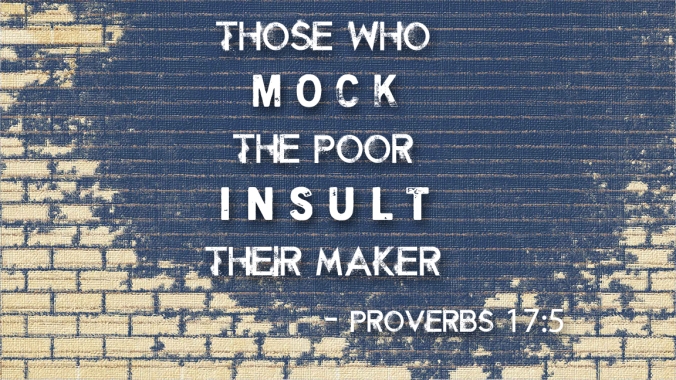
Americans have a schizophrenic attitude toward people living in poverty. On one hand we canonize Mother Theresa for her work with the poor, and missionaries who feed starving Ethiopian children. On the other, we tend to think less charitably of the poor at home, and frequently require them to justify their poverty because we can’t stand the idea that someone somewhere is taking advantage of the “system.” Among Christians and nonbelievers alike, the poor are too often vilified rather than loved, torn apart rather than restored.

Do we honestly believe poor people “over there” are somehow different from or more deserving than people sleeping under bridges in Chicago? Poverty is a product of injustice and bad luck. America may have more resources and opportunity than many nations, but we can’t ignore the social, political, and economic structures that intentionally or unintentionally conspire against the poor. Jesus may have pointed that out once or twice.

We all know examples of people who’ve risen above – maybe we’ve done it ourselves – but lifting oneself out of poverty, especially generational poverty, usually requires exceptional talent. Hard work alone does not guarantee success. Your able body, sound mind, ethnicity, gender, and looks are all matters of chance helping or hindering  you. People who possess socially favorable variations of these traits have the opportunity to earn more, but do they inherently deserve more?

We treat intelligence and strength – and the success they engender – as virtues, but they are not something we choose; they are unearned gifts God has entrusted to us. Aren’t they meant to serve more than our bank accounts? Whether comfortable or afflicted, we should all do our fair share, but Christ taught if we have two coats and our neighbor has none, we should give them one. How often do we instead grill them about why they are too irresponsible to have a coat?

Who among us dares volunteer to tell Jesus we know who is deserving and undeserving, and the poor but unexceptional just don’t make the cut? Yet we do that with our votes and checkbooks every day.

The problem of poverty is complex, but the solution is never to dismiss poor people as weak or lazy. Both Old and New Testament scriptures have very clear positions on loving the poor. Why look for so many reasons not to?

Comfort: Whatever your financial or social status, in God’s eyes and heart you are equal to all His children.

Challenge: Examine what biases, hidden or overt, you might have against the poor. How do you think Christ would respond?

Prayer: God of love, open my heart to those in need. Amen.

Discussion: In what ways do you think America effectively works to alleviate poverty? In what ways is it ineffective?

Join the discussion! If you enjoyed this post, feel free to join an extended discussion as part of the C+C Facebook group. You’ll be notified of new posts through FB, and have the opportunity to share your thoughts with some lovely people.

Civil Disobedience

mercy_not_sacrifice

Today’s readings (click below to open in new tab/window):
Psalms 51; 148, Proverbs 8:1-21, 2 John 1-13, Matthew 12:1-14


The Gospels contain several examples of Christ breaking the Law to serve a greater good. In today’s reading from Matthew he hits the Pharisees with a double whammy. First, he and his hungry disciples pick heads of grain to eat while they are walking through a field, though the Law forbid harvesting on the Sabbath. Then Jesus heals a man with a withered hand (also work forbidden on the Sabbath) and justifies it by asking his critics if, had they only one sheep and it fell into a ditch on the Sabbath, would they lift it out?

As followers of Christ we understand God “desires mercy and not sacrifice” yet many civil and religious laws attempt to bind us to legalism over mercy. When are we called to civil disobedience – that is, disobeying the law out of Christian conscience? Without respect to their merit, some examples include conscientious objectors during wartime, refusal to sign marriage certificates for gay couples, and passing out food to homeless people despite local ordinances forbidding it. Further complicating the matter, Paul tells us in many scriptures to obey the civil authorities because they have been appointed by God.

What can we learn from Jesus’s examples of lawbreaking? Jesus breaks the law to show mercy to others – the sick, the hungry, and the outcast. He doesn’t do it to benefit himself, or to make a show of his piety. To the contrary, his actions compelled religious leaders to seek his destruction. Even when he cleansed the temple by driving out the money changers and livestock dealers, he was confronting a system that was technically legal but exploiting the disadvantaged. That’s the flip side of the coin: pretending our adherence to the law excuses our unmerciful behaviors.

We can’t opt out of society’s laws altogether – that’s simply anarchy – but when the law compels us to do something contrary to God’s desire for mercy, we must stand for God. Like Jesus we must be willing to suffer the consequences of obeying that higher law. And we must do it with the humility of a king whose only crown was thorns.

Comfort: You don’t have to fight every little aspect of society that doesn’t dovetail with your faith…

Challenge: …but you should be willing to stand up in the face of injustice.

Prayer: God of wisdom, teach me when to humbly respect authority, and when to humbly confront it. Amen.

Discussion: Have you broken the law – or the rules – to show mercy?

Join the discussion! If you enjoyed this post, feel free to join an extended discussion as part of the C+C Facebook group. You’ll be notified of new posts through FB, and have the opportunity to share your thoughts with some lovely people.

Yoke and Unburden

1463691099228.jpg

Today’s readings (click below to open in new tab/window):
Psalms 97; 147:12-20, Proverbs 7:1-27, 1 John 5:13-21, Matthew 11:25-30


A yoke, according to Merriam-Webster, is “a wooden bar or frame by which two draft animals (as oxen) are joined at the heads or necks for working together.” When Jesus began his ministry, the people of Israel were still yoked to the Mosaic law and its heavy-handed application. Not only was this law burdensome on its own, the leaders had come to use it as a tool for oppressing the poor and the downtrodden.

When Jesus told his disciples, “my yoke is easy, and my burden is light,” he was inviting them to hitch themselves instead to the divine love of God he brought to earth. Instead of being tethered to an unyielding law that dragged them along mercilessly to the inevitable grave, they could be partnered with forgiveness and mercy.

Note that Jesus did not offer to unyoke them entirely. Ultimately we are all yoked to something, and that something helps determine the direction we travel and how heavy our burden. What are you yoked to? Maybe it’s a career that drags you along at breakneck pace. Or maybe it’s an addiction that grows heavier and heavier with each step. It could be something as beautiful as a family, but even that can take us where we’d rather not be, and the burden can be heavy. If we are yoked to self-interest, the burden may seem light but pivoting on only one point leads us to travel a tight and pointless circle.

Whatever you’re yoked to, do you like the direction it pulls you? Does the burden it places on you wear you down or build you up? When we yoke ourselves to Christ, he will steer us toward faith, but never force us. A gentle tug of conscience is all that’s needed to pull us back on the path.

No matter what ties us down, Christ offers something better. We can still have a career and a family and many other pleasant and meaningful things in our lives, but Christ will guide us through them, rather than let them steer us. We’re all tilling the same field; how we’re yoked determines whether it is killing or sustaining us.

Comfort: Following Jesus does not limit us, but frees us.

Challenge:  Meditate on what you are yoked to. As yourself whether it’s the right thing.

Prayer: God of hope, I will follow where you lead me. Amen.

Discussion: What are you yoked to? Is it something you should free yourself from?

Join the discussion! If you enjoyed this post, feel free to join an extended discussion as part of the C+C Facebook group. You’ll be notified of new posts through FB, and have the opportunity to share your thoughts with some lovely people.

Unhappy Medium

driver

Today’s readings (click below to open in new tab/window):
Psalms 89:1-18; 147:1-11, Proverbs 6:1-19, 1 John 5:1-12, Matthew 11:16-24


Let’s face it: personal standards can be pretty arbitrary. Consider safe driving speed. For many, a reckless driver is someone who passes us, and a timid driver is someone we pass. Unless our cruise control is set exactly to the current speed limit (itself often a relatively arbitrary standard), what basis do we have for this judgment?

Jesus faced similar artificial standards from religious leaders. They complained he was a drunkard and glutton who fraternized with sinners. When they confronted him about their concerns, Jesus reminded them that when John the Baptist fasted and abstained, they accused him of being possessed. You just can’t please some people.

“But wait,” you might say, “isn’t there such a thing as a happy medium?” Certainly there was some acceptable range for drink and dining that might have pleased his detractors, but they almost as certainly would not all have agreed on the upper and lower limits of that range. My happy medium is to the left of yours, and to the right of the next person’s. Whatever our rationale for a standard, there is always personal bias involved.

Supreme Court Justices who agree with our interpretation of the constitution are “impartial,” and those who don’t are “activists.” The same goes for scripture: those who aren’t literal about the sames passages we choose to take literally are “cherry picking” (and there’s no one who is literal about all of it). Even within a political party adopting one platform, or a denomination which follows a single creed, your mileage will vary from your neighbor’s. If Jesus announced his return standing in a bar and with a beer in hand, some Christians would cheer and others reject him. And if John the Baptist was… well, John the Baptist, he’d be too holy for some and not enough for others.

If there were only three people on Earth we’d have four religions, so let’s try to overcome the perverse urge to focus on meaningless differences.  Christians are one body; the least we can do is learn to share the road with each other to caravan behind Christ.

Comfort: You don’t have to please other people …

Challenge: … and they don’t have to please you.

Prayer: Lord I thank you for the beautiful diversity of your creation. Please help me to see all things first with love. Amen.

Discussion: Which of your standards have you had to adjust over the years? Which do you refuse to adjust?

Join the discussion! If you enjoyed this post, feel free to join an extended discussion as part of the C+C Facebook group. You’ll be notified of new posts through FB, and have the opportunity to share your thoughts with some lovely people.
Justice Evolution

heartofflesh

Today’s readings (click below to open in new tab/window):
Psalms 92; 149, Ezekiel 36:22-27, Ephesians 6:1-24, Matthew 9:18-26


“Slaves obey your earthly masters with fear and trembling.”

We can thank Saint Paul for that gem. Sure he also said “in Christ there is no slave or free” and instructed masters to be merciful to their slaves because they ultimately served the same master in heaven, but neither of those satisfactorily addresses the fact that at no time did Paul (or Jesus, for that matter) explicitly condemn slavery. For most of Christian history, slavery was taken for granted, and that verse has been used to justify it.

Once the idea of slavery became unacceptable to almost all mainstream Christians, we weren’t sure what to do with Jesus’s seeming acceptance of it. Some of us tried to differentiate the experience of Biblical slavery versus pre-Civil War slavery in the United States, but in the end all slavery boils down to owning human beings as property. Shouldn’t Jesus have a problem with that?

Of course that question implies Jesus is OK with the way most Christians do things now, and that can be a dangerous assumption. Every human system is flawed. America seems to all but worship capitalism, lumping it in with democracy and Christianity as a kind of US-bred holy trinity, but capitalism itself is amoral and by definition favors the rich above the poor. Not that communism has a fantastic human rights track record. Democracy is subject to mob rule and corruption, and monarchy to tremendous abuses of power. No earthly economic or government system has or can eradicate poverty, oppression, and injustice.

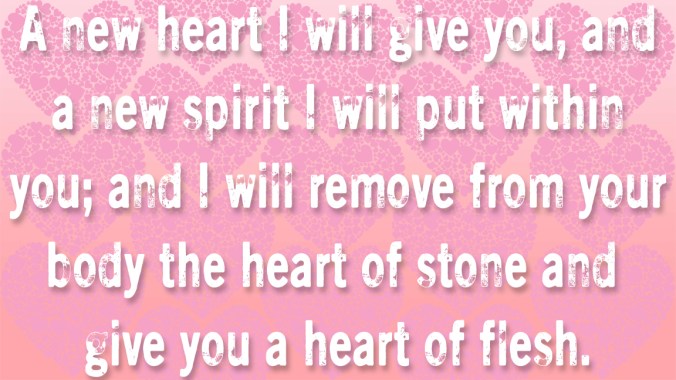
Christ’s message (and consequently Paul’s) transcends these human structures. As the church matures, each generation expands its concept of justice. The past does not invalidate the message, so much as prompt us to look at the present with a more critical eye. Christians led the fight against slavery. The church has evolved from feeding the hungry to tackling the systemic problems which starve them in the first place. What are the next steps in learning to love our neighbors as ourselves? Our job is not to perform theological contortions to explain away the inexcusable; it is to determine how we are to apply Christ’s message today.

Someone will always be waiting to be freed by the gospel.

Comfort: You don’t have to try to excuse the inexcusable things of the past…

Challenge: … but you can’t ignore the inexcusable things of the present.

Prayer: God of love, teach me to shine your light on injustice. Amen.

Discussion: What commonly accepted practices do you think future Christians will look back on in moral embarrassment?

Join the discussion! If you enjoyed this post, feel free to join an extended discussion as part of the C+C Facebook group. You’ll be notified of new posts through FB, and have the opportunity to share your thoughts with some lovely people.

Universal Precautions

righteous_sinners

Today’s readings (click below to open in new tab/window):
Psalms 96; 148, Jeremiah 31:27-34, Ephesians 5:1-32, Matthew 9:9-17


“As Jesus was walking along, he saw a man called Matthew sitting at the tax booth; and he said to him, ‘Follow me.’ And he got up and followed him.” – Matthew 9:9

What does “tax collector” mean to you? In Capernaum where Jesus met Matthew, tax collectors were not exactly IRS agents. They were Jews who collaborated with the occupying forces of Rome to tax the Jewish people for the privilege of being oppressed. If you’re of a Libertarian bent you may not think that’s so different from the modern tax collector, but many Jews considered them traitors to the nation of Israel. The Pharisees lumped them into the same category as the other “sinners” Jesus frequently dined with and challenged the disciples about his choice of companions.

Jesus responded by saying: “Those who are well have no need of a physician, but those who are sick. […] For I have come to call not the righteous but sinners.”

Paul warned the members of the Ephesian church not to associate with those who are disobedient to God. Paul named many kinds of disobedience – so many, in fact, that most of us have been guilty of at least one. Between Jesus dining and drinking with sinners, and Paul warning us to avoid them altogether, what example are we to follow?

When a physician or nurse tends to patients, s/he takes certain precautions to avoid infection. These universal precautions are applied equally whether a patient is obviously ill or not, because one never knows all the facts. Healers can do their work while avoiding contamination, but not while avoiding contact. Every sick patient deserves the dignity of being treated as a person, but boundaries are crucial. So it is with the gospel. We are called to share it with those who need its healing message. To do that, we need to go where they are. We need to share with them common human experiences such as meals, conversation, tears, and laughter. In no way are we permitted to treat them with less dignity than Christ would. We probably shouldn’t even think in terms of “them” as it only fosters dehumanizing division.

We can’t offer comfort to the sick without knowing them, or without recognizing it is only by grace – not our own superiority – that we ourselves have been healed. Faith is not a barrier to isolate us from them, but the protective gear that makes contact possible.

Comfort: No matter how sick you are, Jesus wants you to be well.

Challenge: Don’t shun anyone Jesus didn’t shun.

Prayer: Gracious and loving God, thank you for the healing presence of Christ, and for the opportunity to share it with others.  Amen. 

Discussion: When do you find yourself avoiding people instead of loving them?

Join the discussion! If you enjoyed this post, feel free to join an extended discussion as part of the C+C Facebook group. You’ll be notified of new posts through FB, and have the opportunity to share your thoughts with some lovely people.
Burying The Dead

burythedead

Today’s readings (click below to open in new tab/window):
Psalms 98; 146, 1 Samuel 16:1-13a, Ephesians 3:14-21, Matthew 8:18-27


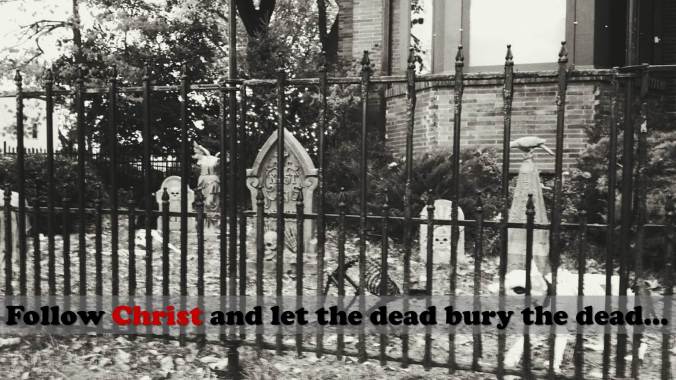
One day, when Jesus was preaching on the shore, the crowds grew so large he told them to move to the other side of the lake. One of the disciples wanted to first bury his father. Jesus replied:

“Follow me, and let the dead bury the dead.”

There are different opinions on the context and meaning of this odd phrase. One is that the man’s father was not yet dead, so the time until his burial was uncertain. Another is that “burying” him would have included acting as executor for his father’s affairs. The common theme across these theories is that to follow Christ is to pursue life, and that postponing our discipleship for the affairs of the world and tarrying among others doing the same is to wallow in death. When Christ calls we are to follow. Period.

If we are honest with ourselves, can we admit that deep down (or maybe not so deep) we know our lives will never be completely in order? Yet we use that reasoning as an excuse for putting off all kinds of things: starting families, launching new careers, jettisoning bad habits, getting in shape, going back to school, pursuing dreams, etc. We pretend there is a noble purpose of order behind our stalling tactic because it’s easier than admitting to laziness or fear. All too often the end result of our self-delusion is that we never get around to what we’d rather be doing, and our lives are still not orderly.

Your life will always be messy. There almost certainly will never be a “right time” – or even a better time – to walk away from the trappings of death and follow life. Voices – both internal and external – will tell you not to shirk your worldly responsibilities; these are the moans of ghosts who can’t move on and don’t want to be left behind and alone. Our true responsibilities are to the priorities Christ has taught us, and it is following him that makes us feel truly alive.

Christ does not cruelly demand we abandon our lives; he graciously invites us to find them.

Comfort: Christ has given you permission to let go of the things that keep you from true life.

Challenge: Egyptians pharaohs were buried with household goods, pets, servants, and even family members. They could not imagine life that didn’t look like what was actually holding them back. Pick one thing in your life that you could put down to lighten your load when following Christ. If it feels good, pick another…

Prayer: God of freedom, I will follow wherever you lead me. Amen.

Discussion: What do you need to put down before you can follow Christ unhindered? What’s stopping you?

Join the discussion! If you enjoyed this post, feel free to join an extended discussion as part of the C+C Facebook group. You’ll be notified of new posts through FB, and have the opportunity to share your thoughts with some lovely people.