The Good Consultant

1454766986357

Today’s readings (click below to open in new tab/window):
Psalms 63; 149, Genesis 24:28-38, 49-51, Hebrews 12:12-29, John 7:14-36


As a profession, consultants have a mixed reputation. After consultants have provided expensive professional expertise, employees commonly respond (correctly) with: “They didn’t tell us anything we didn’t already know.” If this is the case, is the service valuable or not? It can be — if what the business really needed was confirmation, not innovation. It may not sound as poetic as The Good Shepherd, but Jesus was also The Good Consultant.

When Jesus had grown popular enough that Jewish authorities began plotting to kill him, he had two choices: go into hiding, or follow his calling. Despite the danger, he began preaching openly in the temple during Sukkot, one of the most important festivals of the year. People marveled that he, who had not been taught, could teach so wisely. Jesus responded by saying his teachings were not his own but those of God. He advised anyone who doubted his credentials to apply a simple litmus test: was he speaking for his own glory, or for the glory of God? “Anyone who resolves to do the will of God will know whether the teaching is from God or whether I am speaking on my own.”

In this particular case he was preaching about their hypocrisy when it came to applying the Law of Moses, but he wasn’t providing any new information. Many prophets before him told the people of Israel their observation of the law was meaningless — even offensive — to God if they weren’t offering mercy and justice to the least among them. Like many enterprises, they were too busy performing day-to-day operations to step back and ask whether they were really fulfilling their mission in the best way. They knew the right things, but needed Jesus and other prophets / consultants to spur them to change direction.

In our spiritual lives as in our work lives, we need to recognize when established authorities are glorifying themselves and the status quo over the mission, and when outside voices are telling us what we already know to be true. The Good Consultant steers us away from hypocrisy and ego toward mercy and justice.

Comfort: When your conscience tells you to choose mercy over the wishes of authority, you should probably listen to it.

Challenge: Oftentimes following Jesus means defying “business as usual.” Make time to step back and measure your beliefs and actions against the teachings of Christ.

Prayer: God, I will do my best to listen to your voice above all others – including my own. Amen.

Discussion: When you ask your friends or colleagues for advice, how often do you already know what the right answer is?

Join the discussion! If you enjoyed this post, feel free to join an extended discussion as part of the C+C Facebook group. You’ll be notified of new posts through FB, and have the opportunity to share your thoughts with some lovely people. Or feel free to comment here on WordPress, or even re-blog – the more the merrier!

King Incognito

1454643091887

Today’s readings (click below to open in new tab/window):
Psalms 84; 148, Genesis 24:1-27, Hebrews 12:3-11, John 7:1-13


Many cultures have folk tales about a king incognito, that is a king (or sometimes a prince or more unusually a queen) who disguises himself and roams his kingdom. The results of his secret adventure depend largely on whether he is a just king or an unjust one. For example, a just king may uncover plots against him and so prevent them from hatching. An unjust king may be discovered and suffer – even die – as a result. The tone of these stories generally reflect the people’s feelings about their current ruler.

Near the end of his ministry, Jesus arranged such an outing.

The Festival of Booths (Sukkot) was happening in Judea. He sent his disciples without him, saying: “I am not going to this festival, for my time has not yet fully come.” After they departed, he went to the festival alone and disappeared into the crowd. In an era without cameras, not having a group of disciples around him was disguise enough. He was the talk of the festival, and many Jews were looking for him. Some said he was a good man, and others said he was deceiving the people.

Have you heard the phrase: “What someone thinks about you is none of your business?” Knowing what the people thought about him had no ultimate effect on Jesus’s mission. Can we imagine he was surprised to hear both good and bad news? Realistically, what else could we expect? In the verses that follow today’s reading from John, Jesus reveals himself to the crowd and begins preaching. His time had come, and in the end the king must reveal himself.

Other people’s opinions do not matter when we are carrying out the work of the Kingdom of God. While we remain open-minded and listen to what people tell us about their needs, we are to respond as Christ calls us to, whether it makes us popular or not. Some people may love us for it, some may hate us, and some of each may be fellow Christians. When we are following Christ, God’s is the only opinion that matters.

Comfort: You are accountable to no one but God.

Challenge: Do not let other people’s opinions and reactions inflate your ego or deflate your spirit.

Prayer: Breath of Life, help me to learn to rely only on you. Amen.

Discussion: Think about how other people’s opinions have influenced your behavior, for better or worse. What would you have done differently if you didn’t care?

Join the discussion! If you enjoyed this post, feel free to join an extended discussion as part of the C+C Facebook group. You’ll be notified of new posts through FB, and have the opportunity to share your thoughts with some lovely people. Or feel free to comment here on WordPress, or even re-blog – the more the merrier!

The Cloud

image

Today’s readings (click below to open in new tab/window):
Psalms 116; 147:12-20, Genesis 23:1-20, Hebrews 11:32-12:2, John 6:60-71


Pauls’s letter to the Hebrews describes the faith of many heroes of the Old Testament, including Abel, Noah, Abraham, Moses and others. None of them were perfect, but by faith they did amazing things. They are examples and inspirations that endure. Paul describes them – and all the faithful departed – as a “great cloud of witnesses” that surrounds us always.

Over the years the cloud has only grown larger.

From the 20th century alone we might add names of heroes like Martin Luther King, Jr., Edith Stein, and Dietrich Bonhoeffer. Or minds like C.S. Lewis, Thomas Merton, and Dorothy Day. Still more are less well known, but influential in our lives. When we struggle we can look to their lives, works, and words for strength.

Yet during difficult times, many of us insist on toughing it out alone. We convince ourselves no one has experienced the pain, grief, loss, or doubt that we endure. We isolate ourselves because no one could possibly understand us, relate to our situation, or stand to be around us. The beauty of leaning on the cloud of witnesses is that they are beyond feeling burdened by us. And they have so much to teach us.

Feeling despair? Crack open The Dark Night of the Soul by Saint John of the Cross, and you’ll probably start to feel like an amateur. Not much of a reader? Listen to recordings of the Psalms – number 137 reveals anguish at its purest. We don’t seek out these works to wallow in misery like a jilted lover listening to break-up songs, but because they offer wisdom from others who have overcome similar trials. Otto von Bismarck wrote: “A fool learns from his mistakes, but a truly wise man learns from the mistakes of others.” We can also learn from their triumphs.

Despite our occasional insistence to the contrary, we are never alone. Those witnesses who have gone before us, and those who stand beside us today, are a mortal manifestation of the strength and hope that come from faith. No matter where we are in life, we can plug into The Cloud.

Comfort: The entire history of God’s people is available to support you.

Challenge: Next time you feel compelled to isolate yourself because you think others wouldn’t understand, get in touch with someone to share your story.

Prayer: Thank you, Lord, for the legacy of all who have come before me. Help me to be a worthy heir and addition to the great cloud of witnesses. Amen.

Discussion: In times of difficult, are you more likely to go it alone, or ask for assistance? What do you think that reveals about your attitude toward those who need help?

Join the discussion! If you enjoyed this post, feel free to join an extended discussion as part of the C+C Facebook group. You’ll be notified of new posts through FB, and have the opportunity to share your thoughts with some lovely people. Or feel free to comment here on WordPress, or even re-blog – the more the merrier!

Hagar and the Horrible

1454382625545

Today’s readings (click below to open in new tab/window):
Psalms 12; 146, Genesis 21:1-21, Hebrews 11:13-22, John 6:41-51


Ever see those Christian t-shirts, bookmarks, or mugs declaring: “God won’t give you more than you can handle?” It’s a comforting thought — if we don’t think about it too long. However, if we are struggling with chronic pain, the loss of a child, or any number of devastating life events, this sentiment not only rings false, but raises a terrible theological question: “How could God give this to me?”

Abraham and Sarah had a servant named Hagar. God had promised them a child, but in their impatience they forced Hagar to conceive. After Sarah gave birth to Isaac she was jealous of Hagar’s son Ishmael, and told Abraham to banish them both. He sent them packing with some bread and a water skin. After much wandering, a thirsty and desperate Hagar placed Ishmael under the meager comfort of shady bush and waited for him to die.

God didn’t single out Hagar for suffering: Sarah and Abraham did. Abuse and oppression are never part of “God’s plan” for us. Neither are disease nor loss. God may use trials to strengthen us, but God does not heap hardship upon us just to test our endurance or faithfulness. Hardship finds us nevertheless.

Before her son could die, God led Hagar to a well. She and her son survived, and surely they were both influenced for the better or worse — or both — by this trauma. Eventually, as God promised, Ishmael’s descendants formed a mighty nation, alongside the descendants of Isaac. Of course Ishmael’s success did not justify the sufferings of Hagar, but it also meant she did not suffer in vain. What lesson might we learn from this story? Perhaps that no situation is so bleak God can’t help us through it somehow. A God who meets us at our breaking point is very different than a God who pushes us there.

Suffering can force us into a spiritual wilderness where we must rely on God to find our way. When we are in such a state of surrender, God’s mercies can redefine our suffering to have dignity and purpose. God will always offer you more grace than you can handle.

Comfort: Your suffering is not meaningless because God suffers with you.

Challenge: Be cautious about attributing God’s will to humanity’s weakness.

Prayer: Merciful and Loving God, I will trust in you and your grace at all times. Amen.

Discussion: What situations in your life are causing you pain, and how might God help you find a higher purpose for them?

Join the discussion! If you enjoyed this post, feel free to join an extended discussion as part of the C+C Facebook group. You’ll be notified of new posts through FB, and have the opportunity to share your thoughts with some lovely people. Or feel free to comment here on WordPress, or even re-blog – the more the merrier!
Strangers and Angels

1454303645834.jpg

Today’s readings (click below to open in new tab/window):
Psalms 62; 145, Genesis 19:1-17 (18-23) 24-29, Hebrews 11:1-12, John 6:27-40


God was determined to destroy the city of Sodom because its inhabitants were irredeemably wicked. Abraham’s nephew Lot was in Sodom, so Abraham bargained with God to spare it if even ten righteous people could be found there. When God sent his angels to the city, they stayed at Lot’s home. A mob containing every last man in Sodom demanded these strangers be surrendered to them, but Lot offered the mob his daughters instead. In the end, the angels helped Lot’s family escape Sodom, which was destroyed along with Gomorrah and two other cities.

The story is complicated because bronze age customs of hospitality meant protecting your guests even at the expense of your family’s safety. It’s complicated because prophets like Ezekiel clearly state the sins of Sodom were “pride, gluttony, and laziness, while the poor and needy suffered outside her door” (16:49), but many insist it was homosexuality. It’s complicated because we tend to think consequences are related only to the events immediately preceding them, when God had decided to destroy Sodom well before his angels were threatened by a violent mob bent on sexual assault.

When protests occur after a racially charged incident, do we reflect on whether the unrest is a result of not only that particular incident, but also of years of neglecting the needs of strangers? When we entertain calls to shut our borders to refugees – the very “least of these” – because of hypothetical dangers, can we point to the scripture where Jesus calls us to mercy … unless we feel threatened? When the average American consumes food and other resources at rates far exceeding the global average, why do we use words like exceptionalism and patriotism instead of gluttony and pride? Why do we point to the alleged sins of others instead of naming our own?

Sodom is complicated because Sodom is us.

Christ calls us to pick up our crosses and lay down our lives, not fold when we are afraid. Radical hospitality in our homes and communities can be scary, but when strangers and angels knock on our doors, it is Christ we welcome in.

Comfort: True hospitality can be intimidating, but God will see us through it.

Challenge:  Ask yourself what are the limits of your hospitality? Would Jesus ask more of you?

Prayer: Lord, help me to see even the least of my sisters and brothers as Christ in need. Amen.

Discussion: Have you ever been aided by a stranger?

Join the discussion! If you enjoyed this post, feel free to join an extended discussion as part of the C+C Facebook group. You’ll be notified of new posts through FB, and have the opportunity to share your thoughts with some lovely people. Or feel free to comment here on WordPress, or even re-blog – the more the merrier!


Get Fruity

1454216755992

Today’s readings (click below to open in a new tab/window):
Psalms 108; 150, Genesis 18:16-33, Galatians 5:13-25, Mark 8:22-30


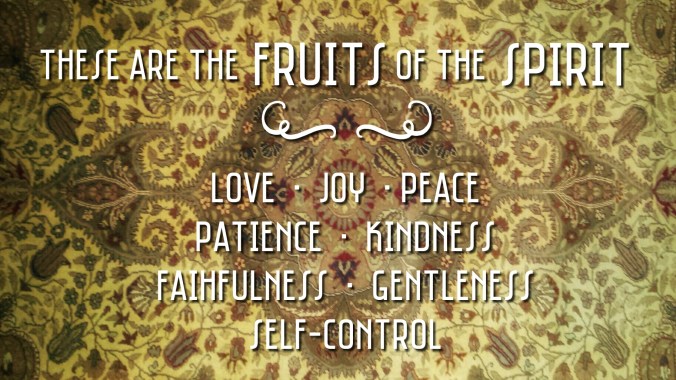
Paul’s letter to the church in Galatia introduced the phrase “fruits of the spirit.” He wrote this letter to the mostly Gentile church because they had fallen under the influence of Jewish evangelists who were persuading them they needed to observe Mosaic law to be good followers of Christ. Paul reminded the Galatians that salvation through Christ leads to changes in attitude and behavior, not the other way around. Over the centuries some Christians have ironically twisted Paul’s insights into a new set of rules and subverted his intent.

Why are we tempted to treat Paul’s list of the fruits of the Spirit and the works of the flesh like a checklist of do’s and don’ts, as though we are wrangling a spot on Santa’s Nice List? It’s always easier to follow specific rules than to do the hard work of learning how to truly love our neighbor. So we substitute a (rather subjective and conveniently curated) list of virtuous activities and evil vices and convince ourselves we are good because we do or don’t do them. We are right back to living for the law, and a second-rate law at that.

Performing good deeds to prove the Spirit is within us is like laying a bunch of apples on the ground and hoping a trunk forms in the middle to raise them all up; they are just going to lay there and eventually rot. Instead we must open ourselves to the Spirit as saplings open to the sun. As we mature in its presence, the resulting fruits – love, peace, generosity, kindness, self-control, etc. – sprout naturally and abundantly. We will act in love and joy because they grow from the inside out.

One last, important feature of fruit: when someone picks it, the branch is not diminished but freed up to create more. Fruit left to rot on the vine does no one any good. Life in the Spirit is not self-centered, but generous. True fruits of the Spirit not only nourish us, they contain the seeds that create a cycle of faith and growth. Our best testimony is the fruit we bear.

Comfort: God’s love for you does not depend on your ability to follow arbitrary rules.

Challenge: Learning to love our neighbors as Christ teaches us to love them takes dedication and hard work.

Prayer: Lord, I will treasure and share the fruits your Spirit has trusted to me.

Discussion: What kinds of rules are important to you? What are not?

Join the discussion! If you enjoyed this post, feel free to join an extended discussion as part of the C+C Facebook group. You’ll be notified of new posts through FB, and have the opportunity to share your thoughts with some lovely people. Or feel free to comment here on WordPress, or even re-blog – the more the merrier!

Looking for Loaves in All the Wrong Places

nutritional content

Today’s readings (click below to open in a new tab/window):
Psalms 122; 149, Genesis 18:1-16, Hebrews 10:26-39, John 6:16-27


Carbs are the enemy of faith.

After miraculously feeding five thousand people with only five barley loaves and two fish, Jesus and his disciples waited until evening and moved across the Sea of Galilee from Tiberias to Capernaum. By morning the crowds had found them. Jesus declared to them: “Very truly, I tell you, you are looking for me, not because you saw signs, but because you ate your fill of the loaves. Do not work for the food that perishes, but for the food that endures for eternal life, which the Son of Man will give you.” The people craved the bread, yet didn’t understand the root of their hunger.

If we have poor eating habits, we often aren’t able to distinguish between cravings and hunger. We know we want something and turn to sugary, fatty foods for a quick fix. They are tasty and relieve our immediate needs, but only for a short time. The more we try to satisfy our hunger with carbs and fat, the more we crave, and in the long run we feel worse. Dieting often fails because instead of making a true lifestyle change as nutritionists advise, we turn to short-term solutions which focus on weight instead of health. When our goals are met, we drop our vigilance and unhealthy habits creep back in. It’s not entirely unlike a cycle where we berate ourselves for our sinfulness and try to overcome it through own strength rather than Christ’s, only to find ourselves in the same place when we can’t resist the cravings.

What’s the nutritional content of our faith? The prosperity gospel teaches us if we say the right prayers or tithe the right amount, we will be rewarded with material goods. Some churches are all about the entertainment value of a worship service because they value high attendance over deep experience. Designed for high volume and low quality, these are more business model than ministry – fifty million served, but not called to serve. Christ calls us to a lifestyle change. He doesn’t tell us what we want to hear or what makes us feel good; he tells us about the food of eternal life. Jesus’s lean meats and broccoli may not sound as much fun as hot fudge Sundays, but he’s saving our lives.

Comfort: The more faithfully we follow Christ, the less we crave the things that don’t feed our spirits.

Challenge: Clean your spiritual cupboard; meditate on discarding teachings that prey on your cravings and filling yourself with those that satisfy eternally.

Prayer: Lord, I will rely on your strength rather than my own. Amen.

Discussion: What do you crave that you know isn’t good for you?

Join the discussion! If you enjoyed this post, feel free to join an extended discussion as part of the C+C Facebook group. You’ll be notified of new posts through FB, and have the opportunity to share your thoughts with some lovely people. Or feel free to comment here on WordPress, or even re-blog – the more the merrier!


Attitude of Abundance

GRASPFUTURE

Today’s readings (click below to open in a new tab/window):
Psalms 88; 148, Genesis 17:15-27, Hebrews 10:11-25, John 6:1-15


Our culture promotes irony and cynicism. These can be useful and enlightening, but many times they simply mask an underlying state of fear. When push comes to shove, we tend to hoard the resources we have rather than trust them to God’s abundance. Even in faith communities simple optimism is often characterized as simple-mindedness.

God told Abraham and Sarah, at 100 and 90 years old respectively, they would conceive a child. Abraham laughed in disbelief. When their son was born, they did as God had instructed and named him Isaac, meaning “he laughs.” With God in the mix, irony became hope.

When thousands gathered at the Sea of Galilee to hear Jesus preach, he asked his disciple Philip where they could buy bread to feed everyone. We don’t know if Phillip laughed, but it’s easy to imagine a dismissive chuckle when he told Jesus they would need more than six months’ wages to buy enough food. And it seems likely there might have been some eye rolling when Andrew mentioned a boy with five loaves of bread and two fish. Yet from this tiny bit, upon Christ’s instructions, they managed to feed everyone with twelve baskets left over.

At first glance the common theme between these stories seem to be that God is most visibly present in the impossible. Unfortunately this idea pushes God outside our normal expectations into a realm where we can only experience his blessings through reality-warping events.

An important lesson in these stories is that God has created us not be starved by fear and doubt, but to feast on possibilities and faith. The approach we take affects the quality of our lives, and the lives of others. More than a simple “can-do” attitude, faith that God’s world is abundant opens us up to true generosity. If we stop worrying that what we have is not enough, we grow comfortable with being generous even in uncertain times. Individuals with this faith can have a positive impact, and communities that cultivate this attitude will find endless doors opening. Behind them is revealed God’s presence in our everyday lives.

The world teaches fear. An abundant faith – focusing not on scarcity and stinginess, but on hope and generosity – is countercultural and revolutionary. Live on the edge.

Comfort: You need less than you think you do. You can give more than you think you have.

Challenge: Embrace hope.

Prayer: Loving God, please help me to remember there is far more to your gifts in the world – seen and unseen – than I could ever comprehend. I will trust you. Amen.

Discussion: In what areas of your life – money, time, affection, etc. – do you take an approach of scarcity? How can you become more generous?

Join the discussion! If you enjoyed this post, feel free to join an extended discussion as part of the C+C Facebook group. You’ll be notified of new posts through FB, and have the opportunity to share your thoughts with some lovely people. Or feel free to comment here on WordPress, or even re-blog – the more the merrier!

 

Body of Work

PrayWithYourFeet

Today’s readings (click below to open in a new tab/window):
Psalms 143; 147:12-20, Genesis 16:15-17:14, Hebrews 10:1-10, John 5:30-47


Circumcision can be a divisive topic. Parents don’t always agree on whether it’s right for their sons. In some circles its medical benefits and risks are hotly debated. Many men –circumcised and not – find it a barbaric and abusive practice and actively work to abolish it. Others, such as those who incorporate it into tribal rites of passage, defend it just as vigorously.

When God made his covenant with Abraham, he required that all males of Abraham’s family and household – even slaves – be circumcised as a sign of that covenant. The practice was so important to the Jewish people that many early Christians thought Gentile men could call themselves followers of the Jewish Christ only if they were willing to be circumcised. Paul eventually declared Gentile fidelity to Christ a “circumcision of the heart” – that is, being bound to Christ through the Spirit, not the law.

Among Christians today decisions about circumcision are more about cultural and personal preferences than religious significance. Losing this requirement has expanded the idea of who belongs to God – Gentiles, women, and other groups can all be “marked” in their hearts without altering their bodies. It is symbolic of movement away from legalism toward grace. But in making the practice irrelevant to faith, have we also lost something else?

Circumcision was a constant, intimate reminder that a person had been dedicated to God. Does anything serve this purpose for Christians today? Physical sensations reinforce our experience of the world. From the immersion of baptism, to the bread of communion, to ashes on the forehead, to wedding rings on our fingers, we use physical means to express spiritual truths.

There is ancient wisdom in the spirituality of the body. Modern Christians dwell in a lot of mental space, often downplaying or even degrading the body. Each body is a work of art: God can sign it in many ways. Let’s be aware of how our bodies can help us connect to God through breath, music, dance, prayer, and even pain. Your body houses the spark of life God has granted you; furnish it with sacred intent.

Comfort: God loves you, body and soul. Always.

Challenge: If you are able to, try different body positions when you pray – kneeling, sitting, arms raised up, palms pressed together, head thrown back, face down on the floor – and notice how each affects your attitude of prayer.

Prayer: Thank you, God, for the gift of life. 

Discussion: How would you describe your relationship with your body?

Join the discussion! If you enjoyed this post, feel free to join an extended discussion as part of the C+C Facebook group. You’ll be notified of new posts through FB, and have the opportunity to share your thoughts with some lovely people. Or feel free to comment here on WordPress, or even re-blog – the more the merrier!

Test Everything

test-all-things

Today’s readings (click below to open in a new window/tab):
Psalms 65; 147:1-11, Genesis 16:1-14, Hebrews 9:15-28, John 5:19-29


Some days the biggest stumbling block to faith is scripture itself. Amid its inspiration, today’s passage from Genesis contains some truly horrifying ideas. God promised Abram he would father a nation, but he and his wife Sarai did not immediately conceive a child. An impatient Sarai suggested Abram impregnate her servant Hagar. Under the law, Sarai could have claimed legal possession of the child. The law also claimed that if Hagar started acting “uppity” after conceiving, her mistress could punish her – so naturally that’s exactly what happened. When Hagar ran away, God advised her to return with the promise her child would also beget a nation.

Forced surrogacy. Abuse. Slavery seemingly endorsed by God. Is it any wonder many people find it so easy to reject the Bible wholesale?

Many Biblical literalists and devout atheists approach the Bible in the same way: either it’s all factual or it’s all useless. They simply come to opposite conclusions. Moderate and progressive Christians can find themselves caught up in defending why they bother with the Bible at all, if they don’t find scripture inerrant. Convoluted excuses and justifications for stories like this one (and worse) erode faith rather than strengthen it.

The Bible is not all there is to God. And specific translations or interpretations (and in the modern age that’s all most of us who don’t read Hebrew and Greek have got) even less so. Treating it like it is might be the most acceptable form of idolatry going today. God can withstand our questions and criticisms of Bronze Age culture. Just because Jesus didn’t explicitly condemn slavery doesn’t mean we should approve it. 1 Thessalonians 5:21 advises: “Test all things; hold fast what is good.” God has given us the ability to discern what is moral and what is immoral, though in some cases like slavery it takes us far longer than it should to make the right call. Acceptable practices become unacceptable, and “abominable” practices such as short hair on women grow inoffensive.

The fact that people have been able to use the Bible to both justify and condemn slavery tells us the truth it contains needs more consideration than the popular “The Bible says it, I believe it, that settles it.” Trust that truth is Godly, wherever it is found.

Comfort: God and truth withstand all scrutiny.

Challenge: Meditate on what previously acceptable practices have been morally rejected in your lifetime, and vice versa.

Prayer: God, help me to approach all things, including scripture, with your guidance. Amen.

Discussion: How would you describe your relationship with the Bible?

Join the discussion! If you enjoyed this post, feel free to join an extended discussion as part of the C+C Facebook group. You’ll be notified of new posts through FB, and have the opportunity to share your thoughts with some lovely people. Or feel free to comment here on WordPress, or even re-blog – the more the merrier!