
Unthinkable Donkeys

20160320_222231-01.jpeg

Christ Entering Jerusalem by Ernst Deger

Today’s readings (click below to open in new tab):
Psalms 84; 150, Zechariah 9:9-12, 1 Timothy 6:12-16, Zechariah 12:9-11, 13:1, 7-9


The Sunday before Easter is Palm (or Passion) Sunday, when we remember Christ’s triumphal entry into Jerusalem. At the height of his ministry and controversy, Christ entered the city riding a donkey, and the huge crowd gathered for Passover greeted him by throwing palm fronds on the path before him. This gesture was a sign of respect for victorious warrior kings … but that donkey told another story.

The prophet Zechariah wrote about the coming messiah as someone who would “command peace to the nations.” Traditionally a warrior king rode into conquered territory on an armored warhorse to signal his victory and dominance. A donkey, though, sent a message of humility. To a people hoping for a military savior to conquer their oppressors, this idea would have chafed. Yet Zechariah was not the only prophet telling the people of Israel to expect the unexpected. Christ’s reign was accomplished not only through peace, but through subservience, including submission to death on a cross. It was unthinkable. It certainly wasn’t what people wanted to hear, but prophetic voices told them anyway.

Like the Israelites, do we hope to assert our future through force? Every year churchgoers read the passion story and join our voices to those who shouted: “Crucify him!” By Easter we’re back to celebrating the resurrection, and little has changed. Rather than humbly live as we believe, we try to pass laws imposing our beliefs on the nation. We fail to speak truth to power – because in this time and place we are the power. All our talk of peace crumbles when we feel threatened; surely Jesus didn’t expect us to suffer for our faith when we could defend ourselves by going on the offensive?

Jesus enters the world through the poor, the sick, and the oppressed. Through our enemies. When we treat them with love we aren’t doing it on behalf of Jesus – we are doing it for Jesus. Christ reaches us not through merely unexpected avenues, but through unthinkable ones. Following Christ means choosing the donkey instead of the warhorse, even when that palm-strewn road leads to the cross.

Comfort: There are voices telling us how to follow Christ. We just need to learn to listen for them.

Challenge: Be careful not to confuse civic and secular authority with salvation and grace.

Prayer: God of Love, teach me the humble way of Jesus. Grant me ears to hear the truth, even when I don’t like it. Set words of peace and justice on my lips. Amen.

Discussion: What leaders appeal to your sense of anger, force, or division? When they speak, are you able to separate what you want to hear from the truth?

Join the discussion! If you enjoyed this post, feel free to join an extended discussion as part of the C+C Facebook group. You’ll be notified of new posts through FB, and have the opportunity to share your thoughts with some lovely people. Or feel free to comment here on WordPress, or even re-blog – the more the merrier!

World Piece

jigsaw-world-1168711-1600x1088

In the cafeteria at work, there’s always a jigsaw puzzle in process on one of the tables. It’s there for anyone who wants to work on it. When one is finally complete it remains on display for a day or two, and then it’s time for the next.

I know – as a metaphor, the jigsaw puzzle has been played out. “We all have a unique role, life is a team effort, every piece is necessary, blah blah blah.”

What struck me recently wasn’t the metaphor of the puzzle itself, but of how we approach putting it together. Specifically, I was pulling together some pieces that looked like they would complete a tiger (they always seem to be “nature” puzzles with animals socializing in very unnatural harmony) when a co-worker commented, “We’re still working the edge pieces.”

That’s the most common approach, isn’t it? Finding the edge pieces, defining the shape of the thing. We like knowing the boundaries and limits in which we are expected to operate.

I believe that the human condition involves life breaking us into pieces and us putting them back together. Of course the number, shape, and size of the pieces vary by each person’s life experience. Most of us start reassembling ourselves by focusing on our borders – the exterior that assures people we know what shape we’re supposed to be. Doing so comforts us and comforts others. Maybe it comforts us in large part because it comforts others and reduces tension between us.

But not everyone is able to start with the borders.

Sometimes our box has been torn open so recklessly that pieces have been flung all over the place and we have to start with what we can find; years can be wasted burrowing under the couch cushions and clawing behind the dresser thinking we have to have all the pieces before we can start assembling any of them.

And sometimes there’s a moment of recognition and clarity – a chance to tame those tiger bits and reduce the chaos – that’s too good an opportunity to resist. Somebody is going to urge us to finish the border first (or even start working on it for us) because our progress doesn’t unfold like they want it to.  Yes it might be more socially acceptable to meet expectations, but better to fix what we can when we can than to ignore the tiger and lose the opportunity for who knows how long.

Of course this all assumes we know something about solving puzzles. Most of us cut our teeth on those four-piece jigsaws for toddlers. You know the kind – large, easy to handle pieces and simple pictures. Probably covered in drool. Our parents gift us with simple challenges so we can practice and work our way up to the hard stuff.

Not everyone is so lucky. Maybe no one ever taught you all the pieces were actually meant to be integrated into something bigger. Maybe they didn’t provide you (or accidentally or deliberately destroyed) a picture of what life should (or could) look like, so the outcome is a mystery. Maybe they were careless and some pieces are torn or damaged or lost or burned … and gone forever. Maybe you drew life’s short straw and your first puzzle is five thousand pieces all the same color with no edges; surely there are some puzzle enthusiasts who would love that, but most of us aren’t up to the challenge.

If we are unfortunate enough to start out with one of those really tough puzzles and no training, it may take a long while of handling those pieces one at a time before realizing they are incomplete parts of a greater whole – a whole we might not be able to begin to envision, let alone start putting a border around. To other people it might look like we’re sifting aimlessly through a pile they’re sure they could easily begin to solve. If they take the time to learn about the challenges of our particular puzzle, will they walk away? Fix it to their own satisfaction while leaving us still bewildered? Or do the hard work of helping us help ourselves?

So start with the edge pieces. Or the tiger. Or just by figuring out that a solution and strategy are possible. And for goodness sake don’t worry about puzzles that aren’t yours – whether to compare or to judge. Because once you get your puzzle together, you’ll discover it’s really just a single piece of an even larger puzzle. Whatever progress we make, there’s more to be made. It’s not only ourselves we’re rebuilding, it’s the entire broken world.

Peace by piece.

Mercy in the Middle

1455164781896

Today’s readings (click below to open in new tab/window):
Psalms 102; 27; 147:12-20, Habakuk 3:1-10 (11-15) 16-18, Philippians 3:12-21, John 17:1-8


One of singer Amy Grant’s most powerful songs is “Ask Me,” the true story of a young girl who experiences sexual abuse in her home. The arc of the song is hopeful, but not naive. Ms. Grant follows in the footsteps of psalmists and prophets struggling to understand where God could be in the middle of terrible trials. Lent is the perfect time for us to ask these questions, to mourn the state of the world. This season reminds us why we need the savior to enter God’s creation again and again.

Psalm 102 uses striking images to illustrate its author’s misery. He eats ash and drinks tears. His bones burn like a furnace. His heart withers like grass. His enemies taunt him until he is helpless as a little bird on a rooftop. Psalm 27 is the plea of someone whose enemies devour his flesh and exhale violence. The prophet Habakuk has visions of war and famine. Yet in the midst of these terrible events, all these writers cry out to the Lord. Habakuk says despite all the horrors around him, “I will rejoice in the LORD; I will exult in the God of my salvation.”

Faith does not require us to pretend we are okay with everything in our lives. When parents or children fall seriously ill, when civilians are bombed, when we lose a job, when we struggle with depression, when natural disasters destroy communities … God does not require us to meekly accept it. We can rant and rail to God about injustice and pain because – as Ms. Grant sings – “He’s in the middle of [our] pain, in the middle of [our] shame.”

Sometimes life stinks, and God knows it. Psalmists, prophets, and terrified little girls survive not by pretending God makes everything OK, but by finding the peace that comes through suffering authentically in God’s presence. Christ is God’s incarnate presence in a grieving world. He doesn’t come to meet uncomplaining cheerleaders, but to share in our suffering and redeem it through his own. Embrace the brokenness of yourself and the world, for that is where peace begins.

Comfort: God is always with you, even when your suffering makes him seem far away.

Challenge: Throughout Lent, look for opportunities to let someone share their struggles with you. Don’t try to fix it – just be present.

Prayer: Gracious and merciful God, thank you for suffering with me through my struggles. Please help me to lean on your mercies when my difficulties seem overwhelming. As I bare my soul to you, share your peace with me so others may see it also. Amen.

Discussion: This reflection is on specific readings, but chances are no matter when you read this you are aware of some unfolding tragedy. How are you responding to it?

Join the discussion! If you enjoyed this post, feel free to join an extended discussion as part of the C+C Facebook group. You’ll be notified of new posts through FB, and have the opportunity to share your thoughts with some lovely people. Or feel free to comment here on WordPress, or even re-blog – the more the merrier!

Sleeping with the Enemy

WEAKRESOLVESTRONGFAITH

Today’s readings (click below to open in a new window):
Psalms 56; 149, Genesis 12:9-13:1, Hebrews 7:18-28, John 4:27-42


How do we approach people we assume to be our enemies? Today’s readings feature two stories about people traveling through presumably hostile territory. They start with very different mindsets, and have very different results.

When Abram and his beautiful wife Sarai arrived in Egypt, he instructed her to pose as his sister so the Egyptians who wanted to woo her would treat him well. Otherwise, he feared, they might murder him to take her. Word of her beauty reached Pharaoh and soon she was living in his home. Displeased with this situation, God afflicted Pharaoh’s household with great plagues. His lie thus revealed, Abram was forced to flee with Sarai.

While passing through Samaria, Jesus stopped at a well. He had a very candid though compassionate conversation with a woman he met there. Once he revealed himself to be the messiah by showing he knew undisclosed details of her life, she was not afraid to challenge him about his relationship with non-Jews. After the people of her town heard her story, they invited Jesus to stay and he spent two days with them. As a result many Samaritans became believers.

Abram told an easy lie, and Jesus told hard truths. The Egyptians treated Abram well for a while, but no relationship was established. In the end, the lie forced him away. The Samaritan woman respected Jesus because he told the truth, and returned his frankness. The initial conversation between them does not read as comfortable, but in the end he formed an unexpected and important relationship with the Samaritan people.

The world tells us never to trust our enemies, and to do unto them before they do unto us. Jesus teaches and shows us another way. It is a more risky path, as we can never be sure of our enemy’s intentions, but it also opens a door to the possibility of reconciliation. If we refuse to hear someone’s story, or respond with judgment, that door stays closed. Being the first to offer a hand in peace is not a sign of a weak resolve, but of a strong faith.

Comfort: Jesus doesn’t want a relationship with your Sunday best, he wants one with your honest everyday self.

Challenge: Do you have any enemies you could get to know better? Try to do so.

Prayer: Prince of Peace, teach me the ways of peace. Amen.

Discussion: Who do you consider your enemies? How do you communicate with them?

Join the discussion! If you enjoyed this post, feel free to join an extended discussion as part of the C+C Facebook group. You’ll be notified of new posts through FB, and have the opportunity to share your thoughts with some lovely people. Or feel free to comment here on WordPress, or even re-blog – the more the merrier!

Christmas Every Day

1451071069675

Readings:  Psalms 2; 148, Micah 4:1-; 5:2-4, 1 John 4:7-16, John 3:31

Today is the day! The long-awaited Christ has come. We shout “Emmanuel!” because God is with us in the flesh. The spirit of this holiday is expansive enough to include many other traditions like brightly lit trees and gift exchanges which, while not uniquely Christian, reflect our joyous celebration.

Tomorrow, or maybe even as early as this evening, we will begin thinking about the clean-up. Most Christmas trees will be down before the new year begins; a few may make it until Epiphany – the day marking the end of the twelve day season of Christmastide. The annual “War on Christmas” will declare its annual 11-month cease-sire as merchants clear the way for Valentine’s Day and summer fashions. Many people who thought it was crucial for cashiers and baristas to say “Merry Christmas” during the entire season of Advent will stop caring on December 27th without realizing the irony.

The intense activity of Christmas – or at least the effort we invest in its more secular aspects – is not sustainable all year long. We may talk about keeping the spirit of Christmas in our hearts all year long, but we aren’t all that good at it. After the holidays, donations to food banks and other charities drop dramatically, but the needs they serve do not diminish. Christmas as a special day of celebration is wonderful, but Jesus did not remain an infant forever, and after Christmas the way we celebrate him must also mature.

We can bring light into dark places through acts of kindness and attitudes of love. We can offer gifts of time, talents, and money so we love people in need as children of God more than once a year. Instead of seeking meaningless offense at otherwise well-intended holiday greetings, we can speak loudly against words and actions of actual oppression and injustice. Like the infamous inn, our lives can become so full we turn away the arrival of Christ without realizing what we’ve done. We can create room by living as if Christmas is not the end of a season, but the beginning of a life where Christ dwells within and among us.

Comfort: Christmas is more than a day; it’s a life of hope, love, peace, and joy.

Challenge: Over the next 11 months, plan a monthly Christmas “celebration” to bring the light of Christ into places and lives that need it.

Prayer: [Read Psalm 96 or Psalm 98, aloud or to yourself].

Discussion: Do you have any Christmas traditions that you could revisit throughout the year?

Join the discussion! If you enjoyed this post, feel free to join an extended discussion as part of the C+C Facebook group. You’ll be notified of new posts through FB, and have the opportunity to share your thoughts with some lovely people. Or feel free to comment here on WordPress, or even re-blog – the more the merrier!
Peace as Perspective

1450504704309

Readings: Psalms 90; 149, Zephaniah 3:14-20, Titus 1:1-16, Luke 1:1-25


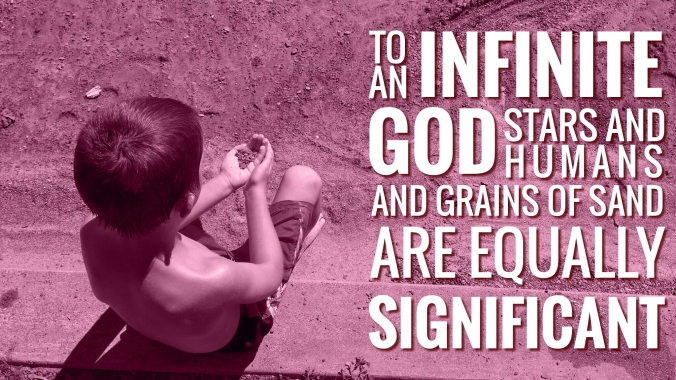
Pondering the universe generally elicits two responses: awe at its grandeur, and a sense of insignificance. In Madeleine L’Engle’s novel A Wind in the Door, when human characters learn to let go of limited concepts of time and space they can converse with stars. In the scale of the infinite universe – and an infinite God – size and distance are irrelevant so humans and stars are equally important. If that’s not mind-bending enough, they meet within a mitochondrion, thousands of which can exist inside a single human cell, to formulate a plan to save the world. The novel teaches that none of us are insignificant, but none of us are solely responsible for history.

When an angel told Zechariah, the father of John the Baptist, that his elderly wife would conceive a child who would herald the messiah, Zechariah did not believe. As a result, he became mute until after John’s birth. Zechariah teaches us that insisting on our own limited view of things makes us powerless in the face of the future. Fortunately John believed in God’s long term plan, and trusted in something greater than himself until his death.

God plays a very long game. Martin Luther King Jr. may have said it best: “The arc of the moral universe is long but it bends toward justice.” Our efforts may seem to make little difference, but from an infinite perspective, a small kindness and a great accomplishment are not very different. It is the accumulation and interaction of these kindnesses and accomplishments that matters. To paraphrase Leo Tolstoy, we add our own light to the sum of all light. On a small scale light moves quickly, but across the galaxy it travels for many thousands of years and the star that generated it may have burned out before we ever see it. So it is with our contributions to the world: they may not be fully understood until long after we have burned out, but our light goes on.

Today’s struggles do not define us. Like mitochondria each of us is a tiny part adding life to the eternal body of Christ. Such perspective adds to the sum of our peace.

Comfort: To an eternal God, stars and humans and grains of sand are equally significant.

Challenge: Read Psalm 90, noting the eternal perspective of the psalmist.

Prayer: Let Your work appear to Your servants
And Your majesty to their children.
Let the favor of the Lord our God be upon us;
And confirm for us the work of our hands;
Yes, confirm the work of our hands. (Psalm 90:16-17)

Discussion: Have you ever been involved in a long-term project, perhaps one that continues long after you stopped (or will stop) being part of it? What did that feel like?

Join the discussion! If you enjoyed this post, feel free to join an extended discussion as part of the C+C Facebook group. You’ll be notified of new posts through FB, and have the opportunity to share your thoughts with some lovely people. Or feel free to comment here on WordPress, or even re-blog – the more the merrier!

Peace as Mourning

1450420802250

Readings: Psalms 102; 148, Genesis 3:8-15, Revelation 12:1-10, Reading John 3:16-21


Jewish mourning rituals are structured and lengthy. For up to a year later, depending on who has died, life is conducted differently. Loved ones help create space for the grieving process by being quietly present for it, rather than trying to make things better.  Anyone who has been in the receiving line at a funeral can tell you most words meant as comfort are anything but. Yet most modern Christian mourners get a funeral and a few days off work, after which our culture tells us to push through it as quickly as possible. We don’t grieve well.

Mourning is not simply being sad. It is not depression. It is the processing of our emotions. When we put on a brave face, the effects of grief will be miserably prolonged. If we choose suppression over healthy mourning, grief remains trapped below the surface only to emerge unexpectedly in endless drips or powerful gushers we are rarely equipped to handle. Mourning permits us to experience the full depth of our loss so we may eventually be at peace with it. The end of a Jewish mourning period signals a new beginning, a reconciliation with our changed reality.

Death is not the only loss we need to mourn. A sense of identity shredded when we lose a job; disillusionment in institutions we once respected; relationships broken beyond repair; a sense of security crushed by world events; younger, healthier bodies; hopes and dreams beyond our ability to realize: mourning helps us let go of these things. The weight of carrying them slows us down until we lag far behind the peace and joy in the life still available to us.

When the psalmist says:

My heart is stricken and withered like grass;
I am too wasted to eat my bread.
Because of my loud groaning
my bones cling to my skin. (Psalm 102:4-5)

he knows he must fully engage with his grief or be forever burdened with it. Advent is a time for recognizing how God mourns a lost humanity, and anticipating the new beginning he sends us in the person of Jesus Christ.

Comfort: Mourning is the mill that grinds grief into peace.

Challenge: Whatever you currently need to mourn, give yourself space to feel your grief while you read Psalm 102.

Prayer: As for me, I am poor and needy, but the Lord takes thought for me. You are my help and my deliverer; do not delay, O my God. (Psalm 40:7)

Discussion: When you experience grief, do you allow it to wash over you or do you put up defenses against it? Why?

Join the discussion! If you enjoyed this post, feel free to join an extended discussion as part of the C+C Facebook group. You’ll be notified of new posts through FB, and have the opportunity to share your thoughts with some lovely people. Or feel free to comment here on WordPress, or even re-blog – the more the merrier!
Peace as Action

1449987646870

Readings: Psalms 24; 150, Amos 9:11-15, 2 Thessalonians 2:1-3, 13-17, John 5:30-47


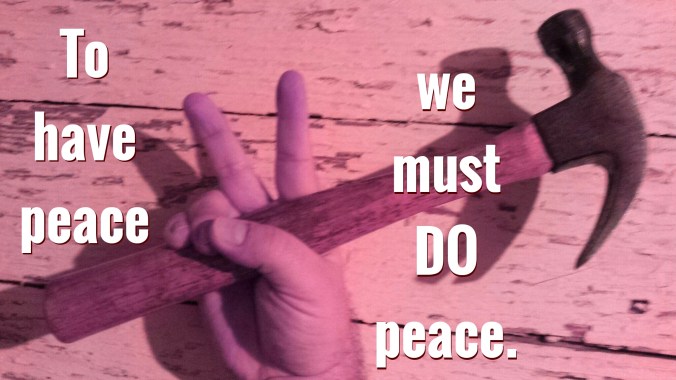
In the musical Rent the character of Mark sings: “The opposite of war isn’t peace; it’s creation.” The narrow definition of peace as merely the absence of destruction is turned on its head in a story about art and artists, but it has more universal application.  True peace is not something we passively experience; it is something we do.

After World War II, the United States initiated the Marshall Plan to help a devastated Europe recover economically. This aid included former enemies Italy and Germany, as well as neutral countries like Iceland. At the same time the U.S. oversaw the reconstruction of Japan, including a security arrangement that still exists today. These decisions were not altruistic on the part of the U.S. Leaders understood simple withdrawal from conflict was not the same as peace, which requires an ongoing effort. They understood peace as doing justice.

If we want to have peace – personal, interpersonal, or international – in our own lives, we can’t rely on outside forces to retreat from conflict and leave us alone to our apathy. Acts of creation and generosity can transform enemies into allies, battlefields into sources of shared harvest. To have peace, we must do peace.

For all his message of doom, the prophet Amos does paint a picture of what the peaceful Kingdom will look like:

they shall rebuild the ruined cities and inhabit them;
they shall plant vineyards and drink their wine,
and they shall make gardens and eat their fruit. (Amos 9:14)

It is not that these activities are possible because we live in some conflict-free vacuum we label peace, but that these activities are peace and create the conditions for its survival.

We all have conflicts. What cities of friendship have we left in ruin? What vineyards of opportunity have we trampled? What refugees of family have we driven away? We can choose to simply retreat from these battles, but let’s not mistake indifference for peace. Rather, let’s regroup and prayerfully consider how we might do peace. When we do peace rather than wait for it, the harvest will be abundant.

Comfort: We are not helpless in the face of conflict. We can rely on God to show us how to live peace.

Challenge: Explore organizations in your local community which work toward peace. Look for ways you might contribute.

Prayer: Relieve the troubles of my heart, and bring me out of my distress. Consider my affliction and my trouble, and forgive all my sins. (Psalm 25:17-18)

Discussion: Where have you settled for indifference instead of peace? What can you do about it?

Join the discussion! If you enjoyed this post, feel free to join an extended discussion as part of the C+C Facebook group. You’ll be notified of new posts through FB, and have the opportunity to share your thoughts with some lovely people. Or feel free to comment here on WordPress, or even re-blog – the more the merrier!

Unburdened

coal-man-980371_1920

Today’s readings (click below to open in new tab/window):
Psalms 57; 145, Jeremiah 44:1-14, 1 Corinthians 15:30-41, Matthew 11:16-24


Jesus told the people of Galilee (and – through Matthew’s gospel – all of us):

Come to me, all you that are weary and are carrying heavy burdens, and I will give you rest. Take my yoke upon you, and learn from me; for I am gentle and humble in heart, and you will find rest for your souls. For my yoke is easy, and my burden is light.

“Burden” was a vague term, perhaps intentionally so. Many things can burden us. Guilt. Family obligations. Persecution. Financial troubles. Illness. Worry. The list is endless, yet Jesus offered comfort and reassurance to all who felt burdened for whatever reason. How relieved the people must have been to hear from someone who did not wish to add to their already heavy burdens, but to actually relieve them.

Later on, Jesus had very different words for his disciples:

 If anyone would come after me, let him deny himself and take up his cross and follow me. For whoever would save his life will lose it, but whoever loses his life for my sake will find it.

Well that doesn’t sound like much of a relief, now does it?

Yet these messages are not contradictory. Jesus would have us learn whatever we need to draw closer to him. In the beginning, that may mean learning what burdens we can, should, and must lay at his feet. If the contents of our lives are so overwhelming that they crowd out Jesus, it’s time to let go of them. And if we can’t let go – for example, a caregiver of a sick child – we can spiritually reposition ourselves to let Christ help lighten the load.

We aren’t ready to pick up the cross on day one of discipleship. Before we can handle that weight, we have to be fully settled into Christ’s yoke – to genuinely trust in the strength of his “gentle and humble heart.” It may take a while, but then we can follow free of even the burden of trying to save our own lives.

Whether we need reassurance that it is safe to draw near him, or a push to follow him to the end, Christ’s words speak to us where we are.

Comfort: Wherever you are in your spiritual growth, Jesus is speaking to you.

Challenge: However close we feel to Christ, we can still grow closer.

Prayer: My Lord, I seek to grow ever closer to you. Amen.

Discussion: Which words of Jesus do you find comforting … and which do you find challenging?

Join the discussion! If you enjoyed this post, feel free to join an extended discussion as part of the C+C Facebook group. You’ll be notified of new posts through FB, and have the opportunity to share your thoughts with some lovely people. Or feel free to comment here on WordPress, or even re-blog – the more the merrier!

Inference Interference

static-snow-2-1519569

Today’s readings (click below to open in new tab/window):
Psalms 57; 145, 2 Kings 5:1-19, 1 Corinthians 4:8-21, Matthew 5:21-26


Naaman was an Aramean warrior who suffered from leprosy. One of his wife’s servants was an Israeli captive. This girl told Naaman that a prophet in her land could cure his illness. With a letter and the good wishes from his own king, Naaman took “ten talents of silver, six thousand shekels of gold, and ten sets of garments” to the king of Israel. Did this generous tribute and simple request touch the heart of the king? Not quite.

When the king of Israel read the letter, he tore his clothes and said, “Am I God, to give death or life, that this man sends word to me to cure a man of his leprosy? Just look and see how he is trying to pick a quarrel with me.”

And that sometimes seems to be the entirety of foreign relations in a nutshell. Personal relations, too.

Inference is a dangerous habit, but we do it all the time. Asking someone directly for clarification of their meaning or intentions should be simple, but we are uncomfortable asking and defensive when asked. Often we would rather just work off assumptions … which we’re not especially good at making. From being offended at unintended “tone” we’ve erroneously read into emails, to completely misreading the motives of foreign governments, inferences cause no end of unnecessary problems.

The prophet Elisha advised the king of Israel to take a breath; he would cure the Aramean commander’s leprosy. Then is was Naaman’s turn to be paranoid. When Elisha instructed him to bathe in the Jordan River, Naaman protested that the cure could not be so simple and prepared to leave. His servants asked him why he would have been willing to do something difficult, and rejected something easy.

If we would like transparency and trust from others, we must be willing to offer them first. Christ tells us before we offer a gift at the altar, we should reconcile ourselves to any brother or sister who has something against us. That’s not the same as forgiving something we have against them – the onus is on each of us to initiate peace whether or not we believe we are in the wrong. If we don’t know how, we can start by asking.

Comfort: Making yourself vulnerable is not a weakness.

Challenge: When in doubt, ask.

Prayer: Let me hear what God the LORD will speak, for he will speak peace to his people, to his faithful, to those who turn to him in their hearts. (Psalm 85:8)

Discussion: Have you ever made an assumption which led to unnecessary conflict?

Join the discussion! If you enjoyed this post, feel free to join an extended discussion as part of the C+C Facebook group. You’ll be notified of new posts through FB, and have the opportunity to share your thoughts with some lovely people. Or feel free to comment here on WordPress, or even re-blog – the more the merrier!