Today’s readings:
Psalms 43; 149, Deuteronomy 7:17-26, Titus 3:1-15, John 1:43-51
In his letter to his associate and friend Titus, Paul asks him to instruct the church in Crete on proper behavior for the faithful. He wants them to be obedient, courteous, and gentle, and wants them to avoid quarrels, gossip, and division. Regarding unbelievers – each of them a possible convert of course – he wants the faithful to be patient, “[f]or we ourselves were once foolish, disobedient, led astray, slaves to various passions and pleasures, passing our days in malice and envy, despicable, hating one another.”
See what he did there?
Paul was anything but naïve. He knew professing faith in Christ did not immediately transform a person into a saint. If it did, he wouldn’t have had to send instructions from afar. He was experienced enough to know his flock needed constant tending. By first appealing to the church’s better nature and describing the lives he hoped they would lead, he let them know he had faith in their potential. Though he attributed the less desirable behaviors to unbelievers, it was a subtle reminder to the church that they were not so different as they might like to pretend.
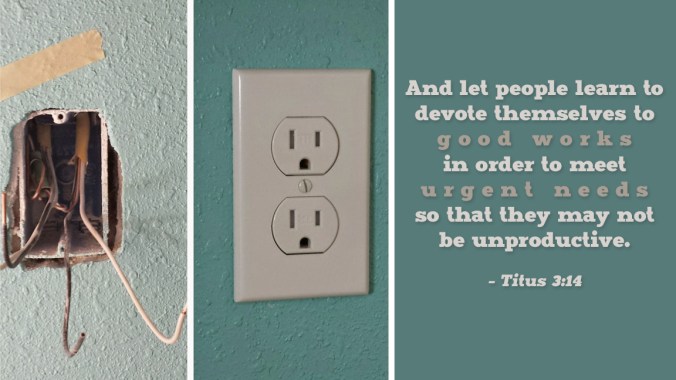
Throughout the letter, Paul suggests the “people learn to devote themselves to good works in order to meet urgent needs, so that they may not be unproductive.” The doing of good works is a benefit not just to the recipient of the work, but also to the giver. Our actions influence our attitudes, and one way to cultivate a spirit of charity is to act charitably. Even when our spirit resists – maybe especially then! – acting in ways that demonstrate a love for God and his creation will help nourish those feelings within us.
Proverbs 16:27 says: “Idle hands are the devil’s workshop; idle lips are his mouthpiece.” To be our best selves, we need to be intentional about how we spend our time. If we don’t fill our days with what is meaningful, we leave the gate open for the meaningless or harmful to creep in and take root. Being productive in the way Paul suggests helps grow God’s kingdom both within us and without.
Comfort: Faith is a journey. Learn from today and be better tomorrow.
Challenge: Do an informal time study of your week. Is your time going where you think it should?
Prayer: Gracious God, teach me to fill my days with what is good and pleasing to you. Amen.
Discussion: What is the difference between relaxation and idleness?
Join the discussion! If you enjoyed this post, feel free to join an extended discussion as part of the C+C Facebook group. You’ll have the opportunity to share your thoughts with some lovely people. Or feel free to comment here on WordPress, or even re-blog – the more the merrier!

 Comfort & Challenge