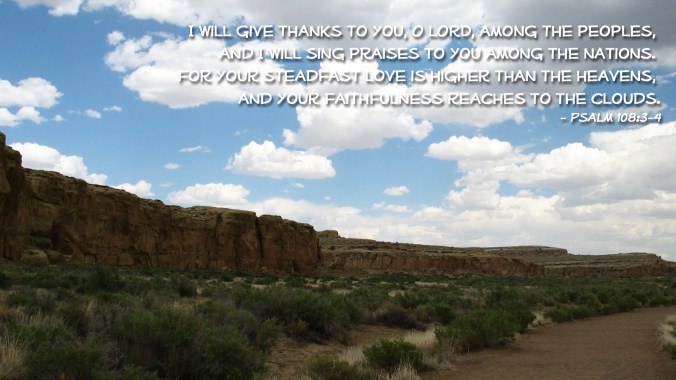
Ordinary Blessings

reachesclouds

Today’s readings (click below to open in new tab/window):
Psalms 108; 150, Job 38:1-11, 42:1-5, Revelation 19:4-16, John 1:29-34


Divine intervention. We are taught in Sunday School to believe it looks like great reward or great punishment defying the laws of nature – like the parting of the Red Sea or the walls crumbling around Jericho; like the resurrection of Lazarus or the destruction of Sodom and Gomorrah. In the case of Job, divine intervention felt both like punishment and reward: God stripped everything he loved and valued from him, then restored his fortunes because he remained faithful. Behind the scenes, the motivations for divine intervention in Job’s life weren’t really about him at all.

We should call God’s involvement in the life of John the Baptist a blessing – after all, he had the privilege of preparing Israel for the arrival of Christ – but his reward for faithfulness was execution. When we hear examples like this, does it diminish our enthusiasm for a divine hands-on management style?

What if divine intervention wasn’t always quite so … obvious? It seems counter-intuitive that God would create a universe in need of constant tweaking, but might it be possible that interaction with God is built into the fabric of creation? That we go through each day touched by God in small ways we may or may not notice? Not that the Spirit is some cosmic personal assistant saving us a good parking space or sparing us from the same financial woes someone else is suffering (though there’s nothing wrong with expressing gratitude for these situations).  Every experience we have is an opportunity to connect with God, but we must choose to make that connection.

When we don’t get that parking space or pay raise, are we just as grateful? When we compare our lives to peers we consider more successful than ourselves (never a good idea, but inevitable), do we acknowledge the blessing of an ordinary life?

Maybe divine intervention doesn’t look like God altering the world for us, but God altering us for the world.

We can’t all be leaders and prophets. We can all be followers of Christ. Surrendering our lives to God makes us the very instruments of divine intervention. If we want to see God at work in the world, let’s look inside first.

Comfort: God is available to us always…

Challenge: … but insisting on our own way can make God seem distant.

Prayer: Holy God, thank you for being present in my life even when I don’t feel you. Amen.

Discussion: In what ways do you feel God has changed you to better serve the world?

Join the discussion! If you enjoyed this post, feel free to join an extended discussion as part of the C+C Facebook group. You’ll be notified of new posts through FB, and have the opportunity to share your thoughts with some lovely people.

Favor or failure?

1494384383919Today’s readings (click below to open in new tab/window):
Psalms 98; 146, Jeremiah 30:10-17, Colossians 1:15-23, Luke 6:12-26


Jeremiah is a complex book containing poems, history, and prophecies from multiple authors. It does not tell a linear story, but describes the experience of a people whose faith in a protective God is strained to breaking when enemies defeat and enslave them. Jeremiah alternately claims Judah’s people have been wicked and lost God’s favor, and also that God loves and will save them. The result is less a clear picture of their relationship with God than a reflection of their confusion and search for answers.

Today’s psalms also show us a God who both punishes and rescues. For the Israelites, everything from harvests to the outcome of battle was a sign of God’s favor or displeasure. This view seems simplistic, but complicates and even makes contradictory our relationship with God. Unless one is a prophet, such a belief structure makes it hard to determine whether we are in the middle of punishment or deliverance.

Yet many self-styled prophets are quick to blame personal and public disasters on God’s disfavor. From  hurricanes to terror attacks to uncontrollable children, one doesn’t have to wait long for someone who blames specific “sinners.” And while the world is indeed broken in ways that need to be named and addressed, those who speak with eagerness and certitude about the people God is punishing never seem to consider their own sins might bring about such action. On the contrary, they often point to their own prosperity as a sign of favor.

Jesus’ words in Luke turn that notion upside down. He calls the blessed poor, hungry, and mournful. The mirthful rich are the ones in trouble. So what are we to do? If the state of our pocketbooks and bellies doesn’t tell us whether we are living according to God’s plan, what does? Jesus calls us to be loving people no matter our external state. He assures us God always loves us, and is with us through both sorrows and joys. A godly life is constant in its humility and charity regardless of fortune. Living such a life renders the question of God’s favor moot.

Comfort: God’s love for us is constant.

Challenge: Think of the times you’ve asked “Why me?”

Prayer: God of Grace and Mercy, thank you for your constancy. Amen.

Discussion: How do you feel when someone blames misfortune on its victim?

Join the discussion! If you enjoyed this post, feel free to join an extended discussion as part of the C+C Facebook group  or visit comfortandchallenge.tumblr.com. You’ll  have the opportunity to share your thoughts with some lovely people. Or feel free to comment here on WordPress, or even re-blog – the more the merrier!

Holy Indifference

1473645198317.jpg

Today’s readings (click below to open in new tab/window):
Psalms 81; 150,Job 38:1, 18-41, Revelation 18:1-8, Matthew 5:21-26


 “The opposite of love is not hate, it’s indifference… The opposite of faith is not heresy, it’s indifference. And the opposite of life is not death, it’s indifference.”
– Elie Wiesel

When disaster strikes, some preachers can’t wait to blame the tragedy on their favorite – or would that be least favorite? – group of sinners. Never mind that disaster falls on the righteous and unrighteous alike, and any given hurricane or shooting may completely miss God’s alleged target; they can always blame America’s general decline into sin. Once they’ve drummed up sufficient guilt and fear in their listeners, they graciously offer an opportunity to relieve said guilt and fear in the form of donations to their own righteous organization.

Except … according to Psalm 81 and other scriptures, God’s worst reaction might not be punishment, but indifference. Our own life experiences tell us God is not some petty bureaucrat handing out punishments for every moral misdemeanor. Neither is God a tin-pot dictator forcibly bending us to his will. He invites us to love and obey Him, and acceptance of that invitation is not without obligation, but if we decline, the consequences – at least in this life – seem to be God’s withdrawal from our lives. The psalmist warned Israel they were suffering because they were bowing to foreign gods so the Lord had left them to the counsel of their own stubborn hearts. In Romans 1, Paul tells us about people who traded God for idols, and how “God gave them up in the lusts of their hearts to impurity, to the degrading of their bodies among themselves.” When a people stopped listening to God, he let them go. The bed they made was their own to lie in.

The good news is that no matter how badly we’ve screwed up our own lives by rejecting God, He will always accept an invitation back into that life. Whatever false idols we’ve been worshiping, God waits with the open arms of a father welcoming home a runaway child. Whether we’ve abandoned that home for an hour or a lifetime, God will be there.

For further reading on today’s reading from Matthew, see Pass the Peace.

Comfort: No matter how badly you’ve screwed up, someone who’s done worse has turned their life around.

Challenge: Be diligent about discerning between your own voice and God’s.

Prayer: God of mercy, forgive me for the times I choose my own counsel over yours. Thank you for leading me home to you again. Amen.

Discussion: What consequences have you suffered as a result of relying on your own counsel instead of God’s?

Join the discussion! If you enjoyed this post, feel free to join an extended discussion as part of the C+C Facebook group. You’ll be notified of new posts through FB, and have the opportunity to share your thoughts with some lovely people. Or feel free to comment here on WordPress, or even re-blog – the more the merrier!