Sweet Temptation

cupcake-1318337-1919x1278

Today’s readings:
Psalms 5; 147:1-11, Jeremiah 18:1-11, Romans 8:1-11, John 6:27-40


Have you ever tried to give up excess sugar? At first it’s an unpleasant mixture of headaches, cravings, and fatigue. After a while those symptoms fade, and you start to feel pretty normal – maybe better than normal, without all the highs and lows of unsteady blood sugar. Eventually candy and soda may become so unbearably sweet on the tongue that you wonder how you ever enjoyed them in the first place. Your appetite changes, and you are better off for it.

The Apostle Paul tried to teach members of the Christian church in Rome about changing their appetites. He knew many of them still had more of an appetite for the flesh then the Spirit. When he tells them “those who live according to the flesh set their minds on the things of the flesh, but those who live according to the Spirit set their minds on the things of the Spirit,” he knows they aren’t excited to give up their earthly habits cold turkey. He also knows that by practicing a life in Christ (and enduring a few resulting headaches and cravings) they will wean themselves off a taste for sin. Maybe they’ll begin to wonder why it was ever so appealing.

Years before Paul wrote to the Roman church, Jesus spoke to the Jews about an appetite change. The Pharisees wanted a sign from him, like the manna they ate while wandering the desert after fleeing Egypt. For a time manna was necessary for survival, but it was limited. Manna, gathered in the mornings, would not keep overnight and rotted away before morning.

Instead he offered them himself as the Bread of Life: “Whoever comes to me will never be hungry, and whoever believes in me will never be thirsty.” To develop a taste for that bread, they would have to stop feasting on the law which they craved but could no longer sustain them.

To savor a better life, we must sometimes figure out which lesser appetites we have been feeding instead. Whatever sweet temptations we think we can’t live without, Jesus promises us something far better.

Comfort: God always has something better in store.

Challenge: Make a list of what appetites – social, physical, mental – you give too much priority. Then write down some goals and strategies for changing that.

Prayer: Abundant Lord, I wish to be filled with the Bread of Life. Amen.

Discussion: What’s your favorite food? Is it good for you?

Join the discussion! If you enjoyed this post, feel free to join an extended discussion as part of the C+C Facebook group. You’ll  have the opportunity to share your thoughts with some lovely people. Or feel free to comment here on WordPress, or even re-blog – the more the merrier!
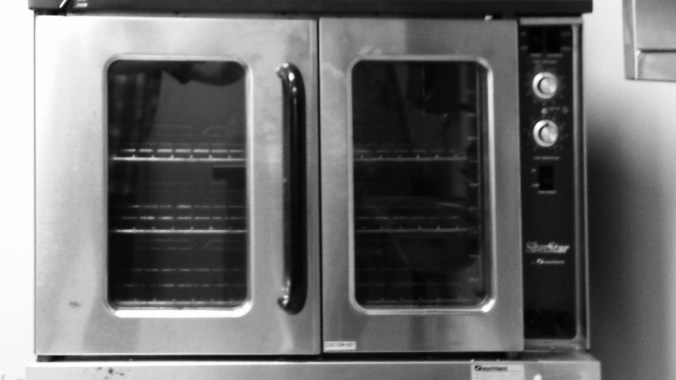
Convection is good for the soul

20170324_160358-01.jpeg

Today’s readings:
Psalms 22; 148, Jeremiah 11:1-8, 14-17, Romans 6:1-11, John 8:33-47


It’s good to keep your freezer full, but not overly so. Solid items are easier than empty space (or mostly empty space) to keep cool, so it shouldn’t be empty. However, too many (or improperly placed) items can restrict the air flow necessary for proper operation. This can result in frost build-up, uneven cooling, and wasted energy. Ovens, especially convection ovens, also work best when there’s enough space for airflow.

We human beings also operate better when we leave room for the Spirit (or as it’s called in Greek, pneuma which also means breath or air). Take the Pharisees for example: Jesus told them, “you cannot accept my word.” Why not? Because their hearts were so crammed full of religion there wasn’t room for revelation. Ever seen a freezer whose contents have frosted into one giant immobile block? That’s what happens to a heart so overloaded with dogma, doctrine, and doing that nothing else – even the divine breath – can enter it. We can’t be so concerned with preserving the past that we ignore the present and oppose the future.

While the freezer preserves, the oven prepares. But we have to be sure we’re not putting too much in there at once either. Faith is not a body of knowledge to be contained and mastered, but an experience to be lived. We can cram countless theological concepts into that oven, but without time and space to expose them to the breath of the Spirit they may turn out to be half-baked. Sure your theology of suffering may have browned up nicely, but if it’s just one of many recipes you’ve rushed to complete, instead of testing thoroughly, it may still be a gooey, useless mess inside. Our ideas about God shouldn’t crowd out our experience of God, or those ideas won’t sustain us in times of need.

As with physical possessions, we may be surprised by how few mental possessions we really need to get by. At some point they become idols clogging our spiritual airways. Let’s preserve the essentials, prepare what’s been entrusted to us, and periodically check for an expiration date on the rest.

Comfort: You don’t have to fill up every space and second.

Challenge: Every day, take time to breathe deeply.

Prayer: God of mercy and love, I seek to sink deeply into your Spirit. Amen.

Discussion: When’s the last time you really cleaned out things you didn’t need?

Join the discussion! If you enjoyed this post, feel free to join an extended discussion as part of the C+C Facebook group. You’ll  have the opportunity to share your thoughts with some lovely people. Or feel free to comment here on WordPress, or even re-blog – the more the merrier!

Out of Thin Air

Today’s readings: Psalms 93; 147:1-11, 1 Kings 17:17-24, 3 John 1-15, John 4:46-54

1451459082880

Why do miracles happen? American Christianity often portrays them as rewards for diligent prayer and great faith. The Gospel of John tells a different story. Jesus performed seven miracles – John called them “signs”- before he was crucified. The second was the healing of a royal official’s son. The official met Jesus in Cana, about 25 miles southwest from where his son lay dying in Capernaum, and asked Jesus to save him. While Jesus did heal the official’s son, his initial response seems almost perturbed: “Unless you see signs and wonders you will not believe.” Jesus was coerced by his mother into the first sign at the wedding in Cana, grumbled about the second, and things didn’t improve much for the next five.  When he raised Lazarus, he wept over his friends’ lack of faith. According to John, signs were performed for the unfaithful.

For some people, faith in God rests on miracles. Jesus, on the other hand, treated miracles as necessary disturbances to the natural order used to persuade people.  God’s presence is not extraordinary, but an ongoing relationship during ordinary life. Like air, it is a life-sustaining presence constantly surrounding us and within us. We don’t normally think about air unless we can’t breathe. John’s Jesus delivers miracles like he’s performing spiritual CPR on those who can no longer inhale God’s presence on their own.

Isn’t it better not to need it in the first place? Like air or water, our spiritual environment can become polluted. Sometimes we trash it ourselves, and sometimes we are downwind from the spiritually toxic. When our faith feels choked off, it may be time to start cleaning up and preventing more damage. This could be a slow process: anger, hate, greed, fear, and poisons like them take time to remove. They are dangerous and unpleasant to handle, but with God’s help handle them we must. The alternative is spiritual suffocation.

Still prefer to wait on a miracle? Neither miracles nor CPR are a permanent fix: if our habits don’t change, our old problems will return. God is always present; live clean and breathe deep.

Comfort: God is as close as the air we breathe.

Challenge: Take an inventory of what’s polluting your spiritual environment.