Today’s readings (click below to open in new tab/window):
Psalms 104; 149, 1 Kings 18:41-19:8, Philippians 3:17-4:7, Matthew 3:13-17
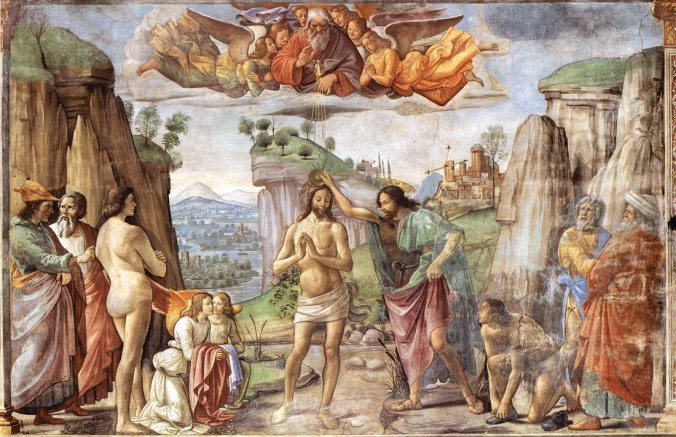
John the Baptist was the antithesis of the scribes and Pharisees in both his message and his appearance. Rather than the elaborate and expensive garments favored by the religious elite of his day, he wore a rough, inexpensive, and probably itchy garment made of camel’s hair. When he wasn’t fasting, he ate locusts and honey. His commitment to humility and simplicity was a physical representation of his message of baptism and repentance. It’s no surprise that when Jesus came to him and asked to be baptized, John humbly objected, saying “I need to be baptized by you, and do you come to me?” When Jesus said “Let it be so now; for it is proper for us in this way to fulfill all righteousness” he consented.
Though he briefly questioned Jesus’ instructions, John was more committed to Christ than to humility.
Can we always say the same? Maybe it’s not humility we turn into an idol. Maybe it’s tithing. Or virginity. Temperance. Or – in an oddly paradoxical progressive twist – moralizing against the foibles of Christian culture (guilty).
Such spiritual disciplines can be excellent means of exploring and expressing our faith – many of them are even direct commandments – but we must remember they are tools and not currency; they do not buy us God’s favor – rather, they help us build an understanding of God’s goodness and our relationship with our creator. We must remember they are tools and not weapons; when Christ and Paul talk to us about what is right and wrong it is so we can change our own hearts, not so we can aim those words at others who fail to fall in line. Currency and weapons, even in a spiritual sense, are seductive idols; they offer us a false sense of control and power when we should be seeking to surrender.
So are we free to do whatever we wish? Of course not. But our moral successes and failures do not save us; Christ already did that. We can accept or reject that redemption, but we can’t diminish or improve upon it. Be generous. Be chaste. Be sober. But be these things out of grateful obedience, not because you think they can save you.
Comfort: Jesus has already done the work of your redemption.
Challenge: Meditate on whether your spiritual impulses are motivated by gratitude or fear.
Prayer: God of Mercy, thank you for Christ the Redeemer. Amen.
Discussion: When do you feel like you let God down?
Join the discussion! If you enjoyed this post, feel free to join an extended discussion as part of the C+C Facebook group. You’ll be notified of new posts through FB, and have the opportunity to share your thoughts with some lovely people. Or feel free to comment here on WordPress, or even re-blog – the more the merrier!

 Comfort & Challenge