Fixer Upper

1471058322754.jpg

Today’s readings (click below to open in new tab/window):
Psalms 51; 148, Judges 14:20-15:20, Acts 7:17-29, John 4:43-54


How long is something brand new? Until it’s driven off the sales lot? Until it’s removed from the packaging? Until the first floorboard begins to squeak? Whatever the criteria, “brand new” never lasts long. The very actions we take to preserve something can accelerate its deterioration: washing a car erodes the finish and recharging a cell phone battery shortens its life. Nothing and no one escapes the wear and tear of existence. Nicks and dents, wrinkles and regrets, from birth onward imperfection relentlessly etches itself onto each of us. The only way to escape life’s hardship is not to live it, but then we are like a toy still in its box gathering dust on a shelf, never fulfilling the purpose for which we were created.

The author of Psalm 51 feels life’s every scrape and smudge. He longs to be washed clean, to be filled with a new and right spirit. He asks the Lord to blot out his transgressions and create a clean heart. Fortunately, God loves a fixer-upper. The psalmist knows “the sacrifice acceptable to God is a broken spirit; a broken and contrite heart.” We’ve all been damaged in ways large and small. Our wounds may be self-inflicted, caused by cruelty, or the unintentional result of friendly fire. When the world shames us into hiding them, we cut ourselves off from Grace. To God, our inevitable brokenness is not a barrier, but an invitation.

“Brand new” is momentary, if not illusory. If we long for the imagined perfection of the past, the present will always seem insufficient. But if we are willing to do the hard and humble work of submitting to God, we will create a testament to the firm foundation He has laid in us. We buff out the scratches through prayer, nail another roof beam back into place with each song of praise, and re-open a boarded up window and let in the light with each act of service.

No matter the source of our damage, and no matter how eager others may be to condemn us, God will offer to restore us.

Comfort: God loves you through all your hardships.

Challenge: Save something you plan to throw out, and see if you can re-purpose it.

Prayer: Create in me a clean heart, O God. Amen.

Discussion: What areas of your life are currently under major reconstruction?

For further reading on John 4:43-54, see Out of Thin Air

Join the discussion! If you enjoyed this post, feel free to join an extended discussion as part of the C+C Facebook group. You’ll be notified of new posts through FB, and have the opportunity to share your thoughts with some lovely people. Or feel free to comment here on WordPress, or even re-blog – the more the merrier!


(Don’t) Stop Me If You’ve Heard This One

1470916884090.jpg

Today’s readings (click below to open in new tab/window):
Psalms 105; 147:12-20, Judges 14:1-19, Acts 6:15-7:16, John 4:27-42


What stories do you like to read or hear over and over again?

Storytelling is one of the most universal aspects of human experience. It serves many functions. Stories like those shared at wakes and funerals can comfort us. Family stories shape our personal identities. Cultural stories, like folk tales, myths, and legends help us make sense of the world in a way hard facts can’t. The author of Psalm 105 and the apostle Stephen both make use of the story of Israel, but to different ends.

The psalmist tells the story of Israel to reassure her people of God’s constant, loving presence. From God’s promise to Abraham that he would be a father of nations, through the arrival in and exodus from Egypt, to the arrival in the promised land, the central theme of the story – as the psalmist tells it – is God’s faithfulness to the people. Part of the joy of hearing a beloved story is anticipation of the familiar elements, and the psalmist certainly hits some well known crowd pleasers, like Joseph in Egypt and the ten plagues. A master storyteller, the psalmist does not make random choices, but carefully uses words and images to reinforce the theme of the story. By the end, listeners know they are a community of the Lord.

Stephen talks about the same events. However, because his intent is to build a case for Christ as the Messiah, he frames the events very differently. As the story unfolds we hear him describe Israel’s initial rejection of her major heroes – from Abraham to Joseph to Moses. He wants to convince the religious authorities they are making the same mistake with Christ. The different themes of the psalmist’s story and Stephen’s story clearly demonstrate the importance of not just the story, but the telling.

Stories tell us who we are by telling us who we’ve been, or who we believe we’ve been. We tell them to pass along our identities and cultures. Over time stories build on themselves and, their meanings can change. Each of us is shaped by and shapes the ongoing Christian story.

Comfort: A good story, like the ones in the Bible, never grows old.

Challenge: Read or listen to multiple sources of news, such as CNN, Fox, the BBC, and Al Jazeera. How does each tell the stories of the day differently?

Prayer: God of healing, thank you for the story of your love for us. Amen.

Discussion: What story do you like to hear or tell?

Join the discussion! If you enjoyed this post, feel free to join an extended discussion as part of the C+C Facebook group. You’ll be notified of new posts through FB, and have the opportunity to share your thoughts with some lovely people. Or feel free to comment here on WordPress, or even re-blog – the more the merrier!

The More Things Change…

seeing red

Today’s readings (click below to open in new tab/window):
Psalms 89:1-18; 147:1-11, Judges 13:15-24, Acts 6:1-15, John 4:1-26


Famed novelist and relapsed Catholic Anne Rice once made a splash with a series of Facebook posts declaring she was “leaving Christianity” but not Christ. Her reasons aren’t exactly groundbreaking. She found Christianity (but not Christ) intolerant, quarrelsome and disputatious. Well… yes. Gandhi supposedly said: “Your Christians are so unlike your Christ” as though that was news to us. We embark on the journey to become more Christ-like specifically because we fall short. We especially need to support each other in the journey when we can’t stand each other. Christianity as a concept or a faith cannot exist outside community.

My former pastor, who worked for years to promote fairness for the LGBT community in our city, engaged the very people Ms. Rice “quit” when she endorsed an employment fairness bill. In the name of Christ, these people demanded the council deny this bill. One council member marveled that all his hate mail all seemed to be from Christians. Also in the name of Christ, many people, including my pastor, spoke in favor of it. The following Sunday she spoke to us about the hard but necessary work of loving those who oppose us. No matter which side of an issue one falls on, praying for one’s enemies is the Christ-like response.

We barely get into the sixth chapter of Acts before the squabbling begins. When Greek Christians felt Hebrew Christians were not treating the Greek widows fairly, the Greeks didn’t pack up and quit. The Hebrews got a little indignant, but the community reached a solution. Nowhere does scripture claim Christians are without quarrels. Without quarrels, Paul’s letters might never have been written! What the gospels and epistles do provide is instruction in how to live together in covenant despite differences.

People haven’t changed much in two thousand years. Some are liberal and some are conservative. Some are traditionalists and some are experimental. Etc., etc. Most of us usually think we’re right. Christianity has never been a monolith of thought and belief. It has always been about loving our enemies – even the ones sitting next to us on Sunday.

Comfort: God made us capable of thoughtful action and reaction.

Challenge: Fact check even the claims you are inclined to agree with.

Prayer: Glorious Creator, thank you for the gift of discernment. Amen.

Discussion: How have you resolved differences with your fellow Christians?

For further reading on today’s passage from John 4, see Worship Well.

Join the discussion! If you enjoyed this post, feel free to join an extended discussion as part of the C+C Facebook group. You’ll be notified of new posts through FB, and have the opportunity to share your thoughts with some lovely people. Or feel free to comment here on WordPress, or even re-blog – the more the merrier!

The Art of Prayer

Today’s readings (click below to open in new tab/window):
Psalms 42; 146, Judges 13:1-15, Acts 5:27-42, John 3:22-36


Art teaches truth beyond the scope of mere facts. The poetry of Psalm 102, for example, invokes vivid images because the facts do not adequately communicate the depths of the psalmist’s despair or his awe of the Lord. “I am terribly sad” tells us something, but it can’t compare to the exquisite anguish of “I eat ashes with my food and mingle my drink with tears.” While “God is eternal” suffices for academic theology discussions, it doesn’t say much about God’s relationship to the mortal world. Describing the heavens and earth as garments that God will eventually change when they wear out puts us in touch with the vastness of eternity. Burning bones, withering grass, a little bird on a roof – these densely packed images don’t just impart knowledge but tune us into the emotional state of the psalmist.

Artistic forms of prayer can lend depth to our spiritual experiences. When we pray from our deepest pains or joys, stating the facts or making requests may cast only pale shadows of our actual experiences and needs, even to ourselves. Could we consider writing God a poem? The idea may sound like something to do when Vacation Bible School is rained out, but the Bible is loaded with prayerful poems. Its 150 psalms and numerous canticles (hymns) teach us poetry and music are an integral part of our faith language. The psalms themselves were originally meant to be sung, and the layers of artistic expression add to their power. We don’t have to be great poets or composers to turn our feelings into art; when it comes to prayer, honesty trumps virtuosity every time. Any honest attempt at prayer can only bring us closer to God.

Approaching the Bible, prayer, or God from a poetic or other artistic perspective opens us to new ways of knowing. Modern culture tends to equate truth only with facts, but truth is transcendent. History books are informative, but Picasso’s Guernica illuminates the devastation of war in ways no book could convey. Being created in God’s image, however we understand that, means we too are fulfilled by creating.

Comfort: Your opportunities for praise and prayer are endless.

Challenge: Write a poem to God about your current state of mind. No one else has to read.

Prayer: Lord of all creation, thank you for the gift of creativity. Amen.

Discussion: What are your creative outlets? Can you see any connections between them and your faith?

Join the discussion! If you enjoyed this post, feel free to join an extended discussion as part of the C+C Facebook group. You’ll be notified of new posts through FB, and have the opportunity to share your thoughts with some lovely people. Or feel free to comment here on WordPress, or even re-blog – the more the merrier!

It’s 3:16 Somewhere

1470692116198.jpg

Today’s readings (click below to open in new tab/window):
Psalms 5; 145, Judges 12:1-7, Acts 5:12-26, John 3:1-21


John 3:16 is possibly the most commercially successful verse in the Bible. It’s so marketable that the reference alone is enough to sell millions of keychains, bumper stickers, t-shirts, coffee mugs, eyeglass cases, pocket protectors, and just about anything else that can sport an imprint. It is the unofficial logo of Brand Jesus.
There’s no shame in its popularity – it’s a beautiful verse summing up the message of the gospel:

“For God so loved the world that he gave his only Son, so that everyone who believes in him may not perish but may have eternal life.”

But could it be the tiniest bit too popular for its own good? Without delving into the whole discussion about faith versus works, is it possible we can be so happy all we have to do is “believe” that we never get around to living out a life transformed by that belief? After all, belief is a solitary and internal occurrence. Belief alone neither feeds the poor nor clothes the naked, or accomplishes any of the things Jesus says we do for him when we do them for the least of our sisters and brothers.

The verses following John 3:16 expand on its statement, and describe how those who believe embrace the light, and those who don’t believe stay in the darkness because it hides their deeds. No matter how strongly we “believe in him” (and what exactly that means is a discussion unto itself), it’s a good idea to regularly check in with ourselves to ask whether we would be comfortable with Christ’s light shining on our lives at this moment. Our actions confess the convictions of our hearts more clearly than any public statement of belief ever will. We can cover our lives in bumper stickers from the local branch of 3:16 24:7 but Jesus knows a whitewashed tomb when he sees one.

Belief is the beginning of a life in faith, not its end. If how we conduct our lives does not stand up to the light, our belief has died on our lips instead of living in our hearts.

Comfort: There’s no need to hide who you are – God loves you warts and all.

Challenge: Supreme Court Justice Louis Brandeis said: “Sunlight is said to be the best of disinfectants.” Shine light on the parts you feel you need to clean up by sharing them with someone you trust.

Prayer: Lord of Light, make your face to shine upon me. Amen.

Discussion: Where do you draw the line between privacy and secrecy?

Join the discussion! If you enjoyed this post, feel free to join an extended discussion as part of the C+C Facebook group. You’ll be notified of new posts through FB, and have the opportunity to share your thoughts with some lovely people. Or feel free to comment here on WordPress, or even re-blog – the more the merrier!

Promises, Promises

1470578830243.jpg

Today’s readings (click below to open in new tab/window):
Psalms 103; 150, Judges 11:1-11, 29-40, 2 Corinthians 11:21b-31, Mark 4:35-41


Poor Jephthah. Or more correctly, poor Jephthah’s nameless daughter. He vowed to the Lord:

“If you give the Ammonites into my hands, whatever comes out of the door of my house to meet me when I return in triumph from the Ammonites will be the Lord’s, and I will sacrifice it as a burnt offering.”

His daughter was the first one through the door.

Jephthah, though devastated, followed through on his vow. Is it a sort of poetic justice that his willingness to make a random sacrifice – possibly an innocent – sealed his daughter’s fate?

This might seem like a story where God is inexplicably cruel, but God never asked Jephthah for a sacrifice. He made his vow to curry favor from the Lord, but since the Lord didn’t respond neither Jephthah nor we can know whether it had any influence on the victory.

Have we ever made rash bargains with the Lord? Maybe something along the lines of: “If I get this promotion, I promise to give half my raise to the church,” or “If I get well, I’ll exercise every day.” The human race as a whole has a poor track record on following through with promises made in the heat of the moment. Unlike Jephthah, we should not resort to bargaining, but should be confident the spirit of the Lord is with us in all situations, regardless of our promises or eventual outcomes. We take vows to God seriously not to avoid God’s wrath, but because broken promises damage any relationship. Vows should never be taken lightly or impulsively – if at all. In Matthew, Jesus warns us about swearing oaths by heaven or by the earth.

Despite the outcome of Jephthath’s story, God isn’t some evil genie or monkey’s paw waiting to twist our own wishes against us. Nor does God’s grace hinge on the appropriate grand gesture or sacrifice. Rather, like a good parent, God allows the consequences of our actions to instruct us. If we are to be good children, we will mind our lessons, and be careful not to make promises we can’t keep.

Comfort: God doesn’t require our promises, but our faith.

Challenge: Reflect on a promise you have broken. How did it make you feel?

Prayer: God of hope, tend my confidence in you so it will grow. Amen.

Discussion: Some commentaries make a strong case that this story is more correctly interpreted as Jephthah consecrating his daughter as a lifelong virgin to the Lord. Does this change your feelings about the story?

Join the discussion! If you enjoyed this post, feel free to join an extended discussion as part of the C+C Facebook group. You’ll be notified of new posts through FB, and have the opportunity to share your thoughts with some lovely people. Or feel free to comment here on WordPress, or even re-blog – the more the merrier!

Mellow Harshed

1470522355491.jpg

Today’s readings (click below to open in new tab/window):
Psalms 63; 149, Judges 9:22-25, 50-57, Acts 4:32-5:11, John 2:13-25


Acts chronicles wonderful stories of the faith and courage of the early church … and then there’s the tale of Ananias and Sapphira. The earliest believers held their possessions in common. Barnabas, a recent convert, had just sold a field and gave all the money to the Apostles for them to distribute to the needy. Ananias and Sapphira were a married couple who also sold some property, but when they brought the money to the Apostles they secretly held some of it back. When Peter asked Ananias what possessed him to lie to the Holy Spirit, Ananias dropped dead on the spot. Three hours later Peter asked Sapphira if the property had sold for the amount donated. When she corroborated Ananias’ lie, Peter called her on it and she too dropped dead.

Seem harsh? Theologians have concocted a stew of reasons for the death of this couple, but it’s a bitter mix. Some claim they died for lying to the Holy Spirit. Others claim they died for introducing sin to the community of believers. Still others claim God needed to make an example of them to show hypocrisy was not acceptable among those who would be part of the church. Finally, by citing Peter’s claim that Ananias had let Satan fill his heart, some speculate the deception was the latest in a series of sins. Somehow they all conclude the lesson is that God is merciful, and only his grace spares us sinners from destruction … unless it doesn’t.

So what do we do with this? First, we note scripture doesn’t say God (or Peter) killed them: it says they dropped dead. Though it feels like judgment, that’s an important difference. Second, the story is not tied up in a neat moral bow like one of Aesop’s fables. But we can draw some lessons: grace is unearned but not guaranteed or to be taken for granted; hypocrisy is fatal, especially in churches; salvation is more than a feel-good promise – we must let it guide our actions.

God does not seek our understanding or approval. Christianity is always a humbling experience.

Comfort: God is always good, even if we don’t understand how.

Challenge: Create a list of your own  hypocrisies. Add new ones as they occur to you. Every day work toward eliminating one.

Prayer: God of Power and Glory, I am your humble servant. Amen.

Discussion: Have you ever felt like you’ve gotten a raw deal from God?

Join the discussion! If you enjoyed this post, feel free to join an extended discussion as part of the C+C Facebook group. You’ll be notified of new posts through FB, and have the opportunity to share your thoughts with some lovely people. Or feel free to comment here on WordPress, or even re-blog – the more the merrier!
Learn and Live

1470433631031.jpg

Today’s readings (click below to open in new tab/window):
Psalms 84; 148, Judges 9:1-16, 19-21, Acts 4:13-31, John 2:1-12


Many cultural commentators bemoan the rise of anti-intellectualism in America. While they do raise legitimate concerns, is it possible the underlying problem is not simply that some people distrust higher education and ignore science, but that we succumb to increasing pressure from media, political, and other forces to define ourselves in ever-widening opposition to each other? Once the idea of academic education became strongly associated with liberal values, many conservatives distanced themselves from it and many liberals began to address social conservatism as a cognitive deficit. Yet both the conservative and liberal movements contain intellectual powerhouses as well as people all across the intelligence scale; people of deep integrity and utter con artists; altruists and narcissists. Whether or not one has had the opportunity to choose specific forms of education is no indicator of morality or intelligence.

Of course this isn’t a new phenomenon. When Peter and John taught boldly in the public square, the rulers and elders of Jerusalem were astonished that “they were unschooled, ordinary men.” They were however fishermen, and successful fishermen had business savvy, an understanding of the elements, fluency in two or more languages, and various other knowledge that high priests may not have recognized or valued; moreover, they had qualities that Jesus valued. Because of their first-hand experience as disciples, Peter and John had wisdom to share with the people, and its truth trumped any class structure.

We need people with an education; specifically we need educated people who recognize their knowledge is not a weapon of class warfare, but a tool for service. We also need people whose knowledge and wisdom is grounded in something other than academia; people who have expertise in common sense – and enough common sense not to vilify or ridicule an academic education. Most of all we need people of all stripes who seek and appreciate the wisdom of people different from themselves.

Christ welcomes the noble and the peasant, the strong and the weak, the rich and the poor. He teaches us God values and loves each of God’s children equally. He invites us to do the same.

Comfort: You are not defined by what others have.

Challenge: Pick a topic that you don’t know  much about (and even better one that intimidates you a little) and talk to someone who is knowledgeable about it.

Prayer: God of Wisdom, teach me to see the diversity of your gifts in all people. Amen.

Discussion: When have you learned something from an unexpected source?

Join the discussion! If you enjoyed this post, feel free to join an extended discussion as part of the C+C Facebook group. You’ll be notified of new posts through FB, and have the opportunity to share your thoughts with some lovely people. Or feel free to comment here on WordPress, or even re-blog – the more the merrier!
Cults of Personality

1470346000879.jpg

Today’s readings (click below to open in new tab/window):
Psalms 116; 147:12-20, Judges 8:22-35, Acts 4:1-12, John 1:43-51


Poor Gideon. He was a poor farm boy from a poor clan and had no desire to lead Israel, but God the Father made him an offer he couldn’t refuse. After Gideon – with the Lord’s help – led the Israelites into a miraculous victory over the oppressive Midianites, his people asked him (and his son and grandson) to rule over them. Gideon replied: “I will not rule over you, and my son will not rule over you; the LORD will rule over you.” Instead he fashioned an ephod (priestly garment) from the golden earrings which had been worn by the Midianites and become spoils of war. Scripture tells us the Israelites made an idol of this ephod, and flocked to it as if they were chasing after a prostitute. It was the ruin of Gideon’s family.

It’s quite telling how easily the people settled for an idol instead of a leader as though they were equivalent. How little we’ve changed. Many churches build entire identities around the charisma of a specific minister. Millions of people hang on every word from celebrity preachers and cite their books and sermons like gospel. Citizens surrender their individual identities under banners and deafening chants of a candidate’s name. At least Gideon had the sense to say “don’t follow me – follow God.” When humble Gideon made a huge error in judgment, the people worshiped the error to the exclusion of God. When we turn a person into an idol not only are we prone to overlook their flaws, we are prone to double-down and spin those flaws into virtues.

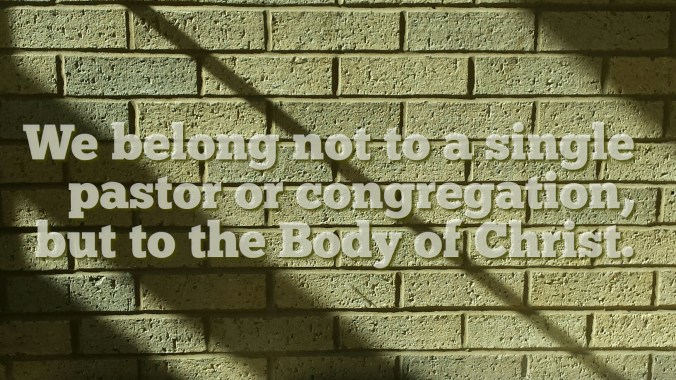
We belong not to a single pastor or congregation, but to the Body of Christ. We owe our primary allegiance not to a candidate, a party, or even a nation, but to the Kingdom of Heaven. We must not turn anyone into an idol who warps our faith; rather we must measure all would-be idols against the standards set by Christ. Idols – whether graven or human – eventually betray us. We may out of necessity follow a Gideon into battle, but only Christ leads us to eternal life.

Comfort: Christ is our spiritual north star.

Challenge: Meditate on the people and institutions you follow; how critical of them are you?

Prayer: Loving and all powerful God, I am faithful to you above all others. Amen.

Discussion: Without tearing apart someone’s character, when have you been disappointed in someone you trusted as a leader?

Join the discussion! If you enjoyed this post, feel free to join an extended discussion as part of the C+C Facebook group. You’ll be notified of new posts through FB, and have the opportunity to share your thoughts with some lovely people. Or feel free to comment here on WordPress, or even re-blog – the more the merrier!

Variety is the Spice of (Eternal) Life

beautyjourney

Today’s readings (click below to open in new tab/window):
Psalms 96; 147:1-11, Judges 7:19-8:12, Acts 3:12-26, John 1:29-42


According to John’s gospel, the first two disciples of Jesus were originally disciples of John the Baptist. One Jesus walked by the three of them, and John declared him the Lamb of God. The two disciples began to literally follow him, until he turned around and asked what they were looking for. Then they followed him home. One of them (Andrew) found his brother Simon to tell him they’d found the Messiah. When they met, Jesus told Simon his new name was Cephas (Aramaic for Rock, the same meaning as Peter).

Don’t Matthew, Mark, and Luke tell a much more interesting version of this story? In that one, Jesus goes down to the docks, starts recruiting, and promises to make any who follow him “fishers of men” – a sales pitch so good people drop their nets and follow him immediately.

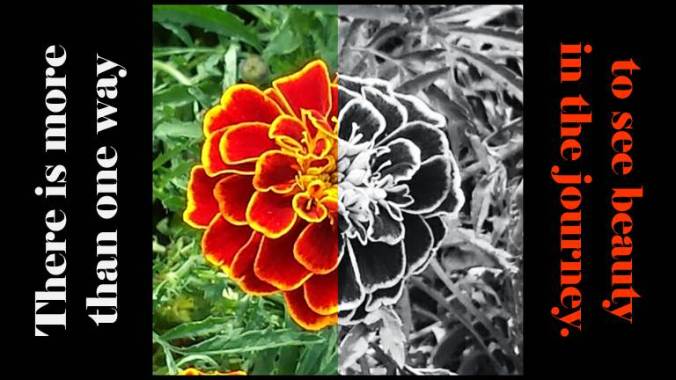
In both versions, whether guided by a teacher or invited directly, Jesus’s disciples feel immediately drawn to follow him. In a way, these two paths reflect different ways we come to know Christ: we can be born into a faith passed on to us, or Jesus can come bursting into our lives from seemingly nowhere. Neither way is more correct than the other, but one makes a more exciting story. While this was not the point John’s gospel was trying to make, it may help us be more open to the variety of faith journeys we encounter.

If we have been born into a faith, dramatic conversion stories may seem more compelling than our own lifelong belief. We should let their enthusiasm reinvigorate our own faith and challenge us to look at it as if it were new to us. If we are converts, we have recently given much thought to what we believe and why, like immigrants who’ve studied to become citizens. Though it may seem others haven’t worked quite as hard for the privilege, we can rely on the grounded experience of lifelong citizens of faith to inform us of the rich traditions we share. No matter how we’ve come to know Christ, we have gifts to share.

Comfort: Whether your faith is new or lifelong, you are an equal member of the Body of Christ.

Challenge: Share your faith journey with someone, and invite them to share theirs with you.

Prayer: Gracious and loving God, thank you for providing many roads to relationship with you. Amen.

Discussion: Have you found anyone’s faith journey particularly inspiring?

Join the discussion! If you enjoyed this post, feel free to join an extended discussion as part of the C+C Facebook group. You’ll be notified of new posts through FB, and have the opportunity to share your thoughts with some lovely people. Or feel free to comment here on WordPress, or even re-blog – the more the merrier!