Make Yourself at Home

img_0284

Today’s readings:
Psalms 24; 150, Isaiah 5:1-7, 2 Peter 3:11-18, Luke 7:28-35


What do people mean when they say, “Make yourself at home?” You can almost certainly feel free to sit where you like, use the bathroom, and get a glass of water. Maybe you could comfortably grab a snack from the kitchen, select something on television, and use the phone. But it’s never really an invitation to explore the contents of a nightstand, rearrange a closet, or throw out that tacky figurine collection.

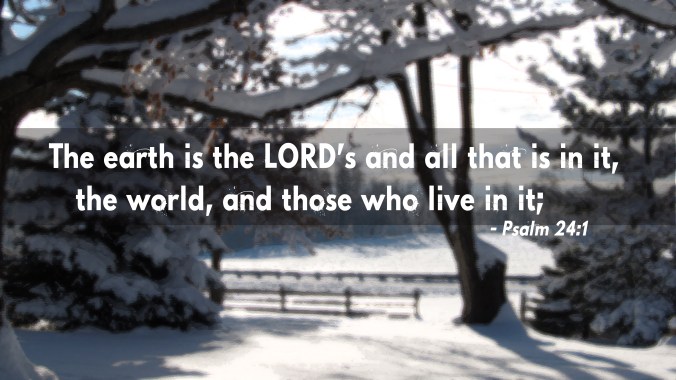
The author of Psalm 24 tells us “The earth is the LORD’s and all that is in it,” including the people. That means everything we touch – the land, the sea, the forests, the animals, and even other lives – is in a home where we are as welcome as we can possibly be, but still don’t own. What does that say about how we should interact with the world?

We wouldn’t want to have to tell a homeowner who’d graciously given us the run of the place that we’d trampled their flowerbeds, taken an axe to the furniture, ignored the smoke alarm, thrown trash over the fence into the neighbor’s back yard, and beaten their pets and children. Not doing these things seems like the common-sense bare minimum of respect … but are we as respectful of the things – and people – God owns?

A steward is someone who manages another person’s property or affairs. In matters of business a steward is ultimately accountable to the owner, and in matters of the world we are ultimately accountable to God. When we pollute air, water, and land, we pollute God’s garden. When the rich toss landfills and industrial waste into the back yards of the poor, we are ungodly neighbors. When we exploit people and bomb our enemies, we exploit and bomb God’s children.

It is impossible to do absolutely no harm and right every wrong in the world. We will make mistakes. But if God dropped in for a surprise inspection, we’d want to be able to say we made our choices not for our own whims and benefits, but to steward his treasures to the best of our abilities.

Comfort: As one of God’s treasures, you deserve dignity.

Challenge: Pay attention to what areas of your state, city, or neighborhood suffer from poor stewardship.

Prayer: God of all Creation, please grant me wisdom to care for the things and people of Your world. Amen.

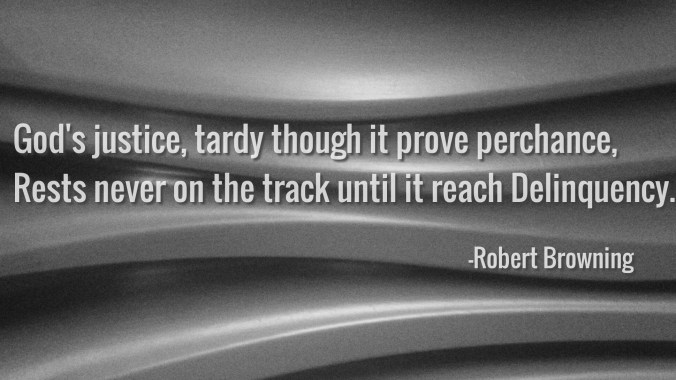
Discussion: How is stewardship related to divine justice?

Join the discussion! If you enjoyed this post, feel free to join an extended discussion as part of the C+C Facebook group or follow @comf_and_chall on Twitter. You’ll  have the opportunity to share your thoughts with some lovely people. Or feel free to comment here on WordPress, or even re-blog – the more the merrier!
The Best Defense

1480774107782.jpg

Today’s readings:
Psalms 90; 149, Isaiah 4:2-6, 1 Thessalonians 4:13-18, Luke 21:5-19


“He who represents himself has a fool for a client.”
– Abraham Lincoln

“We are fools for Christ’s sake, but ye are wise in Christ.
 – 1 Corinthians 4:10

Jesus warned his disciples about what difficulties to expect in the future. He talked about wars, natural disasters, and persecution. If they were dragged into court, he told them, “This will give you an opportunity to testify. So make up your minds not to prepare your defense in advance; for I will give you words and a wisdom that none of your opponents will be able to withstand or contradict.”

How many of us would feel confident entering a courtroom as a defendant with no preparation? Our legal system is a minefield of technicalities few of us can navigate without years of education. We call it our system of justice, but the truth is “justice” can be largely a matter of wealth, influence, and privilege, a system that favors deep pockets and shallow empathy. Where in such a system does faith find a role?

If Jesus and disciples like Paul provide answers to that question, it becomes clear faith is not about victory, at least not in a legal sense – both of them were unjustly condemned! The wisdom Christ promises our opponents can’t “withstand or contradict” may not carry the day in court, but it expresses truths which are – over time – undeniable. In a courtroom, and really in all of life, the purpose of our testimony is not to save our own lives, but to transform the world by introducing – and, as many times as necessary, re-introducing – it to Christ. We don’t have to prepare, because the truth of Christ speaks for itself.

However, if we are living for Christ, we are not really without preparation. We are called to confront the injustices of the world on a daily basis. Seeking solidarity with people who are poor, oppressed, and marginalized teaches us the true meaning of justice. Being a witness for Christ is a lifelong burden, but it is a light and joyful burden because “By your endurance you will gain your souls.”

Comfort: God’s justice is for everyone.

Challenge: With your money or time, support a group that confronts injustice.

Prayer: God of Justice, I trust in you and not the world. Grant me wisdom to be your effective and loving witness. Amen.

Discussion: Is there an injustice you have seen righted in your lifetime?

Join the discussion! If you enjoyed this post, feel free to join an extended discussion as part of the C+C Facebook group. You’ll  have the opportunity to share your thoughts with some lovely people. Or feel free to comment here on WordPress, or even re-blog – the more the merrier!

Keep Lighting the Candle

1480642852352.jpg

Today’s readings:
Psalms 102; 148, Isaiah 3:1-4:1, 1 Thessalonians 4:1-12, Luke 20:41-21:4


As we approach the end of this first week of Advent, let’s reflect on its theme of Hope. This coming Sunday anyone with an Advent wreath will light the second Advent candle, but they will also re-light the Hope candle, and keep lighting it each week until they light the Christ candle.

One of the joys of Advent is knowing exactly when Christ will arrive – the date is already marked on our calendars. Today’s scriptures from Isaiah, 1 Thessalonians, and Luke all focus on people awaiting their own day of deliverance, but waiting without a clear end date. Though time and circumstance differed, each of these writers warned that in the meantime, things would get tougher – maybe even terrible. Even through none of them could name a specific day, all were confident the day of reckoning would indeed come.

Still we wait. We watch things get better in some areas and worse in others. We know from the past that the future holds both glory and terror. Wars begin and end. Diseases appear and disappear. Hungry people are fed, and different people begin to starve. Nothing in the world is new, yet we are made new in Christ. How do we maintain Hope in Christ’s promises for a new and better kingdom in the face of such contradiction?

Our relationship with Hope must evolve. If faith maps our lives, Hope is no longer a pushpin marking some dream destination, but a bright road we must travel. When we light a candle of Hope – by visiting a sick friend, working for equality, feeding the hungry – God’s kingdom exists wherever the light of those candles shines. Like the light of a distant star, Hope is something we observe in the present, but also evidence of the past and the future.

The day we are waiting for is always today. If we are living in relationship with God, does it really matter when Christ returns? If knowing a date changes how we live, we live not in Hope, but desperation. It is in the act of lighting the candle – in letting the Hope of Christ illuminate our hearts – that Christ returns again and again.

Comfort: Hope exists now.

Challenge: We all have something (or things) we’re putting off until the time is right, when realistically it may never be “right.” Find a way to take action as if the time is right now.

Prayer: Eternal God, I place my Hope in you, right now and always. Amen.

Discussion: What are you hoping for?

Join the discussion! If you enjoyed this post, feel free to join an extended discussion as part of the C+C Facebook group. You’ll  have the opportunity to share your thoughts with some lovely people. Or feel free to comment here on WordPress, or even re-blog – the more the merrier!
Puzzling It Out

1480562011426.jpg

Today’s readings:
Psalms 18:1-20; 147:12-20, Isaiah 2:5-22, 1 Thessalonians 3:1-13, Luke 20:27-40


Under ancient Jewish marriage laws, a widow was instructed to marry her late husband’s unwed brother. Theoretically, if that brother died, and there was another brother, she would marry him. And if he died … on down the line.

The Sadducees, who did not even believe in resurrection, tried to trip up Jesus with a hypothetical question about who in the resurrection would be the husband of a woman who’d married seven brothers. Jesus told them nothing as we understood it – including marriage – would be the same.

On one level he was specifically addressing the Sadducees, but on another (and when is anything Jesus says not multi-layered?) he was pointing out the futility of trying to cram God and God’s kingdom into the tiny fragments of human understanding that describe and limit our faith. If we treat them like pieces of a puzzle and try to force them into a single picture, we soon learn that not only are we missing countless pieces, the ones we have may be from different boxes. The only way to fit them inside our desired frame of reference is to tear off the inconvenient bits and pound them flat.

No wonder the picture of Christianity can often make so little sense, especially to outsiders. Not knowing is uncomfortable and scary, so we can waste time rearranging the pieces. This obsession disengages us from the “God of the living” – from life and all its blessed messiness.

An insistence on theological tidiness, especially about unknowable things, doesn’t make us better believers. Mystics of all faiths describe the moment of divine revelation as a surrender to mystery. The wisest people admit to knowing nothing.

Getting stuck in “head” religion ultimately leads to frustration. Thinking you lack spiritual wisdom because you don’t know the right terms or scripture quotes is just not true. God is found in living hearts, not dead paper. Christ is the Living Word not because he appears on Bible pages, but because he rewrites the world.

Rather than “bow down to the work of [our] own hands” by stuffing God into ideas we’ve created, let’s trust that God is present with us in the glorious chaos of life.

Comfort: You don’t have to understand everything – as a matter of fact no one does!

Challenge: Try to give up finding the answer to one question you wish you knew.

Prayer: Infinite God, Lord of all Creation, I am open to your mystery and majesty. Amen.

Discussion: What’s the longest you’ve ever worked on a puzzle before giving up?

Join the discussion! If you enjoyed this post, feel free to join an extended discussion as part of the C+C Facebook group. You’ll  have the opportunity to share your thoughts with some lovely people. Or feel free to comment here on WordPress, or even re-blog – the more the merrier!

Flip The Mattress

2016-11-28

Today’s readings:
Psalms 122; 145, Isaiah 1:10-20, 1 Thessalonians 1:1-10, Luke 20:1-8


As a mattress ages, it slowly loses its ability to properly support us. Even as it grows less and less physically comfortable, it grows familiar – more emotionally comfortable – so we work with what we’ve got. And while we learn to avoid low spots and bad springs, we wake up a little less refreshed every morning. Eventually, we arrange ourselves to fit the mattress when it’s supposed to be the other way around. Very often we wait until we are physically pained before going to the trouble of getting a new one.

Religion has something in common with a mattress: the very act of inhabiting it, distorts it. During Advent we read from the book of Isaiah because it calls God’s people to look at how they twisted their religion until it no longer supported their once vibrant, living faith. The sacrifices they once made to honor God became an abomination, because the people managed to follow the rules without showing compassion and mercy to the least among them. Over time, the people contorted themselves to rest on the comfortable parts of the law and avoid the harder demands of mercy, all the while failing to realize how seriously they were damaging the backbone of their faith.

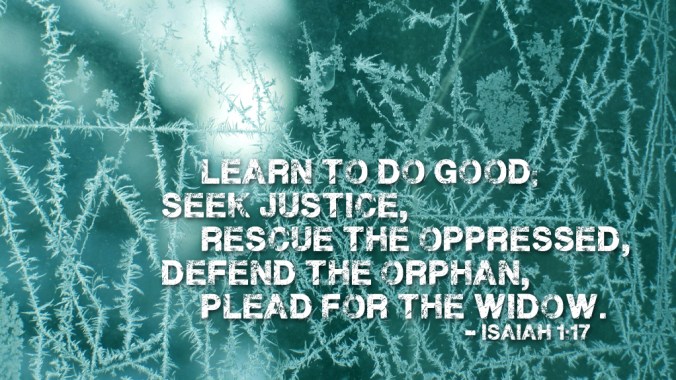
According to Isaiah, the Jewish people were driven into Babylonian exile, despite ample warnings, because God withdrew his favor. During Advent, which is a time of looking both backward and forward, the words of Isaiah should prompt us to reevaluate how we live out our own faith. Are we relying exclusively on rules and ritual? These are not bad things, but alone they do not meet God’s expectations for us to seek justice and rescue the oppressed. It doesn’t take long for us to settle into a routine and forget why we adopted it in the first place. Does our faith practice refresh us to live in love, or does it only equip us to sleepwalk through life?

We can settle for a slowly dilapidating mattress, we can flip it over a little to see if that does the trick, or we can invest in reinvigorating it entirely. Faith doesn’t need to be reinvented, but every so often it does need to be refreshed. We are, after all, a resurrection people.

Comfort: In the end, renewal is more refreshing than it is inconvenient.

Challenge: This Advent season, look at how you might renew your faith practices. Consider participating in a Reverse Advent Calendar.

Prayer: God of all that is, may I never forget you are the reason for all I do. Amen.

Discussion: What are some habits or practices (religious or otherwise) you have abandoned or reworked because they no longer served a purpose?

Join the discussion! If you enjoyed this post, feel free to join an extended discussion as part of the C+C Facebook group. You’ll  have the opportunity to share your thoughts with some lovely people. Or feel free to comment here on WordPress, or even re-blog – the more the merrier!
Present Imperfect

1466443785675.jpg

Today’s readings (click below to open in new tab/window):
Psalms 135; 145, Numbers 16:1-19, Romans 3:21-31, Matthew 19:13-22


The story of the rich young man is generally reduced to the beginning when the man asked how to be good, and the end when he left grieving because Jesus instructed him to sell all his many possessions and follow him. We commonly interpret this story to mean discipleship requires abandoning everything but Christ. This understanding is consistent with parables like the pearl of great price, but the middle of the story is the meat in the sandwich which provides more insight to sink our teeth into.

The man’s original question was: “What good deed must I do to have eternal life?” Jesus responded: “Why do you ask me about what is good? There is only one who is good.” In other words: wrong question, buddy. Jesus followed with: “If you wish to enter into life, keep the commandments.” When the man asked which commandments (the full Mosaic law had hundreds), Jesus named a few common sense ones under the general category of “love your neighbor as yourself.” The young man said he kept them all, yet asked what he still lacked.

Sense a theme? The man sought a formula for salvation. He persisted in insisting his salvation would be his own accomplishment. We are saved by grace and not deeds, but the rich young man couldn’t comprehend a system where he was not in control of his own destiny.

Jesus’s final words to the man begin with: “If you wish to be perfect …” Ouch! Now the man had a completely avoidable burden of perfection laid on him. No wonder he grieved!

What if the man had been satisfied with “Love your neighbor as yourself?” If he could have accepted there wasn’t a salvation equation, but instead unearned grace, Jesus could have stopped right there.

Like the rich young man, we struggle to let go of that one last possession: a need for control. We claim grace, but insist on formulaic rules that give us an illusion of power.

“If you wish to be perfect” is not an introduction to advice on attaining perfection, but an indictment of any belief that we can or need to be. Faith is not an excuse to sin, but life under the law leads to grief. Life under faith leads to grace.

Comfort: God doesn’t expect perfection.

Challenge: Neither should we.

Prayer: God of Mercy, thank you for the gift of unearned grace. Teach me to extend that love to others. Amen.

Discussion: What rules do you have trouble letting go?

Join the discussion! If you enjoyed this post, feel free to join an extended discussion as part of the C+C Facebook group. You’ll be notified of new posts through FB, and have the opportunity to share your thoughts with some lovely people.

Seventy-Seven Times

1466191633592.jpg

Today’s readings (click below to open in new tab/window):
Psalms 51; 148, Numbers 13:1-3, 21-30, Romans 2:25-3:8, Matthew 18:21-35


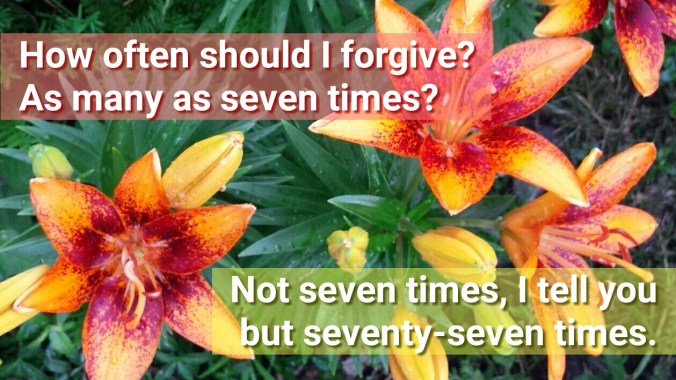
A slave owed his king an unpayable sum. The king decided to sell the slave’s family to collect the debt, but the slave begged for mercy. The king felt pity, released him, and forgave the debt. As the slave walked away, he met a second slave owing him a hundredth of what the king had forgiven. He demanded payment, and when it wasn’t forthcoming he had the second slave jailed. When the king learned this, he revoked his mercy and had the first slave tortured until he paid.

This parable was how Jesus answered Peter’s question: “how often should I forgive?” The story tells us whatever debt we feel someone owes us, God has already forgiven us a debt a hundred (or more!) times greater.

“Tough love” gets tossed around quite a bit. We seem to be firm believers in the power of consequences. It may be fine for parents fostering  the values of children, or managers coaching employees, but the further removed we are from someone personally, the less applicable it becomes. How easy it is to withhold mercy under the pretense of not enabling someone.

By the time we meet most people, life has had its way with them. They behave in ways they have learned best help them physically and emotionally survive. It’s arrogant to assume we would fare better under similar circumstances, and more arrogant to think our petty disciplines will change them.

Should we hand cash to gambling addicts? No. Should we allow co-workers to abuse us? Nope. But when someone is hungry or hurting, we should transcend our grievances to feed and care for them. We can’t fix people – they need to initiate that themselves – but we are called to show mercy to the broken, for we ourselves are broken and beneficiaries of the mercy of God.

Jesus didn’t instruct us to parent everyone. He did instruct us to forgive and love. A crust of bread offered to a starving thief doesn’t condone thievery; it says we trust in something greater we hope to share. Whether he hears that is not up to us.

Comfort: You aren’t responsible for parenting the world.

Challenge: When you feel like someone needs to suffer consequences, ask yourself why.

Prayer: Merciful God, guide me as I seek the balance between mercy and justice.

Discussion: Mercy is a personal matter, but it can seem at odds with civil justice. Have you struggled with this tension? Or do you disagree with the premise?

Join the discussion! If you enjoyed this post, feel free to join an extended discussion as part of the C+C Facebook group. You’ll be notified of new posts through FB, and have the opportunity to share your thoughts with some lovely people. Or leave comments here on WordPress. And feel free to link back to these blogs or re-blog with attribution to comfortandchallenge.com. Peace!

The One and the Ninety-Nine

ewe aint one

Today’s readings (click below to open in new tab/window):
Psalms 97; 147:12-20, Numbers 12:1-16, Romans 2:12-24, Matthew 18:10-20Psalms 97; 147:12-20, Numbers 12:1-16, Romans 2:12-24, Matthew 18:10-20


“The needs of the many outweigh the needs of the few. Or the one.”
– Mr. Spock, Star Trek II: The Wrath of Khan

“The needs of the one … outweighed the needs of the many.”
– Captain Kirk, Star Trek III: The Search for Spock

Humankind has always struggled to balance individual need against the need of the greater community. The modern tool of choice is economic system: capitalism, socialism, communism, etc. Lying along a continuum from individualism to collectivism, these models have achieved various levels of success – if measured economically. Measured spiritually, all fall short because they are not ends, but means. How do we approach this struggle of knowing what and when to sacrifice?

Sacrificial living does not necessarily lead to a literal cross. In the parable of the lost sheep, the shepherd leaves behind ninety-nine sheep to find one. Fine if you’re the one, but most of us are among the ninety-nine left on the mountain. Do we grumble about being temporarily inconvenienced and blame the one’s misfortune on its own failure to keep up? Are we willing to sacrifice a little convenience so the one may survive? Often our answer depends on whether we’ve chosen freely or been coerced … but the shepherd doesn’t bother to survey the sheep.

Sacrifice is valued mostly via lip service. We “sacrifice” trips to the movies or our usual pricy selection at Starbucks to keep our debt down or to save for our children’s college. Rarely outside the military are we asked to make true sacrifices in the sacred sense of giving without expecting anything in return. Or maybe the opportunities are abundant but we value merit over mercy. Does the shepherd seem concerned with whether he is giving the lost sheep “a hand up or a handout?” Are we prepared to make the real sacrifices necessary to save the lost in our society? Because in the end, the hands up demand more personal cost in time, money and comfort than do the handouts.

When it’s our turn to be the one sheep, how will we want the ninety-nine to respond? That’s what we should be prepared to sacrifice.

Comfort: No matter how lost you feel, Christ is searching for you.

Challenge: Remember that lost sheep started out part of the flock. They are family, so their burdens are our burdens.

Prayer: Merciful God, I trust you to find me when I am lost. Amen.

Discussion: When you’ve felt lost, how did you know God had found you again?

Join the discussion! If you enjoyed this post, feel free to join an extended discussion as part of the C+C Facebook group. You’ll be notified of new posts through FB, and have the opportunity to share your thoughts with some lovely people.

Speechless

speechless

Today’s readings (click below to open in new tab/window):
Psalms 89:1-18; 147:1-11, Numbers 11:24-33 (34-35), Romans 1:28-2:11, Matthew 18:1-9


“If any of you put a stumbling block before one of these little ones who believe in me, it would be better for you if a great millstone were fastened around your neck and you were drowned in the depth of the sea.”

Jesus followed up these words with his famous teaching of tearing out an eye or removing a hand if it causes us to stumble away from him. He doesn’t mention the tongue, but it seems logical if our tongue causes us to stumble, we should tear that out also. The tongue may be doubly dangerous, as it can cause others to stumble also.

When our tongues tell people the church hates them (even when we’ve convinced ourselves we’re acting in love), they may find it impossible to believe Christ loves them. Too often the church focuses on a particular subset of sins (usually sexual in nature) and targets the people who commit them until they feel driven from the rest of the community. Paul warns us in Romans that by casting judgment on others, while we ourselves remain sinful, we condemn ourselves. Effectively we say: “Your visible sin is too terrible to tolerate, but my personal sin (which flies under the local radar) is more acceptable.”

Don’t think that’s true? Well, the church hasn’t developed a conversion therapy industry around unrepentant greed, and we don’t distribute scarlet J’s for judgment. Yet the greedy and judgmental can feel perfectly safe in a church that creates a climate hostile toward gay people and unwed mothers.

We are all sinners working toward transformation through Christ. We don’t always agree on what is sinful; that has been true for the entire history of the church, but the church survives because we work it out together. Scripture directs us to hold one another accountable, but the gossip-monger is as accountable as the murderer.

Repentance is a journey we take together. If we oust everyone who doesn’t meet someone else’s standards, soon the church will be empty. Better to enter the kingdom speechless than to have talked one of God’s children out of salvation.

Comfort: God loves you.

Challenge: God loves everyone else, too.

Prayer: Loving God, make me an instrument of your peace. Amen.

Discussion: How has your understanding of sin evolved as your faith has matured?

Join the discussion! If you enjoyed this post, feel free to join an extended discussion as part of the C+C Facebook group. You’ll be notified of new posts through FB, and have the opportunity to share your thoughts with some lovely people.

Monkey Meat

1465945834476.jpg

Today’s readings (click below to open in new tab/window):
Psalms 42; 146, Numbers 11:1-23, Romans 1:16-25, Matthew 17:22-27


“The Monkey’s Paw” is a short story about a mystical artifact (a mummified monkey paw) that has the power to grant three wishes. You are probably familiar with some of the numerous film, television, or other adaptations of this story. The paw twists the wisher’s intent to grant their desires in horrible and disturbing ways. One man wishes for a sum of money, and receives the exact amount as a settlement for his son’s accidental death – the ultimate “be careful what you wish for” moment.

After the Israelites had been wandering the desert for a while, many of them grew tired of eating the manna God provided. Manna was basically boiled into a cake, and people wanted meat. God – displeased with their lack of faith and gratitude – told them they would get meat “until it comes out of your nostrils and becomes loathsome to you.” While God is not malevolent like a Monkey’s Paw, there are still consequences for not wanting to work with the world as God has provided it to us.

Paul’s letter to the church in Rome addresses people who exchanged their understanding of God for something that was more to their liking. In a sense they wished for God to be different in a more worldly and decadent manner, then proceeded to act as if their wish had been granted. The consequences of dissolute living degraded their bodies, minds, and spirits.

As Christians we believe in resurrection and transformation. To many people that may seem like wishful thinking, but we trust that through Christ and the Holy Spirit, God transforms our hearts and our world. Though we must be careful not to get ahead of ourselves and confuse what we hope for with what God is doing. When our endeavors don’t go our way, we assume they have failed. When the Spirit moves through people we can’t bring ourselves to call righteous, we reject their words and efforts. But God creates evangelists from bounty hunters and prophets from murderers … and he doesn’t always clean them up to our satisfaction first.

We don’t change the world by following wishes, but by following Christ. If that’s too bland for our tastes, or not bland enough, we can wish for something different. But in the end, our own wishes taste loathsome when compared to the fruits of the Spirit.

Comfort: Resurrection, better than any wish, is unfolding all around you.

Challenge: When making plans, periodically and prayerfully check in to make sure you aren’t confusing your ideas for God’s.

Prayer: Thy will be done. Amen.

Discussion: Can you recall any experiences in your life when you wanted something and God wanted something better?

Join the discussion! If you enjoyed this post, feel free to join an extended discussion as part of the C+C Facebook group. You’ll be notified of new posts through FB, and have the opportunity to share your thoughts with some lovely people. Or leave comments here on WordPress. And feel free to link back to these blogs or re-blog with attribution to comfortandchallenge.com. Peace!