Epiphanies

CnCEpiphany

Today’s readings:
Psalms 72; 148, Isaiah 52:7-10, Revelation 21:22-27, Matthew 12:14-21
Epiphany readings:
Isaiah 60:1-6, Psalm 72:1-7, 10-14, Ephesians 3:1-12, Matthew 2:1-12


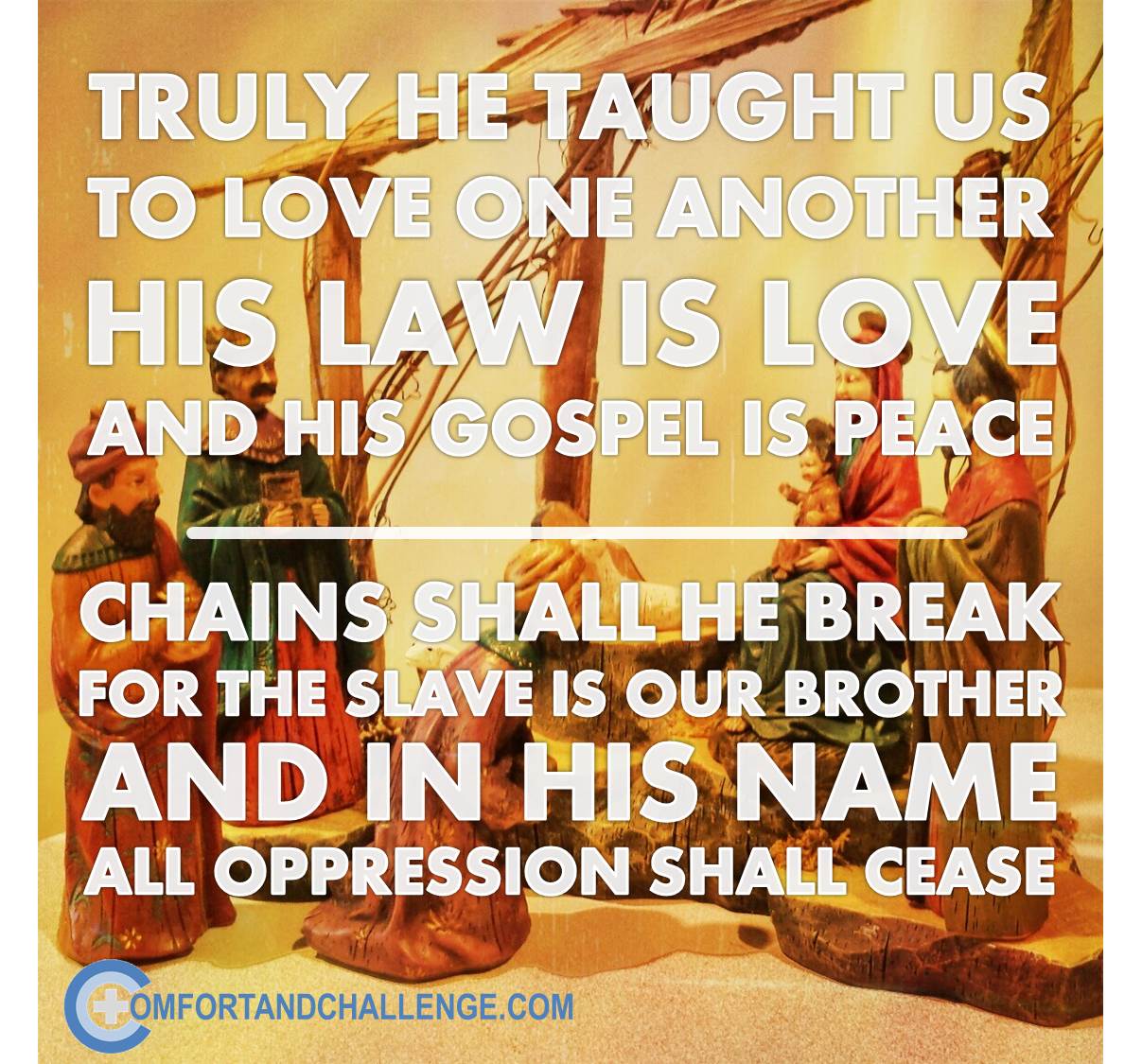
Happy Epiphany! Today is the last day of the Christmas season. Our traditional reading is about the Magi: wise men who – led by a prophecy and a star – traveled from far lands to honor the infant Christ with gifts of gold, frankincense, and myrrh. Some people wait until today to add the Magi to complete their nativity scenes and continue to display it until February 2nd, the feast of the Presentation of the Lord.

If you haven’t yet listened to “We Three Kings” this season, today’s your day!

But the story of the Magi has a darker side. On their way to Bethlehem, the Magi visited King Herod to ask where the newborn King of the Jews might be found. Herod, jealous and fearful, met with the chief priests and scribes to learn all he could about the prophesied messiah, and tried to pump the Magi for information. He told them “when you have found him, bring me word so that I may also go and pay him homage.” In truth, he was less interested in homage than homicide. The Magi, warned in a dream not to return to Herod, went home by another route.

In our daily readings, the same crowd– still fearful of Jesus and all he represents – is conspiring to destroy the adult Jesus. For a time he goes underground, but continues his ministry of healing and justice. Jesus always is who he says he is; his enemies (and some of them claim to serve him) are not.

What exactly does “epiphany” mean? It is a moment of insight or revelation. One of the most important epiphanies in this story is when the Magi realize Herod’s intent differs from his words. We would be wise to follow their example. Often those who govern – religiously or civilly – publicly promote one agenda but follow another. From slapping misleading titles on legislation, to unnecessarily “protecting” a powerful group in order to suppress another more vulnerable one, to rewriting history that judges them unfavorably, people tell us what they think we want to hear in order to lull us into going along with something else. In his novel Nineteen Eighty-Four, George Orwell called it doublethink, and it empowered tyranny.

Some epiphanies are spontaneous. Others are the product of critical thinking. As followers of Christ, let’s strive to be like the Magi and stay ready for both.

Comfort: Jesus is always who he claims to be.

Challenge: Maintain a healthy skepticism of those in power, especially those who tell you what you want to hear.

Prayer: God of truth and light, I will seek to follow you always! Amen.

Discussion: What’s the last epiphany you had?

Join the discussion! If you enjoyed this post, feel free to join an extended discussion as part of the C+C Facebook group or follow @comf_and_chall on Twitter. You’ll  have the opportunity to share your thoughts with some lovely people. Or feel free to comment here on WordPress, or even re-blog – the more the merrier!

Branching Out

vinebranches

Today’s readings:
Psalms 99; 147:12-20, Joshua 1:1-9, Hebrews 11:32-12:2, John 15:1-16


I am the vine, you are the branches. Those who abide in me and I in them
bear much fruit, because apart from me you can do nothing.
– John 15:5

This passage from John beautifully illustrates our relationship with Christ; he is central not only to our beliefs, but to our very lives. Separated from Christ, we wither and die. The passage goes on to describe branches that wither and are burned, and branches that thrive and bear fruit.

Yes the vine is central, but this metaphor also reminds us of the importance of Christian community. After all, when’s the last time you saw a healthy vine with only one branch?

It’s no coincidence that Jesus immediately follows the image of the vine and branches with a commandment for the disciples to love one another so much that they would lay down their lives for each other. Branches are interdependent; the health of each one positively or negatively impacting the health of the others. Apart from community, we are like single branches trying to survive on our own: it’s remotely possible, but the fruit we bear will likely be sparse and limited … and even then only if we can bear any at all before collapsing under our own weight or drying out from overexposure to the elements. A community of many branches anchored together in Christ provides the support and shelter to bear good fruit.

Our reading from John is paired with a passage from Hebrews that refers to a “cloud of witnesses” who fought, won, suffered, and died for their faith so that future generations would see God’s promise fulfilled. Not everything we plant is meant for immediate benefit. A grapevine can take up to three years to produce grapes, but those years without fruit are not without purpose. Roots must grow deep and the plant must mature. Older branches are pruned so the vine may thrive. By participating in the life cycle of a community we contribute not only to its present health, but help provide for the health of future branches.

Let us work toward the health of all branches, supporting each other and bearing the sweetest fruits together.

Comfort: We are not alone.

Challenge: Think about whether you are a positive or negative influence on your own spiritual community.

Prayer: Loving God, thank you for the many branches and witnesses who have made your church possible. Amen.

Discussion: What kind of community do you prefer? For example, blending into a large congregation, being part of small groups, online groups, mission teams, etc.

Join the discussion! If you enjoyed this post, feel free to join an extended discussion as part of the C+C Facebook group. You’ll  have the opportunity to share your thoughts with some lovely people. Or feel free to comment here on WordPress, or even re-blog – the more the merrier!

The Impotence of Power

Today’s readings:
Psalms 20; 147:1-1, Exodus 3:1-5, Hebrews 11:23-31, John 14:6-14


“By faith Moses, when he was grown up, refused to be called a son of Pharaoh’s daughter, choosing rather to share ill-treatment with the people of God than to enjoy the fleeting pleasures of sin.”

– Hebrews 11:24-25

Injustice demands reaction.

Do we pray about it? Discuss it with friends? Ignore it?

Or like Jesus and Moses, do we actively confront it?

Most approaches fall into one of two camps: working within the system, or working outside it. Depending upon the unjust “system” – which may be a government, church, business, or culture – our circumstances may determine which path is available to us. However, as a Hebrew adopted by Pharaoh’s daughter into the Egyptian ruling class, Moses had choices. He could have lamented but otherwise ignored injustice that didn’t affect him directly. He could have lived a comfortable “insider” life and used his influence with Pharaoh’s family to incrementally ease the injustice suffered by his people. Wisely, he chose to act as an outsider.

People in positions of power – boards, elected offices, etc. – often seek that power to change unjust systems. However, insiders can influence change only to the extent that those controlling the system will tolerate it. The more one works to change the system, the greater the risk of being ejected from it.

Even those uncorrupted by power frequently find themselves maneuvered into working to retain that power more than actually using it. The more they hold, the more reluctant they are to lose it. Can the rich and powerful promote justice? Only if it is more important to them than the wealth and power the possess. To truly use power to fight injustice, one must be willing to lose it completely.

What if we are on the outside? If we feel helpless because we lack institutional power, let’s look to Moses, Jesus, and the prophets as inspiration for the ability of outsiders to effect change. Having nothing freed them to say everything. Because they didn’t dedicate their resources to maintaining wealth and power, they could dedicate them to justice. Do our own attachments hinder our willingness to do justice?

Let’s remember, Moses had to descend from the mountain of power before he climbed the mountain of the Lord.

Comfort: You don’t have to be powerful to be full of power.

Challenge: List three ways you can influence the world around you.

Prayer: Merciful God, teach me to exercise power mercifully and for justice. Amen.

Discussion: Have you ever solved a problem by giving up control?

Join the discussion! If you enjoyed this post, feel free to join an extended discussion as part of the C+C Facebook group. You’ll  have the opportunity to share your thoughts with some lovely people. Or feel free to comment here on WordPress, or even re-blog – the more the merrier!

Quantum Leap of Faith

Today’s readings:
Psalms 98; 146; Genesis 17:1-12a, 15-16; Colossians 2:6-12; John 16:23b-30


Birthdays. Anniversaries. New Years.

Certain annual events just seem to invite us to simultaneously reflect on the past and dream about the future. Other unexpected, less celebratory events such as the death of a parent or the loss of a job, may trigger similar feelings for us. Anticipated or not, these times leave us in a sort of “in-between” state when we are not necessarily in motion but contemplating where have been and where we are going. They can be fertile times for resolutions, plans and convictions – some which will stick, and some which won’t.

While periods of planning and intention often serve a purpose, sometimes we settle for intentions rather than actual change. If we are really going to grow as people, eventually we need to stop planning … and start changing.

Other than the TV show, what do you think of when you hear the phrase “quantum leap?” Many people think it means a large change, but it’s actually a term from physics that means an immediate change from one state to another with no intermediate phases – no “in-between” time. The phrase also describes a phenomenon in thought where we jump from Point A (perhaps a problem we are trying to solve) to Point B (its solution) without discernible steps and connections.

Spiritual growth can occur like a quantum leap. When Abram accepts God’s promise to become the father of the future nation of Israel, he is immediately transformed into Abraham. Paul tells the Colossians that when they were baptised they were raised from death along with Christ – a change in state if there ever was one. The psalmist tells us “The Lord sets the prisoners free” and “opens the eyes of the blind.”

Abram to Abraham. Dead to living. Imprisoned to free. Quantum leaps.

There’s nothing wrong with making plans, but often when we are called to act in faith, plans mean very little. Abraham’s wife (who leapt from Sarai to Sarah) planned to grow old and die childless, and laughed when God told her otherwise. We all should be careful not to let our plans become impediments to our faith.

The psalmist warns us not to place our trust in mortal plans that perish but in God alone. It may be wise to look before leaping, but if we can’t … maybe God is calling us to make a quantum leap of faith from blindness to sight.

Comfort: With God’s strength, you can keep moving forward in ways that may surprise you.

Challenge: Pick something you’ve been planning to change, and actually do it.

Prayer: Wise and Loving God, I will trust in your ways.

Discussion: Can you remember any times you had an unexpected shift in attitude, belief, or habits?

Join the discussion! If you enjoyed this post, feel free to join an extended discussion as part of the C+C Facebook group. You’ll  have the opportunity to share your thoughts with some lovely people. Or feel free to comment here on WordPress, or even re-blog – the more the merrier!

Faith Like a Child

1482981970032.jpg

Today’s readings (click below to open in new tab/window):
Psalms 2; 147:1-11, Isaiah 49:13-23, Isaiah 54:1-13, Matthew 18:1-14


When his disciples asked Jesus, “Who is the greatest in the kingdom of heaven?” he called over a child and replied, “Truly I tell you, unless you change and become like children, you will never enter the kingdom of heaven. Whoever becomes humble like this child is the greatest in the kingdom of heaven.” 

What trappings of adulthood cause us to stumble? Pride? Possessions? Whatever they are, we need to cut them from our lives like the offending hand or eye Jesus warned us about.

What does it mean to be humble like a child? It means realizing we are completely dependent on God for our well-being. Everything we have – treasure, talents, even time – is a gift from God. It also means admitting we have little if any control of anything beyond our own behavior. Ego and guilt can easily convince us we are somehow responsible for fixing the world’s problems, when the truth is most of what we can do is clean up our own rooms. We shouldn’t use that as an excuse to duck responsibility, but as a guide to creating healthy perspectives. Insisting on our own way, when that way comes from the narrow understanding of our own experience, can create one of those “stumbling blocks” Jesus warned against. We are to welcome each other as children, because we are all the children of our Creator.

Maybe being child-like grants us a little license to be annoying. Most children go through a “Why?” stage, where every answer they receive is met with another round of “Why?” They are eager to understand the world, and don’t settle for the first answer they receive. We should be just as eager to pepper God with the tough questions as many times as we need to. Some of them will never be answered to our satisfaction, but what we learn by pursuing those answers is invaluable. Be wary of spiritual leaders who have simple answers but discourage tough questions.

Child-like faith isn’t about naivete or ignorance, but about realizing it is more important to be humble than to be in control.

To read other perspectives on this passage from Matthew see The One and the Ninety-Nine and Hands, Eyes, and Butterflies.

Comfort: You don’t have to control everything.

Challenge: Don’t try to control everything.

Prayer: Creator God, I am but a child before You. Thank you for all you do for me. Amen.

Discussion: What does child-like faith mean to you?

Join the discussion! If you enjoyed this post, feel free to join an extended discussion as part of the C+C Facebook group. You’ll  have the opportunity to share your thoughts with some lovely people. Or feel free to comment here on WordPress, or even re-blog – the more the merrier!

Love One Another

20161227_215547_lls-01.jpeg

Today’s readings:
Psalms 34; 147:1-11, Proverbs 8:22-30, 1 John 5:1-12, John 13:20-35


Though the Christmas season lasts through Epiphany (January 6), once the celebration of the Nativity is over, the lectionary readings don’t waste any time getting back to serious business. The day after Christmas we read about the first martyr, and today we read about the Last Supper and the betrayal of Judas. Do we long just a little for an emotional break, a few days to bask in the glory of Christ’s birth?

Except that’s the thing: there really is no break. No matter how strong our faith, life is a mixed bag.

Take the Last Supper, for example. Jesus knows Judas is about to betray him, and Judas knows it, too. But the Last Supper is also the origin of Communion, which unites us with Christians across time and place. And it also gives us these words from Christ:

I give you a new commandment, that you love one another. Just as I have loved you, you also should love one another. By this everyone will know that you are my disciples, if you have love for one another.

Think for a moment what it means that this was a new commandment. What had the disciples been doing during all the preceding years they’d been following Jesus? Were they surprised he felt the need to say it out loud to them? Perhaps it’s a lot harder to do – and comes a lot less naturally to us – than we think.

What a gift that commandment is though. When we practice it, that love is a constant, steadying presence in the ups and downs of life. When we practice it, that love helps us celebrate with each other, mourn with each other, and support each other through difficult times. More than agreeing with one another or liking one another, loving one another with the sacrificial love of Christ is a conscious choice. Our obedience to that commandment – or our disobedience – tells people whether we are truly disciples or merely parrots of the Word.

Life in Christ, at least in our present world, will always be a mixed bag. No matter our state, let us choose to love and be loved. Jesus said so.

Comfort: Christ’s love is constant.

Challenge: Listen to They Will Know We Are Christians By Our Love.

Prayer: Merciful God, source of all love, teach me to love your children as Christ loves me. Amen.

Discussion: Are you able to love someone you don’t like?

Join the discussion! If you enjoyed this post, feel free to join an extended discussion as part of the C+C Facebook group. You’ll  have the opportunity to share your thoughts with some lovely people. Or feel free to comment here on WordPress, or even re-blog – the more the merrier!

Incarnate

1482727093017.jpg

Today’s daily readings:
Psalms 2; 150, Zechariah 2:10-13, 1 John 4:7-16, John 3:31-36

Christmas readings:
Isaiah 52:7-10, Psalm 98, Hebrews 1:1-4 (5-12), John 1:1-14


Many powerful words have been written about the coming of Christ into the world, also known as The Incarnation. According to Luke, angels appeared to announce the Christ child to the world and wise men traveled far to honor him. Every year the truths and traditions and myths and merriment surrounding that event remind us of its wonder. We celebrate it on Christmas with song, light, food, and gifts. 

Imagine being Mary or Joseph, and knowing you were responsible for raising the Son of God. Most new parents only feel like the fate of the world rests on their decisions. Imagine being in awe of the holiness of this child.

How many dirty diapers did it take to dull that shine?

The gospels say little of the childhood of Jesus. There was his Home Alone moment when his parents lost him for three days, but that turned out all right. Childhood and adolescence probably didn’t add much to his messianic reputation. Potty-training and nose-picking. Tantrums. Hormone-fueled moodiness.  Acne. By the time the adult Jesus attended that now-famous wedding in Cana with his mother, she certainly didn’t treat him like an ethereal, holy snowflake: “They’re out of wine. Do something already.”

And that’s the beauty of The Incarnation. It frees us to see the holy in the every day – in the muck and mire. Our solidarity with the poor, the ill, and the grieving doesn’t exist so we can bring holiness into their lives: our job is to see the holiness already there and join hands with it. We create beautiful physical sanctuaries to represent our love for our God, but they are incomplete without the grimy, sweat-stained, tear-streaked spiritual sanctuaries we build around each other. We are incomplete if we never share in the holy, stinking mess of each other’s lives.

A wise person once told me children are cute so parents don’t kill them as teenagers. Enjoy this Christmas, this newborn Christ. Let these memories and feelings sustain you when Christ is more demanding, even unpleasant. Maybe then when you search for the face of Christ in others, the holy will be easier to see.

Comfort: God is everywhere.

Challenge: Examine whether there are situations your faith leads you, but you avoid because they are impractical or messy.

Prayer: Glorious Creator, may I see Your face in all of creation. Amen.

Discussion: What parts of Christianity do you find difficult?

Join the discussion! If you enjoyed this post, feel free to join an extended discussion as part of the C+C Facebook group. You’ll  have the opportunity to share your thoughts with some lovely people. Or feel free to comment here on WordPress, or even re-blog – the more the merrier!
Shepherds

1482621073563.jpg

Today’s readings:
Psalms 90; 149, Isaiah 35:1-10, Revelation 22:12-17, 21, Luke 1:67-80

Christmas Eve readings:
Isaiah 9:2-7, Psalm 96:1-13, Titus 2:11-14, Luke 2:1-14 (15-20)


The shepherd realized he’d been holding his breath, and so inhaled deeply. The air was still strange, full of aromas unidentifiable but seemingly familiar. The usual smells of sheep and pasture had begun to reassert themselves but a subtle perfume would linger for a long time.

Angels. They had seen angels. He didn’t even believe in angels.

Moments ago the sky had been lit with a host of them. As they approached, he and his fellow shepherds began to wonder aloud if it was some new, terrifying trick of the Romans – perhaps a detail dispatched to enforce participation in this new census. But up close – angels! And not with words of punishment, but words of hope:

“Do not be afraid; for see — I am bringing you good news of great joy for all the people: to you is born this day in the city of David a Savior, who is the Messiah, the Lord. This will be a sign for you: you will find a child wrapped in bands of cloth and lying in a manger.”

Why him? he wondered. Why them?

Someone tugged his sleeve. Was he coming? They were going into Bethlehem to discover if it was true. They moved quickly in the cold night. Even late, the streets of Bethlehem were crowded with people walking, talking, even sleeping. There were several stables in town. Would they have to search each –

A baby’s cry cut through the night. They stopped, shushed each other to listen for it again. They followed his voice, but by the time they reached the stable he was quiet. The father stood between the door and his young wife and newborn son lying in a manger.

The mother, so young, so tired-looking, nodded her head and the father stepped aside, though he did not drop his guard.

It was true. The angels had revealed the Messiah to common shepherds. Not to high priests. Not to the governor. To those who made a life protecting the defenseless. Was this to be His way then? A savior of the meek and ordinary? Then he would need a particular strength. A strength that would keep him vigilant while others slept, that kept the predators at bay without succumbing to their wiles, that would compel others to go places that were frightening but necessary.

He would need a shepherd’s strength.

The young mother patiently listened to their story long past the time they should have departed. As they left the stable, the child cried once more.

The shepherd held his breath, savored the sound. When it is time, he thought, I will know your voice.

Comfort: I am bringing you good news of great joy for all the people.

Challenge: To be Christ-like, me must build our own shepherding strengths.

Prayer: Glory to God in the highest heaven, and on earth peace! Amen.

Discussion: Is there a part of the nativity story that particularly speaks to you?

Join the discussion! If you enjoyed this post, feel free to join an extended discussion as part of the C+C Facebook group or follow @comf_and_chall on Twitter. You’ll  have the opportunity to share your thoughts with some lovely people. Or feel free to comment here on WordPress, or even re-blog – the more the merrier!

Naming our Faith

1482542951169.jpg

Today’s readings (click below to open in new tab/window):
Psalms 102; 148, Isaiah 33:17-22, Revelation 22:6-11, 18-20, Luke 1:57-66


Many cultures believe names – and knowledge of names – contain power. In some cultures a person has two names: one for public use, and a private, secret name known to a few or maybe only the one who bestowed it. In other cultures, a person acquires a new name upon completion of a rite of passage into adulthood. Within our communities, we are concerned with protecting “our good name.”

As Christians we don’t revere names as magical, but we do recognize the importance of identity. Christenings and confirmations are powerful examples.

In today’s reading from Luke, Mary’s cousin Elizabeth follows the instructions of an angel and names her son “John” (or more accurately the Hebrew Yôḥanan meaning “God is gracious”). Doing so defies the Jewish tradition of naming the child for a family member. People are so upset about this break in tradition that they demand a response from the child’s mute father Zechariah … but he stuns them when he confirms his wife’s choice by agreeing with her – in writing. This act frees him from years of silence that began because he didn’t believe the angel who prophesied John’s birth to him.

This act of naming – like John the Baptist himself – signifies a change in tradition. It shatters expectations. John defines his own wild, confusing, holy identity as the herald of the messiah.

As Christians, we too are in the business of defying society to forge identities in Christ.

That statement may seem dramatic in a predominantly Christian country like the U.S., but cultural Christianity and life in Christ are separate issues. Jesus fish magnets, Christian radio stations, and Christian dating websites are a sign that in some ways Christianity has become identified more with a consumer brand than a faith identity. Some Christians avoid calling themselves “Christian” not because they are ashamed of Christ, but because of negative associations with scandal and hypocrisy.

Even within the Christian community, we struggle against our own deeply ingrained traditions and expectations to seek the true heart of Christ, and are met with resistance and outright hostility from fellow Christians. When we have the courage to defy expectation and define our own names, our new voices – like Zechariah’s voice – can claim the name “Christian” for positive, meaningful, grace-filled ways.

Comfort: God does not name you as the world names you.

Challenge: With a small group, read and discuss The Irresistible Revolution by Shane Claiborne.

Prayer: God of Peace, name me as your servant. Amen.

Discussion: What does your name mean to you?

Join the discussion! If you enjoyed this post, feel free to join an extended discussion as part of the C+C Facebook group. You’ll  have the opportunity to share your thoughts with some lovely people. Or feel free to comment here on WordPress, or even re-blog – the more the merrier!

Magnificat

1482459960494.jpg

Today’s readings:
Psalms 18:1-20; 147:12-20, Isaiah 31:1-9, Revelation 21:22-22:5, Luke 1:39-48a (48b-56)


Shortly after she became pregnant, Mary hurried to the home of her older cousin Elizabeth in the Judean countryside. Elizabeth – who had recently and unexpectedly conceived a son who would be John the Baptist – was both thrilled and humbled that the mother of the Messiah would come to her. Elizabeth’s husband Zechariah was present, but silent; when he had expressed doubt to the angel who told him his wife would conceive, the Lord struck him speechless until after the child’s birth. In contrast, Mary – who had embraced her role in God’s plan – broke into a lengthy and beautiful prayer which we today call the Magnificat, or the Canticle of Mary.

Mary stayed with Elizabeth for three months. Imagine a home with this pair of first-time mothers, sharing their dreams for their children. Did they worry together whether their husbands could accept and support them through what was to come? Could either of them have imagined the wonder, and horror, and glory that awaited their sons? John would be born first, have a successful ministry first … and die first. Just as our celebration of Mary eclipses our celebration of Elizabeth, the life of Jesus would eclipse that of John the Baptist. Yet all were essential to God’s plan. Based on the words of the Magnificat, it seems even in these most unusual circumstances hope filled that home:

[The Lord] has helped his servant Israel,
in remembrance of his mercy,
according to the promise he made to our ancestors,
to Abraham and to his descendants forever.

Does your story need a little hope right now? Like Mary and Elizabeth, do you find yourself in circumstances you couldn’t have imagined? God is at work. Maybe like Zechariah you can’t believe that, and so you can’t find the words even to pray. Or maybe like Mary you can’t help calling on a God who has promised good things. God is at work. If we can surrender to what is, and trust God for what will be – even if it’s not what we plan – we can find a way to live in hope. God is at work.

Comfort: God is at work..

Challenge: Read the entire Magnificat out loud tonight and each night through Christmas Eve.

Prayer: I love you, O LORD, my strength. Amen.

Discussion: If you had three months to visit a trusted friend or relative and discuss the future, where would you go and what would you talk about?

Join the discussion! If you enjoyed this post, feel free to join an extended discussion as part of the C+C Facebook group. You’ll  have the opportunity to share your thoughts with some lovely people. Or feel free to comment here on WordPress, or even re-blog – the more the merrier!