Succession

prepare_fail

Today’s readings (click below to open in new tab/window):
Psalms 57; 145, 1 Kings 1:(1-4) 5-31, Acts 26:1-23, Mark 13:14-27


Succession planning, long a concern of dynastic governments, has been adopted by business as well. No matter how successful someone is, they can’t lead forever. Term limits, promotions, retirement – many factors drive the continual demand for new leadership. If an enterprise has a clear vision of its mission, succession planning is easier to tackle. If its mission is undefined or murky, finding solid candidates for future leadership roles can be especially challenging.

When King David grew old and frail, his son Adonijah began a popular campaign to be the next king. David didn’t know about it, but it angered his wife Bathsheba, who reminded him of his promise to make their son Solomon his successor. Did that promise mean anything, she demanded to know, or was Adonijah for all intents and purposes already king? David affirmed in front of witnesses that Solomon was his choice. Had Bathsheba not been on the ball, things could have gone very differently. David had not planned and it had almost slipped from his control.

Adonijah made the same common assumptions as many people in politics or business: it’s my turn, so I should be next. Succession planning isn’t just about bumping up the next obvious choice. The person who demands advancement most loudly isn’t necessarily the most qualified. Nor is seniority a qualification in and of itself. The choice needs to reflect the mission, or the mission itself may flounder. Less obvious choices may need time for coaching and preparation.

Paul was far from the obvious choice to spread the gospel of Christ, yet his persecution of Christians may have given him a singular insight into communicating with people who weren’t inclined – or were outright hostile – to hearing it.

The truth is plans only get us so far, but how we plan can make a big difference. Do our gifts align with our goals? Do our goals align with the gospel? When the right opportunities to serve God come along, will we be prepared to recognize and nurture them? We succeed not by imposing our own plans, but by preparing to embrace God’s plans.


Comfort: God desires only good for you.

Challenge: Try to stay out of the way of God delivering that good.

Prayer: Let me hear what God the LORD will speak, for he will speak peace to his people, to his faithful, to those who turn to him in their hearts. (Psalm 85:8)

Discussion: In what ways do you think you could plan better?

Join the discussion! If you enjoyed this post, feel free to join an extended discussion as part of the C+C Facebook group. You’ll be notified of new posts through FB, and have the opportunity to share your thoughts with some lovely people. Or feel free to comment here on WordPress, or even re-blog – the more the merrier!

What We’ve Chosen

doors-1767564_1920.png

Today’s readings (click below to open in new tab/window):
Psalms 67; 150, 2 Samuel 24:1-2, 10-25, Galatians 3:23-4:7, John 8:12-20


“What you want is irrelevant. What you’ve chosen is at hand.”
– Captain Spock, to Lieutenant Valeris
Star Trek VI: The Undiscovered Country

In the sixth Star Trek film (from 1991, so don’t expect spoiler warnings), Spock discovers his protégé, a young Vulcan woman named Valeris, has conspired with representatives from other worlds to murder the chancellor of the Klingon empire – all in the name of keeping the peace. When Spock insists that logic dictates she must kill him to cover her tracks, she says she doesn’t want to and the conspiracy unravels. Peace unfolds anyway.

When we commit immoral acts in the service of a greater good, real or imagined, the eventual consequences are unavoidable. Unfortunately, we aren’t always the one to pay the price.

King David decided to take a census of all the men in Judah and Israel who were fit for military service. His counselors advised against it. The text is not specific about why this was a sinful decision, but common theories speculate he put his trust in military might instead of God, that it was an issue of pride, or that it was a precursor to taxation and military conscription. David regretted it almost immediately, but that did not stop God’s punishment. David had to choose between three years of famine, three months of being pursued by foes, or three days of pestilence (plague). He begged God not to let other people suffer for his sins, but 70,000 people died of plague.

Are we likely to make decisions resulting in the unintended deaths of tens of thousands? Not most of us. But no decision is made in a vacuum. Every day we have the opportunity to make multiple decisions – from what we buy to how we speak to who we include – which affect people’s lives for better or worse. When we come face to face with the results our poor choices in the form of violence, discord, neglect, or harm, regret can’t change anything.

The choices we make now determine the choices available to us – and others – in the future. When making them, will we trust ourselves or God?

Further Reading:
For more on today’s passage from John, see You Don’t Know Me.


Comfort: Making good choices now helps us make better ones in the future.

Challenge: Don’t choose what is hard, or what is easy; choose what is right.

Prayer: Lord of truth and life, guide my thoughts, guide my words, guide my deeds, guide my choices. Amen.

Discussion: When have you had to face unintended consequences?

Join the discussion! If you enjoyed this post, feel free to join an extended discussion as part of the C+C Facebook group. You’ll be notified of new posts through FB, and have the opportunity to share your thoughts with some lovely people. Or feel free to comment here on WordPress, or even re-blog – the more the merrier!

Buck Passing

dollar-1443244_1920

Today’s readings (click below to open in new tab/window):
Psalms 56; 149, 2 Samuel 23:1-7, 13-17, Acts 25:13-27, Mark 13:1-13


“The buck stops here.”
– Popularized by U.S. President Harry S. Truman

For two years Governor Felix let Paul languish in prison. On his way out he left him there as a favor to the Jews and as a problem for his successor, Festus. Festus didn’t know what to do with Paul. The charges against him were not Roman crimes, but Jewish conflicts.  To avoid an unfair trial in Jerusalem, Paul claimed his right as a Roman citizen to appeal his case to the Emperor. Yet, with no clear charges, Festus didn’t know how to explain to Rome why Paul had been sent for trial.

No one, it seems, was both willing and able to take ownership of this problem.

We see this kind of buck-passing in modern government as well. Lots of complaining, but few actual solutions – or proposed solutions which, while of questionable merit, conveniently don’t take effect until after the next election cycle. In our civic lives, we eagerly point fingers at those people who we believe (correctly or incorrectly) cause problems, but rarely do we look at ourselves to consider how we contribute to the very problems we condemn. For example, we don’t like the presence of illegal migrant farm workers, but our insistence on artificially low prices for produce makes them necessary for the agricultural industry. In our personal lives, we can be quick to blame others for our own shortcomings. Think of feuding siblings who blame each other for the years they’ve spent not speaking.

We need to stop passing the buck, and take ownership of our problems.

One of the first steps is realizing a solution often means moving past what seems “fair” to us and onto what makes things right.  If it seems unfair to be the sibling who offers an olive branch when we believe the other person has wronged us, maybe we could ask Jesus if he complained about fairness on the cross. Christ teaches us not to condemn or demand, but to love sacrificially. If we must pass a buck, let it be to someone who needs it more.


Comfort: With God’s help, you have more solutions inside you thank you think you do.

Challenge: Don’t complain about things you’re not willing to help change.

Prayer: Loving God, help me to be a healing presence in the world. Amen.

Discussion: Have you ever realized you were contributing to a problem you blamed on other people?

Join the discussion! If you enjoyed this post, feel free to join an extended discussion as part of the C+C Facebook group. You’ll be notified of new posts through FB, and have the opportunity to share your thoughts with some lovely people. Or feel free to comment here on WordPress, or even re-blog – the more the merrier!
A Convenient Time

interview-2211354_1920

Today’s readings (click below to open in new tab/window):
Psalms 130; 148, 2 Samuel 19:24-42, Acts 24:24-25:12, Mark 12:35-44


Governor Felix of Caesarea, where Paul stood trial for accusations made by Jewish leadership of Jerusalem, was familiar with and curious about the Way (an early name for Christianity). He invited Paul to speak with him about faith in Christ. Notoriously cruel and lusty, Felix grew afraid when Paul spoke of “righteousness, self-control and the judgment to come.” He dismissed Paul until a more convenient time. Two years later after Paul had failed to offer a bribe and Felix was replaced as governor, Paul remained in prison

Apparently a “convenient” time for faith never presented itself. Felix was neither ready nor willing to embrace the Way, and Paul suffered for it. Procrastination is a trait that not only harms the procrastinator, but can result in unfair, unpleasant consequences for others. Perhaps this is most apparent in a work environment, where one person’s procrastination causes delays, difficulties, and stress further down the line. But what of spiritual procrastination? Who does it harm?

Maybe we can think about it like cleaning a closet – a task most of us put off as long as we can. Findings things becomes increasingly difficult. Eventually the closet may cease to be useful, and becomes storage for things we vaguely recollect but never use again. The longer we put off following (or more fully following) the call of God, the less likely we are to answer it later. We tell ourselves we’ll get around to it after we put other lives in order, but we never quite do. When we’re desperate we might rummage around for that thing we need that we think is in there, but because we haven’t tended it properly, it’s just more frustrating mess. In the meantime, the hungry stay hungry, the lonely stay lonely, and we spiritually flounder.

Consider the widow whose offering of two small coins Jesus called “more […] than all the others.” She didn’t wait until she had enough money saved to make those two coins convenient, yet her gift was an enormous blessing. Let us do what we can right now, for the convenient time may never arrive.


Comfort: Today is exactly the right day to draw nearer to God.

Challenge: Start something you’ve been putting off. Don’t just plan to start; actually do it.

Prayer: God, I surrender myself to you today, and trust you will provide tomorrow. Amen.

Discussion: Felix was waiting for a bribe from Paul. When we effectively tell God “I’ll get around to that after [fill in the blank]…” is that like demanding an unearned favor before doing the right thing?

Join the discussion! If you enjoyed this post, feel free to join an extended discussion as part of the C+C Facebook group. You’ll be notified of new posts through FB, and have the opportunity to share your thoughts with some lovely people. Or feel free to comment here on WordPress, or even re-blog – the more the merrier!

Grieving our Enemies

monument-2475606_1920

Today’s readings (click below to open in new tab/window):
Psalms 135; 145, 2 Samuel 17:24-18:8, Acts 22:30-23:11, Mark 11:12-26


After David won back the throne of Israel, it was a case of snatching defeat from the jaws of victory.

With master strategy and a bit of luck, David’s forces defeated the forces of his son Absalom, who had forced his father off the throne and into the wilderness.  David had instructed his soldiers to let Absalom live, but as with all violence the consequences were unpredictable and Absalom was killed. David was distraught and retreated into isolation to mourn. Joab, the captain of his army, eventually approached him to say, “Look, we saved your life and won you your kingdom back and now you’re acting like we’re nothing. Acknowledge your troops or they’ll abandon you by morning.”

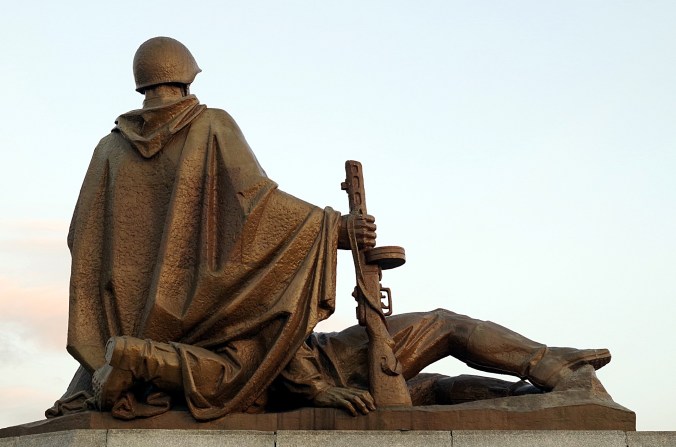
David was deeply experiencing an inescapable truth: any victory through violence is also a failure. A failure of life, a failure of love, and a failure of peace. David felt this because Absalom was his child,  but every slain enemy is somebody’s child. Every slain enemy is still God’s child. Does that feel like something to rejoice about? While it’s natural to celebrate victory, we should remember we are called to do good to those who would persecute us. Demoralizing our foes doesn’t eliminate them; it alienates them further. Had the Allies not been so punitive following World War I and allowed all of Europe to recover economically, who knows how things might have turned out?

Seeing our as enemies as fellow children of God, let alone grieving for them, makes it much harder to justify violence against them. The people knew David had lost his beloved son, but even that relationship was not reason enough to allow grief to exist alongside victory. Its very acknowledgment offended them into claiming David would have preferred them all dead if it meant Absalom could have lived. Allowing someone to humanize the enemy forces us to face uncomfortable truths, so David had to be dragged from his mourning chamber.

Doing violence, even when it seems necessary, damages us. If we must contemplate it, let’s also remember every one of our enemies is loved by Christ.


Additional Reading:
For thoughts on today’s reading from Mark, see Our Neighbors, Our Selves.

Comfort: Blessed are the peacemakers, for they shall be called children of God. 

Challenge: Pray for your enemies – personal, national, and global.

Prayer: How precious is your steadfast love, O God! All people may take refuge in the shadow of your wings. (Psalm 36:7)

Discussion: Have you ever learned to see an enemy as more than just an enemy?

Join the discussion! If you enjoyed this post, feel free to join an extended discussion as part of the C+C Facebook group. You’ll be notified of new posts through FB, and have the opportunity to share your thoughts with some lovely people. Or feel free to comment here on WordPress, or even re-blog – the more the merrier!

Persons of Interest

Today’s readings (click below to open in new tab/window):
Psalms 15; 147:1-11, 2 Samuel 18:19-33, Acts 23:23-35, Mark 12:13-27


Psalm 15 begins by asking who may abide in The LORD’s tent, and who may dwell on The LORD’s holy hill. The answers include those who do not slander, who do no evil to their friends, who stand by their word, and who speak truth. And tucked into the list is those “who do not lend money at interest.”

If that last one seems a little oddly specific or out of place, perhaps a little context will help. This verse isn’t referring to a bank making a small business loan so someone can double the available seating in their coffee shop. It’s about loaning money to friends, family, or neighbors in need.

The LORD, it seems, is not a fan of people profiting from other people’s distress.

In a society which identifies so strongly with capitalism (and conflates capitalism so strongly with Christianity), we can forget not every opportunity to make a legal buck is morally justified. Take the payday loan industry, for example. It advertises itself as a friend to people in need of quick cash, but its business model depends on lending to people who are not able to pay their loans back. The profit is in the exorbitant interest and late fees, which in short order can add up to many times the amount of the original loan. All perfectly legal, but predatory and financially devastating to many families in an already precarious financial situation.

There are of course many other ways, both legal and illegal, to exploit people in financial, physical, or emotional need. In this age of self-identified Christian businesses, we might want to consider that Psalm 15 suggests The LORD cares less about whether we flaunt a cross or Bible next to the cash register than about whether we treat our customers, vendors, and partners as Christ would have us do.  In our personal lives, holding ourselves accountable to Christ should be a higher priority than forcing others to be accountable.

As Christians, we are called to ask ourselves not “How much can I get away with?” but “How much can I give away?”


Comfort: Your generosity, even if exploited, is a strength. 

Challenge: Read about predatory lending.

Prayer: Be gracious to me, and hear my prayer. (Psalm 4:1)

Discussion: Have you ever felt someone exploited you when they purported to help you?

Join the discussion! If you enjoyed this post, feel free to join an extended discussion as part of the C+C Facebook group. You’ll be notified of new posts through FB, and have the opportunity to share your thoughts with some lovely people. Or feel free to comment here on WordPress, or even re-blog – the more the merrier!

Cornered

corner-1031569_1920

Today’s readings (click below to open in new tab/window):
Psalms 123; 146, 2 Samuel 18:9-18, Acts 23:12-24, Mark 11:27-12:12


Have you ever heard the phrase “paint yourself into a corner?” It means to unwittingly trap yourself in a no-win situation, like a person who, while painting a floor, ends in a corner where they can neither finish the job nor exit the room without making a mess.

The forty or so Jewish men of Jerusalem who were committed to killing Paul painted themselves into a kind of reputational corner. They publicly took an oath not to eat or drink until they’d killed him. Unfortunately for them (though fortunately for Paul), Paul’s nephew overheard their plot and arranged to have Paul removed to Caesarea before they could act. Scripture doesn’t tell us what the forty-plus men did next, but oaths were serious business so they couldn’t break one lightly. Given the undesirable and unlikely outcome of letting themselves die of hunger and thirst, we might wonder how long it took each of them to break down and take that first bite after realizing they faced the choice of dying or becoming an oath-breaker.

Remember Galileo? The Church convicted him of heresy for promoting the idea that the earth revolved around the sun. They clung to a vision of the cosmos with the earth at the physical center, despite clear evidence to the contrary. The paint on the church floor dried for centuries before they managed to escape the corner of pride and willful ignorance.

When a cherished or comforting belief conflicts with undeniable reality, clinging to that belief doesn’t demonstrate strong faith; it illuminates a fear that God does not dwell in the truth. A round earth and a heliocentric orbit may have once felt like threats to the Christian worldview, but scientists of the church like LeMaitre and Mendel, who advanced the fields of physics and genetics, understood the discovery of new truths – even if they conflict with our current beliefs – leads us to greater understanding of God.

Let us never be so closed-minded that our thoughts and words conspire to trap us into a corner where our instinct to be defensive overrides our willingness to expand our understanding.


Comfort: Wherever the truth leads you, God is there. 

Challenge: Read this article about scientists who were also Christians.

Prayer: Gladden the soul of your servant, for to you, O Lord, I lift up my soul. (Psalm 86:4)

Discussion: Have you ever been afraid of the truth?

Join the discussion! If you enjoyed this post, feel free to join an extended discussion as part of the C+C Facebook group. You’ll be notified of new posts through FB, and have the opportunity to share your thoughts with some lovely people. Or feel free to comment here on WordPress, or even re-blog – the more the merrier!

Divide and Concur

handshake-2009183_1920.png

Today’s readings (click below to open in new tab/window):
Psalms 135; 145, 2 Samuel 17:24-18:8, Acts 22:30-23:11, Mark 11:12-26


Paul was a shrewd man. When he was arrested and brought before the council in Jerusalem, he noticed some of them were Pharisees like himself, and others were Sadducees. The Pharisees believed in the resurrection, spirits, and angels but the Sadducees did not. This was an ongoing point of contention. By mentioning that he himself was a Pharisee on trial concerning the resurrection of the dead, Paul accomplished a couple things.

First, he managed to gain some sympathy from the Pharisees. Instead of outright condemning him, they began to wonder “What if a spirit or an angel has spoken to him?” Second, he moved the focus off himself and onto the ongoing theological quarrel between the two sects. Their dissension became so heated that the tribune, fearing for Paul’s life, had him removed to the barracks.

For such supposedly smart men, the council members were easily led into unnecessary conflict. Maybe that’s because we are so easily swayed by people who we believe to be part of our “tribe” and so suspicious of people who are not. We tend to assume friends and colleagues who agree with us on one controversial issue – abortion, for instance – will also agree with us other issues – such as same-sex marriage. When we discover they disagree, it may be difficult to reconcile. Conversely if someone disagrees with us on one topic we may presuppose they will disagree with us on others, and when they don’t we have to adjust our thinking about them. If we are unable or unwilling to make those adjustments, we can end up turning a blind eye to the faults of those we initially agree with, and an equally blind eye to the virtues of people we first disagree with.

The good news is, we aren’t required to pigeon-hole anyone.

We don’t have to divide into tribes, and we don’t have to agree on every point to be one body. Yitzhak Rabin said, “You don’t make peace with friends. You make it with very unsavory enemies.” If we are to be blessed as peacemakers, loving through disagreement is an absolute necessity.


Additional Reading:
For thoughts on today’s reading from Mark, see Faith and Figs.

Comfort: Agreement is not necessary for peace. 

Challenge: Watch, listen to, or read something from a point of view you generally disagree with, but listen for points where you might be able to agree.

Prayer: Every day I will bless you, and praise your name forever and ever. (Psalm 145:2)

Discussion: When is the last time you found yourself surprised to agree with a person or group?

Join the discussion! If you enjoyed this post, feel free to join an extended discussion as part of the C+C Facebook group. You’ll be notified of new posts through FB, and have the opportunity to share your thoughts with some lovely people. Or feel free to comment here on WordPress, or even re-blog – the more the merrier!

Silence: Golden or Fool’s Gold?

monument-1638446_1920

Today’s readings (click below to open in new tab/window):
Psalms 19; 150, 2 Samuel 17:1-23, Galatians 3:6-14, John 5:30-47


The phrase “silence speaks volumes” can have different meanings. There’s an active silence when we refuse to speak, leaving others to draw their own conclusions. Ask a child, “Are those your crayon drawings all over the wall?” and silence probably answers the question for you. This silence gives us a slight sense of control when speaking would be difficult.

Then there’s a passive silence, like when we hear gossip among friends, or racist remarks in the cafeteria. In that silence we relinquish control, and those who hear it – or rather, don’t hear it – are more free to interpret it as they will. Declining to participate may send a message that we don’t agree or approve, but it is just as likely (and arguably more so)  to be heard as indifference, assent, agreement, or possibly fear.

As far as we know, David’s trusted counselor Ahithophel kept his silence after David arranged for the death of Uriah so he might marry Uriah’s wife Bathsheba – who was Ahithophel’s granddaughter. (Yes, the book of Samuel should come with a scorecard.) Perhaps this is why, when David’s son Absalom took his father’s throne, Ahithophel so easily swapped allegiances and began to counsel Absalom. It’s not hard to imagine David never saw this betrayal coming.

Whether it’s in business meetings, friendly conversation, or important debates, we should be careful not to make assumptions about people’s silence. Doing so can lead to serious miscalculations. We should also be careful about our own silence, because people will fill in the blanks for us. We don’t need to weigh in with an opinion on everything (Proverbs tells us “Even a fool is thought wise if he keeps silent, and discerning if he holds his tongue”), but there are times when an assumption of agreement or neutrality is dangerous. Consider this quote from writer and Holocaust survivor Elie Wiesel:

Neutrality helps the oppressor, never the victim.
Silence encourages the tormentor, never the tormented.

There is no such thing as “no news”; there is what people hear, and what they assume. Let’s be wise using both our words and our silence.


Additional Reading:
For thoughts on today’s reading from John, see Two Point Perspective.

Comfort: Your words can affect the world for the better. 

Challenge: Pray about when to speak and when to keep silent.

Prayer: Let the words of my mouth and the meditation of my heart be acceptable to you, O LORD, my rock and my redeemer. (Psalm 19:14)

Discussion: When do you feel most free to speak up? When do you feel least able?

Join the discussion! If you enjoyed this post, feel free to join an extended discussion as part of the C+C Facebook group. You’ll be notified of new posts through FB, and have the opportunity to share your thoughts with some lovely people. Or feel free to comment here on WordPress, or even re-blog – the more the merrier!

Just Like Us

Today’s readings (click below to open in new tab/window):
Psalms 104; 149, 2 Samuel 16:1-23, Acts 22:17-29, Mark 11:1-11


Political intrigue. Royal infighting. Double agents. Unchecked lust. Questioned loyalties. Revenge killings.

The story of David and his family could be the plot of a bestselling summer beach novel or a hit Netflix series. At any given point in the narrative, it’s hard to draw a firm line between the good guys and the bad guys. Sometimes they don’t even know themselves. When David’s bodyguards want to kill someone for cursing him, he stops them and says:

“If he is cursing because the LORD has said to him, ‘Curse David,’ who then shall say, ‘Why have you done so?’ […] My own son seeks my life; how much more now may this Benjaminite! Let him alone, and let him curse; for the LORD has bidden him.”

David is tragically flawed. So is Absalom, the son who betrays him. Both have complex motivations for their behavior. We can in turn find both of them completely sympathetic and utterly disappointing.

In other words, Bible Stars: They’re Just Like Us!

Past or present and undoubtedly into the future, humanity is what it is.

We can bemoan the state of the world and its inhabitants, or we can be grateful for a God who loves creation enough to work with us as we are. We will misstep; we will falter; we will do horrible things; but God will not give up on us – even when we give up on ourselves. For all his flaws, David remained a willing servant. Even during the time of his exile, he considered not that God had let him down, but that his desires might not be God’s will.

If God loves, accepts, and works through the frustrating brood that is humanity … so must we. No matter how much we anger and dumbfound one another, there really are no alternatives. Christ challenges us to do good to the people who are unlike us, the people who hurt us, the people who have nothing to offer us. Rather than denigrate others for their flaws and sins, let us embrace and uplift each other as God will always do with us.


Additional Reading:
For thoughts on today’s reading from Acts, see Citizenship.

Comfort: God loves us as we are and calls us to be more. 

Challenge: Try praying for your enemies, not to defeat them, but to bless them.

Prayer: Loving and righteous God, teach me to love as Christ loved. Amen.

Discussion: Does it comfort or trouble you that giants of the faith are very much like us?

Join the discussion! If you enjoyed this post, feel free to join an extended discussion as part of the C+C Facebook group. You’ll be notified of new posts through FB, and have the opportunity to share your thoughts with some lovely people. Or feel free to comment here on WordPress, or even re-blog – the more the merrier!