
No Promises

pinky-swear-329329_1280

Today’s readings (click below to open in new tab/window):
Psalms 108; 150, 1 Samuel 14:36-45, Romans 5:1-11, Matthew 22:1-14


“I meant what I said and I said what I meant. An elephant’s faithful one-hundred percent!”
– Dr. Seuss,
Horton Hatches the Egg

Several Biblical characters suffer the consequences of an unwise – and unsolicited – oath to God. Saul dedicated his troops by offering an oath that cursed any of them who ate before evening fell and their enemy was vanquished. Saul’s son Jonathan didn’t know about the oath and ate a bite of honey from the ground. As a result, God withdrew from Saul for a time. Unaware of the all the facts, Saul said he would kill whoever had sinned – even if it was his own son.

Once the truth came out, Saul and Jonathan were willing to accept the consequences, but the people spoke up on Jonathan’s behalf and said his victories were proof God was with him. They ransomed Jonathan (possibly by substituting some sort of animal sacrifice) and “he did not die.”

In the heat of battle – military, political, or personal – leaders can make rash promises, often in the absence of facts, to attain victory. We’re not just talking government, but also business, church, and even family. When that happens, clean-up duty falls to the rest of us. Like the Israelites, we have to decide whether to be hardliners who insist the promise be kept or to allow for alternatives. If we supported the promise, we may be tempted to take the hard line out of pride or spite. Frequently our decision is swayed when we hear the story of someone we care for who will be personally affected, like the Jonathan to our Israel.

We don’t have to be leaders to make rash promises. When we do, we are cornered into choosing between keeping our word and doing the right thing, and it feels wrong to sacrifice either. Jesus and James advise us to avoid swearing oaths in the first place. Why create unnecessary potential for letting down others, ourselves, or God?

God knows our hearts and our weaknesses. It’s enough to lay them down at the cross and humbly commit to doing our best.


Additional Reading:
For more about today’s passage from Romans, see Endurance Training.
For thoughts on today’s parable from Matthew, see Come to the Banquet.

Comfort: Let your yes mean yes, and your no mean no.

Challenge: Pay attention to the promises people make you. Ask yourself if they seem realistic – or necessary.

Prayer: Let everything that breathes praise The LORD. Praise The LORD! (Psalm 150:6)

Discussion: Have you ever suffered the consequences of a poorly made promise?

Join the discussion! If you enjoyed this post, feel free to join an extended discussion as part of the C+C Facebook group. You’ll be notified of new posts through FB, and have the opportunity to share your thoughts with some lovely people. Or feel free to comment here on WordPress, or even re-blog – the more the merrier!


Forgive and Remember

1499570977017

Today’s readings (click below to open in new tab/window):
Psalms 122; 149, 1 Samuel 14:16-30, Acts 9:10-19a, Luke 23:32-43


We don’t think we’re like other people. It’s cliché for someone in rehab to claim “I’m not an addict like the rest of them.” When someone else gets fired, they were lazy or inept; when we get fired the boss is a jerk. When a group we don’t belong to reacts to oppression, they are snowflakes; when we feel oppressed (despite possibly being in the majority) we’re standing up for what’s right. Even a thief hanging on a cross can find a reason to mock the savior hanging next to him.

Yet that same savior asked God to forgive his executioners. What’s the difference (besides not being Jesus)? Empathy.

Empathy is an ability to relate to the emotions and circumstances of others. It’s inseparable from forgiveness. To forgive we must understand what it means to be forgiven. To feel forgiven, we must first accept responsibility for the things we’ve done which need forgiving (not as popular a choice as maybe it should be) and then trust Christ to do what he said. If on some level we can’t accept Christ’s forgiveness (and it takes a real ego to think we’re the one person he can’t forgive), can what we call and offer as forgiveness be the real deal?

As long as we insist we would have been better, stronger, kinder, etc. having experienced the exact same life as someone else, true forgiveness eludes us. We don’t have to excuse misbehavior or abandon accountability, but neither of those is required to forgive. Actually, if we did, what exactly would we be forgiving?

When the Lord asked Ananias to attend to Saul, Ananias answered: “Lord, I have heard from many about this man, how much evil he has done to your saints in Jerusalem.” Yet in the end he trusted the Lord to make a great evangelist of this villain. Is there any doubt Ananias knew the forgiveness of Christ?

Psalm 51 tells us God will not despise a broken spirit and a contrite heart. When we are willing to admit to our brokenness and receive forgiveness, our ability to forgive blossoms.

Comfort: God will forgive you.

Challenge: It’s up to you to accept that forgiveness.

Prayer: Create in me a pure heart, O God, and renew a steadfast spirit within me.. (Psalm 51:10)

Discussion: What are some examples of the difference between empathy and sympathy? Why is it important to know the difference?

Join the discussion! If you enjoyed this post, feel free to join an extended discussion as part of the C+C Facebook group. You’ll be notified of new posts through FB, and have the opportunity to share your thoughts with some lovely people. Or feel free to comment here on WordPress, or even re-blog – the more the merrier!

Twists and Turns

rosesthorns

Today’s readings (click below to open in new tab/window):
Psalms 88; 148, 1 Samuel 13:19-14:15, Acts 9:1-9, Luke 23:26-31


Trying to cleanly divide the world into good and evil is like untying  a pretzel: it turns out to be inseparable unless you break it. Most of us think we make good choices, or at least justifiable ones. We rarely have time to take a mental step back and evaluate all the circumstances which have shaped what we consider to be “good” before making our day-to-day choices – let alone apply that level of critical thinking to other people’s choices. Therefore, we easily slip into thinking people who believe or choose differently than we would are bad decision-makers or even bad people. Yet circumstance is sometimes all that divides us.

Simon of Cyrene is thought of favorably by much of the Christian church – but why? He was a man the Romans forced to help Jesus carry the cross. We think it’s good that for a time he relieved some of Jesus’s burden, but we can’t separate that from the truth that he participated in also helping along the crucifixion. Who is to say what we would have done under similar circumstances? Resisted? Carried it even further? The influence of the empire – be it ancient Roman or modern American – drives our actions (for good, ill, and both) more than we care to admit.

And then there’s Saul on the road to Damascus. His conversion, while incredible, was not voluntary. Saul wasn’t convinced by the apostles; he was in the business of arresting them because he believed he was doing the right thing by defending his faith. The resurrected Christ spoke to him personally and struck him blind. Who could be an unbeliever after that?

But here’s the thing. No matter what road we’re on, be it to Golgotha, Damascus, or the convenience store around the corner, Christ travels with us. We are both flawed and trying to do the right thing, our lives a tangled braid of delights and disappointments to him, and he loves us through all of it. We don’t understand ourselves well enough to judge anyone else. And Jesus frees us from feeling like we should or have to.


Additional Reading:
For more about today’s passage from Acts, see Staring at the Son.
For thoughts on Psalm 88, see A Thing of Horror?

Comfort: Whatever road you’re on, Christ travels with you.

Challenge: The next time you make negative assumptions about someone, put in the effort to make some positive ones and note how hit impacts your perception of them.

Prayer: Turn, O LORD, save my life; deliver me for the sake of your steadfast love. (Psalm 6:4)

Discussion: Do you ever take time to ask yourself why you believe what you do?

Join the discussion! If you enjoyed this post, feel free to join an extended discussion as part of the C+C Facebook group. You’ll be notified of new posts through FB, and have the opportunity to share your thoughts with some lovely people. Or feel free to comment here on WordPress, or even re-blog – the more the merrier!
Radical Inclusion

shoes mile

Today’s readings (click below to open in new tab/window):
Psalms 143; 147:12-20, 1 Samuel 13:5-18, Acts 8:26-40, Luke 23:13-25


One of the great joys of being a Christian is that we are called to be more in the business of expanding our circle than closing our ranks. At any given point in history, or in any given congregation or denomination, we may be circling the wagons in fear, but since the earliest days of the apostles we’ve been learning that God’s love is more inclusive than our own.

Take Philip for example. One day the Spirit urged him down a certain road, where he found a man sitting in a chariot and reading from the prophet Isaiah. The man, an Ethiopian eunuch serving as a court official of his queen, was in Jerusalem to worship. Philip ran up to the man, who needed help understanding what he was reading, and began a conversation which led to the Ethiopian asking to be baptized in some water they passed on the side of the road. So Philip baptized him.

This first Gentile convert – eager to join the faith and just as eagerly welcomed at the urging of the Spirit – differed from the Jewish apostles racially, ethnically, and sexually. He would never have been allowed inside the physical temple, but once Christ became the temple raised, these distinctions no longer mattered. Christ’s arms stretched out on the cross are the temple gates thrown wide open.

Radical inclusion, while ultimately joyful, can scare us. We worry strange newcomers might change the fundamental character of our community. We fear that allowing our understanding of God’s inclusive nature to evolve somehow betrays long-held beliefs or practices. Throughout history the church and its members have excluded, minimalized, or stereotyped the roles of women, the disabled, and even the left-handed. Yet the Spirit continues to urge us toward each other, to build bridges, to break down assumptions and prejudices based not in the gospel but in culture and superstition.

The world pushes us to judge, condemn, and exclude. Christ invites us to love, forgive, and welcome. As Christ’s body, let’s run to those who, like our Ethiopian friend, differ from us so struggle to understand his invitation.

Comfort: God loves more and better than we could possibly understand.

Challenge: Try to find more reasons to include people than to exclude them.

Prayer: Teach me, o Lord, to love your people and share your Gospel abundantly.

Discussion: Do you belong to any groups the church has excluded or does exclude? How does that affect your relationship with and understanding of Jesus?

Join the discussion! If you enjoyed this post, feel free to join an extended discussion as part of the C+C Facebook group. You’ll be notified of new posts through FB, and have the opportunity to share your thoughts with some lovely people. Or feel free to comment here on WordPress, or even re-blog – the more the merrier!

Getting What You Want

happiness_want

Today’s readings (click below to open in new tab/window):
Psalms 65; 147:1-11, 1 Samuel 12:1-6 (7-15) 16-25, Acts 8:14-25, Luke 23:1-12


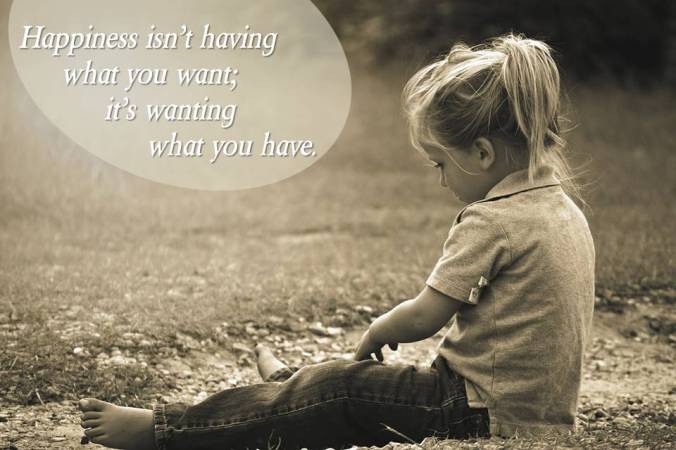
The musical Wicked is a study in contradictions. The Wicked Witch is a misunderstood outcast whose best intentions are used against her. Glinda the Good Witch has charm that hides her manipulative and ambitious nature. As in real life, no character is completely good or evil, but a complicated mix of motives and circumstance. As the second act opens, Glinda has gotten the boy and the fame she hoped for, but at the cost of her dear friend who has been slandered as wicked. As she celebrates her good fortune she also begins to realize it may be the very thing unraveling her happiness. She sings: “Because happy is what happens when all your dreams come true. Well, isn’t it?”

The people of Israel got the king they wanted when God appointed Saul. Yet, Samuel warned them, it was not what God wanted for them. If they or their king rebelled against their Lord, that Lord would turn against them. Once we get what we’ve asked for, we have to live with it … which can turn out to be more complicated and less satisfying than we’d anticipated. And if we’ve really pushed for it – alienating God, friends, or family in the process – we have few options left.

Centuries later the people of Israel got a different kind of king in the person of Jesus, and they didn’t want him. For a while they loved him, but when it became dangerous they turned on him. The authorities arrested him, mocked him, and twisted his words and teachings to convict him. Eventually Jesus just stopped answering questions; no matter what he said, it would be used to condemn him. Maybe that’s a sign that we’ve hardened our hearts too firmly toward what we want (or don’t want): we can’t even hear conflicting opinions.

Life constantly teaches us the differences among what we want, what we should want, and what we need. While we chase our dreams, let’s not trample the blessings we already have. As the Psalmist says, “We shall be satisfied with the goodness of your house, your holy temple.”


Additional Reading:
For more about today’s passage from Acts, see Money For Nothing.

Comfort: True happiness lies in seeking the Lord.

Challenge: Pray regularly about your goals and dreams to discern whether they are right for you; pray also to be grateful for what you have now.

Prayer: Thank you, generous Lord, for providing for my needs.

Discussion: How do you know whether you’re making a sacrifice to follow the right dream, or being stubborn and following the wrong one?

Join the discussion! If you enjoyed this post, feel free to join an extended discussion as part of the C+C Facebook group. You’ll be notified of new posts through FB, and have the opportunity to share your thoughts with some lovely people. Or feel free to comment here on WordPress, or even re-blog – the more the merrier!
Power Play

lincoln

Today’s readings (click below to open in new tab/window):
Psalms 54; 146, 1 Samuel 11:1-15, Acts 8:1b-13, Luke 22:63-71


After Saul was appointed by God through Samuel to be king, one of his first acts was to end the oppression of Nahash the Ammonite who had been terrorizing Israel by gouging out the right eyes of everyone who did not escape. After Saul defeated and scattered the Ammonites, the people called for the deaths of those who had initially opposed his reign. Saul declined, demonstrating he could be merciful in his power. Many years later, taking power for granted, Saul would become petty enough to maneuver David (of “versus Goliath” fame) into life-threatening situations for becoming too popular. Yet in the moment, and for many years afterward, he was a benevolent ruler who ruled wisely.

Centuries later another Saul, who would become the apostle Paul, used his power to persecute Christians because they represented a threat to the stability of the Jewish people under Roman occupation. This Saul’s power was fueled largely by a sense of righteousness, but somehow his dedication to serving his God did not translate into mercy until he was suddenly brought low.

After Jesus was arrested and brought before the council, they asked him if he was the Messiah. He replied “If I tell you, you will not believe; and if I question you, you will not answer.” When pressed further he said, “You say that I am.” They took that as a confession of heresy. The council used their power to twist perceptions and definitions so the outcome – regardless of the facts – was to their liking.

Power, seen through the eyes of Christ, is more responsibility than privilege. Using power (no matter how limited) in petty and cruel ways, even against our opponents, does not reflect the message of the Gospel. Retaliation is both a poor substitute for justice and difficult to reconcile with turning the other cheek. When we find ourselves in positions of power –elected office, social status,  work hierarchy, family dynamics, etc. – let us pray for strength to show mercy and restraint.

How blessed we are to have a savior who shows us the true meaning and best use of power.


Additional Reading:
For more about today’s passage from Acts, see Written Off?.
For another take on today’s passage from Luke, see No-Win Scenario.

Comfort: Being merciful is not a sign of weakness, but of strength.

Challenge: In ways large and small, we can have the upper hand in many relationships. Reflect on whether how you wield power, when you have it, spreads the Gospel.

Prayer: God of power and mercy, give me a heart like Christ.

Discussion: Have you ever been surprised to find out you had more power than you expected?

Join the discussion! If you enjoyed this post, feel free to join an extended discussion as part of the C+C Facebook group. You’ll be notified of new posts through FB, and have the opportunity to share your thoughts with some lovely people. Or feel free to comment here on WordPress, or even re-blog – the more the merrier!

But what has God done for me lately?

language of friendship

Today’s readings (click below to open in new tab/window):
Psalms 57; 145, 1 Samuel 10:17-27, Acts 7:44-8:1a, Luke 22:52-62


New relationships are exciting. We learn new things. We feel new things. We expect new things. But as a relationship matures, we realize we can’t depend on things being constantly new. Deep relationships are based on established expectations. If we are wise, we confide more in someone we’ve grown to trust over time than in our most recent acquaintance. Unfortunately, we can become almost addicted to the excitement of new relationships because they raise immediately gratifying emotions. In the worst cases, we never learn to value depth over novelty.

In today’s reading from Acts, Stephen finishes telling his Hebrew audience the history of their people and how inconstant has been their faithfulness to God, the cycle of loving God when they are being delivered, and neglecting – or even turning away from – God after their memory of God’s deliverance begins to fade. In our passage from Judges, Saul has been selected as king because the people, in opposition to God’s wishes, want a king to be more like the idolatrous nations around them.

In what ways can we be like the ancient Hebrews? When people first find their faith, or have a faith-renewing experience, it’s like the beginning of a new relationship. They are wrapped up in feelings. They see God everywhere. They can be practically giddy. But novelty eventually fades. If the relationship ages without maturing, they need new experiences – like new “signs” – of God’s love and presence. An immature relationship demands constant reassurance because it values feeling over faith.

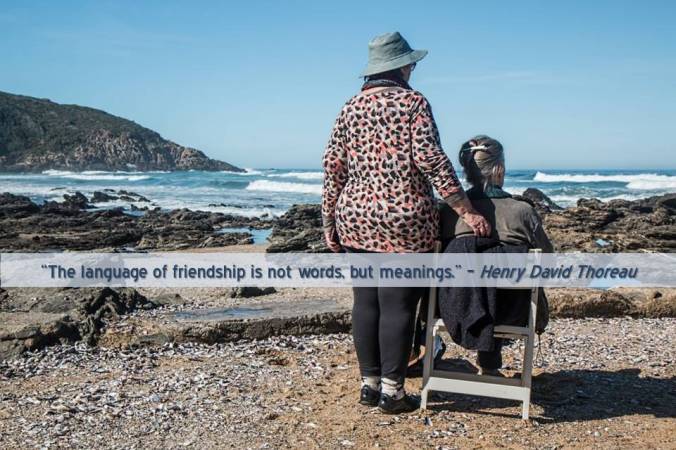
What a mature relationship with God may lack in flash, it makes up in substance. Like lifelong friends who are content simply to be in each other’s presence, our relationship with God may be punctuated with long periods of silence. We shouldn’t confuse this silence with absence or boredom. Like a fallow field, it may seem dormant, but below the surface its very structure is constantly renewed. While the steady maintenance of a good relationship, especially when it seems “dull,” may not produce the high of something new, an enduring relationship built on faith and trust is infinitely more rewarding.


Additional Reading:
For more about Stephen, traditionally considered the first Christian martyr, see Stephen The Leader or Sax and Violence.

Comfort: In times of God’s silence, we still build our relationship.

Challenge: This week, devote 10 minutes a day to silent meditation.

Prayer: God of renewal, I seek a mature and confident relationship with you.

Discussion: Think about your enduring relationships. What do they have in common?

Join the discussion! If you enjoyed this post, feel free to join an extended discussion as part of the C+C Facebook group. You’ll be notified of new posts through FB, and have the opportunity to share your thoughts with some lovely people. Or feel free to comment here on WordPress, or even re-blog – the more the merrier!

Not so Nice

SAMSUNG DIGITAL CAMERA

Today’s readings (click below to open in new tab/window):
Psalms 67; 150, 1 Samuel 10:1-16, Romans 4:13-25, Matthew 21:23-32


When the chief priests asked Jesus by what and whose authority he acted, he declined to answer. Instead, he offered a parable about two brothers whose father told them to work in the vineyard. The first refused, but then went; the second said yes, but didn’t follow through. Which, Jesus asked, did the will of his father? Then he said:

Truly I tell you, the tax collectors and the prostitutes are going into the kingdom of God ahead of you. For John came to you in the way of righteousness and you did not believe him, but the tax collectors and the prostitutes believed him; and even after you saw it, you did not change your minds and believe him.

Tax collectors and prostitutes were not considered “nice” people. Chief priests, the wealthy, and the other usual suspects  were (are?) considered polite society.  Even today we reward people more for blind obedience to the rules than for confronting unjust conditions. We would have more sympathy for refugees “if they followed the rules” though they flee the same types of horrors as did our ancestors who had far fewer rules to contend with. We wouldn’t dismiss protesters “if they were more polite” even though the times they make us uncomfortable are the only times we choose to listen to them. We insist on courtesy from the oppressed before we will acknowledge – let alone help relieve – their suffering.

Then we have the nerve to wear WWJD* t-shirts. Did the pharisees think Jesus was a “nice” guy?

An insistence on niceness always favors the powerful – because nice people don’t challenge the status quo. Jesus didn’t seem too keen on enabling the powerful status quo. So what did Jesus do?

He spoke up for the underdog.
He fraternized with all the “wrong” people.
He named hypocrisy when and where he saw it.
He cared more about people’s stories than their status.
He spoke the truth even when it made “nice” people uncomfortable.

Nice is easy. Kindness is complicated. Nice is cheap. Justice costs us. Nice is love in theory. Discipleship is love in practice.


* What Would Jesus Do?

Comfort: When you are unjustly persecuted, God is with you.

Challenge: When someone’s method of delivering a message makes you uncomfortable, make an effort to listen for content, not emotion.

Prayer: May God be gracious to us and bless us and make his face to shine upon us, that your way may be known upon earth, your saving power among all nations (Psalm 67:1-2).

Discussion: Valuing authenticity over niceness does not mean having free reign to be deliberately unkind just because we feel like it. When is the last time you were unnecessarily unkind?

Join the discussion! If you enjoyed this post, feel free to join an extended discussion as part of the C+C Facebook group. You’ll be notified of new posts through FB, and have the opportunity to share your thoughts with some lovely people. Or feel free to comment here on WordPress, or even re-blog – the more the merrier!

Rising Above

kitesurfing-2224645_1920

Today’s readings (click below to open in new tab/window):
Psalms 56; 149, 1 Samuel 9:15-10:1, Acts 7:30-43, Luke 22:39-51


The author of Psalm 56 feels besieged from all directions. The psalmist – trampled, oppressed, and fought against all day long – cries out to God for strength and relief. In the face of those who stir up strife, plan evil, and lurk ominously, the psalmist continues to thank and praise the God who will provide delivery from death. Amid many trials, this author’s faith even finds cause for poetry:

You have kept count of my tossings;
put my tears in your bottle.
Are they not in your record?

While a literal bottle of tears is unlikely, the psalmist imagined a God so invested in our well-being as to count our sorrows drop by drop; to remember our restless nights as if recorded in a ledger waiting to be balanced. Though enemies are plentiful, the psalmist trusts in God and asks, “What can flesh do to me?”

Are we able to place that kind of trust in God?

We face a lot of threats from mere mortals. Some days we feel as besieged as the psalmist. Do we scheme and plan how to get the upper hand or, as Psalm 56 advises, perform our vows to God and offer thanksgiving because we trust God will deliver us? Plotting a comeuppance for the person who got “our” promotion or bringing up at yet another family holiday dinner that decades-old grudge against our sibling may just be at odds with a better change God has in store for us. Do we have to put up with being stepped on? Certainly not. But when Jesus told us to love our enemies, he didn’t qualify it with “after you get over it.”

So many times, while we toss and weep as we need to, we neglect church, prayer time, or other things because we aren’t in the “right” frame of mind. Yet God isn’t waiting for us to be “right” … God waits for us to be present. Like the psalmist we may have every reason to be upset and fearful. When that’s the case, let’s lean into faith like a kite leans into the wind.

Comfort: God is with us in times of sorrow, fear, and anger.

Challenge: Think about the last time you were upset. Did you turn to God or rely on your own plans? Ask yourself what that can that teach you about how to react in the future.

Prayer: O Most High, when I am afraid, I put my trust in you (Psalm 56:2b-3).

Discussion: What’s your first instinct when you are attacked?

Join the discussion! If you enjoyed this post, feel free to join an extended discussion as part of the C+C Facebook group. You’ll be notified of new posts through FB, and have the opportunity to share your thoughts with some lovely people. Or feel free to comment here on WordPress, or even re-blog – the more the merrier!

The Word and The Sword

sword-790815_1920

Today’s readings (click below to open in new tab/window):
Psalms 130; 148, 1 Samuel 9:1-14, Acts 7:17-29, Luke 22:31-38


After the Last Supper, Jesus tried explaining to the apostles yet again that terrible things were about to befall him and them. He also assured them he would not leave them unprepared. After all, hadn’t they survived – even thrived – when he sent them on the road to spread his message with nothing but the clothes on their backs? Now though, he said, it was time to take up their bags and purses and carry a sword, even if they needed to sell a cloak to buy one. When they pointed out the two already at hand, he told them, “It is enough.”

This idea of Jesus encouraging them to carry weapons really stands out among his teachings to turn the other cheek and love one’s enemies. Sometimes it’s used by people to justify Christians using violence, generally in self-defense but sometimes in more broad terms.

But there’s a greater context.

Jesus referred to a prophetic scripture from Isaiah  which needed to be fulfilled: “And he was counted among the lawless.” Moving from itinerant (if heretical) preacher and his followers to the leader of a party of armed insurrectionists had “lawless” covered. And only a short time later, when Peter actually used one of those swords to defend his messiah, Jesus commanded him to put it away, adding (in Matthew’s gospel), “all who draw the sword will die by the sword.” And the Apostles were famous for their commitment to peace, not their handiness with blade, club, and fists.

We don’t have to assume a position of pacifism to understand Jesus’s advice to take up swords was not about condoning violence. On the other hand, while Jesus talked about loving and forgiving our enemies, he didn’t command us to surrender to them. Wherever our conscience takes us regarding violence and non-violence, we should remember that Christ is fully capable of defending himself or not as he chooses. Our fears never justify initiating violence in his name. To the contrary, times of fear are the times we most need to take a breath and ask ourselves how Jesus would choose to love.

Comfort: Jesus is with us in times of danger.

Challenge: When you must make decisions about violence, make decisions about love first.

Prayer: Search me, O God, and know my heart; test me and know my thoughts (Psalm 139:23).

Discussion: What are your feelings about the intersection of violence and faith?

Join the discussion! If you enjoyed this post, feel free to join an extended discussion as part of the C+C Facebook group. You’ll be notified of new posts through FB, and have the opportunity to share your thoughts with some lovely people. Or feel free to comment here on WordPress, or even re-blog – the more the merrier!