Praising through Pain

1471569436150.jpg

Today’s readings (click below to open in new tab/window):
Psalms 36; 147:12-20, Job 1:1-22, Acts 8:26-40, John 6:16-27


The Book of Job is sad, scary, and difficult: forty-two chapters tackling the big questions of why bad things happen to good people and in summary it concludes (spoiler alert!) you don’t get to question God. Its “happy” epilogue, if one thinks on it for more than a moment, is as horrifying as the rest of the story (replacement children? really?). But it drives home an important lesson many Christians would rather rationalize away: no matter how good or faithful you are, bad stuff can happen to you and you may never find a satisfactory reason.

By the end of chapter one, because of a wager between God and Satan, Job loses his oxen, donkeys, sheep, servants, camels, and children. Devastated by grief, he shaves his head, tears up his robe, and … falls to the ground in worship?

Naked I came from my mother’s womb,
and naked I will depart.
The Lord gave and the Lord has taken away;
may the name of the Lord be praised.

Have you known anyone to respond to a great loss – or a minor one for that matter – with sin  cere worship? Imagine comforting a grieving mother at a funeral by saying: “The Lord gave and the Lord has taken away; may the name of the Lord be praised.” A more common response is anger toward God, perhaps even a period of turning away. Yet Job does not hesitate to worship. A friend once said she gave daily thanks for both the good and bad things in her life. What a faithful prayer!

In all times, in all places, and under all circumstances, God loves us. It’s so very human to want explanations for suffering: God is testing us; God is refining us; God is punishing us. Maybe all of these are true and maybe none are. If there are lessons to be learned from our suffering, we should be open to them. But if there are none … God still loves us.

Worship always. If we must ask “What did I do to deserve this?” let the “this” be God’s undying, praiseworthy love.

For further reading on today’s text from Acts see Run Don’t Walk

For further reading on today’s text from John see Healthy Fear

Comfort: God is with you in good times and bad.

Challenge: Think back to a time you were angry with God. Offer Him now the praise you didn’t feel then.

Prayer: Creator and Redeemer, thank you for the love you bestow on me at all times. I am sorry for the times I couldn’t return it. I will praise you always. Amen.

Discussion: Everyone copes differently with grief. How do you?

Join the discussion! If you enjoyed this post, feel free to join an extended discussion as part of the C+C Facebook group. You’ll be notified of new posts through FB, and have the opportunity to share your thoughts with some lovely people. Or feel free to comment here on WordPress, or even re-blog – the more the merrier!

Money for Nothing

saint benjamin

Today’s readings (click below to open in new tab/window):
Psalms 15; 147:1-11, Judges 18:16-31, Acts 8:14-25, John 6:1-15


The “prosperity gospel” teaches that if we give our resources (usually money) to God, God will reward us several times over in kind. Some preachers sell this idea through a basic list of proof texts, usually neglecting the proper context. Worse, they reduce faith to a transaction or formula ($1 x God = $10), and when people who faithfully put up money don’t realize a material return, their faith is called into question. Think about it: with all the spiritual difficulties Jesus assures us attend wealth, wouldn’t bestowing wealth almost be a punishment? Fortunately, Acts and John teach us some real truths about the nature of giving and resources in God’s kingdom.

When Simon, a magician-turned-convert, saw the apostles’ power to impart the spirit by laying on hands, he offered them money for the same power. Peter’s reaction is unequivocal: “May your silver perish with you, because you thought you could obtain God’s gift with money!” Maybe Simon mistook the disciples’ practice of pooling resources for a membership fee, but his understanding of the relationship between faith and giving was seriously flawed. No one can buy grace or power. We do not give because we expect a return of wealth or status; we give because a relationship with God prompts generosity.

The miracle of the loaves and fishes is told in all four gospels. Beyond a sign of Christ’s power, this event teaches us no resource is too small in God’s kingdom. Like Andrew – who asked “But what are they among so many people?” – our expectations of God can be surprisingly low. Faith is not about outcomes, but trust. We should first have faith that when we act in God’s name, our resources will be abundant. This differs from the prosperity gospel because we believe God will use resources given in good faith to increase the kingdom, not our personal bank accounts.

“Believe and receive” is a misleading simplification of our faith in a God who provides for our needs. We are not called to a faith that bribes God to action, but to actions confident in a faith God has already provided.

Comfort: Our generosity is a grateful response to God’s generosity.

Challenge: Meditate on whether your giving fully reflects your gratitude.

Prayer: God of renewal, I offer generosity in thanks for your many gifts.. Amen.

Discussion: Money isn’t the only way people try to by favor. What other ways have you seen?

Join the discussion! If you enjoyed this post, feel free to join an extended discussion as part of the C+C Facebook group. You’ll be notified of new posts through FB, and have the opportunity to share your thoughts with some lovely people. Or feel free to comment here on WordPress, or even re-blog – the more the merrier!

Written Off?

20160816_174620-01.jpeg

Today’s readings (click below to open in new tab/window):
Psalms 123; 146, Judges 18:1-15, Acts 8:1-13, John 5:30-47


After St. Stephen was martyred by leaders of a temple in Jerusalem, the eighth chapter of Acts tells us Saul – who would later become Saint Paul – stood watching and “approved of their killing him.” In the next chapter Saul will experience an astounding conversion, but before that happens he is a Roman Jew who persecutes and imprisons Christians. Can any of us imagine the person who is our greatest persecutor becoming our most ardent champion? Yet Christ made it possible for Saul. When Christ tells us to pray for our enemies, it’s not just to change their hearts, but to change ours as well. Because you never know.

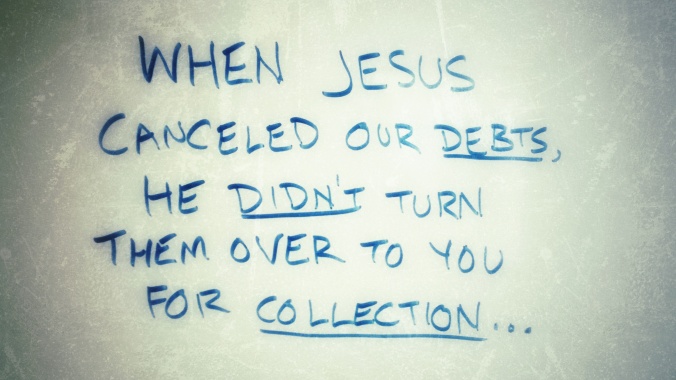
In business, when customer debt is deemed uncollectible, the business has a few options. One is to write it off as bad debt. When this happens, the business can no longer consider that receivable an asset, though the business may continue to try to collect it or sell it off to a collection agency. Generally the business reports this event to credit reporting agencies, and the customer’s debt clings to them for years. A second option is to forgive the debt. The customer must be notified and the business can no longer try to collect. When Christ died for us, all our debts were forgiven … including Saul’s. That is why his past, once he accepted the notice he’d been forgiven, could not be held against him. That is why the present circumstances of anyone, including our persecutors and ourselves, do not give us permission to write them off. Because we never know.

When we write someone off, we say: “You no longer drag me down, but I retain the right to remind you and everyone else how you’ve done me wrong.” If we forgive them, we say: “I don’t like what you did, but it does me no good to waste effort on this debt. Go in peace and I’ll do the same.” Because of the cross, the decision has been taken out of our hands. After all, Jesus taught us to pray: “forgive us our debts as we forgive our debtors.”

Comfort: You aren’t responsible for judging all the wrongs of the world.

Challenge: Meditate on what debts you have trouble forgiving. Pick one to work on forgiving before the year is out.

Prayer: Lord of Healing, forgive me as I forgive my debtors. Amen.

Discussion: When customer debt is forgiven, it may be considered a form of income and therefore create a tax obligation. Do you feel that God’s forgiveness of our debts creates any obligations for us?

Join the discussion! If you enjoyed this post, feel free to join an extended discussion as part of the C+C Facebook group. You’ll be notified of new posts through FB, and have the opportunity to share your thoughts with some lovely people. Or feel free to comment here on WordPress, or even re-blog – the more the merrier!

Sax and Violence

1471296267146.jpg

Today’s readings (click below to open in new tab/window):
Psalms 135; 145, Judges 17:1-13, Acts 7:44-8:1a, John 5:19-29


Jazz musicians say the notes you don’t play are as important as the ones you do. In other words, a saxophone player improvising a riff is set apart by thoughtfully rejecting expectations and embracing alternative blank spaces.

The earliest Christians skipped a lot of notes.

Saint Stephen is widely recognized as Christianity’s first martyr. When he confronted the religious leaders of the Synagogue of the Freedmen in Jerusalem, Stephen reminded them how Israel had rejected the numerous prophets God had sent. He concluded by claiming Jesus was the latest, last, and worst example. The outraged leaders rushed him, dragged him out of the city, and stoned him. Stephen’s last words were: “Lord, do not hold this sin against them.”

What notes did Stephen skip? The ones that might have soothed the ears of the temple leaders. Though the tales provided a familiar framework, the unfamiliar presentation turned the Jewish people from the heroes of their own story into the villains. Jazz can elicit many emotions, including anger, but its message is for those who have ears to hear.

He also skipped notes of violence. Neither Stephen nor any apostles responded to violence or threats with anything but prayer, forgiveness, and further conviction to spread the gospel. This absence of retaliation was undoubtedly as conspicuous as entire bars of musical silence. We don’t have to build an argument for general pacifism to see that when the first Christians were about the business of representing Christ, they did so without violence or even the implication of it.

We are a culture accustomed to violence. The more closely we associate the church with government, the more blurred the line between the business of the world and the business of Christ becomes. But defending a nation or a home is not the same as defending the faith. Violence was not an option Christ chose; at the very least it should not be our first. We always have the option to strike a violent chord, but when we claim to be about the Lord’s work, it matters which end of the spear we are on.

Comfort: We follow the Prince of Peace.

Challenge: This week seek out news and media about non-violent solutions to issues which have traditionally involved violence.

Prayer: Lord of Love, may there be peace in my mind, peace in my heart, peace in my hands, and peace on my lips. Amen.

Discussion: Do you have any personal experiences with the transformative power of preaching the Gospel through peaceful means?

Join the discussion! If you enjoyed this post, feel free to join an extended discussion as part of the C+C Facebook group. You’ll be notified of new posts through FB, and have the opportunity to share your thoughts with some lovely people. Or feel free to comment here on WordPress, or even re-blog – the more the merrier!

More Than Good Enough

1471183447641.jpg

Today’s readings (click below to open in new tab/window):
Psalms 19; 150, Judges 16:15-31, 2 Corinthians 13:1-11, Mark 5:25-34


Today we reach the end of the story of Samson. He has been unlikable, dull-witted, egotistical, impulsive, deceptive, a fatally sore loser, and more than a bit of a hound. In the plus column: he was physically strong because from birth he was consecrated to God as a Nazirite. His role as the God-appointed judge of Israel was “to begin to deliver Israel from the hands of the Philistines.” He accomplished his goal in spectacularly bloody fashion and died without revealing a single redeeming character trait. Charitably, he is not a poster child for righteousness. And that is why we should thank him.

If we can put aside our feelings about the violence of the story (although it may not bother some of us), we can take away an important lesson: God works with what we have to give. We may not have slain anyone because we lost a bet, or burned down entire farms because of a bad breakup, but we have plenty of our own flaws and self-destructive tendencies. God knows this, and is willing to work with us anyway.

It’s easy to think of ourselves or someone else as too flawed to be instruments of God. After all, God knows about the faults the rest of the world sees, and also those we manage to hide from everyone else. Shame, modesty, or both tell us we aren’t good enough to be of any real use to God. Judgment tells us someone else isn’t. When we picture a “servant of the Lord” that picture doesn’t usually include co-dependence, bad credit, or a pornography habit—all of which are small potatoes compared to Samson’s indiscretions. God will choose who God will choose, and our opinion doesn’t carry a lot of weight—especially when God chooses us. Moses tried to beg off because of a speech impediment, and Paul spoke frequently of an unidentified “thorn in his flesh” that kept him humble despite his importance.

We should try to correct our flaws, but rather than letting them define us, let’s try to see how God might be working in us, and in others.

Comfort: No matter how cracked, we are valuable vessels to God.

Challenge: When you find yourself judging someone, think about the hidden strengths God may have given her or him.

Prayer: God of healing, work through me as you will. Amen.

Discussion: Some psychological theories say the flip side of every virtue is a vice. Have you ever found that to be true?

For thoughts on today’s text from Mark, also see Go In Peace.

Join the discussion! If you enjoyed this post, feel free to join an extended discussion as part of the C+C Facebook group. You’ll be notified of new posts through FB, and have the opportunity to share your thoughts with some lovely people. Or feel free to comment here on WordPress, or even re-blog – the more the merrier!

Made Well

1471118462030.jpg

Today’s readings (click below to open in new tab/window):
Psalms 104; 149, Judges 16:1-14, Acts 7:30-43, John 5:1-18


If today’s reading from John had happened in the twenty-first century, someone would have captured it on smart-phone video and posted it to the internet with a click-bait title like: “Hundreds of people stepped right over this disabled man, but when a wandering stranger stopped you won’t believe what happened next!”

After arriving in Jerusalem, Jesus encountered a man who had been ill for 38 years. The man was waiting for a chance to immerse himself in a miraculous fountain. When Jesus asked the man if he wanted to be made well, the man talked about all the people who had obstructed him. This wasn’t exactly what he’d been asked, but in the end Jesus commanded him to take up his mat and walk away healed. Even though the man didn’t answer directly, the specifics of the question are important: “Do you want to be made well?”

Circumstances made it obvious the man desired healing. Jesus could easily have made some assumptions and healed him without asking. Instead, Jesus respected the dignity of his ability to choose — possibly the only dignity remaining to him. Only then did he intercede.

Sometimes we want God to just fix someone already. Maybe it’s someone else, or maybe that someone is us. When God doesn’t act on our schedule, we start thinking of ways to fix it ourselves. If Jesus gives us insight to the character of God, it seems God does not impose himself on us, but respects our ability to choose. People have to be willing to change – and that’s not always the same as wanting to. If we want to be made well — physically, emotionally, spiritually — God seems less interested in who we blame than in getting us on our feet. People step over us because they need healing too. Let’s not be so busy pointing fingers at the co-worker who wronged us or the parent who failed us that we don’t get around to saying “yes” to God. We may need God’s coaxing to rise up from our mat, but that first step is all on us.

Comfort: God respects your ability to choose.

Challenge: Say the serenity prayer.

Prayer: Loving God, open my eyes to the possibilities, and my feet will follow. Amen.

Discussion: What do you want to change about yourself? What do you want to change about someone else?

For further thoughts on today’s reading from John 5, visit Stepping Stone.

Join the discussion! If you enjoyed this post, feel free to join an extended discussion as part of the C+C Facebook group. You’ll be notified of new posts through FB, and have the opportunity to share your thoughts with some lovely people. Or feel free to comment here on WordPress, or even re-blog – the more the merrier!

Fixer Upper

1471058322754.jpg

Today’s readings (click below to open in new tab/window):
Psalms 51; 148, Judges 14:20-15:20, Acts 7:17-29, John 4:43-54


How long is something brand new? Until it’s driven off the sales lot? Until it’s removed from the packaging? Until the first floorboard begins to squeak? Whatever the criteria, “brand new” never lasts long. The very actions we take to preserve something can accelerate its deterioration: washing a car erodes the finish and recharging a cell phone battery shortens its life. Nothing and no one escapes the wear and tear of existence. Nicks and dents, wrinkles and regrets, from birth onward imperfection relentlessly etches itself onto each of us. The only way to escape life’s hardship is not to live it, but then we are like a toy still in its box gathering dust on a shelf, never fulfilling the purpose for which we were created.

The author of Psalm 51 feels life’s every scrape and smudge. He longs to be washed clean, to be filled with a new and right spirit. He asks the Lord to blot out his transgressions and create a clean heart. Fortunately, God loves a fixer-upper. The psalmist knows “the sacrifice acceptable to God is a broken spirit; a broken and contrite heart.” We’ve all been damaged in ways large and small. Our wounds may be self-inflicted, caused by cruelty, or the unintentional result of friendly fire. When the world shames us into hiding them, we cut ourselves off from Grace. To God, our inevitable brokenness is not a barrier, but an invitation.

“Brand new” is momentary, if not illusory. If we long for the imagined perfection of the past, the present will always seem insufficient. But if we are willing to do the hard and humble work of submitting to God, we will create a testament to the firm foundation He has laid in us. We buff out the scratches through prayer, nail another roof beam back into place with each song of praise, and re-open a boarded up window and let in the light with each act of service.

No matter the source of our damage, and no matter how eager others may be to condemn us, God will offer to restore us.

Comfort: God loves you through all your hardships.

Challenge: Save something you plan to throw out, and see if you can re-purpose it.

Prayer: Create in me a clean heart, O God. Amen.

Discussion: What areas of your life are currently under major reconstruction?

For further reading on John 4:43-54, see Out of Thin Air

Join the discussion! If you enjoyed this post, feel free to join an extended discussion as part of the C+C Facebook group. You’ll be notified of new posts through FB, and have the opportunity to share your thoughts with some lovely people. Or feel free to comment here on WordPress, or even re-blog – the more the merrier!

(Don’t) Stop Me If You’ve Heard This One

1470916884090.jpg

Today’s readings (click below to open in new tab/window):
Psalms 105; 147:12-20, Judges 14:1-19, Acts 6:15-7:16, John 4:27-42


What stories do you like to read or hear over and over again?

Storytelling is one of the most universal aspects of human experience. It serves many functions. Stories like those shared at wakes and funerals can comfort us. Family stories shape our personal identities. Cultural stories, like folk tales, myths, and legends help us make sense of the world in a way hard facts can’t. The author of Psalm 105 and the apostle Stephen both make use of the story of Israel, but to different ends.

The psalmist tells the story of Israel to reassure her people of God’s constant, loving presence. From God’s promise to Abraham that he would be a father of nations, through the arrival in and exodus from Egypt, to the arrival in the promised land, the central theme of the story – as the psalmist tells it – is God’s faithfulness to the people. Part of the joy of hearing a beloved story is anticipation of the familiar elements, and the psalmist certainly hits some well known crowd pleasers, like Joseph in Egypt and the ten plagues. A master storyteller, the psalmist does not make random choices, but carefully uses words and images to reinforce the theme of the story. By the end, listeners know they are a community of the Lord.

Stephen talks about the same events. However, because his intent is to build a case for Christ as the Messiah, he frames the events very differently. As the story unfolds we hear him describe Israel’s initial rejection of her major heroes – from Abraham to Joseph to Moses. He wants to convince the religious authorities they are making the same mistake with Christ. The different themes of the psalmist’s story and Stephen’s story clearly demonstrate the importance of not just the story, but the telling.

Stories tell us who we are by telling us who we’ve been, or who we believe we’ve been. We tell them to pass along our identities and cultures. Over time stories build on themselves and, their meanings can change. Each of us is shaped by and shapes the ongoing Christian story.

Comfort: A good story, like the ones in the Bible, never grows old.

Challenge: Read or listen to multiple sources of news, such as CNN, Fox, the BBC, and Al Jazeera. How does each tell the stories of the day differently?

Prayer: God of healing, thank you for the story of your love for us. Amen.

Discussion: What story do you like to hear or tell?

Join the discussion! If you enjoyed this post, feel free to join an extended discussion as part of the C+C Facebook group. You’ll be notified of new posts through FB, and have the opportunity to share your thoughts with some lovely people. Or feel free to comment here on WordPress, or even re-blog – the more the merrier!

The More Things Change…

seeing red

Today’s readings (click below to open in new tab/window):
Psalms 89:1-18; 147:1-11, Judges 13:15-24, Acts 6:1-15, John 4:1-26


Famed novelist and relapsed Catholic Anne Rice once made a splash with a series of Facebook posts declaring she was “leaving Christianity” but not Christ. Her reasons aren’t exactly groundbreaking. She found Christianity (but not Christ) intolerant, quarrelsome and disputatious. Well… yes. Gandhi supposedly said: “Your Christians are so unlike your Christ” as though that was news to us. We embark on the journey to become more Christ-like specifically because we fall short. We especially need to support each other in the journey when we can’t stand each other. Christianity as a concept or a faith cannot exist outside community.

My former pastor, who worked for years to promote fairness for the LGBT community in our city, engaged the very people Ms. Rice “quit” when she endorsed an employment fairness bill. In the name of Christ, these people demanded the council deny this bill. One council member marveled that all his hate mail all seemed to be from Christians. Also in the name of Christ, many people, including my pastor, spoke in favor of it. The following Sunday she spoke to us about the hard but necessary work of loving those who oppose us. No matter which side of an issue one falls on, praying for one’s enemies is the Christ-like response.

We barely get into the sixth chapter of Acts before the squabbling begins. When Greek Christians felt Hebrew Christians were not treating the Greek widows fairly, the Greeks didn’t pack up and quit. The Hebrews got a little indignant, but the community reached a solution. Nowhere does scripture claim Christians are without quarrels. Without quarrels, Paul’s letters might never have been written! What the gospels and epistles do provide is instruction in how to live together in covenant despite differences.

People haven’t changed much in two thousand years. Some are liberal and some are conservative. Some are traditionalists and some are experimental. Etc., etc. Most of us usually think we’re right. Christianity has never been a monolith of thought and belief. It has always been about loving our enemies – even the ones sitting next to us on Sunday.

Comfort: God made us capable of thoughtful action and reaction.

Challenge: Fact check even the claims you are inclined to agree with.

Prayer: Glorious Creator, thank you for the gift of discernment. Amen.

Discussion: How have you resolved differences with your fellow Christians?

For further reading on today’s passage from John 4, see Worship Well.

Join the discussion! If you enjoyed this post, feel free to join an extended discussion as part of the C+C Facebook group. You’ll be notified of new posts through FB, and have the opportunity to share your thoughts with some lovely people. Or feel free to comment here on WordPress, or even re-blog – the more the merrier!

The Art of Prayer

Today’s readings (click below to open in new tab/window):
Psalms 42; 146, Judges 13:1-15, Acts 5:27-42, John 3:22-36


Art teaches truth beyond the scope of mere facts. The poetry of Psalm 102, for example, invokes vivid images because the facts do not adequately communicate the depths of the psalmist’s despair or his awe of the Lord. “I am terribly sad” tells us something, but it can’t compare to the exquisite anguish of “I eat ashes with my food and mingle my drink with tears.” While “God is eternal” suffices for academic theology discussions, it doesn’t say much about God’s relationship to the mortal world. Describing the heavens and earth as garments that God will eventually change when they wear out puts us in touch with the vastness of eternity. Burning bones, withering grass, a little bird on a roof – these densely packed images don’t just impart knowledge but tune us into the emotional state of the psalmist.

Artistic forms of prayer can lend depth to our spiritual experiences. When we pray from our deepest pains or joys, stating the facts or making requests may cast only pale shadows of our actual experiences and needs, even to ourselves. Could we consider writing God a poem? The idea may sound like something to do when Vacation Bible School is rained out, but the Bible is loaded with prayerful poems. Its 150 psalms and numerous canticles (hymns) teach us poetry and music are an integral part of our faith language. The psalms themselves were originally meant to be sung, and the layers of artistic expression add to their power. We don’t have to be great poets or composers to turn our feelings into art; when it comes to prayer, honesty trumps virtuosity every time. Any honest attempt at prayer can only bring us closer to God.

Approaching the Bible, prayer, or God from a poetic or other artistic perspective opens us to new ways of knowing. Modern culture tends to equate truth only with facts, but truth is transcendent. History books are informative, but Picasso’s Guernica illuminates the devastation of war in ways no book could convey. Being created in God’s image, however we understand that, means we too are fulfilled by creating.

Comfort: Your opportunities for praise and prayer are endless.

Challenge: Write a poem to God about your current state of mind. No one else has to read.

Prayer: Lord of all creation, thank you for the gift of creativity. Amen.

Discussion: What are your creative outlets? Can you see any connections between them and your faith?

Join the discussion! If you enjoyed this post, feel free to join an extended discussion as part of the C+C Facebook group. You’ll be notified of new posts through FB, and have the opportunity to share your thoughts with some lovely people. Or feel free to comment here on WordPress, or even re-blog – the more the merrier!