It’s 3:16 Somewhere

1470692116198.jpg

Today’s readings (click below to open in new tab/window):
Psalms 5; 145, Judges 12:1-7, Acts 5:12-26, John 3:1-21


John 3:16 is possibly the most commercially successful verse in the Bible. It’s so marketable that the reference alone is enough to sell millions of keychains, bumper stickers, t-shirts, coffee mugs, eyeglass cases, pocket protectors, and just about anything else that can sport an imprint. It is the unofficial logo of Brand Jesus.
There’s no shame in its popularity – it’s a beautiful verse summing up the message of the gospel:

“For God so loved the world that he gave his only Son, so that everyone who believes in him may not perish but may have eternal life.”

But could it be the tiniest bit too popular for its own good? Without delving into the whole discussion about faith versus works, is it possible we can be so happy all we have to do is “believe” that we never get around to living out a life transformed by that belief? After all, belief is a solitary and internal occurrence. Belief alone neither feeds the poor nor clothes the naked, or accomplishes any of the things Jesus says we do for him when we do them for the least of our sisters and brothers.

The verses following John 3:16 expand on its statement, and describe how those who believe embrace the light, and those who don’t believe stay in the darkness because it hides their deeds. No matter how strongly we “believe in him” (and what exactly that means is a discussion unto itself), it’s a good idea to regularly check in with ourselves to ask whether we would be comfortable with Christ’s light shining on our lives at this moment. Our actions confess the convictions of our hearts more clearly than any public statement of belief ever will. We can cover our lives in bumper stickers from the local branch of 3:16 24:7 but Jesus knows a whitewashed tomb when he sees one.

Belief is the beginning of a life in faith, not its end. If how we conduct our lives does not stand up to the light, our belief has died on our lips instead of living in our hearts.

Comfort: There’s no need to hide who you are – God loves you warts and all.

Challenge: Supreme Court Justice Louis Brandeis said: “Sunlight is said to be the best of disinfectants.” Shine light on the parts you feel you need to clean up by sharing them with someone you trust.

Prayer: Lord of Light, make your face to shine upon me. Amen.

Discussion: Where do you draw the line between privacy and secrecy?

Join the discussion! If you enjoyed this post, feel free to join an extended discussion as part of the C+C Facebook group. You’ll be notified of new posts through FB, and have the opportunity to share your thoughts with some lovely people. Or feel free to comment here on WordPress, or even re-blog – the more the merrier!

Promises, Promises

1470578830243.jpg

Today’s readings (click below to open in new tab/window):
Psalms 103; 150, Judges 11:1-11, 29-40, 2 Corinthians 11:21b-31, Mark 4:35-41


Poor Jephthah. Or more correctly, poor Jephthah’s nameless daughter. He vowed to the Lord:

“If you give the Ammonites into my hands, whatever comes out of the door of my house to meet me when I return in triumph from the Ammonites will be the Lord’s, and I will sacrifice it as a burnt offering.”

His daughter was the first one through the door.

Jephthah, though devastated, followed through on his vow. Is it a sort of poetic justice that his willingness to make a random sacrifice – possibly an innocent – sealed his daughter’s fate?

This might seem like a story where God is inexplicably cruel, but God never asked Jephthah for a sacrifice. He made his vow to curry favor from the Lord, but since the Lord didn’t respond neither Jephthah nor we can know whether it had any influence on the victory.

Have we ever made rash bargains with the Lord? Maybe something along the lines of: “If I get this promotion, I promise to give half my raise to the church,” or “If I get well, I’ll exercise every day.” The human race as a whole has a poor track record on following through with promises made in the heat of the moment. Unlike Jephthah, we should not resort to bargaining, but should be confident the spirit of the Lord is with us in all situations, regardless of our promises or eventual outcomes. We take vows to God seriously not to avoid God’s wrath, but because broken promises damage any relationship. Vows should never be taken lightly or impulsively – if at all. In Matthew, Jesus warns us about swearing oaths by heaven or by the earth.

Despite the outcome of Jephthath’s story, God isn’t some evil genie or monkey’s paw waiting to twist our own wishes against us. Nor does God’s grace hinge on the appropriate grand gesture or sacrifice. Rather, like a good parent, God allows the consequences of our actions to instruct us. If we are to be good children, we will mind our lessons, and be careful not to make promises we can’t keep.

Comfort: God doesn’t require our promises, but our faith.

Challenge: Reflect on a promise you have broken. How did it make you feel?

Prayer: God of hope, tend my confidence in you so it will grow. Amen.

Discussion: Some commentaries make a strong case that this story is more correctly interpreted as Jephthah consecrating his daughter as a lifelong virgin to the Lord. Does this change your feelings about the story?

Join the discussion! If you enjoyed this post, feel free to join an extended discussion as part of the C+C Facebook group. You’ll be notified of new posts through FB, and have the opportunity to share your thoughts with some lovely people. Or feel free to comment here on WordPress, or even re-blog – the more the merrier!

Mellow Harshed

1470522355491.jpg

Today’s readings (click below to open in new tab/window):
Psalms 63; 149, Judges 9:22-25, 50-57, Acts 4:32-5:11, John 2:13-25


Acts chronicles wonderful stories of the faith and courage of the early church … and then there’s the tale of Ananias and Sapphira. The earliest believers held their possessions in common. Barnabas, a recent convert, had just sold a field and gave all the money to the Apostles for them to distribute to the needy. Ananias and Sapphira were a married couple who also sold some property, but when they brought the money to the Apostles they secretly held some of it back. When Peter asked Ananias what possessed him to lie to the Holy Spirit, Ananias dropped dead on the spot. Three hours later Peter asked Sapphira if the property had sold for the amount donated. When she corroborated Ananias’ lie, Peter called her on it and she too dropped dead.

Seem harsh? Theologians have concocted a stew of reasons for the death of this couple, but it’s a bitter mix. Some claim they died for lying to the Holy Spirit. Others claim they died for introducing sin to the community of believers. Still others claim God needed to make an example of them to show hypocrisy was not acceptable among those who would be part of the church. Finally, by citing Peter’s claim that Ananias had let Satan fill his heart, some speculate the deception was the latest in a series of sins. Somehow they all conclude the lesson is that God is merciful, and only his grace spares us sinners from destruction … unless it doesn’t.

So what do we do with this? First, we note scripture doesn’t say God (or Peter) killed them: it says they dropped dead. Though it feels like judgment, that’s an important difference. Second, the story is not tied up in a neat moral bow like one of Aesop’s fables. But we can draw some lessons: grace is unearned but not guaranteed or to be taken for granted; hypocrisy is fatal, especially in churches; salvation is more than a feel-good promise – we must let it guide our actions.

God does not seek our understanding or approval. Christianity is always a humbling experience.

Comfort: God is always good, even if we don’t understand how.

Challenge: Create a list of your own  hypocrisies. Add new ones as they occur to you. Every day work toward eliminating one.

Prayer: God of Power and Glory, I am your humble servant. Amen.

Discussion: Have you ever felt like you’ve gotten a raw deal from God?

Join the discussion! If you enjoyed this post, feel free to join an extended discussion as part of the C+C Facebook group. You’ll be notified of new posts through FB, and have the opportunity to share your thoughts with some lovely people. Or feel free to comment here on WordPress, or even re-blog – the more the merrier!
Learn and Live

1470433631031.jpg

Today’s readings (click below to open in new tab/window):
Psalms 84; 148, Judges 9:1-16, 19-21, Acts 4:13-31, John 2:1-12


Many cultural commentators bemoan the rise of anti-intellectualism in America. While they do raise legitimate concerns, is it possible the underlying problem is not simply that some people distrust higher education and ignore science, but that we succumb to increasing pressure from media, political, and other forces to define ourselves in ever-widening opposition to each other? Once the idea of academic education became strongly associated with liberal values, many conservatives distanced themselves from it and many liberals began to address social conservatism as a cognitive deficit. Yet both the conservative and liberal movements contain intellectual powerhouses as well as people all across the intelligence scale; people of deep integrity and utter con artists; altruists and narcissists. Whether or not one has had the opportunity to choose specific forms of education is no indicator of morality or intelligence.

Of course this isn’t a new phenomenon. When Peter and John taught boldly in the public square, the rulers and elders of Jerusalem were astonished that “they were unschooled, ordinary men.” They were however fishermen, and successful fishermen had business savvy, an understanding of the elements, fluency in two or more languages, and various other knowledge that high priests may not have recognized or valued; moreover, they had qualities that Jesus valued. Because of their first-hand experience as disciples, Peter and John had wisdom to share with the people, and its truth trumped any class structure.

We need people with an education; specifically we need educated people who recognize their knowledge is not a weapon of class warfare, but a tool for service. We also need people whose knowledge and wisdom is grounded in something other than academia; people who have expertise in common sense – and enough common sense not to vilify or ridicule an academic education. Most of all we need people of all stripes who seek and appreciate the wisdom of people different from themselves.

Christ welcomes the noble and the peasant, the strong and the weak, the rich and the poor. He teaches us God values and loves each of God’s children equally. He invites us to do the same.

Comfort: You are not defined by what others have.

Challenge: Pick a topic that you don’t know  much about (and even better one that intimidates you a little) and talk to someone who is knowledgeable about it.

Prayer: God of Wisdom, teach me to see the diversity of your gifts in all people. Amen.

Discussion: When have you learned something from an unexpected source?

Join the discussion! If you enjoyed this post, feel free to join an extended discussion as part of the C+C Facebook group. You’ll be notified of new posts through FB, and have the opportunity to share your thoughts with some lovely people. Or feel free to comment here on WordPress, or even re-blog – the more the merrier!
Cults of Personality

1470346000879.jpg

Today’s readings (click below to open in new tab/window):
Psalms 116; 147:12-20, Judges 8:22-35, Acts 4:1-12, John 1:43-51


Poor Gideon. He was a poor farm boy from a poor clan and had no desire to lead Israel, but God the Father made him an offer he couldn’t refuse. After Gideon – with the Lord’s help – led the Israelites into a miraculous victory over the oppressive Midianites, his people asked him (and his son and grandson) to rule over them. Gideon replied: “I will not rule over you, and my son will not rule over you; the LORD will rule over you.” Instead he fashioned an ephod (priestly garment) from the golden earrings which had been worn by the Midianites and become spoils of war. Scripture tells us the Israelites made an idol of this ephod, and flocked to it as if they were chasing after a prostitute. It was the ruin of Gideon’s family.

It’s quite telling how easily the people settled for an idol instead of a leader as though they were equivalent. How little we’ve changed. Many churches build entire identities around the charisma of a specific minister. Millions of people hang on every word from celebrity preachers and cite their books and sermons like gospel. Citizens surrender their individual identities under banners and deafening chants of a candidate’s name. At least Gideon had the sense to say “don’t follow me – follow God.” When humble Gideon made a huge error in judgment, the people worshiped the error to the exclusion of God. When we turn a person into an idol not only are we prone to overlook their flaws, we are prone to double-down and spin those flaws into virtues.

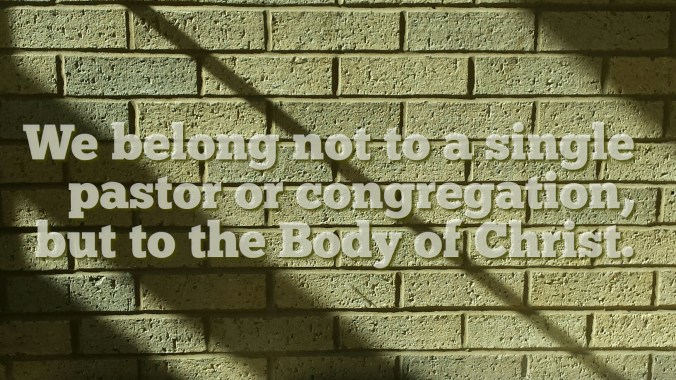
We belong not to a single pastor or congregation, but to the Body of Christ. We owe our primary allegiance not to a candidate, a party, or even a nation, but to the Kingdom of Heaven. We must not turn anyone into an idol who warps our faith; rather we must measure all would-be idols against the standards set by Christ. Idols – whether graven or human – eventually betray us. We may out of necessity follow a Gideon into battle, but only Christ leads us to eternal life.

Comfort: Christ is our spiritual north star.

Challenge: Meditate on the people and institutions you follow; how critical of them are you?

Prayer: Loving and all powerful God, I am faithful to you above all others. Amen.

Discussion: Without tearing apart someone’s character, when have you been disappointed in someone you trusted as a leader?

Join the discussion! If you enjoyed this post, feel free to join an extended discussion as part of the C+C Facebook group. You’ll be notified of new posts through FB, and have the opportunity to share your thoughts with some lovely people. Or feel free to comment here on WordPress, or even re-blog – the more the merrier!

Variety is the Spice of (Eternal) Life

beautyjourney

Today’s readings (click below to open in new tab/window):
Psalms 96; 147:1-11, Judges 7:19-8:12, Acts 3:12-26, John 1:29-42


According to John’s gospel, the first two disciples of Jesus were originally disciples of John the Baptist. One Jesus walked by the three of them, and John declared him the Lamb of God. The two disciples began to literally follow him, until he turned around and asked what they were looking for. Then they followed him home. One of them (Andrew) found his brother Simon to tell him they’d found the Messiah. When they met, Jesus told Simon his new name was Cephas (Aramaic for Rock, the same meaning as Peter).

Don’t Matthew, Mark, and Luke tell a much more interesting version of this story? In that one, Jesus goes down to the docks, starts recruiting, and promises to make any who follow him “fishers of men” – a sales pitch so good people drop their nets and follow him immediately.

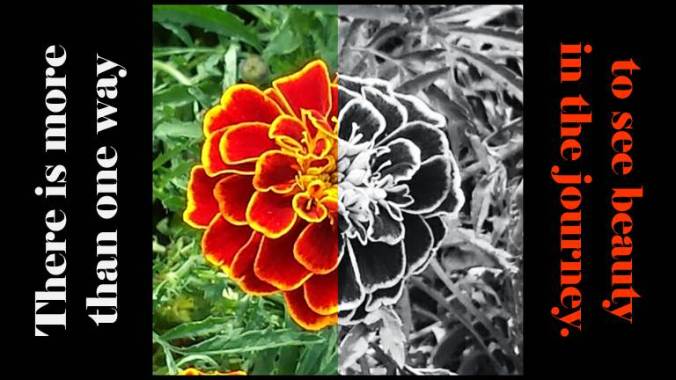
In both versions, whether guided by a teacher or invited directly, Jesus’s disciples feel immediately drawn to follow him. In a way, these two paths reflect different ways we come to know Christ: we can be born into a faith passed on to us, or Jesus can come bursting into our lives from seemingly nowhere. Neither way is more correct than the other, but one makes a more exciting story. While this was not the point John’s gospel was trying to make, it may help us be more open to the variety of faith journeys we encounter.

If we have been born into a faith, dramatic conversion stories may seem more compelling than our own lifelong belief. We should let their enthusiasm reinvigorate our own faith and challenge us to look at it as if it were new to us. If we are converts, we have recently given much thought to what we believe and why, like immigrants who’ve studied to become citizens. Though it may seem others haven’t worked quite as hard for the privilege, we can rely on the grounded experience of lifelong citizens of faith to inform us of the rich traditions we share. No matter how we’ve come to know Christ, we have gifts to share.

Comfort: Whether your faith is new or lifelong, you are an equal member of the Body of Christ.

Challenge: Share your faith journey with someone, and invite them to share theirs with you.

Prayer: Gracious and loving God, thank you for providing many roads to relationship with you. Amen.

Discussion: Have you found anyone’s faith journey particularly inspiring?

Join the discussion! If you enjoyed this post, feel free to join an extended discussion as part of the C+C Facebook group. You’ll be notified of new posts through FB, and have the opportunity to share your thoughts with some lovely people. Or feel free to comment here on WordPress, or even re-blog – the more the merrier!
Prepare Ye

1470146333745.jpg

Today’s readings (click below to open in new tab/window):
Psalms 12; 146, Judges 7:1-18, Acts 3:1-11, John 1:19-28


When the Pharisees pressed John the Baptist about his identity, he replied with a quote from Isaiah: “I am the voice of one crying out in the wilderness, ‘Make straight the way of the Lord.'” Notably he did not say he was the one making the way straight: he offered a rallying cry, but did not take it upon himself to fill the valleys and lower the mountains and level the rugged places. No, he left those duties to us.

If we look critically at the spiritual landscape of our local community, our nation, or our world, do we see straight paths carved out to usher in the glory of the Lord? Let’s just say much of that highway project remains to be completed. Deep valleys of unbridged poverty interrupt the road. Mountains of wealth, power, or other worldly distractions tempt us to achievement which in reality is more obstacle than accomplishment. Our world is a study in the contrast between spiritual mountains and valleys. High and low social status. Casually discarded half-full bottles of water … and tarps laid out to catch a few life-sustaining drops of dew. Piles of diamonds towering above the graves of those who died to excavate them. The temptation to fill the valleys by toppling the mountains into them can be great.

Unfortunately the challenge isn’t so simple, and none of us can complete this project alone. Some days the best we can do is move one teaspoon of earth at a time, and not even all that without spilling some. But John, Isaiah, the prophets, and the saints keep calling to us: “Prepare ye the way of the Lord.” As long as we keep to our task – spoon by spoon, mountain by mountain – the way of the Lord is that much closer to its completion.

If it all seems overwhelming, perhaps we can begin by leveling the mountains and valleys – those things blocking God from view – in our own hearts. Then we open ourselves to serve as one of the countless stepping stones the Lord uses to stride to the places most in need.

Comfort: If you are struggling, remember God is on your side.

Challenge: If you are comfortable, remember you are on God’s side.

Prayer: God of Abundance, I will seek to prepare Your way in the wilderness. Amen.

Discussion: It’s easy to cast the poor as victims and the rich as villains, but both are operating within the same system of injustice. What are some better, non-binary ways to understand the world?

Join the discussion! If you enjoyed this post, feel free to join an extended discussion as part of the C+C Facebook group. You’ll be notified of new posts through FB, and have the opportunity to share your thoughts with some lovely people. Or feel free to comment here on WordPress, or even re-blog – the more the merrier!

Christian Community

1470063661778.jpg

Today’s readings (click below to open in new tab/window):
Psalms 62; 145, Judges 6:25-40, Acts 2:37-47, John 1:1-18


How would we react if our pastor suggested we take all our money to church, throw it into a big pile with everyone else’s money, and let people take what they needed when they needed it? In most churches, we’d start the search for a new pastor. However, Acts 2 tells us that’s how the earliest Christians chose to shape their community.

When our church plans a mission trip, our preparation includes reflection on Acts 2:43-47. We do indeed pool our resources, eat and pray together, and gain the good will of the people by serving them. So far we haven’t sold all our possessions, but members of some Christian communities – often called the New Monastics – have done just that to better serve each other and their neighbors. Some commit to this way of life permanently, and others do it for a season. Mission trips usually last for a short season, but living this way only for a little while can have a profound impact.

The Christian community of Acts functions very differently than today’s mainstream Christian communities. When we hear from people who want to define America as a “Christian nation,” how often do they suggest we divest ourselves of possessions and pool our resources? When someone expresses a desire to do so, do we take them seriously or call them communists or radicals? American culture is based on capitalism and democracy. As Christians, we recognize these are not ends in themselves, but means for building a society. When they are used as tools for injustice and exploitation, as any government or economy can be, we must be the voice of justice – the voice of Christ. When we value ideologies above the values taught by Christ, we must examine and adjust our priorities.

Should we all sell everything and live in communes? Probably not. But we should embrace the underlying values of the early Christians: community is more important than personal wealth; trust is more important than certainty; and time spent in service transforms us in positive ways. What changes can we make to reflect those values in our own lives?

Comfort: Each small step toward community make the next one easier.

Challenge: For each nine dollars you spend on food this week, spend the tenth on donations to a food bank.

Prayer: God of hope, thank you for the gift of community. Amen.

Discussion: What do you think are the positives and negatives of communal living?

Join the discussion! If you enjoyed this post, feel free to join an extended discussion as part of the C+C Facebook group. You’ll be notified of new posts through FB, and have the opportunity to share your thoughts with some lovely people. Or feel free to comment here on WordPress, or even re-blog – the more the merrier!

Holy Underdog!

dragons

Today’s readings (click below to open in new tab/window):
Psalms 108; 150, Judges 6:1-24, 2 Corinthians 9:6-15, Mark 3:20-30


Like many heroes of Israel, Gideon had a humble beginning. Because the Israelites had begun to worship foreign gods, for seven years the Lord allowed the Midianites and other peoples to raze the crops and livestock of Israel: “They and their livestock would come up […] as thick as locusts; neither they nor their camels could be counted; so they wasted the land as they came in.” Gideon’s family threshed their wheat in a wine press to hide it from the Midianites. When the angel of the Lord appeared and told him he would be Israel’s new champion, Gideon was skeptical: “But sir, how can I deliver Israel? My clan is the weakest in Manasseh, and I am the least in my family.” The Lord assured Gideon that – with the Lord at his side – he would be victorious.

Gideon came from a long tradition of underdogs chosen by God (Abraham, Joseph, and Moses to name a few) and many more would follow. What is it God loves about an underdog?

Underdogs are humble. Life has taught them personal strength isn’t always enough. It takes real humility to submit ourselves to God’s will; a person who is used to success on their own terms can find that submission difficult. We have to recognize and admit to our “weaknesses” before they can really become opportunities for God’s strength to shine.

The victory of an underdog is a real testament to faith in God’s power. Had the roles of David and Goliath been reversed, and Goliath been Israel’s giant champion, it would have been just another story of might makes right. When we follow God, right makes might.

Over and over scripture teaches us God has a love of the disenfranchised. The Mosaic Law has numerous rules about treating widows, orphans, and foreigners with compassion. Jesus taught constantly about loving the poor. The prophets tell us Israel fell from God’s favor when the people became satisfied with themselves and ignored the needy. Holy underdogs are a continuous reminder that God’s justice is not about acquiring what we deserve, but about serving others in need.

Comfort: Whether you feel like a champion or not, God loves you as one.

Challenge: In the coming week, watch the news for examples of true underdogs who have accomplished something important of noble. Can you see the Lord’s influence in their lives?

Prayer: Lord, I thank you for the strength that sustains me even when I am weary and afraid. Amen.

Discussion: Do you have a favorite underdog story?

Join the discussion! If you enjoyed this post, feel free to join an extended discussion as part of the C+C Facebook group. You’ll be notified of new posts through FB, and have the opportunity to share your thoughts with some lovely people. Or feel free to comment here on WordPress, or even re-blog – the more the merrier!

Double Standards

monsters

Today’s readings (click below to open in new tab/window):
Psalms 122; 149, Judges 5:19-31, Acts 2:22-36, Matthew 28:11-20


Have you heard of Jael? She played a pivotal role in the book of Judges. Israel was battling the Canaanite army, whose captain was Sisera. When he realized his cause was lost, Sisera sought refuge at the home of Heber and Jael, Kenites who had no conflict with the Canaanites. Home alone, Jael offered Sisera milk, food, and a place to sleep. As he slept, Jael hammered a tent spike through his skull until it stuck in the ground. Jael’s deed is celebrated in The Song of Deborah, a judge of Israel who prophesied a woman would kill Sisera. Yet Jael remains a controversial figure: she violated the hospitality code of her culture by harming a guest in her home. Normally the Israelites would have judged this type of infraction quite negatively, but since it was to their benefit, they interpreted it as the will of God.

After Jesus had risen from the grave, the chief priests and elders offered a large bribe to Roman guards to say his body had been stolen while they slept. They further offered to run interference with the governor, should word of the missing body get back to him. These chiefs and elders were the supposed spiritual leaders of the Jewish people. Among the laws they represented was a prohibition on bearing false witness. To do so warranted punishment equal to whatever the wronged party would have suffered. Yet because they convinced themselves they were doing right, the hypocrisy did not matter to them.

Double standards are pernicious, especially when we believe our cause is just. It’s natural to overlook flaws in the people and institutions we favor, and exaggerate them in those we don’t. Doing so, however, undermines our integrity, our credibility, and ultimately the cause we serve. For people of integrity, good ends do not justify bad means. The righteous who resort to unrighteous tactics destroy the thing they hope to preserve. Consciously hold your friends, your enemies, and yourself to the same standards. Let us be less concerned with whether we “win” … and more with whether we witness to Christ.

Comfort: Losing is no shame if you lose with integrity.

Challenge: Over the next week, pay to attention to the double standards of your own views, especially around religion and politics.

Prayer: God of Justice, open my eyes to my own short sightedness. Amen.

Discussion: What double standards bother you the most?

Join the discussion! If you enjoyed this post, feel free to join an extended discussion as part of the C+C Facebook group. You’ll be notified of new posts through FB, and have the opportunity to share your thoughts with some lovely people. Or feel free to comment here on WordPress, or even re-blog – the more the merrier!