Heat vs Light

heatlight

Today’s readings (click below to open in new tab/window):
Psalms 122; 149, Numbers 24:12-25, Romans 8:18-25, Matthew 22:23-40


The Sadducees – an aristocratic group of Jewish religious leaders who did not believe in resurrection – were determined to discredit Jesus. They had a vested interest in maintaining the status quo with Rome by squashing this rabble-rousing preacher.  Their attempts to trick him into appearing foolish consistently backfired.

According to Mosaic law, if a married Jewish man died, his brother was to marry his widow. The Sadducees posed a scenario in which a woman was married to seven different brothers, because each had to marry her when another brother died. Which brother, they wanted to know, would be her husband in the resurrection?

At first it may sound like  legitimate question, but it’s actually a pretty juvenile approach, not unlike asking whether Superman could beat up The Hulk, or what would happen if a werewolf and a vampire bit each other at the same time. Sure it might provide hours of heated distraction for people who get geeked over hypothetical situations, but it doesn’t mean anything.

Jesus stopped this whole line of “reasoning” in its tracks by telling the Sadducees they couldn’t even ask the right question. “In the resurrection,” Jesus told them, “they neither marry nor are given in marriage, but are like angels in heaven.”

When the Sadducees retreated, the Pharisees – who were political rivals but united against the common enemy of Jesus – tested him by asking what was the most important commandment. Jesus said:

‘You shall love the Lord your God with all your heart, and with all your soul, and with all your mind.’ This is the greatest and first commandment. And a second is like it: ‘You shall love your neighbor as yourself.’ On these two commandments hang all the law and the prophets.”

Some Christians thrive on essentially meaningless debates over technicalities which seem vital to theology wonks, but bruise and break the Body of Christ; we’ve got the evidence of hundreds of denominational scars. When we’re drawn into conversations which are more invested in division than unity, especially with other Christians, let’s remember the two great commandments. They teach us to ask better questions.

Comfort: Nobody has all the answers.

Challenge: Including you.

Prayer: Lord of Heaven and Earth, I love you with all my heart, mind, and soul. Give me strength to love my neighbor as myself, and to love myself well. Amen.

Discussion: Have you ever gotten into a debate that generated a lot of heat and little or no light?

Join the discussion! If you enjoyed this post, feel free to join an extended discussion as part of the C+C Facebook group. You’ll be notified of new posts through FB, and have the opportunity to share your thoughts with some lovely people. Or feel free to comment here on WordPress, or even re-blog – the more the merrier!

God or Caesar?

1467384667330.jpg

Today’s readings (click below to open in new tab/window):
Psalms 88; 148, Numbers 24:1-13, Romans 8:12-17, Matthew 22:15-22

Political parties thrive on an “Us vs. Them” mentality, so beware equating faith with politics. It’s difficult enough to find a congregation aligning with all our religious values, so how could any secular organization hope to do so? While we should stand on our principles, political affiliation – whether Left, Right, or Center – is not a litmus test for determining who is a “real” Christian.  When politics and faith become so entangled that the issues of a party – regardless of whether they have anything to do with the Gospel – acquire religious status and devotion, political affiliation becomes an idol.

The Pharisees tried to trap Jesus by asking whether Jews should pay Roman taxes. He answered: “Give to the emperor the things that are the emperor’s, and to God the things that are God’s.” His answer stymied them, in no small part because he didn’t actually answer the question! Some interpret this passage as implying we should honor state obligations as long as they don’t interfere with religious ones; if the emperor’s face is stamped on the coin of the realm, we can return it to him as required. Does this seem a little out of character for the Jesus who would flip the entire social order so the last will be first? Let’s not confuse a reconciling faith with one that merely appeases. Might this interpretation have Jesus giving too much regard to the state? Could we instead say Jesus teaches us the state is a reality we live with, but it does not impact our faith? Christians in capitalist democracies aren’t more or less Christian than those living happily under monarchies or socialism.

Since in truth everything belongs to God, nothing really belongs to the emperor (or any government). We live our faith regardless of the emperor or president. We can have an opinion on taxes – or any number of secular issues – but if we elevate them to religious status we fall into the Pharisees’ trap. Friends, family and associates may push us, even unwittingly, toward such traps. Instead let’s follow Jesus’ example, and not flip the coin of false choices.

Comfort: God’s nature is the same regardless of circumstance.

Challenge: Do some study of Christians in other countries.

Prayer: God of Hope, teach me to recognize what is important to you. Amen.

Discussion: if you have a political affiliation, has it ever come into conflict with your faith?

Join the discussion! If you enjoyed this post, feel free to join an extended discussion as part of the C+C Facebook group. You’ll be notified of new posts through FB, and have the opportunity to share your thoughts with some lovely people. Or feel free to comment here on WordPress, or even re-blog – the more the merrier!
Come to the Banquet

1467321551779.jpg

Today’s readings (click below to open in new tab/window):
Psalms 143; 147:12-20, Numbers 23:11-26, Romans 8:1-11, Matthew 22:1-14

After the Parable of the Husbandmen, Matthew presents us the Parable of the Wedding Banquet. In the first parable, a landowner hired tenants to farm his vineyard. When he sent his servants and son to collect, the tenants killed them. The landowner killed the tenants and replaced them with more suitable staff.

In the second parable, a king prepares a wedding banquet for his son. He sends servants to gather the invited guests, but the guests refuse to come. He sends more servants, who share details about the sumptuous feast, but the guests seize, mistreat, and kill them. After the king’s army destroys those who rejected him, he sends more servants to invite anyone they can find, until the wedding hall is filled. One guest is inexplicably without wedding clothes, and the king throws him out.

We could interpret these parables as lessons about a harsh God, but these stories – especially read back-to-back without the artificial separation of chapters – say something more poignant. In both parables, the God figure generously invites people to participate in his abundance. The people not only repeatedly reject his offers, they kill his true servants. More than simple disobedience, or even indifference, the rejection is a deep betrayal. These lessons say God’s default attitude toward us is one of eager welcome, and that trying his patience to the breaking point takes some serious effort.

When the king invites the second group of guests to the banquet, he makes no distinction between good and bad. The guest who rejects the wedding clothes (which would have been provided by the king) has already been forgiven, and still chooses to dishonor his benefactor. When we accept the invitation to God’s banquet, Christ has already wiped the slate for us prior to our arrival, but we would be foolish to take it for granted.

No matter what harsh teachings you may hear, remember God does not eagerly pounce on your failure, but desires you to enjoy life in his abundance. It is not something we can win or that God capriciously takes from us, but it is ours to lose.

Comfort: God is rooting for you to accept Him.

Challenge: Some people are determined to reject God. We are still to love them.

Prayer: Generous God, thank your for the life of abundance you freely offer. Amen.

Discussion: Have you ever felt like rejecting God? What did you do?

Join the discussion! If you enjoyed this post, feel free to join an extended discussion as part of the C+C Facebook group. You’ll be notified of new posts through FB, and have the opportunity to share your thoughts with some lovely people. Or feel free to comment here on WordPress, or even re-blog – the more the merrier!

One and done?

1467241145380.jpg

Today’s readings (click below to open in new tab/window):
Psalms 65; 147:1-11, Numbers 22:41-23:12, Romans 7:13-25, Matthew 21:33-46


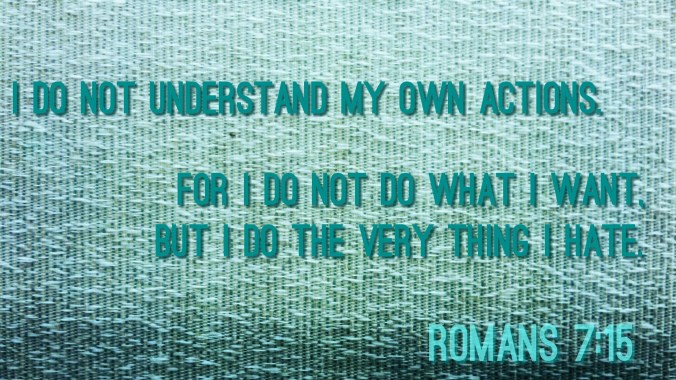
One tenet of Calvinism is the belief that God has predetermined who will be “elected” (believers saved by grace) and who will not. Though there are varying schools of thought on the interaction of belief and election, and people ask how they can know if they are elected, the prevailing presumption seems to be that belief is evidence you have been elected. But really you only know that you believe at this moment. People and circumstances constantly change.

In the Parable of the Husbandmen, a landowner (God) plants a vineyard (the nation of Israel), leases it to some tenants (the leaders of Israel), and leaves the country. While he is away, he sends servants (the prophets of old) to claim the produce, but the tenants beat, kill, and stone them. Finally the landowner sends his son (Jesus) but the servants kill him, too.

It seems clear the tenants believed they could establish themselves as the rightful occupants, beneficiaries, and heirs of the vineyard. They had been hand-picked by the landowner, but turned out to be untrustworthy. Unsurprisingly, the religious leaders in Jesus’s audience were not fans of this story. Without debating the merits of Calvinism, can we see how this parable illustrates the dangers of taking one’s own righteousness for granted?

As with many things in Christianity, humility in this area serves us well. Yes, believers should rejoice in our salvation. But we should not assume that automatically makes us good caretakers of the faith. It is never our own convictions and strengths that save us, but the grace of God. We might think of the tenants as evil, but as Rebecca Solnit (paraphrasing Mary McCarthy) says: “we are all the heroes of our own stories.” In other words, without being open to outside perspectives, we aren’t the best judges of our own righteousness; we need to remain open to the idea we could become the bad tenants. The fruits of the spirit are not ours to horde, but to return to God when called to do so. Salvation is not a one-time deal, but something we accept every day.

Comfort: God desires your salvation.

Challenge: Though our salvation is a cause for joy, our faith must remain humble.

Prayer: God of Salvation, teach me to serve you and not my own interests. Amen.

Discussion: How do you feel about predestination?

Join the discussion! If you enjoyed this post, feel free to join an extended discussion as part of the C+C Facebook group. You’ll be notified of new posts through FB, and have the opportunity to share your thoughts with some lovely people. Or comment here on WordPress, or feel free to re-blog. The more the merrier!

The Unknown God

1466973849765.jpg

Today’s readings (click below to open in new tab/window):
Psalms 67; 150, Numbers 21:4-9, 21-35, Acts (17:12-21) 17:23-24, Luke 13:10-17


While Paul was stranded in Athens after being driven out of Berea, he didn’t waste any time. Paul noticed the Athenians were always looking for something new to believe in, and he took advantage of their nature to spread the Gospel of Jesus Christ. The Greek pantheon included a dozen Olympian gods and many more besides, so the city was full of idols to all of them. In one temple he noticed an shrine dedicated to “an unknown god” just in case the worshipers had missed a deity. Paul told the Athenians this unknown god was the god of Israel, who had made the world and everything in it.

Constructing an idol to an unknown God may seem opportunistic or pragmatic, but there is a certain element of humility in it. Allowing for an unknown God was admitting “there is more to the nature of divinity than we know.” Despite all our talk about the mystery of God, many Christians are content to behave as if God is completely known to us. Our idols are creeds and books, doctrine and dogma. How often have we used them to justify the worship of a false god – a god who condones inequality and injustice, corruption and bigotry; a god who values what and who we value, and hates what and who we hate? A god we have created in our own image.

Jesus remains a constant source of surprise about the nature of God. Over and over he taught us that defining and limiting God – even with the most righteous intentions – reduces us to worshiping a cold, dead idol with no spark of love or mercy. By using parables rather than directives, he showed us God is more knowable through question and mystery than through rigid rule books. We aren’t free to define God however we want, but we are free from having God defined for us by people pretending to have all the answers. Admitting ignorance is sometimes a giant leap toward wisdom. Genesis tells us God spoke the world into existence; Christ’s incarnation transformed that monologue into an ongoing conversation.

Comfort: You don’t have to have all the answers.

Challenge: Nobody has all the answers.

Prayer: God of creation, I seek to follow Jesus Christ to truth and love. Correct my path when I am in error, and keep my heart humble. Amen.

Discussion: What is the difference between seeking truth, and simple rebelliousness?

Join the discussion! If you enjoyed this post, feel free to join an extended discussion as part of the C+C Facebook group. You’ll be notified of new posts through FB, and have the opportunity to share your thoughts with some lovely people.

Hosanna!

hosanna

Today’s readings (click below to open in new tab/window):
Psalms 56; 149, Numbers 20:14-29, Romans 6:1-11, Matthew 21:1-11


Today’s passage from Matthew is traditionally read during the Palm Sunday passion narrative. Jesus sends a couple disciples ahead to find a donkey and a colt so he can ride them into Jerusalem. A crowd gathers and lays cloaks and branches on the road as they praise his arrival with “Hosanna!” The colt and the donkey are rich with symbolism and meaning, but today let’s think about what it means to hear this story outside the Lenten and Easter season.

As Jesus arrived, word spread. Without social media, television, or cameras, word of mouth quickly drew great numbers – enough people to put the literal fear of God into local religious and civil authorities. A couple thousand years later, this is still true. When Christ is present in our communities, we see and hear about that presence in the testimony of changed lives. Sometimes, maybe unbeknownst to us, we are the ones testifying. When people hear our individual and collective stories, who responds with “Hosanna!” and who trembles? Throughout history, Christ has been on the side of the marginalized and downtrodden. If our lives causes the poor and the outcast to be afraid, and the powers-that-be to celebrate, it may be time to seriously re-calibrate our outlook and message.

Then there’s the other side of the coin. Most days we’re in the crowd minding our own business. When Jesus shows up are we more likely to recognize him in a polished preacher who could sell sand in a desert, a person wearing rags and living in a car, or someone who looks like they are from our own neighborhood? It’s a trick question, because it’s the message, not the style of messenger, that counts; any person we meet could be spreading the Word; we need to be open to hearing it.

We should be prepared to greet Christ not just yearly, but daily. The cloaks we lay before him are woven from lives of service; the branches grown from seeds of neighborly love. Though that first road led to the cross, we now follow him down the road to new life.

Comfort: Every day presents a chance to be renewed through Christ.

Challenge: Christ often arrives in unexpected ways, sometimes ways we find difficult to accept.

Prayer: God of New Life, thank you for the life, sacrifice, and resurrection of Christ Jesus. May my life be a worthy tribute to lay at his feet. Amen.

Discussion: Where have you unexpectedly discovered Christ?

Join the discussion! If you enjoyed this post, feel free to join an extended discussion as part of the C+C Facebook group. You’ll be notified of new posts through FB, and have the opportunity to share your thoughts with some lovely people.

Entrance Exams

UsThem

Today’s readings (click below to open in new tab/window):
Psalms 19; 150, Numbers 14:26-45, Acts 15:1-12, Luke 12:49-56


A 2012 U.S. News and World Report study claimed one out of three American citizens tested could not pass the civics portion of the immigration naturalization test. Rather than indict our educational system, but let’s consider what it says about our attitudes toward membership. Many exclusive groups, such as nations or religions, accept people born inside the group into full membership. Outsiders who wish to immigrate or convert must usually undergo education, testing and other entrance requirements. The different standards point to an underlying assumption that being born into a group imparts an essential understanding of the group’s culture. This study would indicate otherwise. Is it possible that one reason we construct “entrance exams” is to reassure ourselves of the superiority of our own group?

When some people in Antioch began saying Gentiles could only be saved if they were “circumcised according to the custom of Moses,” Paul and Barnabas strongly disagreed. Peter agreed and asked the gathered apostles why they would put God to the test “by placing on the neck of the disciples a yoke that neither our ancestors nor we were able to bear?” In other words, if the Jewish people couldn’t save themselves with the law, Gentiles shouldn’t be expected to either. Does it sound a little like the type of entrance exam that doesn’t create good members, so much as hype the superiority of the group?

Of course immigration requires regulation, and conversion at least some minimal commitment to the standards of a religion: a person who believes Jesus never existed would make a poor Disciple of Christ. However, we must be careful we don’t exclude people based on matters of preference. Today we don’t ask each other whether we’ve been circumcised, but we may ask whether someone’s baptism was full-immersion or not, or which prayer someone said to become saved, or any number of questions regarding local and denominational customs. It seems part of the human experience that we must learn again and again that God “has made no distinction between them and us.” As Christians, let us make no distinctions where God has not.

Comfort: In God’s kingdom there is only an “us.”

Challenge: Ask your pastor about the requirements to join your church. Or if you don’t belong to a church, ask a friend about theirs.

Prayer: God of the sun and stars, shine a light on all that unites us.

Discussion: We are all members of some groups by birth, and some by intent. Are they any memberships you struggle with?

Join the discussion! If you enjoyed this post, feel free to join an extended discussion as part of the C+C Facebook group. You’ll be notified of new posts through FB, and have the opportunity to share your thoughts with some lovely people.

Open Wide and Say “Awe!”

psalm 104

Today’s readings (click below to open in new tab/window):
Psalms 104; 149, Numbers 13:31-14:25, Romans 3:9-20, Matthew 19:1-12


A sense of awe is a natural reaction to the miracle of creation. Non-theists, especially those involved in the sciences, frequently cite a sense of wonder as central to their spirituality. People of faith, like the author of Psalm 104, attribute the beauty and complexity of the universe to the divine purpose behind it all. People who find time spent in nature helps them feel closer to God are attuned to this sense of wonder. If we spend a lot of time studying scripture and trying to wrap our brains around God, we may find it more difficult – or frivolous – to appreciate unexamined awe. Yet this is a legitimate way of apprehending God. As we seek to deepen our relationship with God, let’s take an occasional break from “head” space to dwell in “heart” space where that sense of awe can reach us best.

Busy people may need to intentionally slow down to notice everyday wonders. Do we ever think of the sky as being stretched out as the tent of God’s dwelling place, or of the winds as God’s messengers? These poetic images do not need to be literal to reveal truth to us. The psalmist finds wonder in springs gushing forth to satisfy every wild animal, in food springing from the earth, in trees and mountains, darkness and light, predator and prey. If we ever have trouble feeling our connection to a sense of wonder, Psalm 104 is an amazing resource for reestablishing it.

Let’s commit to being aware of the sources of awe in our own lives. The diverse beauty of a garden or a wild meadow. The complexity of our own bodies, even when they can no longer serve us well. The grace of hundreds of birds swooping in unison. The power of a storm extending farther than we can comprehend. Awe can inspire and terrify us at the same time. What it cannot be is analyzed, for then it ceases to be awe. Let us simply dwell in the presence of the Lord and for a while let awe crowd out everything else. It blesses a soul.

Comfort: Faith isn’t just about what you can figure out. Maybe it never is.

Challenge: At least once a week, find some time to simply be – t0 be in the presence of God without expectation and open to possibility.

Prayer: God of all creation, thank you for the beauty that surrounds me. Even on the days I can’t see it, maybe especially on those days, humble me with your wonder. Amen.

Discussion: Where or how do you find it easiest to experience God?

Join the discussion! If you enjoyed this post, feel free to join an extended discussion as part of the C+C Facebook group. You’ll be notified of new posts through FB, and have the opportunity to share your thoughts with some lovely people.

Poll: Discussion Questions?

I’d like to generate more conversation on the daily posts. I’d really like to hear what people think about the topics. Do you think a discussion questions might launch some conversation?