The Art of (Non) Persuasion

1469036875566.jpg

Today’s readings (click below to open in new tab/window):
Psalms 15; 147:1-11, Joshua 8:30-35, Romans 14:13-23, Matthew 26:57-68


Almost all of us have engaged in a dispute – friendly or heated – which ended with: “Let’s agree to disagree.” It sounds like a civil way to exit an impasse, but is it at all satisfying for either party?  Rarely is it as short and simple as “I believe X” and “I believe Not X” so “Let’s A2D.” By the time it becomes necessary to drop this conversational guillotine, both parties have probably been building a case for a position that matters to them – no one “agrees to disagree” chocolate ice cream is better than vanilla. The unspoken message is: “I believe you’re wrong, but it seems impossible to convince you otherwise.”

Members of the early church in Rome seemed to have trouble agreeing on a lot of things. The flagship issue was about food. In simplest terms, Gentile converts to Christianity did not feel the need to observe Jewish dietary laws, and many Jewish members of the church held fast to these laws. Paul directed his response to the Gentiles, whom he characterized as stronger in their faith:

I know and am persuaded in the Lord Jesus that nothing is unclean in itself; but it is unclean for anyone who thinks it unclean. If your brother or sister is being injured by what you eat, you are no longer walking in love … Let us then pursue what makes for peace and for mutual upbuilding.

In other words, we don’t have to impose, defend, or even share every belief we have, especially if doing so undermines someone’s faith or the peace of the community. Surrendering our need to be right is a legitimate spiritual discipline. Here’s a modern example for consideration: some people believe Gospel miracles are metaphors, and other people they are historical; does trying to convince someone miracles are or aren’t “true” help build their faith or just reinforce our own?

These days mutual upbuilding is a countercultural attitude. Rather, we are encouraged to shout over each other and refuse to give an inch. We don’t have to settle for agreeing to disagree … if we can agree to listen.

Comfort: You are not responsible for changing the minds of the world.

Challenge: For one whole day, try not to offer any unnecessary opinions. Can you go two?

Prayer: God of peace, grant me the wisdom to know when to speak and when to hold my tongue. May I do both these things to the glory of your name. Amen.

Discussion: What do you think are the practical limits of keeping your opinions to yourself? When does this type of peacemaking cross the line to appeasement?

Join the discussion! If you enjoyed this post, feel free to join an extended discussion as part of the C+C Facebook group. You’ll be notified of new posts through FB, and have the opportunity to share your thoughts with some lovely people. Or feel free to comment here on WordPress, or even re-blog – the more the merrier!


Road Trip

1468940645773.jpg

Today’s readings (click below to open in new tab/window):
Psalms 123; 146, Joshua 8:1-22, Romans 14:1-12, Matthew 26:47-56


“Christian” is not always a useful term. To people outside the faith, it’s often defined by a set of assumptions and biases that may or may not reflect the beliefs and actions of any particular person. Inside the faith … well, it’s pretty much the same thing. Not only have we divided ourselves into denominations, within those denominations we differ along liberal/conservative lines and other polarities. Non-denominational congregations often become de facto denominations with a single member church. On our good days we work toward being ecumenical, on most days we are tolerant but pretty convinced we are right, and on bad days we think “those people” are not “real Christians.”

Chapter 14 of Romans offers us some advice. Paul tells those who are strong in the faith to welcome the weaker (even those terms contain judgment), but not to quarrel over opinions. If the weak reject certain foods, or consider some days holier than others, the strong (who had moved beyond the law) should not chastise them, but instead recognize these actions were intended for the glory of God.

Our mistake lies in assuming that once we have embraced the Christian label, we have reached a destination.  In truth, we have only begun a journey. We follow the path to Christ our whole lives and beyond. We’re all at different places on the path, and that’s fine. If our fellows aren’t as far along as we are (and isn’t that a subjective call!) we may feel like they are holding us back and be tempted to drag them forward. Ever physically dragged someone along? Not only is it exhausting, it results in unsafe stumbling for both parties. What we can do is blaze a trail, mark it with friendly sign-posts, and wait to offer the refreshment of bread and wine before resuming our journey together. We can offer guidance when asked, and corrections if they wander off the path entirely or try to drag us backward with them. And we can humbly remember that up ahead, maybe out of sight beyond a curve in the road, someone waits patiently for us.

Comfort: Faith is like a road trip; we’re all trying to get to the same place. 

Challenge: Faith is like a road trip; we all have to stop at different times.

Prayer: Loving God, grant me patience and endurance for my own journey, and patience and generosity to help others on their own journey. Amen.

Discussion: Have you ever been tempted to think that someone who identifies as a Christian is not a “real” Christian? Why or why not?

Join the discussion! If you enjoyed this post, feel free to join an extended discussion as part of the C+C Facebook group. You’ll be notified of new posts through FB, and have the opportunity to share your thoughts with some lovely people. Or feel free to comment here on WordPress, or even re-blog – the more the merrier!

Solid Ground

Today’s readings (click below to open in new tab/window):
Psalms 41, 52; Joshua 7:1-13; Romans 13:8-14; Matthew 26:36-46


Our modern understanding of happiness – as in “life, liberty and the pursuit of” – is a fairly new concept. American culture equates happiness with gratification, pleasure, or pleasantness and portrays it as a normative state. The happiness our culture tells us we should pursue is in truth impossible to sustain, so we feel failure or even guilt because we aren’t happy all the time. We are uncomfortable with grief, anger, or any emotion standing in the way of happiness. Our impulse is to muscle our way through difficult emotions – to manage them rather than feel them.

The Hebrew root of “happy” as it’s used in Psalm 41 (“Happy are those who consider the poor”) is also used for blessed, fortunate, place, step, and fate. Happiness in the Psalms refers to a condition of right relationship with God – regardless of our emotional state. “Satisfied” isn’t quite as… satisfying a word as “happy,” but it is more accurate. Satisfaction is independent of emotion. If happiness is a breathtaking sunset, satisfaction is the ground under our feet: we don’t notice it most of the time, but if it starts to crumble beneath us, we realize the sunset is merely a pleasant distraction. Because happiness is comparatively intense, we think of satisfaction as a lesser state, when it is actually foundational.

When Jesus in Gethsemane prays for suffering to pass him by, is he what we would call happy? How about when he realizes his friends can’t stay awake with him? Or when he accepts God’s desires above his own? Jesus shows us that feeling good is not as important as doing what is right. In the core of his being, Christ is happy as the Psalms describe it.

Some people go to the opposite extreme of happiness, and seek out suffering to please God. While we must be willing to suffer in the name of love and solidarity with Christ, such manufactured piety is unhealthy. Being in right relationship with God comprises both rewards and difficulties, and the transient emotions accompanying them are like sunsets and rain. We need solid ground to enjoy or endure.

Comfort: We are created for more than happiness, we are created for relationship with God!

Challenge: When you get a chance, watch a nature documentary. As you watch, reflect on the struggles and rewards that are part of the natural order.

Prayer: God of all Creation, above all things I seek right relationship with you. Amen.

Discussion: During what experiences have you suffered, yet been at peace?

Join the discussion! If you enjoyed this post, feel free to join an extended discussion as part of the C+C Facebook group. You’ll be notified of new posts through FB, and have the opportunity to share your thoughts with some lovely people. Or feel free to comment here on WordPress, or even re-blog – the more the merrier!

Raise the Roof

raise the roof

Today’s readings (click below to open in new tab/window):
Psalms 19; 150, Joshua 6:15-27, Acts 22:30-23:11, Mark 2:1-12


When people learned Jesus had returned home after several days away, a crowd gathered outside his home. It was so large that one man, whose friends had carried him there on a mat because he was paralyzed, couldn’t get near the door. Undeterred, they tore an opening in the roof and lowered him into the house. Jesus rewarded his faith first by forgiving his sins, then by healing his infirmity.

This healing was performed partly as a demonstration to those who questioned Jesus’s authority to forgive sins. The faith of the man helped Jesus further his ministry.

How hard would we work to get our friends to Jesus? Would we tear open a roof? Progressive Christians are generally uncomfortable with evangelizing; worrying about being “Bible-thumpers” creates a spirit of timidity until we are more likely to witness to a favorite new novel or sushi restaurant than push the Good Book and Bread of Life. There are other places to begin, though. Open a door to give them a place to stay. Open a window to freshen a sick room they can’t leave. And while doing so we can open our mouths to have a conversation about who inspires and strengthens us to live in grace.

Of course we shouldn’t try to force the unwilling to meet him. But we can lend a hand to lift up those who are paralyzed by fear, addiction, or guilt. When we suffer those same conditions ourselves, we may need to lean on the strength and faith of others to deliver us to Christ’s presence. Even when it seems impossible that we might reach him, there is a way to be found if we persevere.

When we break through whatever barriers are between us and Christ’s healing presence, we may be surprised to find what we really need is forgiveness — from God and from ourselves. Without a clean start, any other type of healing we experience will be incomplete. We are healed not just for our own sakes, but also to further Christ’s ongoing ministry by sharing our own witness of the good news.

Comfort: There are many ways to share the Gospel.

Challenge: Find one that is comfortable to you.

Prayer: Gracious and Loving God, help me find my voice so I may spread your Gospel. Amen.

Discussion: What is the most rewarding conversation you have had about faith?

Join the discussion! If you enjoyed this post, feel free to join an extended discussion as part of the C+C Facebook group. You’ll be notified of new posts through FB, and have the opportunity to share your thoughts with some lovely people. Or feel free to comment here on WordPress, or even re-blog – the more the merrier!
Authority? Figures.

Today’s readings (click below to open in new tab/window):
Psalms 104; 149, Joshua 6:1-14, Romans 13:1-7, Matthew 26:26-35


In Romans 13 Paul writes that earthly authorities are appointed by God, therefore we should submit to them. He asserts that anyone who has good conduct has no reason to fear the authorities. He claims “the authority does not bear the sword in vain” – that it does not punish people without good cause. Paul goes so far as to say resisting authority is equivalent to resisting God, a behavior worthy of wrath.

Does this accurately reflect our experience of authority?

Paul wrote this letter during a time when political and civil unrest threatened the status of the Jewish People in the Roman Empire. He wanted to prevent them from committing acts that would invite retaliation. This attitude must have been a divisive one, since so many of Jesus’ teachings and actions were aimed directly against the abuses of the Roman government. How could Paul bring himself to defend the empire that crucified his Savior?

Paul offered no qualifiers, but Biblical commentaries usually advise us his words apply only to just authorities. The problem is this leads to circular logic: the ones we like are just, the ones we don’t are not. After the last several presidential elections, whether the winner was a conservative or liberal, many people who supported the opposition claimed the winner was illegitimate. We take a similar view of federal judges: when we agree with their rulings, they are upholding the constitution; when we disagree, they are judicial activists. And in non-democratic countries it’s even more complicated.

What to do? One option might be to withdraw from the political process altogether, as some denominations do. Yet this option doesn’t seem to reflect the actions of Jesus, the many martyrs, and other advocates of justice who died standing up to authority. We might be better off to remember the only authority to whom we owe any allegiance is God. We’re going to disagree about what that means, but each of us is obligated to act as we believe God calls us to. If we have ears to listen, Christ and the Spirit will point us toward true authority.

Comfort: You don’t answer to anyone but God.

Challenge: You still have to live with authority.

Prayer: Creator God, Lord of Heaven and Earth, I am your creature, and will follow you before all others. Amen.

Discussion: When does authority rub you the wrong way?

Join the discussion! If you enjoyed this post, feel free to join an extended discussion as part of the C+C Facebook group. You’ll be notified of new posts through FB, and have the opportunity to share your thoughts with some lovely people. Or feel free to comment here on WordPress, or even re-blog – the more the merrier!

Burning Love

Today’s readings (click below to open in new tab/window):
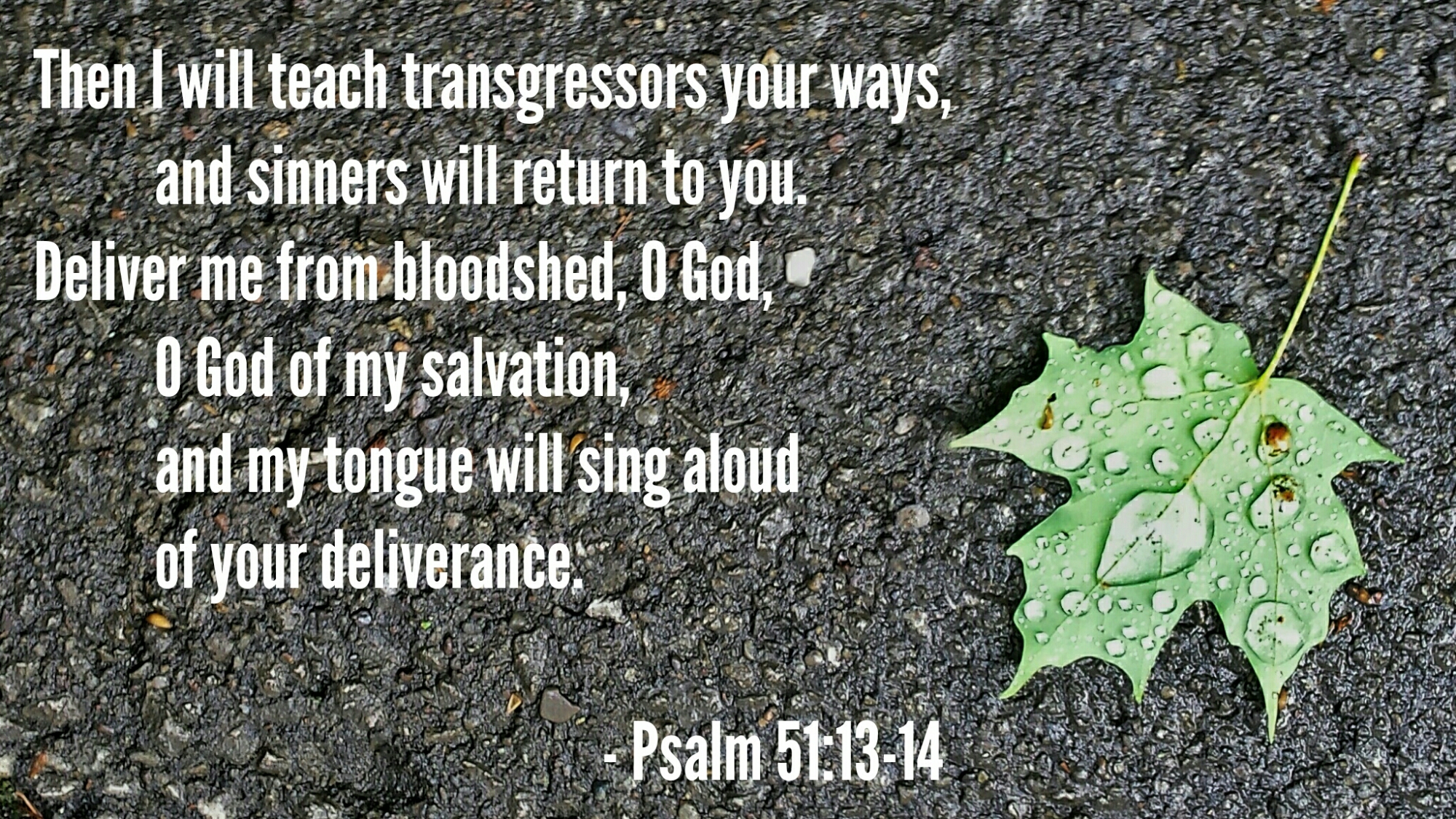
Psalms 51; 148, Joshua 4:19-5:1, 10-15, Romans 12:9-21, Matthew 26:17-25


Who are your enemies and what are you doing about it?

According to Saint Paul, you should be stepping up to meet their needs. In Romans 12 he says “bless those who persecute you” and “do not repay anyone evil for evil” and goes on to quote Proverbs: “if your enemies are hungry, feed them; if they are thirsty, give them something to drink; for by doing this you will heap burning coals on their heads.” Paul tells us: “Do not be overcome by evil, but overcome evil with good.”

In the middle of all this he says: “never avenge yourselves, but leave room for the wrath of God.” Think about that for a moment: when we avenge ourselves on our enemies, we crowd out God.

Do we really live as if we believe, as Paul teaches, evil will be overcome by good? Not in the sense of the good guys outgunning, outlawyering, or outthinking the bad guys, but in the sense of good showing mercy to evil? Whether we are advocating for public policy, going about the business of the church, or conducting our personal lives, Christians can’t – with any integrity – cry for punishment of wrongdoing without equal enthusiasm for doing good to those who wrong us. We’re not talking about giving aid and comfort to enemy forces so they can destroy us, but leaving room for God to mete out any wrath on His own terms and timeline. Does that sound potentially dangerous? Well, Christ doesn’t command us to be safe; he commands us to love.

Do we fear our enemy’s repentance? Jonah (of “and the whale” fame) didn’t want to offer mercy to the people of Nineveh because they were his enemies and he was invested in hating them. He was miserable when they repented. Shouldn’t our Christian desire be that even our enemies find salvation? When our vengeance preempts the Lord’s wrath, it also preempts His mercy. Woe to anyone who has to own up to either of those.

Who are your enemies?

Are they next door? Overseas? Thirsty? Hungry?

And what are you doing about it?

Comfort: Foregoing revenge does not make you weak; it makes you faithful.

Challenge: In the news an social media, watch for examples of either/or, us/them thinking and talk with friends about how to overcome such thinking.

Prayer: Gracious and Merciful God, grant me the patience to put aside my ego and self-righteousness so I may do good to those who persecute me. Amen.

Discussion: What wrongdoing, personally or generally, do you have trouble forgiving?

Join the discussion! If you enjoyed this post, feel free to join an extended discussion as part of the C+C Facebook group. You’ll be notified of new posts through FB, and have the opportunity to share your thoughts with some lovely people. Or feel free to comment here on WordPress, or even re-blog – the more the merrier!

Take Time for Renewal

Today’s readings (click below to open in new tab/window):
Psalms 97; 147:12-20, Joshua 3:14-4:7, Romans 12:1-8, Matthew 26:1-16


Like all relationships, our relationship with Christ needs tending. We can become so focused on doing the work we feel Christ calls us to do, that we neglect the source of that call. Our periods of relationship-building may not always look productive to others, but in the long run they renew us for continued service. In today’s reading from Matthew, Judas chastises a woman for pouring an extravagant amount of expensive perfume on Jesus’ feet, and complains it could have been sold to feed the poor. Jesus tells Judas the poor will always be around, but he would only be with them a little longer. The woman’s action was a needed moment of preparation for both her and Jesus. Relentlessly monitoring each “unproductive” moment and “wasted” penny does not bring us closer to Christ, but it does bring us closer to burnout.

Isn’t a conscious effort at restoration and renewal – be it physical or spiritual – a form of gratitude to God? If we used a car only in the service of feeding the hungry and clothing the naked, it would still need regular maintenance. Otherwise it would break down too soon and be good for nothing. Yet we are often willing to risk letting our own engines seize rather than take the time for self-care. Do we believe God wants us to drive ourselves non-stop only to be junked before our time? Of course not. Our physical, mental and spiritual health are gifts from God. Gratitude includes caring for them as they deserve.

The sad truth is, the poor (and the sick, and the imprisoned) always will be around, at least until the kingdom of God is fulfilled. The work is never ending, but our endurance isn’t. Even Jesus needed and sought periods of solitude and rest – why would we expect more of ourselves? The Pharisees accused Jesus of being a drunkard and a glutton. Yet we are often afraid of the criticism we might receive for saying “no” to a request for our time or talents. We answer only to God, and God knows we could use a break.

Comfort: You can rest without guilt.

Challenge: Look at your weekly and monthly schedules. Is there anything you could let go in order to find more time to rest in the presence of God?

Prayer: God of Renewal, thank you for the talents you have given me to serve your people, and the time you have given me to spend with you. Amen.

Discussion: Do you have trouble saying “No?” Why?

Join the discussion! If you enjoyed this post, feel free to join an extended discussion as part of the C+C Facebook group. You’ll be notified of new posts through FB, and have the opportunity to share your thoughts with some lovely people. Or feel free to comment here on WordPress, or even re-blog – the more the merrier!

Whatsoever

WhatsoeverYouDo

Today’s readings (click below to open in new tab/window):
Psalms 89:1-18; 147:1-11, Joshua 3:1-13, Romans 11:25-36, Matthew 25:31-46


In the Parable of the Sheep and the Goats, a king judges and divides all the nations of the world – blessed sheep on his right hand and accursed goats on his left. To the sheep he says: “I was hungry and you gave me food, I was thirsty and you gave me something to drink, I was a stranger and you welcomed me, I was naked and you gave me clothing, I was sick and you took care of me, I was in prison and you visited me.” The sheep ask when they did these things for him, and he explains whenever they did it for the least of his brothers, they did it for him. How we understand this message hinges on how we understand Jesus’s use of “brothers.”

Many hear a call to social justice, to consider all who are in need the brothers (and sisters) of Christ. Scripture – in both Old and New Testament passages – certainly calls us to show mercy and hospitality to the poor and marginalized, so this reading seems in character. Others focus on how “brother” is used elsewhere in Matthew, and associate it with “follower.” Under this interpretation, the story is about the consequences of how people receive specifically the disciples and – by extension – preachers of the Gospel. The second camp is concerned the first camp promotes a social gospel reducing salvation to a list of specific good works. The first camp calls this an oversimplification of their position and claims those who truly receive Christ respond to those in need.

Between these camps lies the beauty of parables, which are open to interpretation. Not to say we can impose whatever meaning suits our current whim, or that Jesus’s intent is unimportant, but that more than one aspect of the truth can be revealed. Is it not vital to welcome the Gospel and aid its bearers? And once we do so, will we not view our relationship to “the least” in a new light that inspires us to serve them? Our relationship to the Gospel is inseparable from our relationship to the world.

Comfort: You can’t go wrong welcoming the Gospel and serving the needy.

Challenge: Our fellow Christians, who have different understandings of the Gospel than we do, can be the hardest not to judge. Make it a point this week to engage such people in conversation, with the intent only of understanding, not persuading.

Prayer: Gracious and Merciful God, grant me the patience and humility to understand the lessons of scripture. Amen.

Discussion: Is there one interpretation of this parable you prefer over the other? Is it the same one you feel is more “authentic?”

Join the discussion! If you enjoyed this post, feel free to join an extended discussion as part of the C+C Facebook group. You’ll be notified of new posts through FB, and have the opportunity to share your thoughts with some lovely people. Or feel free to comment here on WordPress, or even re-blog – the more the merrier!

Questions That Matter

stupidanswers

Today’s readings (click below to open in new tab/window):
Psalms 116; 147:12-20, Deuteronomy 3:18-28, Romans 9:19-33, Matthew 24:1-14


In Matthew 24, Jesus begins to talk about his eventual return. He speaks about what signs and trials the disciples can expect before the “end of the age.” Despite expectations of his earliest followers, it didn’t happen quickly, and ever since some Christians have spent great effort assembling world events like pieces of an end-times jigsaw puzzle. Others insist on creating a rift between science and religion, pitting evolution against creationism. Is it possible to spend so much time focusing on the beginning and the end that we lose sight of the middle – the only time we can actually know?

While knowledge is important on its own merit, it can be a mistake to hang our faith on specific, unknowable questions, or to judge whether someone else is “our kind” of Christian based on their answers. So what sort of faith questions should we be asking ourselves and each other? Evaluating them against another question might help: Will the answer affect my faith or how I live my life? Developing a relationship with Christ; feeding the hungry; sharing the Good News: none of these depend on arguments for or against evolution, or whether the end is nigh. A life lived in love, justice and mercy transcends apologetics and refutations. Defense of a certain idea or school of thought can easily become an idol substituted for true faith. Hundreds of end time predictions have been wrong. What do we suppose the people who pinned their faith on these predictions did the day after the world ended?

Jesus did talk about the beginning and the end, but the greater part of his lessons was about the middle – about living in right relationship with God and each other. Shouldn’t we spend our limited time and energy on the things Jesus emphasized? Endless debate doesn’t clothe the naked or comfort the sick. If Jesus does show up tomorrow, we might rather be caught doing what he told us to do.

So here’s a question: what can we do for the least of our brothers and sisters? The answer matters to Jesus and to us.

Comfort: We don’t need all the answers to follow Jesus.

Challenge: The next time someone wants to engage you in divisive theological debate, instead invite her/him to share in works of mercy.

Prayer: Gracious and Merciful God, lead me always to the right questions. Amen.

Discussion: Are you able to confidently say: “I don’t know?” Why or why not?

Join the discussion! If you enjoyed this post, feel free to join an extended discussion as part of the C+C Facebook group. You’ll be notified of new posts through FB, and have the opportunity to share your thoughts with some lovely people. Or feel free to comment here on WordPress, or even re-blog – the more the merrier!

Relay Race

OLYMPUS DIGITAL CAMERA

Today’s readings (click below to open in new tab/window):
Psalms 108; 150, Numbers 27:12-23, Acts 19:11-20, Mark 1:14-20


One of the hardest lessons of faith is learning to trust that God will come through, but not always according to our preferred schedule – or in our lifetime. As the nation of Israel drew nearer and nearer to entering the promised land, God reminded Moses that, because of past disobediences, Moses would not be entering it with them. After forty years of wandering, Moses must have found the disappointment almost unbearable. Can we imagine, were we to be in Moses’s sandals, not clinging to some sliver of hope that God might relent and let us in, if only for a day? Yet Moses chose to trust God and contribute to a smooth transition in leadership.

From the decades wandering in the desert, to the church being established in Acts, to our modern day, faith is a community experience. Our current vocabulary around faith emphasizes personal salvation, and that is an element of it, but the peace we pray for and the justice we long for are not personal but communal transformations. Maturing in that faith includes recognizing when it is time to pass the torch. Projects and missions near and dear to our hearts may not be fully realized in our own lifetimes. A narrow, individual perspective interprets this as failure, but a faith founded in community – in the eternal Body of Christ – invests hope in the long game.

Whether we are retiring from ministry or can no longer find time to serve as bake sale coordinator, merely stepping aside is not enough; when possible we should work to ease the transition for both our community and the person assuming our burden. When the Lord named Joshua as Moses’s successor, Moses presented him to the congregation, and personally commissioned him to lead the people. How humbling it must have been for Moses to admit the people could enter the promised land with or without him. Yet for a long time he was God’s chosen instrument of liberation and survival, and there must have been immense satisfaction as well.

Faith is not a sprint, or a marathon, but a relay race.

Comfort: You alone are not responsible for the fate of the world.

Challenge: When it is time to pass along your responsibilities, do so with grace.

Prayer: Eternal God, teach me to appreciate the time and tasks you have given me, as well as the opportunity to rest in your peace. Amen.

Discussion: Do you have trouble letting other people do things their own way?

Join the discussion! If you enjoyed this post, feel free to join an extended discussion as part of the C+C Facebook group. You’ll be notified of new posts through FB, and have the opportunity to share your thoughts with some lovely people. Or feel free to comment here on WordPress, or even re-blog – the more the merrier!