Joy and Fear

1459351854474.jpg

Today’s readings (click below to open in new tab/window):
Psalms 99; 147:1-11, Exodus 12:40-51, 1 Corinthians (15:29) 30-41, Matthew 28:1-16


When Mary Magdalene and the other Mary visited the tomb of Jesus on that first Easter morning, they found the tomb empty and the stone rolled away. A young man robed in white greeted them by saying “Do not be afraid!” He explained Jesus had risen and gone ahead to Galilee. Matthew tells us they left the tomb filled with fear and joy. They were overjoyed when Jesus met them on their way to find the other disciples and deliver the angel’s message. He greeted them and also said “Do not be afraid.”

Many of our most joyous life experiences also include a degree of fear.

Cold feet before marriage. The impending birth of a child. Graduating school and entering the adult world. Such events contain within them the promise of renewed life and hopes, but also an element of the unknown. The two Marys and the other disciples were overjoyed their messiah was alive, but his resurrection also created a change in their entire worldview and set them on a path of faith no one had ever trod before.

Ellen Johnson Sirleaf, President of Liberia and first woman president of an African nation, wrote in her memoirs: “If your dreams don’t scare you, they are not big enough.” The power of the resurrection allows us to have enormous dreams, so if we aren’t a little afraid, we may not be embracing all things made possible through Christ.

Not often, one suspects. But that reassurance can prevent fear from paralyzing us. When the risen Christ tells us not to be afraid, he’s not a drill sergeant yelling “Suck it up, buttercup!” because we have to tough it out on our own. He is telling us we don’t need to be afraid because he is with us. Beyond death. Always.

Like the two Marys rushing down the road to spread the good news, joy and fear travel hand in hand. We have a word for that: Hope.

Comfort: Christ is with us always, ready to transform our fear to joy.

Challenge: Do something that scares you, but be sure to invite Christ to do it with you.

Prayer: God of Hope, give me strength in my fear, and hear my words of praise for you in my joy. In you all things are possible. Amen.

Discussion: How does fear hold you back?

Join the discussion! If you enjoyed this post, feel free to join an extended discussion as part of the C+C Facebook group. You’ll be notified of new posts through FB, and have the opportunity to share your thoughts with some lovely people.

The Rest of the Story

historyvtruth

Today’s readings (click below to open in new tab/window):
Psalms 98; 146, Exodus 12:28-39, 1 Corinthians 15:12-28, Mark 16:9-20


The phrase “history is written by the victors” is usually attributed to Winston Churchill or Walter Benjamin. The implication is that each culture or civilization gaining prominence rewrites history as propaganda flattering itself. Some facts may be inconvenient or unavoidable, but over time the need to define ourselves as the good guys spins them; consider recent proposed textbook revisions redefining slaves as “immigrants” and the slave trade as the “Atlantic triangular trade,” or Canadian First Nations peoples mutually agreeing to “make room” for European settlers.

Could this idea influence our reading of the Passover story in Exodus?

Moses had been trying to convince Pharaoh to let the Hebrews leave captivity to worship in the wilderness. Every time Pharaoh refused to free them – the text says God “hardened Pharaoh’s heart” – God sent another plague upon Egypt. These escalated in severity until finally, in the dead of night, God slew all the firstborn of Egypt. Through Moses God warned the Hebrews to mark their doorways with blood, so their houses were passed over for death. As grief devastated Egypt, Pharaoh finally relented.

Exodus was written by the Hebrew people for the Hebrew people. Of course they are its heroes … but God also created the Egyptians. They were estranged from Him and worshipped other Gods, but surely He took no joy in slaughtering His children. Our Christian story traces its roots through the history of the Hebrew people, so we celebrate this victory, but can we imagine the horror of this story from the perspective of an Egyptian peasant family losing their only son?

In numerous biblical passages, God forbade the Jews to return to Egypt. Yet when the infant Jesus was in danger of being killed by Herod, God instructed Joseph to flee to Egypt, where he and his family stayed for years. Moabites, Uzzites, and Samaritans were similarly vilified, but God raised heroes from them and Christ spoke freely with them. When we wrestle to reconcile texts like the Passover narrative to God’s loving nature (and we should), we should also be wrestling with our own attitudes about personal, cultural, and historical enemies. People on the losing side of history have stories too.

Comfort: It’s OK to think critically and ask questions of difficult Biblical material. God will always be able to handle your questions and doubts.

Challenge: Do some research into history as relayed by people who didn’t fare so well.

Prayer: God of the past, present, and future, guide me so my contributions to the story of humankind are just and merciful. Amen.

Discussion: What parts of your national history are subject to “whitewashing?”

Join the discussion! If you enjoyed this post, feel free to join an extended discussion as part of the C+C Facebook group. You’ll be notified of new posts through FB, and have the opportunity to share your thoughts with some lovely people.

Rolling Away the Stones

rock-in-hand-1238868-1920x1440

Today’s readings (click below to open in new tab/window): 
Psalms 97; 145, Exodus 12:14-27, 1 Corinthians 15:1-11, Mark 16:1-8


When Mary Magdalene and Mary the mother of James visited the tomb of Jesus, they found the stone rolled aside and the tomb empty, nothing but a shroud left behind. A young man in a white robe told them Jesus had already gone ahead to Galilee.

If we open ourselves to God’s love and forgiveness, resurrection is a process as native as breathing. We can see it at work in addictions recovery, mended relationships, and lives rebuilt after disaster or tragedy. The difference between surviving and thriving is our daily willingness to embrace the possibility of resurrection – of an entirely new life in God’s love.

The stones that entomb us – grudges, disappointments, anger, bitterness, hate – can seem difficult or impossible to roll away. What if they only seem heavy because we refuse to let go of them? A light stone, if held long enough, becomes a tiresome burden. The most difficult roadblock to resurrection can be our unwillingness to simply let go of burdens we have clung to because their weight anchors us to a familiar place. Change – even good change – is something we tend to resist. Resurrection is a hand open to possibility, and you can’t open your hand while holding on to something else.

On a mission trip to Lake Charles, Louisiana we were helping repair the damage done by Hurricane Rita. Miz Stanley’s home was scheduled for light repairs, but once there we learned the trauma of the storm and the death of her husband had driven the elderly owner to develop a hoarding compulsion. The hoarding and accompanying health hazards had estranged her from her children and grandchildren. One woman in our group had experience helping people transition from independent to assisted living, and knew how to coach someone to let go of possessions. Talk about resurrection! Over the course of a week we cleared out an entire floor of her house, and Miz Stanley continued to progress long after we left. Her relationship with her family was renewed, all because she literally let go of the old. The same possibility exists for all of us.

Comfort: The possibility of resurrection is always within arm’s length.

Challenge: When you pray this week, pray with your arms outstretched.

Prayer: Merciful and loving God, I am open to all the possibilities you offer!

Discussion: What stones do you refuse to let roll away from you?

Join the discussion! If you enjoyed this post, feel free to join an extended discussion as part of the C+C Facebook group. You’ll be notified of new posts through FB, and have the opportunity to share your thoughts with some lovely people. Or feel free to comment here on WordPress, or even re-blog – the more the merrier!

The Roseanne Reboot is a Nightmare (for political purists)

roseanne reboot publicity photo

The Roseanne reboot premiered to spectacular ratings, despite the many liberal and progressive voices publicly declaring they would not watch it because of the titular star’s enthusiastic support of President Trump, and conservatives boycotting it for including a “gender creative” grandchild. If I had to label my own political leanings, I think of myself as a left-of-center moderate – which generally means plenty of self-identifying conservatives classify me as a liberal and self-identifying liberals as ideologically impure.

I watched the double-episode Roseanne premier and I laughed. A lot. Much like the Will & Grace reboot, the characters fell into their old roles and relationships pretty seamlessly. Divisive politics were a prominent theme, but isn’t that going on in living rooms all over the United States?

The last election created political rifts in my own family for the first time that I can remember.  It’s not that we’ve always been in lockstep over candidates or even issues, but that this last election felt personal in ways previous ones never had. I am grateful that we are now getting back to a place where we can discuss policy and issues, rather than litigating yet again the morality of voting for either candidate. What’s done is done. Once more we can delve into the nuances of immigration, economics, gun control, health care, racism and other issues with rhetorical passion but without personal venom.

For a while I was convinced one’s choice of candidate revealed something more significant about them than it actually did. It turns out voting for the “other” candidate doesn’t make you a monster. I just can’t bring myself to stereotype any stripe of voter because we were all the same people before and after the election. We didn’t have fascists and snowflakes (or people throwing around ridiculously inappropriate terms like fascist and snowflake) in the family before, and we don’t have them now.

What I think has been much more revelatory is whether post-election one is more loyal to parties, candidates, and ideologies than to ideas and principles. In other words, do you defend the indefensible because it’s “your team” or do you aim for consistency and integrity? Plenty of people on both sides have passed or failed this standard.

And that brings us back to Roseanne. Many people seem not to be able to put aside Roseanne Barr’s personal (though very publicly expressed) politics to give the show a chance. But Barr is hardly the only contributor to this endeavor. Executive producer and actor Sara Gilbert (daughter Darlene) and actor Laurie Metcalf (sister Jackie) are integral to the show, and both have political viewpoints very divergent from Barr’s. Actor John Goodman (husband Dan) is largely apolitical as far as public persona goes. Do Barr’s politics trump (no pun intended) everyone else’s because she gets top billing? No viewpoint is silenced. Everyone looks equally ridiculous.

Are we so entrenched – are our beliefs and worldviews so fragile – that we can’t tolerate exposure to any enterprise that doesn’t completely conform to them, even when it espouses other values we agree with?

The following paragraph contains a few spoilers to make some points, so just skip it if you like – you’ll still be able to keep up.

Most confounding to ideological purists might be the characters’ lack of adherence to stereotyping. Grandmother Roseanne forcefully defends the clothing choices of her grandchild Mark – who does not identify as transgender but does identify as a someone most comfortable in traditionally feminine clothing. Does that sound like the left’s characterization of a stereotypical Trump supporter? Even when it seems the characters are about to prove the stereotypes right – Roseanne refers to Hillary Clinton as “the worst person in the world” and Jackie can’t resist making a point of wearing a pink pussy hat and Nasty Woman t-shirt to their reunion after a year-long, politically-driven estrangement – the expected vitriol makes an appearance but is ultimately unsustainable. It would seem we can maintain the anger only as long as we can maintain our self-imposed distance, but once love and necessity force us to interact … we start to remember who we were. The differences don’t disappear, but they are reduced to a controlled simmer.

Politics may be the current vehicle of the new show, but it’s not the destination. Roseanne continues primarily to be about how a struggling family gets through life together. Once the pressing problems of health, employment, deployment, and identity assert themselves, the characters – and we – remember politics divides us much more than it ever solves anything. Getting through life together isn’t a matter of accusing and persuading, but loving and serving.

I believe the program we need right now isn’t one where everyone in the family has reached a unified liberal or conservative consensus, but one that shows us how to be family despite our imperfections and (sometimes very raw) disagreements. Like the Roseanne of decades ago, the current incarnation reflects what’s going on in our own living rooms and at our own kitchen tables. There’s room for everyone – and for everyone to be pissed off. This cast has obviously become a family in more than a scripted sense, and as such they have learned to harness their common goals toward creation rather than let their differences drive them to enmity. Like it or not, that’s progress.

Risen and Recognized

1459099239295.jpg

Easter readings (click below to open in new tab/window):
Acts 10:34-43, Psalm 118:1-2, 14-24, Acts 10:34-43, Luke 24:1-12

Today’s daily readings:
Psalms 93; 150, Exodus 12:1-14, John 1:1-18, Luke 24:13-35


Jesus Christ is risen today! Alleluia!

Where will we encounter him? Cleopas and another disciple (possibly his wife, who was present at the crucifixion) were on the road to Emmaus when they met him. Surprised that he didn’t seem to know about recent events in Jerusalem, they spoke of the crucifixion and the empty tomb. Though he interpreted for them the meaning of everything that had happened, they still did not know who he was. When he sat down to eat with them and blessed bread and broke it, “their eyes were opened” and they knew the risen Christ. “He had been made known to them in the breaking of the bread.”

Like the disciples who met him on the road, or the boat full of disciples who later saw him on the shore but didn’t recognize him, our vision of Christ can be limited by our expectations.

When we limit Christ to what we already know of him, we are not following the living Christ, but worshiping a lifeless photograph. Christ didn’t rise so we could wrap ourselves in a shroud-like faith that preserves but does not reveal.

To find the living Christ we often have to take time away from the safe and familiar worship at the foot of the cross – because he is no longer there!

The risen Christ may seem like a stranger, but we will recognize him by his love. When he breaks bread with our enemies. When he stands on a cold street corner protesting injustice. When he holds the hand of a lonely friend with a terminal diagnosis. When he digs a well on a desert reservation so people don’t have to drive two hours for water every day. When he welcomes refugees fleeing violence into his home for weeks at a time. Christ does all these things when we, as his only body here on earth, do these things. It is then when others who do not know him may see his nature revealed in us. It is then we can declare our redeemer lives.

Jesus Christ is risen today! Alleluia!

Comfort: Our savior lives, and he lives in us!

Challenge: Today of all days, greet everyone with love.

Prayer: Dear LORD I give thanks for the Risen Christ! May I live ever more deeply into the love you have shown us through his sacrifice and resurrection. Your grace and mercy are endless. May my praise be endless as well. Amen.

Discussion: Despite being a resurrection people, we often entomb our faith by confining it to church. How can you let yours free in the world?


Inside Out

Untitled-1

Today’s readings (click below to open in new tab / window):
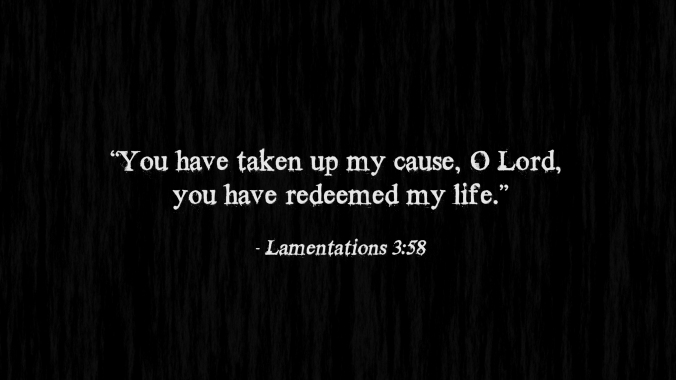
Psalms 43; 149, Lamentations 3:37-58, Hebrews 4:1-16, Romans 8:1-11


How do you go on?

After one of your closest companions betrays your beloved teacher …
After fear has driven you to deny your friend and savior …
After the messiah to whom you dedicated your life lies in a tomb…

… how do you go on?

The disciples would have begun observing the weekly Sabbath shortly before sundown on the day of Christ’s crucifixion. Candles would be lit. Prayers would be said. Songs sung. Meals eaten. Outward signs of mourning were forbidden on the Sabbath. Everything would have looked normal on the outside, but inside … grief and chaos.

Whatever activity or (this being the Sabbath) inactivity occupied their bodies, the disciples’ minds must have been on the tomb, not far away, with a body freshly lain and a stone newly rolled across it. From the outside it would have looked like any other tomb, but inside … incomprehensible injustice.

The scribes and Pharisees, Herod and Pilate, and everyone else who feared or hated Christ’s teachings were settling back into a sense of restored order, perhaps even contentment that they had successfully squelched this would-be king and prevented rebellion. The world looked the same as it had before, with the same people holding power, but deep inside … the rules of victory were being rewritten.

We spend a lot of time in this state, appearing one way to the world while, for better or worse, experiencing a wholly different inner life. Holy Saturday represents the tipping point of that experience. On that day, the disciples were resigned to the calm and ordered injustice of the flesh, while their souls were in torment. After that day, they were willing to sacrifice themselves on the altar of the Gospel, because nothing could shake the peace they had found in Christ. What a remarkable change!

What state are we in today? Is our world orderly but our faith easily shaken? Is our world in turmoil but our faith a rock? Or are we somewhere in-between, living an extended Holy Saturday moment, broken but hoping despite the evidence that justice will reign?

On the outside today may seem like any other day, but inside …

Comfort: The story isn’t over.

Challenge: Sometimes we have to give up exterior respectability to find interior peace.

Prayer: God of hope, today we mourn the injustice of the world. Send us peace. Send us love. Send us Christ. Amen.

Discussion: When has your outward stability masked inward change?

Join the discussion! If you enjoyed this post, feel free to join an extended discussion as part of the C+C Facebook group. You’ll be notified of new posts through FB, and have the opportunity to share your thoughts with some lovely people. Or feel free to comment here on WordPress, or even re-blog – the more the merrier!

Holy Friday

1458878752643.jpg

Today’s readings (click below to open in new tab/window):
Psalms 22; 148, Lamentations 3:1-9, 19-33, 1 Peter 1:10-20, John 13:36-38

Readings for Good Friday:
Isaiah 52:13-53:12, Psalm 22, Hebrews 10:16-25, John 18:1-19:42


If “Good Friday” seems like an odd name for a day commemorating a crucifixion, understand that good used to mean holy. All over the world, Christians re-enact Christ’s journey to Golgotha (also called Calvary) and his terrible execution. From congregations reading the passion together, to prayer groups walking the stations of the cross in troubled neighborhoods, to entire towns becoming Jerusalem for the day, Christians feel compelled to relive the story.

Because we know how the story turns out, we may find it easy to judge the crowds whose cheers turned to condemnation, or Peter, who – as Christ predicted – denied knowing him not not once, not twice, but three times. Certainly we would not have shouted “Crucify him!” We could never deny him … could we?

Let’s assume we could. Actually, let’s assume we have – because it’s true. None of us lives perfectly. That being the case, isn’t it comforting to know the person Jesus hand-picked to found the church was as flawed as we are? Maybe that’s why in passion stories most of us play the angry mob: to be reminded each of us is in need of forgiveness, and so don’t have the right to judge anyone. Christ later assured Peter he was still loved, but surely the knowledge of that moment of fear, weakness, and betrayal never left him. And almost as surely that memory helped forge the compassion and mercy for others that would have been necessary to speak for Christ.

When we feel like judging, let’s remember Peter – weak, frightened, impulsive, imperfect Peter. Then let’s remember Christ forgave him, as he forgives us, and calls us to forgive. It was the sin of the world that Christ forgave on that cross, including the sin of our own imperfect mercy and tarnished compassion.

From noon this day until Sunday morning, the disciples were without Christ. They thought the story was over, and despaired. This holy Friday and Saturday, let’s contemplate what it would mean to live without hope of forgiveness for ourselves and others. Today Christ hangs on the cross. We shouted “Crucify him!” Now we weep.

Comfort:

Challenge: Pray for forgiveness.

Prayer: Lord Jesus Christ, son of the living God, have mercy on me, a sinner.

Discussion: What does Good Friday mean to you?

Join the discussion! If you enjoyed this post, feel free to join an extended discussion as part of the C+C Facebook group. You’ll be notified of new posts through FB, and have the opportunity to share your thoughts with some lovely people. Or feel free to comment here on WordPress, or even re-blog – the more the merrier!

Where is bread and wine?

1451766966701

Today’s readings (click below to open in new tab / window):
Psalms 27; 147:12-20, Lamentations 2:10-18, 1 Corinthians 10:14-17; 11:27-32, Mark 14:12-25


Maundy Thursday is the day Christians traditionally observe The Last Supper, when we received the gift of communion from Christ. No matter our particular practices and beliefs around communion, all Christians can recognize it unites us across time and place. The significance of celebrating a salvation accomplished through a broken body and shed blood has been contemplated for lifetimes, yet its power and mystery are undiminished.

The book of Lamentations speaks of infants crying “Where is bread and wine?”as they faint weakly on their mothers’ bosom. These elements have been staples throughout recorded history. Their presence represents abundance, and their absence despair. The author, who was referring to physical bread and wine,  probably could not have imagined a crucified messiah. Yet in Christ’s sacrifice abundance and despair are united in a way that assures us the divine is present in all things, even the worst life has to offer. Even sitting at a meal with a friend you know will betray you to excruciating death.

Some days we can’t see the bread and wine.

Where are they when disease robs us of our comfort and dignity?
Where are they when senseless accidents rob us of our loved ones?
Where are they when the world burns at the hands of madmen?
Where are they when children are abused, abandoned, and sold into slavery?
Where are they when depression shrouds our souls in darkness?

They are at the communion table. The Lord’s Supper is powerful because it gives us a taste of bread and wine when we can’t find them on our own. It acknowledges that – right now – life is hard and tragic and seemingly senseless … but because that bread is Christ’s broken body, and that cup is filled with Christ’s shed blood, it reminds us God is present among us – and revealed – in life’s tragedy. Our pain is as real to God as it is to us.

We have been wandering the wilderness for so long we can’t see our way out. For now the bread may taste like ash and the wine like tears, but Lent always surrenders to Easter.

Comfort: God is present with you right now.

Challenge: Today, allow yourself to grieve.

Prayer: God, my creator, make known to me your presence. Amen.

Discussion: What does communion mean to you?

Join the discussion! If you enjoyed this post, feel free to join an extended discussion as part of the C+C Facebook group. You’ll be notified of new posts through FB, and have the opportunity to share your thoughts with some lovely people. Or feel free to comment here on WordPress, or even re-blog – the more the merrier!

Only Tenants

1458765638560.jpg

Today’s readings (click below to open in new tab / window):
Psalms 5; 147:1-11, Lamentations 2:1-9, 2 Corinthians 1:23-2:11, Mark 12:1-11


The Parable of the Tenants is a difficult story, which forces us to confront our unwillingness to put God’s desires above our own. A landowner entrusts his vineyard to tenants while he travels abroad. After the harvest the landowner dispatches servants to collect his share, but the tenants greet the servants with violence that ranges from beatings to murder. Finally the landowner sends his son, and they kill him too.

In the common interpretation of this story the landowner is God, the tenants are the appointed religious leaders, the vineyard is Israel, the servants are prophets of the past, and the son is Jesus. The leaders hold the people captive and forget the true head of the vineyard is God. They destroy any and all who oppose their claim to power, even those sent by the true owner. The death of the son foretells the crucifixion.

Contrast this parable with the second chapter of 2 Corinthians. The Biblical narrative tells us Paul visited Corinth three times. The first visit was to establish the church. The second one – which he refers to in his letter as “the painful visit” – was to reprimand church leadership for acting immorally. One man seems to have been particularly troublesome. In this letter, Paul says he is not going to visit again at this time precisely because he feels his corrections had been too harsh and wants to avoid causing any more pain for the church or himself. He asks the Corinthians to forgive the troublesome man and punish him no longer.

When Paul realized his approach was not true to his mission … he gave it back to God. A more stubborn man might have dug in his heels and justified his actions, maybe even returned to Corinth to double down. Paul knew spreading the Gospel was more important than defending himself. Refusing to surrender his plot of land might have broken the Corinthian church. Whether our plot is a ministry, a family, or an actual vineyard, we are all only tenants tending it best we can until the time comes to give it back to God.

Comfort: You don’t have to tend the whole world…

Challenge: … but tend your plot well and surrender it timely.

Prayer: Generous and loving God, teach me to care for your world as you have called me to do, and grant me the humility to change and grow with your seasons. Amen.

Discussion: When does your urge to punish endanger your willingness to forgive?

Join the discussion! If you enjoyed this post, feel free to join an extended discussion as part of the C+C Facebook group. You’ll be notified of new posts through FB, and have the opportunity to share your thoughts with some lovely people. Or feel free to comment here on WordPress, or even re-blog – the more the merrier!

Paulitically Correct

Today’s readings (click  below to open in new tab/window):
Psalms 34; 146, Lamentations 1:17-22, 2 Corinthians 1:8-22, Mark 11:27-33


Remember the old Reese’s Peanut Butter Cup commercials where one person walked down the sidewalk carrying chocolate, another person rounded the corner carrying peanut butter, and they collided? “You got your chocolate in my peanut butter! You got your peanut butter on my chocolate!” Then smiles as a voice announced: “Two great tastes that taste great together!” Religion and politics are the opposite of whatever that was: mix them together and it leaves a bad taste in everyone’s mouth.

The chief priests, scribes, and elders of Jerusalem were politicians first and religious leaders second. When they asked Jesus by whose authority he cleared the temple of moneychangers and merchants, he responded with a question of his own: “Did the baptism of John come from heaven, or was it of human origin?” If they chose heaven, they would have to explain why they hadn’t believed him. If they chose human, the crowd would become angry. Their response did not hinge on what was true,  but on what was politic. We don’t even know what they believed, because they said: “We don’t know” – the “I do not recall” of its time. The political press conference hasn’t changed much since then.

Because their politics undermined their moral authority, Jesus did not feel compelled to answer their questions. Perhaps we should take a similar approach to modern day religious leaders who rely on popularity to maintain authority. Many a pastor – regardless of personal beliefs – has refused to challenge a congregation on issues of inclusiveness for fear people might object and leave. Such silence is almost always interpreted as consent for the status quo. Religious leaders – ordained or self-proclaimed – seeking political office must depend on popularity to succeed, and that often means sacrificing  integrity on the altar of electability.

Jesus did not compromise his mission, even as his followers turned on him. Paul may have adapted his style to suit an audience, but his message remained consistent. Neither dodged the difficult questions.  We are wise to reserve our respect for religious leaders who do not pander, but tell us what they believe. Even when we disagree, integrity is a foundation for building relationships.

Comfort: It’s all right to question religious leaders when you question their motives.

Challenge: God has given you the ability to think for yourself. Use it.

Prayer: God of wisdom, grant me ears to hear the words of the just and righteous. Help me turn away from voices that lack integrity. Amen.

Discussion: Have you ever felt like you sold out your values?

Join the discussion! If you enjoyed this post, feel free to join an extended discussion as part of the C+C Facebook group. You’ll be notified of new posts through FB, and have the opportunity to share your thoughts with some lovely people. Or feel free to comment here on WordPress, or even re-blog – the more the merrier!