But what has God done for me lately?

language of friendship

Today’s readings (click below to open in new tab/window):
Psalms 57; 145, 1 Samuel 10:17-27, Acts 7:44-8:1a, Luke 22:52-62


New relationships are exciting. We learn new things. We feel new things. We expect new things. But as a relationship matures, we realize we can’t depend on things being constantly new. Deep relationships are based on established expectations. If we are wise, we confide more in someone we’ve grown to trust over time than in our most recent acquaintance. Unfortunately, we can become almost addicted to the excitement of new relationships because they raise immediately gratifying emotions. In the worst cases, we never learn to value depth over novelty.

In today’s reading from Acts, Stephen finishes telling his Hebrew audience the history of their people and how inconstant has been their faithfulness to God, the cycle of loving God when they are being delivered, and neglecting – or even turning away from – God after their memory of God’s deliverance begins to fade. In our passage from Judges, Saul has been selected as king because the people, in opposition to God’s wishes, want a king to be more like the idolatrous nations around them.

In what ways can we be like the ancient Hebrews? When people first find their faith, or have a faith-renewing experience, it’s like the beginning of a new relationship. They are wrapped up in feelings. They see God everywhere. They can be practically giddy. But novelty eventually fades. If the relationship ages without maturing, they need new experiences – like new “signs” – of God’s love and presence. An immature relationship demands constant reassurance because it values feeling over faith.

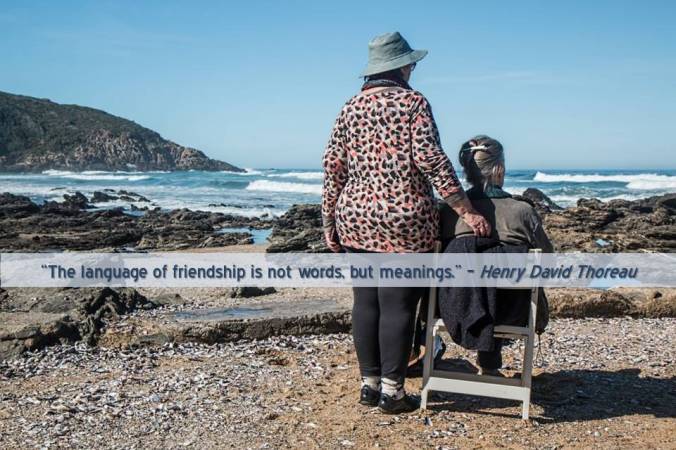
What a mature relationship with God may lack in flash, it makes up in substance. Like lifelong friends who are content simply to be in each other’s presence, our relationship with God may be punctuated with long periods of silence. We shouldn’t confuse this silence with absence or boredom. Like a fallow field, it may seem dormant, but below the surface its very structure is constantly renewed. While the steady maintenance of a good relationship, especially when it seems “dull,” may not produce the high of something new, an enduring relationship built on faith and trust is infinitely more rewarding.


Additional Reading:
For more about Stephen, traditionally considered the first Christian martyr, see Stephen The Leader or Sax and Violence.

Comfort: In times of God’s silence, we still build our relationship.

Challenge: This week, devote 10 minutes a day to silent meditation.

Prayer: God of renewal, I seek a mature and confident relationship with you.

Discussion: Think about your enduring relationships. What do they have in common?

Join the discussion! If you enjoyed this post, feel free to join an extended discussion as part of the C+C Facebook group. You’ll be notified of new posts through FB, and have the opportunity to share your thoughts with some lovely people. Or feel free to comment here on WordPress, or even re-blog – the more the merrier!

Not so Nice

SAMSUNG DIGITAL CAMERA

Today’s readings (click below to open in new tab/window):
Psalms 67; 150, 1 Samuel 10:1-16, Romans 4:13-25, Matthew 21:23-32


When the chief priests asked Jesus by what and whose authority he acted, he declined to answer. Instead, he offered a parable about two brothers whose father told them to work in the vineyard. The first refused, but then went; the second said yes, but didn’t follow through. Which, Jesus asked, did the will of his father? Then he said:

Truly I tell you, the tax collectors and the prostitutes are going into the kingdom of God ahead of you. For John came to you in the way of righteousness and you did not believe him, but the tax collectors and the prostitutes believed him; and even after you saw it, you did not change your minds and believe him.

Tax collectors and prostitutes were not considered “nice” people. Chief priests, the wealthy, and the other usual suspects  were (are?) considered polite society.  Even today we reward people more for blind obedience to the rules than for confronting unjust conditions. We would have more sympathy for refugees “if they followed the rules” though they flee the same types of horrors as did our ancestors who had far fewer rules to contend with. We wouldn’t dismiss protesters “if they were more polite” even though the times they make us uncomfortable are the only times we choose to listen to them. We insist on courtesy from the oppressed before we will acknowledge – let alone help relieve – their suffering.

Then we have the nerve to wear WWJD* t-shirts. Did the pharisees think Jesus was a “nice” guy?

An insistence on niceness always favors the powerful – because nice people don’t challenge the status quo. Jesus didn’t seem too keen on enabling the powerful status quo. So what did Jesus do?

He spoke up for the underdog.
He fraternized with all the “wrong” people.
He named hypocrisy when and where he saw it.
He cared more about people’s stories than their status.
He spoke the truth even when it made “nice” people uncomfortable.

Nice is easy. Kindness is complicated. Nice is cheap. Justice costs us. Nice is love in theory. Discipleship is love in practice.


* What Would Jesus Do?

Comfort: When you are unjustly persecuted, God is with you.

Challenge: When someone’s method of delivering a message makes you uncomfortable, make an effort to listen for content, not emotion.

Prayer: May God be gracious to us and bless us and make his face to shine upon us, that your way may be known upon earth, your saving power among all nations (Psalm 67:1-2).

Discussion: Valuing authenticity over niceness does not mean having free reign to be deliberately unkind just because we feel like it. When is the last time you were unnecessarily unkind?

Join the discussion! If you enjoyed this post, feel free to join an extended discussion as part of the C+C Facebook group. You’ll be notified of new posts through FB, and have the opportunity to share your thoughts with some lovely people. Or feel free to comment here on WordPress, or even re-blog – the more the merrier!

Invitation: Cross Traffic

cross traffic does not stop

Over the last few months our neighborhood has undergone a lot of changes in traffic patterns. My street in particular has had many stops signs and streetlights moved or removed. Judging from the number of automobile collisions, near misses, and squealing brakes, “Cross Traffic Does Not Stop” is not universally understood. You might assume that legally the responsibility clearly falls on the person who didn’t stop when they were supposed to, and most of the time you’d be right, but in many states the law says if you can try to avoid an accident and choose not to, you are also partially at fault. As I’ve lived on the street for several years, and I am aware of the increased possibility of accidents, you can be sure I slow down as I near problem intersections. Part of me is annoyed that I have to, but a better part doesn’t want my self-righteousness to cause anyone else pain.

Would it be fair to say the church doesn’t always take responsibility for how its own Cross-traffic can sometimes do more harm than good? We can feel fully justified about the course we have set, following the doctrinal rules of the road, but sometimes our determination to move our own agenda forward causes harm. When we are unyielding and someone gets hurt, we tend to shift all the blame to those sinful drivers who would be just fine if they followed the rules.

Life throws all kinds of confusing detours at people. If we are so stuck behind our righteous blinders that we’d rather collide than swerve, we need to take responsibility for the damages.

If we really want to share the gospel, instead of wielding it like two tons of unforgiving inertia,  we need to be aware of where people are. If we insist on being right, yet our rightness wounds or kills them (and bad religion has done plenty of both), exactly who have we saved? When it comes to life, none of us has a spotless driving record, yet when dealing with other people we often seem to forget how we’ve been forgiven and survived to tell the tale. We insist on repentance for sins we aren’t currently committing but remain silent about the ones we are (unless perhaps we protest too much). Offering a little accident forgiveness doesn’t mean we’ve justified the infraction.

If you feel like like you’ve been run over by the church, remember Jesus made many an unexpected left turn to love people he could have bypassed. If you don’t feel safe coming to him, let him come to you. Other people don’t get to make that decision for you.

The communion table is where Cross traffic stops to remember. Where we shouldn’t feel like people are cutting us off, because we shouldn’t be jockeying for the lead.  Where someone may experience their first taste of real love and forgiveness – provided we haven’t closed the road.

To paraphrase an old bumper sticker, “Save a life. Be aware. Struggling souls are everywhere.”

May the peace of our Lord Jesus Christ be with you all.

Rising Above

kitesurfing-2224645_1920

Today’s readings (click below to open in new tab/window):
Psalms 56; 149, 1 Samuel 9:15-10:1, Acts 7:30-43, Luke 22:39-51


The author of Psalm 56 feels besieged from all directions. The psalmist – trampled, oppressed, and fought against all day long – cries out to God for strength and relief. In the face of those who stir up strife, plan evil, and lurk ominously, the psalmist continues to thank and praise the God who will provide delivery from death. Amid many trials, this author’s faith even finds cause for poetry:

You have kept count of my tossings;
put my tears in your bottle.
Are they not in your record?

While a literal bottle of tears is unlikely, the psalmist imagined a God so invested in our well-being as to count our sorrows drop by drop; to remember our restless nights as if recorded in a ledger waiting to be balanced. Though enemies are plentiful, the psalmist trusts in God and asks, “What can flesh do to me?”

Are we able to place that kind of trust in God?

We face a lot of threats from mere mortals. Some days we feel as besieged as the psalmist. Do we scheme and plan how to get the upper hand or, as Psalm 56 advises, perform our vows to God and offer thanksgiving because we trust God will deliver us? Plotting a comeuppance for the person who got “our” promotion or bringing up at yet another family holiday dinner that decades-old grudge against our sibling may just be at odds with a better change God has in store for us. Do we have to put up with being stepped on? Certainly not. But when Jesus told us to love our enemies, he didn’t qualify it with “after you get over it.”

So many times, while we toss and weep as we need to, we neglect church, prayer time, or other things because we aren’t in the “right” frame of mind. Yet God isn’t waiting for us to be “right” … God waits for us to be present. Like the psalmist we may have every reason to be upset and fearful. When that’s the case, let’s lean into faith like a kite leans into the wind.

Comfort: God is with us in times of sorrow, fear, and anger.

Challenge: Think about the last time you were upset. Did you turn to God or rely on your own plans? Ask yourself what that can that teach you about how to react in the future.

Prayer: O Most High, when I am afraid, I put my trust in you (Psalm 56:2b-3).

Discussion: What’s your first instinct when you are attacked?

Join the discussion! If you enjoyed this post, feel free to join an extended discussion as part of the C+C Facebook group. You’ll be notified of new posts through FB, and have the opportunity to share your thoughts with some lovely people. Or feel free to comment here on WordPress, or even re-blog – the more the merrier!

The Word and The Sword

sword-790815_1920

Today’s readings (click below to open in new tab/window):
Psalms 130; 148, 1 Samuel 9:1-14, Acts 7:17-29, Luke 22:31-38


After the Last Supper, Jesus tried explaining to the apostles yet again that terrible things were about to befall him and them. He also assured them he would not leave them unprepared. After all, hadn’t they survived – even thrived – when he sent them on the road to spread his message with nothing but the clothes on their backs? Now though, he said, it was time to take up their bags and purses and carry a sword, even if they needed to sell a cloak to buy one. When they pointed out the two already at hand, he told them, “It is enough.”

This idea of Jesus encouraging them to carry weapons really stands out among his teachings to turn the other cheek and love one’s enemies. Sometimes it’s used by people to justify Christians using violence, generally in self-defense but sometimes in more broad terms.

But there’s a greater context.

Jesus referred to a prophetic scripture from Isaiah  which needed to be fulfilled: “And he was counted among the lawless.” Moving from itinerant (if heretical) preacher and his followers to the leader of a party of armed insurrectionists had “lawless” covered. And only a short time later, when Peter actually used one of those swords to defend his messiah, Jesus commanded him to put it away, adding (in Matthew’s gospel), “all who draw the sword will die by the sword.” And the Apostles were famous for their commitment to peace, not their handiness with blade, club, and fists.

We don’t have to assume a position of pacifism to understand Jesus’s advice to take up swords was not about condoning violence. On the other hand, while Jesus talked about loving and forgiving our enemies, he didn’t command us to surrender to them. Wherever our conscience takes us regarding violence and non-violence, we should remember that Christ is fully capable of defending himself or not as he chooses. Our fears never justify initiating violence in his name. To the contrary, times of fear are the times we most need to take a breath and ask ourselves how Jesus would choose to love.

Comfort: Jesus is with us in times of danger.

Challenge: When you must make decisions about violence, make decisions about love first.

Prayer: Search me, O God, and know my heart; test me and know my thoughts (Psalm 139:23).

Discussion: What are your feelings about the intersection of violence and faith?

Join the discussion! If you enjoyed this post, feel free to join an extended discussion as part of the C+C Facebook group. You’ll be notified of new posts through FB, and have the opportunity to share your thoughts with some lovely people. Or feel free to comment here on WordPress, or even re-blog – the more the merrier!

King Makers

stone-horses-1219399-1598x838

Today’s readings (click below to open in new tab/window):
Psalms 36; 127:12-20, 1 Samuel 8:1-22, Acts 6:15-7:16, Luke 22:24-30


After the death of Joshua, who succeeded Moses, the twelve tribes of Israel fractured and many people – despite warnings from God – began to worship Ba’al in the custom of the other nations around them. Because of their unfaithfulness, God let their enemies overtake them. Eventually God pitied them and raised up a series of Judges (part military leader, part legal arbiter) to restore them. Both the people and the Judges were unsteady in their faithfulness, and often relapsed to Ba’al worship and corruption.

Samuel, a righteous man and Judge, was the father of the last two judges. His sons, nothing like him, “took bribes and perverted justice.” The people demanded Samuel instead appoint a King. Samuel and God were displeased  the people were rejecting God as their king. Speaking for God, Samuel told them what kind of king they could expect: one who took their property and harvests, conscripted their sons into military service, forced their daughters to labor for him, and generally abused them for his own gain.

The people refused to listen, saying “We are determined to have a king over us, so that we also may be like other nations, and that our king may govern us and go out before us and fight our battles.”

God let them have their king.

How often we choose affection for a king (or president, coach, etc.) over the blessings of the Lord. As long as we feel someone will lead our tribe to victory (be that in elections, ball games, or culture wars), we overlook that person’s ruinous flaws even when we’ve been warned about them. In the end the institution we claimed to want to protect is tarnished at best or gutted at worst.

We can do better than willful ignorance and hollow victory. Our triumphs don’t come from bringing our enemies low at any cost, but from holding our integrity high at every cost. Placing our trust in God rather than kings frees us to tell the emperor he has no clothes. The price we pay today will be much lower than one that comes due later.

Comfort: Choosing integrity is its own reward.

Challenge: Don’t follow authorities blindly, even when you agree with them.

Prayer: O continue your steadfast love to those who know you, and your salvation to the upright of heart! (Psalm 36:10).

Discussion: Have you ever found yourself questioning someone you once put on a pedestal?

Join the discussion! If you enjoyed this post, feel free to join an extended discussion as part of the C+C Facebook group. You’ll be notified of new posts through FB, and have the opportunity to share your thoughts with some lovely people. Or feel free to comment here on WordPress, or even re-blog – the more the merrier!

Every Table

still-life-379858_1920

Today’s readings (click below to open in new tab/window):
Psalms 15; 147:1-11, 1 Samuel 7:2-17, Acts 6:1-15, Luke 22:14-23


Jesus didn’t seem to miss many meals. He accepted dinner invitations from tax collectors. He ate with Pharisees. He arranged delivery for thousands of people. Twice. He had intimate dinners with friends. He invited himself into the homes of notorious sinners. After his resurrection, he threw a fish fry on the beach.

Certainly his most famous meal was the Last Supper, the Passover meal he ate with his disciples before the crucifixion. From this meal we derive communion, sharing bread and cup in remembrance as Jesus commanded us.

When he arrived for this supper, he told his disciples, “I have eagerly desired to eat this Passover with you before I suffer.” Among them was Judas, who would betray him for thirty pieces of silver. Jesus could have called Judas out and sent him away before the meal, but he chose not to. This choice makes a remarkable statement: despite knowing of Judas’s impending treachery, Jesus still loved him so much that he wanted Judas at the table for one last meal together.

Depending on how we understand the accounts of Judas’s death (Matthew tells us he gave back the silver the next day and hung himself), this was also his last supper. An even more final event perhaps, since no resurrection awaited him. Imagine the sorrow Christ must have felt not just because he was betrayed, but because his friend would never have a chance to know that even he could have been forgiven.

While we point to the cross as the ultimate symbol of Christ’s immeasurable love for us, let’s not neglect the sacredness of the table. Not just the communion table, but every table which offers us a chance to love as Christ did; that is … every table. Powerful as it is, the cross is in the past, over and done, making relatively few demands of us. The table is present, sometimes inconveniently so, waiting for us to invite friends, strangers, enemies, and lost causes to experience the common humanity Christ brought to every table.

The cross, though indispensable, remains empty. The table begs to be filled.

Additional Reading:
For more on today’s passage from Luke, see Continental Divide.

For thoughts on today’s reading from Acts, see The more things change…

Comfort: Even when we don’t invite Christ to the table, he may invite himself.

Challenge: Read about the meals Jesus attended in Luke.

Prayer: Be gracious to me, and hear my prayer (Psalm 4:1b).

Discussion: Describe a meal that was especially meaningful to you.

Join the discussion! If you enjoyed this post, feel free to join an extended discussion as part of the C+C Facebook group. You’ll be notified of new posts through FB, and have the opportunity to share your thoughts with some lovely people. Or feel free to comment here on WordPress, or even re-blog – the more the merrier!

Dishing It Out

cookies-1735090_1280

Today’s readings (click below to open in new tab/window):
Psalms 123; 146, 1 Samuel 6:1-16, Acts 5:27-42, Luke 21:37-22:13


In some cultures it’s considered bad form to return a dish empty. Say your neighbor prepares a plate of food for you when you aren’t feeling well. You might bake some nice cookies to load the plate before you give it back. That extra touch shows your gratitude.

When the Philistines finally realized they needed to return the Ark of the Covenant to Israel, their priests and diviners warned them not to send it back empty. To do so would show a lack of respect for the great power the Lord had demonstrated. It sounds a little disgusting, but the Philistines fashioned ten gold tumors and ten gold mice to accompany the Ark. These objects symbolized the plagues the Lord had set upon them.

Now they could have just dropped the Ark at the border and run, but that would not have shown they had learned and grown in their understanding of the relationship through the hardships that damaged it. That’s kind of the difference between making an apology and making amends. An apology requires a certain sincerity and an admission of wrongdoing, and is often adequate, but it’s like returning the plate empty: your bases are covered and you’re under no further obligation, but it’s the bare minimum. Amends are the cookies on the plate. They show that you value the relationship enough to put in the extra effort; that you appreciate the circumstances which have made them necessary. Most importantly, amends are not about you or soothing your guilt or grief, but about letting the other party know you are invested enough to genuinely try.

Sometimes relationships can’t be salvaged. Apologies aren’t always accepted. Amends aren’t always welcomed. Such rejection can be hurtful and bewildering, but if we simply recycle that pain as blame or anger, we’re back at square one. The Philistines had no guarantee the Lord would be moved by their odd golden ornaments. Before we offer amends, we should be resigned to be at peace regardless of the outcome, because we have done what we can. Bake the cookies, and leave the rest to God.

Comfort: You are only responsible for what you can do.

Challenge: You are responsible to do what you can.

Prayer: Have mercy upon us, O LORD, have mercy upon us,
for we have had more than enough of contempt (Psalm 123:3).

Discussion: Has anyone ever made amends to you?

Join the discussion! If you enjoyed this post, feel free to join an extended discussion as part of the C+C Facebook group. You’ll be notified of new posts through FB, and have the opportunity to share your thoughts with some lovely people. Or feel free to comment here on WordPress, or even re-blog – the more the merrier!

Follow the leader?

chess-316657_1280

Today’s readings (click below to open in new tab/window):
Psalms 135; 145, 1 Samuel 5:1-12, Acts 5:12-26, Luke 21:29-36


Leaders, no matter how powerful or influential, are only human. Unfortunately, the more power they wield, the more their inevitable flaws are magnified. As Peter and the other apostles preached the good news of the resurrected Christ, many people flocked to them; “they even carried out the sick into the streets, and laid them on cots and mats, in order that Peter’s shadow might fall on some of them as he came by.” The Sadducees – whose flaw was jealousy – had the apostles arrested and imprisoned with seemingly no thought to the people who were being cured.

After the Philistines captured the Ark of the Covenant, their leaders put it in the temple of Dagon. When over the course of two nights the statue of Dagon was first toppled then dismembered, did they rid themselves of it? No, they moved it to Gath where the inhabitants were then afflicted with deadly tumors. Then they moved it to Ekron, which fared no better.

Whether our government leaders are monarchs, clergy, or elected representatives their willingness to do right by the people usually extends only as far as their grip on power. That’s not to say they are bad people, just that they are as susceptible to the corruptions of power as any who seek it. Very few who scrape their way to first also desire to be least.

The people didn’t want Peter and company arrested. Ekron certainly didn’t want the Ark and a plague of tumors. Gath did volunteer to take it, but had no idea what was in store. When we experience the magnified flaws of leaders – especially those of a different nation, faith, or political affiliation  – we should be careful not to generalize those flaws across the people they represent.  The typical Christian is no better or worse a person than the typical Jew or Muslim. No political party has a monopoly on virtue or vice. Communists love and want what’s best for their children the same as capitalists.

As followers of Christ, we are called to love people not as a reflection of their leaders, but of ours.

Comfort: You don’t have to make enemies just because someone tells you to.

Challenge: Spend time seeking shared values, and it will be easier to manage differences.

Prayer: Lord, give me eyes to see all people as your beloved children. Amen.

Discussion: Are there any groups of people you used to stereotype, but no longer do?

Join the discussion! If you enjoyed this post, feel free to join an extended discussion as part of the C+C Facebook group. You’ll be notified of new posts through FB, and have the opportunity to share your thoughts with some lovely people. Or feel free to comment here on WordPress, or even re-blog – the more the merrier!

‘Fess Up

apple-464182_1920

Today’s readings (click below to open in new tab/window):
Psalms 19; 150, 1 Samuel 4:12-22, James 1:1-18, Matthew 19:23-30


While nearly all Christian denominations now consider the Book of James an official part of the New Testament canon, it can still be controversial. It mentions Christ only twice, and never in the context of his resurrection, but does refer to many of his sayings. Scholars don’t agree on its author, timing, or structure. Still it contains great wisdom which doesn’t rely on complex theological understandings (though it is not without its own theological stance). Simply put, James wants us to live with the integrity of a disciple of Christ.

Not everyone embraces this common-sense approach. Here’s some of what James has to say about temptation:

No one, when tempted, should say, “I am being tempted by God”; for God cannot be tempted by evil and he himself tempts no one. But one is tempted by one’s own desire, being lured and enticed by it; then, when that desire has conceived, it gives birth to sin, and that sin, when it is fully grown, gives birth to death.

We like to push the blame for our temptations onto external sources. It’s part of the earliest stories of our faith, when Eve blamed the serpent and Adam blamed Eve. We blame the devil. We blame God. Yet James tell us we can’t be tempted by something we didn’t want to begin with.

If we dodge responsibility for our own temptations, we never overcome them. It’s like denying a need for bifocals by saying the television won’t focus any more.

When we say confession is good for the soul, we’re usually talking about sins already committed. What if we practiced confessing our temptations before they matured into sins? Shame tells us to shove them in the closet, but then we end up struggling so hard to keep them behind the door that they consume all our energy and eventually wear us down, escape, and trample our lives.

Confessing a temptation to a trusted friend or counselor helps us put it into perspective and manage it. If, as Justice Brandeis said, sunlight is the best disinfectant, let’s not suffer alone in the darkness.

Read more on today’s passage from Acts in Camels and Needles.

Comfort: Temptation is a part of life. It doesn’t make you a bad person.

Challenge: Be brave enough to deal with your temptations before they become reality.

Prayer: Let the words of my mouth and the meditation of my heart be acceptable to you, O LORD, my rock and my redeemer (Psalm 19).

Discussion: How do you fight temptation?

Join the discussion! If you enjoyed this post, feel free to join an extended discussion as part of the C+C Facebook group. You’ll be notified of new posts through FB, and have the opportunity to share your thoughts with some lovely people. Or feel free to comment here on WordPress, or even re-blog – the more the merrier!