Loving Our Enemies

20170416_183615-01

Today’s readings (click below to open in new tab/window):
Psalms 99; 147:1-11, Jeremiah 30:18-22, Colossians 1:24-2:7, Luke 6:27-38


When Christ tells us to love our enemies, the underlying assumption is that we will have enemies; none of us gets through life without a few. How are we to love them? As usual, Jesus doesn’t tell us how to feel but how to behave: “Do good to those who hate you, bless those who curse you, pray for those who abuse you.” This sounds like the ultimate in selflessness, but we engage in these actions to transform ourselves and our relationships with the world.

Unless we are engaged in a war, calling someone an “enemy” can seem melodramatic. To put Christ’s words into action, we might define enemies as anyone we don’t feel like blessing, praying, or doing good for. Maybe our enemies are social – the people challenging us at work, school, or other social groups. Maybe they are political; few things set us at odds so quickly, even when we share common goals. Maybe our enemies are inherited through longstanding cultural grudges, and we don’t have any firsthand reason to clash. In all these cases, society teaches us to distrust, outmaneuver, or outright harm. Television reality shows turn strangers into enemies for entertainment. Our hearts can war even when our hands are at peace.

If we love our enemies only to change them, we are missing the point. While a move from enemy toward friend is great, harboring any purpose for love other than love itself will eventually frustrate and disappoint us – and short-circuit its power to change our own hearts. How should we pray for our enemies, if not to change them? Just like we pray for our loved ones. Such prayer may take immense effort when we have been wronged, but if we wait until we feel like praying for them, that day may never come. Kindness toward those who anger us isn’t hypocritical, it is a discipline crucial to re-shaping our hearts to better resemble Christ’s heart.

Loving those who love us is nothing to brag about, but loving those who despise us – while expecting nothing in return! – changes both our hearts and the world.

Comfort: Loving our enemies gets easier with practice.

Challenge: Pray for your enemies – and mean it.

Prayer: Teach me, Lord, to love my enemies as Christ loves me. Amen.

Discussion: As you go through life, do you find you have more or fewer enemies?

Join the discussion! If you enjoyed this post, feel free to join an extended discussion as part of the C+C Facebook group  or visit comfortandchallenge.tumblr.com. You’ll  have the opportunity to share your thoughts with some lovely people. Or feel free to comment here on WordPress, or even re-blog – the more the merrier!

Favor or failure?

1494384383919Today’s readings (click below to open in new tab/window):
Psalms 98; 146, Jeremiah 30:10-17, Colossians 1:15-23, Luke 6:12-26


Jeremiah is a complex book containing poems, history, and prophecies from multiple authors. It does not tell a linear story, but describes the experience of a people whose faith in a protective God is strained to breaking when enemies defeat and enslave them. Jeremiah alternately claims Judah’s people have been wicked and lost God’s favor, and also that God loves and will save them. The result is less a clear picture of their relationship with God than a reflection of their confusion and search for answers.

Today’s psalms also show us a God who both punishes and rescues. For the Israelites, everything from harvests to the outcome of battle was a sign of God’s favor or displeasure. This view seems simplistic, but complicates and even makes contradictory our relationship with God. Unless one is a prophet, such a belief structure makes it hard to determine whether we are in the middle of punishment or deliverance.

Yet many self-styled prophets are quick to blame personal and public disasters on God’s disfavor. From  hurricanes to terror attacks to uncontrollable children, one doesn’t have to wait long for someone who blames specific “sinners.” And while the world is indeed broken in ways that need to be named and addressed, those who speak with eagerness and certitude about the people God is punishing never seem to consider their own sins might bring about such action. On the contrary, they often point to their own prosperity as a sign of favor.

Jesus’ words in Luke turn that notion upside down. He calls the blessed poor, hungry, and mournful. The mirthful rich are the ones in trouble. So what are we to do? If the state of our pocketbooks and bellies doesn’t tell us whether we are living according to God’s plan, what does? Jesus calls us to be loving people no matter our external state. He assures us God always loves us, and is with us through both sorrows and joys. A godly life is constant in its humility and charity regardless of fortune. Living such a life renders the question of God’s favor moot.

Comfort: God’s love for us is constant.

Challenge: Think of the times you’ve asked “Why me?”

Prayer: God of Grace and Mercy, thank you for your constancy. Amen.

Discussion: How do you feel when someone blames misfortune on its victim?

Join the discussion! If you enjoyed this post, feel free to join an extended discussion as part of the C+C Facebook group  or visit comfortandchallenge.tumblr.com. You’ll  have the opportunity to share your thoughts with some lovely people. Or feel free to comment here on WordPress, or even re-blog – the more the merrier!

Are we having fun yet?

20170402_084931-01-01

Today’s readings (click below to open in new tab/window):
Psalms 97; 145, Jeremiah 30:1-9, Colossians 1:1-14, Luke 6:1-11


The opening paragraphs of Paul’s letter to the Colossians are nothing short of joyful. He is thankful for the love they show one another. He commends them for the good fruits they bear. He encourages them to continue growing in strength, patience, and all the blessings found in the glory of God. And he celebrates with them the redemption and forgiveness found in Christ.

Contrast this with our passage from Luke. The Pharisees in the temple condemn hungry disciples for simply plucking a few heads of wheat to crush between their fingers and eat, because these actions break the strict interpretation of some Sabbath prohibitions. When, on another Sabbath, a man with a withered hand appears in the temple, Jesus practically dares them to stop him from healing the man. In their midst the miraculous power of God is revealed. How do they keep from shouting in wonder, applauding, or singing praises? Somehow they manage. And what’s more, they resent it so much they further their plot against him.

Faith is joyful, but religion can suck the joy right out of it.

It seems like every church has a person or clique who appoint themselves to the Corrections Committee. The Corrections Committee is sure to tell us when we improperly pass the collection plate, when we volunteer for a duty that belongs to someone else (because it always has), or when we’ve mowed the grass in the wrong pattern. Typical members of the Corrections Committee complain about how they seem to have to do everything themselves, yet refuse to give anything up.

For your own peace of mind and spirit, resist all urges to join the Corrections Committee. It will never lack members waiting to pounce on a misplaced sugar bowl. Instead, seek reasons to find the joy in your faith community. Celebrate the history of the Spirit in your fellowship, but don’t chain it to the past. Most importantly, don’t deny people a place at Christ’s table because they don’t know which fork to use. Life and faith are hard enough. Don’t keep the joy under lock and key.

Comfort: Christ’s burden is light!

Challenge: So don’t make it unnecessarily heavy for yourself or others.

Prayer: God of Grace and Mercy, I will seek the joy you offer. Amen.

Discussion: Have you ever found yourself serving on the Corrections Committee?

Join the discussion! If you enjoyed this post, feel free to join an extended discussion as part of the C+C Facebook group  or visit comfortandchallenge.tumblr.com. You’ll  have the opportunity to share your thoughts with some lovely people. Or feel free to comment here on WordPress, or even re-blog – the more the merrier!

Who’s The Boss?

bossleader

Today’s readings (click below to open in new tab/window):
Psalms 93; 150, Genesis 18:22-33, 1 Peter 5:1-11, Matthew 7:15-29


“God opposes the proud,
but gives grace to the humble.”

In his first epistle, Peter wrote these words to both the elders of the early church and the younger members of the flock. He advised the elders not to lord their position over anyone, and the younger to accept appropriate authority. This may seem like a basic teaching, but even among Christians who have been circulating this letter for two thousand years, it’s easier said than done.

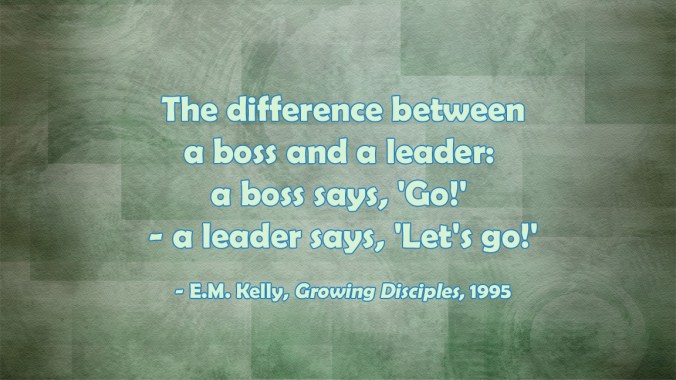
In church and in business, it’s easy to confuse being a boss with being a leader. Bosses tell people what to do, expect people to accept marching orders whether they make sense or not, and often aren’t willing to entertain challenges. Leaders on the other hand embody qualities that make people want to follow them, empower and encourage people to make decisions that support the organization’s vision, and listen to what the people they are leading have to say. A boss makes it your problem; leaders make it their responsibility.

According to Peter, the difference between a boss and a leader is humility. We should never confuse humility with a lack of confidence. To the contrary, the bossiest people are often the most brittle and least confident about their vision, while confidence allows for an open mind. Leaders are decisive, but they are also thoughtful and flexible. A boss reprimands; a leader coaches. Because they view the relationship with the people they lead (and with fellow leaders) as collaborative rather than adversarial, leaders trust people unless there is a reason not to. Peter, though the effective head of the church, considered himself one elder among many.

Christianity is a voluntary state. Good Christians leaders don’t intimidate or bully people into faith or good behavior – they make a compelling case for the love of Christ. Even once we opt in to being part of the Christian community, the job of our leaders is not chief prosecutor, but mentor. Yes they must always stick to sound teaching, and sometimes even discipline, but the primary method of both should adhere to the grace Christ offers us.

Comfort: It’s OK to question your church leaders when they seem in it for their own gain. Even if you’re mistaken, a good leaders will listen to what you have to say.

Challenge: If you are called to a position of authority or decision-making, be a leader not a boss.

Prayer: Gracious God, teach me to be humble, for I am serving both when I lead and when I follow. Amen.

Discussion: Who’s one of the best leaders you’ve met and why?

Join the discussion! If you enjoyed this post, feel free to join an extended discussion as part of the C+C Facebook group  or visit comfortandchallenge.tumblr.com. You’ll  have the opportunity to share your thoughts with some lovely people. Or feel free to comment here on WordPress, or even re-blog – the more the merrier!

Lion’s Den

Briton_Riviere_-_Daniel's_Answer_to_the_King_(Manchester_Art_Gallery)

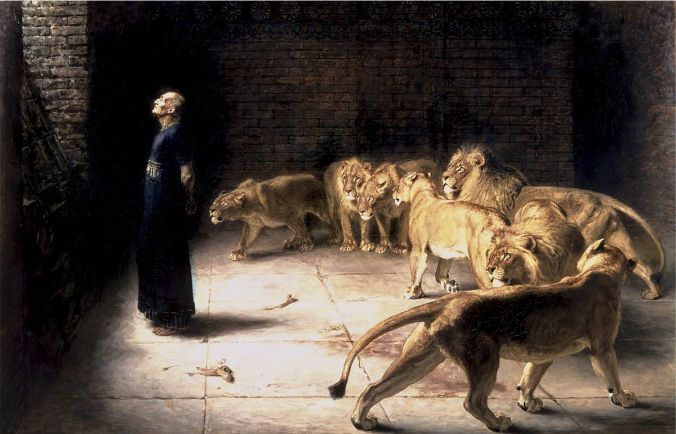
Daniel’s Answer to the King, Briton Rivière, 1890

Today’s readings (click below to open in new tab/window):
Psalms 92; 149, Daniel 6:16-28, 3 John 1-15, Luke 5:27-39


What is power?

Emperors and kings, queens and prime ministers, presidents and dictators – we associate these people with power. Some – like emperors – seem to have nearly unlimited power, while others – such as presidents – have clearly defined powers. Yet even the power of an emperor is insignificant before the power of faith.

King Darius was heartbroken after his advisers exploited his ego and Daniel’s faith to tricked Darius into condemning Daniel to the lion’s den. Darius tried desperately to find another course of action, but was trapped by his own decree. It seems even an emperor is not more powerful than his own word. He prayed that Daniel’s God might save him, then retreated to his castle for a sleepless night of fasting. In the morning, Daniel emerged unharmed. Darius decreed that all should tremble before the Living God of Daniel. He had the advisers and their families thrown into the den, where they had the same chance as Daniel, but their faith in deception and idols did not serve them as well.

Every ruler (or ruling body) is limited to actions that they believe will allow them to retain power. Sometimes that means observing the law, and sometimes that means creating fear. But in some circumstances they still have to watch the consequences of their actions unfold well beyond the reach of their control. While Darius could do nothing, Daniel’s faith in God saved both of them.

No matter who is technically in control, the moral health of a nation, religious body, corporation, or other entity depends on the faith and basic decency of ordinary people. Regardless of whether the powers-that-be are rooting for us or against us, how we enter the lion’s den matters. The resistance of persistent faith in the face of what seems like certain defeat or destruction changes us, the world, and the powerful.

Margaret Mead famously said: “Never doubt that a small group of thoughtful, committed, citizens can change the world. Indeed, it is the only thing that ever has.” For citizens of the Kingdom of Heaven that commitment is to Christ.

Power is faith.

Comfort: Your faith matters, even when you don’t feel like it does.

Challenge: When you feel like your actions and faith don’t matter, pray for understanding of why they do.

Prayer: Mighty God, teach me to find the strength in faith. Amen.

Discussion: What do you feel powerless against? Now what would you tell someone who felt the same way?

Join the discussion! If you enjoyed this post, feel free to join an extended discussion as part of the C+C Facebook group  or visit comfortandchallenge.tumblr.com. You’ll  have the opportunity to share your thoughts with some lovely people. Or feel free to comment here on WordPress, or even re-blog – the more the merrier!

Trust, But Verify

working-and-trust-1215529

Today’s readings (click below to open in new tab/window):
Psalms 96; 148, Daniel 6:1-15, 2 John 1-13, Luke 5:12-26


A dedicated employee – or more specifically an overly-dedicated employee – can be a red flag to fraud investigators. That accounts payable manager who never takes vacation and works nights and weekends to make sure checks are getting cut may be doing those things so no one has a chance to notice the details. Such activity can go on for years until a change in pattern – such as a forced vacation – exposes the truth.

Former con-man and current FBI consultant Frank Abagnale Jr., whose story inspired the movie Catch Me If You Can and television show White Collar, pulled off many of his cons by presenting people what they expected or wanted to see. We expect someone in a pilot’s uniform (one of Abagnale’s many impersonations) to be a pilot. We don’t expect a long-time, dedicated employee to be a thief. Even if we are naturally skeptical, if we aren’t regularly practicing or studying deception, we probably aren’t skilled at anticipating it.

The Persian King Darius wasn’t anticipating deception from his appointed presidents and satraps (governors), but they were jealous of Daniel’s distinguished and reputable service. They trapped Daniel by flattering the king and convincing him to forbid, upon pain of being devoured by lions, that any of his subjects pray to any god or deity but Darius for the next thirty days. The conspirators knew Daniel would keep praying to God, so they reported him to Darius, who was reluctant but bound by his own law.

When Jesus sent his disciples out to spread the gospel, he advised them to be “wise as serpents and harmless as doves.” It doesn’t take much wisdom to be skeptical of people we don’t like or agree with, but it takes some to determine at what level we should place our bar for “too good to be true.” Let’s avoid the trap Darius and Daniel fell into by not letting people or organizations exploit our ego, faith, or desire, perhaps by keeping in mind the Russian proverb: “trust, but verify.” We must love people, but that love is only blind when we close our eyes.

Comfort: You are allowed – even morally obligated – to think for yourself.

Challenge: No matter how much you respect someone, don’t trust them more than your conscience or your God.

Prayer: Loving God, teach me to find the balance between love and wisdom. Amen.

Discussion: Have you ever fallen for a con because someone said what you wanted to hear?

Join the discussion! If you enjoyed this post, feel free to join an extended discussion as part of the C+C Facebook group  or visit comfortandchallenge.tumblr.com. You’ll  have the opportunity to share your thoughts with some lovely people. Or feel free to comment here on WordPress, or even re-blog – the more the merrier!

Found Wanting or Wanting to be Found?

feestmaal

Belshazzar’s Feast, Rembrandt, 1637

Today’s readings (click below to open in new tab/window):
Psalms 47; 147:12-20, Daniel 5:13-30, 1 John 5:13-20 (21), Luke 5:1-11


Jesus knows you are flawed, and loves you anyway. God knows you are flawed, and loves you anyway. People know you are flawed, and some of them will love you and some of them won’t, but none of them are God so in the long run it doesn’t matter. That leaves you. You know you are flawed; how will you deal with it?

King Belshazzar was deeply flawed, and he seemed to revel in it. When he desecrated the temple vessels of the captured Jews, a mysterious hand wrote strange words on the palace wall. Terrified, he brought in the captive prophet Daniel to interpret them for him. Because Belshazaar praised false idols but ignored the “God in whose power [was his] very breath,” Daniel interpreted the words as follows:

 mene, God has numbered the days of your kingdom and brought it to an end; tekel, you have been weighed on the scales and found wanting; upharsin, your kingdom is divided and given to the Medes and Persians

Belshazzar was killed that same night.

Peter was also flawed. When he first realized Christ’s nature, “he fell down at Jesus’ knees, saying, ‘Go away from me, Lord, for I am a sinful man!’” Jesus replied, “Do not be afraid; from now on you will be catching people.” Peter would remain highly flawed throughout his career as apostle and founder of the church, but his attitude of faith and repentance kept him close to God.

Some of us think our flaws put distance between us and God. With this mindset, we worry we aren’t as “good” as other Christians (who are doing their own worrying). When things get tough we don’t want to burden others with our struggles (though they would happily lend an ear, a hand, or a buck). With this mindset, our flawed ego tells us we couldn’t possibly be forgiven.

Not so.

Do not be afraid. Belshazzar teaches us to be aware of our flaws. Peter teaches us not to be so aware of them that we despair. God loves us too much to leave us where we are.

Comfort: God loves you as you are.

Challenge: Love and trust God enough to make you even better.

Prayer: Thank you, Holy God, for the forgiveness and love you offer even though I can never earn it. Amen.

Discussion: Have you ever felt like your flaws put distance between you and God?

Join the discussion! If you enjoyed this post, feel free to join an extended discussion as part of the C+C Facebook group  or visit comfortandchallenge.tumblr.com. You’ll  have the opportunity to share your thoughts with some lovely people. Or feel free to comment here on WordPress, or even re-blog – the more the merrier!

Symbolic

american-eagle-with-flag-1565088

Today’s readings (click below to open in new tab/window):
Psalms 99; 147:1-11, Daniel 5:1-12, 1 John 5:1-12, Luke 4:38-44


Symbols are important to us. There are countless United States flags, from cheap plastic ones made overseas to quality domestic products purchased by our armed forces, but desecrating even one – while legal – is an affront to the millions of people who have served under it. “Desecrate” is generally reserved for the defilement of holy objects, and if any secular item rises to that criteria, it is the flag. Like other holy objects, the flag has rules for handling, display, and disposal.

The gold and silver temple fixtures of the captive Jews were locked away in Babylonian vaults. One day Belshazzar, successor to King Nebuchadnezzar, got drunk and had his servants retrieve them “and the king and his lords, his wives, and his concubines drank from them.” Capturing the vessels was one thing; desecrating them was another. A hand appeared and the terrified king watched it write mysterious words on the palace wall. He was desperate to know their meaning, so his queen reminded him of Daniel’s gifts for interpretation.

An attack on a symbol is an attack on an identity. It plucks the raw nerves of tribalism under our veneer of civilization. It spits in the eye of our existence. We know our nation is more than a pattern on cloth. We understand a printed Bible is mass produced for profit. The body of slain soldier is tragic but still just a body. Yet our enemies know desecrating any of these will incense us, possibly to recklessness.

Symbols can also be personal. That pair of soda-cap cufflinks Uncle Ted left to your cousin may seem silly to you, but they may symbolize a deep bond between parent and child.

When we deal with friends and enemies, let’s be sensitive to what symbols might mean. Let’s avoid mocking, exploiting, or desecrating things that aren’t important to us but have meaning for others. And when we are offended, let’s remember a symbol is never more important than what or who it represents; our defense of it should not betray it. Our symbol is the empty cross – but our savior is not there.

Comfort: Symbols, used properly, can be powerful and motivational.

Challenge: Symbols, used improperly, can be manipulative and dangerous.

Prayer: Gracious God, teach me to think critically about symbols and ideas, and to value them only as much as they glorify you. Amen.

Discussion: Read this article on flag etiquette. What do you think about the flag being incorporated into clothing?

Join the discussion! If you enjoyed this post, feel free to join an extended discussion as part of the C+C Facebook group  or visit comfortandchallenge.tumblr.com. You’ll  have the opportunity to share your thoughts with some lovely people. Or feel free to comment here on WordPress, or even re-blog – the more the merrier!

Grass Fed

cow-feeding-1615305-1599x1065

Today’s readings (click below to open in new tab/window):
Psalms 98; 146, Daniel 4:28-37, 1 John 4:7-21, Luke 4:31-37


The second time Daniel interpreted a dream for Nebuchadnezzar, he warned the king that his pride would be his undoing. A year later he was on the rooftop of the palace, boasting of how the kingdom existed to glorify him him, when things took a bizarre turn:

Immediately the sentence was fulfilled against Nebuchadnezzar. He was driven away from human society, ate grass like oxen, and his body was bathed with the dew of heaven, until his hair grew as long as eagles’ feathers and his nails became like birds’ claws.

This lasted for seven years. Nebuchadnezzar recovered his senses after accepting that the Lord was sovereign over all, including the king himself. When it was over, he went back to business as usual, but with a new humility.

One popular interpretation of this story is that putting our own will and pride above the will of God is a madness that results in our own degradation. We think of Nebuchadnezzar’s time in the wilderness as punishment – how pleasant could it have been? – but in the grand scheme was he worse off than when he believed in God but ignored him?

Is this story a little hard to swallow (no grass-munching pun intended)?

If so, it’s okay not to know what to make of it. We like to understand and classify the stories we hear, whether they come from the Bible, the news, or our own experiences, so we can drop them in the appropriate mental file, reinforce our preferred worldview, and move on. Sometimes, though, it’s preferable to ponder something without arriving at a tidy resolution.

Do we relate to the chaos, the tragic flaw of pride, the eventual humility, or even the dark humor of a king reduced to living like a wild animal? Nebuchadnezzar liked quick answers – he was willing to execute hundreds to get a dream interpreted! – but it took him seven years to work out what God was saying to him and turn his eyes heavenward. Live with the chaos, ridiculousness, and mystery for a bit, and you might be surprised at what you learn.

Comfort: You don’t always have to force an answer.

Challenge: Seriously. Stop doing that.

Prayer: God of mystery and truth, teach me to appreciate both in equal measure. Amen.

Discussion: What unanswered questions are you living with, and are you at peace with that?

Join the discussion! If you enjoyed this post, feel free to join an extended discussion as part of the C+C Facebook group  or visit comfortandchallenge.tumblr.com. You’ll  have the opportunity to share your thoughts with some lovely people. Or feel free to comment here on WordPress, or even re-blog – the more the merrier!

People are People

diversity-6-1238192-1919x1190

Today’s readings (click below to open in new tab/window):
Psalms 97; 145, Daniel 4:19-27, 1 John 3:19-4:6, Luke 4:14-30


Sometimes all it takes to be a prophet is an understanding of human nature and a keen sense of irony. When Jesus began preaching in his home town of Nazareth, he knew the people in the synagogue would want the same signs he performed earlier in Capernaum. Mark’s gospel tells us the people had so little faith Jesus was able to do very little. In today’s reading from Luke, Jesus tells them “no prophet is accepted in the prophet’s hometown.” Five verses later, they are shoving him toward a cliff.

They could have tried to be more accepting, if only to prove him wrong, right? But that’s not human nature. How many teenagers, when asked if they’ve been drinking, counter with, “If you’re going to keep accusing me I might as well!” How many spouses caught in infidelity blame the insecurities of their husband or wife? We don’t enjoy someone telling us we’re wrong, especially when we know they’re right, so we lash out at the messenger. We drink and blame our parents. Cheat and blame our spouses. Lack faith and blame our savior.

Jesus saw it coming, and so should we. Across time and geography certain truths about human nature persist. We tend to think we are more self-aware than other people, but in reality – not so much. When we’re not busy convincing ourselves we are better than we are, we may be looking at other cultures and communities as “noble savages” who are somehow exempt from the less desirable traits of humanity. Or worse, we may look at whole groups of people as more capable of corruption than we could ever be. As clichéd as it might sound, people are people.

The good news is we can be better. First, we must abandon the mindset that we are exempt from basic human nature. Second, we must honestly examine ourselves as an outsider (Jesus, maybe?) might see us. Finally, we must consciously decide to act in ways consistent with our faith, even if that action goes against our nature. Let’s step back from the cliff before it’s too late.

Comfort: God knows our nature – and our potential.

Challenge: Pray about the things that you do despite knowing better.

Prayer: God of strength, I seek your nature before my own. Amen.

Discussion: What about human nature still manages to surprise you?

Join the discussion! If you enjoyed this post, feel free to join an extended discussion as part of the C+C Facebook group  or visit comfortandchallenge.tumblr.com. You’ll  have the opportunity to share your thoughts with some lovely people. Or feel free to comment here on WordPress, or even re-blog – the more the merrier!