Usurpers

checkmate-1511866_1920

Today’s readings (click below to open in new tab/window):
Psalms 51; 148, 2 Samuel 15:19-37, Acts 21:37-22:16, Mark 10:46-52


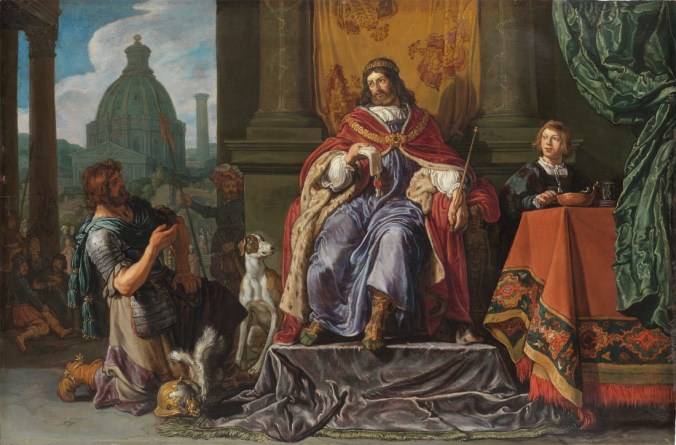
Absalom’s seizure of his father David’s throne was what we might call a bloodless coup. In the nine years between the rape of Absalom’s sister Tamar by David’s other son Amnon (the event which effectively destroyed their relationship), their father-son dynamic went from estranged, to distant, to cool, and finally to enmity. Absalom used much of this time to win the favor of the people of Israel and quietly plot against his father, whom he knew would be reluctant to do him harm. By the time David and his court realized the inevitability of Absalom’s usurpation, they could do little more than  flee to the countryside.

Both small changes and veritable revolutions can catch us unawares – especially when we don’t want to believe they’re happening. Surely David, steeped as he was in a lifetime of political intrigue, should have seen the warning signs. Perhaps his desire to be reconciled with a son he loved clouded his judgment. That same fatherly love had caused him to stay the hand of judgment when Amnon did the unthinkable to Tamar.

None of us have a kingdom at stake, but we should always be alert for those who would usurp the Kingdom.   Who are these people? Politicians who pay lip service to Christianity to further unrelated – sometimes contrary – agendas. Religious leaders who for personal gain exploit our desire to be generous and charitable. Cultural figures who use their Christianity – conservative, liberal, or moderate – as a sword instead of a plowshare.

Absalom won the love of the people before dethroning their God-anointed king. Like the proverbial frog boiled so gradually it didn’t notice, they probably didn’t realize when or why they were in hot water. Our church, our community, and even our nation can shift around us if it does so by nearly imperceptible degrees which we find easy to ignore because of love and loyalty.

Our own well intended perceptions can be skewed by many factors. If Christ remains our benchmark – our plumb line – we will be able to spot intentions and actions which claim the gospel but do not square with it.


Additional Reading:
For thoughts on today’s reading from Mark, see Stop! Collaborate and Listen.

Comfort: Christ is our most reliable standard. 

Challenge: When you love or are loyal to something, don’t be afraid to be critical of it.

Prayer: Loving and righteous God, make your ways clear to me. Amen.

Discussion: Have you ever been part of a community group whose character changed, or wasn’t who you thought they were?

Join the discussion! If you enjoyed this post, feel free to join an extended discussion as part of the C+C Facebook group. You’ll be notified of new posts through FB, and have the opportunity to share your thoughts with some lovely people. Or feel free to comment here on WordPress, or even re-blog – the more the merrier!
Anointed, Appointed, and Appalling.

david_uria_brief_grt

David hands the Letter to Uriah, Pieter Lastman ca. 1583 – 1633

Today’s readings (click below to open in new tab/window):
Psalms 116; 147:12-20, 2 Samuel 11:1-27, Acts 19:11-20, Mark 9:2-13


While we are one body, Christians disagree on many subjects. One of the more controversial topics is the nature of God’s will. Over the centuries the finer points of this argument have divided the church many times. Some of us believe God directly controls the universe down to its subatomic components. Others believe God exerts minimal influence over the creation. Most of us land somewhere in the middle, influenced by – but often uninformed on the specifics of – whatever denomination (or non-denomination) we belong to.

In the United States few things highlight the arguments about God’s will – as well as people’s inconsistencies in embracing and defending  those arguments – like the election of a president. When we like the person who is elected, it’s God’s will. When we don’t like the person, it’s a subversion of God’s will. And some of us accept either (or neither) result as God’s will.

Whichever camp we call home, we ought to agree on one thing: just because someone is chosen by God doesn’t mean they will be righteous in all they do.

King David had everything he could have wanted, but when he saw Bathsheba, the wife of his soldier Uriah, he decided he wanted her too. When David impregnated her while Uriah was away at war, he conspired first to trick Uriah into sleeping with her so the solider might believe the child was his own, then to maneuver Uriah into a vulnerable position in battle so he would be killed.

David was anointed by God. David was appointed King of Israel. David was appalling in his behavior.

The evil he did to Uriah was not God’s will – to the contrary, it angered God. Not only did Uriah die, but so did many other soldiers whom David either didn’t consider or didn’t mind sacrificing (and given his considerable strategic skills, it was probably the latter).

Great power amplifies both our virtues and flaws.  Accepting a monarch, president, or other leader does not mean accepting and defending everything they do. God’s will may be inscrutable, but Christ’s teachings will always help us find the way.


Additional Reading:
For thoughts on today’s reading from Acts, see Just One Bite.

Comfort: God does not will evil.

Challenge: Read a little about predestination and Arminianism.

Prayer: I wait for the LORD, my soul waits, and in his word I hope. (Psalm 130:5)

Discussion: What do you think of when you hear the phrase “God’s will?”

Join the discussion! If you enjoyed this post, feel free to join an extended discussion as part of the C+C Facebook group. You’ll be notified of new posts through FB, and have the opportunity to share your thoughts with some lovely people. Or feel free to comment here on WordPress, or even re-blog – the more the merrier!

Substance Over Style

job-interview-437026_1920

Today’s readings (click below to open in new tab/window):
Psalms 12; 146, 2 Samuel 7:18-29, Acts 18:12-28, Mark 8:22-33


Successfully interviewing potential employees requires a lot of insight. Because it can be so overwhelming, many employers and hiring managers follow rules-of-thumb to quickly weed out applicants from large piles of resumes. A typo or lack of white space may route someone right to the circular file. Employers may apply similar rules to streamline the interview process. Applicants who have a good interview but don’t supply a timely thank you note may inadvertently disqualify themselves. One could argue these mistakes speak to a lack of attention to detail or follow-through. On the other hand, employers are not usually looking for people whose primary skills include writing resumes and interviewing for new jobs. In some cases, to the chagrin of many a hiring manager, excellent resume and interview skills mask a host of other deficiencies more pertinent to the position.

Eloquence and charisma are no substitute for actual knowledge and experience. Yet people are often more swayed in their opinions by someone who sounds convincing – or convinced – than by people who lack charm but tell truth. A smoothly delivered inaccuracy (or outright lie) may very well be more widely accepted than an ill-spoken fact.

Like good interviewers, we need to be able to discern what’s beneath the surface; between style and substance.

When Priscilla and Aquila (followers of Paul, disciples of Christ) first ran into Apollos, he was enthusiastic, bold, and eloquent in declaring the Way of the Lord. He was also a little deficient in his knowledge, so “they took him aside and explained the Way of God to him more accurately” so he might join them in preaching the gospel. This was a smart hire. For evangelists, style can matter quite a bit. But Priscilla and Aquila knew he needed more substance to do the job well.

They didn’t rule him out over the verbal equivalent of a typo, and they didn’t let him fly solo until he’d proven his skill matched his swagger. Let’s follow their example and be discerning about whom we let sway us. However persuasive we may find the messenger, the message is what counts.


Additional Reading:
For more thoughts on today’s reading from Acts, see Under Construction.
For thoughts on today’s passage from Mark, see Cracked.

Comfort: Even when you don’t feel eloquent, you may have something to say.

Challenge: Flip through a few different news channels. Pay attention to who you pay attention to and why.

Prayer: May the LORD, maker of heaven and earth, bless you from Zion. (Psalm 134:3)

Discussion: Have you ever misjudged someone’s abilities or integrity because of their charisma?

Join the discussion! If you enjoyed this post, feel free to join an extended discussion as part of the C+C Facebook group. You’ll be notified of new posts through FB, and have the opportunity to share your thoughts with some lovely people. Or feel free to comment here on WordPress, or even re-blog – the more the merrier!

Not a Checklist

Checklist, Check, List, Marker, Checked, Pen, Pencil

Today’s readings (click below to open in new tab/window):
Psalms 84; 150, Jeremiah 6:9-15, 1 Corinthians 6:12-20, Mark 5:1-20


“All things are lawful for me,” but not all things are beneficial. “All things are lawful for me,” but I will not be dominated by anything.

Paul wrote these words to the church in Corinth to address a heresy that taught our actions don’t matter because we have been redeemed by Christ. Some extremists claimed those who sinned the most boldly were holier because they were forgiven the most. Modern Christians are unlikely to adopt this twisted logic, but it was appealing in a city where prostitution was not just common but part of religious worship.

Paul went on to condemn fornication as the only sin committed against one’s own body. Christianity has embraced the anti-fornication message, though studies showing Christians are having only slightly less non-married sex than non-Christians raises the question whether we are good at separating the lawful from the beneficial.

We sure seem to like developing sets of rules for being a good Christian. We especially seem to like exploring how far we can bend them before they are technically broken. Yet it is very possible to do what is religiously “legal” and still be doing the wrong thing. This is one of the real challenges of the Christian life: whether we are obeying a rule, breaking it, or operating in an arena without rules, we are responsible for figuring out whether our choices are beneficial, or at least not harmful.

As we grow in faith, we should constantly challenge ourselves to think more and more with the mind of Christ. Paradoxically, this can leave us with more questions than answers – but the questions keep improving. Our concept of sin grows from a checklist of laws to an understanding of what damages our relationship with God. Some things are universally wrong, but what is perfectly harmless for others may be sinful for us, and vice versa. For example, depending on the person, video games can be a benign pastime, or a source of addiction; there’s no rule to determine that line.

We are never done growing closer to God. Don’t let the rules tell you otherwise.

Comfort: Jesus understands your struggles; lean on him.

Challenge: Be honest with yourself about when you’re bending the rules.

Prayer: Merciful God, forgive me my sins, and help me to sin no more. Amen.

Discussion: What are the signs you know you’re about to make a bad decision?

Join the discussion! If you enjoyed this post, feel free to join an extended discussion as part of the C+C Facebook group , visit comfortandchallenge.tumblr.com, or follow @comf_and_chall on Twitter. You’ll  have the opportunity to share your thoughts with some lovely people. Or feel free to comment here on WordPress, or even re-blog – the more the merrier!
Hearing The Voice

child-s-ear-1307271-1919x1284

Today’s readings (click below to open in new tab/window):
Psalms 67; 150, Isaiah 66:7-14, 1 John 3:4-10, John 10:7-16


One of the most popular images of Jesus is The Good Shepherd. Shepherding was a central part of his culture, so his audience would have been familiar with how tended their flocks. He contrasted the role of the true shepherd – who would lay down his life for his sheep – to the role of a hired hand, someone likely to flee if things got dangerous. He also spoke of the thief and the wolf, who scatter and harm the sheep out of greed and selfishness. Jesus is confident his own flock will hear and know him and be led to safety.

Sheep are not bright, but the constancy of their shepherd helps them come to know him as a companion, protector, and guide. They won’t survive long without listening. We, on the other hand, are free to follow our shepherd or not, to listen or to ignore. How can we learn to discern our shepherd’s call the hired hands and thieves who may be wolves in shepherd’s clothing?

We can know his words. Reading the Gospels ourselves is different than trusting others to interpret scripture for us. Many a thief has used scripture to bilk well-meaning sheep from their money and eventually their faith. Regularly studying the Gospels and reliable sources of instruction help us understand them in context and teach us to recognize that voice.

Our shepherd will lead us to abundant life. Any message that leaves us feeling diminished or unloved by God is being delivered by an inept hired hand. Our shepherd will challenge and correct us for our own good, but only in loving ways. Christ always calls us out of the wilderness onto the path of life, not into a tangle of thorny condemnation.

Finally, we can pray. Not long, bleating prayers to fill up the silence, but quiet prayers which leave room for the divine voice to reveal itself. If we are out of practice it may take us a while to hear that voice, but we’ll know it when we do.

Comfort: Jesus calls us home with a familiar, consistent voice.

Challenge: Make a point of regular scripture reading and prayer time to train yourself to hear the voice of Christ.

Prayer: God of Grace, thank you for calling to me, even when I try not to hear. Amen.

Discussion: Have you ever been mislead by spiritual thieves or wolves?

Join the discussion! If you enjoyed this post, feel free to join an extended discussion as part of the C+C Facebook group , visit comfortandchallenge.tumblr.com, or follow @comf_and_chall on Twitter. You’ll  have the opportunity to share your thoughts with some lovely people. Or feel free to comment here on WordPress, or even re-blog – the more the merrier!

Mob Mentality

20160929_224627-01.jpeg

Today’s readings (click below to open in new tab/window):
Psalms 116; 147:12-20, Hosea 4:1-10, Acts 21:27-36, Luke 6:1-11


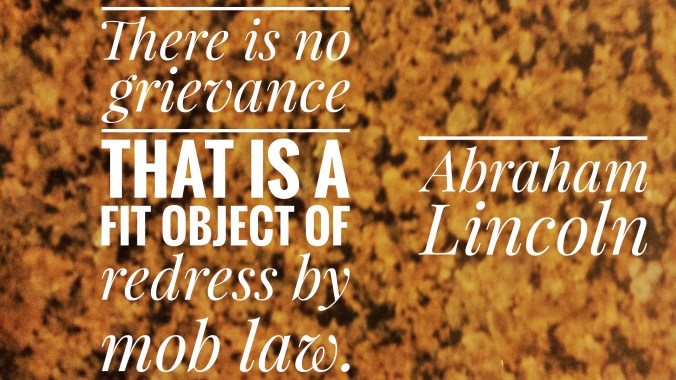
Poor Paul. As if his actions weren’t polarizing enough, the Jews in the Jerusalem temple were ready to string him up for things he hadn’t done. They only had to say Paul had brought Greeks into the temple (he hadn’t), and the crowd dragged him outside, barred the doors, and beat him. Reaction was swift, forceful – and completely unwarranted.

Have you ever found yourself caught up in a mob mentality? A mob isn’t always a crowd of torch-wielding villagers. In our age of instant communication, the mob may be virtual, but it is no less infectious. We condemn or canonize people over a single image or sound bite. Technology has made it almost impossible to resist crossing the line from observer to participant. Take political campaigns: aren’t we more likely to repeat and re-post negative things about the opposition? Toss in the need of politicians to “spin” a situation to manage immediate public perception, and careers – even lives – are ruined by a media-driven mob. Even seemingly positive behaviors – for example, responses to natural disasters – are made less effective by mob mentality. Charitable organizations frequently waste donations that arrive in unmanageably large quantities at the beginning of a disaster recovery, then later run short, because people respond as a well-intentioned mob, rather than waiting to assess long-term needs.

The slow-burning mob, like the one that plotted against Jesus as his teachings began to threaten the status quo, is especially insidious. Today terms like “whisper campaign” describe indirect attacks meant to destroy a person’s reputation. Rather than appealing to a sense of outrage, this type of attack appeals to the ego; we all like to feel like we are “in the know” and a whisper campaign helps us believe we are privy to insider information. We can become part of a mob without ever knowing it. The seeds planted by the Pharisees at the beginning of Jesus’ ministry help prime the mob that eventually yells “Crucify him!”

As people of faith, we must temper our reactions with love and patience. As the hands of Christ, we do not swing blindly at shadows.

Comfort: God made us capable of thoughtful action and reaction.

Challenge: Fact check even the claims you are inclined to agree with.

Prayer: Glorious Creator, thank you for the gift of discernment. Amen.

Discussion: Have you been part of a physical or social mob and later regretted it?

Join the discussion! If you enjoyed this post, feel free to join an extended discussion as part of the C+C Facebook group or follow @comf_and_chall on Twitter. You’ll  have the opportunity to share your thoughts with some lovely people. Or feel free to comment here on WordPress, or even re-blog – the more the merrier!