Hitting the Mark(et)

bulls-eye-1930498_1920

Today’s readings (click below to open in new tab/window):
Psalms 122; 149, 2 Samuel 5:22-6:11, Acts 17:16-34, Mark 8:1-10


Some churches approach evangelism like a marketing campaign, while others consider this tactic crass. Demographic analysis and ad campaigns may not seem spiritual, but they can get butts in the seats. Prayer groups and one-on-one meetings may seem more spiritual, but risk becoming insular activities which impact only existing members. Trite as it sounds, a healthy approach lies somewhere in the middle.

Paul knew a thing or two about marketing. When he spoke to the Athenians, he used familiar phrases from Greek poets and philosophers to support his position. When modern churches try to appear relevant by co-opting current trends, they aren’t as far from Paul as we might think. In Paul’s Greece, a person’s choice of philosophy was a social statement as much as a system of thought, so Paul knew to keep his references culturally savvy. He chose to “speak their language.”

When churches speak a lot of “Christianese” their insider language is meaningful to members, but leaves outsiders feeling excluded. Think what “slain in the spirit” sounds like to a non-Christian.  A church should not resemble a club with a secret password.

Critics of Christian culture – including many Christians – often point to “relevant” marketing efforts as a sign of desperation or insincerity. If Paul is our example of effective evangelism – and if he isn’t, who could be? – such critics might want to temper their judgments. On the other hand, a packed house does not necessarily indicate spiritual success. A large congregation means nothing if its members are not challenged to fully live the Gospel because its leaership fears doing so might negatively impact the collection plate or the head count. Conversely, a small congregation is not by default virtuous or successful, especially if it isn’t reaching out to the greater community.

A successful congregation is one that shares the Good News in ways people can understand and are attracted to, without compromising its message. The primary goal is never numbers-driven. If we follow Paul’s example, we will see that presenting the unexpurgated Gospel message in a sincere but relatable way is the only marketing plan we need.


Additional Reading:
For more thoughts on today’s passage from Acts, see The Unknown God.

Comfort: Some of the best evangelism is simple truth, plainly spoken.

Challenge: Check your church’s promotional material for “Christianese.”.

Prayer: Compassionate God, teach me to share Christ’s message. Amen.

Discussion: What kind of evangelism do you best respond to?

Join the discussion! If you enjoyed this post, feel free to join an extended discussion as part of the C+C Facebook group. You’ll be notified of new posts through FB, and have the opportunity to share your thoughts with some lovely people. Or feel free to comment here on WordPress, or even re-blog – the more the merrier!

Invitation: Fair

chain-carousel-2274009_1920

Last weekend I attended our local county 4-H Fair. If, like me, you’ve never been an active participant in 4-H, the fair may be your only exposure to the organization. The fair is up for a little more than a week, and most of the vendors, rides, and attractions are part of a national circuit unrelated to 4-H. The heart of the fair – and the core of 4-H – beats in the exhibits of livestock, agriculture, arts, and skills demonstrated by young people who have worked hard all year to submit their entries. While 4-H has more members in urban and suburban counties, rural and farming communities have much higher participation rates.  American rural communities skew conservative in their politics and religion, but the organization itself focuses on values that cross the cultural divide.

For me this tolerance is most evident in the vendors exhibit hall. These groups are unrelated to 4-H, and while the organization doesn’t endorse any of them, it does have final say on who can or can not exhibit. Most of them are completely non-controversial, but you might also be surprised to find some of them under the same roof in Indiana. Local Democratic, Libertarian, and Republican parties all seem to think it’s a good place to recruit. A Right To Life group, The Gideons, and Planned Parenthood are all present. Event organizers are smart enough not to put them beside each other, but there’s room for all.

Nobody protests or taunts anyone. Everyone seems to understand we are there in common support for the youth and the program. The four Hs in 4-H stand for head, heart, hands, and health and for at least a week we manage to direct them toward the common good without betraying our values.

4-H is not a Christian organization, but it sure sets a fine example of gathering around the table. So many Christian congregations adopt a decidedly liberal or conservative stance – often based on the preferences of the pastor – that it doesn’t take long to figure out “All are welcome” really means “all are welcome … to be persuaded to our positions on social issues.”

Yet we can have wildly varying positions on many controversial topics and still be dedicated to Christ. Instead of splintering into narrower and narrower definitions of “acceptable” Christianity, maybe we could take a cue from 4-H. We don’t all need to stand next to each other on every issue, but we can coexist under the same roof without shouting each other down. We can find common values and use them to help young people become better citizens of both the world and the Kingdom. We can understand the beating heart of the church is in the fruit of the vine and the bounty of the harvest present on the communion table. We can realize letting someone in the door is not the same as endorsing their values … but helps us to live ours.

Our reasons for excluding each other are our reasons, not Christ’s. Let’s gather around the table to hear what Christ might have to say about finding reasons to be inclusive. It’s only fair.

May be the peace of our Lord Jesus Christ be with you all.

Radical Inclusion

shoes mile

Today’s readings (click below to open in new tab/window):
Psalms 143; 147:12-20, 1 Samuel 13:5-18, Acts 8:26-40, Luke 23:13-25


One of the great joys of being a Christian is that we are called to be more in the business of expanding our circle than closing our ranks. At any given point in history, or in any given congregation or denomination, we may be circling the wagons in fear, but since the earliest days of the apostles we’ve been learning that God’s love is more inclusive than our own.

Take Philip for example. One day the Spirit urged him down a certain road, where he found a man sitting in a chariot and reading from the prophet Isaiah. The man, an Ethiopian eunuch serving as a court official of his queen, was in Jerusalem to worship. Philip ran up to the man, who needed help understanding what he was reading, and began a conversation which led to the Ethiopian asking to be baptized in some water they passed on the side of the road. So Philip baptized him.

This first Gentile convert – eager to join the faith and just as eagerly welcomed at the urging of the Spirit – differed from the Jewish apostles racially, ethnically, and sexually. He would never have been allowed inside the physical temple, but once Christ became the temple raised, these distinctions no longer mattered. Christ’s arms stretched out on the cross are the temple gates thrown wide open.

Radical inclusion, while ultimately joyful, can scare us. We worry strange newcomers might change the fundamental character of our community. We fear that allowing our understanding of God’s inclusive nature to evolve somehow betrays long-held beliefs or practices. Throughout history the church and its members have excluded, minimalized, or stereotyped the roles of women, the disabled, and even the left-handed. Yet the Spirit continues to urge us toward each other, to build bridges, to break down assumptions and prejudices based not in the gospel but in culture and superstition.

The world pushes us to judge, condemn, and exclude. Christ invites us to love, forgive, and welcome. As Christ’s body, let’s run to those who, like our Ethiopian friend, differ from us so struggle to understand his invitation.

Comfort: God loves more and better than we could possibly understand.

Challenge: Try to find more reasons to include people than to exclude them.

Prayer: Teach me, o Lord, to love your people and share your Gospel abundantly.

Discussion: Do you belong to any groups the church has excluded or does exclude? How does that affect your relationship with and understanding of Jesus?

Join the discussion! If you enjoyed this post, feel free to join an extended discussion as part of the C+C Facebook group. You’ll be notified of new posts through FB, and have the opportunity to share your thoughts with some lovely people. Or feel free to comment here on WordPress, or even re-blog – the more the merrier!

Invitation: Cross Traffic

cross traffic does not stop

Over the last few months our neighborhood has undergone a lot of changes in traffic patterns. My street in particular has had many stops signs and streetlights moved or removed. Judging from the number of automobile collisions, near misses, and squealing brakes, “Cross Traffic Does Not Stop” is not universally understood. You might assume that legally the responsibility clearly falls on the person who didn’t stop when they were supposed to, and most of the time you’d be right, but in many states the law says if you can try to avoid an accident and choose not to, you are also partially at fault. As I’ve lived on the street for several years, and I am aware of the increased possibility of accidents, you can be sure I slow down as I near problem intersections. Part of me is annoyed that I have to, but a better part doesn’t want my self-righteousness to cause anyone else pain.

Would it be fair to say the church doesn’t always take responsibility for how its own Cross-traffic can sometimes do more harm than good? We can feel fully justified about the course we have set, following the doctrinal rules of the road, but sometimes our determination to move our own agenda forward causes harm. When we are unyielding and someone gets hurt, we tend to shift all the blame to those sinful drivers who would be just fine if they followed the rules.

Life throws all kinds of confusing detours at people. If we are so stuck behind our righteous blinders that we’d rather collide than swerve, we need to take responsibility for the damages.

If we really want to share the gospel, instead of wielding it like two tons of unforgiving inertia,  we need to be aware of where people are. If we insist on being right, yet our rightness wounds or kills them (and bad religion has done plenty of both), exactly who have we saved? When it comes to life, none of us has a spotless driving record, yet when dealing with other people we often seem to forget how we’ve been forgiven and survived to tell the tale. We insist on repentance for sins we aren’t currently committing but remain silent about the ones we are (unless perhaps we protest too much). Offering a little accident forgiveness doesn’t mean we’ve justified the infraction.

If you feel like like you’ve been run over by the church, remember Jesus made many an unexpected left turn to love people he could have bypassed. If you don’t feel safe coming to him, let him come to you. Other people don’t get to make that decision for you.

The communion table is where Cross traffic stops to remember. Where we shouldn’t feel like people are cutting us off, because we shouldn’t be jockeying for the lead.  Where someone may experience their first taste of real love and forgiveness – provided we haven’t closed the road.

To paraphrase an old bumper sticker, “Save a life. Be aware. Struggling souls are everywhere.”

May the peace of our Lord Jesus Christ be with you all.

Invitation: Daylily

daylily-1511814_1280

In the late spring of every year, the daylilies start to appear in the back yard. I’m no gardener, but I do enjoy the beauty of flowers and these ones, with their brilliant orange glow, pop like slow-burning fireworks of joy.

Aside from an occasional watering when the weather grows unseasonably hot or dry – which I’m not sure they even need – they require no effort to maintain. These beauties were here when we got here, and unless someone purposely tears them out, they will long outlast us. Given the short lifespan of any individual flower, that seems a little mystical.

Of course the desirability of any plant is subjective to the grower. I’ve heard people say daylilies are “just this side of weeds” and “invasive nuisances.” Still, I get excited when I see them appear in a corner of the yard where they hadn’t been before. They may be my favorite kind of drop-in guests.

The more there are, the brighter the glow. When the sun hits the yard at just the right angle, it puts me in mind of the holy fire of Pentecost, a season we are in the midst of at this moment.

Maybe we can take some invitational inspiration from the daylily.

It doesn’t appear because of anything elaborate we’ve done – no special programming, no fancy greenhouse. It appears because its nature is to bask in the sun for the short time it has on earth, and it thrives when we accept it for who it is and offer assistance during tough times.

Daylilies are as common as the dirt they grow in, but God has seen fit to imbue them with striking beauty. There may be fancier plants in the garden, more serious subjects which require elaborate knowledge and constant care to grow, but we miss a lot of grace if we choose to equate common with nuisance, or if we devote all our attention to the “important” blooms and never look around at what we’ve been given freely. When they show up uninvited in the odd corner where they aren’t “supposed” to be, could it be a misplaced sense of control that compels us to reign them in rather than marvel at their resilience?

People are going to show up at Christ’s table uninvited. We might prefer them to have been better tended, more holy and less common in appearance or demeanor, closer to some design we had in mind, but God puts them where God will. Our job isn’t to weed them out, but to find the Christ in them and offer spiritual and physical nourishment as needed. Viewed from just the right angle, even the most common flower glows, and the more who gather around Christ’s table, the brighter the glow.

Who are we to determine who deserves to bask in the Son? Let us be gardens of welcome.

May the peace of our Lord Jesus Christ be with you all.

In the Light

sankt-hans-1247171

Today’s readings (click below to open in new tab/window):
Psalms 19; 150, Isaiah 62:6-12, 1 John 2:3-11, John 8:12-19


In his first epistle, John tells us any believer who hates another believer is no believer at all. We can claim to walk in the light of Christ, but if we hate a brother or sister we are still in the darkness. In the Gospel of John, Jesus says: “I am the light of the world. Whoever follows me will never walk in darkness but will have the light of life.” True commitment to Christ leaves us unwilling to hate our fellow believers, no matter how strongly we may disagree with them (and we can disagree plenty).

It’s possible to say we’re following Christ, and maybe to believe that, without it actually being true. Let’s think of the light of Christ like a bonfire on the beach. We can remain within its direct light where we can feel its heat, see clearly by it, and easily reach those who would share it with us. Or we can dispassionately observe it from a little further down the beach or farther out at sea. From a distance, we see the bonfire and believe it exists; we can study it through a telescope to describe it and theorize about it and analyze it; maybe we use it as a rough guide to navigate … but it has no real impact on our lives. Even if we can hear the songs and laughter of those gathered around the bonfire, and smell the food being roasted on it, we don’t actually share the light, warmth, and proximity they do.

Successfully staying within the bonfire’s influence requires cooperation among those gathered. For example, we can all agree not to throw gasoline on it, but we may disagree on what species of wood is most fragrant. Some of us may be choking on smoke while others breathe easily (and obliviously), but the wind will always change. We may argue and develop resentments over these differences, but it’s not our business to push people out or storm off ourselves. Christ tends this fire; he will make sure all who stay within its glow are cared for.

Comfort: When you walk in the light, hate burns away.

Challenge: Try thinking of the light as a communal gathering, not a solo walk.

Prayer: God of light and love, I will seek to follow in Christ’s footsteps. Amen.

Discussion: Sometimes we throw something on a bonfire and experience unintended and unfortunate consequences. Have you ever unintentionally caused strife in your faith community?

Join the discussion! If you enjoyed this post, feel free to join an extended discussion as part of the C+C Facebook group , visit comfortandchallenge.tumblr.com, or follow @comf_and_chall on Twitter. You’ll  have the opportunity to share your thoughts with some lovely people. Or feel free to comment here on WordPress, or even re-blog – the more the merrier!

Solidarity

1479010779571-01.jpeg

Today’s readings (click below to open in new tab/window):
Psalms 56; 149, Joel 3:9-17, James 2:1-13, Luke 16:10-17 (18)


I don’t believe in charity. I believe in solidarity. Charity is so vertical. It goes from the top to the bottom. Solidarity is horizontal. It respects the other person. I have a lot to learn from other people.

The author of James would probably have appreciated these words from Uruguayan author Eduardo Galeano. James was very aware that people struggle to see everyone as equal without regard to social and economic status. He wrote:

For if a person with gold rings and in fine clothes comes into your assembly, and if a poor person in dirty clothes also comes in, and if you take notice of the one wearing the fine clothes and say, “Have a seat here, please,” while to the one who is poor you say, “Stand there,” or, “Sit at my feet,” have you not made distinctions among yourselves, and become judges with evil thoughts?

Maybe we don’t make such distinctions on Sunday mornings, but the ever-present barriers between classes is very real. One common way to handle poverty is to push it out of sight. Many a generous soul who volunteers at a food bank or homeless center would not be keen to find one on their own block. We all like to hear a struggling neighborhood has been improved, but do we ask whether the improvements are positively impacting the people most in need, or are just forcing them away to create a new playground for the more affluent? In many ways, we are tolerant rather than inclusive. Tolerance starts from an assumption that we own social (and sometimes physical) space and have the authority to grant others permission to enter it; inclusivity assumes we all have equal right to that space and requires mutual respect and actual relationship to thrive.

Our faith communities should be places where we remove barriers and distinctions. By choosing solidarity and inclusivity over charity and tolerance, we remake part of the world in the image of the Kingdom. Whether our personal poverty is one of pocket, spirit, or status … we have a lot to learn from other people.

Comfort: All members of the Body of Christ are equal.

Challenge: Spend time with people who are different from you.

Prayer: Lord of Creation, may my heart be open to all. Amen.

Discussion: Are there any ways you are tolerant where you could become inclusive?

Join the discussion! If you enjoyed this post, feel free to join an extended discussion as part of the C+C Facebook group or follow @comf_and_chall on Twitter. You’ll  have the opportunity to share your thoughts with some lovely people. Or feel free to comment here on WordPress, or even re-blog – the more the merrier!

Borders

20160901_143257-01.jpeg

Today’s readings (click below to open in new tab/window):
Psalms 19; 150, Hosea 11:1-11, 1 Corinthians 4:9-16, Matthew 15:21-28


Our society talks a lot about borders. Usually we mean national borders, no small source of contention. We talk about them as though they are real, permanent things when the truth is they are in a state of continual flux. We are concerned with people who cross borders, but in many cases, such as Mexican-American war over the vaguely defined territory of Texas, borders cross people.

When Jesus met a Canaanite woman, the encounter was informed by centuries of borders drawn and redrawn as the Jewish people settled the area. According to the Book of Joshua, the nation of Israel had seized Canaan, slaughtered its people, and inhabited it as the Promised Land. That kind of history doesn’t unfold without leaving scars. The woman was very bold to approach Jesus, who first rebuked her by saying he had come for Israel and wasn’t going to waste the children’s food on the dogs. She countered by saying even the dogs got crumbs that fell from the table. Moved by her faith, Jesus healed her daughter of a demon.

Not all borders are geographic. The Canaanite woman bravely crossed a dangerous border. We establish such borders all the time, sometimes willingly and sometimes not. Borders drawn by race, income, and religion define us both geographically and socially. Ethnic neighborhoods may form because people like having something in common, but at least as often they form because other neighborhoods wouldn’t have them. With gentrification the income border crosses impoverished neighborhoods and drives out long-time residents. Christians establish borders of denomination and right thinking. Borders, no matter how arbitrary or unjust, are forced upon us.

Despite the dog comment, Christ was in the business of erasing borders: between sinners and the righteous, Samaritans and Jews, the clean and unclean. In God’s kingdom, borders become meaningless. Humankind insists on the vanity of division where God has put none, and we are the poorer for it. What borders do we allow to define ourselves and our faith? Are they really borders Christ would have observed? The neighbors we must love are waiting on the other side.

Comfort: As citizens of the Kingdom, all the world is within our borders.

Challenge: Breaking borders often involves making sacrifices. Ask yourself whether the borders you preserve are creating safety at the cost of your discipleship.

Prayer: Infinite God, teach me to see the world as you do. Amen.

Discussion: What spiritual borders have you crossed? What borders do you know you still need to cross?

Join the discussion! If you enjoyed this post, feel free to join an extended discussion as part of the C+C Facebook group or follow @comf_and_chall on Twitter. You’ll  have the opportunity to share your thoughts with some lovely people. Or feel free to comment here on WordPress, or even re-blog – the more the merrier!

A Table Long and Wide

20140719_154415-01.jpeg

Today’s readings (click below to open in new tab/window):
Psalms 96; 147:1-11, Hosea 3:1-5, Acts 21:15-26, Luke 5:27-39


Inclusiveness is a challenging concept. When we say people are welcome in our community, do we mean we welcome them as they are, or that we invite them to become more like us? Each community has fundamental values that are central to its identity, so we can usually assume those values appeal to people who wish to join. However, new arrivals frequently challenge customs and traditions, and most communities work harder to maintain them than to discover if they are, in fact, essential. Because communities of faith are voluntary, inclusivity presents a particular challenge, as those who are uncomfortable with it are free to depart to form or join more comfortable (that is, homogeneous) groups, and leaders don’t like to lose members.

When Paul returned to Jerusalem, the Jewish Christians elders welcomed him and praised God for all he’d done among the Gentiles. After he told his story, the elders expressed concern about rumors that he’d been telling Jews abroad to forsake the laws of Moses. Though this wasn’t true, they insisted he undergo ritual purification to validate his Jewishness so other Jews would listen to him. They also sent a letter to the Gentile Christians telling them to abstain from certain foods and fornication. These early Christians struggled with inclusion – with deciding what behaviors were simply unacceptable for members of the community. Over time some expectations have changed and some have not, and still we wrestle with establishing essentials.

The Pharisees chastised Jesus and his companions for dining with tax collectors and other sinners. Jesus responded by saying “Those who are well have no need of a physician, but those who are sick; I have come to call not the righteous but sinners to repentance.” His inclusive table allows for the failings of humanity, but it is not degenerate; its essential characteristic is that Christ calls all who participate to repentance. What that repentance looks like in our individual lives is between us and our Lord. Inclusion is not a call to conform to the community, but a call for the community to see and share Christ’s table everywhere.

Comfort: There’s enough room at Christ’s table for everyone; new people are not taking food from your mouth.

Challenge: Visit a church that’s different from your own. Remember how you felt about it – good and bad – the next time you welcome someone to your own.

Prayer: God of abundance, thank you for all the voices and colors of the world. Amen.

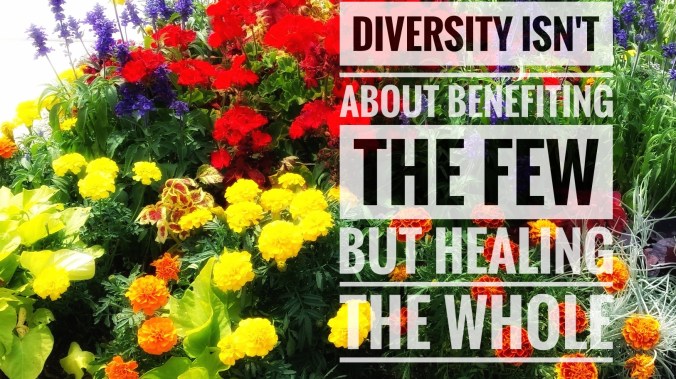
Discussion: We generally talk about diversity in society and the workplace as an advantage to people in the “minority.” It actually benefits everyone. How have you found this to be true?

Join the discussion! If you enjoyed this post, feel free to join an extended discussion as part of the C+C Facebook group or follow @comf_and_chall on Twitter. You’ll  have the opportunity to share your thoughts with some lovely people. Or feel free to comment here on WordPress, or even re-blog – the more the merrier!

Invitation: Extrapolation

1472392781083.jpg

Years ago I worked at a small computer services company. The environment there was pretty informal, and the conversations wandered everywhere. Politics and religion, topics studiously avoided in many settings, were definitely up for grabs, and I was eager to discuss both.

Our new customer service manager – let’s call her Claudia – also liked discussing her faith. She was Mormon, and had loaned me some literature about the church so we could talk about it. The materials were interesting, but left me with a lot of questions, so I did some research on my own. Like any religion Mormonism has a checkered history. One part that bothered me a lot was the church’s history of banning black people from full participation well into the twentieth century (which to be fair has not been a practice since 1978).

When I asked Claudia about her feelings on the matter, I was surprised she didn’t outright condemn the church’s history of racism. Instead, she explained to me that Mormons believe in a pre-existence, and your circumstances of birth are a reflection of how righteous you were in that pre-existence. There was also something about black people being descendants of Noah’s son Ham, who was cursed. “Doesn’t it make sense,” she said, “that you must have done something wrong to deserve to be born into such difficult circumstances?”

I was stunned. “But Claudia … you’re Mexican. By that logic lots of white people would say the same thing about you.”

“That’s different,” she said.

At this point, let’s be clear this isn’t about judging Mormonism or Claudia. It’s about extrapolation.

Extrapolation is an “act or instance of inferring an unknown from something that is known.” All of us have known what it’s like to be part of a group that’s been unjustly excluded. That exclusion can be cultural or generational. Too many times that exclusion has a supposed biblical basis. Yet so often we are unable – or unwilling – to extrapolate from our own experiences to understand the people we choose to exclude are experiencing something similar and predictable. Does it really seem likely that people who exclude you are acting unjustly, but the exclusion you inflict on others is rational?

Over the centuries, we’ve developed lots of “sound” theology to disenfranchise people from Christ’s table. So much so, that every one of us is probably banned from participating fully in one or more denominations, yet welcome in others. Entire denominations have coalesced around left-overs and left-outs. Could this division along the lines of personal prejudices disguised as doctrine really be what Christ had in mind?

Christ knows you. Christ knows your struggles. Not one perfect person has ever been invited to a communion table. And the reasons some churches may not invite you now have less to do with your imperfections than with the church’s own flaws. The people we excluded a hundred years ago, fifty years ago, even ten years ago are now full participants in the life of the church. History will eventually reveal the church’s unjust prejudices against some of the people we exclude today. Maybe it’s you. Maybe it’s your neighbor. Maybe it’s me. Knowing what Christ taught, should we be extrapolating practices of judgment or of mercy? Let’s continue that discussion around Christ’s table, where all are welcome.

May the peace of our Lord Jesus Christ be with you all.