Stop or I’ll shoot (my mouth off)

listen

Today’s readings (click below to open in new tab/window):
Psalms 104; 149, Isaiah 61:10 – 62:5, 2 Timothy 4:1-8, Mark 10:46-52


“Tone policing” means dismissing someone’s message by condemning the tone in which it’s delivered. Frequently used by groups in power to silence those who seek equality, an example of this tactic might be telling a woman who seeks equal pay, “I can’t listen when you’re so shrill and angry.” Tone policing prioritizes politeness over justice.

The term is relatively new, but the behavior is not. When Jesus was leaving Jericho, a crowd was following him. Buried in the crowd, a blind beggar named Bartimaeus began shouting for Jesus’s attention. The crowd ordered him to be quiet. Though we don’t know their exact words, they essentially told him to know his place and not to speak out of turn. Never mind that no one had the basic decency to offer help him or push him forward – it was his “rudeness” they made an issue.

Like many who are silenced, Bartimaeus only wanted access to the same things other people had. In his case, these things were the mercy and healing offered by Jesus. Fortunately for Bartimaeus, Jesus stopped in his tracks and called him over.

Jesus asked Bartimaeus: “What do you want me to do for you?” Now Jesus certainly knew the man was blind, but he made no assumptions about what the man wanted based on his most obvious characteristics, and instead allowed Bartimaeus the dignity of speaking for himself. Bartimaeus asked for his sight, and Jesus told him: “Go; your faith has made you well.” Note that Jesus did not say “I have made you well.” Jesus may have facilitated it, but acknowledged Bartimaeus had within himself the resources for his own wholeness.

When we ally ourselves in seeking justice with people who are less advantaged, let’s follow the example of Christ. Let’s relinquish social and political space for people to speak, rather than speaking for them. Let’s listen to what people tell us they need, rather than assuming what’s best for them. We don’t always need to cast ourselves as the creators of justice; a lot of the time we just need to get out of its way.

Comfort: God hears all cries for justice.

Challenge: When listening to people, try to concentrate on what they are saying more than how they are saying it.

Prayer: God of justice, grant me the wisdom to speak and listen justly. Amen.

Discussion: Under what circumstances do you find it difficult to listen to people?

Join the discussion! If you enjoyed this post, feel free to join an extended discussion as part of the C+C Facebook group , visit comfortandchallenge.tumblr.com, or follow @comf_and_chall on Twitter. You’ll  have the opportunity to share your thoughts with some lovely people. Or feel free to comment here on WordPress, or even re-blog – the more the merrier!


Intersections

1481770706315-01.jpeg

Today’s readings (click below to open in new tab/window):
Psalms 50; 147:1-11, Isaiah 9:8-17, 2 Peter 2:1-10a, Mark 1:1-8


In the opening of Mark’s gospel, the author quotes the prophet Isaiah: “Prepare the way of the Lord, make his paths straight.” The quote continues to say valleys shall be raised and mountains brought low. In this metaphor, the highest and lowest of us all are equal before God and God’s justice. It’s easy to picture a single, clear, straight road leading the Lord right to that place of justice. But note that Isaiah uses the plural “paths.” This may simply indicate turns or changes in direction, but could it be more?

Promoters of social justice often use the term “intersectionality.” In brief, it means that all forms of justice, rather than being separate situations, are connected and intertwined. Issues of poverty are not separate from issues of race, which are not separate from issues of gender, and so on. It is possible to make headway directing our efforts down only one of these paths, but that means we aren’t contributing to progress on the others, which actually holds us back. Even the most privileged person is trapped in systems of injustice, and intersectionality teaches him to see how he is both oppressed by and contributes to them. Intersectionality is not about saying one group’s privilege is bad, but about removing obstacles to that same privilege for everyone else.

And that brings us back to paths, plural. God is beyond time, space, and understanding. His paths to righteousness are infinite, cutting through many wildernesses at once. The Lord’s justice is not completed in a single march, but through a convergence from all directions, all times, all the colors of its spectrum merging into a destination shining with divine understanding. We each have the opportunity to walk with the Lord on many paths, all headed toward that unified light. Let’s make sure we’re not making progress on leveling our own path by throwing our rubble onto someone else’s.

Like love, justice exists in endless supply, but we must let it rush through us like rivers instead of damming it up. Over time, rivers straighten their own paths, and so can we.

Comfort: Your path is as valid as everyone elses.

Challenge: Read about intersectionality.

Prayer: Infinite God, I will seek your justice in all directions. Amen.

Discussion: Have you ever found your well-being tangled with someone who was not like you?

Join the discussion! If you enjoyed this post, feel free to join an extended discussion as part of the C+C Facebook group or follow @comf_and_chall on Twitter. You’ll  have the opportunity to share your thoughts with some lovely people. Or feel free to comment here on WordPress, or even re-blog – the more the merrier!

Holy Inappropriate

1479872581264.jpg

Today’s readings (click below to open in new tab/window):
Psalms 12; 146, Zechariah 11:4-17, 1 Corinthians 3:10-23, Luke 18:31-43


The Washington Post, Forbes, The Wall Street Journal, and other publications have written about how the voices of women in the workplace are not heard as strongly as men’s. There are multiple cultural reasons for this, and possibly a few biological ones. When women attempt to compensate, they are often labeled “bossy”, “shrill”, or worse. In environments where men (and sometimes other women) don’t or won’t recognize this phenomenon, women are caught in a no-win scenario of being ignored or being dismissed.

We dismiss a lot of people. As Jesus passed Jericho, a blind beggar on the roadside asked what the commotion was about. When he heard it was Jesus, the beggar called out, “Son of David, have mercy on me!” Those in front scolded him, but he persisted. Eventually Jesus stopped and ordered the crowd to bring the man over. He asked Jesus to restore his sight, and of course Jesus healed him. Then began to follow Jesus and glorify God, and the crowd praised God also.

Jesus wasn’t concerned that the beggar approach him the “right” way. If he hadn’t shouted and annoyed people, he wouldn’t have been heard at all. His blindness and his poverty were greater issues than whether the people around him were comfortable with how he cried for justice. Except for Jesus, not one person in the crowd was noted to express concern with his situation, but they sure spoke up when his attempt to do something about it inconvenienced them. The majority attempting to silence the minority – or the one – has always been an impediment to justice.

How do we silence people today? How often do we insist they need to be polite more than they deserve justice? We comfortably ignore them as long as they remain quiet in the back of the crowd, shush them when they don’t, then dismiss them as inappropriate and undeserving when they do what they must to be heard. Jesus never said “be polite” or “don’t make anyone uncomfortable.” If someone needs to shout to be heard, it’s time to ask why we didn’t notice them before.

Comfort: Everyone’s voice deserves to be heard.

Challenge: Pay attention to any tendencies you may have to dismiss a message or concern because you don’t like how attention is brought to it.

Prayer: Lord of Peace, teach us to listen to one another in love. Amen.

Discussion: When have you felt like you weren’t heard? Or when have you failed to hear someone else?

Join the discussion! If you enjoyed this post, feel free to join an extended discussion as part of the C+C Facebook group or follow @comf_and_chall on Twitter. You’ll  have the opportunity to share your thoughts with some lovely people. Or feel free to comment here on WordPress, or even re-blog – the more the merrier!
Justice or Just Us?

1479529236564.jpg

Today’s readings (click below to open in new tab/window):
Psalms 88; 148, Malachi 3:1-12, James 5:7-12, Luke 18:1-8


Jesus told a parable about a widow who kept asking a judge for justice against her opponent. This judge neither feared God nor respected people. He refused her for a long time, but eventually relented so she would not wear him out with constant bother. Jesus said if such an unjust judge granted justice, God would surely be swift to grant justice to His children when they cried out to him.

Justice doesn’t always seem swift. Like the widow, we keep asking but it eludes us. Why would a God who acts swiftly make us wait? Danish philosopher and Christian theologian Søren Kierkegaard said “Prayer does not change God, but it changes him who prays.” When justice seems slow, perhaps it is because we are slow to change. If our prayer for justice remains unanswered, could it be time to examine what we’re asking for, why we’re asking, and whether we need to change to make it happen? Or maybe we are changing, but don’t feel it. We don’t know how many times the widow approached the judge, or what she said, but in her persistence she one day became the person he didn’t want to be bothered by again. Even if her demand never changed, what she represented did and that could only happen over time.

When Pope Francis said: “You pray for the hungry. Then you feed them. That’s how prayer works,” he was very much in line with Kierkegaard. If our only hope for justice is outside ourselves and our relationship with God, we will be forever disappointed. Despite what you’ve read on bumper stickers, Gandhi never actually said “Be the change you want to see in the world,” but it resonates with us because it is a universal truth. Justice begins on the inside. We can point fingers all day long, often with good reason, but ultimately that fixes nothing and persuades no one.

Prayer is what we say, but also what we do and how we live. If you feel like justice isn’t being served, maybe it’s waiting for you to whip up a batch.

Comfort: Prayer will change you if you let it.

Challenge: Be open to being changed.

Prayer: Lord, make me an instrument of your peace, and your justice. Amen.

Discussion: Have you ever realized you were the solution to a problem?

Join the discussion! If you enjoyed this post, feel free to join an extended discussion as part of the C+C Facebook group or follow @comf_and_chall on Twitter. You’ll  have the opportunity to share your thoughts with some lovely people. Or feel free to comment here on WordPress, or even re-blog – the more the merrier!

Silenced

20161024_232624.png

Today’s readings (click below to open in new tab/window):
Psalms 62; 145, Jonah 1:17-2:10, Revelation 11:1-14, Luke 11:14-26


Along his travels, Jesus encountered a man who was rendered mute by a demon. Jesus cast the demon out and the man began to speak. The crowd was amazed, through some of them claimed Jesus cast out demons because he trafficked with demons. He rebuked them by saying a kingdom divided against itself could not stand.

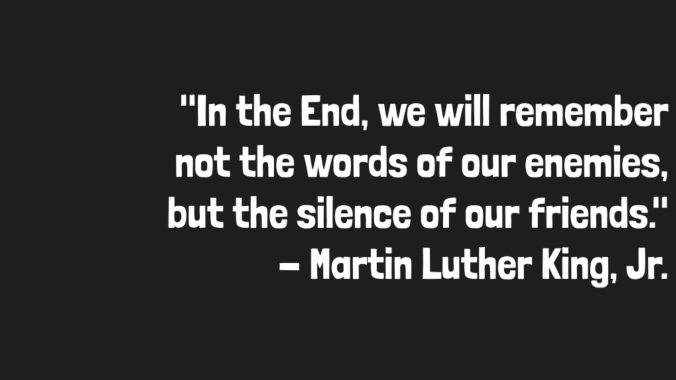
Dark forces always prefer our silence. For centuries the demons of racism, sexism, poverty, homophobia, religious persecution, and other persuasions have silenced countless people. Fears of rejection and retaliation muffle our truths. From slavery through suffrage through the civil rights era through today, the Bible itself has been used to dismiss generations of cries for justice. We effectively silence each other by refusing to listen: if your candidate, doctrine, or experience differs significantly from mine, too often I reject it outright without considering what it has to say about mine.

When I am forced to listen, if your words make me uncomfortable, I will find excuses to discredit them. Maybe I can’t pin it on Beelzebub, but your party, nationality, education, income, or number of piercings conveniently justifies my suspicions.

Fortunately, Christ’s power and love ultimately loose the tongues of the oppressed. God’s Kingdom is united around the language of justice. How do we make sure that kingdom is not divided? Martin Luther King, Jr may have summed it up best: “Injustice anywhere is a threat to justice everywhere.” We must recognize that the injustice which concerns us does not stop with the relief of our own oppression, or that of people like us, but extends to such relief for all God’s beloved children. The members of a united house speak truth to each other, especially when the house is in need of repair to keep it from collapsing under its own failings.

When Jesus restores our voice, let us use it wisely and compassionately. When others undermine and defame us, let us remember we are a kingdom united around justice. In the words of James Weldon Johnson:

Lift every voice and sing
Till earth and heaven ring,
Ring with the harmonies of Liberty.

Comfort: You have  a voice that deserves to be heard.

Challenge: Try to listen for voices you have been dismissing.

Prayer: Creator God, I lift my voice in praise and love to you. May I join with all of creation in singing your song of love. Amen.

Discussion: When have you felt like you weren’t heard?

Join the discussion! If you enjoyed this post, feel free to join an extended discussion as part of the C+C Facebook group or follow @comf_and_chall on Twitter. You’ll  have the opportunity to share your thoughts with some lovely people. Or feel free to comment here on WordPress, or even re-blog – the more the merrier!

Guilty Until Proven Innocent

1475889623634.jpg

Today’s readings (click below to open in new tab/window):
Psalms 51; 148, Hosea 9:10-17, Acts 24:24-25:12, Luke 8:1-15


After fleeing an angry Jerusalem mob who falsely accused him and conspired to kill him, Paul found himself in Caesarea. Felix, the governor, was familiar with The Way and sympathetic to Paul. When Paul’s accusers arrived, they argued their case that he had defiled the temple, but couldn’t make the charges stick in a Roman court. Rather than free Paul, Felix kept him in protective custody – for two years! He hoped to get money from Paul, and frequently invited him to visit and converse. Paul’s teachings about justice and self-control unnerved Felix. Eventually Felix’s successor arrived, but even then he left Paul in prison to appease the Jews. The new governor, Festus, didn’t wait long to hear Paul’s case, but he in turn decided to send Paul to Rome and the emperor for judgment.

Friends were allowed to visit and attend to Paul’s needs, but two years of confinement with no hearing was certainly unjust. Felix and Festus were true politicians who didn’t want any negative repercussions pinned to them. Freeing Paul would have angered the Jews, and convicting him would have been blatantly against the law, so instead he was left to languish.

The parallels to our modern political and justice systems are sadly obvious.

If we were Christians living in first-century Caesarea, would we have been fighting to free Paul as fiercely as his enemies fought against him? Acts doesn’t mention anyone advocating on his behalf. All around the world, people are unjustly imprisoned for political and religious reasons. A few dedicated souls toil to liberate them, but most of us shake our heads, perhaps pray a little, and don’t believe there’s much we can do.

But there is. Our faith communities can speak out against the conditions that allow such things to happen. We can organize or support non-partisan justice efforts. Our shared Christian history is one of both being unjustly persecuted, and of unjustly persecuting – and both still happen today. Our political role is not to side with one party or the other, but to be a prophetic voice against the injustices of the system itself.

Comfort: In matters of justice, even your small voice matters.

Challenge: Use it.

Prayer: God of justice, give me the courage to confront injustice where I see it, and the wisdom not to participate in it. Amen.

Discussion: If you had to pick one justice issue to receive your efforts, what would it be and why?

Join the discussion! If you enjoyed this post, feel free to join an extended discussion as part of the C+C Facebook group or follow @comf_and_chall on Twitter. You’ll  have the opportunity to share your thoughts with some lovely people. Or feel free to comment here on WordPress, or even re-blog – the more the merrier!
“If I perish, I perish.”

1474337965340.jpg

Today’s readings (click below to open in new tab/window):
Psalms 57; 145, Esther 4:4-17, Acts 18:1-11, Luke 1:1-4, 3:1-14


Are heroes born or made? Esther’s story does not begin heroically: on the advice of her uncle Mordecai she hides her Jewish heritage to become the favored concubine of the Persian king. He makes her his new queen, but a queen who is little more than a slave herself.

Esther’s concerns for the world don’t extend beyond her family. When she learns Mordecai is loitering outside the castle gate and wearing only a sackcloth (a symbol of grief) she sends him clothes. He refuses them and has messengers explain the king’s chief official, who feels disrespected by Mordecai, is going to kill all the Jews in the empire, and asks Esther to plead with the king on behalf of her people. Esther declines, claiming she is as powerless as anyone who approaches the king unbidden.

After Mordecai explains that she is in a unique position to help her people, and that if she refuses then she will die with the rest of the king’s household when someone else rises up, Esther reevaluates her decision. In the end, she agrees to risk her life by approaching the king. Not at all confident about the outcome, she asks her people to pray and fast for her.

In the end, we can’t hide from injustice simply because it does not directly affect us. Like Mordecai warned Esther, one way or another we will feel its impact. When people came to John for baptism, he warned them hiding behind the name of Abraham wouldn’t protect them from the coming wrath. He told tax collectors and soldiers – who thought working for the empire protected them from the consequences of shaking down the vulnerable – to knock it off. As the Reverend Martin Luther King, Jr. said, “injustice anywhere is a threat to justice everywhere.” We can ignore a societal cancer and suffer its inevitable malignancy or, like our reluctant heroine Esther, we can say “If I perish, I perish” and do our best to cut it out now. Perhaps some heroes are made when we fear living with injustice more than we fear dying of complacency.

Comfort: It’s okay to be afraid.

Challenge: But try to be afraid of the right things.

Prayer: Lord of Heaven, be my strength and my courage in the face of injustice. Amen.

Discussion: What scares you?

Join the discussion! If you enjoyed this post, feel free to join an extended discussion as part of the C+C Facebook group or follow @comf_and_chall on Twitter. You’ll  have the opportunity to share your thoughts with some lovely people. Or feel free to comment here on WordPress, or even re-blog – the more the merrier!

Plea Bargain

1472996838351.jpg

Today’s readings (click below to open in new tab/window):
Psalms 103; 150, Job 25:1-6, Job 27:1-6, Revelation 14:1-7, 13, Matthew 5:13-20


Plea bargaining is a common but controversial practice. On one hand, it increases efficiency in an overburdened criminal justice system, and results in convictions that otherwise might not happen. On the other, many people believe plea bargaining results in unfair sentencing, an erosion of constitutional rights, and coerced confessions of (sometimes innocent) people who are too frightened and/or poor to demand a fair trial with adequate representation. Plea bargaining is a balance between getting things done, and getting things right. It forces us to ask whether an increased conviction rate is worth a decrease in fairness – or the right measure at all.

Job’s friend Bildad wanted him to plea bargain with God. Essentially he said: “Everybody’s guilty of something. Just admit your wrongdoing and this will all go away.” Job, rightly convinced of his own innocence, wasn’t having it: “[M]y lips will not speak falsehood, and my tongue will not utter deceit. Far be it from me to say that you are right; until I die I will not put away my integrity from me.” In the end, Job is justified; he is badly abused, but his righteousness remains unblemished.

When Jesus said he came not to abolish the law, but to fulfill it, he was preparing for the ultimate plea bargain. Guilty of nothing, he knowingly and willingly took our sin to the cross. Not just some of our sin – all of it. If we are willing to yoke our fate to his, to follow him through both destruction and glory, and to recognize our freedom is not of our own doing, the law no longer has power over us.

Very often God’s justice is an upside-down reflection of human justice. Rather than increasing the conviction rate, Christ’s sacrificial plea bargain reduced it to zero. Efficiency was measured not in condemnations, but in salvation. Unlike Job, we are all guilty of something. Let’s honor Christ’s sacrifice by admitting to every bit of it, by wringing out every drop of forgiveness and new life he offers. Let us beat our swords into plowshares, and prison bars into gates of welcome.

(for additional thoughts on today’s text from Matthew 5, see Lightly Salted)

Comfort: Jesus has already paid the price for your freedom.

Challenge: Forgiveness and freedom are meant to be passed along. Take some action to help address injustices in your own community.

Prayer: Lord of Heaven and Earth, I love you with all my heart, mind, and soul. Give me strength to love my neighbor as myself, and to love myself well. Amen.

Discussion: Watch this video on plea bargaining. What are your thoughts?

Join the discussion! If you enjoyed this post, feel free to join an extended discussion as part of the C+C Facebook group. You’ll be notified of new posts through FB, and have the opportunity to share your thoughts with some lovely people. Or feel free to comment here on WordPress, or even re-blog – the more the merrier!

Getting What We Deserve

1471904440175.jpg

Today’s readings (click below to open in new tab/window):
Psalms 54; 146, Job 6:1-4, 8-15, 21, Acts 9:32-43, John 6:60-71


Our culture finds a certain satisfaction in seeing people get what they deserve. When we say “justice has been served” we are usually referring to the sentencing of a guilty person, or the acquittal of an innocent one. We romanticize the myth that anyone with a strong enough work ethic can “pull himself up by his bootstraps” and become a success. What we can’t quite wrap our heads around is when good things happen to bad people, and bad things happen to good people.

Job’s insistence that his suffering is unjust by such standards makes his friend Eliphaz uncomfortable. Like many of us, Eliphaz wants to believe people get what they deserve. He so desperately clings to a worldview threatened by Job’s situation that he can’t admit the reality that would comfort his friend: suffering is not always deserved. Job archly observes: “you see my calamity, and are afraid.”

Maybe questions that ask why people don’t get what they deserve are the wrong kinds of questions. Paul hunted Christians up to the moment of his conversion. What did he deserve? Jesus asks us to love and forgive our enemies. What do they deserve? What do we deserve? While most of the world works on a merit system, Jesus works with grace. “Good” people don’t need success, but spiritual growth. “Bad” people don’t need punishment, but healing. Deep down, we know this. We describe our criminal justice system as rehabilitative, though the reality is very different. Our worldly form of justice too often trumps the justice of Christ and the prophets.

What if Christian justice isn’t a focus on what we personally deserve, but on the act of providing bread and love and wholeness where none of these things are found? What if we are to temper accountability with mercy? Fairness with charity? Law with love? Suffering can’t be explained away in one or a thousand daily devotionals, but if our highest value is a life based on faith in Christ, that value is neither increased by prosperity nor decreased by suffering. In both joy and hardship we can find God.

Comfort: Grace is not earned, but given freely.

Challenge: When you read, listen to or watch this week’s news, note when worldly and Christian justice are they same and when they differ.

Prayer: God of justice, teach me its meaning. Amen.

Discussion: When are you tempted to promote worldly justice over Christ-like justice?

Join the discussion! If you enjoyed this post, feel free to join an extended discussion as part of the C+C Facebook group. You’ll be notified of new posts through FB, and have the opportunity to share your thoughts with some lovely people. Or feel free to comment here on WordPress, or even re-blog – the more the merrier!

Expect the Unexpected

1471832446492.jpg

Today’s readings (click below to open in new tab/window):
Psalms 67; 150, Job 4:1-6, 12-21, Revelation 4:1-11, Mark 6:1-6a


No Bible stories are about God telling a prophet: “All is well. Carry on just as you have been.” Rather, He promises to make a childless, elderly couple the parents of a nation as numerous as the stars. He appoints an adopted Hebrew into the Egyptian royal house to free slaves. He transforms a persecutor of Christians into their greatest evangelist. These stories? There are plenty of them.

When Jesus preached to the residents of his hometown, “he was amazed at their unbelief.” They asked “Is not this the carpenter, the son of Mary and brother of James and Joses and Judas and Simon, and are not his sisters here with us?” This guy? They were actually offended by his teaching. Jesus as the messiah was doubly unexpected: both a hometown boy, and a preacher of peace.

Self-proclaimed messiahs before Jesus had led rebellions against Rome. The crucified bodies of these men and their followers literally lined the road to Jerusalem for miles. Another messiah promoting bloody rebellion was expected, but not needed.
We like preachers and teachers who comfort us. We are much more skeptical of radicals, of people who make us uncomfortable, of people challenging the status quo. But these are requirements for prophets. It’s their vocation to make us question our beliefs and behaviors. People in powerful or safe situations have little motivation to question a system that works for them. Instead, injustices are brought to light by those for whom the system is not working, or those who become willing to sacrifice the privileges the system affords them.

Is every outrageous character a prophet and every outlandish claim a prophecy? Of course not. But when God demands change, He demands it for the poor and oppressed, and their voices sound jarring, unsettling – even threatening – to those in power. They call us to recognize how our actions and beliefs negatively impact the lives of others. Sometimes the voice of God is still and small because it comes from those who have been silenced. Our modern prophets are not those who comfort us, but those who challenge us.

Comfort: God doesn’t challenge us to change because we have failed, but because we can succeed..

Challenge: This week, try to learn something from people who have made radical commitments to living out the gospel.

Prayer: God of growth, show me how I can change, and bless me with the courage to do so. Amen.

Discussion: Who has challenged you to change the way you understand the gospel?

Join the discussion! If you enjoyed this post, feel free to join an extended discussion as part of the C+C Facebook group. You’ll be notified of new posts through FB, and have the opportunity to share your thoughts with some lovely people. Or feel free to comment here on WordPress, or even re-blog – the more the merrier!