Love Better

1449419762969

Readings: Psalms 24; 150, Amos 6:1-14, 2 Thessalonians 1:5-12, Luke 1:57-68


Traditionally the theme of the second week of Advent is Love. Often “love” evokes warm feelings of family, friends, and romance. However, depending on a person’s life circumstances, those feelings may be mixed with longing, loneliness, hope, and other emotions.

Sorting out feelings about feelings? Well, love is complicated. Advent adds yet another wrinkle: love as the world falls apart.

The prophet Amos and the apostle Paul both share harsh words about the future. Amos tells the people of Israel they have offended God so mightily that He is “raising up against you a nation, O house of Israel, […] and they shall oppress you from Lebo-hamath to the Wadi Arabah.” Paul in his second letter to the church in Thessalonica tells them they who do not obey the Gospel “will suffer the punishment of eternal destruction, separated from the presence of the Lord and from the glory of his might.” While these passages definitely drive home the message that God desires righteousness, they don’t much describe a God who define Love as a gooey confection of simple affection.

Except in these examples, God’s anger exists because people are too focused on false righteousness and not enough on love. The people of Israel were making ritual sacrifices like clockwork, but ignoring and exploiting the poor. “Obeying the Gospel” wasn’t about rules but about loving God and loving our neighbors as ourselves. These prophets warned us separation from God occurs when we fail to love God and each other.

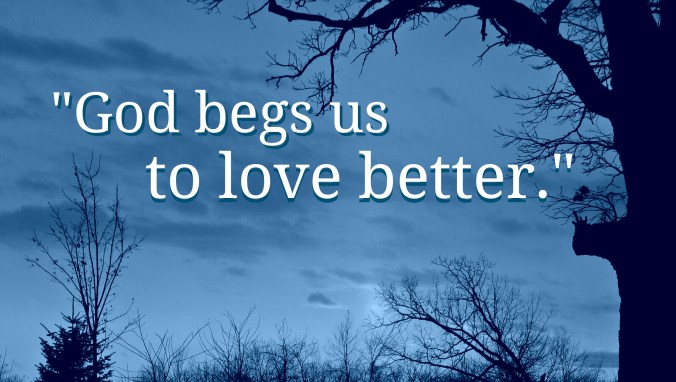
Throughout the Bible, God sends warning after warning about the consequences of failing to love. He sends us Jesus so we may be reconciled to him in love, and before that sends us John the Baptist to tell us Jesus is on the way. Love is complicated. Think about your own relationships where love has been broken: it’s rarely a sudden snap, but a slow dissolution with opportunities for one or both sides to repent. God begs us to love better.

Advent is a season for reflecting on how well we love God and each other. Before the world falls apart, God call us to love. Afterward, it is the only thing that saves us.

Comfort: God loves us even in anger.

Challenge: Work on a relationship where love has been broken.

Prayer: Make me to know your ways, O LORD; teach me your paths. Lead me in your truth, and teach me, for you are the God of my salvation; for you I wait all day long. (Psalm 25:4-5)

Discussion: How has your understanding of love changed over time?

Join the discussion! If you enjoyed this post, feel free to join an extended discussion as part of the C+C Facebook group. You’ll be notified of new posts through FB, and have the opportunity to share your thoughts with some lovely people. Or feel free to comment here on WordPress, or even re-blog – the more the merrier!

Dismantled

late-stage-1431760_1920

Today’s readings (click below to open in new tab/window):
Psalms 56; 149, Jeremiah 52:1-34, 1 Corinthians 15:12-29, Matthew 11:7-15


When Jerusalem finally fell to Babylon, it fell hard. The king’s sons were killed and his eyes were put out. Priests, councilors, officers, and random citizens were executed in a show of force and cruelty that ended in the exile of Judah. The Babylonians sacked the temple, looting everything down to the serving utensils and decorative bronze pomegranates.

No one could say they didn’t see it coming. From Israel’s first king Saul through her last king Zedekiah, nearly all of them betrayed the Lord and the people in significant ways. Time after time, the Lord allowed them to repent, and spared both king and kingdom. The Lord had no desire to see his people suffer, and was generous with forgiveness. But after more than twenty kings and nearly as many generations, the Lord’s warnings that nothing good would come from choosing to be led by kings were undeniable. Israel and then Judah fell to foreign invaders and for all intents and purposes ceased to be.

In time they would be restored, at least for a while. The period in between was one of grief not just for the Jewish people, but also for the Lord.

The Lord never delights in our suffering, but also doesn’t seem to stop us from bringing it upon ourselves. Our relationship with our creator is based on love, and love can never be forced. Is all our suffering a result of our own decisions? Certainly not. Many times it’s the fallout of other people’s decisions. Sometimes it’s unavoidable or unpredictable, like a disease or a disaster. But our stubbornness and hard hearts still cause us no end of grief. And at times it feels like the consequences of our actions return to dismantle us down to the smallest details of our lives.

During those times, wouldn’t we prefer a God who, satisfied that we’ve learned our lesson, quickly snatches us from spiritual exile and restores us to good fortune? But easy fixes aren’t love either. Love stands by to offer the appropriate support while we fix ourselves … and sometimes it has to wait a long time for us to figure out both what we need to fix and the will to do it. No matter how long it takes, God waits.

When we feel undone by life, let’s cling to the certainty that God does not leave us, but grieves with us until we find our way back to wholeness.

Comfort: God is with you even when it doesn’t feel like it.

Challenge: If what you’ve been doing isn’t working … do something else.

Prayer: Open to me the gates of righteousness, that I may enter through them and give thanks to the LORD.. (Psalm 118:9)

Discussion: When the people of Israel eventually returned to their homes, they had to rebuild from the ground up. Have you ever had to rebuild instead of fixing?

Join the discussion! If you enjoyed this post, feel free to join an extended discussion as part of the C+C Facebook group. You’ll be notified of new posts through FB, and have the opportunity to share your thoughts with some lovely people. Or feel free to comment here on WordPress, or even re-blog – the more the merrier!

Faith and Friction

emery-cloth-1827149_1920

Today’s readings (click below to open in new tab/window):
Psalms 5; 145, 2 Kings 21:1-18, 1 Corinthians 10:14-11:1, Matthew 8:28-34


Early followers of Christ lived in a culture where a temple or idol to one deity or another lurked around almost every corner. Even within the Christian church, Jews and Gentiles had backgrounds and beliefs which were not always in agreement. This created complicated social situations where believers had to balance being a loving neighbor (or business partner or customer) against upholding their principles.

In today’s reading from Corinthians, Paul writes about eating meat sacrificed to idols or demons – which would have been forbidden under Jewish law. Instead of declaring such actions sinful or not, he wrote: “‘All things are lawful,’ but not all things are beneficial. ‘All things are lawful,’ but not all things build up.” He advised them their actions should be chosen in accordance with their convictions, yet not to undermine their witness to the people around them. He didn’t want them leading anyone into behavior that other person thought was a sin.

We face similar challenges. Every day we are called to follow our principles even when they run contrary to social pressures, politics, employers, friends, family, foreign cultures, and fellow people of faith. In some situations, particularly matters of personal ethics, we may simultaneously be judged by some people as too pious while others see us as terrible sinners. If we remain loving, it doesn’t matter. Christ didn’t worry about being called a glutton or a drunkard, and John the Baptist was just fine being a holy freak. Isn’t it liberating to know our allegiance is never to public opinion, but to God, “for why is [our] freedom being judged by another’s conscience?”

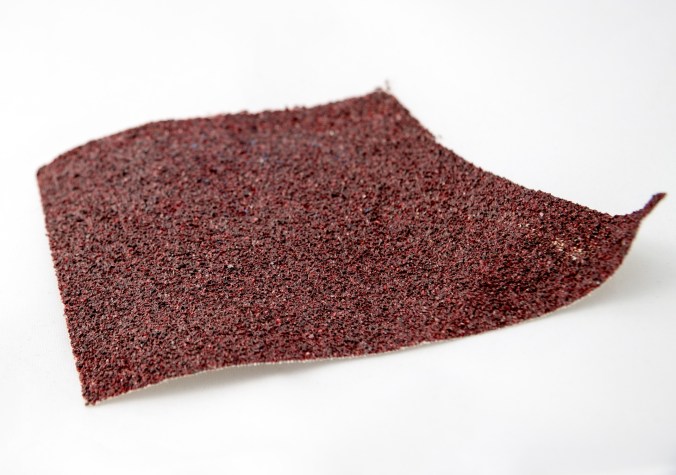
We are not a people bound by laws and technicalities of action and thought (no matter how much some people might cling to that model). We are a people freed by love and meant to love freely. Our faith is in constant friction with the world. We are called to live our faith, but never to impose it. It is up to us to decide whether that friction is a source of irritation like sandpaper on skin, or a source of warmth like two hands rubbing together as if in prayer.

Comfort: You don’t need to worry about how other people judge you.

Challenge: Seek common ground rather than the upper hand.

Prayer:  Give justice to the weak and the orphan; maintain the right of the lowly and the destitute. Rescue the weak and the needy; deliver them from the hand of the wicked. Amen. (Psalm 82:3-4)

Discussion: Where do you encounter the most friction between your faith and the world?

Join the discussion! If you enjoyed this post, feel free to join an extended discussion as part of the C+C Facebook group. You’ll be notified of new posts through FB, and have the opportunity to share your thoughts with some lovely people. Or feel free to comment here on WordPress, or even re-blog – the more the merrier!

War and Peas

pea-soup-2786118_1920

Today’s readings (click below to open in new tab/window):
Psalms 65; 147:1-11, 2 Kings 6:1-23, 1 Corinthians 5:9-6:11, Matthew 5:38-48


The Arameans and the Israelites were frequently at war. Because the prophet Elisha seemed to always be one step ahead of the king of Aram, the king sent an army of Arameans to surround the city of Dothan, where Elishah was dwelling. As the army approached, Elishah prayed the Lord would strike them blind, and they were blinded. Then Elisha tricked them into believing he would lead them to the man they sought, but instead led them back to Samaria and the king of the Israelites. The Lord opened the army’s eyes and they realized the tables had turned and they were surrounded in the heart of enemy territory. The king would have been happy to kill the Arameans, but instead Elishah directed the king to unleash the full fury of … soup and salad.

That’s right, Elisha had the king invite the Arameans to a feast, and then release them to return home. Afterward “the bands from Aram stopped raiding Israel’s territories.”

Could this be the sort of thing Jesus was thinking of when he told his disciples, “Love your enemies and pray for those who persecute you?” In Luke’s gospel, it’s even expanded to doing good to them and lending to them without expecting a return. When’s the last time you lent something to an enemy?

Whether our enemies are personal, political, or global, one sure way to keep them enemies is to keep treating them as enemies. Elishah’s example, and Jesus’s words, are also echoed in Proverbs and other scriptures: “If your enemy is hungry, give him food to eat; if he is thirsty, give him water to drink. In doing this, you will heap burning coals on his head, and the Lord will reward you.” Humanizing our enemies leaves them vulnerable to humanizing us in return, and that’s probably the last thing they want. Yet it’s the first step toward loving them.

Enmity may be forced on us by circumstances beyond our control, but how we treat our enemies is up to us. Whether you’re more motivated by burning coals or cooling tensions, loving our enemies is the path to eliminating them.

Comfort: You don’t have to return hate for hate.

Challenge: Invite an enemy to dinner.

Prayer: O divine master grant that I may not so much seek to be loved as to love. Amen.

Discussion: Have you ever been shown kindness or love by someone you considered an enemy? Did it change you?

Join the discussion! If you enjoyed this post, feel free to join an extended discussion as part of the C+C Facebook group. You’ll be notified of new posts through FB, and have the opportunity to share your thoughts with some lovely people. Or feel free to comment here on WordPress, or even re-blog – the more the merrier!

Gift Receipts

gifts-1505216_1920

Today’s readings (click below to open in new tab/window):
Psalms 67; 150, 2 Kings 4:8-37, Acts 9:10-31, Luke 3:7-18


Have you ever received a gift you didn’t request or want, but which you didn’t feel comfortable returning? Something like a piece of art which you really don’t care for, but made especially for you by a loved one. Or maybe you’ve been given a pet you weren’t ready for. Suddenly we have to decide whether that sculpture has to be on the coffee table all the time or just when Aunt Molly visits, and whether we can afford next month’s planned vacation and a pet sitter.

The prophet Elisha gave an unexpected gift to a Shunnamite woman who had prepared a place for him to stay when he traveled. The childless woman was past the age when she expected to bear children, but through the power of God Elisha told her she would conceive. When her son was older he one day returned from the field with a mysterious headache, and died sitting on his mother’s lap. The woman was left with anger and grief over the loss of something she had never expected to have. Fortunately, Elisha was able to restore the son to life.

A disciple named Ananias was given an unexpected vision from God. Saul of Tarsus, a persecutor of Christians, was laid up blind and Ananias was to visit him so his sight could be restored. Ananias’s response was basically, “Really Lord? This guy?” but God reassured him Paul was to be an instrument of great evangelism. Sight restored, Paul started with a bang and so angered the Jews with his preaching that they plotted to kill him. The disciples had to sneak Paul out of town in a basket lowered through a hole in the city wall. Paul would turn out to be a difficult gift to wrangle for years to come.

The more strongly we feel about respecting the giver, the tougher it is to deny a gift we didn’t want in the first place. Isn’t God the giver we respect the most? Not every gift we have from God will be one we desire. It may be inconvenient. Burdensome. Painful even. We need to figure out what to do with it anyway.

Making room for the unwelcome gifts along with the welcome teaches you not every gift is about you, but might be about the grace that is found in sacrificial love. If you’re not going to go out and get it for yourself, somebody has to give it to you.

Comfort: Every gift from God, even an unwelcome one, is a treasure.

Challenge: Ask yourself which of your gifts you are not using, and why.

Prayer: May God continue to bless us; let all the ends of the earth revere him. (Psalm 67:7)

Discussion: What’s the worst gift you’ve given? How did you find out it was a bad idea?

Join the discussion! If you enjoyed this post, feel free to join an extended discussion as part of the C+C Facebook group. You’ll be notified of new posts through FB, and have the opportunity to share your thoughts with some lovely people. Or feel free to comment here on WordPress, or even re-blog – the more the merrier!

Getting Warmer

1504645594735

Today’s readings (click below to open in new tab/window):
Psalms 12; 146, 1 Kings 8:65-9:9, James 2:14-26, Mark 14:66-72


Today’s reading from Mark finds Peter warming himself by a fire in the courtyard of the high priest’s palace, where inside Jesus is standing trial and facing a battery of false witnesses. The witnesses outside aren’t much more truthful. When a servant woman confronts Peter as a companion of Jesus, he denies it and retreats to the forecourt, where it is less warm but he can still feel like he hasn’t abandoned Jesus. After the cock crows she points him out to the gathered guards and other bystanders, but still he denies knowing Jesus. When the bystanders themselves begin accusing him, he curses and swears he doesn’t know Jesus.

After the cock crowed a second time and he remembered how Jesus had predicted these denials, could Peter feel warm no matter how close he got to the fire?

It can be easy to convince ourselves we’re standing by Jesus when we’ve really chosen the coziness of the courtyard over the real heat in the courtroom.  How close do we let ourselves get before our rationalizations begin? Do we want “Christian” values enacted as law … until they affect our wallets? Do we turn the other cheek … until our physical safety is threatened? Do we love our neighbors … until they put up a campaign sign for the other candidate?

We all fall short of living Christ’s love perfectly. When we do, it’s important that instead of making excuses about laws and practical repercussions, we are honest with ourselves and others about our failures, limitations, and fears. Christ knows and forgives them, but we can’t be forgiven for something we won’t confess.

In his epistle, James talks about works as evidence of faith. He’s not saying we’re saved by works – he’s saying if our heart isn’t changed enough to move us to action, it isn’t changed enough. When Jesus talked about loving people, he wasn’t promoting warm feelings, but charitable actions. We can say we love our enemies, but if we don’t do good to them, it’s not the kind of love Jesus addresses. Merely doing no harm falls short of the glory. By extension, if we say we love Jesus but that love ends with words – in the warm courtyard of personal salvation safely removed from the danger of the courtroom  – and risks not even our comfort, do we love enough?

When we hear the crow that forces us to face our shortcomings, it’s not too late to do better. Peter remained the rock of the newly forming church. His courage backslid once or twice but, as the memory of that courtyard surely never left him, he ultimately did right – even when it cost him.

Christ promises us a failure is not an end. When confessed and confronted, it is an opportunity to grow ever closer to him.


Comfort: You haven’t done anything God hasn’t already forgiven someone else for. 

Challenge: Look for reasons to love extravagantly, rather than excuses to stay comfortable.

Prayer: Loving God, may my actions reflect the state of my heart, and may the state of my heart reflect Christ. Amen. 

Discussion: Where do you struggle to act on your faith because doing so is uncomfortable or impractical?

Join the discussion! If you enjoyed this post, feel free to join an extended discussion as part of the C+C Facebook group. You’ll be notified of new posts through FB, and have the opportunity to share your thoughts with some lovely people. Or feel free to comment here on WordPress, or even re-blog – the more the merrier!

Human Kindness, Overflowing

peru-641632_1920

Today’s readings (click below to open in new tab/window):
Psalms 123; 146, 1 Samuel 25:1-22, Acts 14:1-18, Mark 4:21-34


David and his six hundred men camped in the wilderness outside Carmel, near the property of a wealthy man named Nabal. David sent men to tell Nabal that unlike some of the more dangerous characters roaming the wilderness they had harmed neither his shepherds nor his flock but protected them; therefore, would he spare them whatever food he could? Nabal, cranky and suspicious of runaway servants, declined. David returned with four hundred armed men, ready to kill all the males of the household.

Allowing that a refusal of hospitality was a much stronger insult in David’s culture, and that the text is clearly biased against Nabal … in this situation David is not a nice guy. Essentially he tells his troops, “Hey, boys! This guy who didn’t actually ask for our protection now refuses to compensate us for it so we’re going to slaughter his household.”

Today we call that sort of extortion a “protection racket.”

Ever heard of Nice Guy Syndrome? Simplified (maybe overly so), it’s the idea that some men who see themselves as nice believe this obliges women – especially women they’ve supported through relationships with men who are “not nice” – to consider them romantically. Less a virtue and more an objectifying strategy.

No matter how kind you are, no one (regardless of gender) owes you a date. Or a job. Or a meal. Or even gratitude. We appreciate these things. Being only human, we feel the sting of their absence. But if we feel it too keenly – if it punctures and deflates our impulse to be kind – perhaps what we value is not kindness itself, but the ego stroke of being perceived as kind.

True kindness is an expression of gratitude for God’s limitless love for us. It reflects God’s patience with our own imperfections and ingratitude. If we love only those who love us back, we do not love: we negotiate. As Paul writes in 1 Corinthians, love does not insist on its own way – including being returned “appropriately.” A kindness freely given is a gift to both souls, a balm which never runs dry.

Comfort: Your kindnesses, even unacknowledged, matter.

Challenge: Once a week, make a point of being kind to someone you don’t like, or who doesn’t like you.

Prayer: Thank you, God, for the many kindnesses you show me daily. Amen.

Discussion: David is an example of a flawed but basically good person. How do you deal with it when your heroes or loved ones fall short of your expectations?

Join the discussion! If you enjoyed this post, feel free to join an extended discussion as part of the C+C Facebook group. You’ll be notified of new posts through FB, and have the opportunity to share your thoughts with some lovely people. Or feel free to comment here on WordPress, or even re-blog – the more the merrier!

Learning to See

alone-971122_1920

Today’s readings (click below to open in new tab/window):
Psalms 96; 147:1-11, 1 Samuel 16:1-13, Acts 10:1-16, Luke 24:13-35


“[F]or the LORD does not see as mortals see;
they look on the outward appearance,
but the LORD looks on the heart.”
– 1 Samuel 16:7b

An entire movie genre features attractive yet shallow young people learning to appreciate the inner beauty of their less attractive peers. The beautiful person usually doesn’t admit to themselves how they have fallen in love with someone who is – by Hollywood standards – not quite as beautiful (and very likely someone they have previously tormented) until after a dramatic makeover montage reveals hitherto concealed physical beauty.

What would happen without the makeover? Would the handsome jock remain in denial about his feelings for the nerdy writer who never discovered the right conditioner for her split ends? Would the popular cheerleader continue to friend-zone the bespectacled mathlete who otherwise won her heart?

Not that beautiful people deserve all the blame. The plain Janes and Jims in these movies aren’t falling over themselves to date average looking people. It’s still a real statement for a film to explore romance between two ordinary-looking (or – gasp! – slightly unattractive) people. And it’s not limited to romance. Action, science fiction, and horror movies often use the shorthand of physical appearance to indicate who the heroes and villains are.

As a culture we buy into these ideas. When we don’t like someone, we are much more likely to comment negatively on their looks or the way they dress – especially if they’re women – though it’s entirely irrelevant. Conversely, when we feel kindly toward someone, we are disposed to more favorably rate their appearance.

How do we learn to see as God sees? Maybe the trick is to love first, and see second. Psalm 139 says God knit and loved our inmost selves in the womb. Is it possible for us, limited by mortal understanding as we are, to decide to love people before we meet or even see them? First impressions may be visual, but we can control our first expressions toward someone. When the holy in us deliberately chooses to greet the holy in others, the scales of judgment fall from our eyes.


Additional Reading:
For thoughts on today’s passage from Acts, see Double Vision.
For more on Luke’s resurrection story, see Risen and Recognized.

Comfort: God knows your inmost self.

Challenge: The next time you are tempted to comment on someone’s appearance, ask yourself why you think it would appropriate to do so.

Prayer: Bless me, O LORD, maker of heaven and earth, of body and soul. Amen.

Discussion: How does getting to know someone’s inner life affect how you perceive their outer appearance?

Join the discussion! If you enjoyed this post, feel free to join an extended discussion as part of the C+C Facebook group. You’ll be notified of new posts through FB, and have the opportunity to share your thoughts with some lovely people. Or feel free to comment here on WordPress, or even re-blog – the more the merrier!

Clothes Encounters

shirt-1902602_1920

Today’s readings (click below to open in new tab/window):
Psalms 12; 146, 1 Samuel 15:24-35, Acts 9:32-43, Luke 23:56b-24:11 (12)


Clothing plays a role in all three of today’s scripture passages.

In Samuel, King Saul tries to detain the prophet Samuel by grabbing at his robe and accidentally tears a strip off. Samuel, angry that Saul has not been following God’s instructions to annihilate the Amalekites and their property (and like any good prophet not one to pass up a symbolic moment), declares: “The LORD has torn the kingdom of Israel from you this very day, and has given it to a neighbor of yours, who is better than you.”

In Acts, Peter visits the home of Tabitha, a good and charitable woman who had recently died. Some widows were gathered and reminiscing over garments she had made while among them. Peter clears the room, prays, and says “Tabitha, get up” – which she does.

And in Luke, a Peter who has not yet experienced the power of the resurrection is with the eleven remaining apostles when Mary Magdalene, Mary the mother of James, Joanna, and other women tell them about meeting two angels at the open and empty tomb of Jesus. The disciples dismiss this tale, but Peter investigates for himself. At the tomb he finds the discarded burial shroud.

After someone loses a loved one, it may be quite a while before they can bring themselves to dispose of the deceased person’s clothes. Clothing carries the color, the scent, the shape of our existence. What does a trip through our wardrobe say about us? Does it tell a story of hard work? Of impeccable style? Perhaps a lifelong struggle with body image? Wealth or poverty? Our tendencies toward conformity or rebellion? A barometer of our sense of adventure? When we are gone, what memories will our closet contain?

In the end, we hope to tailor stories of loving God with all our hearts, and our neighbors as ourselves.

Trouser knees worn thin and shiny from time in prayer. Jacket elbows patched because we gave the second coat away. Cuffs and collars pressed for our Sunday best. What we wear will be remembered for how we loved while wearing it.


Additional Reading:
For more thoughts on today’s passage from Luke and the empty tomb, see Idol Tales.

Comfort: How you will be remembered is largely up to you.

Challenge: Take a look at your closet. Does it tell the story you hope people will remember?

Prayer: I will give to the LORD the thanks due to his righteousness, and sing praise to the name of the LORD, the Most High. (Psalm 7:17)

Discussion: What’s your favorite article of clothing and why?

Join the discussion! If you enjoyed this post, feel free to join an extended discussion as part of the C+C Facebook group. You’ll be notified of new posts through FB, and have the opportunity to share your thoughts with some lovely people. Or feel free to comment here on WordPress, or even re-blog – the more the merrier!

One of these things is not like the others…

christhealingthelepers

Today’s readings (click below to open in new tab/window):
Psalms 54; 146, Deuteronomy 12:1-12, 2 Corinthians 6:3-13 (6:14-7:1), Luke 17:11-19


On the way to Jerusalem Jesus was going through the region between Samaria and Galilee. As he entered a village, ten lepers approached him. Keeping their distance, they called out, saying, “Jesus, Master, have mercy on us!” When he saw them, he said to them, “Go and show yourselves to the priests.” And as they went, they were made clean. Then one of them, when he saw that he was healed, turned back, praising God with a loud voice. He prostrated himself at Jesus’ feet and thanked him. And he was a Samaritan. Then Jesus asked, “Were not ten made clean? But the other nine, where are they? Was none of them found to return and give praise to God except this foreigner?” Then he said to him, “Get up and go on your way; your faith has made you well.”

Jesus asked where the other nine might be, but it seems he should have known; after all, he had told them to go to the priests for ritual cleansing. The one he praised for returning had actually failed to follow instructions. When someone is rewarded for breaking the rules, how does that make us feel?

When do we think it’s appropriate to break the rules? Here’s one possible answer: when it brings us closer to Christ. In the case of the Samaritan leper, that closeness included physical proximity. Technically, before getting a clean bill of health from the priest, he should not have approached Jesus, let alone gotten close enough to fall at his feet. Of the ten, he alone seemed to understand it was his relationship with God and Christ, not his adherence to instructions, which made him whole and presentable.

Don’t let anyone’s expectations stop you from rushing toward the love of God. Not when they treat you like an outsider. Not when their rules are designed to hold you back. Not even when your own expectations leave you feeling unworthy. No matter how much you think the odds are stacked against you, throw yourself at the feet of that love. Your faith will make you well.

Comfort: God loves you regardless of anyone’s rulebook.

Challenge: You have to be willing to accept that love.

Prayer: Merciful God, I throw all my cares, praise, and gratitude at your feet. Amen.

Discussion: Has anyone ever made you feel unworthy of God’s love? If so, how have you overcome those feelings?

Join the discussion! If you enjoyed this post, feel free to join an extended discussion as part of the C+C Facebook group. You’ll be notified of new posts through FB, and have the opportunity to share your thoughts with some lovely people. Or feel free to comment here on WordPress, or even re-blog – the more the merrier!