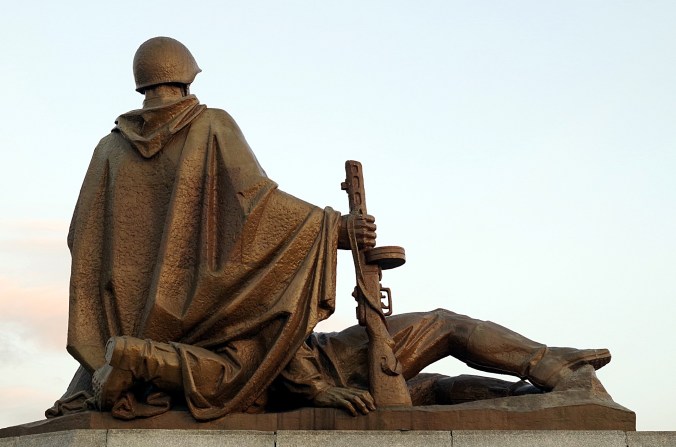
Grieving our Enemies

monument-2475606_1920

Today’s readings (click below to open in new tab/window):
Psalms 135; 145, 2 Samuel 17:24-18:8, Acts 22:30-23:11, Mark 11:12-26


After David won back the throne of Israel, it was a case of snatching defeat from the jaws of victory.

With master strategy and a bit of luck, David’s forces defeated the forces of his son Absalom, who had forced his father off the throne and into the wilderness.  David had instructed his soldiers to let Absalom live, but as with all violence the consequences were unpredictable and Absalom was killed. David was distraught and retreated into isolation to mourn. Joab, the captain of his army, eventually approached him to say, “Look, we saved your life and won you your kingdom back and now you’re acting like we’re nothing. Acknowledge your troops or they’ll abandon you by morning.”

David was deeply experiencing an inescapable truth: any victory through violence is also a failure. A failure of life, a failure of love, and a failure of peace. David felt this because Absalom was his child,  but every slain enemy is somebody’s child. Every slain enemy is still God’s child. Does that feel like something to rejoice about? While it’s natural to celebrate victory, we should remember we are called to do good to those who would persecute us. Demoralizing our foes doesn’t eliminate them; it alienates them further. Had the Allies not been so punitive following World War I and allowed all of Europe to recover economically, who knows how things might have turned out?

Seeing our as enemies as fellow children of God, let alone grieving for them, makes it much harder to justify violence against them. The people knew David had lost his beloved son, but even that relationship was not reason enough to allow grief to exist alongside victory. Its very acknowledgment offended them into claiming David would have preferred them all dead if it meant Absalom could have lived. Allowing someone to humanize the enemy forces us to face uncomfortable truths, so David had to be dragged from his mourning chamber.

Doing violence, even when it seems necessary, damages us. If we must contemplate it, let’s also remember every one of our enemies is loved by Christ.


Additional Reading:
For thoughts on today’s reading from Mark, see Our Neighbors, Our Selves.

Comfort: Blessed are the peacemakers, for they shall be called children of God. 

Challenge: Pray for your enemies – personal, national, and global.

Prayer: How precious is your steadfast love, O God! All people may take refuge in the shadow of your wings. (Psalm 36:7)

Discussion: Have you ever learned to see an enemy as more than just an enemy?

Join the discussion! If you enjoyed this post, feel free to join an extended discussion as part of the C+C Facebook group. You’ll be notified of new posts through FB, and have the opportunity to share your thoughts with some lovely people. Or feel free to comment here on WordPress, or even re-blog – the more the merrier!

Divide and Concur

handshake-2009183_1920.png

Today’s readings (click below to open in new tab/window):
Psalms 135; 145, 2 Samuel 17:24-18:8, Acts 22:30-23:11, Mark 11:12-26


Paul was a shrewd man. When he was arrested and brought before the council in Jerusalem, he noticed some of them were Pharisees like himself, and others were Sadducees. The Pharisees believed in the resurrection, spirits, and angels but the Sadducees did not. This was an ongoing point of contention. By mentioning that he himself was a Pharisee on trial concerning the resurrection of the dead, Paul accomplished a couple things.

First, he managed to gain some sympathy from the Pharisees. Instead of outright condemning him, they began to wonder “What if a spirit or an angel has spoken to him?” Second, he moved the focus off himself and onto the ongoing theological quarrel between the two sects. Their dissension became so heated that the tribune, fearing for Paul’s life, had him removed to the barracks.

For such supposedly smart men, the council members were easily led into unnecessary conflict. Maybe that’s because we are so easily swayed by people who we believe to be part of our “tribe” and so suspicious of people who are not. We tend to assume friends and colleagues who agree with us on one controversial issue – abortion, for instance – will also agree with us other issues – such as same-sex marriage. When we discover they disagree, it may be difficult to reconcile. Conversely if someone disagrees with us on one topic we may presuppose they will disagree with us on others, and when they don’t we have to adjust our thinking about them. If we are unable or unwilling to make those adjustments, we can end up turning a blind eye to the faults of those we initially agree with, and an equally blind eye to the virtues of people we first disagree with.

The good news is, we aren’t required to pigeon-hole anyone.

We don’t have to divide into tribes, and we don’t have to agree on every point to be one body. Yitzhak Rabin said, “You don’t make peace with friends. You make it with very unsavory enemies.” If we are to be blessed as peacemakers, loving through disagreement is an absolute necessity.


Additional Reading:
For thoughts on today’s reading from Mark, see Faith and Figs.

Comfort: Agreement is not necessary for peace. 

Challenge: Watch, listen to, or read something from a point of view you generally disagree with, but listen for points where you might be able to agree.

Prayer: Every day I will bless you, and praise your name forever and ever. (Psalm 145:2)

Discussion: When is the last time you found yourself surprised to agree with a person or group?

Join the discussion! If you enjoyed this post, feel free to join an extended discussion as part of the C+C Facebook group. You’ll be notified of new posts through FB, and have the opportunity to share your thoughts with some lovely people. Or feel free to comment here on WordPress, or even re-blog – the more the merrier!

The Word and The Sword

sword-790815_1920

Today’s readings (click below to open in new tab/window):
Psalms 130; 148, 1 Samuel 9:1-14, Acts 7:17-29, Luke 22:31-38


After the Last Supper, Jesus tried explaining to the apostles yet again that terrible things were about to befall him and them. He also assured them he would not leave them unprepared. After all, hadn’t they survived – even thrived – when he sent them on the road to spread his message with nothing but the clothes on their backs? Now though, he said, it was time to take up their bags and purses and carry a sword, even if they needed to sell a cloak to buy one. When they pointed out the two already at hand, he told them, “It is enough.”

This idea of Jesus encouraging them to carry weapons really stands out among his teachings to turn the other cheek and love one’s enemies. Sometimes it’s used by people to justify Christians using violence, generally in self-defense but sometimes in more broad terms.

But there’s a greater context.

Jesus referred to a prophetic scripture from Isaiah  which needed to be fulfilled: “And he was counted among the lawless.” Moving from itinerant (if heretical) preacher and his followers to the leader of a party of armed insurrectionists had “lawless” covered. And only a short time later, when Peter actually used one of those swords to defend his messiah, Jesus commanded him to put it away, adding (in Matthew’s gospel), “all who draw the sword will die by the sword.” And the Apostles were famous for their commitment to peace, not their handiness with blade, club, and fists.

We don’t have to assume a position of pacifism to understand Jesus’s advice to take up swords was not about condoning violence. On the other hand, while Jesus talked about loving and forgiving our enemies, he didn’t command us to surrender to them. Wherever our conscience takes us regarding violence and non-violence, we should remember that Christ is fully capable of defending himself or not as he chooses. Our fears never justify initiating violence in his name. To the contrary, times of fear are the times we most need to take a breath and ask ourselves how Jesus would choose to love.

Comfort: Jesus is with us in times of danger.

Challenge: When you must make decisions about violence, make decisions about love first.

Prayer: Search me, O God, and know my heart; test me and know my thoughts (Psalm 139:23).

Discussion: What are your feelings about the intersection of violence and faith?

Join the discussion! If you enjoyed this post, feel free to join an extended discussion as part of the C+C Facebook group. You’ll be notified of new posts through FB, and have the opportunity to share your thoughts with some lovely people. Or feel free to comment here on WordPress, or even re-blog – the more the merrier!
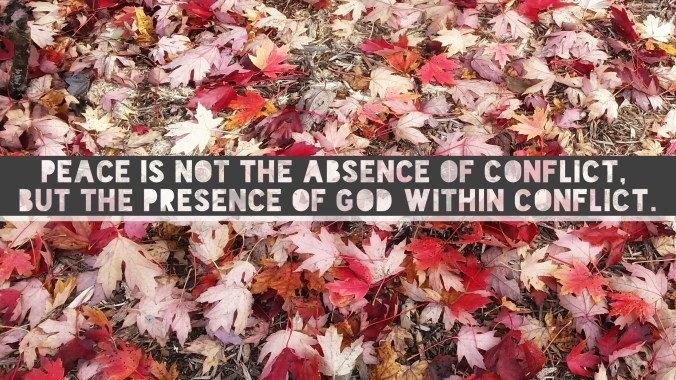
Things That Make For Peace

chalk-1-1528404-1280x960

Today’s readings (click below to open in new tab/window):
Psalms 84; 148, Song of Solomon 2:8-13; 4:1-4a, 5-7, 9-11, 2 Corinthians 12:11-21, Luke 19:41-48


Let’s consider these words from Jesus which he spoke as, weeping, he approached Jerusalem:

If you, even you, had only recognized on this day the things that make for peace! But now they are hidden from your eyes. Indeed, the days will come upon you, when your enemies will set up ramparts around you and surround you, and hem you in on every side. They will crush you to the ground […] because you did not recognize the time of your visitation from God.

This prediction came to pass about 40 years later when Rome crushed a Jewish rebellion and burned the temple. Interesting history, but history and prophecy also usually having something to say to us in the present if we really listen.

How are we failing to recognize “the things that make for peace?” Despite admonitions from Jesus to turn the other cheek and do good to those who persecute us, we remain adept at rationalizing violence, war, and revenge (masquerading as justice). Jesus said love your enemies and hate your family. When we decide which of his teachings were hyperbole and which he meant us to put into literal action, why don’t these ever seem to be the latter? The things that make for peace aren’t about correcting or controlling outside factors, but about making the personal sacrifices necessary for peace. If someone decides that means going off to war we write patriotic songs about it, but if another decides it means refusing to go to war (and risking imprisonment) we toss out slurs like coward and traitor. Following the Prince of Peace may not make us absolute pacifists, but we must face the emotional and physical violence we excuse – even celebrate – in our own lives.

Ignore the things that make for peace long enough, and when we need them they will be hidden from us in a blindness of our own choosing. The world has enough people, Christian and not, justifying why we don’t have to love self-sacrificially as Christ commanded. War and hate thrive regardless of whether we support or participate in them. Peace does not.

Comfort: Peaceful actions are a sign of strength.

Challenge: When you find yourself looking for reasons to justify violence, look just as hard for reasons not to.

Prayer: Prince of Peace, create in me a loving heart and thoughtful mind. Amen.

Discussion: When do you think violence is justified? How does that fit with your understand of Jesus’s teachings?

Join the discussion! If you enjoyed this post, feel free to join an extended discussion as part of the C+C Facebook group. You’ll be notified of new posts through FB, and have the opportunity to share your thoughts with some lovely people. Or feel free to comment here on WordPress, or even re-blog – the more the merrier!

The Multiplication of Division

1477942519638.jpg

Today’s readings (click below to open in new tab/window):
Psalms 5; 145, Zephaniah 1:7-13, Revelation 14:1-13, Luke 12:49-59


Jesus is known as the Prince of Peace, so why would he have told his disciples: “Do you think that I have come to bring peace to the earth? No, I tell you, but rather division! From now on five in one household will be divided, three against two and two against three; they will be divided.” He says sons, fathers, daughter, mothers, and in-laws will be set against each other. Is this the picture of Christianity we try to embrace and promote?

Fortunately, we have the entire Gospel to help us understand the broader context and character of Christ. His vision of love, mercy, and forgiveness was uncompromising. To follow him meant (and often still means) taking a stand against social and religious norms. For many people, such a challenge is unacceptably threatening; truth and mercy don’t always trump the desire to maintain the status quo. In families struggling with dysfunctions of alcoholism or abuse, family members who seek to regain emotional health through counseling and treatment, which necessitate exposing the problem, are often vilified by other family members who believe they benefit from keeping the situation under wraps. Dysfunctional religion involves similar behavior, and people confronting problems are often accused of creating them.

When you stand for what you believe in, you will create enemies, even out of family members. But Jesus tells us to love our enemies and do good to them. He tells us to forgive as many times as we have to. And in the midst of it all we must remain humble, because despite our best efforts to follow Christ, some of the stands we take in good faith … will be mistaken.

Have you heard of “cheap grace?” There’s also “cheap peace.” It’s the kind of peace defined by an absence of conflict. Cheap asks us to compromise our principles and values to achieve an imaginary state. Divisions will always exist. Real peace, the kind we find in Christ, exists in our hearts and relationships despite passionate arguments and harsh disagreements. We must decide whether to address them by building bridges or walls.

Comfort: Christ brings peace to the most difficult places.

Challenge: Grow your faith not by appeasing your enemies, but by finding ways of doing good to them while holding firm to your values.

Prayer: God of peace and love, I will look for your peace in all situations. Amen.

Discussion: When have you been forced to cooperate on a project at work, home, or church with someone you disagreed with? How did it go?

Join the discussion! If you enjoyed this post, feel free to join an extended discussion as part of the C+C Facebook group or follow @comf_and_chall on Twitter. You’ll  have the opportunity to share your thoughts with some lovely people. Or feel free to comment here on WordPress, or even re-blog – the more the merrier!

Sax and Violence

1471296267146.jpg

Today’s readings (click below to open in new tab/window):
Psalms 135; 145, Judges 17:1-13, Acts 7:44-8:1a, John 5:19-29


Jazz musicians say the notes you don’t play are as important as the ones you do. In other words, a saxophone player improvising a riff is set apart by thoughtfully rejecting expectations and embracing alternative blank spaces.

The earliest Christians skipped a lot of notes.

Saint Stephen is widely recognized as Christianity’s first martyr. When he confronted the religious leaders of the Synagogue of the Freedmen in Jerusalem, Stephen reminded them how Israel had rejected the numerous prophets God had sent. He concluded by claiming Jesus was the latest, last, and worst example. The outraged leaders rushed him, dragged him out of the city, and stoned him. Stephen’s last words were: “Lord, do not hold this sin against them.”

What notes did Stephen skip? The ones that might have soothed the ears of the temple leaders. Though the tales provided a familiar framework, the unfamiliar presentation turned the Jewish people from the heroes of their own story into the villains. Jazz can elicit many emotions, including anger, but its message is for those who have ears to hear.

He also skipped notes of violence. Neither Stephen nor any apostles responded to violence or threats with anything but prayer, forgiveness, and further conviction to spread the gospel. This absence of retaliation was undoubtedly as conspicuous as entire bars of musical silence. We don’t have to build an argument for general pacifism to see that when the first Christians were about the business of representing Christ, they did so without violence or even the implication of it.

We are a culture accustomed to violence. The more closely we associate the church with government, the more blurred the line between the business of the world and the business of Christ becomes. But defending a nation or a home is not the same as defending the faith. Violence was not an option Christ chose; at the very least it should not be our first. We always have the option to strike a violent chord, but when we claim to be about the Lord’s work, it matters which end of the spear we are on.

Comfort: We follow the Prince of Peace.

Challenge: This week seek out news and media about non-violent solutions to issues which have traditionally involved violence.

Prayer: Lord of Love, may there be peace in my mind, peace in my heart, peace in my hands, and peace on my lips. Amen.

Discussion: Do you have any personal experiences with the transformative power of preaching the Gospel through peaceful means?

Join the discussion! If you enjoyed this post, feel free to join an extended discussion as part of the C+C Facebook group. You’ll be notified of new posts through FB, and have the opportunity to share your thoughts with some lovely people. Or feel free to comment here on WordPress, or even re-blog – the more the merrier!

The Art of (Non) Persuasion

1469036875566.jpg

Today’s readings (click below to open in new tab/window):
Psalms 15; 147:1-11, Joshua 8:30-35, Romans 14:13-23, Matthew 26:57-68


Almost all of us have engaged in a dispute – friendly or heated – which ended with: “Let’s agree to disagree.” It sounds like a civil way to exit an impasse, but is it at all satisfying for either party?  Rarely is it as short and simple as “I believe X” and “I believe Not X” so “Let’s A2D.” By the time it becomes necessary to drop this conversational guillotine, both parties have probably been building a case for a position that matters to them – no one “agrees to disagree” chocolate ice cream is better than vanilla. The unspoken message is: “I believe you’re wrong, but it seems impossible to convince you otherwise.”

Members of the early church in Rome seemed to have trouble agreeing on a lot of things. The flagship issue was about food. In simplest terms, Gentile converts to Christianity did not feel the need to observe Jewish dietary laws, and many Jewish members of the church held fast to these laws. Paul directed his response to the Gentiles, whom he characterized as stronger in their faith:

I know and am persuaded in the Lord Jesus that nothing is unclean in itself; but it is unclean for anyone who thinks it unclean. If your brother or sister is being injured by what you eat, you are no longer walking in love … Let us then pursue what makes for peace and for mutual upbuilding.

In other words, we don’t have to impose, defend, or even share every belief we have, especially if doing so undermines someone’s faith or the peace of the community. Surrendering our need to be right is a legitimate spiritual discipline. Here’s a modern example for consideration: some people believe Gospel miracles are metaphors, and other people they are historical; does trying to convince someone miracles are or aren’t “true” help build their faith or just reinforce our own?

These days mutual upbuilding is a countercultural attitude. Rather, we are encouraged to shout over each other and refuse to give an inch. We don’t have to settle for agreeing to disagree … if we can agree to listen.

Comfort: You are not responsible for changing the minds of the world.

Challenge: For one whole day, try not to offer any unnecessary opinions. Can you go two?

Prayer: God of peace, grant me the wisdom to know when to speak and when to hold my tongue. May I do both these things to the glory of your name. Amen.

Discussion: What do you think are the practical limits of keeping your opinions to yourself? When does this type of peacemaking cross the line to appeasement?

Join the discussion! If you enjoyed this post, feel free to join an extended discussion as part of the C+C Facebook group. You’ll be notified of new posts through FB, and have the opportunity to share your thoughts with some lovely people. Or feel free to comment here on WordPress, or even re-blog – the more the merrier!

Holly and Ivy

One of my favorite Christmas carols (still eight days left!) is The Holly and the Ivy, and Natalie Cole does a beautiful version. While I was searching for a version to share, I noticed many comments about the pagan symbolism of holly and ivy. Some were informative and some, from both Christians and non-Christians, were less than kind. As with all things, each person approached the conversation with a personal bias. I like to think of this song as an example of how our different experiences can inform each other, rather than shout over each other, especially in a season where so many cultures celebrate holidays.


We interrupt our regularly scheduled Advent broadcast … or do we?

20131130_155258-01

As we embark on the the fourth and final week, I want to acknowledge I’ve received some questions about the Advent themes and the “traditional” order they’ve fallen in. For some people and traditions the themes of Hope, Love, Peace, and Joy are familiar, but the expected order is different. For others the actual themes themselves may vary.

It’s all OK.

Traditions like Advent wreaths, candles, and the season itself don’t exist for our slavish dedication. They are rituals we have created to periodically remind ourselves of certain aspects of our faith. The point of them is not whether the pink candle is for Joy or the fourth week is for Peace, but to help us reflect on our need for Christ to enter our lives and the world.

Maybe mixing it up is a good thing. When people ask whether I get tired of reading the same scriptures every year, of hearing the same story of Jesus being born,  or of celebrating them same seasons over and over, my answer is always: “No, I don’t, because even though the stories don’t change, I’m in a different place in my life and faith journey, so I am always hearing and learning something different.” Mixing up the weeks of Advent provides another opportunity for fresh perspective, while at the same time providing a familiar and comforting framework.

In a couple days our readings will include the Magnificat, the words of Mary as she praises God for using her as a vessel to redeem her people. Mary’s prayer speaks new messages to me every time I read it. It doesn’t change, but I do. For some people though, it will be the same every time, and that’s fine. They made need a slight change to hear new meaning, and an unexpected difference in the order of themes or a fresh Biblical interpretation like The Message may provide the catalyst.

So if your regular broadcast of Advent has been interrupted, I hope that has helped you see, hear, feel, consider, and learn new things. Christ enters the world in unexpected ways. Expect that.