Flip

20170208_175756-01.jpegToday’s readings (click below to open in new tab/window):
Psalms 89:1-18; 147:1-11, Isaiah 59:1-21, 2 Timothy 1:15-2:13, Mark 10:1-16


We can all struggle with decisions. From dinner to voting, sometimes we just get stuck. A friend once advised that when we find ourselves spinning our mental wheels, we should flip a coin. The result is not binding: if it lands and we feel satisfied, let it ride; if we think, “Maybe two out of three…” make the other choice. When we go to friends for advice, they often tell us, “You know what to do.” At that point we’re not seeking advice so much as a nudge in the right direction. When we are determined to do something we know is a bad decision … those are the times we don’t seek advice at all.

Sin is that last type of decision: we deliberately turn away from God and conscience. Isaiah promises God’s arms are not too short to reach us, or His ears too weak to hear. Rather, we erect our own barriers through sin. Isaiah describes sinners who weave webs to snare others and clothe themselves, but find no shelter in them. He talks about the serpent eggs they hatch to poison others. Webs of lies. Hatched plots. Such sins cover us in barriers of shame, fear, and guilt that can make it feel almost impossible to turn back to God. Always there, he can’t offer forgiveness we don’t seek.

Jesus tells us to receive the Kingdom of God like little children. Children are shameless. They can grind peanut butter into a shag carpet and still ask for the jelly with a smile. We raise them to understand consequences, but spend little time training them to accept forgiveness. To stop reaching for us and to start obeying us – or hiding when they don’t. To see God that way. Tearing down those barriers built by sin means trusting that God will forgive us. That’s a lot of unlearning, but we don’t have to be defined by our bad decisions; Christ practically begs us to make the one good choice which restores us to wholeness.

We don’t need to flip a coin; we just need to flip an attitude.

Comfort: God is always waiting for you to seek His face.

Challenge: Learn to ask for forgiveness, even when you don’t feel like you deserve it.

Prayer: Thank you loving God for the gift of your grace. Amen.

Discussion: What conditions do you put on yourself (or others) before you can forgive?

Join the discussion! If you enjoyed this post, feel free to join an extended discussion as part of the C+C Facebook group , visit comfortandchallenge.tumblr.com, or follow @comf_and_chall on Twitter. You’ll  have the opportunity to share your thoughts with some lovely people. Or feel free to comment here on WordPress, or even re-blog – the more the merrier!

Beautifully Broken

quilt-squares-1416222-01.jpeg

Today’s readings (click below to open in new tab/window):
Psalms 84; 148, Isaiah 55:1-13, Galatians 5:16-24, Mark 9:2-13


Christians have an image problem. Like any other group in the age of the 24-hour news cycle, our most extreme and attention-grabbing brothers and sisters make the news and tell our story … whether we’d like them to or not. When a tiny church comprised of a handful of family members pickets military funerals to protest homosexuality, they make national headlines for years. A “family-values” politician caught in an affair becomes a media spectacle and fodder for those who would point out Christian hypocrisy. These types of public relations problems are not unique to Christians, or even religious groups. The public is fascinated with scandals, especially when they involve someone who has portrayed him- or herself as a “righteous” person.

Paul seems to draw distinct lines between the drunken, quarrelsome fornicators who will not inherit the kingdom of God, and the joyful, generous peacemakers who will. We want to heed his words: for good or ill, the behaviors he describes do have consequences in our lives and relationships with God and each other. As Christians we can feel pressure to appear as if we have all the good qualities and none of the bad. In reality, we have the same faults and foibles as everyone else, and when we pretend otherwise, people can practically smell the insincerity. Humbly acknowledging our own flaws doesn’t diminish our witness. To the contrary it tells the true story of grace: not that we become perfect, but that we accept God’s love despite our imperfections.

Acknowledging our flaws doesn’t mean we should settle for them. As we grow in our faith, our behaviors and attitudes will reflect that growth. When someone is thoroughly grounded in her or his faith, other struggling people – believers and non-believers alike – feel comfortable enough with that person to be truthful. To love like Christ loves, we must recognize a person’s brokenness without defining them by it. Let’s do our part to fix that image problem by showing the world following Christ means being humble and truthful. As Christ’s broken body heals the world, our broken and contrite hearts do also.

Comfort: God loves you broken, but doesn’t leave you broken.

Challenge: Resist the urge to make yourself look good. Instead try to be faithful.

Prayer: Thank you God for the love, forgiveness, and healing found in your grace. Amen.

Discussion: Common wisdom says we despise in others the flaws we struggle with ourselves. Do you find this to be true?

Join the discussion! If you enjoyed this post, feel free to join an extended discussion as part of the C+C Facebook group , visit comfortandchallenge.tumblr.com, or follow @comf_and_chall on Twitter. You’ll  have the opportunity to share your thoughts with some lovely people. Or feel free to comment here on WordPress, or even re-blog – the more the merrier!

Just one bite …

1474513132673.jpg

Today’s readings (click below to open in new tab/window):
Psalms 65; 147:1-11, Esther 6:1-14, Acts 19:1-10, Luke 4:1-13


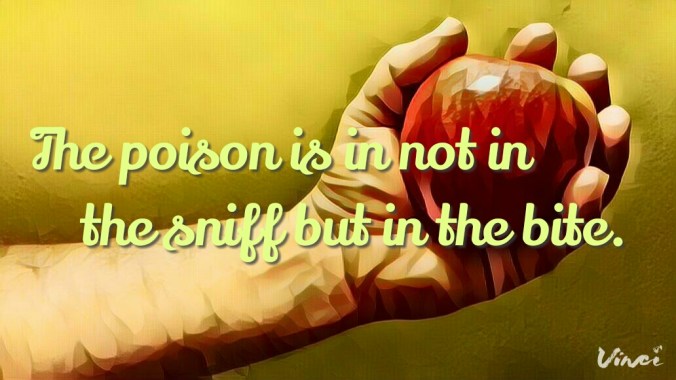
Ever long for the day when your faith is so strong, temptation will never taunt you again? Spoiler alert: it will be a long wait. Even Jesus, when he spent forty days in the desert preparing for his ministry, felt the devil’s temptations to abandon his ministry for a life of worship and power.

Temptations can shame us. We think we are the only people tempted to think or act a certain way. Ironically we are especially reluctant to confess to those who could counsel us best, because we want to keep their respect. Instead we battle urges in silence and solitude, and the very thing we try to avoid – food, sex, gossip, drugs, alcohol – becomes the center of our attention because we have nowhere to banish it. Scriptures like Matthew 5:28 (“anyone who looks at a woman lustfully has already committed adultery with her in his heart”) convince us temptation has already condemned us.

When we speak openly to trusted counselors or support groups about our temptations we find that we are not alone. We also find speaking the truth unlocks the mental prison where we are trapped alone and wrestling with guilt. We learn scriptural words like “lust” and “covet” don’t refer to casual thoughts, but to ungoverned desire. We learn to check casual thoughts before they become ungoverned desire. Most importantly, we learn sunlight is the best disinfectant even for spiritual ailments.
When we pray “lead us not into temptation but deliver us from evil” what are we really asking? To avoid all instances of temptation? Unrealistic. We are acknowledging temptation is part of life, and that we depend on God to help us cope. Tempted until the end of his ministry, Jesus prayed in the Garden of Gethsemane that his burden might pass. The important lesson is that he submitted his will to God’s.

Don’t be discouraged – experiencing temptation doesn’t mean we’ve already lost the battle! Resisting temptation in small things helps us build strength in case serious temptations arise. Let’s follow the example of Jesus, and acknowledge our temptation, but choose to submit to God.

Comfort: God is greater than temptation; we just have to invite him in.

Challenge: If you struggle with temptation, find a place to talk about it.

Prayer: God of strength, deliver us from evil. Amen.

Discussion: How do you deal with temptation?

Join the discussion! If you enjoyed this post, feel free to join an extended discussion as part of the C+C Facebook group or follow @comf_and_chall on Twitter. You’ll  have the opportunity to share your thoughts with some lovely people. Or feel free to comment here on WordPress, or even re-blog – the more the merrier!

Mellow Harshed

1470522355491.jpg

Today’s readings (click below to open in new tab/window):
Psalms 63; 149, Judges 9:22-25, 50-57, Acts 4:32-5:11, John 2:13-25


Acts chronicles wonderful stories of the faith and courage of the early church … and then there’s the tale of Ananias and Sapphira. The earliest believers held their possessions in common. Barnabas, a recent convert, had just sold a field and gave all the money to the Apostles for them to distribute to the needy. Ananias and Sapphira were a married couple who also sold some property, but when they brought the money to the Apostles they secretly held some of it back. When Peter asked Ananias what possessed him to lie to the Holy Spirit, Ananias dropped dead on the spot. Three hours later Peter asked Sapphira if the property had sold for the amount donated. When she corroborated Ananias’ lie, Peter called her on it and she too dropped dead.

Seem harsh? Theologians have concocted a stew of reasons for the death of this couple, but it’s a bitter mix. Some claim they died for lying to the Holy Spirit. Others claim they died for introducing sin to the community of believers. Still others claim God needed to make an example of them to show hypocrisy was not acceptable among those who would be part of the church. Finally, by citing Peter’s claim that Ananias had let Satan fill his heart, some speculate the deception was the latest in a series of sins. Somehow they all conclude the lesson is that God is merciful, and only his grace spares us sinners from destruction … unless it doesn’t.

So what do we do with this? First, we note scripture doesn’t say God (or Peter) killed them: it says they dropped dead. Though it feels like judgment, that’s an important difference. Second, the story is not tied up in a neat moral bow like one of Aesop’s fables. But we can draw some lessons: grace is unearned but not guaranteed or to be taken for granted; hypocrisy is fatal, especially in churches; salvation is more than a feel-good promise – we must let it guide our actions.

God does not seek our understanding or approval. Christianity is always a humbling experience.

Comfort: God is always good, even if we don’t understand how.

Challenge: Create a list of your own  hypocrisies. Add new ones as they occur to you. Every day work toward eliminating one.

Prayer: God of Power and Glory, I am your humble servant. Amen.

Discussion: Have you ever felt like you’ve gotten a raw deal from God?

Join the discussion! If you enjoyed this post, feel free to join an extended discussion as part of the C+C Facebook group. You’ll be notified of new posts through FB, and have the opportunity to share your thoughts with some lovely people. Or feel free to comment here on WordPress, or even re-blog – the more the merrier!

Invitation: Faith is a Roller Coaster

1453645845969

Who doesn’t love roller coasters?

OK, lots of people don’t, but I sure do. One of my favorites is the Superman ride at Six Flags in Gurnee, Illinois. Once a rider is strapped in, your arms and legs are free, and your torso is harnessed so that your back is to the track and you are facing outward. As the track soars, swoops, and twists you get a superhero-eye’s view of the sky and earth – a childhood fantasy come to life.

The first time I rode it the line was two hours long. The day and the company were pleasant, but still I had a queasy feeling replacing the usual excitement. Part of the fun of a coaster ride is the fear and feeling of survival, but for some reason the fear was more intense than usual. I hadn’t been to an amusement park in years, and had put on a lot of weight since the last visit. Part of me was irrationally convinced I was too heavy for the ride. Voices and visions of snapping gears and the rapidly approaching ground filled my mind. Other people heavier than me were getting on and safely returning, but reality wasn’t reassuring. I considered ditching the line and waiting for my friends.

Unlike Superman, I can’t deflect bullets, but once in a while I can bite them. Sweating and nauseated, I said a little prayer as the attendant secured me into the ride and launched us down the track.

It was the best coaster ride I’ve ever been on, and you can bet I’ve been back. Why the irrational fear? It’s because I wasn’t who I thought I should be, and let my insecurities tell me lies about where I belonged.

Church can be that way.

Some people don’t come to church because they believe they aren’t good enough. Or others come to church and believe the invitation to the communion table couldn’t possibly include them, even when the attendant tells them it does. In their minds, somehow their sins and shortcomings are weightier than the sins of everybody else in the crowd. They may even believe God has forgiven far worse sins than theirs, but for some reason they are still afraid. This attitude may seem like humility, but in truth it requires an enormous ego to believe your burdens are the only ones in creation God can’t lift off you. You just aren’t that special.

But you are beloved by God. Jesus said: “It is not the healthy who need a doctor, but the sick. I have not come to call the righteous, but sinners.” (Mark 2:17 and Matthew 9:12) Your sins and imperfections are not barriers between you and Christ: they are doors. The bigger your issue, the wider your door. You just need to be willing to open it.

Faith has lots of ups and downs, twists and turns. It can be exhilarating and terrifying at the same time. Through it all, no matter your burdens, God will be strong enough to carry you. Strap in and come to the table.

May the peace of our Lord Jesus Christ be with you all.