Under Construction

1474429329017.jpg

Today’s readings (click below to open in new tab/window):
Psalms 54; 146, Esther 5:1-14, Acts 18:12-28, Luke 3:15-22


Apollos was a Jewish man who followed the teachings of Jesus. Acts tells us: “He was an eloquent man, well-versed in the scriptures. He had been instructed in the Way of the Lord; and he spoke with burning enthusiasm and taught accurately the things concerning Jesus.” He must have learned about Jesus apart from Paul and the other Apostles because he knew about the baptism of John, but not about baptism in the Holy Spirit. When he began teaching in Ephesus, a couple named Priscilla and Aquila (whom Paul had made disciples) pulled him aside to “explain the Way of God to him more accurately.”

This story is a wonderful model for how we Christians can support each other in growing our faith. Priscilla and Aquila did not embarrass Apollos by calling him out publicly, or set themselves up in opposition. Apollos was willing to hear them out and learned from them. They simply informed him of things he didn’t know, and the church thrived.

Let us celebrate and embrace this spirit of gentle correction and willingness to learn. Throughout our faith lives, every one of us is both an Apollos and a Priscilla, a teacher who is at the same time a student. What if, instead of treating the church as an ancient, brittle construction we inhabit solely for the purpose of preserving it, we recognized it as still being built by the Holy Spirit continuing to live and move among us? If we are continuing to work on the project together, like the members of the early church, we feel freer to hear each other’s stories and look at the project from each other’s perspectives to understand the big picture. Christ remains our foundation, but we are a team of builders united in the clamor and mess of creating something, rather than tourists traveling the approved but lifeless path to ogle the crumbling relics we aren’t allowed to touch.

The church is a living body, and living bodies grow and mature. Let’s embrace that process of growth by remaining supportive of each other despite the inevitable growing pains.

Comfort: The faith doesn’t need us to defend it…

Challenge: … it needs us to live it.

Prayer: Eternal God, may the breath of life you have granted me add life to your church here on Earth. Amen.

Discussion: Has hearing someone else’s perspective changed how you understand your faith?

Join the discussion! If you enjoyed this post, feel free to join an extended discussion as part of the C+C Facebook group or follow @comf_and_chall on Twitter. You’ll  have the opportunity to share your thoughts with some lovely people. Or feel free to comment here on WordPress, or even re-blog – the more the merrier!

“If I perish, I perish.”

1474337965340.jpg

Today’s readings (click below to open in new tab/window):
Psalms 57; 145, Esther 4:4-17, Acts 18:1-11, Luke 1:1-4, 3:1-14


Are heroes born or made? Esther’s story does not begin heroically: on the advice of her uncle Mordecai she hides her Jewish heritage to become the favored concubine of the Persian king. He makes her his new queen, but a queen who is little more than a slave herself.

Esther’s concerns for the world don’t extend beyond her family. When she learns Mordecai is loitering outside the castle gate and wearing only a sackcloth (a symbol of grief) she sends him clothes. He refuses them and has messengers explain the king’s chief official, who feels disrespected by Mordecai, is going to kill all the Jews in the empire, and asks Esther to plead with the king on behalf of her people. Esther declines, claiming she is as powerless as anyone who approaches the king unbidden.

After Mordecai explains that she is in a unique position to help her people, and that if she refuses then she will die with the rest of the king’s household when someone else rises up, Esther reevaluates her decision. In the end, she agrees to risk her life by approaching the king. Not at all confident about the outcome, she asks her people to pray and fast for her.

In the end, we can’t hide from injustice simply because it does not directly affect us. Like Mordecai warned Esther, one way or another we will feel its impact. When people came to John for baptism, he warned them hiding behind the name of Abraham wouldn’t protect them from the coming wrath. He told tax collectors and soldiers – who thought working for the empire protected them from the consequences of shaking down the vulnerable – to knock it off. As the Reverend Martin Luther King, Jr. said, “injustice anywhere is a threat to justice everywhere.” We can ignore a societal cancer and suffer its inevitable malignancy or, like our reluctant heroine Esther, we can say “If I perish, I perish” and do our best to cut it out now. Perhaps some heroes are made when we fear living with injustice more than we fear dying of complacency.

Comfort: It’s okay to be afraid.

Challenge: But try to be afraid of the right things.

Prayer: Lord of Heaven, be my strength and my courage in the face of injustice. Amen.

Discussion: What scares you?

Join the discussion! If you enjoyed this post, feel free to join an extended discussion as part of the C+C Facebook group or follow @comf_and_chall on Twitter. You’ll  have the opportunity to share your thoughts with some lovely people. Or feel free to comment here on WordPress, or even re-blog – the more the merrier!

Quick To Listen, Slow To Speak

1474233796754.jpg

Today’s readings (click below to open in new tab/window):
Psalms 67; 150, Esther 3:1-4:3, James 1:19-27, Matthew 6:1-6, 16-18


Fire and brimstone. Hellfire and damnation. Pulpit pounding and Bible thumping. These (mostly) unfair representations of the Christian church persist for a reason. As with any group, angry voices are generally the loudest voices, and the loudest voices are the ones people hear and remember. We can blame the media for neglecting our daily efforts to feed the hungry, while focusing attention on headline-grabbing events where rabid protesters chant “God hates f(ill-in-the-blank)s” but we also have to acknowledge Christianity’s self-inflicted reputational wounds.

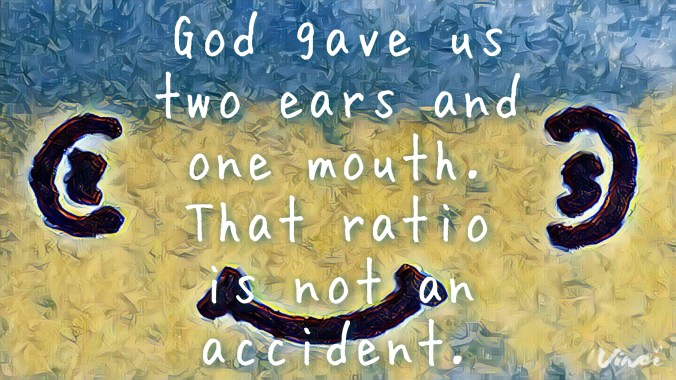
James tells us: “Let everyone be quick to listen, slow to speak, slow to anger; for your anger does not produce God’s righteousness.” He also says “If any think they are religious, and do not bridle their tongues but deceive their hearts, their religion is worthless.” Quick to listen. Slow to speak. Bridled tongues. Basically the opposite of the behaviors our culture reinforces.

Practicing our religion does not mean getting angry when others don’t feel compelled to support or observe it with us. The Gospel doesn’t sound like good news when our message is effectively: “The freedom and joy I find in Christ are so great that I will socially, politically, and legislatively force you to comply with and enjoy it.” Anger is a bully, and we can’t bully someone into knowing Christ’s love. We can’t (and shouldn’t) even bully all Christians into believing exactly the same things.

What we can do is stand firm in love, however we understand that. It is absolutely possible to hold fast to our convictions without attacking those who challenge us. Tone matters: to many people, it may say more about us than our actual words do. Listening to our opponents and enemies isn’t the same as endorsing them. It may even open a door for us to face some unpleasant truths about ourselves.

When we stand firm, let us tilt our ears to listen. When we shout for justice, let us shout from atop a mountain of love. When we reveal sin, let us blanket it in the hope of reconciliation. Good news delivered in an angry voice is merely noise.

(For further thoughts on today’s reading from Matthew 6, see Keep It In The Closet.)

Comfort: Anger is exhausting; you can let it go.

Challenge: This week make an effort to hear what people are saying without trying to formulate a response while you listen.

Prayer: Loving God, teach me when to speak and when to remain silent. Amen.

Discussion: What angers you so much you can’t hold your tongue?

Join the discussion! If you enjoyed this post, feel free to join an extended discussion as part of the C+C Facebook group or follow @comf_and_chall on Twitter. You’ll  have the opportunity to share your thoughts with some lovely people. Or feel free to comment here on WordPress, or even re-blog – the more the merrier!

Invitation: Chunk

1474225611872.jpg

Several weeks ago I was having dinner with friends and the conversation turned to childhood memories, specifically memories of dinner time. Our experiences were somewhat different. One of my friends explained how in his large family the younger children were lucky to get much, as the father took his food first, and then the oldest children, and so on. By the time the youngest ate, there was always something left, but it could be pretty meager. My own experience was different. We did not think of ourselves as wealthy – my father brought home a teacher’s salary and worked part time in a grocery store – but whether we ate at home or out, we three children were served or could order portions equal to that of the adults. I remembered it being the same way at my grandparents’ table, and with my aunts, uncles, and cousins as well. This, I said, seemed much more fair. Then my friend explained that in his family if his father didn’t keep up his strength and ability to work, there wouldn’t have been food on the table at all. Suddenly I was confronted by the reality of my own privilege, and reminded how wealth is always a relative condition.

In my term as an Elder of my church, I had the privilege of serving communion many times to many people. With another elder I would hold bread or the cup as people walked up to break off a chunk and dip it in the juice. One thing that always amused me was how ninety percent of the people always seemed to tear off the smallest possible piece of bread. I was never sure why this was: we always had plenty left over, and the tiny pieces were obviously difficult to manage based on the number that ended up floating in the cup. If the bread was especially crusty and wouldn’t tear easily, some people shrugged and smiled apologetically for not being able to rip off a smaller portion.

After my dinner conversation, I now wonder if people’s idea of how much communion bread they’re entitled to reflects the abundance or scarcity of their life experience, or if maybe it reflects their perception of what they bring to the table relative to others. The next time I invite people to Christ’s table for communion, I want to tell them Jesus wants them to help themselves to a big ol’ chunk of his grace. At Christ’s table we are all equal, and there’s enough to go around. Don’t be shy – be hungry. Hungry for love. Hungry for forgiveness. Hungry for mercy. Jesus wants us to be stuffed to the gills with all these things. The less you think you deserve them, the more you should consume. Tearing off a morsel that you might actually have to chew on a while isn’t an indulgence … it’s the whole point. Christ didn’t die for us so we could live on crumbs; he died so we could feast on grace.

May the Peace of our Lord Jesus Christ be with you all.

Know When to Hold ‘Em

1474139974300.jpg

Today’s readings (click below to open in new tab/window):
Psalms 56; 149, Esther 2:5-8, 15-23, Acts 17:16-34, John 12:44-50


A young man asked me for advice about going on his first job interviews. He was going through his “emo” phase – hair grown out over his eyes, t-shirts with four-letter words, black nail polish. I suggested that for some  employers he’d need to adjust his look – hair out of the face, collared shirt, remove the polish. He replied: “If they don’t like me the way I am, it’s their loss.”

“Tell me how that pays,” I said, and explained people are rarely hired to be themselves; employers hire the parts that fill the role for the duration of the shift and want you to leave the rest at home. If they ask you to compromise your values, it’s not the right job for you; if they forbid t-shirts with rude gestures, make the concession. Self-expression is important, but not in all ways at all times.

Esther had a sort of involuntary job interview when she was taken with many women to the king’s palace so he could select a queen. She listened to the king’s eunuch, who “had charge of the women” and asked only what he advised. She also remembered her uncle Mordecai’s advice, and didn’t revealed her kindred or her people” who were Jewish exiles in Persia. The king chose Esther because he believed her beauty and temperament filled the role of queen.

Mordecai overheard a plot to kill the king, and Esther passed this information along, gaining favor for herself and her uncle. As Esther’s story unfolds, she wisely decides when to reveal herself, when to hold back, and how to gain the trust of the king.

Sharing the gospel is not unlike interviewing for a job, or courting a king – it’s not dishonest to exercise discretion. We don’t want to blurt out absolutely everything in a take-me-or-leave-me ultimatum. Trust and relationships take time. Bosses, spouses, and friends are more receptive to challenging ideas when they come from a trusted ally than from a stranger who claims to know better. People are not projects; to bring them to Christ, we must learn to love them first.

(For further thoughts on today’s reading from Acts 17, see The Unknown God.)

Comfort: You don’t have to win converts on the spot; take your time to get to know people, and Christ will shine through.

Challenge: Be deliberate about holding and freeing your tongue.

Prayer: Loving God, teach me when to speak and when to remain silent. Amen.

Discussion: Has your enthusiasm for a project ever backfired?

Join the discussion! If you enjoyed this post, feel free to join an extended discussion as part of the C+C Facebook group or follow @comf_and_chall on Twitter. You’ll  have the opportunity to share your thoughts with some lovely people. Or feel free to comment here on WordPress, or even re-blog – the more the merrier!

100 Thanks!

We hit 100 followers! I know that’s small change in the blogging world, but it’s a big deal to this little voice. Thanks for your support.

Seeing God Everywhere

1474036758376.jpg

Today’s readings (click below to open in new tab/window):
Psalms 130; 148, Esther 1:1-4, 10-19, Acts 17:1-15, John 12:36b-43


The Book of Esther is not just a captivating story, it is an unusual part of the Bible: it never mentions God. This glaring omission made it a controversial addition to both Jewish and Christian canon. A work about Jewish/Persian relations from a clearly Jewish perspective, Esther shows little regard for Jewish law. But because it is included, we can assume those who selected it believed it had something to say about our relationship with God.

Are we prepared to see God in people, things and events which are not explicitly Christian, or religious in any way? We should be. God is present in all the world at all times. If we limit ourselves to people and experiences with a big, bold Christian sticker on them, we’ll spend a lot of time rejecting that presence. Our own Christian faith is not irrelevant or unimportant; indeed, our faith tradition teaches us to see God in context. We trust that God moves in people and in ways we may never fully understand. When someone is blessed with the gift of music, generosity, or poetry, we know that gift comes from God, even when the possessor of the gift doesn’t believe so. If we ignore or denigrate them because they don’t fall comfortably into a Christian marketing plan, we snub gifts God has given the world.

Our relationship with the secular world is complicated. In the Gospel of Luke, Jesus himself offers us messages which may seem to conflict. In verse 9:50 he tells the disciples “whoever is not against you is for you,” while in 11:23 he says “whoever is not with me is against me.” The earlier verse is an instruction to the disciples about others doing good works, while the latter concludes a parable about Jesus’ role in salvation. If we take a long view of the Gospels, don’t we see a Christ whose actions favor acceptance and love of those rejected by self-righteous religious figures? The Pharisees accused Jesus of being too worldly because he didn’t seek reasons to reject people, but to love them. Can we do less?

Comfort: God loves us whether or not we meet others’ expectations.

Challenge: As you are exposed to popular entertainment and culture, look for where God’s presence is realized, and where it is rejected.

Prayer: Compassionate God, I will seek you in everyone and everything. Amen.

Discussion: In what secular art (music, film, paintings, etc) have you seen signs of God?

Join the discussion! If you enjoyed this post, feel free to join an extended discussion as part of the C+C Facebook group. You’ll be notified of new posts through FB, and have the opportunity to share your thoughts with some lovely people. Or feel free to comment here on WordPress, or even re-blog – the more the merrier!

Surrender

1473955880268.jpg

Today’s readings (click below to open in new tab/window):
Psalms 36; 147:12-20, Job 28:1-28, Acts 16:25-40, John 12:27-36a


For most people, surrender is a dirty word. Not just in war or sports, but in everyday life. Heaven forbid we not crush the gas pedal to pass and scowl at the driver who cut us off. We dare not end any argument, no matter how pointless or relationship-damaging, by simply withdrawing from it. Our business cannot simply succeed; it must out-perform or – better yet – eliminate its competition. We talk about loving our enemies, but we put it off until after we defeat them.

When an earthquake miraculously released Paul and Silas from unjust imprisonment, what would we have expected them to do? As their jailer was about to kill himself over his failure, they could have seized this opportunity to escape, but Paul cried out to stop him. Not exactly a move from the Jack Bauer playbook, is it? The jailer was so moved he fell at their feet, asked what he could do to be saved, and took them to his home, where Paul and Silas baptized his entire family.

Paul so loved his enemy (for who is your enemy if not your wrongful jailer?) he risked imprisonment and further beatings rather than see the man harm himself. Succumbing to Christ transformed Paul – who only months before had been hunting and jailing Christians – so drastically he was able to create converts by showing mercy in the face of injustice. Christ renewed Paul, who renewed the jailer, who renewed his family, and so on…

We all contain that same potential. To tap into it, we must surrender all that we are to Christ. We’re taught to never surrender, but there’s no getting around it. We surrender not from a position of weakness, but from a position of trust. What do we surrender? The grudge against the neighbor who always takes our parking space; the certainty we are the right kind of Christian; the status of socializing with the popular crowd; the fear of the different and the unknown.

Surrender is a lifelong process that doesn’t perfect us, but opens us to the possibilities available in God’s realm.

Comfort: God finds strength in our weakness.

Challenge: At the beginning of each week, select one thing – a grudge, a habit, a fear – to surrender to God.

Prayer: Compassionate God, thank you for the arms that hold me up. Amen.

Discussion: How does the idea of surrendering make you feel?

Join the discussion! If you enjoyed this post, feel free to join an extended discussion as part of the C+C Facebook group. You’ll be notified of new posts through FB, and have the opportunity to share your thoughts with some lovely people. Or feel free to comment here on WordPress, or even re-blog – the more the merrier!

Now on Twitter!

Comfort & Challenge is now on twitter! Never used this platform, but if it’s your thing, please follow @comf_n_chall. Thanks!

Seeds

1473820623836.jpg

Today’s readings (click below to open in new tab/window):
Psalms 15; 147:1-11, Job 42:1-17, Acts 16:16-24, John 12:20-26


“Very truly, I tell you, unless a grain of wheat falls into the earth and dies, it remains just a single grain, but if it dies, it bears much fruit.”
– John 12:24

Jesus shares this image of a seed dying to bear fruit as a metaphor for his own impending death, and the faith community that will grow from it. Just as an apple seed contains all the genetic material to create a fully-formed apple tree from water, soil and light, Jesus contains everything the world needs to be transformed into the limbs of the body of Christ. Both the seed and Jesus sacrifice themselves to turn potential into reality, and both remain fully present in the fruit they bear.

Like all good parables, this one contains multiple levels of meaning. Each of us needs to “die to ourselves” to release the potential God has placed in us. What does it mean to “die to ourselves?” Like a seed, we have to shed any shell that keeps us from fully surrendering to God’s transformational process. Our shells may grow from pride, greed, fear, selfishness, or anything that inhibits the Spirit. Until that shell crumbles, neither we nor the world will see any real fruit.

How do we discard our shells? The same way any seed does: a little dirt, a little water, and a little light. We have to dig in and dirty our hands by helping the poor, the sick, and anyone Christ commands us to serve. Through the waters of baptism – a ritual symbolizing death and resurrection – we surrender ourselves to God and agree to trust his understanding above our own. We allow the light of Christ, his message of love and faith, to penetrate our hearts until it burns away all resistance. Faith lives that are never exposed to these elements are like seeds that never leave the packet: we see the picture of what they’re supposed to become, but never taste the real thing.

The world hungers for God. Let’s do everything we can to feed it by nurturing the seeds within us to fruition.

Comfort: To die to the self is not to perish, but to be reborn in Christ..

Challenge: Are you getting enough dirt, water and light? Examine how you engage the world, trust God, and embody Christ’s light.

Prayer: Compassionate God, thank you for the potential in each of us. Amen.

Discussion: Have you ever gotten into a debate that generated a lot of heat and little or no light?

Join the discussion! If you enjoyed this post, feel free to join an extended discussion as part of the C+C Facebook group. You’ll be notified of new posts through FB, and have the opportunity to share your thoughts with some lovely people. Or feel free to comment here on WordPress, or even re-blog – the more the merrier!