Who do you say I am?

1476672686332.jpg

Today’s readings (click below to open in new tab/window):
Psalms 67; 150, Micah 1:1-9, 1 Corinthians 10:1-13, Matthew 16:13-20


In first century Palestine, self-proclaimed messiahs were like coffee houses in Seattle: there was one on every corner, each claimed to be more authentic than the others, and most of them were overpriced. Jesus was different. According to Reza Aslan in Zealot: The Life and Times of Jesus of Nazareth, Jesus stood out because he didn’t charge for his services, and he was reluctant to publicly use the title of Messiah.

When Jesus asked his disciples who people said he was, they answered: “Some say John the Baptist, but others Elijah, and still others Jeremiah or one of the prophets.” When he asked them who they thought he was, Peter said: “You are the Messiah, the Son of the living God.” Jesus blessed him and said: “flesh and blood has not revealed this to you, but my Father in heaven.” He then instructed the disciples to tell no one he was the Messiah.

Who do you think Jesus is? Is your understanding one you have developed by listening to God, or is it one handed down to you by other human beings? Of course we are introduced to our faith by other people, usually our parents though sometimes friends or other sources, but after they make the introduction, it’s up to us to develop the relationship. Think of your friends: who each one is to you may be very different from who they are to others. Just as a friend who goes on impromptu road trips with you may be a friend who is a reliable, steady support for someone else, the role Jesus plays in each of our lives may differ. Some of us need him to help reign in our darker impulses, and some of us need him to help us lighten up on our judgmental tendencies. We can need him in lots of ways at once, so it’s important that we don’t assume our relationship with him should look exactly like someone else’s. We all know the same Jesus, but our experience of him is unique and we can’t let anyone dictate what it should be like.

Comfort: Your relationship with Jesus is both special and communal.

Challenge: Have you asked yourself lately who Jesus is to you? If not, meditate and pray on that.

Prayer: Lord of Heaven, I am humbled and blessed that you have known me by name even before I was born. Amen.

Discussion: Has anyone ever told you that you were doing Christianity “wrong?”

Join the discussion! If you enjoyed this post, feel free to join an extended discussion as part of the C+C Facebook group or follow @comf_and_chall on Twitter. You’ll  have the opportunity to share your thoughts with some lovely people. Or feel free to comment here on WordPress, or even re-blog – the more the merrier!
The B-Team

1476587594774.jpg

Today’s readings (click below to open in new tab/window):
Psalms 56; 149, Hosea 14:1-9, Acts 28:17-31, Luke 9:37-50


One day Jesus took three disciples up a mountain to pray with him. His appearance was transfigured to reveal his glory, the disciples were dazzled, and God said: “”This is my Son, my Chosen; listen to him!” It’s a powerful moment with great theological significance.

This is about the other nine disciples.

While Peter, James, and John were with Jesus, the others were working on the mission Jesus had given them, including casting out demons. A man begged them to cast out the spirit who possessed his son, and caused him to shriek and convulse. The disciples, probably already feeling like the B-Team, couldn’t do it. Imagine the desperate and possibly heated brainstorming they had about how to get this done before Jesus came back.

Descending from glory to a scene of failure, an exasperated Jesus asked: “You faithless and perverse generation, how much longer must I be with you and bear with you?” He attributed their failure to a lack of faith. Of course he healed the boy and returned him to his father.

How often, despite our best efforts to be strong in our faith, do we feel like the nine who were left behind, floundering to figure out what to do and how to do it? Are we jealous or resentful of the Peters who seem to be there for all the good stuff? We struggle to make a difference, and they seem to waltz right into it.

The original twelve disciples were not above such pettiness. They argued over which of them was the greatest, but Jesus wasn’t having it. Pulling a child to his side, he said: “Whoever welcomes this child in my name welcomes me, and whoever welcomes me welcomes the one who sent me; for the least among all of you is the greatest.”

Our faithfulness is not defined by perfection and power, but by our ability to love as Jesus asks us to. If it keeps us humble, second string is a fine place to be. If the least among us are the greatest, maybe the mountain isn’t the top after all.

Comfort: God knows your heart and faith; what other people think doesn’t matter.

Challenge: Don’t compare yourself to others.

Prayer: Glorious Creator, I seek to serve you humbly and with love in my heart. Amen.

Discussion: Do you have control issues?

Join the discussion! If you enjoyed this post, feel free to join an extended discussion as part of the C+C Facebook group or follow @comf_and_chall on Twitter. You’ll  have the opportunity to share your thoughts with some lovely people. Or feel free to comment here on WordPress, or even re-blog – the more the merrier!

Patterns

1476501554874.jpg

Today’s readings (click below to open in new tab/window):
Psalms 130; 148, Hosea 13:9-16, Acts 28:1-16, Luke 9:28-36


The human mind is wired to recognize patterns – visual, behavioral, and temporal. This trait is a survival mechanism: breaks from expected patterns alert us to potential danger. Now that most of us no longer need to detect predators on the savanna, our brains still want to impose patterns – that is, a sense of order – onto the thinPattgs we observe, regardless of whether it actually makes sense to do so.

The ship that was taking Paul to Rome ran aground on the island of Malta. The inhabitants offered hospitality to the stranded crew. As the new friends huddled around a fire on a rainy night, a viper which had been nesting beneath the fire tried to escape the heat by biting Paul’s hand. Paul shook it off into the flames, but the Maltese whispered: “This man must be a murderer; though he has escaped from the sea, justice has not allowed him to live.” When Paul suffered no ill effects, they reversed their decision and declared him a God.

Confirmation bias – a warped adaptation of pattern recognition – is the habit of interpreting events to support what you already want to believe. The Maltese wanted to believe only the guilty were punished, so the bite indicated evil … until it didn’t, and they created an outlandish excuse that supported their assumptions. Religious and political affiliations virtually require confirmation bias to survive, though the threats they perceive are not physical, but ideological.

A sneaky byproduct of our environment, confirmation bias is much easier to recognize in others than in ourselves. We all would rather feel safe than threatened, so we are not inclined to question false but comforting assurances. Simply put, we like to be right.

Faith, however, does not need to be right. Instead of twisting truth to fit our preconceptions, it frees us up to meet the world as it is, because we trust that however the world is put together, God did it and is fully present in it. We can see the patterns behind the mere shadows of patterns, the ebb and flow of the Spirit through our world.

Comfort: Faith will get you through difficult truths.

Challenge: Pick a topic you feel strongly about. Speak with someone or read something that represents the other side. Try to find common ground based in truth.

Prayer: God of truth and wisdom, may my opinions be humble and my thoughts pointed toward you. Amen.

Discussion: Where might your blind spots be?

Join the discussion! If you enjoyed this post, feel free to join an extended discussion as part of the C+C Facebook group or follow @comf_and_chall on Twitter. You’ll  have the opportunity to share your thoughts with some lovely people. Or feel free to comment here on WordPress, or even re-blog – the more the merrier!

Stay Hungry

1476405630037.jpg

Today’s readings (click below to open in new tab/window):
Psalms 36; 147:12-20, Hosea 13:4-8, Acts 27:27-44, Luke 9:18-27


We complain when we’re cold, hungry, thirsty, tired, or in pain but no one ever complains: “I’m just too … satisfied.” Yet satisfaction – or perhaps more accurately self-satisfaction – led to the downfall of the nation of Israel.

Through the prophet Hosea, God shared these words with Israel: “When I fed them, they were satisfied; they were satisfied, and their heart was proud; therefore they forgot me.” In other words, God provided for them in their time of need. They were provided for so well, they started to take it for granted. Eventually, because they were without need, they forgot about God altogether.

It’s a common story, really. When we are in need or distress, we pray and demand to know: “why do I deserve this?” When God provides, and our bellies no longer ache from hunger or our hearts from sadness, it’s easy to forget where we started. We take it for granted. If part of God’s blessing required hard work from us, we may start to give ourselves a little more credit for our own success than is due – and judge others who haven’t made it as far. Sure, we say we know we owe everything to God, but do we really? When is the last time we had a well-stocked kitchen, a happy marriage, and a stretch of good health and asked: “Why do I deserve this?”

Maybe we should stay a little hungry. The spiritual discipline of fasting involves a physical hunger, an unavoidable pang we can use as a reminder to focus our attention toward God. Whether it reminds us of our own dependence, or of the needs of those who hunger not by choice, it teaches us humility and gratitude. Other disciplines – study, solitude, service, etc. – also lift us from a state of oblivious contentment and help us not to take God for granted.

Let’s sacrifice a meal, a lazy Saturday morning, or twenty dollars to a higher cause. It’s all right to feel a little deprived of the more worldly satisfaction they might have provided. That pang reminds us to focus on what’s important.

Comfort: Gratitude will improve your mood.

Challenge: Make time daily to thank God for what God has provided.

Prayer: Thank you, God, for all the  blessings in my life. All glory and honor is yours. Amen.

Discussion: What do you take for granted?

Join the discussion! If you enjoyed this post, feel free to join an extended discussion as part of the C+C Facebook group or follow @comf_and_chall on Twitter. You’ll  have the opportunity to share your thoughts with some lovely people. Or feel free to comment here on WordPress, or even re-blog – the more the merrier!

Crash Course

1476320147400.jpg

Today’s readings (click below to open in new tab/window):
Psalms 15; 147:1-11, Hosea 13:1-3, Acts 27:9-26, Luke 9:1-17


Imagine you are a sailor on the Mediterranean sea two thousand years ago. Your crew has been charged with transporting a prisoner from Jerusalem to stand trial before the Emperor in Rome. It’s almost winter, and many ships have already docked to wait out the angry weather until spring. Your captain though is eager to complete this voyage and sets sail. The prisoner has the nerve to suggest a delay. He is probably none too eager to meet his fate, you think. Trusting in your captain, the idols you’ve tucked into your bunk, and the value of your cargo, you set sail with the rest of the crew.

And then it turns out the prisoner was right. The swells are impossible to navigate. The ship stops a few times, makes reinforcements, but eventually finds itself helpless before the mighty wind. The crew curses as they throw cargo overboard and watch their profits sink. Then, in desperation, they toss over the tackle. The prisoner, damn his eyes, calmly tells everyone they will survive, but they’re going to have to run the ship aground. And you know he’s right.

The truth made Paul unpopular. No one likes the guy telling them they have to crash to survive. We especially don’t like him when he’s right. Once in a while we take a brave step out of the box and deliver the unpopular message, but more often than we are Paul, we are the sailor – or Pharisee – grumbling and ignoring that guy so we have more time to listen to the guy who tells us what we want to hear … even as things fall apart around us.

The truth is, sometimes you have to crash your ship – or throw profit overboard, or abandon your ideology, or wreck your comfort – to save your life. God doesn’t set out to ruin you, but if you’ve stubbornly stuck to the foolish course, the disaster may have to play out before you can move on. God will wait as long as it takes to find your safe harbor. The truth, however difficult, is your guiding star.

Comfort: When you decide to correct course, no matter difficult, we are drawing nearer to God.

Challenge: Plan a an hour of solitude each week to meditate on the direction your life is taking. Perhaps keep a notebook or journal of what you’d like to correct, how you might do it, what difficulties you might encounter, and your progress. End each session with a prayer of thanks to God for being with you.

Prayer: Thank you, God, for second, third, and fourth chances. Guide my steps so they might always lead me toward you. Amen.

Discussion: What efforts have you made to improve yourself?

Join the discussion! If you enjoyed this post, feel free to join an extended discussion as part of the C+C Facebook group or follow @comf_and_chall on Twitter. You’ll  have the opportunity to share your thoughts with some lovely people. Or feel free to comment here on WordPress, or even re-blog – the more the merrier!

The Fringe

1476243372672.jpg

Today’s readings (click below to open in new tab/window):
Psalms 123; 146, Hosea 12:2-14, Acts 26:24-27:8, Luke 8:40-56


A leader of the synagogue named Jairus moved to the front of the crowd to fall at Jesus’ feet and beg him to heal his dying daughter. Among the crowd who followed Jesus to Jairus’ house was a woman who’d suffered incurable hemorrhages for twelve years. She timidly touched the fringe of his robe, and was instantly healed. When Jesus asked who touched him, the woman tried to hide. After he asked a second time, she fell trembling before him. Jesus said to her, “Daughter, your faith has made you well; go in peace.” Afterward Jesus continued on to the house of Jairus, and though many said the girl had died, Jesus said to her, “Child, get up!” and she did.

Jairus, a man and a religious leader, did not hesitate to force his way through the crowd and demand Jesus’ attention. By contrast, the woman’s ailment would have rendered her unclean; approaching Christ directly would have been unthinkable for her. It was no wonder she hid when he called her out, because according to her culture she should never have touched him and could have been punished. Instead, Jesus stopped to call her Daughter, and bid her go in peace.

Is our society so different? Privileged people still move to the head of the line and ask for what they need, and we usually get out of their way. The less privileged are pushed to the edges, and frequently shamed simply for asking. Whether it’s cash or a voice or a vote, too often we suspiciously insist they justify their requests in ways we’d never expect of the financially or socially affluent. We’ll fork over chunks of cash for a new church social hall, but want reckoning for every dime of grocery assistance. We call them “takers” then wonder why they’d rather hustle than be humiliated. Somehow we are more sympathetic to the poor halfway around the world than the homeless living under a bridge downtown.

Jesus was respectful of everyone in need, regardless of privilege. If we call people out, let it be to say, “Go in peace!”

Comfort: When you are in need, it’s all right to ask.

Challenge: While accountability is important, try to follow your more charitable impulses.

Prayer: God of abundance, help me to remember more for others does not have to mean less for me, and let me be willing to share when others have none. Amen.

Discussion: What’s your favorite charity and why?

Join the discussion! If you enjoyed this post, feel free to join an extended discussion as part of the C+C Facebook group or follow @comf_and_chall on Twitter. You’ll  have the opportunity to share your thoughts with some lovely people. Or feel free to comment here on WordPress, or even re-blog – the more the merrier!

Things Get Real

wher_it_isnt

Today’s readings (click below to open in new tab/window):
Psalms 135; 145, Hosea 11:12-12:1, Acts 26:1-23, Luke 8:26-39


Sometimes there is a large gap between what we say we want and what we actually want. Presenting his case before King Agrippa, Paul explained that he was a faithful Jew; like many of his accusers he was a Pharisee, and he’d actively persecuted Christians. His encounter with the risen Christ was unexpected and life-changing. By preaching the Gospel, Paul asserted, he was dutifully acknowledging the arrival of the long-awaited Messiah: “I stand here, testifying to both small and great, saying nothing but what the prophets and Moses said would take place.”

The Pharisees said they wanted Paul jailed for violating the law, but they actually wanted to preserve the status quo which allowed them privilege under the oppressive Roman regime. Waiting for the messiah demanded nothing, but his arrival was dangerous and uncomfortable.

Christians say we want to love the poor and the sick, but too often we actually want to express that love in ways that don’t make us too uncomfortable: nothing that messes up the sanctuary of the church, or threatens our safety, or makes us feel icky. We say we welcome strangers, but we don’t want them be too strange. Like the Gerasenes who ran Jesus out of town after he purged a man of many demons, we don’t want to be the kind of holy that attracts the wrong kind of attention – the kind that makes us look dirty and maybe unbalanced, rather than freshly laundered and pressed for the Thursday evening hymn sing.

The business of the church is not beautiful building s and respectable congregations. These things are fine; they simply aren’t the point. Filling up the pews is nice, but it’s also meaningless if we’re only playing a numbers game by poaching existing believers from “rival” congregations. We need to take the Gospel where it is not, which is often exactly where we don’t want to be. The good news is not that we bring Jesus to people, but that he is already with them and waiting to be embraced. When we don’t go to them, we don’t go to him either.

Comfort: It’s okay for your faith life to be messy.

Challenge: Same as the Comfort, but for the other half of the room.

Prayer: God, grant me the courage and strength to be an effective part of the life-altering Body of Christ. Amen.

Discussion: What chances do you regret not having taken?

Join the discussion! If you enjoyed this post, feel free to join an extended discussion as part of the C+C Facebook group or follow @comf_and_chall on Twitter. You’ll  have the opportunity to share your thoughts with some lovely people. Or feel free to comment here on WordPress, or even re-blog – the more the merrier!

Borders

20160901_143257-01.jpeg

Today’s readings (click below to open in new tab/window):
Psalms 19; 150, Hosea 11:1-11, 1 Corinthians 4:9-16, Matthew 15:21-28


Our society talks a lot about borders. Usually we mean national borders, no small source of contention. We talk about them as though they are real, permanent things when the truth is they are in a state of continual flux. We are concerned with people who cross borders, but in many cases, such as Mexican-American war over the vaguely defined territory of Texas, borders cross people.

When Jesus met a Canaanite woman, the encounter was informed by centuries of borders drawn and redrawn as the Jewish people settled the area. According to the Book of Joshua, the nation of Israel had seized Canaan, slaughtered its people, and inhabited it as the Promised Land. That kind of history doesn’t unfold without leaving scars. The woman was very bold to approach Jesus, who first rebuked her by saying he had come for Israel and wasn’t going to waste the children’s food on the dogs. She countered by saying even the dogs got crumbs that fell from the table. Moved by her faith, Jesus healed her daughter of a demon.

Not all borders are geographic. The Canaanite woman bravely crossed a dangerous border. We establish such borders all the time, sometimes willingly and sometimes not. Borders drawn by race, income, and religion define us both geographically and socially. Ethnic neighborhoods may form because people like having something in common, but at least as often they form because other neighborhoods wouldn’t have them. With gentrification the income border crosses impoverished neighborhoods and drives out long-time residents. Christians establish borders of denomination and right thinking. Borders, no matter how arbitrary or unjust, are forced upon us.

Despite the dog comment, Christ was in the business of erasing borders: between sinners and the righteous, Samaritans and Jews, the clean and unclean. In God’s kingdom, borders become meaningless. Humankind insists on the vanity of division where God has put none, and we are the poorer for it. What borders do we allow to define ourselves and our faith? Are they really borders Christ would have observed? The neighbors we must love are waiting on the other side.

Comfort: As citizens of the Kingdom, all the world is within our borders.

Challenge: Breaking borders often involves making sacrifices. Ask yourself whether the borders you preserve are creating safety at the cost of your discipleship.

Prayer: Infinite God, teach me to see the world as you do. Amen.

Discussion: What spiritual borders have you crossed? What borders do you know you still need to cross?

Join the discussion! If you enjoyed this post, feel free to join an extended discussion as part of the C+C Facebook group or follow @comf_and_chall on Twitter. You’ll  have the opportunity to share your thoughts with some lovely people. Or feel free to comment here on WordPress, or even re-blog – the more the merrier!

Weathering The Storms

1475979498929.jpg

Today’s readings (click below to open in new tab/window):
Psalms 104; 149, Hosea 10:1-15, Acts 25:13-27, Luke 8:16-25


How often have we heard teams pray before a sporting event to ask God to help them win the big game (and by inference, sabotage the other team, as though getting God to cheat for you is sportsmanlike)? How many people thank Jesus for everything from parking spots to Grammy awards, as if they are saying “Good job!” to a personal assistant? Our relationship with our God should be close, but not so cozy we forget who is in charge.

When the disciples were afraid their boat would sink in a storm, they woke Jesus from his sleep. He rebuked and calmed the storm – and then he rebuked the disciples for their lack of faith. To this point they had experienced Jesus as a healer, storyteller, and prophet who taught forgiveness. For the first time, they got a glimpse of the raw power of a being who could command the clouds and sea. Not surprisingly, this revelation amazed and frightened them. They asked themselves exactly who it was they’d agreed to follow.

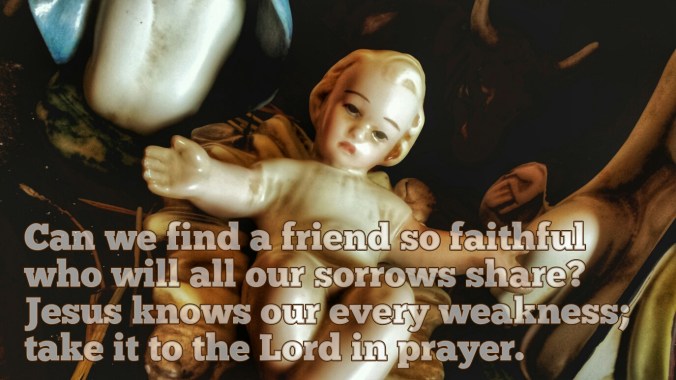
As we mature in our own faith, our experiences may be similar. At some point we must move past the non-threatening, undemanding baby Jesus in the manger, to a more adult Jesus who makes loving but firm demands of us. The more we follow him, the more we realize how harrowing discipleship can be. Like those first disciples, we cry out for the Jesus who takes away our problems, but eventually we learn he expects us to have faith through our personal storms. Jesus is not just a servant, but a servant leader who teaches us to have faith that casts out fear. The closer we grow, the greater our awe and the more we realize just how amazing his love for us is, because he is so much greater than we will ever imagine.

When your storm comes up, do you want to be the disciple who in a faithless panic wakes Jesus? Better to be the disciple who can say “I kept the course faithfully – even through trouble – because I trust in you, Lord.”

Comfort: We can be confident Jesus is present during all life’s storms.

Challenge: When you pray in times of trouble, ask yourself (and God) whether you should be praying to avoid or endure them.

Prayer: Teach me, Lord, to trust you in difficult and frightening times. Amen.

Discussion: Have you ever become stronger from a situation you would rather have prayed away?

Join the discussion! If you enjoyed this post, feel free to join an extended discussion as part of the C+C Facebook group or follow @comf_and_chall on Twitter. You’ll  have the opportunity to share your thoughts with some lovely people. Or feel free to comment here on WordPress, or even re-blog – the more the merrier!

Guilty Until Proven Innocent

1475889623634.jpg

Today’s readings (click below to open in new tab/window):
Psalms 51; 148, Hosea 9:10-17, Acts 24:24-25:12, Luke 8:1-15


After fleeing an angry Jerusalem mob who falsely accused him and conspired to kill him, Paul found himself in Caesarea. Felix, the governor, was familiar with The Way and sympathetic to Paul. When Paul’s accusers arrived, they argued their case that he had defiled the temple, but couldn’t make the charges stick in a Roman court. Rather than free Paul, Felix kept him in protective custody – for two years! He hoped to get money from Paul, and frequently invited him to visit and converse. Paul’s teachings about justice and self-control unnerved Felix. Eventually Felix’s successor arrived, but even then he left Paul in prison to appease the Jews. The new governor, Festus, didn’t wait long to hear Paul’s case, but he in turn decided to send Paul to Rome and the emperor for judgment.

Friends were allowed to visit and attend to Paul’s needs, but two years of confinement with no hearing was certainly unjust. Felix and Festus were true politicians who didn’t want any negative repercussions pinned to them. Freeing Paul would have angered the Jews, and convicting him would have been blatantly against the law, so instead he was left to languish.

The parallels to our modern political and justice systems are sadly obvious.

If we were Christians living in first-century Caesarea, would we have been fighting to free Paul as fiercely as his enemies fought against him? Acts doesn’t mention anyone advocating on his behalf. All around the world, people are unjustly imprisoned for political and religious reasons. A few dedicated souls toil to liberate them, but most of us shake our heads, perhaps pray a little, and don’t believe there’s much we can do.

But there is. Our faith communities can speak out against the conditions that allow such things to happen. We can organize or support non-partisan justice efforts. Our shared Christian history is one of both being unjustly persecuted, and of unjustly persecuting – and both still happen today. Our political role is not to side with one party or the other, but to be a prophetic voice against the injustices of the system itself.

Comfort: In matters of justice, even your small voice matters.

Challenge: Use it.

Prayer: God of justice, give me the courage to confront injustice where I see it, and the wisdom not to participate in it. Amen.

Discussion: If you had to pick one justice issue to receive your efforts, what would it be and why?

Join the discussion! If you enjoyed this post, feel free to join an extended discussion as part of the C+C Facebook group or follow @comf_and_chall on Twitter. You’ll  have the opportunity to share your thoughts with some lovely people. Or feel free to comment here on WordPress, or even re-blog – the more the merrier!