
Fire of God

20161215_221008-01.jpeg

Today’s readings (click below to open in new tab/window):
Psalms 18:1-20; 147:12-20, Isaiah 9:18-10:4, 2 Peter 2:10b-16, Matthew 3:1-12


Fire is a prominent theme in today’s scriptures. It is equated with the coming of God twice in Psalm 18, twice in the Isaiah reading, and three times by John the Baptist in our passage from Matthew’s gospel. Fire is an apt metaphor: it terrifies us, yet sustains us; it destroys us, yet we exist because of flames ignited billions of years ago. Maybe you’ve heard someone compare fire to a living thing. While not technically true, fire is primal, unpredictable, and uncontrollable. Under some conditions, attempting to contain fire may cause more harm than good. Decades of fire prevention in the Southwest contributed to many of the raging firestorms appearing in our present day.

Isaiah’s people thought they had contained the fire of the Lord, that they had reduced it to meaningless rites and empty sacrifices; they were a people ignoring the smoldering coal in their midst, willfully ignorant of the inevitable destruction such negligence would bring upon them. When people shrugged off the warnings of John the Baptist because they considered being Jewish – children of Abraham – all the righteousness they needed, John told them the Lord could raise His people from stones and burn them like chaff separated from the wheat.

But fire also heals. It cleanses. It is absolutely essential to the reproductive cycle of some plants. Humans couldn’t live in many of the places we do without it.

God, like fire, is a force we simultaneously fear, respect, require, flee, draw near, and can’t safely touch. The gospel though, is a lit torch. We pass it to others when we see them shivering in the cold and dark. We gather around it in community. We share its flame so others may bear it where we do not go. In our darker moments, we forget why it was gifted to us and march with it against our enemies. We must always remember the torch we bear is a pale reflection of its source, and shun the pride that tells us we own or control it.

This Advent we wait for the spark in a dark, dark world.

Comfort: God is always larger than we can imagine, but never so large that we are small to God.

Challenge: Meditate on a candle, a campfire, or some other open flame. What do you see?

Prayer: All powerful Lord, I will seek Jesus as the light in the darkness. Amen.

Discussion: How does thinking of God as a fire make you feel?

Join the discussion! If you enjoyed this post, feel free to join an extended discussion as part of the C+C Facebook group or follow @comf_and_chall on Twitter. You’ll  have the opportunity to share your thoughts with some lovely people. Or feel free to comment here on WordPress, or even re-blog – the more the merrier!

Guess Again

1480134596531-01.jpeg

Today’s readings (click below to open in new tab/window):
Psalms 84; 148, Zechariah 14:1-11 , Romans 15:7-13 , Luke 19:28-40


Jesus used many parables to describe the Kingdom of Heaven: great banquets, lost sheep, bridesmaids, poor but generous widows, scattered seed, and on and on. What he didn’t do was provide a literal description. We can assume this was intentional, and for good reasons. However, while we wrestle with those reasons and interpret parables, we continue to disagree on the details. Perhaps the best, if most trite, advice we have is: “Expect the unexpected.”

When Jesus rode into Jerusalem on a donkey, he confounded both Pharisees and Roman officials by mocking the authority of empire. He also defied the expectations of his own Jewish people, who were anticipating a military-style messiah but got a radical peacenik. Because he was not limited by assumptions, he embodied an unpredictable threat to both the status quo and the hoped-for change.

The Apostle Paul also operated outside acceptable social parameters. As a Jew and Roman taking the gospel to the Gentiles, he expanded the Christian world beyond the imaginations of Christ’s original Jewish disciples. Furthermore, in his letter to the Roman church, he justified it using the words of their own prophet Isaiah: “The root of Jesse shall come, the one who rises to rule the Gentiles; in him the Gentiles shall hope.”

Most of us have some idea of the type of justice we hope to see in Heaven’s fully realized Kingdom. For some, it is the righteous elimination of sin and restoration of goodness. For others, it’s an inclusive realm where the marginalized find their place at the table. There may be as many visions as there are Christians, and somehow the diversity of creation simultaneously supports and disavows each of them. The only thing they all share in common is their incompleteness. Whatever the true Kingdom looks like, it is beyond our imagination – not just in the sense that it is greater than our hopes, but also that it is beyond our ability to conceive.

Insisting on our own vision of the Kingdom is like having a roadmap but never unfolding it; we can only understand the places we’ve already been.

Comfort: The justice you long for is part of the kingdom…

Challenge: … but is it only a part.

Prayer: Gracious God, I will be open to your Kingdom and humble in my expectations. Amen.

Discussion: When did something turn out different – but better – than you expected?

Join the discussion! If you enjoyed this post, feel free to join an extended discussion as part of the C+C Facebook group or follow @comf_and_chall on Twitter. You’ll  have the opportunity to share your thoughts with some lovely people. Or feel free to comment here on WordPress, or even re-blog – the more the merrier!
Pharisee Territory

20161031_152652

Today’s readings (click below to open in new tab/window):
Psalms 122; 149, Malachi 3:13-4:6, James 5:13-20, Luke 18:9-14


A Pharisee and a tax collector were praying in the temple. The Pharisee thanked God that he was not like immoral people such as the tax collector. He even boasted to God about his tithing and fasting. The tax collector prayed, “God, be merciful to me, a sinner!” Jesus told to this parable to some who were patting themselves on the back for their righteousness while condemning others, and he advised them, “all who exalt themselves will be humbled, but all who humble themselves will be exalted.”

We all like to think we are like the tax collector, but it’s tough. We can’t just not be the Pharisee. The tax collector – who would have been judged by his fellow Jews for working for the Roman empire – never compared himself to anyone. He simply admitted his sins before God and asked for mercy. True humility goes beyond not bragging, to embracing the idea that we could be completely wrong but still trusting in God’s mercy to forgive us and possibly set us right.

When we differ with people on matters of religion, politics, or anything else, it’s natural and easy to talk about why they are wrong. Mostly we talk about it with like-minded people who reinforce our opinions, but sometimes we gird ourselves for philosophical battle. If that happens, are we more concerned with convincing others we are right (which by definition insists they are wrong), or in finding common ground for mutual benefit? It feels good to puncture the balloons of the self-righteous, but when it is designed to shame or demonize rather than serve and love, we aren’t doing the work of the kingdom, because we’ve wandered into Pharisee territory.

Loving our enemies isn’t going to feel satisfying. At times it will feel downright humiliating. Yet that is what Christ calls us to do. If we are to be peacemakers, we need to let go of ego, and then to let go of the certainty that we’ve let go of ego. We are not justified by triumph in this world, but by faith in the realm of God.

Comfort: God doesn’t love you for being right, but for being faithful.

Challenge: In discussions or arguments about sensitive topics, try to understand the opposing point of view (rather than your preconceptions about it) before asserting your own.

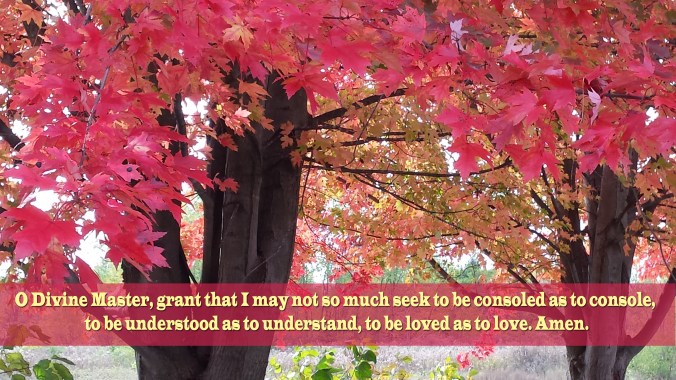
Prayer: O Divine Master, grant that I may not so much seek to be consoled as to console, to be understood as to understand, to be loved as to love. Amen.

Discussion: Are there topics you can’t discuss without insisting on your way?

Join the discussion! If you enjoyed this post, feel free to join an extended discussion as part of the C+C Facebook group or follow @comf_and_chall on Twitter. You’ll  have the opportunity to share your thoughts with some lovely people. Or feel free to comment here on WordPress, or even re-blog – the more the merrier!

First, do no harm.

1479243135156-01.jpeg

Today’s readings (click below to open in new tab/window):
Psalms 54; 146, Habakkuk 3:1-10 (11-15) 16-18, James 3:1-12, Luke 17:1-10


Primum non nocere – Latin for “first do no harm” – is a widely accepted principle of the medical community. It may seem obvious that the art of healing would be opposed to harm, but medicine is less cut-and-dried than we’d like. Physicians need a healthy ego. Especially in life-threatening situations, hesitation and self-doubt can have serious consequences for the patient. Yet decisive action needs to be tempered by humility, for the wrong treatment may make things worse and our intentions can’t prevent that.

James advised early Christians against becoming teachers, because teachers are held to higher standards of judgment and we all make plenty of mistakes. He explained many mistakes involve the tongue (our words) and the damage caused by its improper use. In matters of faith, it takes a certain amount of ego to claim to be a teacher, and even more humility to be a good one. Without the right balance, teachers can do more harm than good to a faith community. There’s a difference between sharing and discussing our faith, and establishing ourselves as authorities. Much caution is advised for the latter.

Acknowledging there are countless opportunities to make mistakes, Jesus warned his disciples: “It would be better for you if a millstone were hung around your neck and you were thrown into the sea than for you to cause one of these little ones to stumble.” How do we cause people to stumble? Well, the next thing he talked about was forgiving people who sin against us (note he didn’t mention forgiving those who sin against others, because neither the offense nor the forgiveness are ours). If they offend us seven times a day, we are to forgive them each time they repent. Think of it as a physician who tells her patient at every annual checkup to eat less and exercise more; the patient is contrite and promises to do better, and though it never happens, the physician retains the patient.

What is the connection between forgiveness and stumbling? That may be for a teacher to reveal. Until you find one, try to do no harm.

Comfort: Repentance is not a one-time offer.

Challenge: Find some spiritual exercises to build your forgiveness muscles.

Prayer: Loving and merciful God, grant me the strength, humility, and wisdom to share your love with others even when I don’t want to. Amen.

Discussion: Who do you have trouble forgiving? What impact does that have on your spiritual and emotional well-being?

Join the discussion! If you enjoyed this post, feel free to join an extended discussion as part of the C+C Facebook group or follow @comf_and_chall on Twitter. You’ll  have the opportunity to share your thoughts with some lovely people. Or feel free to comment here on WordPress, or even re-blog – the more the merrier!
Everyone’s a Critic

1478305718630.jpg

Today’s readings (click below to open in new tab/window):
Psalms 104; 149, Zephaniah 3:14-20, Revelation 18:1-14, Luke 14:1-11


First-century Galilee, like all other Jewish provinces, was under Roman rule. Many of its affairs were still handled locally by a succession of Jewish governors (tetrarchs) descended from Herod the Great, also commonly called Herod. Herod Antipas was the governor of the Galilean province, where Jesus was most active with his ministry.

When some Pharisees warned Jesus that Herod was looking to kill him, Jesus did not seem at all intimidated. He said: “It is impossible for a prophet to be killed outside of Jerusalem […] the city that kills the prophets and stones those who are sent to it!” Jerusalem, in the neighboring Judean province, was the center of Jewish political, cultural, and religious life. As is the case with many seats of power, it was prone to silence its critics – sometimes violently.

Members of an institution, especially if they feel attacked, are likely to defend it against critics both internal and external. For many of us, the fear of flaws being exposed (if only to ourselves and our peers) outweighs the legitimacy of the criticism. The church is as susceptible to this behavior as other institutions; church history, from the Vatican to countless televangelists to local congregations, is full of cover-ups and scandals. While scandals damage the reputation of individuals, cover-ups erode or obliterate the credibility and moral authority of the church itself.

If we listen to our internal critics – those who call out hypocrisy, ethics violations, inconsistencies, and other problems – we can correct ourselves before the whiff of decay attracts external critics, who are more invested in our comeuppance than our survival. Silencing them leads to an eventual implosion and leaves us nothing but spiritual rubble.

Let’s listen to the voices that make us uncomfortable. Let’s do some soul-searching to figure out whether our defensiveness is triggered because we think they’re wrong – or because we secretly don’t want to admit they are right. That might sound scary, but it’s incredibly liberating to truly know yourself and your own heart. Institutions and reputations can be undone, but no critic can destroy an honest relationship with our loving God.

Comfort: Integrity only improves your relationship with God.

Challenge: When people criticize you or your group, try to understand where they are coming from, rather than immediately responding or defending.

Prayer: Lord of Truth, help me to face truths no matter how difficult they may be to accept, for I know truth will draw my heart closer to yours. Amen.

Discussion: What is some of the best criticism you have received?

Join the discussion! If you enjoyed this post, feel free to join an extended discussion as part of the C+C Facebook group or follow @comf_and_chall on Twitter. You’ll  have the opportunity to share your thoughts with some lovely people. Or feel free to comment here on WordPress, or even re-blog – the more the merrier!

The B-Team

1476587594774.jpg

Today’s readings (click below to open in new tab/window):
Psalms 56; 149, Hosea 14:1-9, Acts 28:17-31, Luke 9:37-50


One day Jesus took three disciples up a mountain to pray with him. His appearance was transfigured to reveal his glory, the disciples were dazzled, and God said: “”This is my Son, my Chosen; listen to him!” It’s a powerful moment with great theological significance.

This is about the other nine disciples.

While Peter, James, and John were with Jesus, the others were working on the mission Jesus had given them, including casting out demons. A man begged them to cast out the spirit who possessed his son, and caused him to shriek and convulse. The disciples, probably already feeling like the B-Team, couldn’t do it. Imagine the desperate and possibly heated brainstorming they had about how to get this done before Jesus came back.

Descending from glory to a scene of failure, an exasperated Jesus asked: “You faithless and perverse generation, how much longer must I be with you and bear with you?” He attributed their failure to a lack of faith. Of course he healed the boy and returned him to his father.

How often, despite our best efforts to be strong in our faith, do we feel like the nine who were left behind, floundering to figure out what to do and how to do it? Are we jealous or resentful of the Peters who seem to be there for all the good stuff? We struggle to make a difference, and they seem to waltz right into it.

The original twelve disciples were not above such pettiness. They argued over which of them was the greatest, but Jesus wasn’t having it. Pulling a child to his side, he said: “Whoever welcomes this child in my name welcomes me, and whoever welcomes me welcomes the one who sent me; for the least among all of you is the greatest.”

Our faithfulness is not defined by perfection and power, but by our ability to love as Jesus asks us to. If it keeps us humble, second string is a fine place to be. If the least among us are the greatest, maybe the mountain isn’t the top after all.

Comfort: God knows your heart and faith; what other people think doesn’t matter.

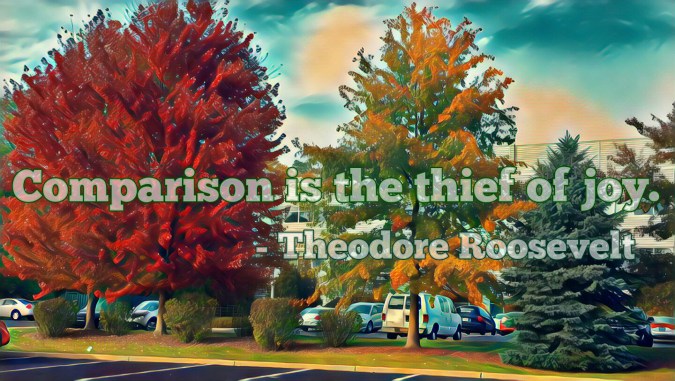
Challenge: Don’t compare yourself to others.

Prayer: Glorious Creator, I seek to serve you humbly and with love in my heart. Amen.

Discussion: Do you have control issues?

Join the discussion! If you enjoyed this post, feel free to join an extended discussion as part of the C+C Facebook group or follow @comf_and_chall on Twitter. You’ll  have the opportunity to share your thoughts with some lovely people. Or feel free to comment here on WordPress, or even re-blog – the more the merrier!
Surrender

1473955880268.jpg

Today’s readings (click below to open in new tab/window):
Psalms 36; 147:12-20, Job 28:1-28, Acts 16:25-40, John 12:27-36a


For most people, surrender is a dirty word. Not just in war or sports, but in everyday life. Heaven forbid we not crush the gas pedal to pass and scowl at the driver who cut us off. We dare not end any argument, no matter how pointless or relationship-damaging, by simply withdrawing from it. Our business cannot simply succeed; it must out-perform or – better yet – eliminate its competition. We talk about loving our enemies, but we put it off until after we defeat them.

When an earthquake miraculously released Paul and Silas from unjust imprisonment, what would we have expected them to do? As their jailer was about to kill himself over his failure, they could have seized this opportunity to escape, but Paul cried out to stop him. Not exactly a move from the Jack Bauer playbook, is it? The jailer was so moved he fell at their feet, asked what he could do to be saved, and took them to his home, where Paul and Silas baptized his entire family.

Paul so loved his enemy (for who is your enemy if not your wrongful jailer?) he risked imprisonment and further beatings rather than see the man harm himself. Succumbing to Christ transformed Paul – who only months before had been hunting and jailing Christians – so drastically he was able to create converts by showing mercy in the face of injustice. Christ renewed Paul, who renewed the jailer, who renewed his family, and so on…

We all contain that same potential. To tap into it, we must surrender all that we are to Christ. We’re taught to never surrender, but there’s no getting around it. We surrender not from a position of weakness, but from a position of trust. What do we surrender? The grudge against the neighbor who always takes our parking space; the certainty we are the right kind of Christian; the status of socializing with the popular crowd; the fear of the different and the unknown.

Surrender is a lifelong process that doesn’t perfect us, but opens us to the possibilities available in God’s realm.

Comfort: God finds strength in our weakness.

Challenge: At the beginning of each week, select one thing – a grudge, a habit, a fear – to surrender to God.

Prayer: Compassionate God, thank you for the arms that hold me up. Amen.

Discussion: How does the idea of surrendering make you feel?

Join the discussion! If you enjoyed this post, feel free to join an extended discussion as part of the C+C Facebook group. You’ll be notified of new posts through FB, and have the opportunity to share your thoughts with some lovely people. Or feel free to comment here on WordPress, or even re-blog – the more the merrier!

One and done?

1467241145380.jpg

Today’s readings (click below to open in new tab/window):
Psalms 65; 147:1-11, Numbers 22:41-23:12, Romans 7:13-25, Matthew 21:33-46


One tenet of Calvinism is the belief that God has predetermined who will be “elected” (believers saved by grace) and who will not. Though there are varying schools of thought on the interaction of belief and election, and people ask how they can know if they are elected, the prevailing presumption seems to be that belief is evidence you have been elected. But really you only know that you believe at this moment. People and circumstances constantly change.

In the Parable of the Husbandmen, a landowner (God) plants a vineyard (the nation of Israel), leases it to some tenants (the leaders of Israel), and leaves the country. While he is away, he sends servants (the prophets of old) to claim the produce, but the tenants beat, kill, and stone them. Finally the landowner sends his son (Jesus) but the servants kill him, too.

It seems clear the tenants believed they could establish themselves as the rightful occupants, beneficiaries, and heirs of the vineyard. They had been hand-picked by the landowner, but turned out to be untrustworthy. Unsurprisingly, the religious leaders in Jesus’s audience were not fans of this story. Without debating the merits of Calvinism, can we see how this parable illustrates the dangers of taking one’s own righteousness for granted?

As with many things in Christianity, humility in this area serves us well. Yes, believers should rejoice in our salvation. But we should not assume that automatically makes us good caretakers of the faith. It is never our own convictions and strengths that save us, but the grace of God. We might think of the tenants as evil, but as Rebecca Solnit (paraphrasing Mary McCarthy) says: “we are all the heroes of our own stories.” In other words, without being open to outside perspectives, we aren’t the best judges of our own righteousness; we need to remain open to the idea we could become the bad tenants. The fruits of the spirit are not ours to horde, but to return to God when called to do so. Salvation is not a one-time deal, but something we accept every day.

Comfort: God desires your salvation.

Challenge: Though our salvation is a cause for joy, our faith must remain humble.

Prayer: God of Salvation, teach me to serve you and not my own interests. Amen.

Discussion: How do you feel about predestination?

Join the discussion! If you enjoyed this post, feel free to join an extended discussion as part of the C+C Facebook group. You’ll be notified of new posts through FB, and have the opportunity to share your thoughts with some lovely people. Or comment here on WordPress, or feel free to re-blog. The more the merrier!

The Unknown God

1466973849765.jpg

Today’s readings (click below to open in new tab/window):
Psalms 67; 150, Numbers 21:4-9, 21-35, Acts (17:12-21) 17:23-24, Luke 13:10-17


While Paul was stranded in Athens after being driven out of Berea, he didn’t waste any time. Paul noticed the Athenians were always looking for something new to believe in, and he took advantage of their nature to spread the Gospel of Jesus Christ. The Greek pantheon included a dozen Olympian gods and many more besides, so the city was full of idols to all of them. In one temple he noticed an shrine dedicated to “an unknown god” just in case the worshipers had missed a deity. Paul told the Athenians this unknown god was the god of Israel, who had made the world and everything in it.

Constructing an idol to an unknown God may seem opportunistic or pragmatic, but there is a certain element of humility in it. Allowing for an unknown God was admitting “there is more to the nature of divinity than we know.” Despite all our talk about the mystery of God, many Christians are content to behave as if God is completely known to us. Our idols are creeds and books, doctrine and dogma. How often have we used them to justify the worship of a false god – a god who condones inequality and injustice, corruption and bigotry; a god who values what and who we value, and hates what and who we hate? A god we have created in our own image.

Jesus remains a constant source of surprise about the nature of God. Over and over he taught us that defining and limiting God – even with the most righteous intentions – reduces us to worshiping a cold, dead idol with no spark of love or mercy. By using parables rather than directives, he showed us God is more knowable through question and mystery than through rigid rule books. We aren’t free to define God however we want, but we are free from having God defined for us by people pretending to have all the answers. Admitting ignorance is sometimes a giant leap toward wisdom. Genesis tells us God spoke the world into existence; Christ’s incarnation transformed that monologue into an ongoing conversation.

Comfort: You don’t have to have all the answers.

Challenge: Nobody has all the answers.

Prayer: God of creation, I seek to follow Jesus Christ to truth and love. Correct my path when I am in error, and keep my heart humble. Amen.

Discussion: What is the difference between seeking truth, and simple rebelliousness?

Join the discussion! If you enjoyed this post, feel free to join an extended discussion as part of the C+C Facebook group. You’ll be notified of new posts through FB, and have the opportunity to share your thoughts with some lovely people.